

In this Good Practices Note, P. Jaisridhar explains how ICAR-KVK-Nilgiris, in partnership with Rural Development Organisation (RDO) Trust and Department of Horticulture, up-scaled Black carrots in the Nilgiris district.
CONTEXT
Despite being India’s carrot production powerhouse (producing 3.6 lakh tons annually), small-scale vegetable farmers in the Nilgiris district of Tamil Nadu were experiencing market saturation with conventional orange carrots and limited price premiums. Traditional crop monoculture left farmers vulnerable to market fluctuations and limited their income potential despite favourable agro-climatic conditions. Though the region’s established carrot infrastructure and ideal temperate climate (6,000-8,500 feet elevation) could have been underutilised to diversify, these opportunities were overlooked.
The Nilgiris, designated as a UNESCO Biosphere Reserve, required agricultural practices aligned with environmental conservation and organic production systems. However, farmers lacked awareness of heritage crops such as black carrots (Daucus carota subsp. sativus var. atrorubens), which could command 2-3 times higher market prices while fitting perfectly into organic farming systems. The absence of institutional support, demonstrated cultivation protocols, and market linkages prevented the adoption of this high-value crop.
The situation demanded innovative extension approaches that could bridge the gap between a farmer’s isolated experiment and systematic commercial adoption. ICAR-Krishi Vigyan Kendra (KVK) Nilgiris initiated comprehensive extension interventions to transform black carrot cultivation from a single farmer’s field into a district-wide commercial opportunity with support from the Department of Horticulture and an emphasis on organic production.
GOOD PRACTICES
Field-Based Discovery and Documentation
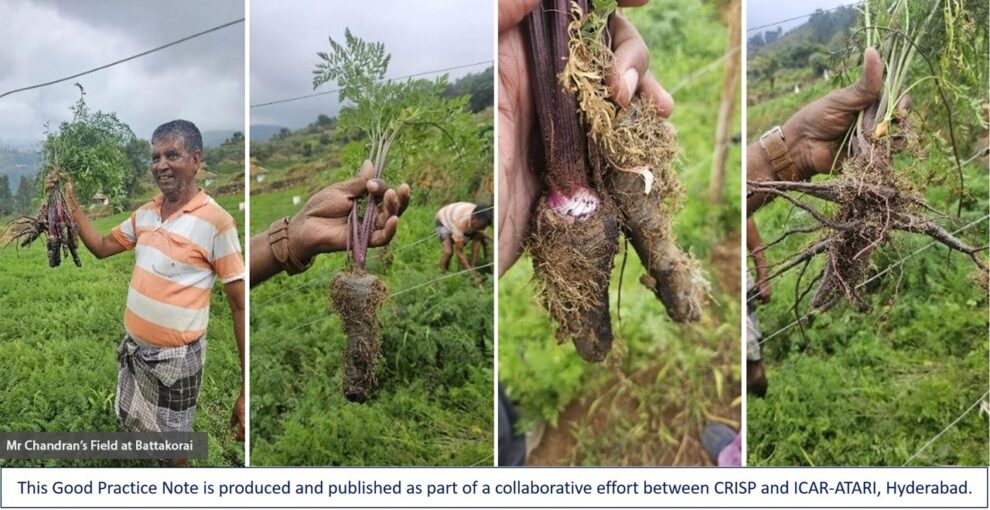
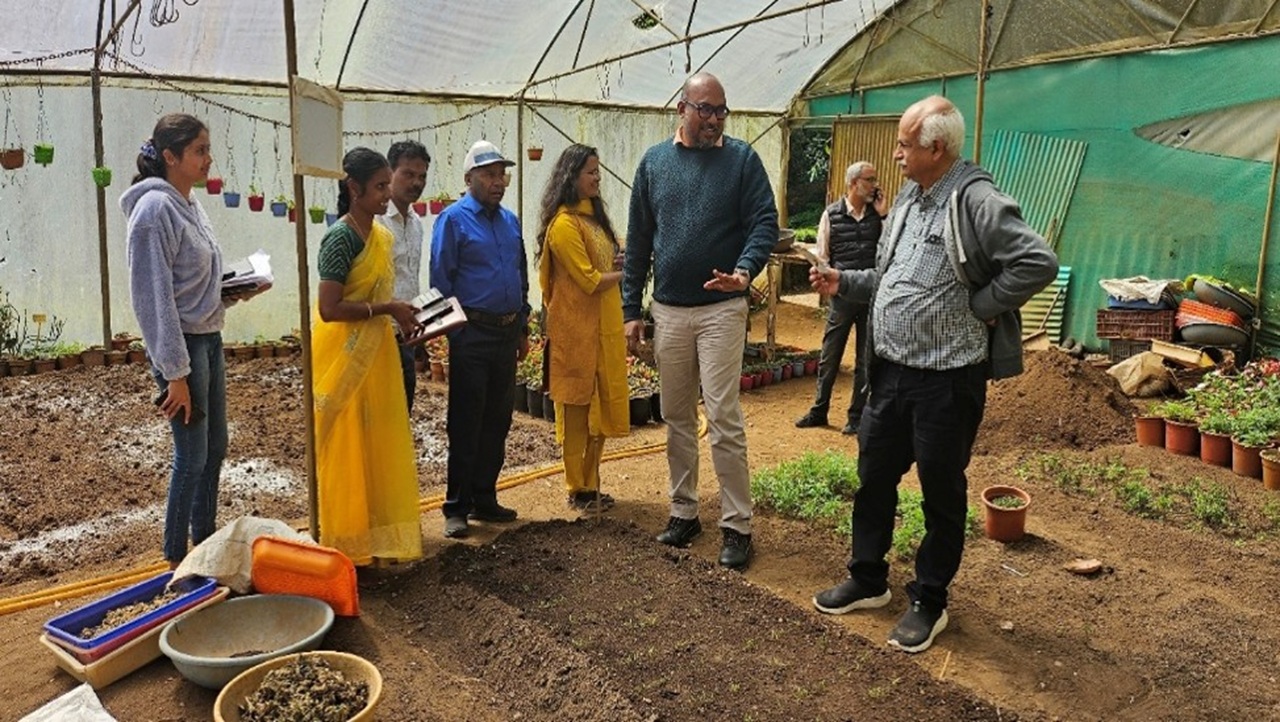
To start with, the ICAR-KVK Nilgiris, under the leadership of Dr P. Jaisridhar, documented experimental black carrots cultivated by Mr Chandran, a progressive farmer from Battakorai village in Kotagiri Block of Nilgiris District. Mr Chandran is an innovative farmer with over three decades of expertise. When RDO Trust identified him as a beneficiary organic farmer, they provided black carrot seeds, recognising his proven track record and willingness to innovate. Rather than waiting for research station validation, the KVK team actively scouted the field, documenting cultivation practices, measuring agronomic performance, assessing market viability, and capturing photographic evidence.
This farmer-field-first approach identified commercially viable practices through keen observation and technical documentation, transforming field observations into compelling evidence for institutional decision-making.
Evidence-Based Institutional Advocacy
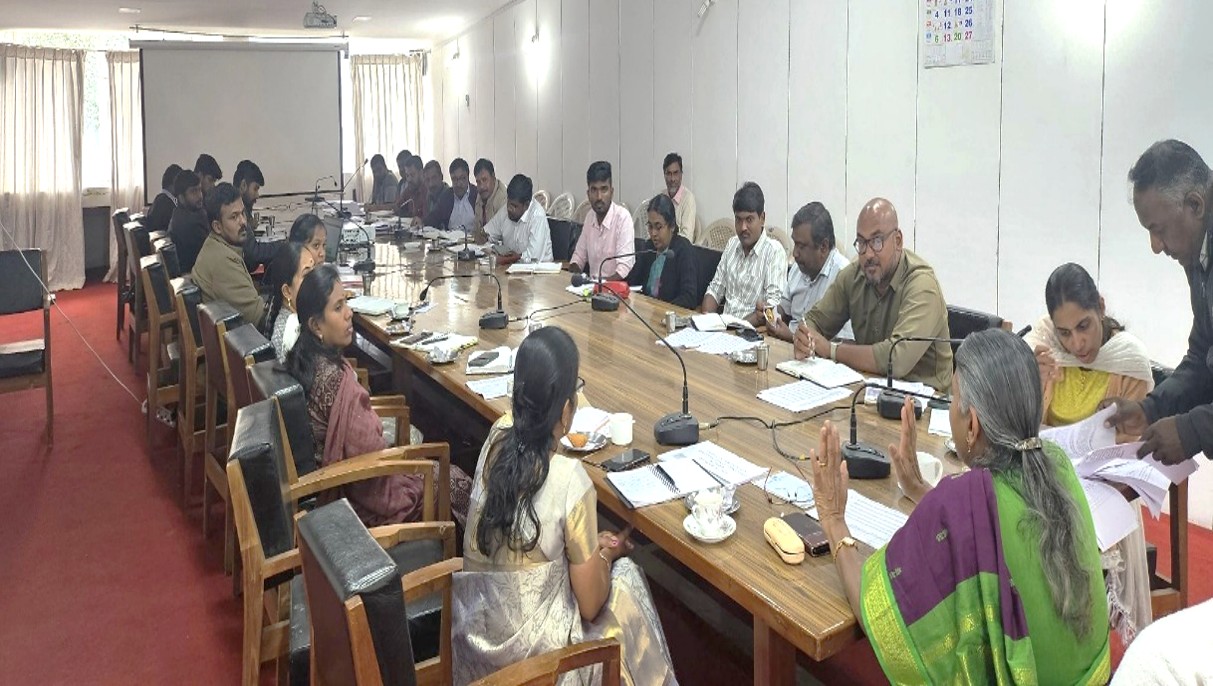
During November 2025, a comprehensive presentation was made by the KVK to the Joint Directorate, Department of Horticulture and Plantation Crops, The Nilgiris, built on five evidence pillars, namely:
- Mr Chandran’s successful field documentation,
- Botanical history (Central Asian over 1,000 years),
- ICAR-developed varieties (Kasi Krishna, Pusa Asita PCU-5, Black Beauty),
- Economic data (2-3x price premium, anthocyanin industry) and Nutritional superiority (10x antioxidant capacity), and
- Alignment with district organic farming initiatives.
Turkey’s thriving black carrot juice industry demonstrated the effectiveness of proven business models. This multi-dimensional approach secured immediate departmental support, with the Joint Director sanctioning demonstration trials at two strategic locations.
Demonstration-Based Trials Through Institutional Partnerships
The Joint Director sanctioned demonstration trials at two strategic locations: SIMS Park in Coonoor (which receives more than 25,000 annual visitors) and Nanjanad State Horticulture Farm belonging to the Department of Horticulture and Plantation Crops, Nilgiris. ICAR-KVK provided comprehensive technical support, facilitating variety selection, developing Nilgiris-specific organic protocols, coordinating seed suppliers, establishing monitoring systems, and planning farmer field days. This partnership transformed RDO Trust’s seed provision and farmer experimentation into official departmental trials, ensuring validation while accelerating adoption.
Organic-by-Design Market Positioning
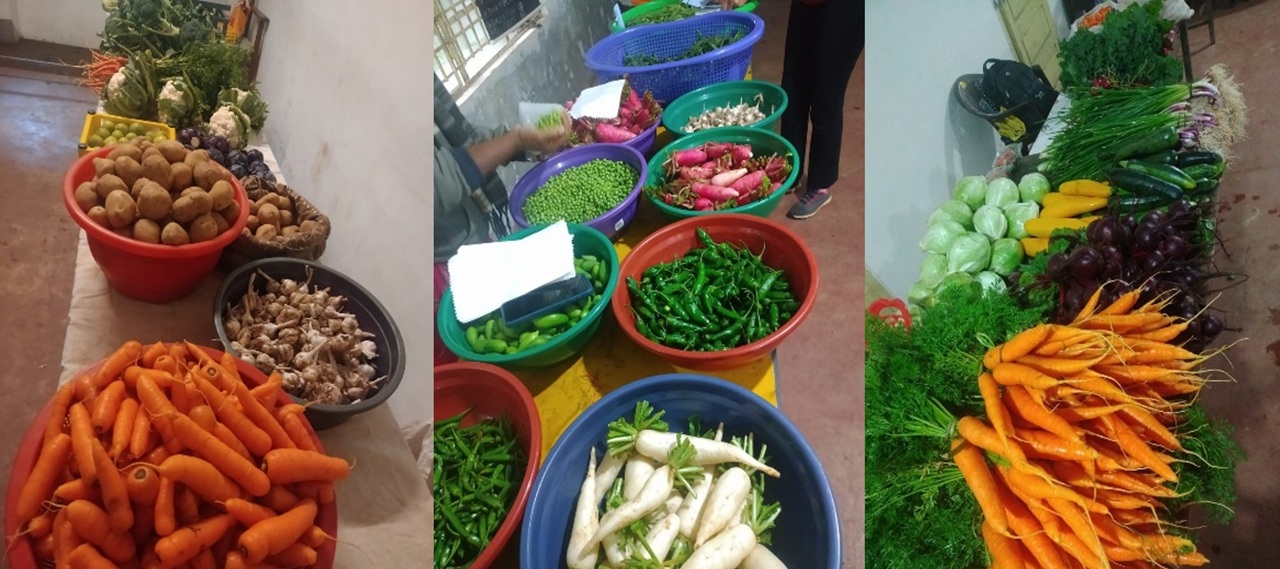
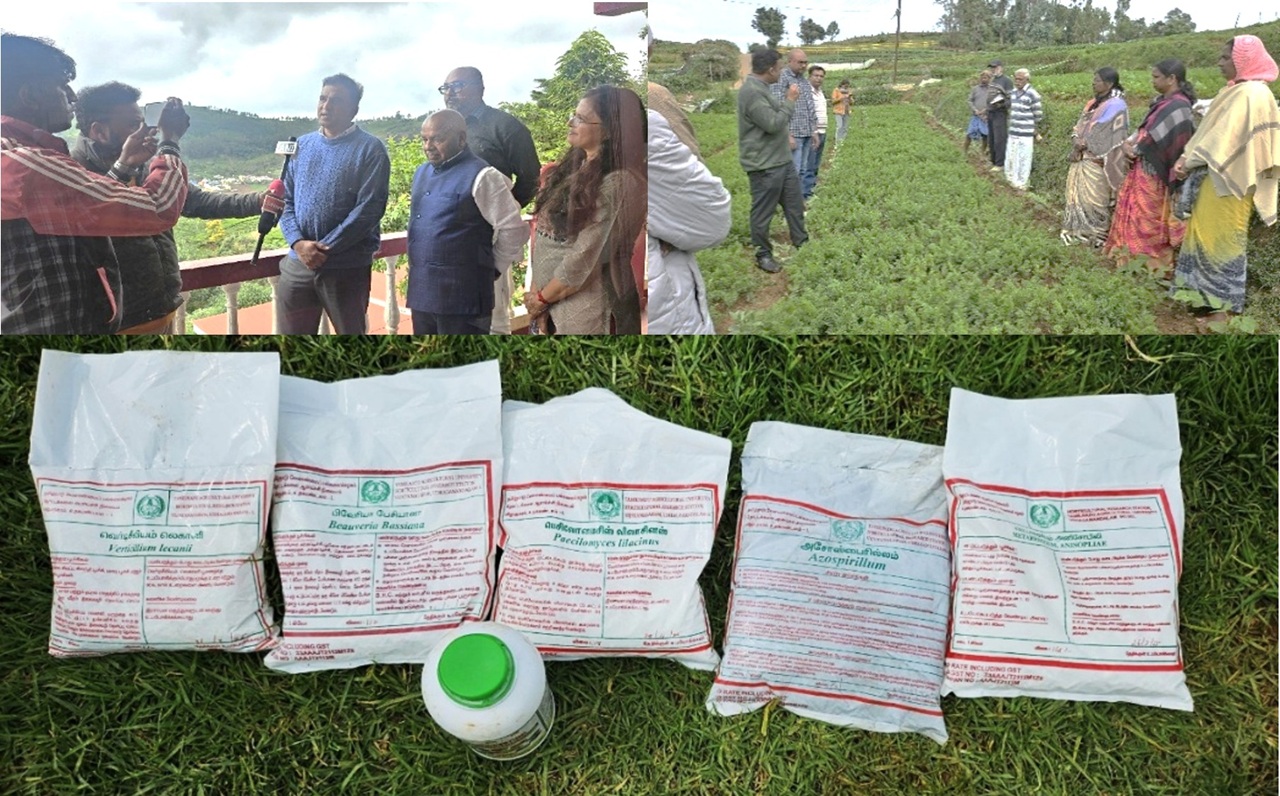
Black carrot was positioned as inherently organic from the outset, aligning with the markets of The Nilgiris Organic Horticulture Farmers’ Association (TOHFA) at SIMS Park and the Horticulture Centre, Coonoor. Technical guidance emphasised 20-25 tons/acre FYM/vermicompost, green manuring, biofertilizers (Azospirillum, PSB), organic mulching, botanical pesticides, and crop rotation. Training programs covered organic certification processes, while initial market linkages connected farmers with TOHFA’s weekly markets, attracting health-conscious consumers willing to pay premium prices.
Multi-Channel Knowledge Dissemination
Since November 2025, ICAR-KVK has conducted seven training programs, reaching diverse farmer segments, including Kota Tribes, Scheduled Caste farmers, and carrot growers in the Nilgiris. Content was tailored by audience – technical details for progressive farmers, simplified practices for traditional farmers, business cases for youth, and organic protocols for organic farmers. Visual materials, viz., field photographs, social media channels, TV interviews, and WhatsApp groups, effectively popularised black carrots while positioning Mr Chandran as a farmer-expert for peer-to-peer learning.
Creating Market Pull before Production Push
Recognising that technology fails without assured markets, ICAR-KVK conducted market surveys identifying distribution channels before encouraging widespread cultivation.
- Quick-commerce platforms already list black carrots: BigBasket (₹44-50/500g), Blinkit, Zepto (₹26-35, 10-minute delivery), Swiggy Instamart (120+ cities).
Organic speciality stores include myHarvest Farms, KPN Fresh (40+ stores in Tamil Nadu), OotyMade.com, and Gourmet Garden. Traditional retail chains include Reliance Fresh/Freshpik (2,700+ stores), More Supermarket, and Heritage Fresh. This multi-channel approach ensures market readiness, with ICAR-KVK identifying networks to connect Nilgiris farmers while planning value-addition training (juice, fermented kanji, pickles, chips) and business planning for cost-benefit analysis in parallel.
CHALLENGES
Farmer Scepticism and Risk Aversion
The Nilgiris’ thriving orange carrot industry created comfort with existing practices and fear of experimentation—’Why abandon what works for what might work?’ was the common sentiment. The Department’s demonstration trials at high-visibility locations provided evidence from official sources, while small plot trials (10-20% acreage) were recommended to minimise risk. Early adopters received amplified coverage through social media, newspapers, and television. Farmers trust their eyes and neighbours more than statistics—visible, local demonstrations with risk mitigation strategies bridged the gap between interest and action.
Seed Availability and Quality Concerns
After documenting the initial black carrot experimental plots established by RDO Trust using privately sourced seeds, I researched the availability of ICAR-developed varieties suitable for the Nilgiris district. I identified promising varieties from the Indian Institute of Vegetable Research (IIVR), Varanasi and the Indian Agricultural Research Institute (IARI), New Delhi. However, procuring these varieties presented significant challenges: complicated requisition processes, unsuitable minimum order quantities, viability concerns after long-distance transport, and the absence of local seed multiplication systems in our region.
To address these constraints, I initiated on-farm trials of ICAR varieties through KVK Nilgiris to assess their adaptability across different agro-climatic zones in the district. I also approached the Department to consider including black carrots in their official seed distribution program once our trials demonstrate successful results.
Looking ahead, I recognise that sustainable solutions require more than just improved cultivation practices—they demand complete supply chain development. I am working to identify progressive farmers who can be trained for local seed production and to establish multiplication chains within the district, ensuring consistent seed availability and quality for future black carrot cultivation.
Knowledge Gaps in Organic Cultivation
While farmers had extensive experience with orange carrots, black carrot cultivation under organic systems presented unique challenges: varying pest susceptibilities, uncertainty about fertiliser timing for optimal anthocyanin development, unfamiliar maturity indicators for harvest, and post-harvest handling protocols. ICAR-KVK developed Nilgiris-specific protocols by synthesising ICAR literature, adapting northern India practices, and monitoring Department trials currently in the vegetative phase. Technical advisory via newspapers, television, WhatsApp groups, and field visits treated knowledge gaps as participatory learning opportunities.
Market Infrastructure and Price Discovery
Practical challenges that emerged included the absence of trading channels for black carrots, uncertainty about actual versus projected prices, no grading standards, concerns about processing demand consistency, and cold-chain logistics. ICAR-KVK analysed Chennai, Bangalore, and Coimbatore markets, documenting retail prices (₹80-120/kg for black carrots vs. ₹25-40/kg for orange carrots). Pilot marketing through organic markets and value-addition training enable diversification, while farmer organisations need to be encouraged to move towards aggregate production. Market development must parallel production—testing quantities, establishing relationships, documenting prices, and preventing post-harvest distress.
Balancing Innovation Promotion with Realistic Expectations
While we tried to generate enthusiasm for black carrot cultivation, we avoided over-promising. The systematic approach began with Mr Chandran’s experimental cultivation documented by ICAR-KVK, followed by Department demonstration trials at SIMS Park and Nanjanad Farm (currently in vegetative phase). Parallel market feasibility studies examined consumer acceptance while RDO Trust identified retail connections. Communications deliberately emphasised responsible adoption: pilot-scale experimentation (10-20% acreage), evidence-based information from actual field observations, transparent discussion of challenges alongside benefits, and farmer record-keeping. This ensures that market linkages are confirmed and harvest performance is documented before encouraging widespread cultivation, thereby de-risking farmer investment. As we all know, the credibility of extension services is easily damaged by exaggeration, and honest communication builds trust.
BENEFITS AND IMPACT
Immediate Process Impacts
Pioneer Farmer Empowerment
Mr Chandran’s experimentation positioned him as a knowledge leader, with his field becoming a learning site, building collective confidence that Nilgiris agriculture can diversify. ICAR-KVK documentation validated his expertise, demonstrating that innovation can originate from farmer fields, not just research stations.
Strengthened institutional collaboration
The initiative catalysed an effective partnership between ICAR-KVK (research-extension) and the Department of Horticulture (implementation), creating synergy through complementary roles—KVK provided documentation, technical protocols, and training; the Department established demonstration infrastructure. This collaborative model sets a precedent for future technology dissemination.
Economic and Qualitative Impacts
Market analysis indicates black carrots offer ₹80-100/kg (2.5-3x premium over orange carrots at ₹25-35/kg), with organic certification adding 20-30% advantage. If yields match those of orange carrots (12-20 tonnes/acre), farmers realise substantially higher gross revenues. Actual cost-benefit data will be available post-harvest from Chandran’s field and Department plots. The initiative challenged the mindset that agricultural success requires maximising tonnage, demonstrating that strategic crop selection for premium markets enhances income without expanding acreage—crucial for land-constrained Nilgiris farmers. Premium pricing and sophisticated market channels appealed particularly to educated youth, demonstrating agriculture as a modern, profitable profession. Black carrot’s organic suitability proved that environmental sustainability and profitability need not conflict, reducing chemical pressures in the UNESCO Biosphere Reserve. The institutional response built farmer confidence that the agricultural system is responsive to innovation, creating openness to future diversification.
SUSTAINABILITY AND SCALING UP
Sustainability
Economic sustainability is strong, with 150-200% higher returns supported by genuine market demand for natural anthocyanins across the food, beverage, and cosmetics industries, and by multiple market channels diversifying revenue streams. Agronomically, black carrots fit existing rotations, improving soil health while requiring only locally available or on-farm producible inputs. Knowledge resembles orange-carrot practices, minimising learning curves. Institutionally, Department integration ensures continued support while TOHFA provides organisational infrastructure for sustained collective action. Socially, the practice aligns with existing patterns, requiring only behavioural change in the use of organic inputs and market orientation. In 2026, the KVK will be undertaking multi-locational trials to test its on-farm results. The data from these trials would be used to popularise black carrot varieties.
Scaling Potential
This practice can be replicated across the entire Nilgiris district with minimal modification. Potential for scaling exists in other temperate regions (Himachal Pradesh, Uttarakhand, Jammu & Kashmir, and higher elevations in Karnataka and Meghalaya) as well. Prerequisites for scaling include a temperate climate (15-20°C), access to organic inputs or on-farm capacity, market linkages before widespread production, 2-3 seasons of extension support, ICAR-variety seed availability, farmer training if lacking organic experience, and confidence-building demonstration plots.
LESSONS LEARNT
What Worked Well
- Farmer Field Discovery: This initiative originated from recognising a progressive farmer’s experiment. Extension specialists must actively seek innovations in farmers’ fields rather than waiting for validation at research stations—extension’s role is to discover, document, and disseminate.
- Strategic Institutional Advocacy: Evidence-based presentations to departmental leadership proved far more effective than farmer-by-farmer extension alone. The Joint Director’s immediate trial sanction accelerated dissemination by years—convincing one decision-maker controlling resources amplifies impact exponentially.
- Organic-by-Design Positioning: Framing black carrot as inherently organic simplified decision-making and automatically positioned farmers for premium markets, avoiding chemical-intensive starts followed by difficult transitions.
- Gradual Risk Management: Recommending small plot trials (10-20% acreage) reduced farmer risk and increased experimentation willingness. This graduated approach built confidence through realistic experience before significant commitments.
What Could Be Improved
- Earlier Market Development: Market linkages came somewhat late. Earlier formal agreements with processors and retailers would have provided greater confidence. Future initiatives should secure preliminary buyer commitments before encouraging new crop investments.
- Seed Supply Chain Development: Dependency on distant ICAR centres created challenges. Earlier investment in local seed multiplication—identifying and training interested farmers—would have made scaling smoother. Immediately identify 2-3 farmers for seed production and provide intensive support.
- Value-Addition Infrastructure: While individuals received value-addition training, community-level processing infrastructure would have enabled larger-scale value capture. Community processing managed by farmer collectives bridges the gap between raw produce sales and consumer-ready products.
PRACTICAL TIPS FOR EXTENSION SPECIALISTS
- Scout actively: Visit diverse farms regularly beyond scheduled programs. Innovations hide in fields. Systematic field scouting, even informal visits, can uncover practices worth scaling.
- Document systematically: Photographs, measurements, farmer testimonials, and cost-benefit data create compelling evidence. Transform field observations into institutional decision-making tools.
- Think institutionally: One good presentation to district leadership achieves more than 100 farmer meetings. Use data, visuals, success stories from other regions, and precise policy alignment to inspire departments with an evidence-based vision.
- Build partnerships early: Identify all stakeholders who can contribute and create roles for each from the start. Leverage high-visibility locations for demonstrations—thousands of visitors create organic publicity worth more than paid advertising.
- Position quality from day one: When introducing premium crops, embed standards from day one. Starting organic eliminates costly transition periods and immediately positions for high-value markets.
- Use multiple channels: Never rely on single communication channels. Older farmers respond to field visits; youth engage through WhatsApp and social media; women prefer SHG meetings. Adapt messages to the medium and audience.
- Secure markets first: Ensure demand exists before encouraging supply. Technology push without market pull creates disillusionment. Even informal buyer commitments build farmer confidence more effectively than technical superiority arguments.
- Manage risk thoughtfully: Help farmers experiment safely without threatening livelihoods. Small plots, continued support, and honest communication about challenges alongside benefits build trust.
- Follow through persistently: Handholding through 2-3 seasons builds confidence. Extension credibility is a long-term asset easily damaged by short-term exaggeration.
CONCLUSION
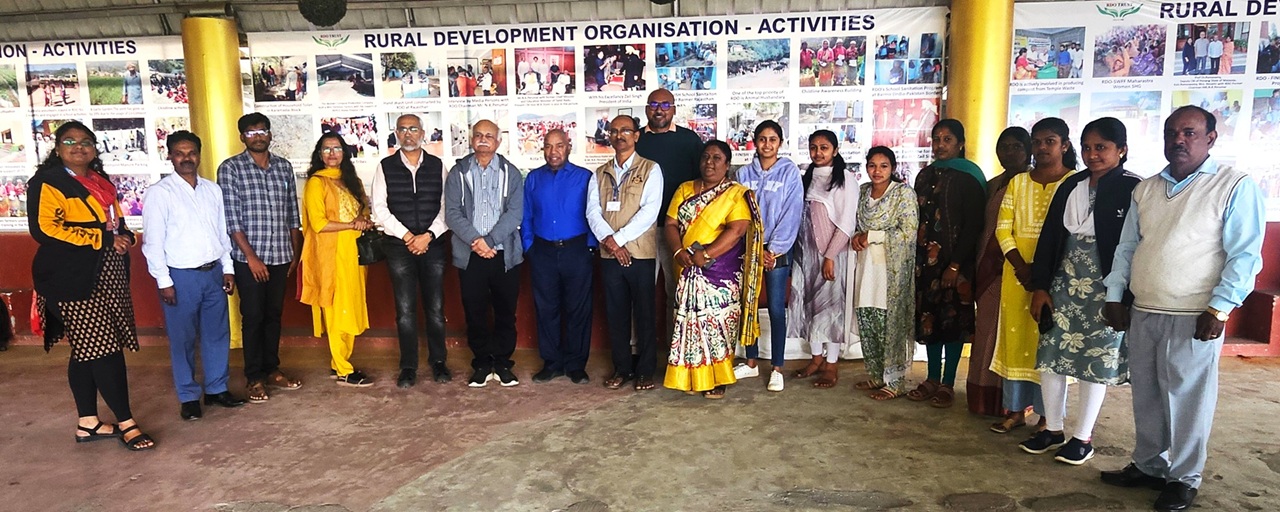
The upscaling of black carrot production demonstrates how effective extension combines field-level discovery, evidence-based institutional advocacy, strategic partnerships, and farmer-centric risk management. What began as one progressive farmer’s experiment by RDO Trust transformed into a Department of Horticulture policy through ICAR-KVK’s systematic intervention.
The initiative succeeded because it addressed real economic constraints (market saturation, price erosion), leveraged existing strengths (established infrastructure, ideal climate, farmer expertise), aligned well with environmental priorities (organic cultivation in UNESCO Biosphere Reserve), and provided clear economic benefits (2-3x price premiums, diverse market channels, value-addition opportunities).
For extension specialists facing similar challenges—introducing new crops, promoting organic practices, building institutional support—the black carrot experience offers replicable lessons: discover farmer innovations actively, document evidence systematically, advocate institutionally, partner strategically, manage risk thoughtfully, market before production, and follow through persistently.
Acknowledgements
Rural Development Organisation (RDO) Trust and Department of Horticulture and Plantation Crops,
The Nilgiris
Dr P. Jaisridhar is an Assistant Professor and Subject Matter Specialist in Agricultural Extension at ICAR–Krishi Vigyan Kendra, Tamil Nadu Agricultural University, The Nilgiris. An author and researcher, he received the MANAGE Award for his book ‘Communication Technologies in Agriculture,’ demonstrating his expertise in digital agriculture, ICT, and extension education. His research covers climate change adaptation, agricultural institutions, and sustainable farming. With numerous peer-reviewed publications, he is dedicated to linking technology with grassroots development. He can be reached at jaisridhar@tnau.ac.in.
“This Good Practices Note clearly shows how careful field work and farmer experience can be turned into practical learning, and Dr. P. Jaisridhar deserves appreciation for this grounded approach. It is very similar to KVK Wayanad’s work on strawberry and other high-value crops, where learning happens directly in farmers’ fields. Both efforts focus on small trials, clear results, and linking farmers to markets. Together, they show how simple, field-based extension can build confidence and improve farm incomes in hill regions”.