

In this blog, Ayush and Alagu argue why extension should play a role in tackling child labour in Indian Agriculture.
CONTEXT
As extension professionals, we may often assume that issues such as child labour are outside our scope. However, as key stakeholders in the agricultural sector, it is our responsibility to work towards creating an agricultural system that is non-exploitative, safe, and grounded in human rights. Today, extension and advisory services (EAS) are not limited to technology transfer; they are also working towards social change by incorporating transformative planning. Beyond traditional roles such as training and program implementation, we should also tap into policy advocacy.
Just as ending poverty and achieving zero hunger are global priorities, eliminating child labour is equally urgent, and this commitment is clearly embedded in SDG target 8.7, which calls for the eradication of child labour in all its forms.
There cannot be “zero hunger” without “zero child labour.” A compelling cycle illustrates how child labour, if not dealt with, perpetuates itself and keeps alive other problems like low education, malnutrition and poverty.
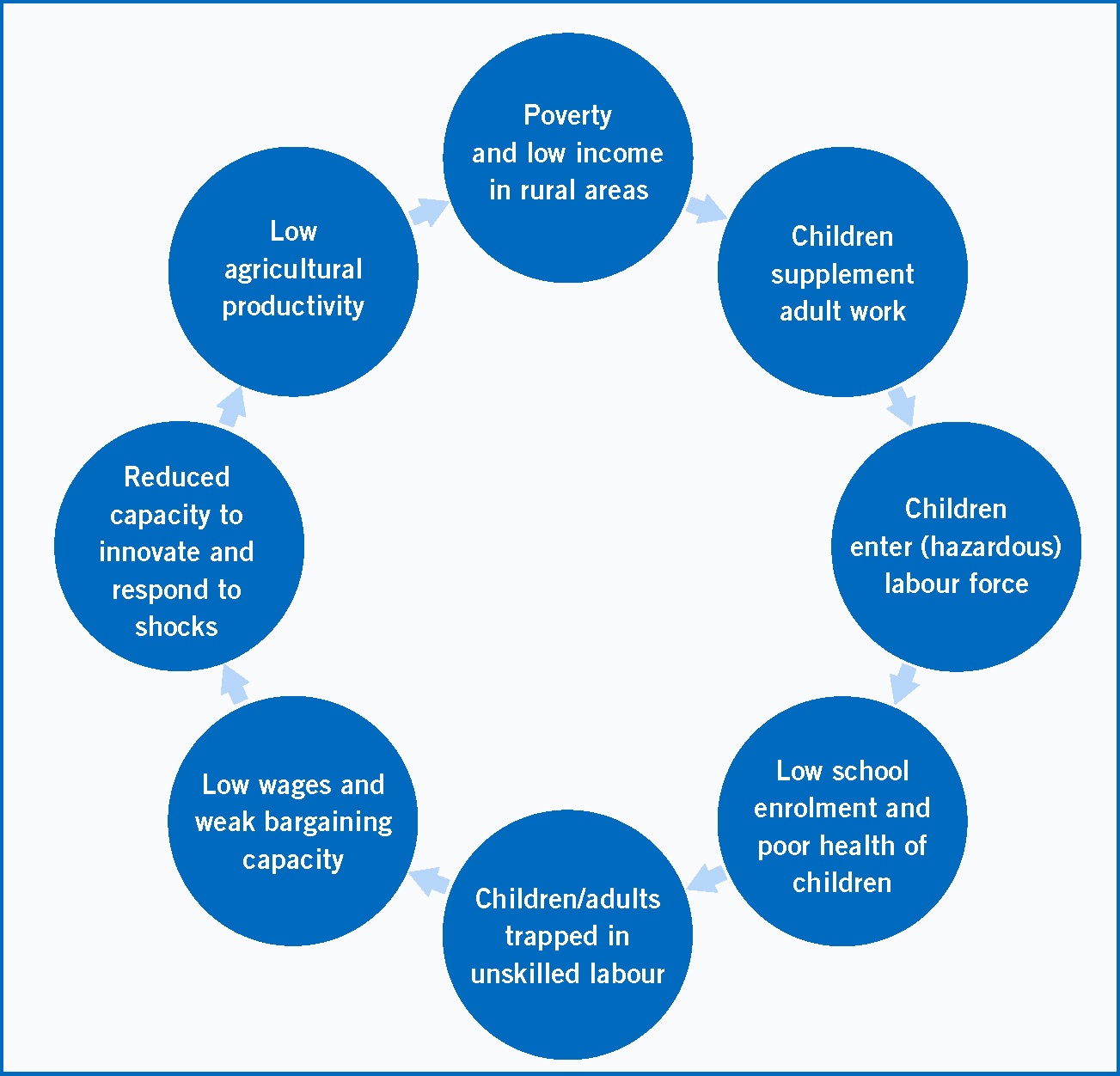 Child labour cycle
 HOW SERIOUS IS CHILD LABOUR IN INDIAN AGRICULTURE?
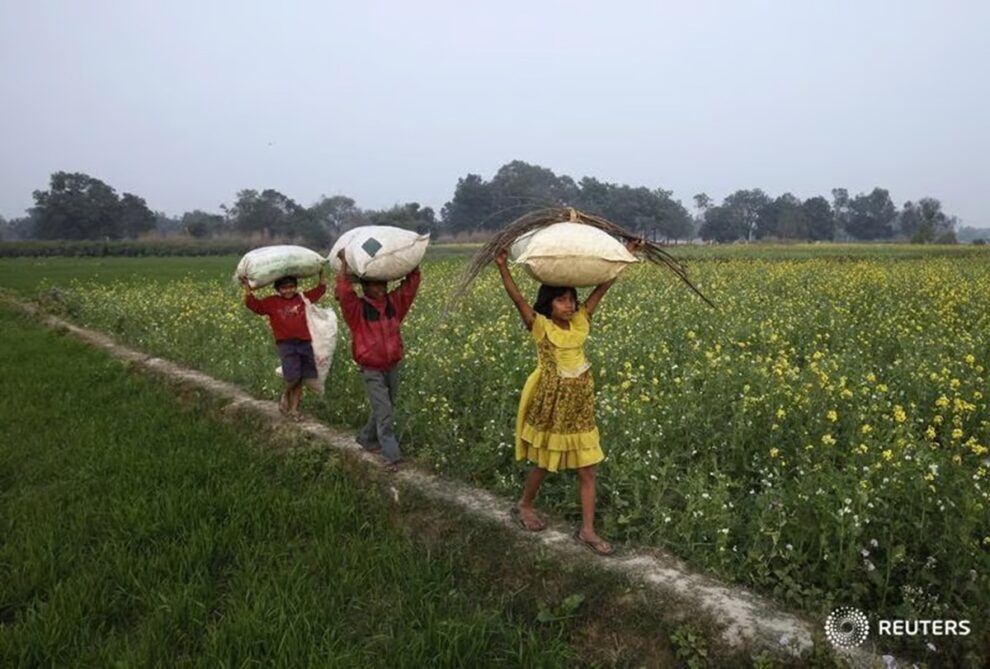
According to the 2011 Census, agriculture emerged as the largest sector employing children in India. In rural areas, 40.1 per cent of children were engaged as agricultural labourers, 31.5 per cent as cultivators, 4.6 per cent in the household industry, and 23.8 per cent in other areas work. Furthermore, an analysis of data from the Employment and Unemployment Survey (EUS) 2011–12 and the Periodic Labour Force Survey (PLFS) 2018–19 says that nearly 50 per cent of working children are employed within their family units, with the agricultural sector employing about half of them.
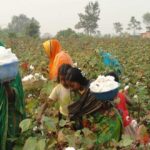
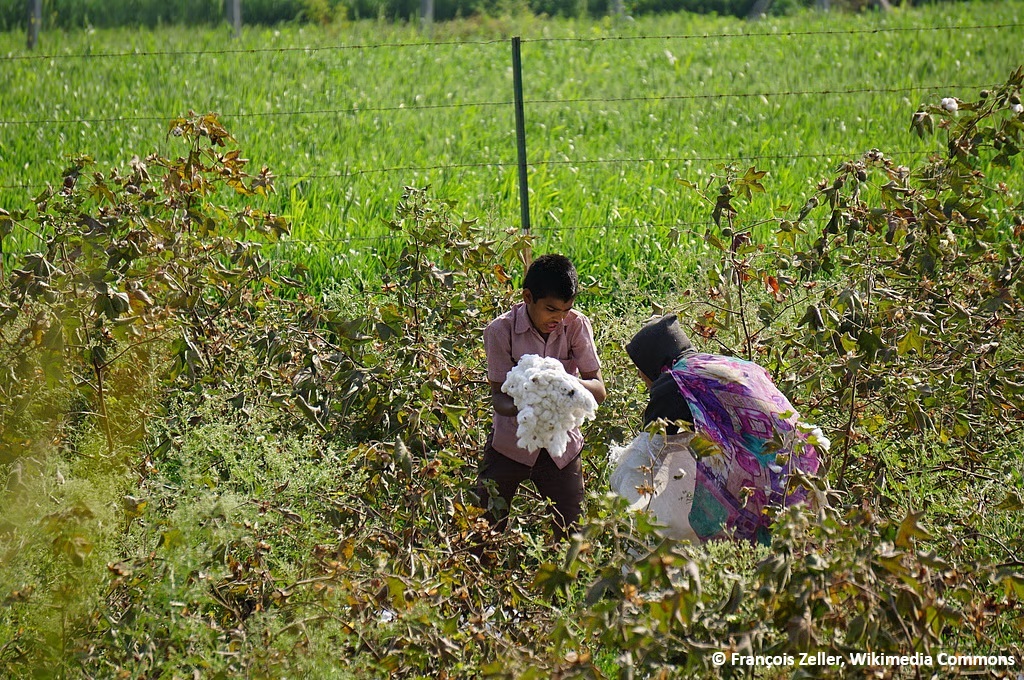
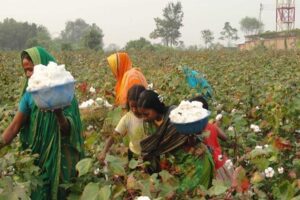
A study of 369 farms in Maharashtra, Madhya Pradesh, Uttar Pradesh, Andhra Pradesh, Karnataka, Tamil Nadu, and Telangana found that 34% had children present or working on the farms. The cotton and seed sectors show high prevalence: approximately 151,000 children were employed in cottonseed farms across Andhra Pradesh, Telangana, Gujarat, Karnataka, and Rajasthan, while 79,980 children worked in vegetable seed production (tomato, hot pepper, and okra) in Karnataka and Maharashtra.
The crisis extends to other sectors, such as floriculture, where children in the Thiruvallur District of Tamil Nadu are exposed to pesticides while plucking jasmine. In the shrimp processing sector, teenage girls are particularly vulnerable; notably, 47 suspected minors were rescued from units in Andhra Pradesh, while others work full-time peeling shrimp in sheds. Finally, the tea industry remains a persistent site of exploitation. The Assam State Commission for Protection of Child Rights notes that among the 4 per cent of working children in Assam, 1.58% of all working children are concentrated in tea estates, with a particularly high incidence in small tea gardens.
WHAT IS ITS EFFECT ON CHILDREN?
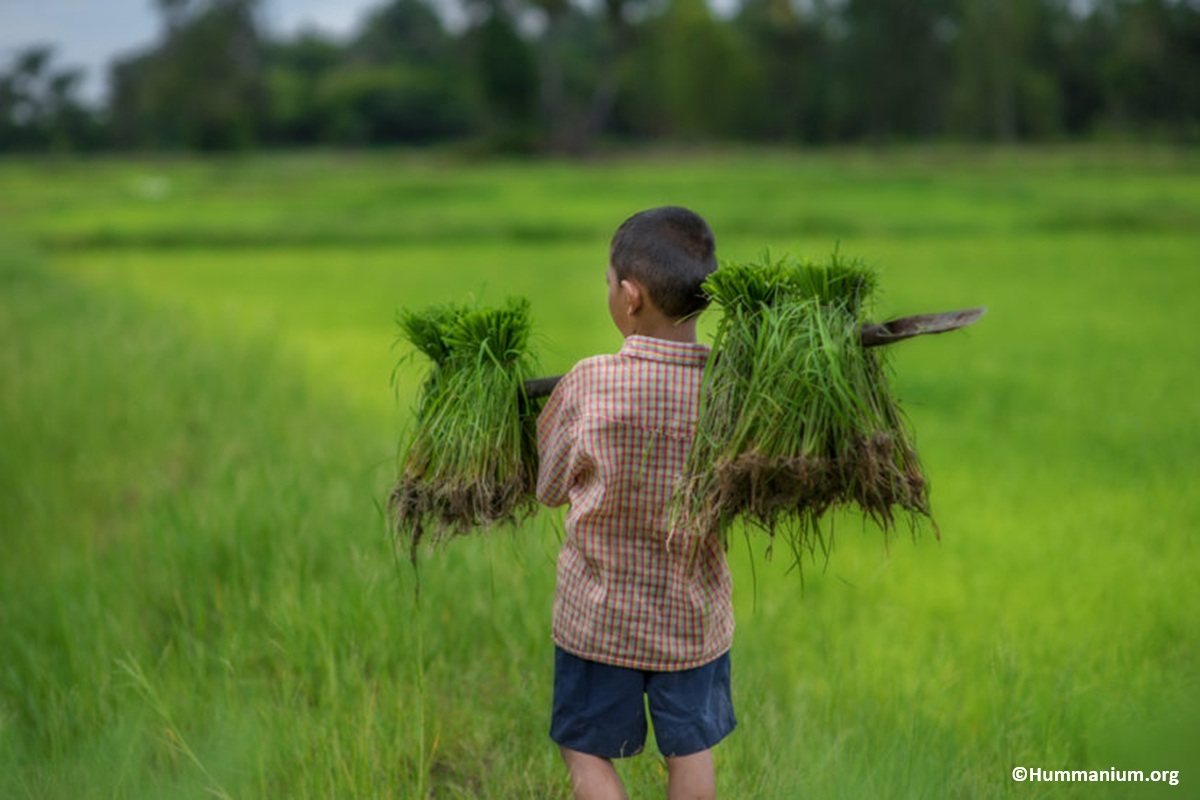
Physical Harms: Harms caused by exposure to pesticides are chest irritation, throat burn, skin rashes, dizziness, pesticide poisoning, and issues of tuberculosis, asthma and headaches among beedi workers as they come in contact with nicotine. Physical injuries include cuts in fingers while picking cotton, stained hands while peeling arecanut and other musculoskeletal disorders caused when they are engaged in different activities in the field.
The hindrance to education: The hindrance is more in the case of migrant children, as they struggle to access education due to their migratory status, linguistic barriers, and distance from schools
Other than these, the children are subjected to verbal abuse in some places, girls are pushed into illegal child marriages, and there are also reports of children working in tea gardens, especially girls, who are at risk of trafficking. Moreover, children are at risk of becoming part of bonded labour practices as their families take advances (loans) with exorbitant interest rates (up to 50%) from contractors, which binds them to work for 5-6 months to repay the debt.
THE MISSING EXTENSION!
Fifty-Second Report of the Standing Committee on Labour, Textiles and Skill Development (2023-24) has noted that Department of Agriculture and Farmers’ Welfare neither have any data regarding number of children engaged in child labour nor do they have any mechanism to receive complaints on the issue of child labour in agriculture sector and also does not have any mechanism to take suo motu action in the matter. Similarly, the Ministry of Fisheries, Animal Husbandry & Dairying does not have any mechanism presently to estimate the number of child labour engaged in the fisheries sector.
The Ministry of Labour and Employment remains the primary department for the prevention and mitigation of child labour in agriculture. The ministry is responsible for administering programs and projects under the Child and Adolescent Labour (Prohibition & Regulation) Act, 1986, as amended in 2016, the National Child Labour Project (NCLP) Scheme in 1988, and the online portal PENCIL (Platform for Effective Enforcement for No Child Labour). But the committee itself has concluded that the implementation of these programs and projects has to go a long way toward achieving the objective of eliminating child labour, as per commitments made by the country.
WHAT ROLES CAN EXTENSION PLAY?
Agricultural extension is uniquely positioned to address child labour due to its direct engagement with farmers and farm workers. This close interaction helps extension personnel understand rural livelihoods, observe labour practices, and suggest practical, context-specific solutions, making them key stakeholders in tackling child labour in agriculture. The following are a few roles that extension can play to reduce the incidence of child labour:
Conduct awareness campaigns involving multiple departments
- The State Labour, Agriculture, Animal Husbandry, Fisheries, and Forestry Departments can raise awareness of labour rights and occupational safety and health, and guide people on how to register complaints.
- The Department of School Education and Literacy, along with NCLP Special Training Centres and Village Education Committees, can promote awareness of schemes such as Samagra Shiksha Abhiyan (SSA) and the PM POSHAN Scheme, focusing on rehabilitation and bridge education for affected children.
- Child Welfare and Protection Committees and District Child Protection Units can raise awareness about Mission Vatsalya and ensure communities understand child protection and welfare systems.
Develop educational materials
Drawing inspiration from the IEC material on child labour and health hazards developed by the V.V. Giri National Labour Institute, as well as the document Hazardous Child Labour in Agriculture and Forestry (Republic of Kosovo), extension professionals can support these efforts by developing behaviour change communication materials and conducting outreach activities.
Data gathering
The Fifty-Second Report of the Standing Committee on Labour, Textiles and Skill Development (2023-24) highlighted the lack of reliable data on child labour in agriculture as a major concern. Existing digital platforms such as AgriStack (Ministry of Agriculture & Farmers Welfare) and PENCIL – Platform for Effective Enforcement for No Child Labour (Ministry of Labour & Employment) can play an important role in addressing this gap. These database platforms can be better integrated and utilised to improve data sharing, monitoring, and coordination across departments.
Develop a child labour monitoring system
Specialised committees and a dedicated child labour monitoring system can be created under the Ministry of Agriculture & Farmers Welfare, following the example of the Ministry of Food and Agriculture (MOFA) in Ghana.
Promote community action
The Village Savings and Loan Associations (VSLA) in cocoa communities offer a good example of community action. It is similar to the women’s self-help group initiative in India, but it is well adapted to mitigate child labour. In VSLA, the primary criterion for community selection is the rate and number of children identified as being in or at risk of child labour within the community. Community Facilitators are trained in child protection and safeguarding to ensure they are sensitive to children’s well-being and welfare. Training is provided on key concepts related to the worst forms of child labour, child protection, and awareness-raising techniques and Child protection and safeguarding. Here, extension agents can act as community facilitators.
CONCLUSION
It is true that India already has a burdened agricultural extension system. It is also true that extension professionals are not formally empowered with enforcement mechanisms to directly combat child labour. However, the lack of formal authority does not lessen the ethical responsibility we bear towards farming communities. The evidence presented throughout this blog clearly emphasises both the extent and seriousness of child labour in agriculture, as well as its deep connections with poverty, physical harm, and obstacles to education. Extension systems, due to their reach, trust, and field presence, are uniquely placed to influence attitudes, raise awareness, and act as links between communities and institutional structures. Our role is shifting from simply transferring technology to becoming catalysts for social change. The choice before us is to remain passive observers or to become active participants in building a more just and fair agricultural system.
 Ayush Emmanuel Lal is a Junior Researcher at the Centre for Research on Innovation in Science Policy (CRISP). He holds a postgraduate degree in Agricultural Extension and Communication, and his research interests are adoption behaviour and gender issues in agriculture. He can be reached at ayushlal0712@gmail.com.
 Alagu Niranjan is a Research and Knowledge Management Officer with the Centre for Research on Innovation and Science Policy (CRISP), Hyderabad, India. He can be reached at: alaguniranjan@crispindia.org.

Add Comment