


In this meeting note, Mohamed Aseemudheen shares his experience of participating in the “Kerala and the World Economy Conference 2026” organised by the Centre for Development Studies, Thiruvananthapuram during 23-24 February 2026.
CONTEXT
Academic conferences often feature many presentations crammed into limited time slots, leaving little room for reflection and discussion. The Kerala and the World Economy Conference 2026, organised by the Centre for Development Studies (CDS), Thiruvananthapuram, was refreshingly different in both its structure and intellectual orientation. Conducted under the theme “Kerala in Transition: Building an Inclusive Economy in a Shifting Global Order,” the conference brought together scholars, policymakers, and researchers from multiple disciplines to examine Kerala’s development experience within a broader global context.
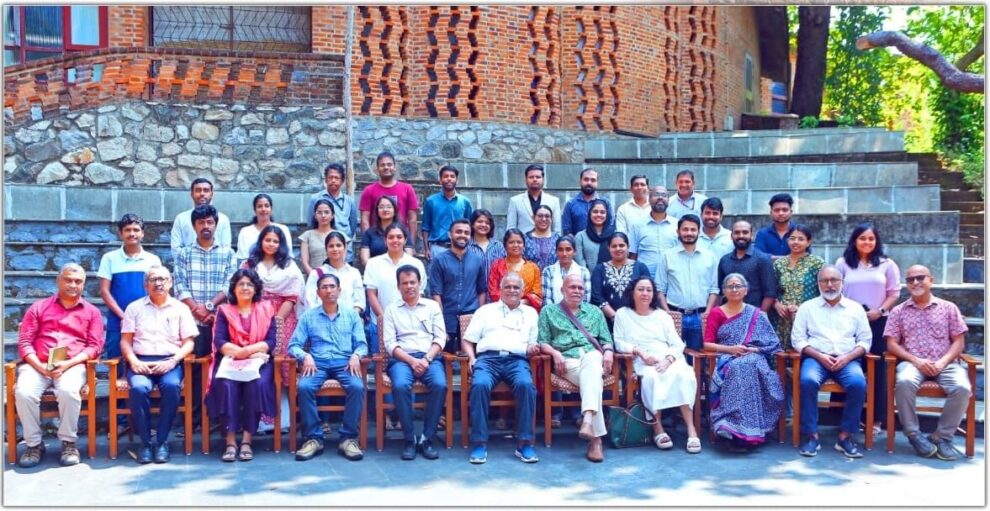
The conference followed a carefully curated format. Participation was selective, and the event was fully sponsored for chosen presenters. Rather than hosting a large number of research papers, the organisers limited the programme to twenty presentations, including seventeen oral presentations and three poster presentations. Each contribution addressed contemporary issues relevant to Kerala’s development and its linkages with global economic processes.
Despite the limited number of presentations, the sessions were intellectually dense and deeply engaging. The discussions were not rushed; instead, each presentation received thoughtful attention from participants and discussants. This structure created a stimulating academic environment where participants could engage more meaningfully with ideas.
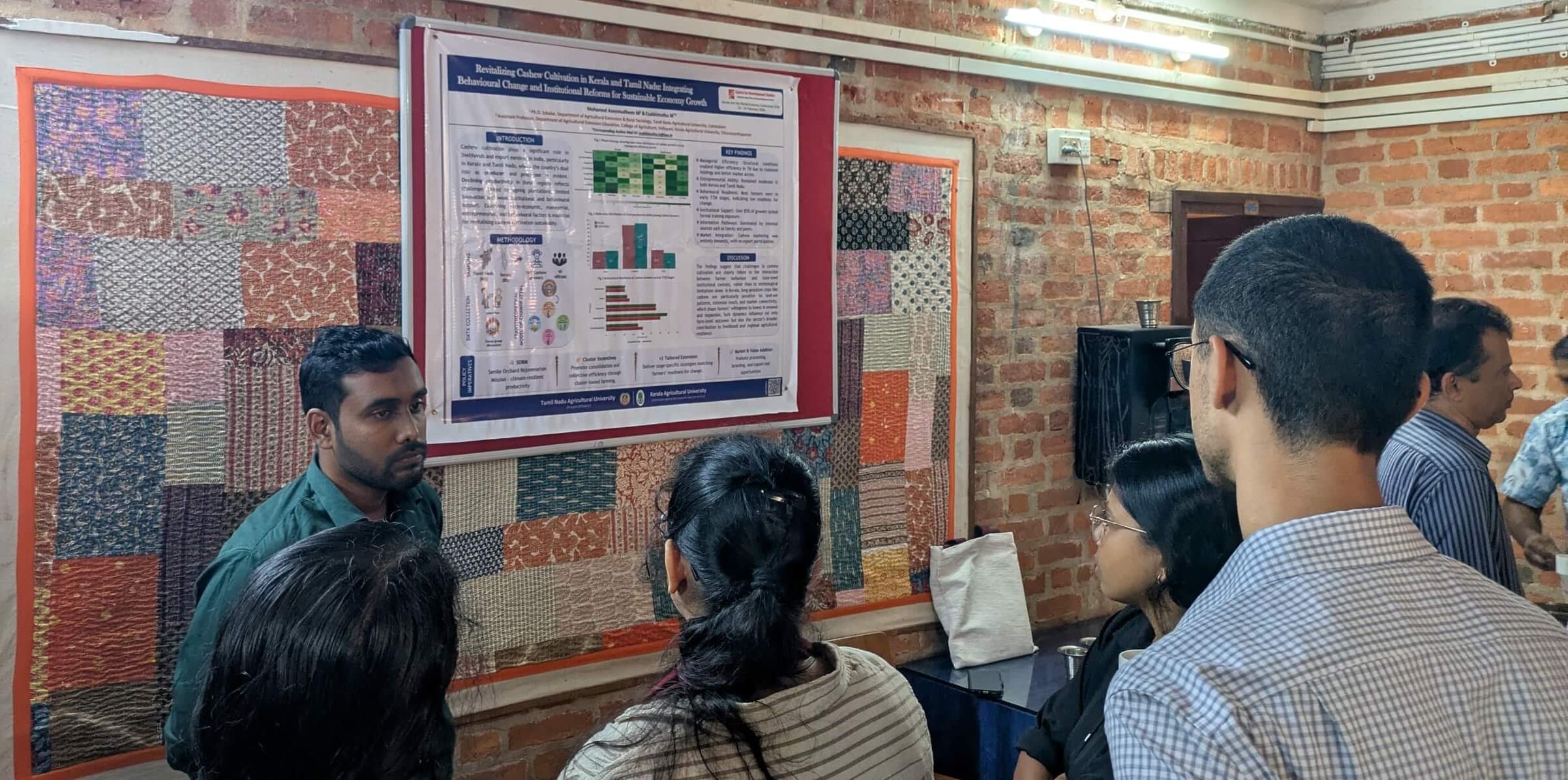
I had the opportunity to present a poster titled “Revitalizing Cashew Cultivation in Kerala and Tamil Nadu: Integrating Behavioural Change and Institutional Reforms for Sustainable Economic Growth.” Interactions around the poster session helped situate my research within broader development conversations and highlighted how agricultural issues intersect with wider economic and institutional contexts.
The programme included keynote lectures, thematic technical sessions, research presentations, poster discussions, a documentary screening, and a book discussion and release session.
INSIGHTS FROM THE KEYNOTE LECTURES
The keynote lectures provided diverse perspectives on development, each approaching the subject from a different analytical lens.
The opening keynote by Prof. K. P. Kannan introduced the idea of “New Malayali Capital,” highlighting how Kerala’s engagement with globalisation has generated new forms of economic capital through migration, remittances, entrepreneurship, and diaspora networks. The discussion on the scale of migration to Gulf countries and its socio-economic implications illustrated how global labour mobility continues to shape Kerala’s development experience. The session also explored emerging debates around technological transitions and the possible implications of artificial intelligence on employment patterns.
Another keynote address by Prof. Chinmay Tumbe, titled “The Rise of the West in India,” examined the historical and geographical foundations of regional development. Beginning with rainfall as a developmental indicator, the lecture illustrated how geography, migration, trade networks, and urbanisation interact in shaping economic trajectories. His observation that “water is the destiny of India” emphasised the fundamental role of natural resources in influencing long-term development patterns.
The third keynote lecture by Prof. Sunil Mani focused on the emergence of knowledge-based industries in Kerala and how the state has gradually transformed constraints into opportunities through investments in education, research, and innovation. The discussion highlighted the growing importance of knowledge economies and technology-driven sectors in shaping future development pathways.
The final keynote by Prof. M. Vijayabaskar examined the challenges of subnational industrial development and drew lessons from Tamil Nadu’s industrial trajectory. The lecture highlighted how institutional arrangements, policy frameworks, and industrial ecosystems influence regional economic performance. Together, the keynote sessions offered complementary perspectives on migration, geography, innovation, and industrial development.
REFLECTIONS FROM THE TECHNICAL SESSIONS
The thematic sessions that followed the keynote lectures addressed a wide range of development issues, including gender and labour markets, environmental sustainability, industrial development, fiscal governance, social inclusion, and migration dynamics.
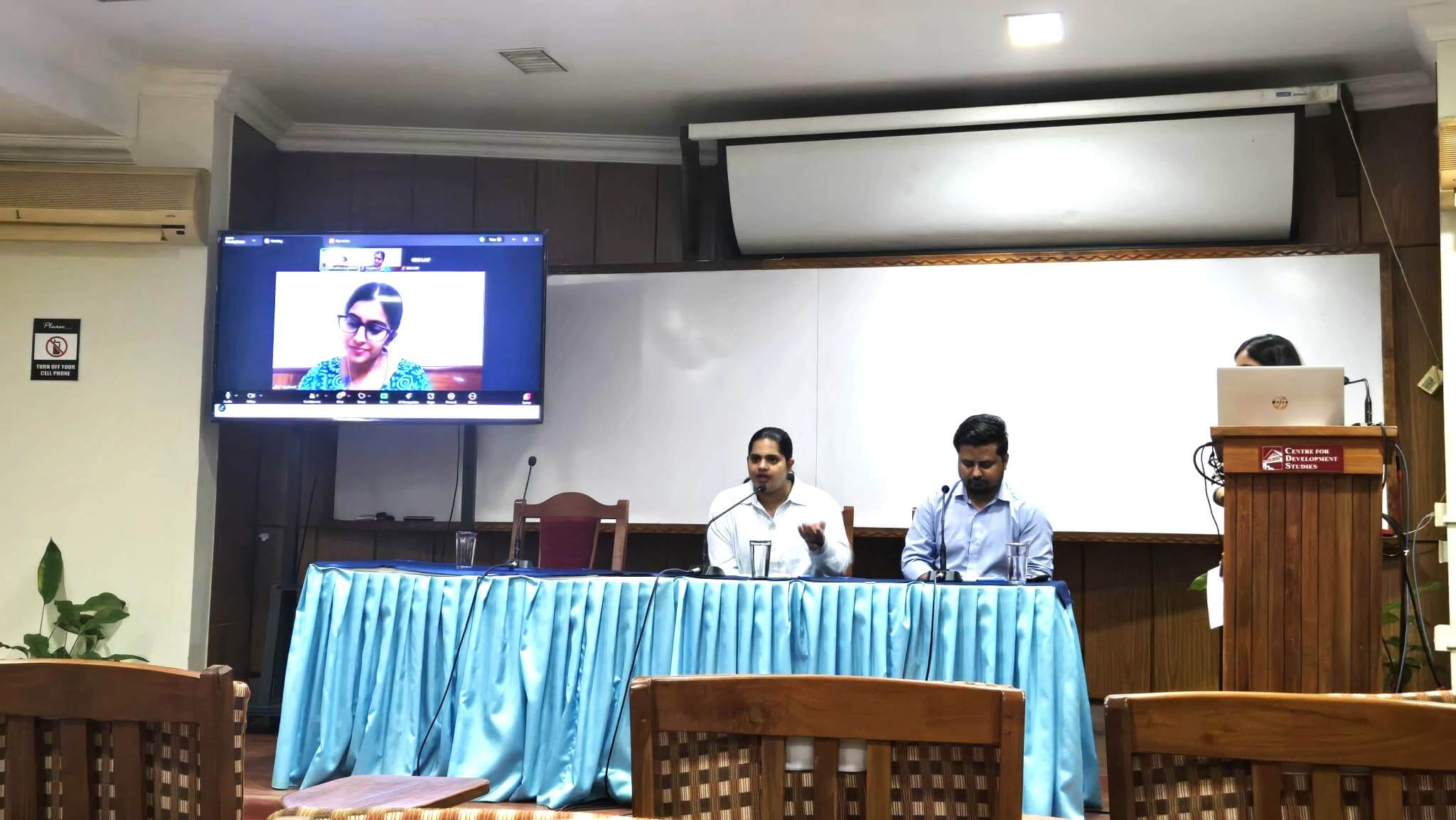
The discussions on labour markets and migration highlighted how mobility shapes labour availability, household aspirations, and livelihood choices. These insights are particularly relevant for agricultural sectors where labour shortages and demographic changes influence farm-level decision-making.
Sessions focusing on environmental issues drew attention to emerging concerns, including marine pollution, urban emissions, and disaster-induced displacement. These discussions underscored the growing need to integrate environmental sustainability into development planning.
Other presentations examined the role of institutions, local governance, and fiscal policies in shaping development outcomes. Together, these discussions demonstrated that a single sector does not drive development; rather, it emerges from the interaction of multiple economic, social, and institutional forces.
Learning Beyond Presentations
The conference also included activities that went beyond traditional academic sessions. The documentary screening on Kerala’s inland waterways offered a powerful reflection on how geography, ecology, and human livelihoods are interconnected. Similarly, the book talk and book release sessions stimulated discussions on labour mobility and social change, themes that resonated strongly with many of the conference presentations.
These diverse elements helped create a more immersive learning experience, encouraging participants to reflect on development from both analytical and human perspectives.
Rethinking Data and Evidence in Development Research
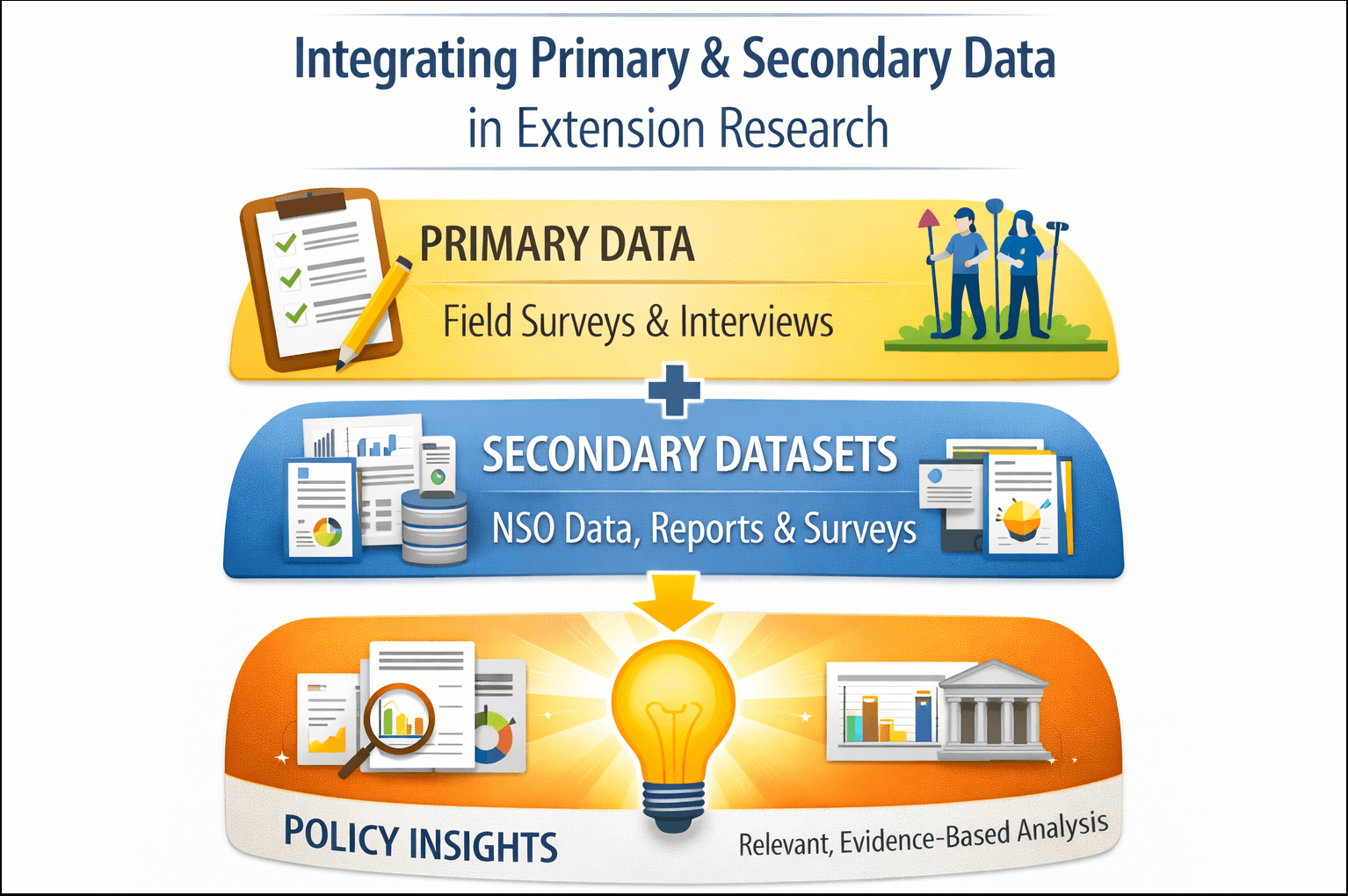
One of the most important lessons I gained from the conference relates to the role of data in development research. As extension researchers, we often rely heavily on primary data collected through field surveys to understand farmers’ behaviour and local realities. While such data is valuable, it may sometimes provide only a partial view of larger development trends.
The discussions at the conference highlighted the importance of integrating secondary data sources generated by national statistical agencies and research institutions. Large datasets from the Ministry of Statistics and Programme Implementation (MoSPI) provide broader perspectives on economic and social dynamics across regions and time.
Combining primary survey insights with reliable secondary datasets can strengthen research analysis and generate more robust policy implications. This approach is particularly important when studying complex development issues that extend beyond local contexts.
Development as an Interdisciplinary Process
Another important takeaway from the conference was the recognition that development is inherently interdisciplinary. Economic transformation cannot be understood through a single domain; rather, it requires engagement with insights from economics, geography, sociology, political science, and environmental studies.
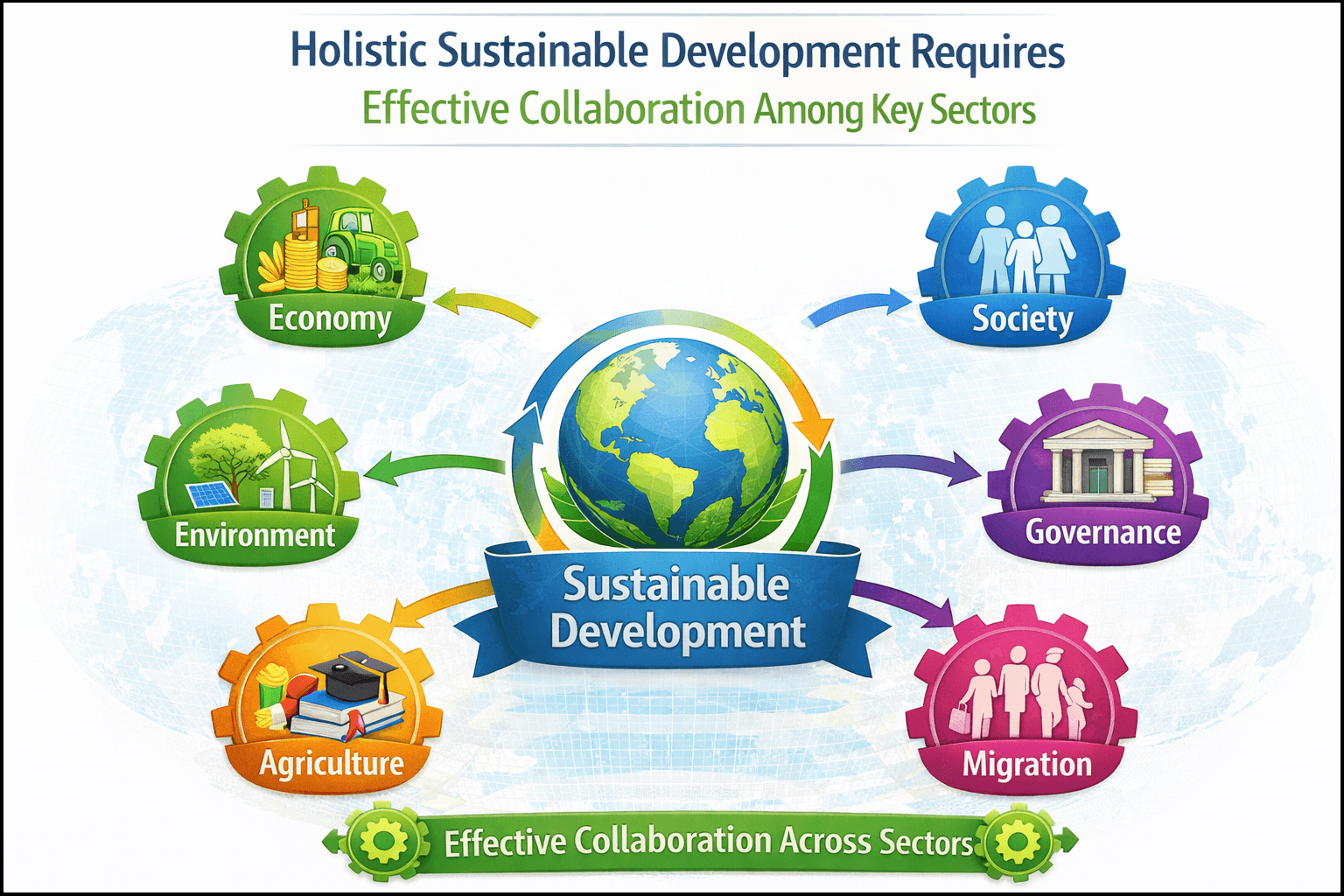
For agricultural extension systems, this insight is highly relevant. Farmers’ decisions are influenced not only by agricultural technologies but also by labour markets, migration trends, environmental conditions, and institutional frameworks. Addressing agricultural challenges, therefore, requires collaboration across sectors and disciplines.
Participating in the Kerala and the World Economy Conference 2026 broadened my perspective as an extension researcher. The discussions encouraged me to think beyond field-level observations and to engage more actively with macro-level development debates.
The conference also motivated me to explore the vast amount of existing secondary data available in the public domain. Analysing such datasets alongside field-based research can generate insights that are both locally grounded and relevant for broader policy discussions.
The overall organisation of the Kerala and the World Economy Conference 2026 was highly commendable. The well-planned sessions, smooth coordination, and inclusion of diverse programme elements, such as keynote lectures, technical sessions, documentary screenings, and book discussions, created an engaging and intellectually stimulating environment.
The conference provided meaningful opportunities for interdisciplinary learning and interaction among participants, and the sharing of event photographs and presentation-related materials after the conference could further enhance follow-up learning. As a leading development research institute, we organise and archive such materials thematically, which may also help participants revisit the discussions more systematically.
CONCLUSION
The Kerala and the World Economy Conference 2026 provided an enriching platform for interdisciplinary dialogue on development, economic transformation, and policy challenges. The conference highlighted how issues such as migration, environmental change, institutional reforms, and technological transitions shape regional development trajectories.
For agricultural extension scholars, engaging with such forums is particularly valuable because it helps situate agricultural research within broader socio-economic contexts. The experience reinforced an important lesson: meaningful development research requires both grassroots engagement and macro-level understanding, integrating insights from field-level interactions with broader analytical perspectives.
Acknowledgement
I sincerely thank the Centre for Development Studies (CDS), Thiruvananthapuram, for sponsoring my participation as a poster presenter in this conference. I extend my heartfelt gratitude to my major advisor, Dr Ramasubramanian, Senior Scientist & Head, ICAR – Krishi Vigyan Kendra (KVK), Virudhunagar, TNAU and Dr C. Karthikeyan, Professor and Head, Department of Agricultural Extension and Rural Sociology, TNAU, for motivating and guiding me to participate in this conference. I also express my sincere thanks to my Master’s programme major advisor, Dr Esakkimuthu M, for permitting and encouraging me to present my Master’s research work at the conference.
 Mohamed Aseemudheen M is currently pursuing Ph.D. in Agricultural Extension Education at Tamil Nadu Agricultural University, Coimbatore. He can be reached at aseem1264@gmail.com.
Add Comment