


Platform: FAO E-learning Academy
Duration: Self-paced
Certification: Yes, it is free
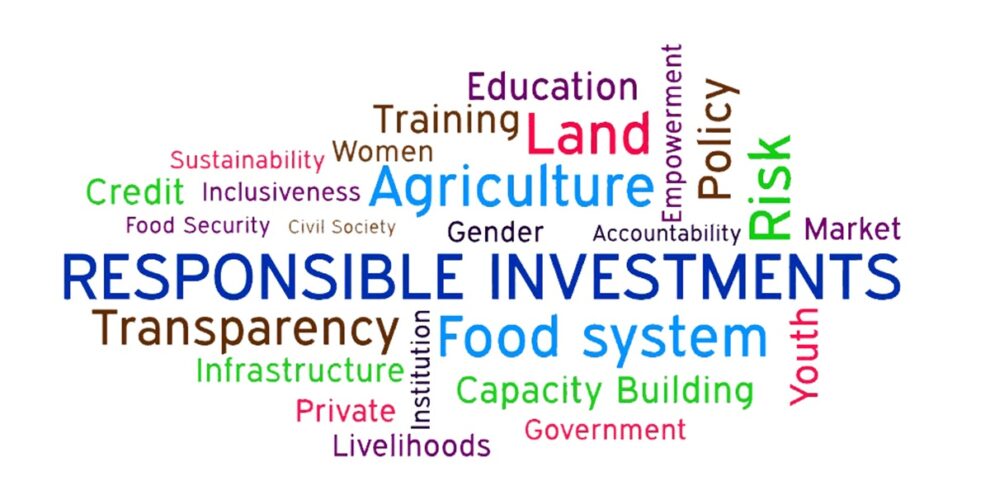
Investments are important to make agrifood systems more resilient, inclusive, and sustainable so they can feed a growing global population. The “Responsible Investment in Agriculture and Food Systems” e-learning series conceptualises investment as a holistic and ethical process that goes beyond mere economic returns to encompass social inclusion, environmental sustainability, and long-term development outcomes.
The course is designed for beginners to intermediate learners, making it accessible to individuals with basic knowledge of agriculture, development, or policy, while still offering valuable insights for advanced learners. It follows an asynchronous learning approach, allowing learners to progress at their own pace without fixed schedules. This flexibility makes it suitable for working professionals, students, and extension practitioners.
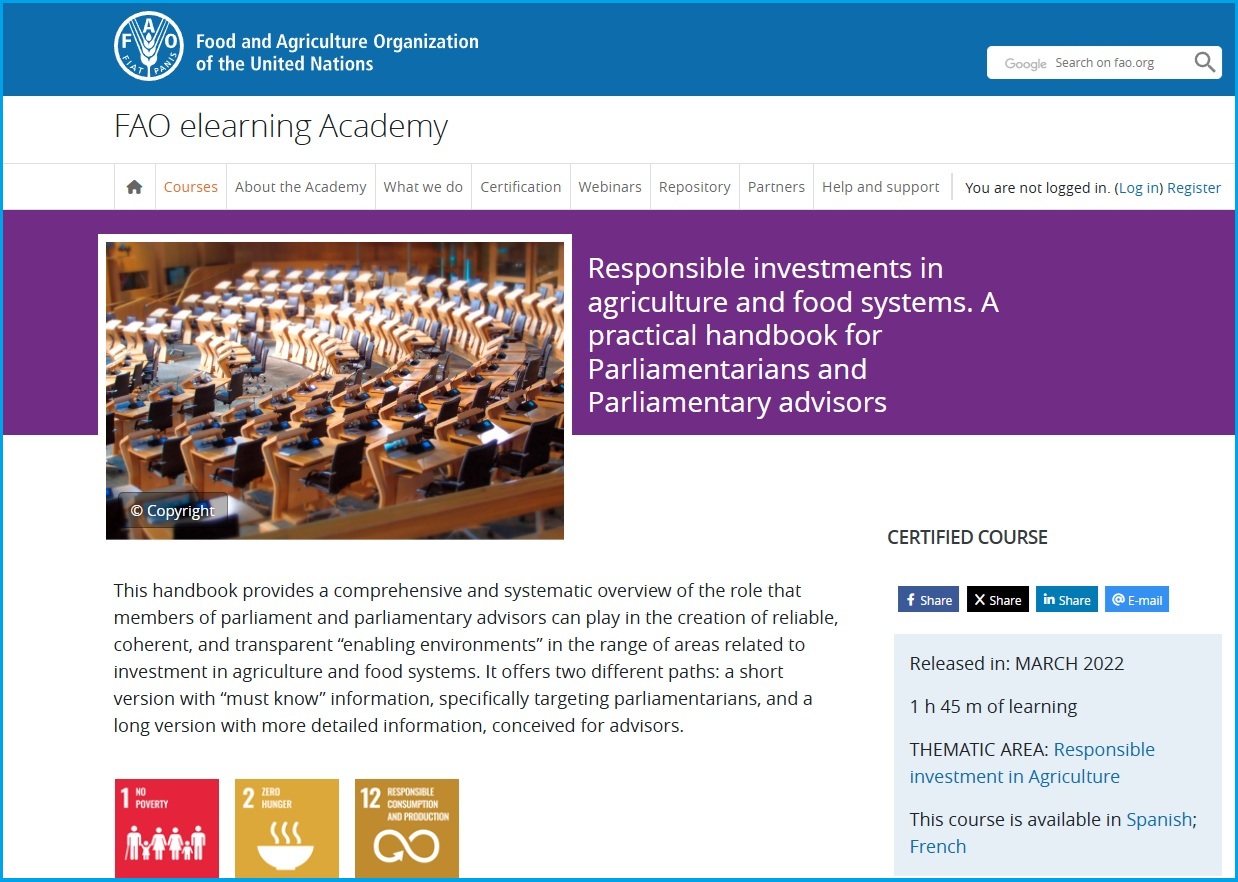
The course series is well-structured into 10 thematic courses covering key areas such as principles of responsible investment, governance mechanisms, enabling environments, and inclusion of youth and women. Each course consists of reading materials and quizzes that reinforce conceptual understanding. The content is logically sequenced, enabling gradual learning. While peer interaction is limited, the structured design and supplementary resources ensure clarity and engagement.
 Course 1-Principle of responsible investment in the agriculture and food system:
This course emphasises that agricultural investments must enhance food security, nutrition, and inclusive growth while protecting human rights, smallholders, and marginalised groups. It promotes gender equality, women’s empowerment, youth participation, and sustainable resource management, while respecting cultural heritage. Transparency, accountability, and good governance are key to ensuring investments are economically viable, socially responsible, and environmentally sustainable.
Courses 2, 3, & 4-Creating an enabling environment for responsible investment in agriculture and food systems (Fundamentals, Analysis, and Reforms):
These three courses highlight that an enabling environment should be grounded in policy coherence, transparency, inclusiveness, and effective institutional mechanisms.
The Fundamentals course introduces core principles and stresses the need to align policies to ensure a stable investment framework.
The Analysis course emphasises transparency, trust, risk reduction, accountability, and inclusive participation.
The Reforms course focuses on strengthening legal frameworks, aligning with food security and sustainable goals, protecting rights, and promoting responsible practices. It also underlines coordination among agencies.
Course 5-Empower youth to engage in responsible investment in agriculture and food systems:
This course highlights barriers faced by youth in agriculture and stresses supportive policies, skills, and technology access to empower them in building sustainable ventures.
Course 6-Supporting young agri-entrepreneurs with responsible agricultural investment projects:
This course provides a comprehensive understanding of responsible investment, focusing on youth empowerment, stakeholder roles, and mentorship to develop sustainable agribusinesses.
Course 7-Empower women to engage in responsible investment in agriculture and food systems:
This course addresses challenges faced by women in agriculture and promotes policies, resources, and inclusive decision-making to enhance their participation and productivity.
Course 8-Screening for responsible investment in agriculture and food systems:
This course stresses the importance of government regulation, screening, and due diligence to ensure transparent, accountable, and responsible investments.
Course 9-Responsible investment in agriculture and food systems – targeted to the private sector:
This course highlights the role of the private sector in aligning investments with CFS-RAI principles to achieve sustainable, inclusive, and ethical agri-food systems.
Course 10–Responsible investments in agriculture and food systems. A practical handbook for Parliamentarians and Parliamentary advisors:
This course emphasises the role of parliamentarians in shaping policies, ensuring accountability, and promoting inclusive, gender-sensitive, and sustainable agricultural investments.
These courses include module-wise quizzes to assess learners’ understanding of key concepts. A minimum passing score (generally around 70–80%) is required to complete each course. Learners must complete all modules and quizzes to receive the certificate. These courses are easily accessible, with no strict deadlines, allowing participants to complete them at their convenience.
By enrolling in this course, I have gained a holistic understanding on the importance of investments in agriculture grounded in sustainability, inclusiveness, and the balance between profit, people, and the planet. The e-learning series highlighted the importance of an enabling environment for ethical investments, which necessitates strong policies, legal frameworks, and institutional coordination. I also learned how critical it is to empower youth and women by addressing the barriers they often face, such as access to land, finance, skills, and technology. The courses also deepened my understanding of transparency, accountability, and screening mechanisms to ensure investments are responsible and beneficial. A key point is the important role of stakeholders, including governments, the private sector, civil society, and parliamentarians, in building sustainable agri-food systems.
Having a good understanding of investing in agri-food systems is crucial for development professionals as it directly shapes food security, livelihoods, sustainability, and inclusive growth. Learning this topic through a course like this will help enhance the capacity to evaluate, design, and promote investments that are not only economically viable but also socially equitable and environmentally sustainable, ensuring the long-term resilience of the agri-food sector.
I strongly recommend these courses to Master’s and PhD scholars pursuing social science topics such as agricultural extension, rural development, agricultural economics, public policy, development studies, etc., and those working in the development sector focusing on promoting agriculture and livelihoods.
 Shaktiranjan Das is a PhD scholar in agricultural extension at Visva-Bharati University. His doctoral research focuses on the agripreneurial ecosystem. He can be reached at shaktiranjandas92@gmail.com.

Add Comment