


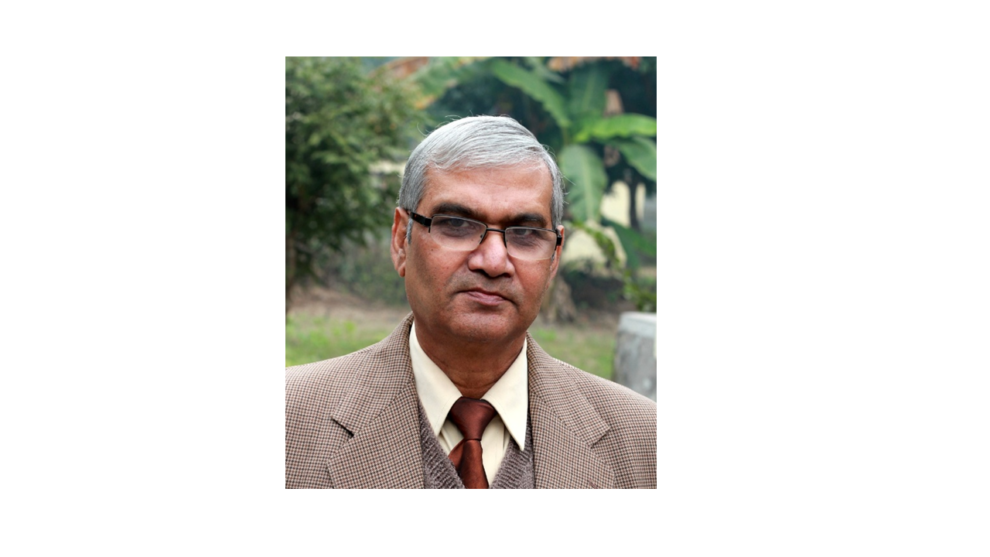
IN LOVING MEMORY OF DR BIRENDRA KUMAR
(1 June 1953 – 6 February 2026)
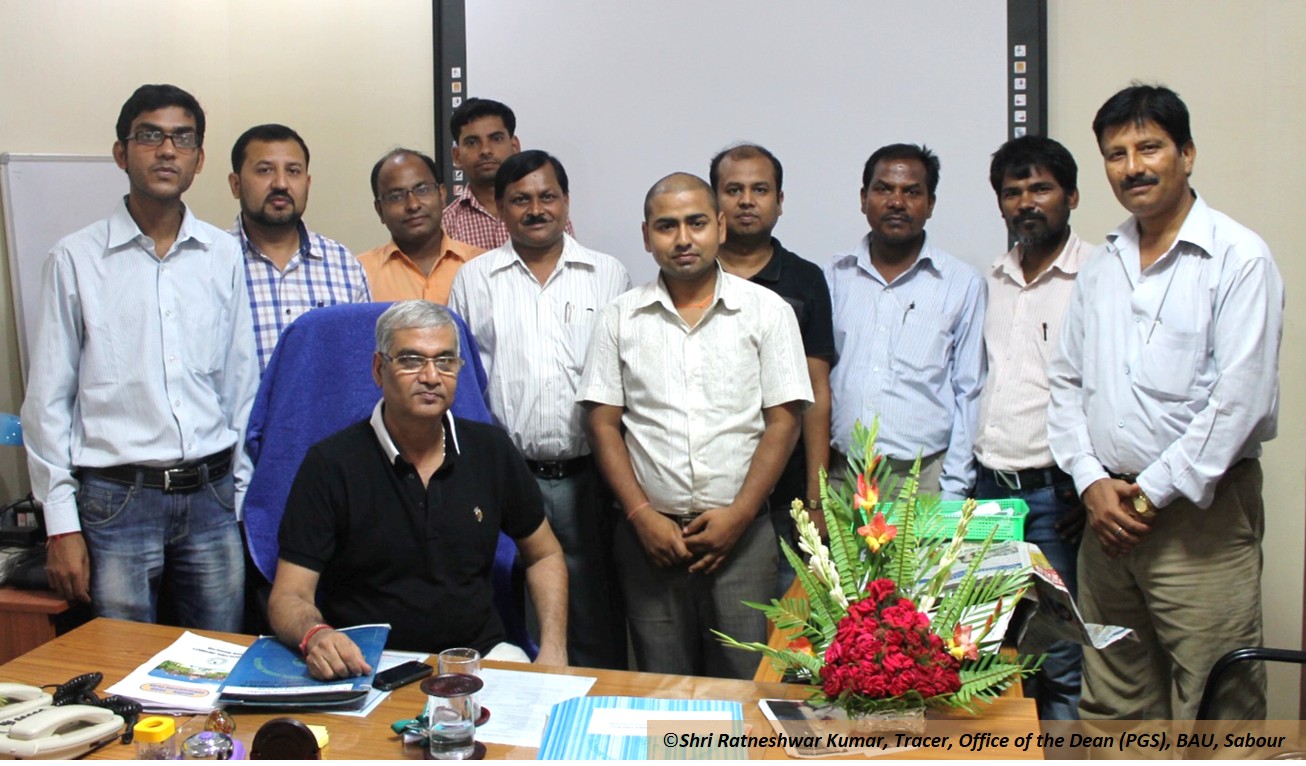
Dr Birendra Kumar, born on 1 June 1953 in Sitamarhi district of Bihar, lived a life devoted to teaching, learning, and service until his passing on 6 February 2026. He was not only a distinguished academic and administrator but, above all, a true teacher in the most profound sense of the word. For me, he was much more than a senior colleague; he was a mentor, a guide, and a constant source of inspiration. I had the privilege of working under his leadership after joining Bihar Agricultural University, Sabour, as an Assistant Professor in 2012, when he was serving as Chairman of the Department and Dean of Postgraduate Studies. His wisdom and values have profoundly shaped the last fifteen years of my professional life.
Dr Kumar completed his Bachelor’s degree in Agriculture from G. B. Pant University of Agriculture & Technology, his Master’s degree from Rajendra Agricultural University (now Dr Rajendra Prasad Central Agricultural University, Pusa), and his PhD in Agricultural Extension from B.R. Ambedkar Agra University as an in-service candidate. His academic journey reflected his lifelong commitment to learning and self-improvement. He often reminded us that degrees were only milestones, not destinations, and that real scholarship was a continuous process.
He began his professional career in 1979 as a Training Associate at the Ramkrishna Ashram Krishi Vigyan Kendra in Nimpith. He frequently spoke to me about how deeply the KVK’s practical, farmer-oriented training system influenced his thinking. It was here that he developed his conviction that education must be rooted in reality and social responsibility. He believed that a teacher should never be disconnected from the lives of the people they seek to serve.
After KVK Nimpith, he joined Rajendra Agricultural University as an Assistant Professor in Extension Education and later moved to G. B. Pant University as an Associate Professor in Agricultural Communication. Despite professional uncertainties in his early career, he never lost faith in his calling. He once shared with me how hesitant he was while applying for an Associate Professor position with only a Master’s degree, and how encouragement from his mentors strengthened his resolve. At Pantnagar, he flourished as a teacher and leader, serving as Professor and Head and initiating postgraduate programs in agribusiness management that transformed many young lives.
Later, driven by his deep emotional attachment to Bihar and his passion for institutional development, he joined Bihar Agricultural University, Sabour, as Dean of Postgraduate Studies. During his tenure, he worked tirelessly to strengthen academic systems and postgraduate education. Even after retirement, he continued to serve as Scholar-in-Residence at Dr Rajendra Prasad Central Agricultural University, Pusa, demonstrating that for him, teaching was not a job but a lifelong mission.
Dr Kumar always regarded himself primarily as a teacher. He repeatedly expressed his wish to be remembered not as a Dean, Director, or Administrator, but simply as a teacher. He believed that teaching was the noblest profession, one in which there is nothing to hide and everything to share. According to him, a classroom should be a space of trust, openness, and moral integrity, where students feel free to speak without fear or hesitation.
In 2012, he established the Centre of Excellence in Teaching and Learning at Bihar Agricultural University. This was one of his most visionary initiatives. Through “Teaching Circles,” he brought together interested faculty members to experiment with new pedagogical approaches. I was fortunate to coordinate many of these meetings and learn directly from his reflections. He treated these sessions as laboratories of learning, where mistakes were welcomed, and improvement was celebrated.
He encouraged us to adopt innovative methods such as flipped learning, blended learning, multimedia teaching, and gamification at a time when these ideas were still unfamiliar to many. I vividly remember how he motivated us to collaborate with the Media Centre and experiment with digital tools long before such practices became common. He believed that teachers must never hesitate to try new approaches if they genuinely care about student learning.
Dr Kumar had deep compassion for students. He never judged them by examination scores alone. He often told me that a student who struggles in class may become an excellent practitioner if given the right environment. He invested special effort in mentoring such students, helping them discover their strengths and build confidence. Many of his former students today stand as living examples of his faith in human potential.
One of his most remarkable qualities was his mastery of communication. He had an extraordinary sensitivity to language and expression. He used to explain to me how words such as “happy,” “glad,” “pleased,” and “thrilled” carried different meanings and emotional tones. He prepared handwritten notes on such nuances and tested them in classrooms. On several occasions, he took me to his undergraduate classes or attended my classes to show how students responded differently to carefully chosen words. These experiences remain among my most valuable professional lessons.
He was a firm believer in facilitative teaching. He emphasised listening, observing, questioning, and reflective thinking as core teaching skills. According to him, effective learning involved entering the classroom with purpose, opening up minds, organising content thoughtfully, stimulating curiosity, and providing meaningful closure. He practised these principles with remarkable consistency and encouraged us to do the same.
Dr Kumar also gained valuable international experience as a Visiting Professor at Haramaya University in Ethiopia. He often narrated how academic programs were designed through stakeholder consultations involving farmers and community representatives. He admired their seriousness about accountability and public funds. These stories enriched our understanding of participatory education and governance.
In his later years, he developed a keen interest in educational technology. He firmly believed that technology could transform learning and extension systems. We co-authored an article on generative AI in agricultural extension published in AESA, and I was amazed by how quickly he familiarised himself with emerging platforms. Despite his health challenges, he read extensively and provided insightful suggestions, reminding me that intellectual curiosity has no age.
Just ten days before his passing, I spoke with him over the phone. He advised me to write about Dr G. Trivedi, who had recently received the Padma Shri. The write-up was published in AESA last week. His voice was feeble, something I had never experienced before. I requested him to take care of his health. We also discussed our plan to organise a public speaking workshop for first-year and MBA students, a dream that now remains unfulfilled. That conversation remains deeply etched in my memory.
Dr Birendra Kumar was an asset to agricultural education and extension in India. He shaped institutions, nurtured teachers, empowered students, and upheld ethical leadership. For me, he was a constant source of guidance and encouragement, especially during difficult professional phases. His faith in me strengthened my confidence, and his lessons continue to guide my work.
His passing has created an irreplaceable void in my life and in the lives of countless students and colleagues across the country. Yet, his values, teachings, and compassion live on through those he mentored. He will always remain in our hearts as a “teacher’s teacher.”
May his noble soul rest in eternal peace.
Amen.
 Dr Aditya Sinha is an Assistant Professor (Agricultural Extension Education) at Bihar Agricultural University, Sabour, Bihar; Email: inc.aditya@gmail.com

Add Comment