
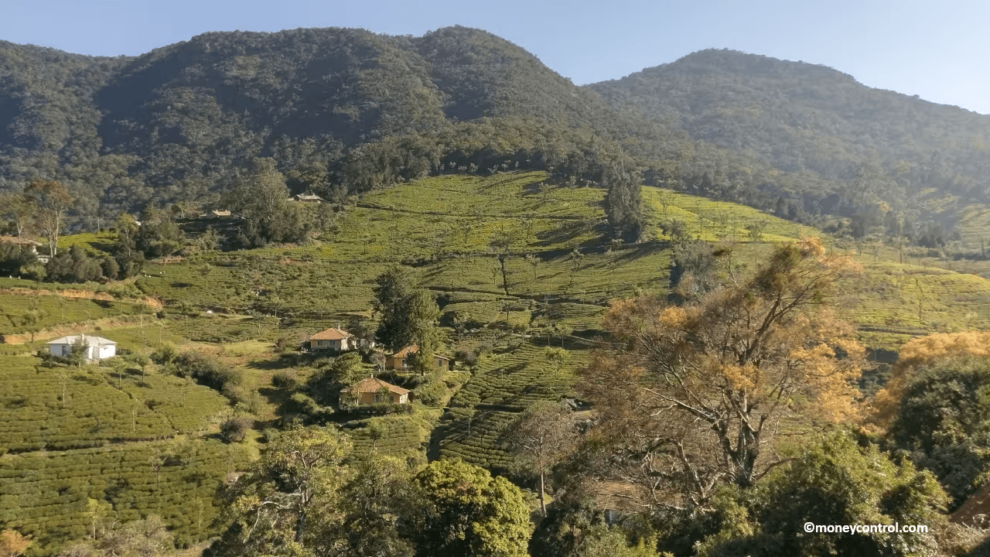
P Jaisridhar has been working in the Nilgiris since August 2024, and he thought he knew its landscapes well. A visit to Kinnakorai changed that. Tucked deep in the hills, hours from the nearest town, this village of 2,000 people had somehow remained invisible to the very systems designed to serve it. What he found there wasn’t a community in despair — it was one of remarkable vitality, held together by a rare social harmony and the stubborn advocacy of a single extraordinary man. Here he shares the story of that village, and of what he believes must still be done for it.
Context
There is a road in the Nilgiris that few government vehicles have ever taken. It winds past eucalyptus groves and cardamom estates, past waterfalls that have no names on any map. Follow it to its very end, and you arrive at Hiriyaseegai — Tamil Nadu’s last hamlet before the forest gives way to Kerala’s Attapadi in Palakkad District.
The village that contains this hamlet is Kinnakorai. Spread across ten hamlets — Melur, Aathatu, Appatti, Hosatti, Hiriyaseegai, Thaniyakandi, Aada, K.K. Nagar, J.J. Nagar, and Kamaraj Nagar — it is home to roughly 2,000 people who have lived and worked at the margins of administrative attention (Box 1). Their land is fertile. Their knowledge is ancient. Their tea is organic by tradition, not certification. Yet until recently, almost no line department had found its way here.
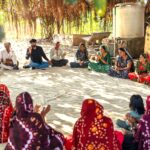
I visited Kinnakorai on a field trip I will not easily forget. What I found was not a village waiting to be rescued. It was a community quietly thriving on its own terms — held together by a rare social harmony, a deep connection to the forest, and the stubborn advocacy of one extraordinary man.
| Box 1: Ten Hamlets, Three Communities, One Village The upper hamlets — Melur, Aathatu, Appatti, and Hosatti — are home to the Baduga community, whose identity is deeply intertwined with organic tea cultivation. The middle hamlets, from Hiriyaseegai through J.J. Nagar, are home to the Irula and Kurumba tribal communities — forest-dwelling peoples whose primary livelihoods are honey collection and labour in the Baduga tea gardens. The southernmost hamlet, Kamaraj Nagar, is home to the Adi Dravidar community. Yet what struck me most about Kinnakorai was not its diversity, but its cohesion. There have been no communal clashes; relations between communities are cordial and rooted in genuine familiarity. This social capital, invisible to development planners, may be Kinnakorai’s greatest asset. |
THE MAN WHO WOULD NOT LET THEM BE FORGOTTEN
Mr Mega Belliappan is not a politician. He holds no government post. He is the President of The Nilgiri Organic Horticulture Farmers Association (TOHFA), and his currency is persistence. For years, he watched as Kinnakorai remained invisible in district development plans. Farmers grew organic tea — not by ideological choice, but because they had never used chemicals — yet received no premium, no market linkage, no institutional recognition for a product that urban consumers were increasingly paying a premium to obtain. He knocked on doors. He filed representations. He attended meetings that yielded nothing and returned for the next one anyway.
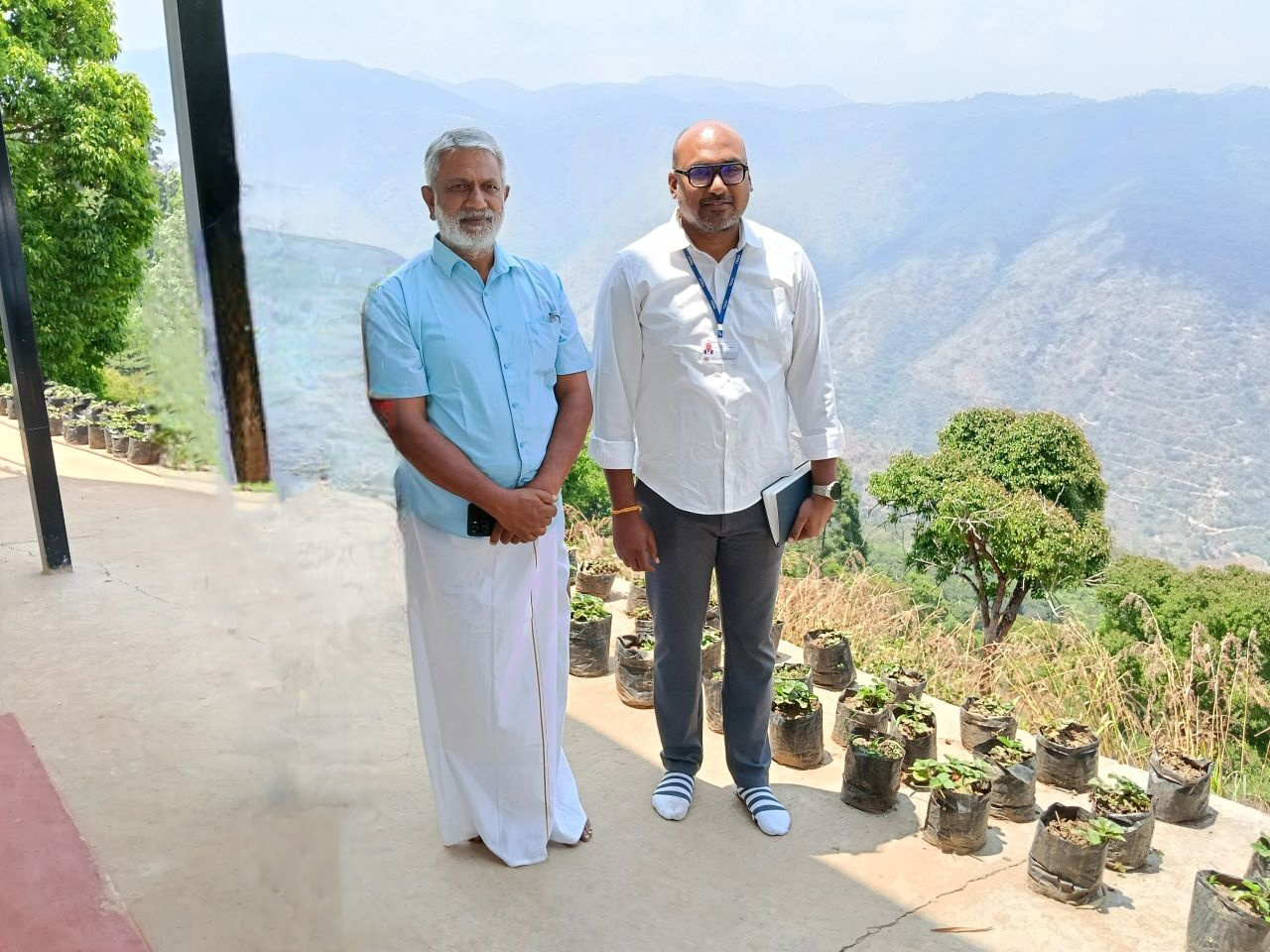
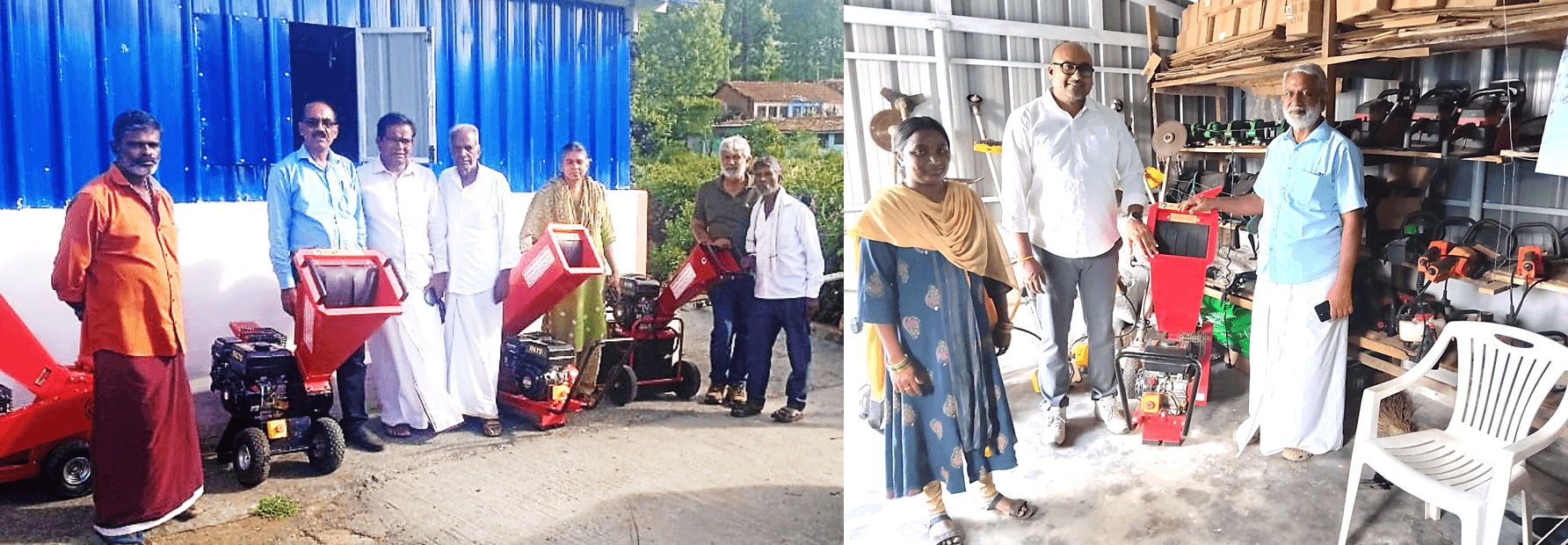
His persistence eventually bore fruit. In 2022-23, Kinnakorai was granted a Special Area Development Project focused on organic tea cultivation, with a budget sanction of Rs. 50 lakhs. With this funding, Belliappan established a Custom Hiring Centre in 2023, equipped with tools and equipment for tea cultivation and hill horticulture. For the first time, small and marginal farmers could access machinery they could never have afforded individually.
VOICES FROM THE FOREST EDGE: MEETING THE IRULAR CHIEF
Through Belliappan’s introduction, I had the privilege of meeting Mr Sugumaran, the Chief of the Irular tribe in Kinnakorai. The Irulas are among India’s most ancient tribal communities, carrying an irreplaceable archive of knowledge about medicinal plants, forest ecosystems, and honey harvesting. Yet like many tribal communities in the Nilgiris, they inhabit a precarious space between constitutional protections and developmental neglect.
Sugumaran observed with quiet dignity: “The government gave us a home. Now give us a livelihood to take.” His message was not one of bitterness — it was a statement of fact. The Indian state has acknowledged the Irulas’ right to land and shelter. But a house without a livelihood is an incomplete promise.
THE LAND THAT WAITS
Of the 680 acres of revenue land in Kinnakorai, only 400 acres are currently under active cultivation. The remaining 280 acres — nearly 41 per cent of the village’s agricultural potential — lies fallow. This is not laziness or lack of will. It is the arithmetic of neglect. Without adequate irrigation infrastructure and access to inputs, marginal farmers cannot risk expanding cultivation on land with no safety net.
Two specific and solvable challenges limit the village’s agricultural economy.
The first is market access. Kinnakorai’s tea — grown without chemical inputs, at altitude, with traditional knowledge — ought to command a premium in the organic market. Instead, most farmers are compelled to sell to INDCO, the village cooperative. INDCO is a lifeline, but it is the only option, leaving farmers with limited bargaining power and income.
The second is water and input infrastructure. During my visit, a farmer put it with a clarity no policy document could improve: “If I had a water harvesting structure and portable sprinklers, I could mix bio-fertilisers in the tank and use them for foliar spraying on my tea. I could also motivate others to follow the same practice.” The solution is not expensive. The technology exists. The knowledge to use it exists. What is missing is the intervention.
A VILLAGE IN THE BLIND SPOT
Kinnakorai’s continued marginalisation is not primarily a resource problem — Tamil Nadu is not a poor state, and the Nilgiris is not an under-resourced district. The problem is one of visibility. Villages that are difficult to reach, lack vocal political representation, and are populated by tribal and historically marginalised communities tend to fall through the gaps in development planning. They are known to exist and are therefore assumed to be taken care of.
Kinnakorai has fertile land, organic produce, a cohesive social fabric, and a demonstrated capacity to use institutional support productively. The Custom Hiring Centre is proof of that capacity. What the village needs now is sustained attention — from the district administration, the agricultural department, NGOs working in tribal development, and the CSR ecosystem, which is increasingly interested in community-rooted organic supply chains.
WHAT ONE MAN’S ADVOCACY CAN — AND CANNOT — DO
It would be wrong to frame this story as a triumph of individual agency alone. Belliappan’s advocacy secured a crucial intervention — but it should not have taken one man’s relentless effort over many years to secure what is, by any measure, a basic development entitlement for an agricultural community.
The systemic failure here is one of participatory planning. Had Kinnakorai been included in routine block-level agricultural planning — had tribal communities been brought into gram sabha discussions with adequate facilitation — the village’s needs would have been identified and addressed years earlier. Extension systems like KVK Nilgiris are well-positioned to bridge this gap through Participatory Rural Appraisal methodologies that document community priorities through direct engagement rather than top-down assessment.
THE ROAD TO HIRIYASEEGAI
Before I left, Belliappan took me along the road that winds toward Hiriyaseegai. The drive is short in distance and long in sensation — the landscape shifts from cultivated tea gardens to dense shola forest within minutes, and the air carries the particular coolness of altitude mixed with the smell of things growing in the absence of human intervention.
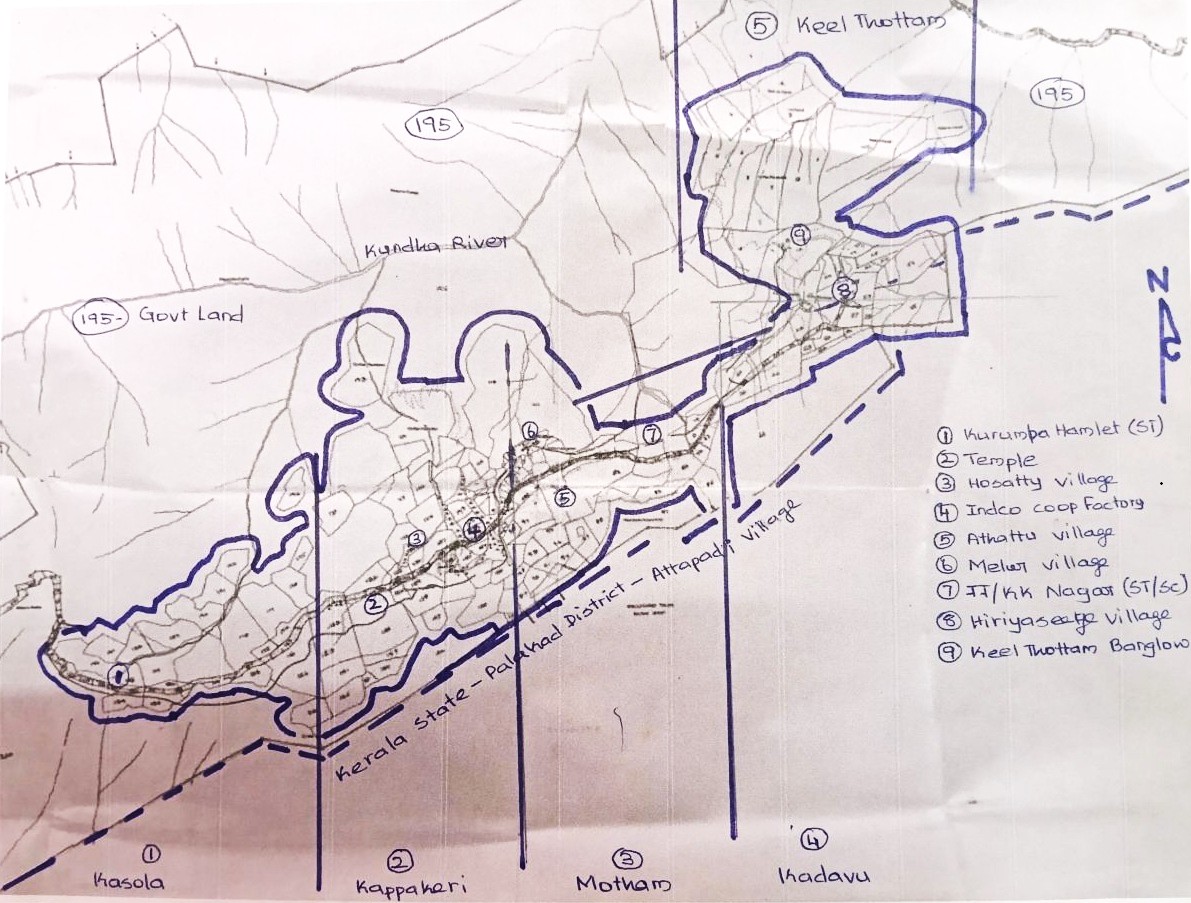
At Hiriyaseegai, the road simply stops. Beyond it, Tamil Nadu ends. A few kilometres further, Kerala’s Attapadi begins — another district, another state, another set of promises half-kept to tribal communities. Hiriyaseegai may be the last hamlet of Tamil Nadu in this direction. But it must not be last in any other sense — last to receive services, last to benefit from agricultural investments funded by taxes these communities too contribute, in their own way.
FROM A SOCIAL MEDIA POST TO THE BOARDROOM: THE STORY CONTINUES
Some stories don’t end with a visit. They begin with one.
When I wrote about Kinnakorai, I did not imagine the article would travel beyond the usual readership of agricultural extension circles. I was wrong. The story found its way to Mr Dhritiman Deka, Development Officer, Tea Board of India, Coonoor, who reached out after reading it, asking for the contact of the man behind Kinnakorai’s quiet revolution. That man was, of course, Mr Mega Belliappan — President of The Nilgiris Organic Farmers Association and a valued member of the Scientific Advisory Committee of KVK Nilgiris.
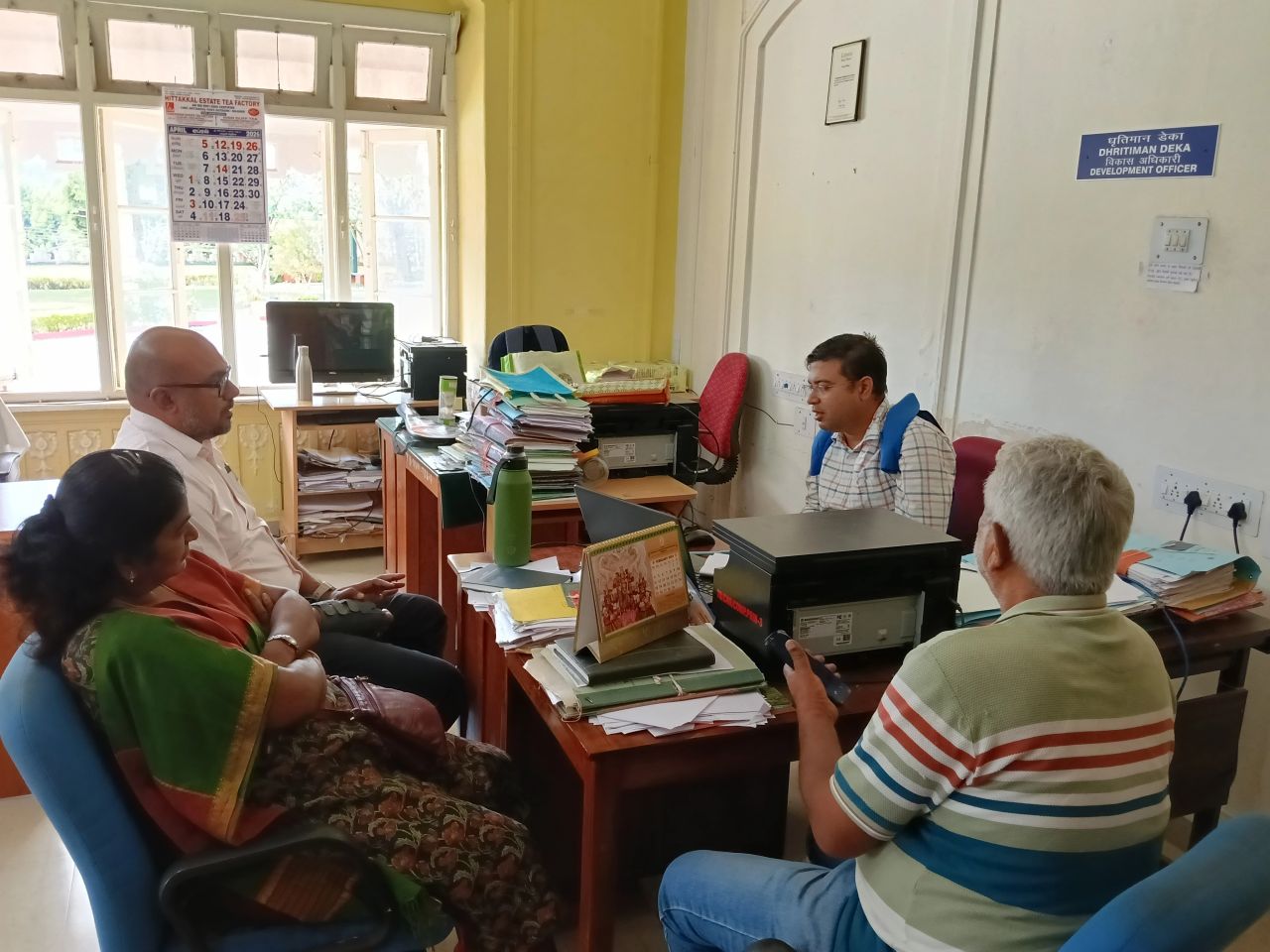
What followed was a masterclass in perseverance. Belliappan didn’t wait. He followed up with the Tea Board — again and again — on organic tea certification for Kinnakorai’s farmers. He updated KVK Nilgiris at every step. He didn’t complain. He didn’t give up. He kept knocking on the door until the system finally opened it.
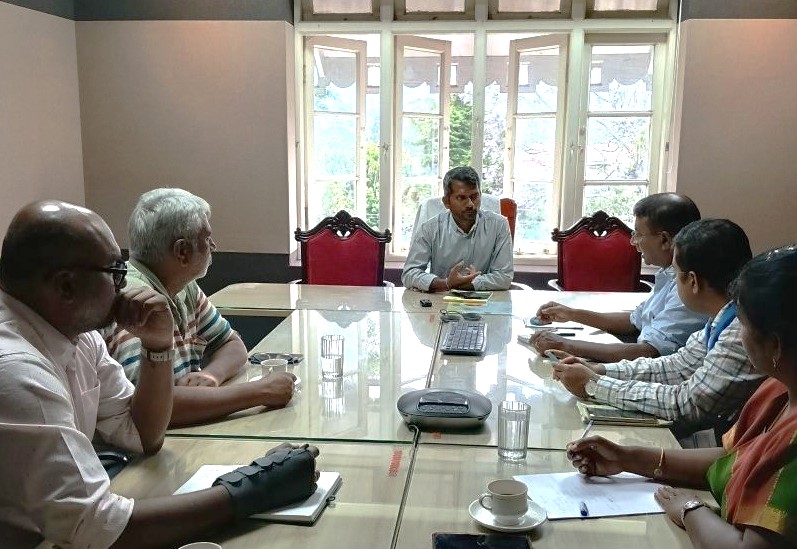
His relentless follow-up led to something remarkable: the Tea Board of India invited scientists from KVK Nilgiris for a joint sitting. My colleague (SMS — Entomology) and I visited the Tea Board office in Coonoor. We held a formal discussion with Mr M. Bharani Kumaar, IAS, Executive Director, Tea Board of India, on organising a collaborative capacity-strengthening programme on Organic Tea Cultivation. This multi-stakeholder initiative, when realised, will benefit tea-growing farmers across the entire Nilgiris district.
All of this — because one farmer refused to be silent.
| “Most farmers who visit KVK come, share their problems, and wait. When nothing happens immediately, they complain. That is human. But Mega Belliappan chose a different path — the path of consistent follow-up, trust in the system, and belief that development is earned through action, not just expectation.” |
KVK Nilgiris is proud to recognise Mr Mega Belliappan for his unwavering determination, his trust in public institutions, and his commitment to his community. His journey is proof that sustainable development is not a gift given by institutions — it is a space created by individuals who refuse to stop trying.
Kinnakorai’s story is no longer just about one village at the edge of Tamil Nadu. It is becoming a model for what grassroots advocacy, institutional collaboration, and farmer leadership can achieve together. The journey ahead is long. But it has truly begun.
WHAT I BELIEVE NEEDS TO BE DONE
Based on my visit and interactions with farmers, tribal community members, and local leaders — and informed by the encouraging response from the Tea Board — I want to put forward the following as personal recommendations:
- Link organic tea to better markets. I urge the district administration and TNAU to facilitate transport aggregation and direct linkage with certified organic tea buyers. The opening of dialogue with the Tea Board of India is a promising first step — it must now be translated into formal certification and market access for Kinnakorai’s farmers.
- Invest in water harvesting. I would strongly recommend constructing farm ponds and community water harvesting structures in the upper hamlets. The fallow 280 acres will remain fallow until farmers have the water security to risk cultivating it.
- Strengthen the Custom Hiring Centre. I feel that portable sprinkler systems should be added to the existing Centre as a priority, along with hands-on training in bio-fertiliser preparation and foliar application.
- Formalise tribal livelihoods. I believe Irula and Kurumba honey collectors should be registered under GI-tagged forest produce schemes without further delay. Forest Rights Act claims for community forest resource management must also be expedited.
- Bring Kinnakorai into participatory planning. I strongly feel that facilitated PRA exercises should be conducted in Kinnakorai, with deliberate representation of all four communities. A village should never again have to wait for one individual’s advocacy to get on a planning map.
- Develop fallow lands through convergence. I would advocate prioritising the unutilised 280 acres through MGNREGA-funded land development, soil health restoration, and agroforestry integration under tribal sub-plan provisions.
END NOTE
I returned from Kinnakorai having learnt more in a single day than many conference sessions yield in their entirety. The village taught me what extension workers must never forget: that communities at the geographical margins are not peripheral to development — they are its unfinished business.
Mr Mega Belliappan walked me to my vehicle as the afternoon light turned the tea gardens golden. “The village has everything it needs,” he said, looking out over the valley. “We just need people to look.”
It is time to look.
And increasingly, people are.
 Dr P. Jaisridhar is an Assistant Professor and Subject Matter Specialist in Agricultural Extension at ICAR-Krishi Vigyan Kendra (KVK), Nilgiris, Tamil Nadu Agricultural University. His research focuses on tribal and marginalised farming communities in the Nilgiris region, on the participatory rural appraisal methodology, on digital agriculture extension, and on climate-resilient farming systems. He has international exposure through Cornell University, IFPRI, IWMI, JICA, and the World Vegetable Centre. Contact: jaisridhar@tnau.ac.in

Add Comment