

In this meeting note, Shikhakrati Negi reflects on her participation in the 1st Johar Shauka Youth and Business Conclave.
CONTEXT
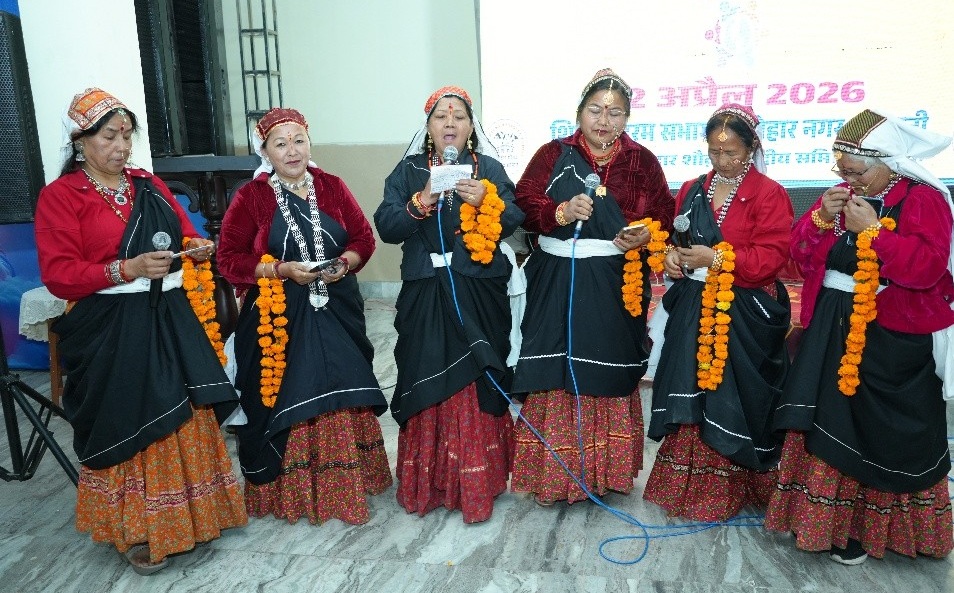
Johar Shauka Kendriya Samiti (JSKS) is a registered society established in 2012 as the apex body representing the Shauka community of Johar–Munsyari (Box 1). The organisation works to coordinate and guide various Shauka institutions and associations towards the community’s collective welfare and development. The Johar Shauka Kendriya Samiti (JSKS) organised its First Johar Shauka (Box 1) Youth and Business Conclave 2026 on April 12 in Haldwani, Uttarakhand, to bring together local youth, elders, market actors, and institutions as co-thinkers and co-creators to generate ideas and solutions grounded in real lived experience.
|
Box 1: Johar Shaukas? |
At the core of this day of thoughtful dialogue and collective brainstorming lay a deceptively simple yet profound question: how can a community with such rich knowledge and deep-rooted identity chart a path toward economic self-sufficiency on its own terms? Through a mix of inspiring talks, personal journeys, and open dialogue, the conclave went beyond discussion.
Invited as a speaker on small animal husbandry opportunities and supporting government schemes, I drew on my extension and advisory background, including my work with the Sheep and Wool Development Board of Uttarakhand, to navigate the familiar terrain of sheep rearing, rabbit farming, and the allied wool and meat value chains shaping the regional economy. However, by the close, I had gained a richer understanding of the community’s deep-rooted traditions and the indigenous knowledge quietly sustaining the sector.
KEY CONVERSATIONS AT THE CONCLAVE
The conclave was structured around two sessions:
- The first session brought together speakers from public service, research, policy, and institutions alongside entrepreneurs and on-the-ground practitioners, each sharing perspectives and experiences.
- The second session opened into an interactive dialogue and brainstorming exchange of possibilities and opportunities.
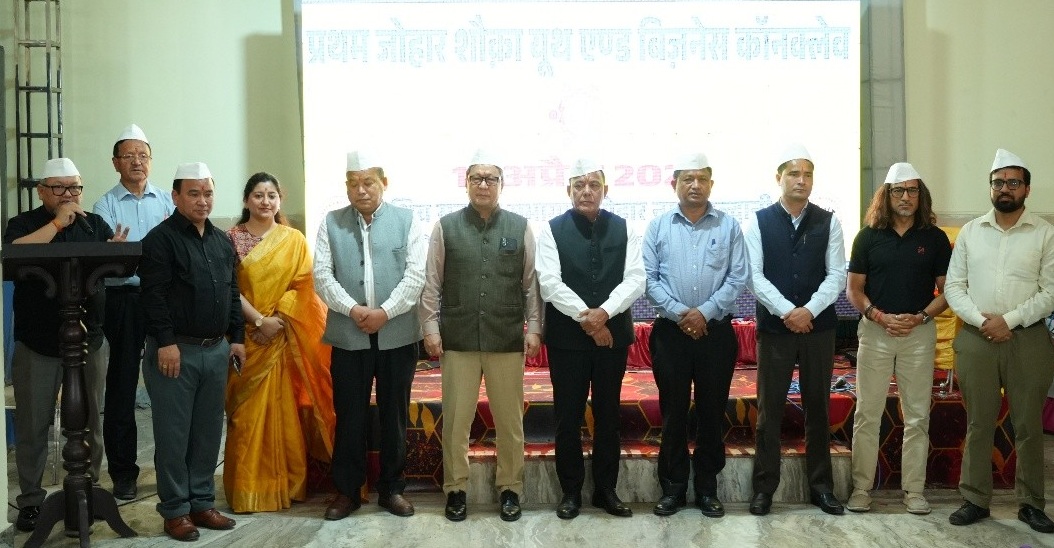
Key themes and ideas that emerged across both sessions:
- Rural Livelihoods & Enterprise: Scalable rural businesses through agribusiness, niche farming models, and value-added production systems suited to mountain geographies.
- Community Homestays: Family-run homestays built around Shauka cultural identity, history, and landscape as a model for tourism that keeps ownership and benefit within the community.
- Cold-Water Trout Farming: A concrete, underexplored opportunity well-suited to the Valley’s high-altitude rivers, deserving serious attention from both the community and supporting institutions.
- Organic Mountain Produce: Herbs, seeds, and grains that command premium prices in urban markets, with organic certification and direct market linkages as actionable next steps.
- Policy & Financial Ecosystems: How government schemes, financial support systems, and institutional frameworks shape what becomes possible at the grassroots and the real challenges of navigating them.
- Traditional Knowledge as an Asset: Practices long considered routine or residual within the community re-examined as genuine strengths, skills that are reframed and positioned effectively, carry significant value in contemporary markets.
MY TAKEAWAYS – LIVELIHOODS, SKILLS AND THE VALUE OF COMMUNITY KNOWLEDGE
In my presentation, I spoke of the opportunities available in small animal husbandry, particularly sheep and rabbit rearing and the range of government schemes that support these activities under various central and state programmes. I tried to be mindful that small animal husbandry in the Munsiyari region is not a standalone livelihood. The wool harvested from locally reared sheep feeds directly into a skilled craft tradition that the community has practised for generations. Households process the wool themselves, including scouring, carding, spinning, and dyeing, before weaving it into a Dann (hand-knotted woollen carpet with Buddhist motifs made using the Tibetan knotting technique) or a Thulma (thick handwoven woollen blanket). A single Dann takes nearly six weeks to complete and lasts 20 -25 years. The conversation about livestock, therefore, could not be separated from this larger craft and cultural ecosystem it sustains, which led to the possibilities and potential of reframing the Shauka artisans.
At the same time, listening to the other presentations expanded my own understanding of livelihood development in mountain communities. What stood out across the discussions was the deep interconnectedness of these sectors. Conversations around tourism, hospitality, fisheries, entrepreneurship, and rural enterprise all pointed toward the same larger reality: sustainable livelihoods in mountain regions cannot be approached in isolation. The discussions reinforced how local ecology, cultural identity, traditional knowledge, institutional support, and market access must work together for meaningful and lasting development to emerge. What also became evident was that the challenge is often not the absence of opportunity, but the ability to connect communities with systems, finance, training, and long-term support structures in ways that are accessible and locally relevant.
I suggested that skilled wool and carpet artisans from the community could be positioned not just as producers, but as master trainers. The knowledge they hold about fibre selection, loom construction, weaving technique, natural dyes, and quality assessment is precisely the kind of knowledge that vocational training institutions, self-help group federations, and skill development programmes struggle to source and pay well for. Rather than treating this as a local or marginal asset, the community could formalise and monetise it by:
- Training artisans from other regions
- Running structured skill transfer programmes
- Seeking accreditation under national skill development frameworks such as Pradhan Mantri Kaushal Vikas Yojana (PMKVY)
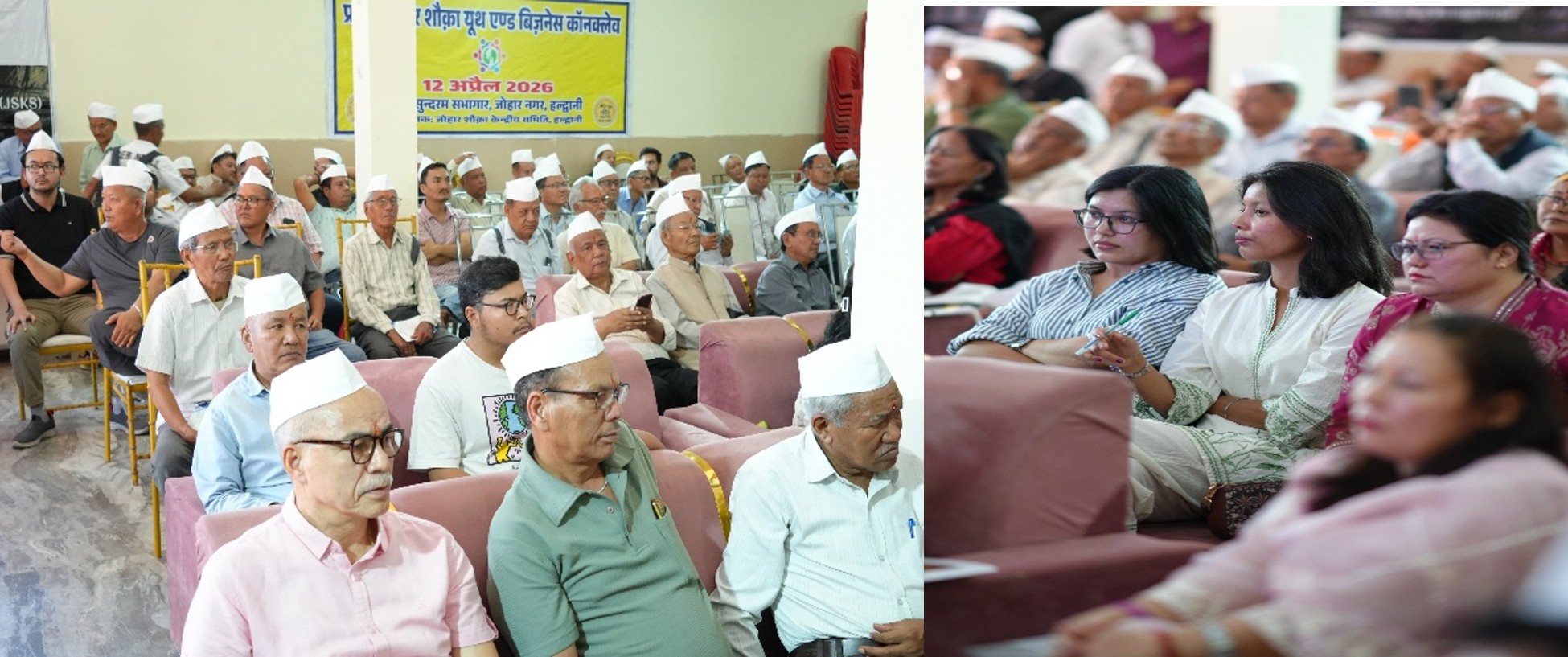
REFLECTIONS
The Johar Shaukas are not, as the discourse around tribal communities sometimes implies, a community in deficit, lacking skills, lacking resources, lacking vision. They are a community in transition, navigating the distance between what they have always known and what the contemporary economy seems to demand. The conclave made clear that what they need most is not new knowledge imported from outside, but a framework that makes their existing knowledge visible, valued, and viable.
I also found myself reflecting on the role of community-based organisations in extension work. With their limited funds (membership fee and periodic donations from members and the public at large), the JSKS has done something that government extension systems often struggle to do: it has created a trusted space where community members feel safe being honest about what is working, what is not, and what they actually want. Extension practitioners would do well to build more partnerships with such organisations rather than treating them as conduits for government messaging.
Finally, the intersection of cultural preservation and livelihood emerged as a theme I had not anticipated to engage with so directly. The traditions, such as weaving, are not merely economic activities. It is a carrier of identity, memory, and aesthetic sensibility. Any livelihood intervention that treats it purely as a production unit will miss what makes it irreplaceable and will likely fail to sustain community engagement over time.
CLOSING THOUGHTS
The idea of a master trainer is worth pursuing seriously. One concrete pathway is the Recognition of Prior Learning (RPL) mechanism under the Skill India Mission, which could allow Shauka artisans to be formally certified as trainers. The next steps would be to identify willing master artisans within the community and engage with training institutions to discuss what this might look like in practice.
I also intend to revise how I communicate government schemes in communities like this one. Presenting a menu of schemes and eligibility criteria is necessary but insufficient. What’s needed alongside it is a narrative that connects scheme benefits to specific livelihood identities. The insights I gained from fisheries and hospitality speakers were integral to understanding the full texture of opportunity in this landscape. Future advisory work in mountain tribal communities should routinely include such cross-sector conversations.
The exchange was also a reminder that information alone is rarely the bottleneck. A farmer who knows a scheme exists but cannot navigate its paperwork is no better served than one who has never heard of it. My real takeaway was about the communication architecture: who else needs to be in the room, how linkages with banking correspondents and government services must be built in from the start, and why follow-up handholding matters as much as the initial orientation.
The Johar Valley is a long way from the policy rooms where decisions about tribal livelihoods are made. The conclave was a reminder that the most durable extension is not the transfer of knowledge to communities, but the creation of conditions in which communities can extend their own knowledge outward, to markets, to institutions, and to a wider world that is only beginning to understand what it has been missing.
Acknowledgements
I am grateful to Shri Narendra Singh Jangpangi (IRS), President of the Johar Kendriya Shauka Samiti, for the kind invitation to be part of this landmark event. My sincere thanks to Dr Bhupendra Singh Jangpangi, Additional Director, Department of Animal Husbandry, Uttarakhand, and Dr G S Kharayat, CEO, Uttarakhand Sheep and Wool Development Board, for their confidence in placing me as a resource person at this platform. And finally, gratitude to the members of the Johar Shauka community for their warmth and hospitality.
 Dr Shikhakrati Negi is a Veterinary Officer working with the Uttarakhand Sheep and Wool Development Board, Dehradun, Uttarakhand. She can be contacted at shikhaknegi24@gmail.com
Add Comment