


In this blog, Abhishek Yadav shows how inadequate post-harvest extension support is leading to lower price realisation for farmers. He argues for extending advisory services beyond the farm to include post-harvest handling and quality management, giving them the same priority as pest and disease management.
CONTEXT
Most conversations about cumin farmers in India start and end in the field. How much did they sow? Did the rain come at the wrong time? Did blight or wilt take the crop? Those questions matter. But anyone who spends time in the cumin trade sees a second, quieter problem: a lot of the money a farmer could earn is lost after the crop has already been harvested.
I work in the cumin trade and source from the Unjha market in Gujarat, which is the main trading hub for Indian cumin. This blog is written from that side of the chain: what happens to a farmer’s crop between the threshing floor and the auction yard, and where I think extension work could make the biggest difference.
A CROP THAT IS RISKY EVEN BEFORE IT LEAVES THE FIELD
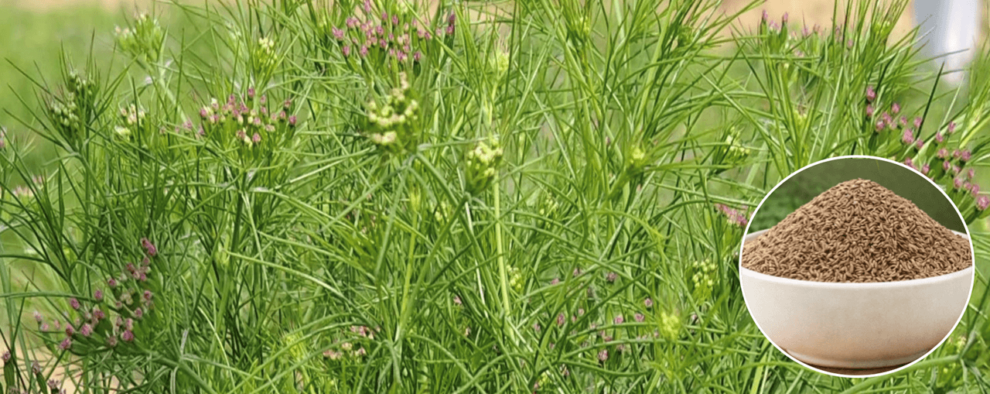
Cumin is India’s largest seed spice by area. According to a recent study in the International Journal of Seed Spices, it was grown on about 7.14 lakh hectares in 2022-23, with an average national yield of around 647 kg per hectare. Almost all of it comes from Gujarat and Rajasthan.
It is also a fragile crop. Alternaria blight, which spreads in humid conditions after flowering, can cause losses of up to 80% in bad years. Unseasonal rain or fog close to harvest can ruin the colour and aroma of the seed even when the plants survive. Farmers know this risk well, and most extension programmes rightly focus on it.
Advice on growing the crop reaches farmers through several channels: the Spices Board, state agriculture departments, the Krishi Vigyan Kendras (district-level farm science centres), farmer producer organisations, and the ICAR-National Research Centre on Seed Spices in Ajmer, which is mainly a research institution. Whether that support is enough on the production side is a fair question. My argument here is narrower: whatever is done for production, the weeks after harvest deserve at least the same attention.
But surviving to harvest is only half the story. What the farmer does next decides which price band the crop falls into.
WHERE THE VALUE LEAKS AFTER HARVEST
A useful piece of research here is a 2018 survey of 200 cumin-growing households in Rajasthan by K.J. Joseph and S. Mohanakumar at the Centre for Development Studies, titled Post-Harvest Issues in Seed Spices in India: The Case of Coriander and Cumin. A few of their findings match closely with what I see when lots arrive at the market.
Drying is done in the open
Every cumin farmer in the survey dried the crop in the sun. Only about 3.6% had received the Spices Board’s subsidised polythene sheets for drying, and around 77% did not know the scheme existed. Seed dried on bare ground picks up soil, stones and dust. That shows up directly in the buyer’s grading.
Cleaning is mostly manual
About 84% of farmers cleaned their cumin by hand. Machine cleaning and drying facilities were largely available only to traders. That means the value added by cleaning (moving a lot from a lower grade to a higher one) is captured by the trader, not the farmer.
Nobody tests quality
None of the surveyed farmers had their cumin tested. The main reason given was cost (88%), followed by distance. So, farmers sell without knowing the moisture, purity, or other parameters buyers use to set the price.
Most of the crop is sold at harvest, through intermediaries.
Around 80% of the produce was sold at harvest time, when prices are usually at their lowest. Nearly 80% went to traders and agents, and only about 2% was sold directly to wholesalers. Farmers who sold to local agents reported prices 20-30% lower than in the specialised market, and many were tied to traders through advances taken during the season.
Distance to the main market is a real barrier
For Rajasthan farmers, Unjha is 350 to 500 km away. The study found that transport costs often outweigh the price difference, so farmers sell locally even though better prices exist at the specialised market.
HOW THIS LOOKS FROM THE BUYER’S SIDE
When a lot of cumin reaches an exporter or processor, the questions are simple: what is the purity (often expressed as 99% or 99.5%), how much dust, stone and foreign matter is there, what is the moisture, and how does it look and smell? Colour, uniformity and aroma all affect the grade.
A farmer who dried the crop on a clean sheet, removed most of the dust and kept the moisture down will usually land in a better price band than a neighbour who grew an identical crop but handled it poorly after harvest. In my experience, the difference between those two lots is not luck. It is mostly knowledge and access to basic equipment.
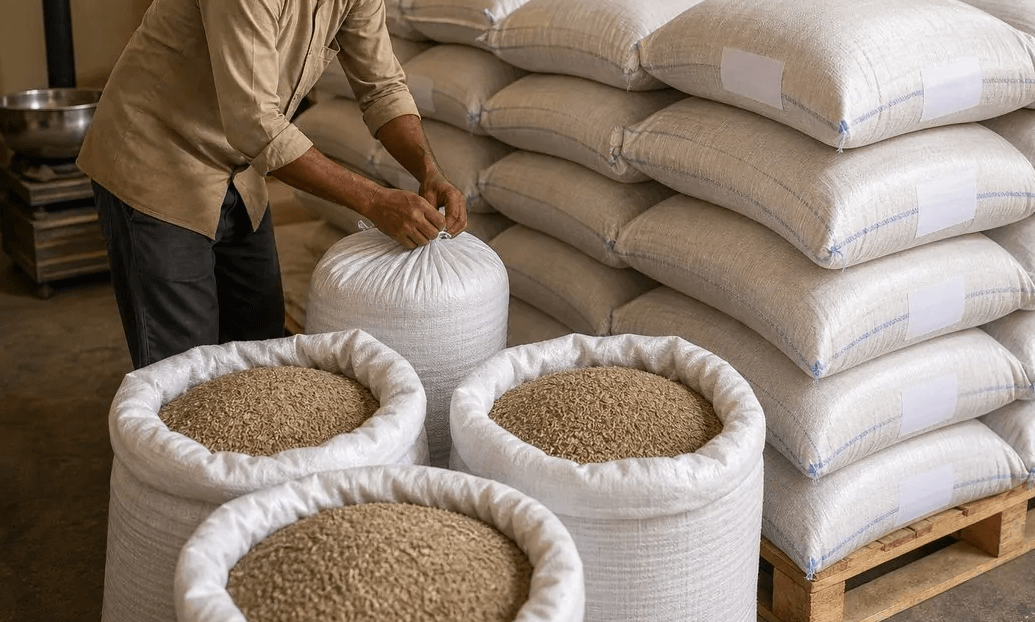
This is why I think post-harvest handling deserves as much extension attention as pest and disease management.
WHERE EXTENSION COULD MAKE THE BIGGEST DIFFERENCE
- Make drying and cleaning the default, not the exception: The Spices Board scheme for drying sheets already exists, yet most farmers in the survey did not know about it. Extension workers and Krishi Vigyan Kendras are well placed to close that awareness gap. Simple demonstrations showing the price difference between a sun-dried lot on bare ground and one dried on a sheet would make the case better than any leaflet.
- Teach farmers how buyers grade: Most farmers I have spoken to know their crop is “good” or “average”, but few know the actual parameters a buyer uses. Short sessions on purity grades, moisture limits and what causes a lot to be downgraded would help farmers decide whether it is worth cleaning further before selling.
- Bring basic testing closer to the village: If quality testing is too expensive and too far away, farmers will keep selling blind. Low-cost moisture meters and simple purity checks at the FPO or village-cluster level could give farmers bargaining power at the point of sale.
- Use FPOs to share equipment and reach better markets: The survey found that most farmers who used machines rented them. Farmer producer organisations can pool cleaning and grading equipment, aggregate volumes large enough to justify transport to a specialised market, and in some cases sell directly to exporters or processors. Examples already exist in Rajasthan of FPOs working with large buyers on cumin grown under integrated pest management. Extension services can help more FPOs build the quality systems such buyers expect.
- Help farmers avoid distress selling at harvest: Selling 80% of the crop in the weeks when prices are lowest is often a cash problem, not a choice. Storage advice (safe moisture levels, clean bags, pest prevention), combined with links to warehouse receipt and credit schemes, could let some farmers hold part of their crop until prices recover.
- Measure what changes: Extension programmes on post-harvest handling are easier to scale when the benefit is visible in rupees. Simple before-and-after records (the grade a concerned lot achieved, the price per quintal, the time spent on cleaning) would show farmers and funders whether drying sheets, shared cleaning machines or collective selling actually raise incomes. It would also help identify which interventions are worth the cost in each district, since conditions in Barmer are very different from those in Surendranagar or Kutch.
A note on my own position
I am a trader in this chain, so I have an interest in better quality cumin reaching the market. But I also think the current system leaves too much of the value of cleaning, grading and timing with intermediaries, simply because farmers lack small, practical pieces of knowledge and equipment. That is exactly the kind of gap extension services are good at closing.
Cumin will always be a risky crop in the field. What happens after the harvest does not have to be.
 Abhishek Yadav is the founder of Gadin Exports a cumin and seed spice exporter based in Gurugram that buys directly at the Unjha market in Gujarat. He has spent two years in the cumin trade. His first export shipment went to Ghana, and he is building export relationships with buyers in Africa. He checks every lot and its lab report before buying. (abhi.zlato@gmail.com)


Add Comment