
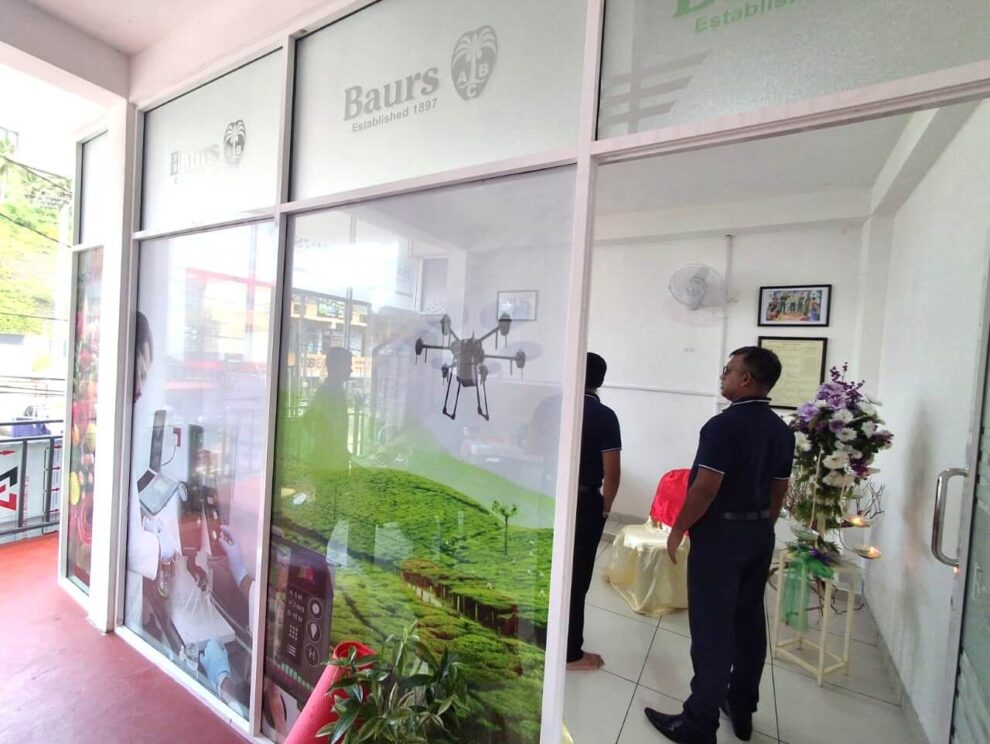
Baurs Techno Centre modernises Sri Lanka’s agricultural advisory by combining diagnostics, data, and extension. In this blog, Tharaka Jayasinghe describes how it provides farmers with an integrated path from problem detection to science-based solutions.
CONTEXT
Since its inception in 1897, the “Baurs” name has been synonymous with agriculture in Sri Lanka. A.Baur & Co. (Pvt.) Ltd., one of the oldest Swiss-owned companies in Sri Lanka, has played a pioneering role in establishing private advisory and extension services for the country’s plantation sector. From its earliest years (1901), Baurs focused on providing scientific, field-based guidance to major plantation industries, particularly tea and coconut in Sri Lanka (Box 1).
In an era where precision agriculture and evidence-based decision-making define the future of farming, traditional extension frameworks must evolve rapidly. Across South Asia, farmers continue to rely on advisory services for critical production decisions, yet many still lack access to reliable diagnostics, site-specific recommendations, and integrated service delivery.
Keeping these in view, the Baurs Advisory Service has taken a strategic leap forward by establishing a Regional Laboratory and Techno Centre, offering a replicable model for modern rural advisory systems. This initiative bridges the gap between field-level extension, diagnostic services, and input supply, creating a seamless pipeline from problem analysis to practical solution delivery.
| Box 1: A Baur and Co (Pvt. Ltd): Supporting data-driven decision-making by farmers In an era when scientific agronomy was still emerging in South Asia, Baurs took a forward-thinking step by bringing Swiss agronomists to Sri Lanka. These experts travelled across plantations, conducted soil testing, gathered field-level data, and worked closely with planters to improve crop productivity. Their recommendations were grounded in evidence, enabling plantation managers to optimise yield, enhance efficiency, and apply inputs more effectively. Baurs also played a foundational role in coconut research in Sri Lanka. The field trials and data-collection initiatives initiated by the company formed the basis for extensive research activities that were later absorbed into what ultimately became the Coconut Research Institute of Sri Lanka. From the inception of its organic and chemical fertiliser business in 1897, Baurs has remained committed to several core principles, including farmer education, encouraging farmers to adopt “data-driven decision-making” and their extension officers to continue providing farmer-centric advisory and extension services. Our advisory and extension professionals visit estates and farms, identify technical, economic, and business shortcomings, and provide guidance to resolve them so businesses can continue to operate profitably and sustainably. Farmers and planters are educated about Good Management Practices (GMP) and Good Agricultural Practice (GAP). The prime objective is to educate planters and farmers to maximise the efficiency of all inputs and increase the efficiency of factors contributing to the total productivity of the agri-business. Baurs’ agriculture mainly consists of fertilisers, plant protection, seeds, animal health, laboratory services, and advisory and extension services. There are several extension officers representing sub-sales areas of the district, and the majority of them regularly work with plantation crops such as Tea, Coconut, Rubber, and Cinnamon, and seasonally with Paddy, Maize, and Vegetable farmers. |
BAURS TECHNO CENTRE
Baurs Techo Centre is a regional small-scale laboratory situated next to the dealership to advise farmers who come to purchase agro-chemicals and fertilisers, or who want to diagnose nutrient deficiencies in soil, in leaf, soil pH, soil CEC level, and pest and disease. So farmers can buy the exact products (fertiliser or chemicals) they need for their crops without guessing or predicting. This approach has a high impact on farmer satisfaction because its solution accuracy is much higher than that of previous guessing approaches. It can reduce the need for unwanted fertiliser and agro-chemicals, reduce production costs for the farmer, and generate good profits due to increased efficiency and reduced costs.
Usually, we have main dealers, sub-dealers, distributors and end users. There are around 4 to 5 main dealers per district. This Baur Techno Centre mainly focuses on main dealers and sub-dealers, and distributors are encouraged to send soil and leaf samples to the main Centre for testing.
The Baurs Techno Centre (BTC) serves as a hub for localised diagnostics and personalised advisory support. Farmers can walk into the centre with soil and leaf samples, meet a trained extension officer, and immediately access critical decision-making tools. This is our first BTC in Sri Lanka, and we plan to expand throughout the plantation crops area in 2026. The nature of support provided at these centres is as follows:
On-Site Soil pH Diagnostics
Farmers bring soil samples directly to the Techno Centre, where extension officers conduct instant pH testing. This enables:
- Rapid identification of soil acidity/alkalinity constraints
- Immediate correction strategies
- Timely liming and fertiliser recommendations
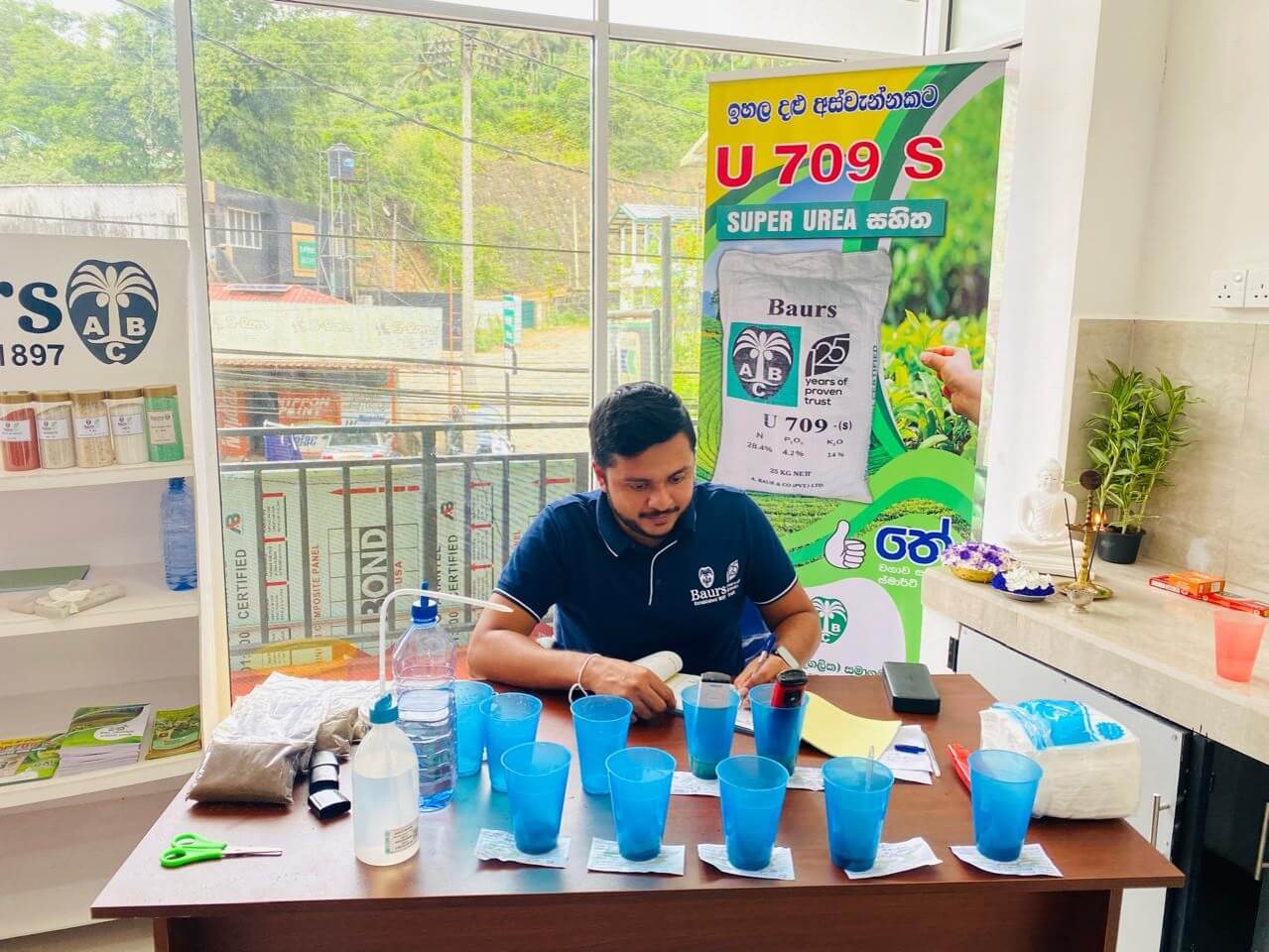
This direct engagement empowers farmers to understand their soil status in real time. Also, extension officers can recommend or advise farmers on the appropriate methodologies or products to use. This diagnostic laboratory is always situated near a fertiliser and agro-chemical shop. So, he can quickly buy the product (solution). So, this integrated approach fulfils marketing, sales and private advisory objectives while maintaining the highest level of farmer (customer) satisfaction. Because the use of highly accurate data for decision-making and product selection directly impacts higher farmer satisfaction. This satisfaction encourages repeat buying and repeat visiting; in the end of the day, it creates a great brand name Baurs (ultimate objective of Baurs Extension is to strengthen the Baurs Brand within farming communities).
Central Laboratory Support for Detailed Testing
For advanced nutrient analysis, the Techno Centre follows a hub-and-spoke model:
- The extension officer collects and codes the farmer’s soil sample.
- Samples are dispatched to the Baurs Central Laboratory in Kelaniya, equipped for macro/micro-nutrient testing.
- Results are interpreted by agronomists and relayed back to the farmer via the local extension officer.
This workflow ensures scientific accuracy while keeping diagnostics accessible in rural regions. For farmers with 10 -50 acres of land area cultivation, we conducted soil nutrients analysis, leaf testing (e.g., coconut), and then our extension officers can precisely identify the real nutrient needs for the land. They develop site-specific fertiliser mixtures for farmers. The extension officer communicates this fertiliser mixture to the fertiliser blending factory. Then, products reach farmers as customers blend with site-specific recommendations, enabling us to deliver the highest satisfaction for farmers. (If the extension officer gives common recommendations which will not provide correct results for farmers, there is no satisfaction, no business continuation.)
Leaf Analysis and Crop-Specific Diagnostic Services
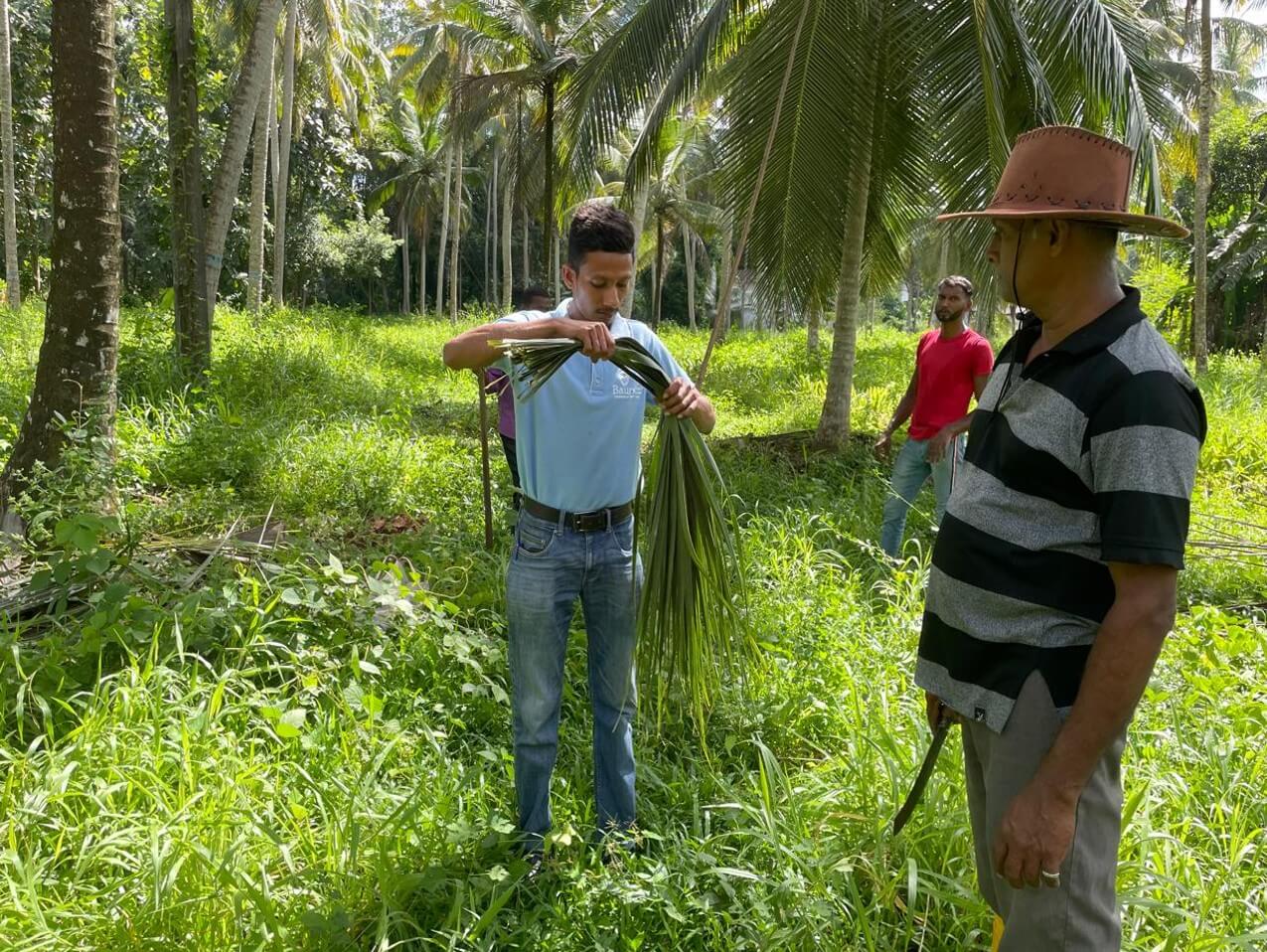
The Centre offers specialised tests critical for perennial crops in Sri Lanka:
- Tea leaf nutrient testing
- Tea starch testing for pruning decisions
- Coconut leaf nutrient testing
These tests provide precise insights into crop nutrient dynamics and help determine pruning timing, fertiliser adjustments, and canopy management practices. Most of the time, we use the central laboratory support for these services.
Field-Based Advisory: Personalised and Continuous Support
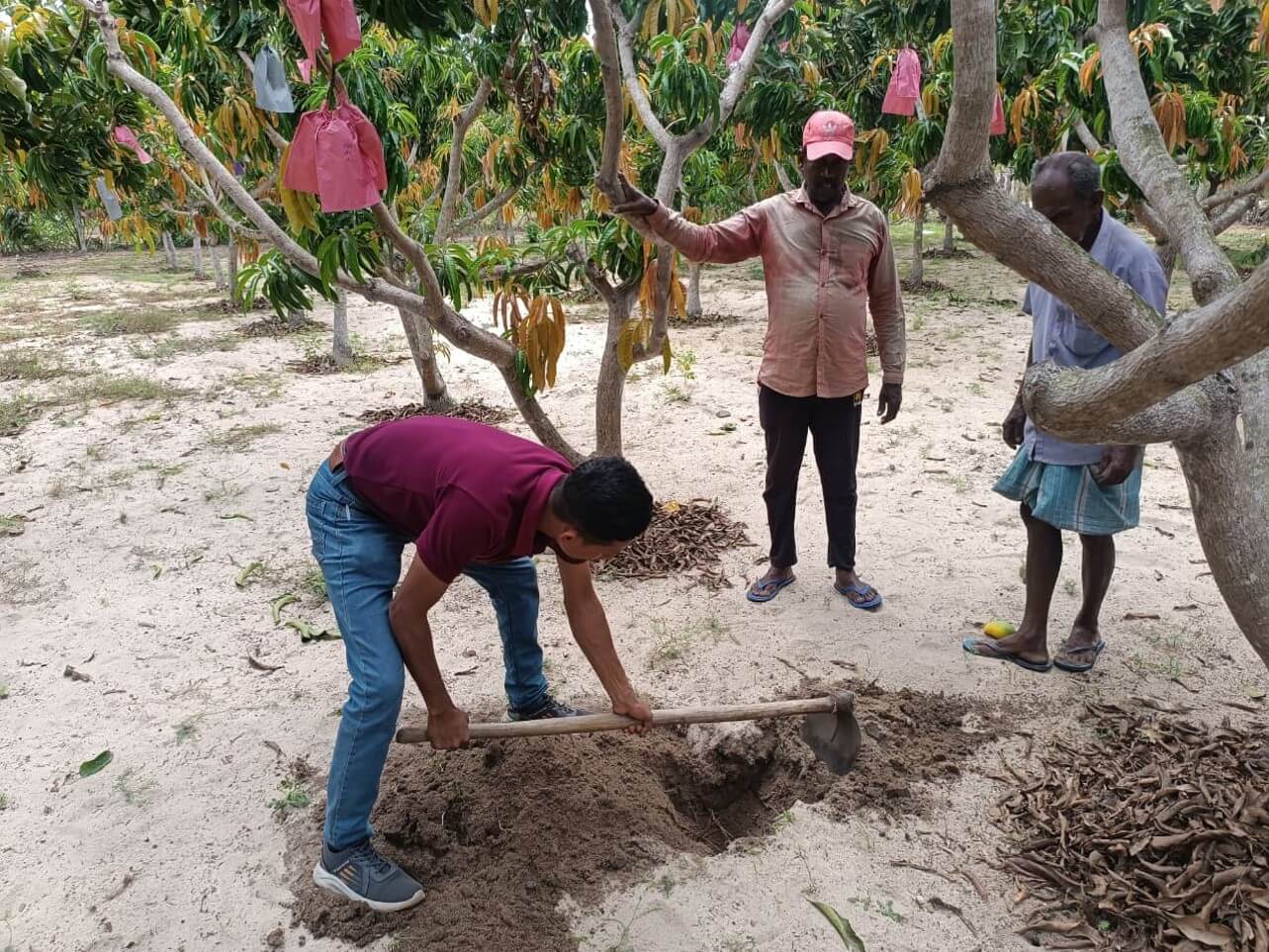
The extension officer plays a dual role—serving as both a laboratory liaison and a field agronomist. Beyond receiving farmers at the Techno Centre, the officer:
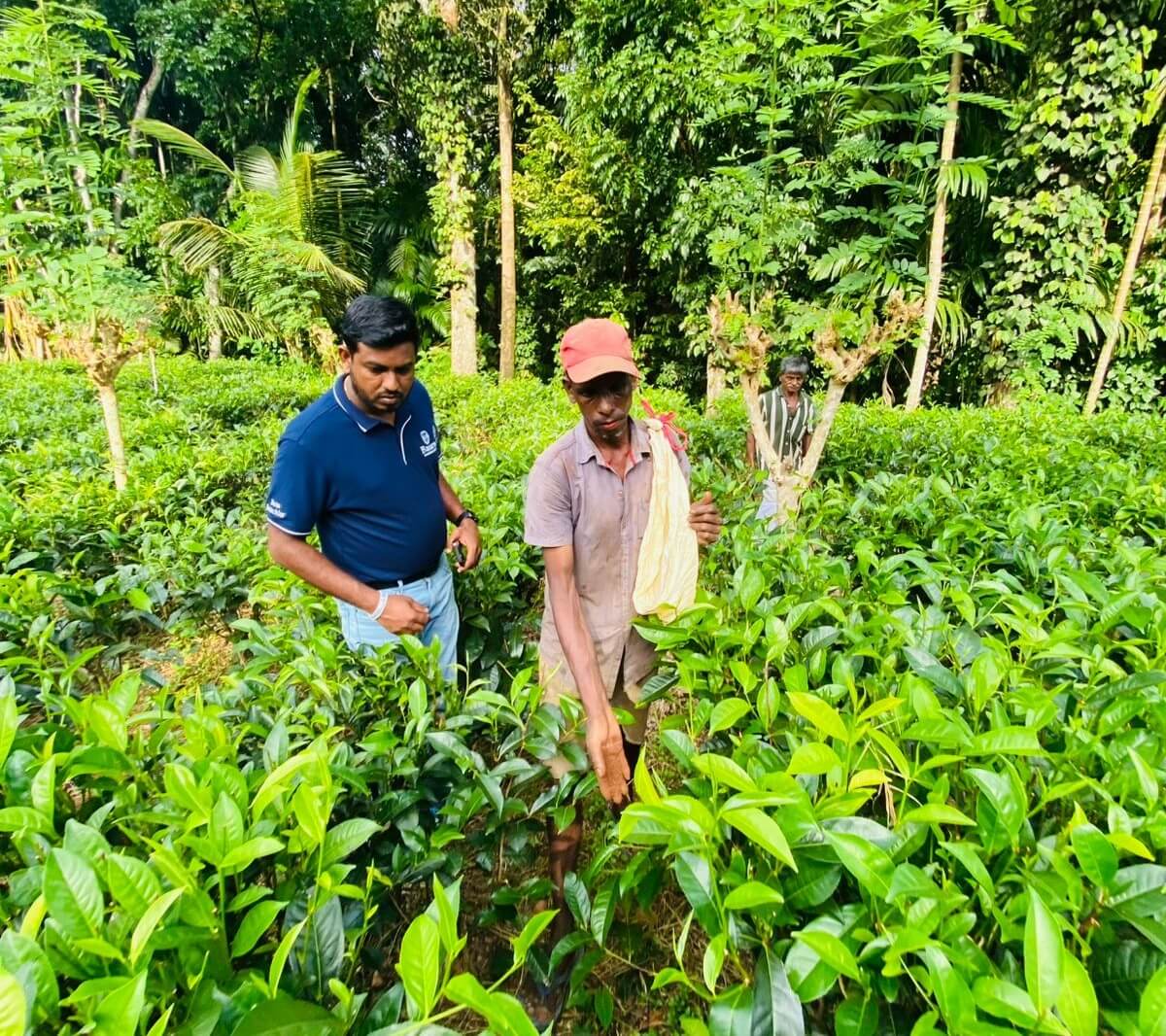
- Conducts estate visits
- Collects soil and leaf samples onsite
- Diagnoses field problems
- Provides personalised, site-specific agronomic guidance
This hybrid extension model (Box 2) strengthens trust and ensures that recommendations are grounded in field realities.
Box 2: Why This Model Works: Key Strengths
|
ENDNOTE
One of the most innovative aspects of this Integrated, Result-Oriented Delivery System is the alignment of:
- Diagnostic services
- Personalised advisory
- Availability of correct inputs at nearby agrochemical and fertiliser shops
This ensures that once a farmer receives a recommendation, the appropriate fertiliser, formulation, and chemical are readily accessible. This end-to-end integration solves one of the biggest challenges faced by extension- the breakdown between advice and implementation.
Baurs Techno Centre, as a hybrid extension approach is strengthening farmers’ data-driven decision-making, It is not about simply promoting the products the company has among farmers. This strategy of Baurs have now started influencing other companies too to share data with farmers. At the end of the day, farmers will be empowered, the efficacy of the agro-ecosystem will increase, and sustainability will be guaranteed.
 Tharaka Jayasinghe is the Senior Manager of the Advisory and Extension Division at A. Baur & Co. (Pvt.) Ltd., Sri Lanka. He holds a BSc in Agriculture from the University of Peradeniya and a Master’s degree in Business Studies from the University of Colombo. He currently serves as the Vice President of the Sri Lanka Agricultural Extension Association. He can be contacted at jayasingheatm@gmail.com.

I read this with keen interest and curiosity and found it an insightful piece on how the Baurs Techno Centre (BTC) is redefining extension in Sri Lanka. What stands out is the strong alignment between diagnostics, personalised advisory, and the assured availability of correct inputs—something many extension systems struggle to integrate. Models in India and the region offer useful parallels: Rythu Seva Kendras, Tata Kisan Sansar, ITC e-Choupal, and Agriclinics & Agribusiness Centres all show the value of local service hubs that combine quality inputs, technical support, and digital tools.
The key lessons from these systems—strong branding and trust, trained local champions, entrepreneurial models, and smart public–private partnerships—can further strengthen and scale BTCs. At the same time, BTC brings unique strengths to the region, particularly the seamless “diagnostics → advisory → inputs” pipeline and its focus on plantation crops.
This hybrid, data-driven model has strong potential for replication across South Asia as a modern Farmer Service Centre that truly closes the advice–implementation gap. Congratulations to author Tharaka Jayasinghe for presenting the BTC model. Looking forward to AESA for many more success stories from the region.