




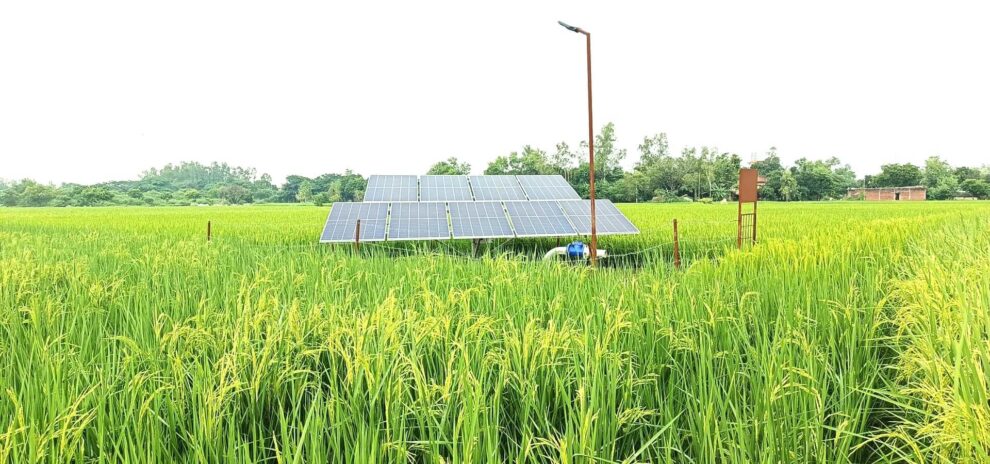
In this blog, Aneesha Bali argues that solar farming for smallholders is not mainly a matter of adopting new technology, but rather a challenge of institutional development. She emphasises that the role of Extension and Advisory Services (EAS) is not to train individual farmers to maintain solar panels, but to strengthen Farmer-Producer Organisations (FPOs) so they can serve as credible institutional platforms for collective solar investments.
CONTEXT
India stands at a unique crossroads. With ambitious renewable energy targets of 500 GW by 2030 and a farming sector that employs nearly half the country’s workforce, agrivoltaics—the co-location of solar panels and agriculture—offers a compelling pathway to address energy security, climate adaptation, and farmer livelihoods simultaneously. Yet, for the 86% of Indian farmers who are small and marginal with holdings under two hectares, accessing this opportunity remains frustratingly out of reach. This blog argues that Farmer-Producer Organisations (FPOs) are not merely helpful but essential institutional vehicles for making solar farming accessible to small farmers.
UNDERSTANDING INDIA’S FPO ECOSYSTEM: A LANDSCAPE VIEW
The FPO ecosystem in India has grown remarkably since the Companies Act was amended in 2002 to allow the formation of producer companies—hybrid entities combining cooperative principles with corporate governance structures.
As of mid-2025, India has over 44,000 registered Farmer-Producer Companies, with the number continuing to grow. Under the 10,000 FPO program, recent data indicate that approximately 1,200 are women-only FPOs. These organisations are supported by a three-tier architecture: Self-Help Groups (SHGs) at the grassroots, Village Organisations (VOs) at the intermediate level, and Cluster-Level Federations (CLFs) at the apex. This federated structure creates pathways to aggregate resources, share risks, and build collective capacity—precisely the institutional features needed for capital-intensive solar farming projects.
The ecosystem is supported by multiple government agencies—NABARD, SFAC, and state rural livelihoods missions—and complemented by civil society organisations and private sector players. The 10,000 FPO scheme provides equity grants up to Rs 15 lakh and credit guarantee cover up to Rs 2 crore, while programmes like the Agriculture Infrastructure Fund (AIF) offer concessional credit with interest subvention. Despite this institutional scaffolding, only about 14% of FPOs have accessed formal financing (6100+ as per SoFPO 2025)—indicating both the challenge and the opportunity ahead. This underscores the need for FPO segmentation and the selection of ‘ready’ FPOs.
THE SCALE PROBLEM: WHY INDIVIDUAL FARMERS CANNOT ACCESS SOLAR FARMING
Grid-connected agrivoltaics under PM-KUSUM Component A requires a minimum capacity of 500 kW, with 1 MW being more practical. A 1 MW agrivoltaics system requires 4-5 acres of contiguous land and costs approximately Rs 5-6 crore. For elevated (stilt-mounted) structures that allow farming underneath—the true promise of agrivoltaics—this cost rises to Rs 5.5-6.5 crore due to taller poles and reinforced foundations.
Consider the arithmetic from a small farmer’s perspective: a farmer with 2 acres cannot meet the minimum land requirement. Even if land were not a constraint, mobilising Rs 5-6 crore in capital is impossible for individual smallholders. Banks require collateral, project documentation, and creditworthiness that most small farmers lack. The 25-year commitment period of solar projects introduces risks that no individual small farmer can absorb alone.
This is not a market failure that extension services can address through better information or training. It is a structural barrier that requires institutional innovation. FPOs provide precisely this institutional bridge.
FPOS AS INSTITUTIONAL BRIDGES: THE COLLECTIVE ACTION ADVANTAGE
FPOs address every barrier that prevents individual small farmers from participating in solar farming. Through land aggregation, an FPO with 500 members can pool contributions of 1-2 acres each to aggregate 50-100 acres of suitable land. What is impossible individually becomes straightforward collectively.
For capital access, FPOs can leverage government schemes, with a Rs 5-6 crore project divided among 500 members, translating to Rs 10,000 – 12,000 per farmer, suddenly within reach. They can employ professional management and engage technical consultants whose costs are distributed across hundreds of members. And the 25-year commitment becomes manageable institutional risk for an FPO that can absorb member turnover, crop failures, and market fluctuations.
An instructive example comes from milk cooperatives that are exploring agrivoltaics to offset their energy-intensive cold-chain and processing needs. The collective structure allows them to integrate solar generation into existing cooperative infrastructure—an approach individual dairy farmers could never achieve on their own.
EMERGING MODELS FROM THE FIELD: FPOS LEADING THE WAY
Across India, pioneering FPOs and collectives are demonstrating how solar farming can work at scale. These examples offer valuable lessons for replication.
Sahyadri Farms: India’s Largest FPO Pilots Agrivoltaics
In Nashik, Maharashtra, Sahyadri Farmers Producer Company—India’s largest FPO with over 10,000 member farmers collectively owning about 25,000 acres—has launched a 250 kW agrivoltaics pilot project. The installation uses bifacial panels mounted at 3.75-4 metres height with 6-metre spacing between rows, specifically designed for growing grapes and citrus fruits.
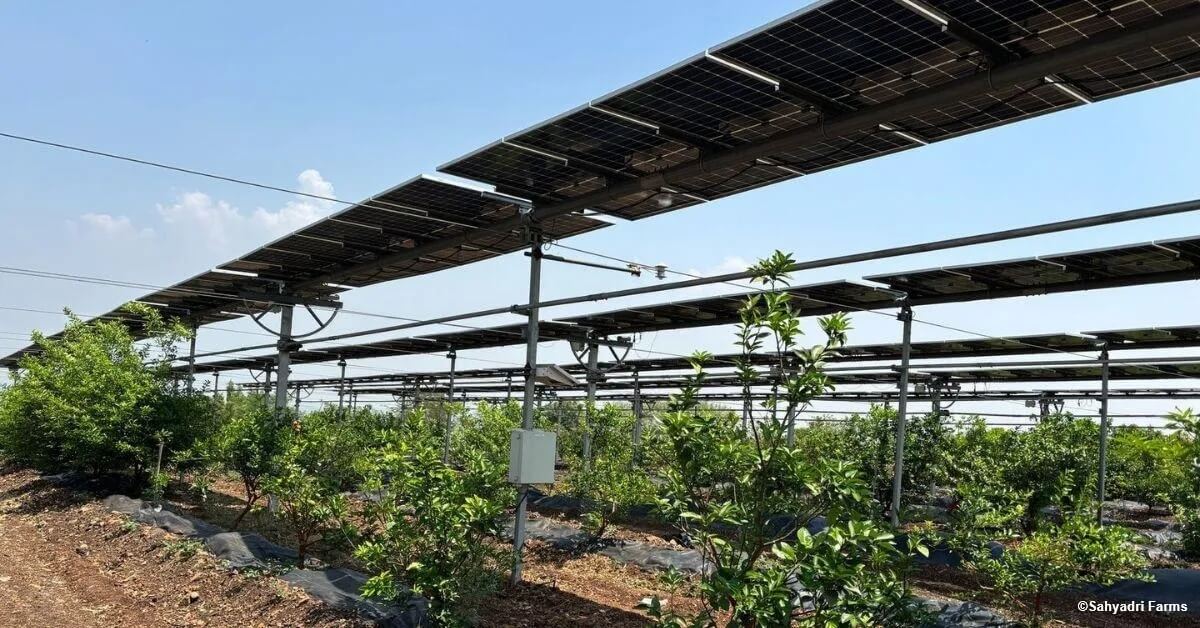
As Programme Director Mahesh Shelke explains, ‘The dual use of land helps farmers earn through rent. In addition, the structures used in agrivoltaics provide good support for horticultural crops such as grapes. Instead of the farmer investing in a support structure, it is readily available.’ The project, developed in collaboration with GIZ, SunSeed APV, and Kanoda Energy, demonstrates how FPO ownership ensures direct market access and enhances farmers’ incomes.
JEEViKA Bihar: Women’s SHGs as Solar Irrigation Pioneers
Bihar’s JEEViKA programme, which has mobilised over 1.35 crore women into more than 10.6 lakh SHGs, offers a compelling model for solar adoption through collectives. Women’s self-help groups in Muzaffarpur district have installed solar irrigation pumps and transformed themselves into ‘Irrigation Service Providers.’ Groups like Shiv Ganga Samuha Sichai Samity now supply water to over 100 farmers, generating an annual income of Rs 1.2-1.3 lakh per group. Each of the 10 members contributed Rs 13,000 as an initial investment to a project costing approximately Rs 7 lakh, with the remaining support coming from development partners.
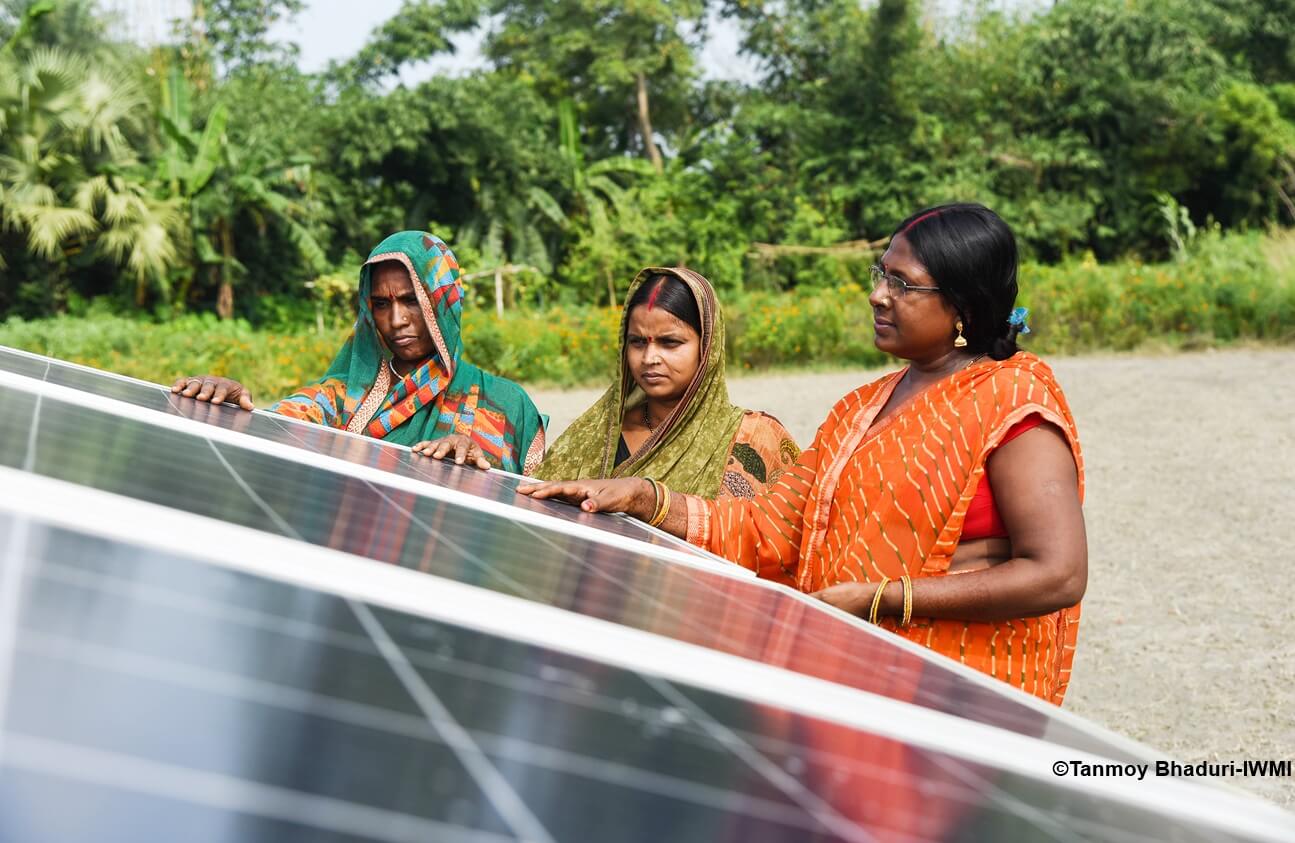
The TERI-JEEViKA partnership has further expanded this model, providing Integrated Domestic Energy Systems (solar home lighting and cooking systems) to over 50,000 households through SHGs. The unique financial model—60% paid by women in monthly instalments, 40% contributed by CSR and donor funds—has trained around 20 local Energy Entrepreneurs and 300 solar technicians, creating a sustainable ecosystem for clean energy access at the bottom of the pyramid.
Telangana’s Indira Mahila Shakti: A State-Scale Vision
Telangana’s ambitious Indira Mahila Shakti scheme, launched in March 2024, demonstrates what state-level commitment can achieve. The government has targeted 1,000-4,000 MW of solar capacity through women’s self-help groups. Under this initiative, 2 MW of solar power capacity is being allocated to women’s groups across all 32 districts, with zero-interest loans and maintenance provided by Telangana REDCO and Vidyut Discoms. Each 1 MW plant, costing approximately Rs 3 crore, is estimated to generate around Rs 30 lakh annual income for participating SHGs. The scheme is integrated with PM-KUSUM and identifies 4,000 acres of government land, tribal lands under the Recognition of Forest Rights Act, and unused hilltops for solar installations.
What makes this model particularly noteworthy is its comprehensive approach: the same women’s collectives are being supported to purchase buses for public transport, run petrol pumps, and establish processing units—demonstrating that solar can be part of a broader portfolio of income-generating assets owned by women’s groups.
THE WATER-ENERGY-FOOD NEXUS: WHY AGRIVOLTAICS MATTERS FOR INDIAN AGRICULTURE
Agrivoltaics is not merely about generating electricity on farmland. It sits at the intersection of India’s most pressing agricultural challenges: water scarcity, energy costs, and climate vulnerability.
In water-stressed regions—which cover much of peninsular and western India—the shading effect of elevated solar panels reduces evapotranspiration, conserving soil moisture. Research indicates water savings of 20-30% when drip irrigation is combined with agrivoltaics. The panels also protect crops from extreme heat events and hailstorms, providing a climate adaptation co-benefit that pure ground-mount solar cannot offer.
Field practitioners report improved soil health under agrivoltaic systems—better moisture retention, reduced soil temperature fluctuations, and in some cases, enhanced microbial activity. These ecological benefits compound over time, making the 25-year project horizon not just financially rational but agronomically beneficial.
Crop Selection: Matching Agriculture to Agrivoltaics
Not all crops are suitable for agrivoltaics. Agricultural scientists emphasise preserving existing farming ecosystems when introducing solar infrastructure—selecting crops that thrive in partial shade rather than forcing sun-loving varieties under panels.
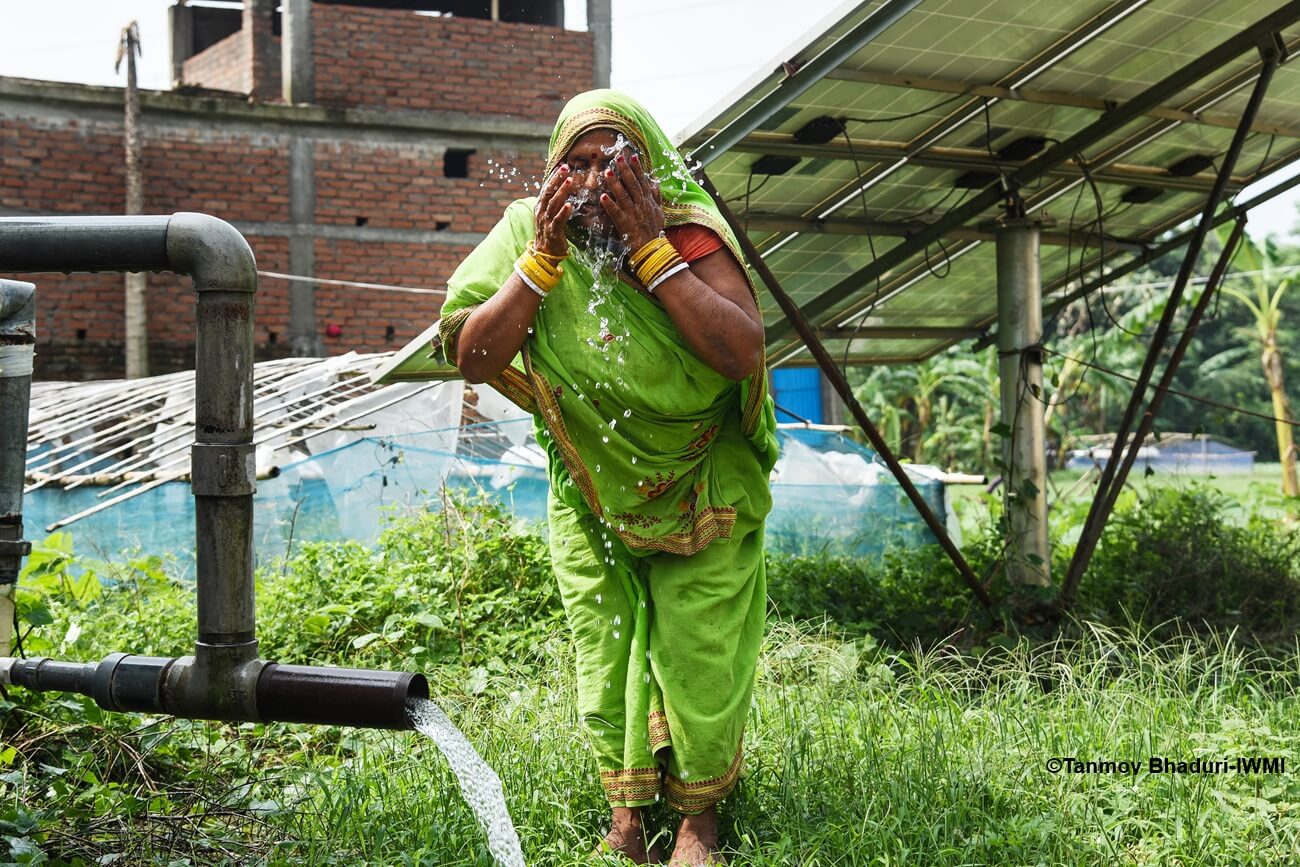
Crops to avoid include rice, most oilseeds, and other sun-intensive varieties that require maximum solar radiation for optimal yields. Crops that perform well under agrivoltaics include shade-tolerant vegetables such as tomatoes, chillies, and leafy greens; root crops such as turmeric and carrots that benefit from cooler soil temperatures; and high-value crops such as cherry tomatoes and exotic vegetables that command premium prices.
For FPOs, crop selection has direct implications for member engagement. If the FPO’s members primarily cultivate paddy or groundnut, agrivoltaics may require a shift in cropping patterns that demands careful planning, training, and support for market linkage. Extension professionals should assess not just land suitability but cropping system compatibility before promoting agrivoltaics to an FPO.
Market Linkages: Corporate Demand and Carbon Credits
Beyond overcoming barriers, FPOs unlock market opportunities unavailable to individual farmers. Over 440 companies worldwide under the RE100 initiative have committed to 100% renewable electricity—including Indian corporates like Infosys, Wipro, and the Tata Group, as well as multinationals operating in India. These companies need traceable, local solar sources for ESG reporting. They increasingly prefer ‘community solar’ or ‘farmer-linked’ procurement over anonymous utility-scale plants.
A corporate buyer does not want to negotiate with 50 individual farmers. But one FPO representing 50 farmers? That is efficient procurement. FPOs can serve as aggregation platforms that connect farmers’ land with corporate renewable energy demand—a market-driven pathway that complements subsidy-based approaches.
Carbon credits through voluntary carbon markets present another opportunity, though practitioners advise realism. The registration process takes 20-30 months, requires rigorous documentation, and yields modest returns in the early years. Carbon credits should be viewed as a supplementary revenue stream rather than as a primary justification for the project. That said, the aggregation that FPOs provide makes carbon credit registration viable—individual farmers simply cannot navigate these complex certification processes on their own.
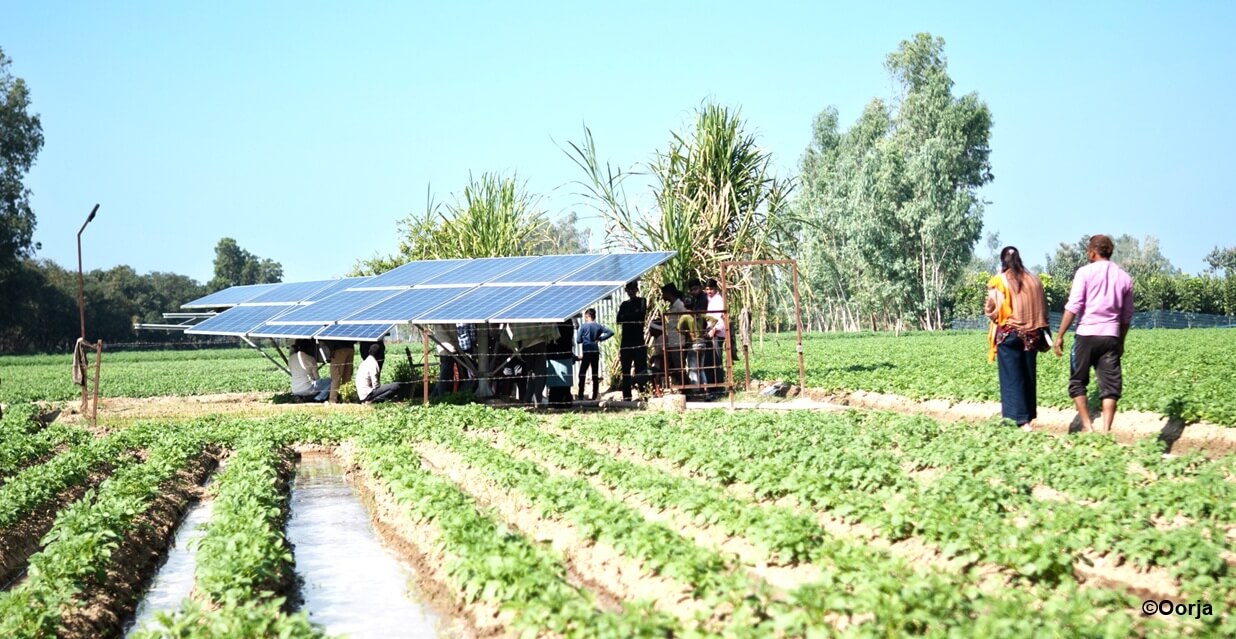
The Readiness Question: Selecting FPOs for Success
While FPOs are necessary vehicles, extension professionals must exercise judgment about which FPOs are ready for solar farming projects. A 25-year infrastructure commitment requires institutional maturity that many young FPOs lack.
A practical readiness checklist includes:
- at least 3 years of operational history;
- clean audited financials;
- a full-time professional CEO (not a farmer-director managing part-time);
- prior experience managing infrastructure such as warehouses, custom hiring centres, or processing units; and
- active member participation beyond paper registration.
Pushing agrivoltaics on FPOs that are not ready sets them up for failure and discredits the model. The extension approach should be to identify the top 5-10% of FPOs—those with strong governance, experienced leadership, and existing infrastructure—for demonstration projects. Let success breed replication.
Farmer ownership matters. While developer-led models (where private companies install and operate solar plants on farmland) reduce risk, they also diminish farmers’ agency and long-term benefits. FPOs offer a middle path: collective responsibility for asset maintenance combined with collective ownership of returns. But this requires genuine institutional capacity, not just legal registration.
Member Engagement: The ‘Go Slow to Go Fast’ Principle
Agrivoltaics is an unfamiliar technology for most farmers. The temptation for enthusiastic extension workers is to rush into project implementation. Experience suggests the opposite approach works better.
The first three months should be purely informational—exposure visits to working sites, videos showing crops growing under panels, and farmer-to-farmer conversations. No commitments, no sign-ups. When JEEViKA in Bihar introduced solar pumps to Self-Help Groups, they started with one ‘lighthouse’ installation per block. Seeing one working system generated demand for dozens more. The demonstration effect is more powerful than any presentation.
Concrete numbers convince better than abstract benefits. When you tell a farmer ‘agrivoltaics is good for the climate,’ they are sceptical. When you show them ‘Delhi farmers under the Mukhyamantri Kisan Aaye Badhotri Yojana are getting Rs 1 lakh per acre per year in lease rent, plus free electricity, while continuing to farm’—that is tangible. Use real income figures from existing schemes and PPP models.
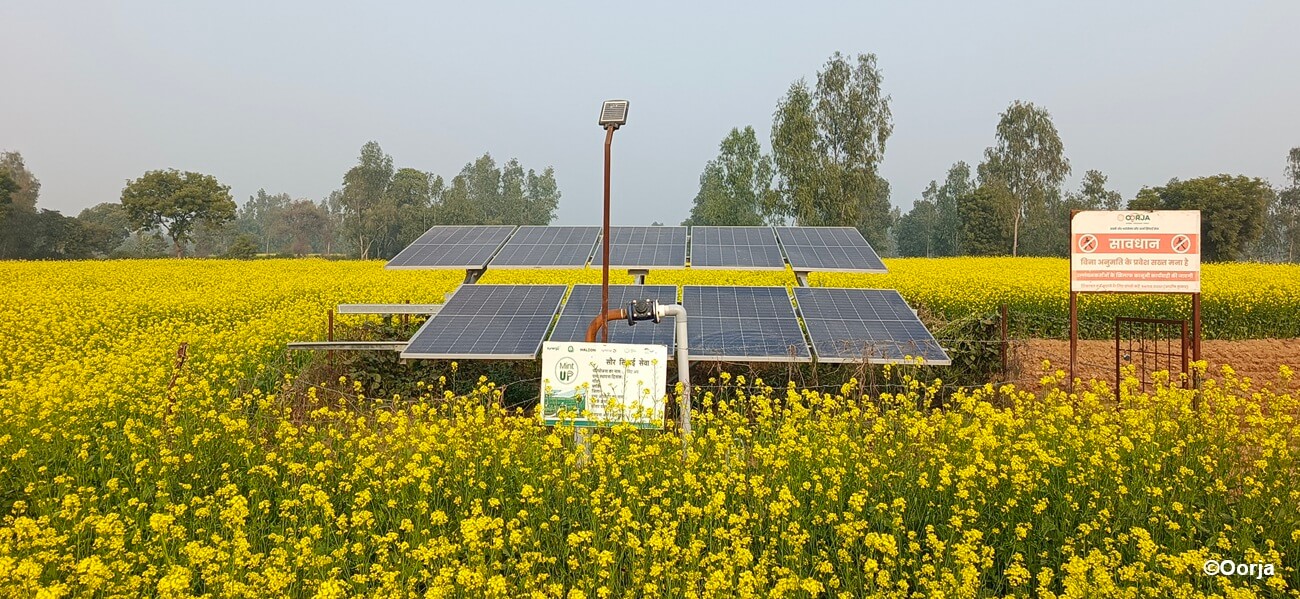
Women’s Participation: Owners, Not Beneficiaries
Women’s participation must be built in from day one—in governance, crop selection, revenue sharing, and skill building. Retrofitting inclusion does not work.
Experience shows that having women on FPO Boards changes the questions asked. Men typically focus on tariffs and technology. Women ask about crop impact, labour requirements, and household benefits. Both perspectives lead to better decisions. Where possible, revenue should flow into women’s own bank accounts rather than being routed through male household heads.
A model worth watching is Telangana’s Indira Mahila Shakti, which aims to generate 1,000-4,000 MW through SHG-owned solar plants. Revenue flows to the Zilla Mahila Samakhya (district women’s federation), ensuring women control both the asset and its returns. The single most important insight from the SHG ecosystem is this: when women own the asset, they protect it. When they are just ‘beneficiaries,’ they become passive.
POLICY GAPS: WHAT EXTENSION PROFESSIONALS SHOULD ADVOCATE FOR
Current policy creates an unintended bias against true agrivoltaics. PM-KUSUM allows stilt-mounted structures but does not support them. Elevated structures cost Rs 1-1.5 crore more per MW than ground-mount solar—but both receive the same tariff and subsidy. Rational economic choice pushes developers and farmers toward ground-mount installations, which permanently take land out of farming.
Extension professionals can advocate for dedicated Viability Gap Funding (VGF) for agrivoltaics—either a 20-30% capital subsidy specifically for elevated structures, or a generation-based incentive above regular tariff for projects that maintain active farming underneath. Aligning with state policies that address both agriculture and energy objectives will be crucial for scaling agrivoltaics.
Implications for Extension and Advisory Services
For extension professionals, the message is clear: solar farming for small farmers is not primarily a technology adoption challenge. It is an institutional development challenge. Our role is not to train individual farmers in solar panel maintenance but to strengthen FPOs that can serve as credible institutional vehicles for collective solar investments.
- Concrete actions include:
- assessing FPO readiness before promoting solar farming;
- evaluating cropping system compatibility alongside land suitability;
- organising exposure visits to working agrivoltaics sites;
- facilitating connections between ready FPOs and experienced solar developers through platforms like the India Agrivoltaics Alliance;
- ensuring women’s participation is designed in from the beginning; and
- advocating for policy reforms that level the playing field for true agrivoltaics.
India will host the World Agrivoltaics Conference in Delhi later this year—a signal of growing global and national attention to this approach. Agrivoltaics through FPOs is not just a solar strategy—it combines climate adaptation, food security, and farmer prosperity. The market exists. Corporations need renewable energy. Developers need aggregated land. FPOs can be the bridge. The question for extension services is whether they will help build that bridge.
 Aneesha Bali works with the National Association of Farmer-Producer Organisations (NAFPO), where she focuses on policy advocacy and capacity building for FPOs across India. This blog draws from her participation in the webinar ‘Solar Farming Through FPOs: Schemes and Models for Farmer Groups’ organised by SwitchON Foundation as part of the Renewable Agrivoltaics Challenge. She can be contacted at: aneesha@nafpo.in



Add Comment