

Transhumant pastoralism in the Himalayas, a climate-adaptive system, is facing increasing pressure. In this blog, Ankaj Thakur, Nishant Verma, and Brij Vanita argue that sustaining both pastoral livelihoods and this distinctive production system will require stronger support for animal welfare, secure mobility, and better market linkages.
CONTEXT
High above the Dhauladhar peaks, a Gaddi herder pauses his flock at 14,000 feet. Below stretch the mountains that his ancestors walked for centuries. Ahead lies a highway where traditional routes once passed. “This journey tests us all,” he says. “For Goats and herders alike, this is a walk for survival, not just livelihood.”
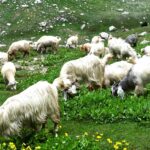
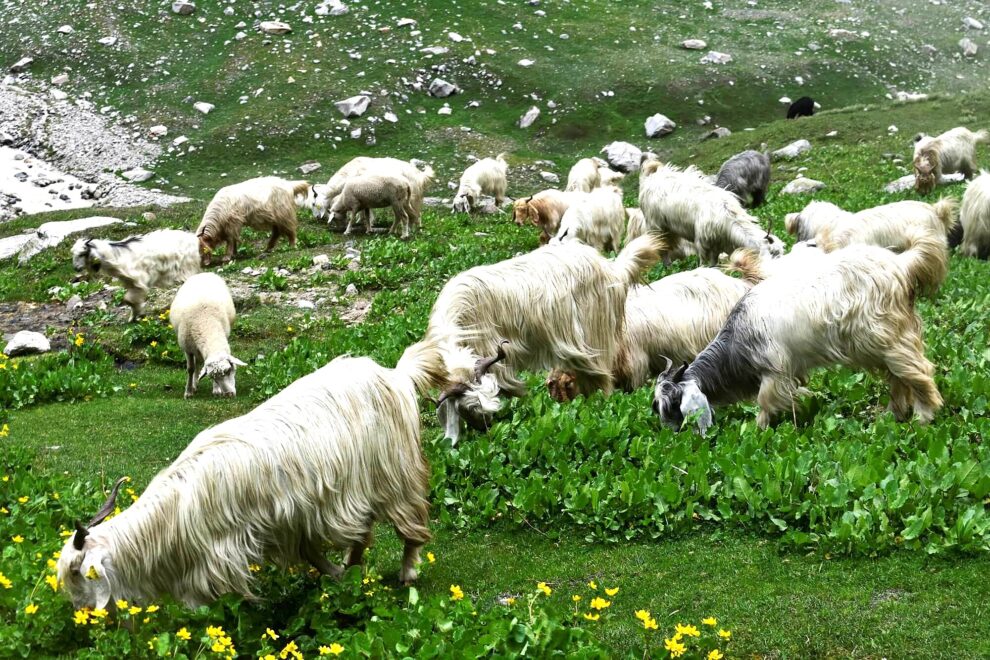
Every year, as the seasons change, thousands of goats in Himachal Pradesh begin this long journey across the mountains. Along with them walk the Gaddi pastoralists, families who have followed this path for generations. For them, migration is not a choice; it is a way of life shaped by nature, tradition, and survival.
But today, this journey is becoming harder for both the animals and the people who depend on them.
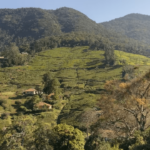
In the Himalayan context, pastoral mobility follows a vertical pattern, with herds moving across altitudes rather than long horizontal distances (Figure 1). This movement is closely linked to seasonal changes in temperature, forage availability, and disease risk.
Mountain pastures shaped by short growing seasons and rich plant diversity offer unique nutritional advantages. In this setting, mobility is not simply a tradition; it is a key adaptive strategy that underpins both animal welfare and system resilience. Recognising these mountain-specific dynamics is essential when designing policies related to grazing access, livestock management, and climate adaptation.
A TRADITION UNDER PRESSURE
For generations, pastoralists followed well-defined migratory routes, stopping at traditional halting points known locally as thikanas. These routes ensured access to grazing, water, and rest for animals. Today, many of these paths are disturbed. Roads, dams, plantations, and changing land use have reduced grazing areas and forced pastoralists to move along highways or into unfamiliar terrain, often increasing stress, injuries, and even the loss of animals. Pastures that once covered large parts of the state have shrunk significantly, and unpalatable and invasive plant species are replacing palatable grasses. For generations, pastoral systems have supported not only livestock production but also ecological balance. Seasonal movement helps prevent overgrazing, maintain soil fertility, and sustain biodiversity across landscapes. However, increasing restrictions on mobility and shrinking grazing lands are disrupting this balance, putting greater pressure on limited resources and reducing the resilience of both animals and ecosystems.
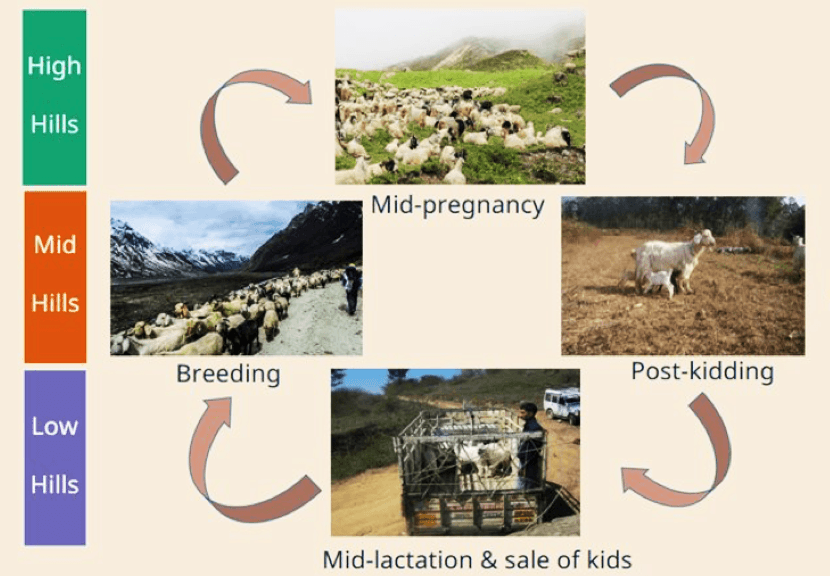
Figure 1: Gaddi transhumance cycle across altitudinal gradients: high hills (summer grazing), mid hills (breeding), low hills (lactation & kid sale).
At the same time, there is a noticeable shift in labour patterns. With younger generations moving away from pastoralism, many flock owners now depend on puhals—hired or contractual herders—to manage their animals during migration. While this helps sustain the system, it also alters the traditional human–animal bond and the continuity of knowledge, which have long been central to effective herd management.
Changing Climate, Rising Risks
Climate change is adding another layer of uncertainty. Unpredictable weather—sudden rainfall, snowfall, and storms—can trap flocks in difficult terrain, often at vulnerable halting points during migration.
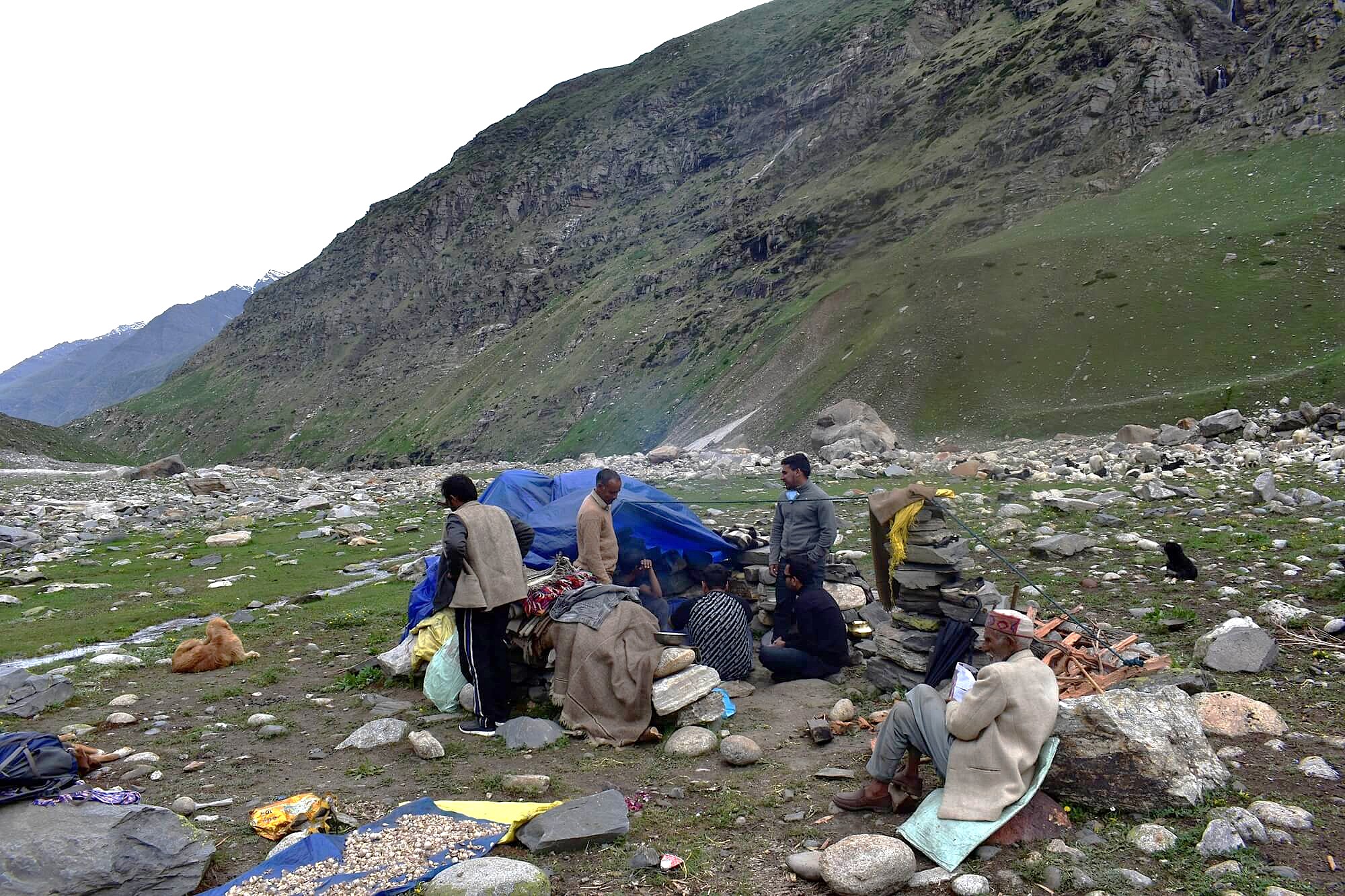
This risk became tragically evident on February 1, 2026, when a lightning strike near the Solan–Subathu road killed 55 sheep and goats from a migratory flock belonging to a herder from Kinnaur. The incident occurred in the early hours as shepherds were setting up tents for the night halt—narrowly escaping themselves. Such events, once considered rare, are becoming increasingly frequent with erratic weather patterns. They highlight the need for practical interventions such as weather early-warning systems, identification of safer halting sites, and community-level disaster preparedness tailored to transhumant routes.
At the same time, gradual shifts in temperature and grazing patterns are affecting animal health by altering forage availability, increasing disease risks, and reducing overall productivity. Despite these challenges, pastoralists continue their journeys, often adapting silently, but at a growing cost.
Loss of Knowledge, Loss of Control
Pastoral systems once relied on deep knowledge of landscapes, plants, and animal behaviour. Herders could identify poisonous plants and avoid risky grazing areas. They could detect illness early and manage herds with minimal external inputs. But this knowledge is fading. With younger generations moving away from pastoralism, this unwritten system of wisdom is weakening. As a result, risks such as plant poisoning, delayed disease detection, and poor herd management are rising.
The Market Paradox
Interestingly, goats raised under transhumant systems produce meat and milk that closely align with what modern consumers increasingly seek—natural, low-input, and sustainably produced. Animals graze freely on diverse alpine pastures, with minimal use of external inputs such as antibiotics or concentrates, giving these products a unique ecological and nutritional identity.
Yet, pastoralists rarely benefit from this value. In local markets, their products are sold at conventional prices, with little recognition of how they are produced. In contrast, similar claims, such as “grass-fed” or “naturally raised,” can command significantly higher prices in organised, urban markets.
This disconnect reflects a deeper issue: the absence of traceability, certification, and market linkages that can differentiate pastoral products. Without these, the value created through mobility, natural grazing, and traditional management remains largely invisible to consumers.
The Missing Link: Traceability
Consumers today pay premiums for “pasture-to-plate” stories such as grass-fed, hormone-free meat with verified welfare standards. Yet Gaddi pastoralists remain invisible consumers, and increasingly want to know where their food comes from, how animals are raised, and whether systems are truly sustainable. Transhumant goats already deliver this value: naturally grass-fed on Himalayan biodiversity, walking 300+ km across altitudinal gradients. But without proof, they fetch commodity prices.
POLICY SUPPORT: A STEP IN THE RIGHT DIRECTION
There are signs of change: the Government of Himachal Pradesh recently launched the PEHEL (Pastoralists Empowerment in Himalayan Ecosystems for Livelihood) scheme in January 2026, with an investment of ₹ 300 crore, targeting over 40,000 pastoral families, including Gaddi, Gujjar, and other communities. The scheme aims to strengthen pastoral livelihoods through improved grazing access, support services, and integration of traditional systems into development planning. It is expected to be implemented through state departments such as Animal Husbandry, Forest, and Rural Development, to enhance livelihood security while conserving pastoral ecosystems.
This is a significant recognition of pastoral livelihoods, which have long remained outside mainstream policy support. At the same time, recent efforts to identify and protect traditional migratory routes and halting sites are encouraging. For instance, the Forest Department’s January 2025 notification recognised that 1,637 pastoral locations have been identified as key passageways or halting sites for pastoralists, helping ensure that development activities do not disrupt these migratory systems. However, challenges remain. Access to grazing lands is still restricted in many areas, and the implementation of rights under frameworks such as the Forest Rights Act remains incomplete.
Since its inception in 2010, the All India Coordinated Research Project (AICRP) on Goat Improvement at CSK Himachal Pradesh Krishi Vishvavidyalaya (CSKHPKV), Palampur, has worked closely with Gaddi pastoralists (Box 1).
| Box 1: Science Meets Tradition: Role of AICRP on Gaddi Goats Through field-based research, the project has: – Studied the adaptability and performance of Gaddi goats under real migratory conditions – Generated practical insights on health, nutrition, and breeding, and – Supported conservation of this hardy indigenous breed. Following Gaddi flocks across their migratory routes—from Lahaul’s high pastures and Bharmour’s rugged highlands to Kangra’s winter valleys—the project delivers health interventions and breeding support proven effective under real transhumant conditions. These field-based efforts highlight that simple interventions in nutrition, healthcare, and herder awareness on early disease detection, feeding and basic welfare practices can improve animal health and resilience under migratory conditions. However, ensuring that such support reaches pastoralists at the right time and place along migratory routes remains a key challenge. Strengthening this link between traditional practices and scientific support is essential for making interventions practical and effective in real field conditions. |
WALKING TOWARDS THE FUTURE
Transhumant pastoralism is not a backward system. It is a climate-adaptive, resource-efficient way of livestock production. However, sustaining it requires coordinated action from multiple stakeholders. The Department of Animal Husbandry and Veterinary Extension Services needs to play a stronger role in mobile health support, disease surveillance, and welfare-oriented interventions, while recognising its current constraints in workforce and outreach. At present, service delivery often remains limited due to workforce and logistical constraints, especially in remote and high-altitude areas.
Forest and revenue departments have a critical role in recognising and facilitating traditional grazing access, while balancing conservation priorities with pastoral livelihoods. Researchers can translate field knowledge into practical tools, and policymakers must ensure that grazing rights, mobility, and pastoral welfare are addressed through on-ground implementation rather than only policy intent. Improving animal welfare must remain central to these efforts. Targeted support, including nutritional supplementation during critical stages, preventive healthcare, and herder awareness on early disease detection and welfare indicators, can enhance both animal performance and livelihood security. Similarly, traceability systems and market linkages are largely absent or weak and require coordinated action by government agencies, producer groups, and market institutions.
Pastoralism must also be understood within the broader context of climate resilience. Mobility, often viewed as a limitation, is in fact a strength that enables pastoral systems to adapt to environmental variability. While recognising grazing rights, integrating indigenous herding knowledge into policy, and using appropriate technologies such as digital records and route mapping could strengthen sustainable pastoral mobility, these measures remain limited in practice and require greater institutional support. In this context, organisations such as the Indian Pastoralist Communities Network (IPCN) can play an important role in advocacy, documentation of pastoral knowledge, and policy engagement, as reflected in the International Year of Rangelands and Pastoralists (IYRP) 2026 initiative.
Transhumant pastoralism deserves a place in India’s green-growth conversation. These systems already deliver climate-smart, low-input protein—essential animal-source foods that support nutrition security while also helping sustain alpine ecosystems. Scientific assessments of the Trajan pasture in Jammu and Kashmir show a carrying rate of only 10.32%, suggesting that current grazing pressure remains well within ecological limits.
Rather than framing animal agriculture and alternative proteins as opposite pathways, Environment, Social and Governance (ESG)-oriented policy should recognise the diversity of livestock systems and avoid treating them as a single category. Such frameworks should reward climate-smart, humane pastoral systems alongside innovation in alternative proteins, particularly in regions where pastoralism supports nutritional sovereignty and where alternatives may be unaffordable or culturally inappropriate. In this context, Gaddi goats moving across Himalayan gradients embody the balance between mobility as resilience and tradition as sustainable practice.
CONCLUSION
Today, both goats and pastoralists are walking not just across mountains but through uncertainty. Their survival depends on how well we understand and support this system. With the right balance of tradition, science, and policy, transhumant pastoralism can move from survival to sustainability, ensuring that animals and communities alike continue to thrive in the Himalayan landscape.
However, his transition will require more than recognition alone. It demands a critical reassessment of the roles, limitations, and responsibilities of key stakeholders, including pastoralists, researchers, policymakers, development agencies, and local institutions, in addressing the challenges outlined under “Tradition under Pressure.” In the spirit of the International Year of Rangelands and Pastoralists (IYRP) 2026, this reassessment should also be linked to broader efforts to strengthen awareness, investment, and policy support for transhumant pastoral systems.
 Dr Ankaj Thakur is an Assistant Professor of Livestock Production Management in the Department of Livestock Farm Complex at CSKHPKV, Palampur, working on pastoralism, animal welfare, and resilience in Himalayan transhumant systems. He can be reached at ankajthakur@hillagric.co.in
 Dr Nishant Verma is an Assistant Professor, Animal Genetics and Breeding in Livestock Farm Complex and Principal Investigator of the AICRP Gaddi Field Unit at CSKHPKV, Palampur, focusing on genetic improvement and field-based research in migratory goat systems. He can be reached at nish100verma@hillagric.co.in
 Dr Brij Vanita is a Subject Matter Specialist (Animal Sciences) at CSKHPKV, engaged in extension, herder training, and technology dissemination. She can be reached at brijvanta@hillagric.co.in
Add Comment