


In this blog, Anindita Bhattacharya explores the limitations of agricultural extension services in effectively supporting homestead farming. She also highlights how these systems, often overlooked, can be better utilized and strengthened through more targeted and inclusive extension approaches.
CONTEXT
I entered the South 24 Parganas district of the Sundarbans region in West Bengal nearly a decade ago with a familiar assumption, shaped by formal training in agricultural extension that “supporting farmers” primarily involved transferring technical knowledge, introducing new technologies, and providing standardised recommendations based on textbooks, training modules, and expert systems.
That assumption lasted only a few weeks in the field. What stood out then and remains relevant today was how the farmers themselves understood support. This issue was often not primarily due to a lack of knowledge. Farmers already possessed knowledge of microclimate, seasonal soil behaviour, crop diversity, and risk management. This knowledge was not abstract; it was practical expertise developed through long-term engagement with the same land and navigating constant uncertainty. However, this expertise has been and continues to be rarely visible in extension programs, advisory systems, and digital platforms, which tend to treat farmers as information recipients rather than as knowledge holders.
This gap was evident in everyday extension practices. During my survey, one farmer described how a regional advisory team recommended a high-yield paddy variety across multiple villages. However, in that microclimate, the seeds failed to germinate. The recommendation was technically sound but ecologically misplaced. A decade later, similar examples continue to surface in extension discussions, illustrating how standardised advisories often fail to account for locally embedded knowledge.
THE REAL GAP IS VALIDATION, NOT CAPACITY
This disconnect reveals a deeper issue. In this context, the failure of agricultural extension was not primarily technical but institutional. Systems consistently misidentify gaps as deficits in farmer knowledge whenever local expertise does not conform to standardised scientific or administrative formats. Even when local expertise is demonstrably better suited to specific ecological and social contexts, it is often overridden rather than integrated.
Despite policies promoting “capacity building,” the real gap lay not in information but in recognition, trust, and relevance. This misreading affected not only productivity but also farmer resilience, dignity, and survival. Farmers required validation of their expertise and collaboration in solving real problems through approaches such as farmer-led trials with local varieties or structured feedback mechanisms that incorporated their experiences. Simply transferring formal knowledge without acknowledging their experience failed to provide meaningful support.
Although participatory extension approaches had been promoted in policy and academic literature at the time of the survey, their implementation was limited. A decade later, despite continued policy emphasis, the gap between design and field-level delivery remains noticeable. Surveys continue to indicate that 60-65 per cent of small farmers in India report extremely limited access to meaningful extension support over the year, highlighting a systemic gap between policy design and field-level delivery. Consequently, persistent hierarchies among frontline agents, program designers, and platform vendors undermine trust and effectiveness, creating a system where relevance is assumed rather than demonstrated.
DIGITALISATION: WHEN TOOLS REPLACE PURPOSE
This institutional logic, which I observed ten years ago, has only deepened with the acceleration of digitalisation. Agricultural policy now places even greater emphasis on digital tools such as mobile advisories, extension apps, data dashboards, and AI platforms as solutions to structural agrarian problems, often equating them with modernisation.
However, the field realities documented during my survey, which told a different story from the literature, remain instructive for today’s context. Although smartphone ownership has expanded and over 62 per cent of farmers use mobile apps for agricultural information, their effective use remains constrained by frequent power cuts, unstable network connectivity, and uneven digital literacy, particularly among older farmers. More importantly, digital extension does not fail because farmers resist technology; it fails because most platforms are designed to extract data, demonstrate scale, or satisfy project metrics rather than solve farmers’ most immediate livelihood problems.
One young farmer explained that an advisory SMS service recommended fertiliser use days after he adjusted his cropping strategy to address brackish water intrusion and rising soil salinity. Though the recommendation was technically correct, it was useless because it arrived too late and ignored the ecological conditions. That insight remains valid in today’s digital expansion, illustrating that the biggest mistake is confusing tools with outcomes. Without farmer participation in design and validation, digital extension reproduces the same top-down failures observed a decade ago. During crises, when farmers require resilience and stability, launching a new application is not a solution. Digital tools become meaningful only when they are grounded in farmers’ realities and backed by human accountability.
CASH RELIEF AND THE LIMITS OF EMERGENCY SUPPORT
When crops fail, farmers’ most immediate concern is cash flow, not training. This was evident during my field work and remains true today. Knowledge cannot replace food, inputs, or debt repayments during crises. Emergency relief is often delayed and conditional, requiring documentation that is difficult to assemble under stress. Although recent reforms have accelerated cash transfers, farmers have recognised their limits. Relief payments offer temporary breathing space but do not resolve long-term livelihood insecurity or reduce exposure to future shocks.
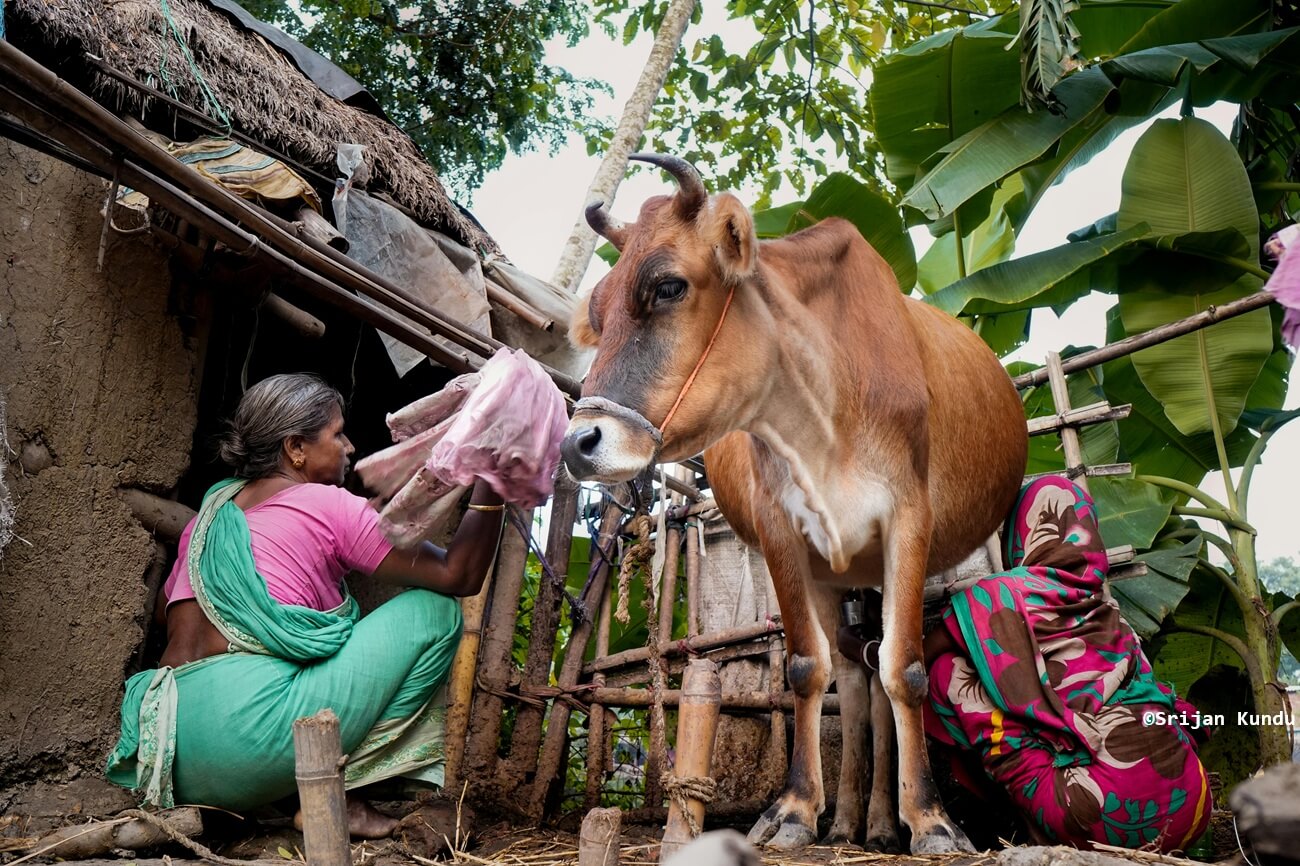
In regions like the Sundarbans, where landholdings are fragmented and climate risk is constant, farmers described how a cyclone can destroy a seasonal crop, erasing months of investment in a single event. During such periods, the small backyard farms sustained their households for months while cash transfers were delayed. The families relied on daily harvests to meet their food needs and sold surplus locally for cash. This dependence was not episodic; it was embedded in everyday life and continues to be so.
HOMESTEAD FAMILY FARMING: QUIET INSURANCE AGAINST UNCERTAINTY
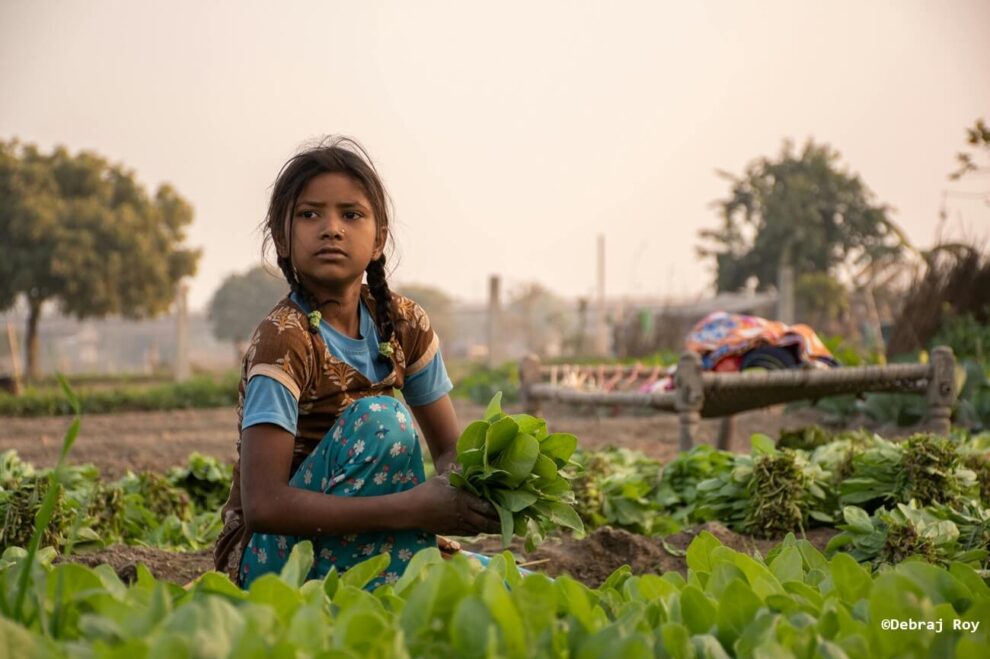
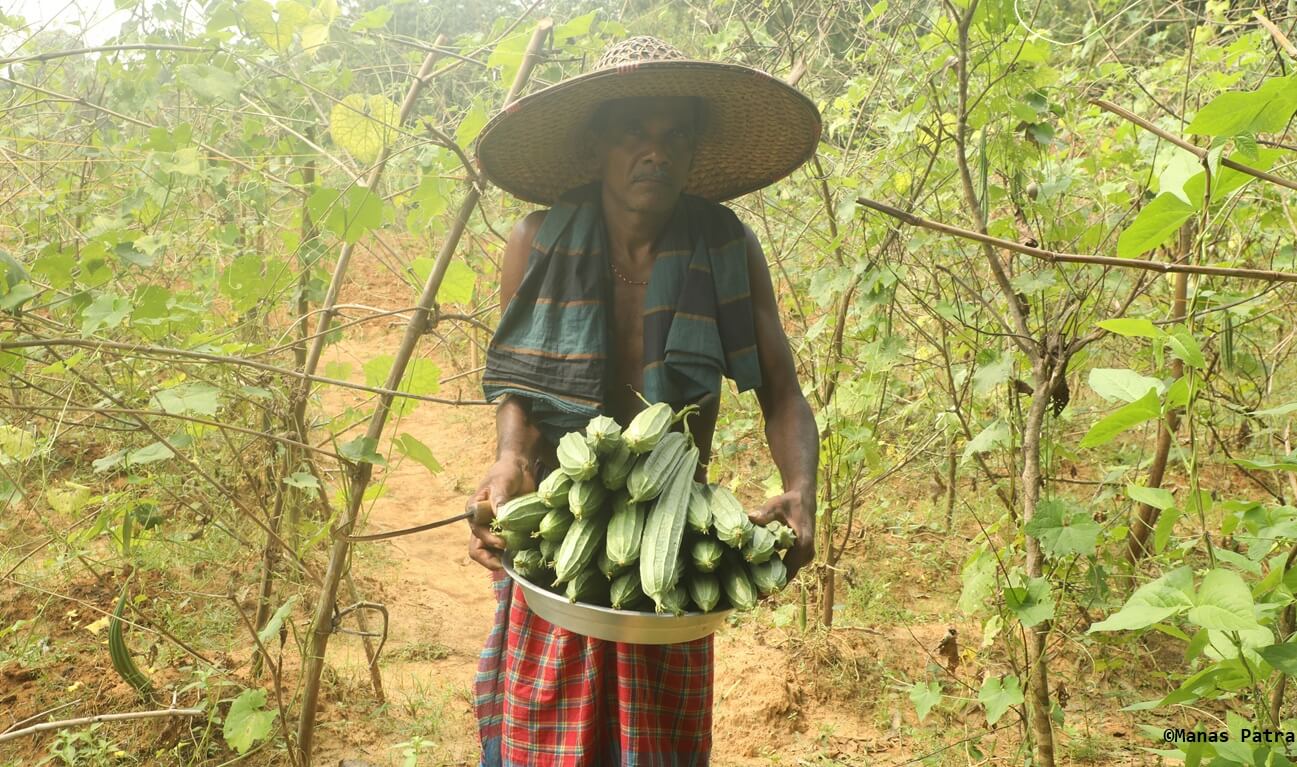
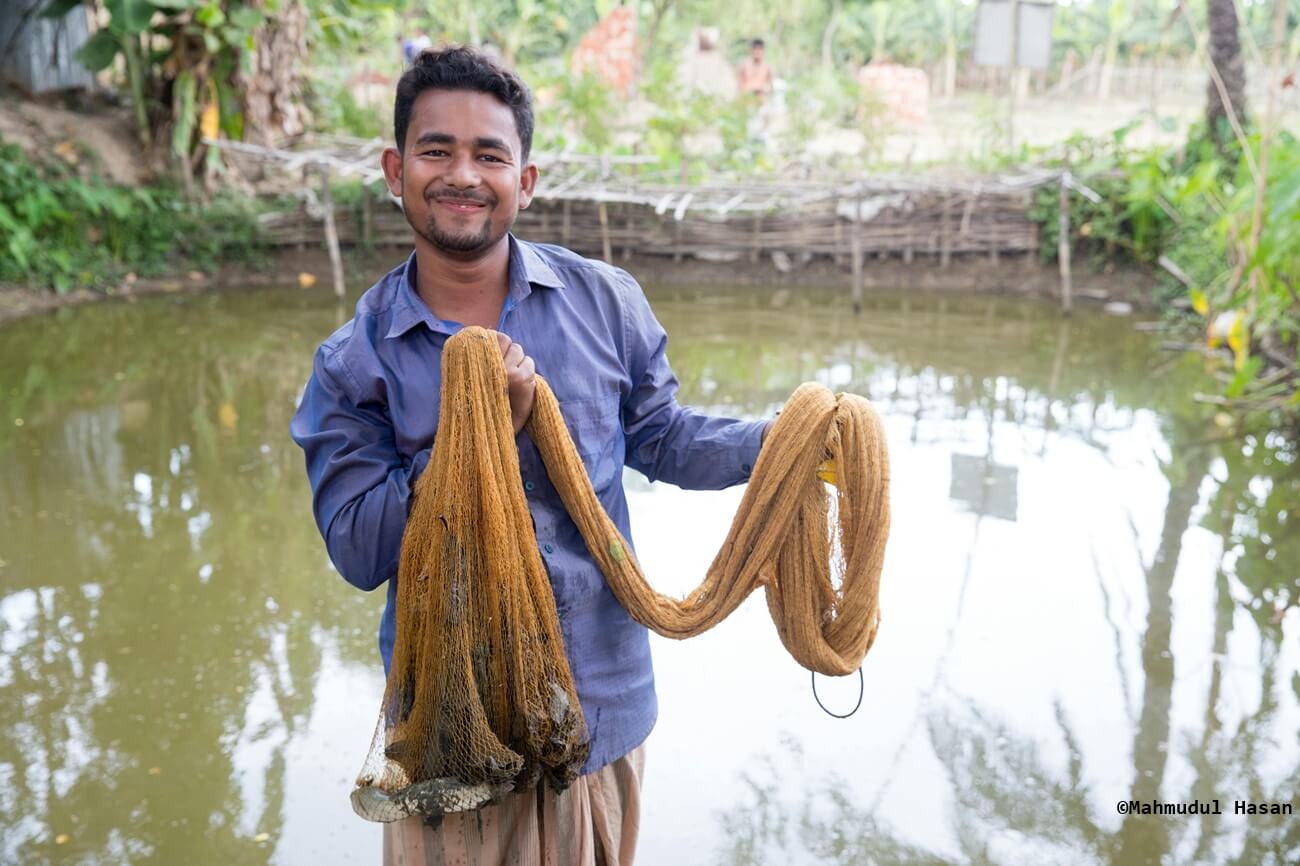
Across villages, households maintain this parallel risk-management system known as homestead family farming. Typically occupying around 0.1 ha (1000 square meters) of land, these farms integrate crops, trees, fish, livestock, and poultry, and rely on minimal external inputs and recycled resources internally. A decade ago, I observed that beyond formal extension programs, these systems functioned as a decentralised risk-distribution mechanism, reducing dependence on bureaucratic timelines, eligibility criteria, and administrative delays. That structural role has not diminished; if anything, climate volatility and market instability have made such systems even more relevant today. By diversifying risk across species, seasons, and income streams, homestead farms absorbed shocks in ways that no single crop advisory or subsidy programme could replicate. The system generates a benefit–cost ratio of approximately 5.7, reflecting economic efficiency alongside ecological stability. When commercial crops failed, these farms sustained the households.
However, the public extension support for the integrated components of this system remains highly uneven. At the local level, the public sector presence is largely limited to the Department of Agriculture, whose advisory services focus primarily on crop production. Extension support for other components is limited or fragmented, leaving most of the households to rely on their own knowledge and locally evolved practices. As a result, the integration that sustains homestead farms largely operates beyond the formal advisory structures.
Despite their consistent role in buffering households against shocks, homestead farms were rarely labelled as an innovation and remained largely invisible in extension planning. Their invisibility persists, reflecting institutional priorities more than empirical realities.
WHY FORMAL EXTENSION LOSES CREDIBILITY
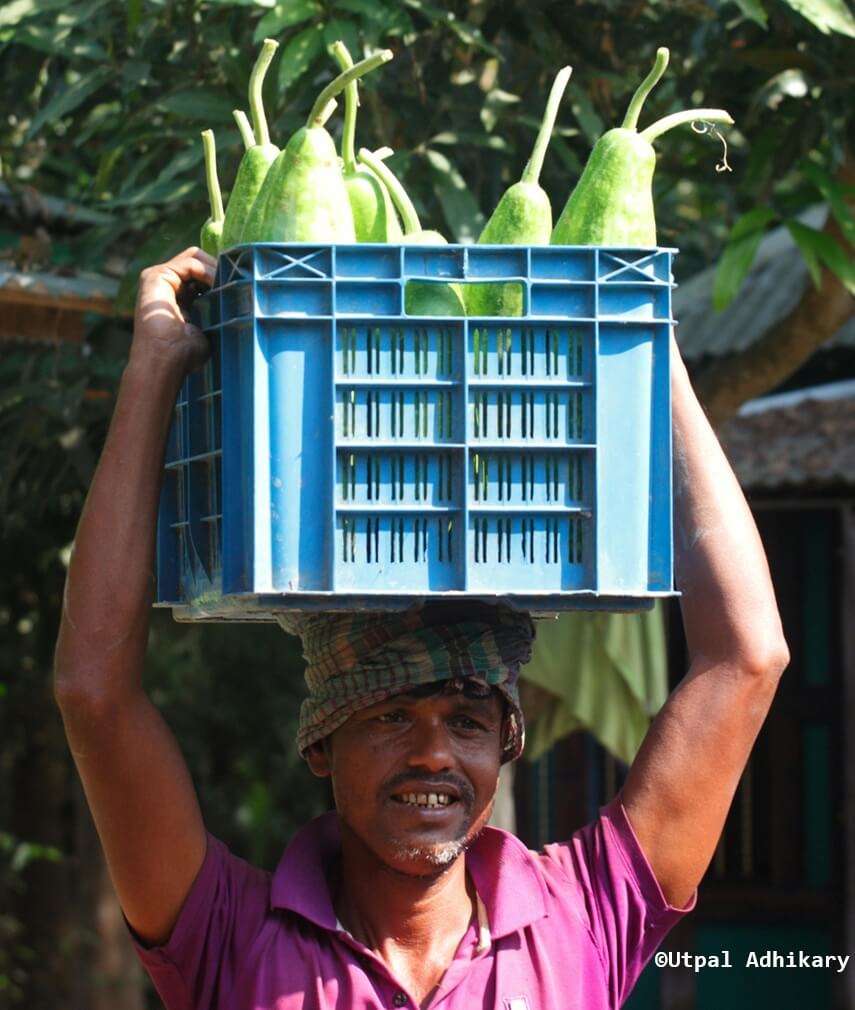
Nearly every homestead farm family I met followed the same principle: farmers trust their own experience first and adopt institutional advice only when it demonstrably improves results. The principle remains central to the credibility of extension today. Extension efforts often fail not only because of technical flaws but because they prioritise bureaucratic procedures and compliance over farmers’ actual needs. When procedures override outcomes, tools lose their relevance, and trust disappears. This problem is particularly evident in the public sector extension and advisory services. As a result, farmers often rely on multiple channels, including their farming community, private advisory services, and their own experience, when making decisions. Consequently, when the formal extension systems fail to demonstrate relevance within this broader information network, their credibility weakens further.
Homestead family farming persists because it is flexible, responsive to uncertainty and effective where formal systems fall short. A credible extension system must recognise and strengthen this reality, not ignore it.

This means moving beyond a single crop advisory service and acknowledging homestead farming as an integrated livelihood system. Extension services can strengthen these systems by supporting farmer-led experiments with a locally adopted combination of crop, fish, poultry, and livestock while also providing context-specific technical guidance that responds to the ecological conditions of each locality. It also requires recognising the pluralistic advisory groups, such as community-based organisations, NGOs, and farmers’ networks, because in regions like Sundarbans, these actors play an important role in shaping farmers’ decisions. Therefore, better coordination among these actors is necessary, along with the creation of platforms that promote integrated advisory support rather than treating each component as an isolated sector.
CONCLUSION: RECENTRING EXTENSION POLICY
My survey and engagement with farmers revealed a simple but often overlooked truth: homestead family farming is not a residual practice awaiting modernisation. It is an adaptive, knowledge-rich system that already delivers resilience, food security, and risk reduction outcomes, which many extension programs and digital tools continue to pursue.
A decade later, as extension becomes more digitised and policy discourse more technology-driven, the core lesson remains unchanged. If extension policy continues to prioritise scalable tools over locally embedded systems, it will continue to miss its stated objectives. Recentring extension around homestead family farming does not require abandoning science and technology. It requires reordering priorities:
- Replace uniform advisories with context-sensitive frameworks– This would require shifting from generic recommendations to locally adapted advisories based on field inspection. Although public extension systems are often primarily engaged in implementing schemes, local-level staff and partner organisations can facilitate farmer consultations and on-farm trials to ensure that recommendations reflect local ecological conditions.
- Integrate homestead resilience indicators into extension targets- Presently, the monitoring and evaluation in many public extension systems focus mainly on administrative indicators such as the number of meetings conducted or farmers participating. Resilience indicators should be incorporated to complement the existing reporting system. This requires including outcomes such as diversity of species maintained in homestead farms, household food availability derived from this production and farmers’ adoption of locally adopted practices.
- Initiate funding for locally adapted and farmer-validated experiments. This does not necessarily require new funding channels; the existing programs, such as the Agricultural Technology Management Agency (ATMA), implemented by the state Department of Agriculture, already provide limited flexibility for activities like Kisan Mela, Exposure Visit, Farmers Training, Demonstrations, etc. Within such programs, a portion of resources could be allocated to participatory trials on the homestead farming system using locally adapted species, with results shared through extension platforms. These efforts could be supported by the local advisory groups within the broader pluralistic extension services.
Reordering priorities in this manner treats farmers as partners in generating and validating knowledge and innovation. Without these changes, extension may become increasingly digitised in form but remain ineffective in practice and impact.
The limitations of public extension services are relevant not only in the Sundarbans but also across West Bengal and other parts of India, particularly in remote, ecologically fragile, and tribal farming regions where extension systems must respond to the needs of poorer farmers. At a time when implementing large-scale institutional reforms is difficult, it is important to explore complementary approaches beyond traditional public extension structures.
One such approach involves strengthening para-extension models in which locally trained resource persons are accountable to the community and provide support to farmers engaged in homestead farming. A program such as Anandadhara implemented under the National Rural Livelihoods Mission (NRLM) in West Bengal offers relevant examples. Through women’s self-help groups, the program supports small farmers, particularly women, with crop production and backyard production practices in Sundarbans. Some community volunteers called “Prani Bandhu” also assist farmers with livestock management at their doorstep. These initiatives suggest that community-embedded systems may complement formal extension services and provide locally responsive support in contexts where conventional extension mechanisms have limited reach.
 Anindita Bhattacharya is an independent researcher and writer specialising in agrarian crisis, small-scale agriculture (homestead farming), and rural livelihoods. She can be reached at aninditabhattacharya.87@gmail.com.

Add Comment