


In this blog, R. M. Prasad examines the pervasive unreliability of information shared on social media and advocates for stricter content regulation, greater digital literacy, and AI-powered curation systems to effectively address misinformation.
CONTEXT
Social media has transformed agricultural extension by enabling rapid, low-cost, and interactive knowledge exchange between farmers, researchers, and experts. Key platforms like WhatsApp, YouTube, and Facebook are widely used to share real-time, personalised content on various topics, bridging the gap between farm experts and farmers. Given the great advantages of social media (Box 1) for information sharing, understanding how social media can be effectively utilised to disseminate agricultural technologies in developing countries is an important policy consideration.
| Box 1: Advantages of Social Media Social media has several advantages over other ICTs in disseminating information.Firstly, compared with SMS, social media allows informants to more easily disseminate agricultural information to large numbers of people with a single post.Secondly, informants can post information on social media, along with images and videos, helping people understand the information being distributed.Thirdly, social media allows users to easily share and discuss information with other users, both publicly and privately. For example, users can have public discussions by commenting on posts or communicate privately through direct messages.Finally, users can learn about informants by accessing the informants’ account pages, which is expected to improve the credibility of these information sources. |
One challenge with the increasing use of social media is the unreliability of the information conveyed. There is a great potential for the rapid spread of misinformation, disinformation, and fake news through social media. This is aggravated by the fact that social media platforms lack traditional gatekeepers like journalists, and users often prioritise interactive media and peer-to-peer sharing over professional news sources. The spread of misinformation through social media can have real-world consequences, including public panic, economic losses, and erosion of trust in institutions. So, information quality in social media is a critical factor that defines how effectively information is conveyed, understood, and applied.
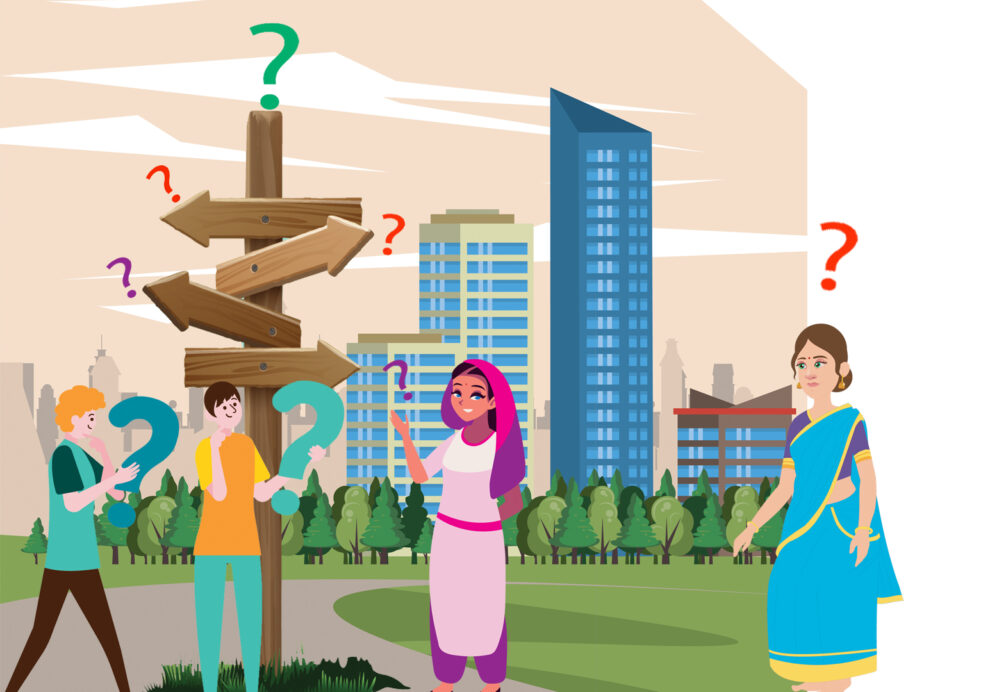
WHAT AFFECTS INFORMATION QUALITY?
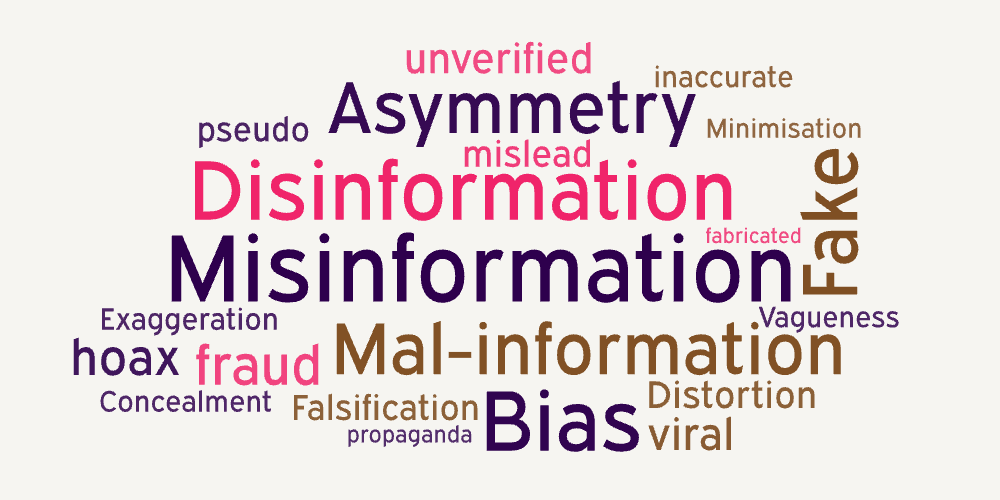
Misinformation
Misinformation is false or inaccurate information that gets the facts wrong. It spreads rapidly across social media and other online platforms, posing risks to societal well-being. Research on the psychology of misinformation has proliferated in recent years. Yet, many questions remain about how and why misinformation spreads, how it affects behaviour and how best to counter it. Answering these questions well depends in part on how misinformation is defined; it can include inaccurate news, conspiracy theories, disinformation campaigns, propaganda, and slanted reporting. Misinformation can be defined as “any information that is demonstrably false or otherwise misleading, regardless of its source or intention.” A social media rumour in Canada claimed that butter became harder at room temperature because cows were fed palm oil. This infamous ‘buttergate’ scandal is a classic example of misinformation. Similarly, the widespread misconception that ‘organic’ means completely pesticide-free is misinformation, since organic farmers use plant-based pesticides.
The issue of misinformation in agriculture has been largely ignored for years, but has gained significant attention since 2016, driven by the widespread popularity of the term ‘fake news’ during the US Presidential election, COVID-19 controversies, and the increased use of social media. Before social media’s prevalence in agriculture, discussions of misinformation mainly focused on controversial topics such as the use of GMOs.
Disinformation
It is false information which is deliberately intended to mislead, intentionally misstating the facts. UNICEF identifies seven main types of misinformation and disinformation that can impact people.
These types are often categorised to help young people and parents navigate the digital landscape.
- Satire or parody- False, humorous content that has the potential to fool or mislead.
- False connections- When headlines, visuals or captions do not support the content.
- Misleading content- Information used to frame an issue or an individual incorrectly
- Fake context- Genuine content shared with false contextual information.
- Imposter content- Genuine sources or brands are impersonated by false information
- Manipulated content- Genuine information or imagery (such as images or videos) that is manipulated (e.g., deepfakes).
- Fabricated content- New, false content created, designed and created to harm or deceive.
Mal-information
Mal-information is information used to inflict harm on a person, organisation, or country. Mal-information in agribusiness involves the deliberate, malicious spread of true or context-manipulated information (e.g., specific farm practices, trade data) to cause harm, such as manipulating market prices, damaging reputation, or triggering panic. It often exploits social media, creating economic losses, lowering consumer confidence, and distorting food supply chains.
With increasing access to social media platforms, users can curate their own content streams and create their own “trust networks” or “echo chambers” within which inaccurate, false, malicious and propagandistic content can spread. These new ecosystems allow dis- and misinformation to flourish as users are more likely to share “exciting” or sensationalist stories and are far less likely to assess sources or facts properly. ‘Echo chambers’ is a term used to describe the experience of only seeing one type of content. Essentially, the more someone engages with the content, the more likely they are to see similar content. When an algorithm creates an echo chamber, it means the user will only see content that supports the user’s view. As such, it’s really difficult to hear others’ perspectives and widen their worldview. This means that when challenged, they become more defensive and are likely to spread hate.
Information biases
Information biases in extension education refer to systematic errors, distortions, or inaccuracies in the collection, interpretation, and dissemination of information meant for farmers and rural stakeholders. The common types of information biases are:
Confirmation bias: tendency to seek out and use information that confirms one’s views and expectations. In other words, cherry-picking information to validate certain points. This affects our ability to think critically and objectively, which can lead to skewed interpretations and the overlooking of information with opposing views. For example, while some argue that ‘soybean is the next super food’, another argument warns that ‘soybean causes cancer’. Social media is rife with unfounded claims about the health benefits and negative consequences of different types of food.
Conformity bias: It is similar to groupthink, which occurs when we change our opinions or behaviours to match those of the larger group, even if it doesn’t reflect our own. This bias may occur when we face peer pressure or try to fit into a particular social group or professional environment. Farmers continue cultivating a specific crop variety because it yields well, and many farmers in the locality are adopting it; this is a case of conformity bias. Another example is farmers preferring to grow a particular crop based on ‘peer effect’, even though the crop is found to be less adaptable to cope with climate change.
Status quo bias: This describes our preference for the way things are or for things to remain as they are, which can result in resistance to change. An example is the reliance of farmers on MSP-based cropping, creating a ‘rational inertia’, disregarding more potential and profitable crops.
Anchor bias: It occurs when we rely too heavily on the first piece of information we receive as an anchor for our decision-making. This causes us to see things from a narrow perspective. For example, if farmers received a record-high price last year, they may use that price as an ‘anchor’ for the current year, refusing to sell at a lower price, even though the price is reasonable.
Perception bias: This occurs when we judge or treat others based on often inaccurate, overly simplistic stereotypes and assumptions about the group they belong to. The gender bias against women input dealers by some farmers creates unfair competition and barriers to entry for women entrepreneurs.
Information Asymmetry:
This refers to a situation in which one party in a transaction has more or better information than the other. This imbalance can lead to market inefficiencies and unfair outcomes, as one party may exploit its informational advantage over the other. Essentially, it’s a mismatch of knowledge that can create power imbalances and affect decision-making. This is relevant in the case of organic farming, where educated farmers gather more information on certification, marketing, etc., than illiterate farmers.
Information distortion
It refers to changes in the form, meaning, or availability of information, which can be unintentional or deliberate. It can range from transmission errors to deliberate misrepresentation. There are different types of distortion. These include:
- Unintentional Distortion: This occurs when the sender doesn’t intend to distort the information, but a change in form, meaning, or availability leads to inaccuracies. For example, policies that subsidise fertilisers (e.g., urea) to boost yields may lead to excessive fertiliser application by farmers.
- Intentional Distortion: This involves deliberate alteration of information for specific purposes, such as promoting a particular viewpoint or obscuring facts. Examples include MSPs deliberately used to cultivate water-intensive crops and subsidised water for their cultivation.
- Concealment: This involves omitting specific information to create a false or misleading impression. For example, seed dealers may conceal information about seed viability, thereby affecting seed quality.
- Falsification: This involves delivering incorrect information. This is commonly noticed in the food industry, wherein false information about additives, preservatives, etc., is provided to consumers.
- Exaggeration, Minimisation, or Vagueness: These methods are used to limit the recipient’s understanding of the information or leave room for misinterpretation. The ‘precision trap’ in precision farming is a classic example of this. It occurs when accumulated small, inaccurate data inputs create a false sense of certainty, leading to “precisely inaccurate” decisions and eroding necessary checks and balances.
Information Overload
The phenomenon of information overload has been known by many different names, including: information overabundance, infobesity, infoglut, data smog, information pollution, information fatigue, social media fatigue, social media overload, information anxiety, infostress, infoxication, reading overload, communication overload, cognitive overload, information violence, and information assault. There is no single, generally accepted definition. Still, it can best be understood as the situation that arises when so much relevant and potentially useful information is available that it becomes a hindrance rather than a help. This is because the information exceeds a farmer’s capacity to process and utilise it. When faced with too many choices or contrasting information, farmers may experience ‘paralysis’, preventing them from making any decisions at all. Too much information on adaptive and coping strategies related to climate change is a classic case.
The best ways of avoiding overload, individually and socially, appear to lie in a variety of coping strategies, such as filtering, withdrawing, queuing, and “satisficing.” Better design of information systems, effective personal information management, and the promotion of digital and media literacy also play a part. Overload may perhaps best be overcome by seeking a mindful balance in consuming information and in finding understanding.
Information poverty
In simplest terms, it means that individuals, organisations, or communities have insufficient information to be effective, a contested concept that has been understood in different ways. It is closely connected to the concept of the so-called digital divide, the idea that some individuals and groups are disconnected from the ability to access and use digital information. Women farmers often find it difficult to access and utilise timely and relevant information such as weather forecasts, market prices, etc which affect their farming performance.
SUGGESTED STRATEGIES FOR IMPROVING INFORMATION QUALITY
While social media is a transformative tool for extending knowledge, its effectiveness depends heavily on managing the quality of the information shared, requiring a strategic, user-centric approach from extension professionals. Enhancing information quality on social media in India requires a multi-pronged approach combining stricter content moderation, improved digital literacy, and AI-driven curation to filter misinformation.
- Content Generation & Curation:Extension agencies must curate, verify, and create their own content, using visual aids like videos and images to ensure accuracy and relevance. Encourage influencers and users to verify information before sharing to improve the overall quality of content.
- Adopting Quality Frameworks: Adopting a “fit for use” framework that focuses on the intrinsic, contextual, and representational quality of the information.
- Platform Accountability & Regulation: Implementation of the Digital Personal Data Protection (DPDP) Act, 2023, is critical to penalise platforms for misuse of data and to curb harmful content. Platforms should prioritise ethical AI to reduce the spread of abusive, false, or misleading information.
- Official & Trusted Information Channels: Government agencies can improve trust by using social media for direct, real-time updates on services and policies, countering misinformation with authenticated information.
- Leveraging Analytics for Quality: Brands and content creators should use analytics to focus on engagement rather than reach, fostering communities that value authentic and verified information. Using social media analytics to track engagement, measure outcomes, and refine strategies to ensure that the information meets the farmers’ needs.
- Promotion of Credible Content: Encouraging the creation of high-quality, educational, and socially responsible content to counteract the proliferation of misinformation.
- AI Moderation: Implement robust AI tools to flag false information and harmful, unethical content.
- Community Moderation: Use crowd-sourcing to identify misinformation and promote high-quality, trusted sources.
 Dr. R. M. Prasad is a retired Agricultural Extension expert from Kerala Agricultural University, with over 32 years of service, including as Associate Director of Extension. He contributed to European-funded projects like KHDP and KMIP, served as a National Facilitator for MANAGE, and held key roles at NIRDPR and the Government of Meghalaya. He was also a member of ICAR’s Research Advisory Committees for IIMR and DCR. His interests include technology transfer, climate change, and skill development. He can be contacted at drrmprasad@gmail.com



Great to see AESA driving this conversation, which is very timely and well written. It should encourage extension professionals, policymakers, and platforms alike to think critically about how we uphold information quality while leveraging social media’s reach.
Looking forward to more dialogues on issues of contemporary importance and practical frameworks for implementation.
“The blog is highly informative, particularly for those working in the agriculture sector. Many people
are unaware of the true nature of the crisis and often rely on guesswork or information provided by
dealers and company representatives. Agricultural extension services today seem largely confined to
academic settings. It is time for the government to direct qualified agricultural experts to actively
support farmers in the field. Until that happens, fake news and misinformation will continue to
spread”.
“Well written, highlighting the advantages, disadvantages, and information overload in the social
media. When biased and fake news spread rapidly in the social media, the society is in danger”
The piece not only describes the social media landscape and the uncertainties surrounding it, but
the section I appreciated most was the final one, which discusses how to make the media more
trustworthy. However, given the way the media ecosystem is structured, the real question is: who
will bell the cat? I rely on informed judgment and knowledge-based discretion when responding to
media content. Well done—please keep blogging.
This is a highly relevant, timely, and valuable piece of writing. It is clear, well-structured, and
thoughtfully presented as an essay. You may consider including the word “Agriculture” in the title, as
the term “extension” alone may not fully capture the seriousness and scope of the issues discussed.
Excellent work—congratulations!
Information in agriculture needs two things to succeed: Quality and accessibility. We need the regulations to keep the information honest, but we need social-media-optimized formats to keep it relevant.
This is a well-written blog on the present-day extensive use of social media in the field of Agricultural Extension covering wide range of issues. Unreliability of social media information whether through misinformation, disinformation or mal information is a serious bane of this effective tool in communication. Social media is a powerful tool with global connectivity that imparts multiplier effect by its design. An unfair or untrue intent could probably magnify and inflict incomprehensible impacts. Very happy to read the suggested strategies for information quality. To me, this topic not only is relevant to Agricultural extension, but to every other known field of knowledge.