



Platform: CABI Academy
Duration: Approximately 3-4 hours
Certification: Yes, free of cost
The Primer on Evidence Synthesis course, offered through the CABI Academy, is a self-paced, fully online programme available free of cost. This short course enables learners to develop a foundational understanding of the evidence synthesis landscape by introducing key terminologies and core principles. In addition to explaining what evidence synthesis entails, the course highlights its importance for informed decision-making, particularly in the agriculture sector.
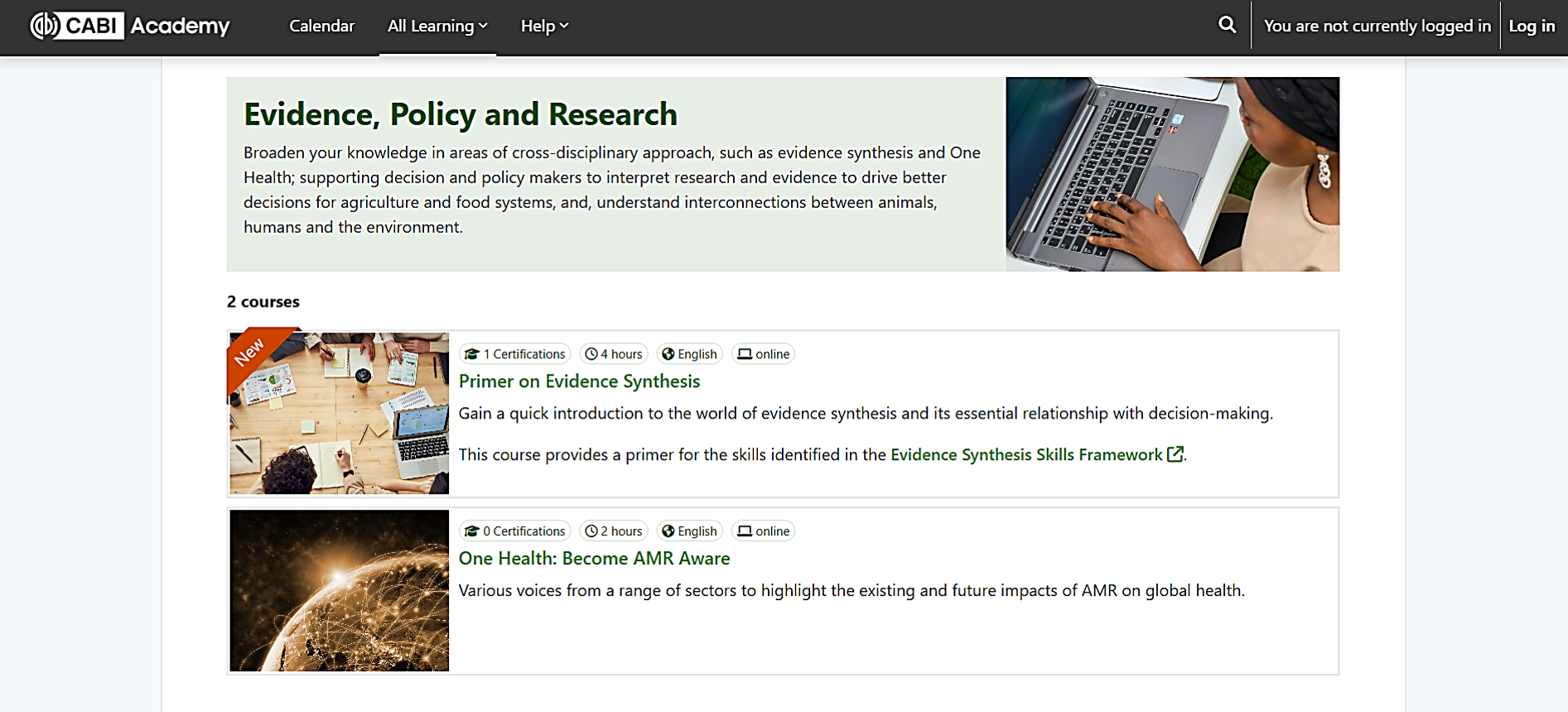
The course follows a fully asynchronous online learning model, allowing learners to progress at their own pace and making it suitable for working professionals, researchers, and students. The course content is designed for beginners to early-intermediate learners, making it accessible to learners with limited prior exposure to evidence synthesis, while still offering sufficient conceptual depth for those intending to engage in systematic reviews, scoping reviews, or policy-oriented evidence assessments.
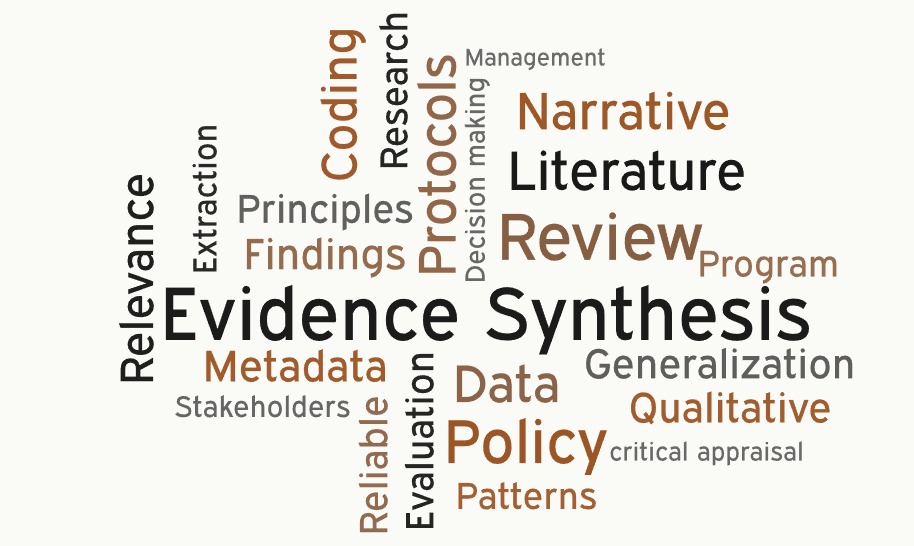
The course aims to teach learners how to formulate research questions, design protocols for evidence synthesis and literature searches, and draw meaningful conclusions. This helps them systematically identify, evaluate, and synthesise existing research evidence to support informed decision-making.
In terms of organisation, the course is logically structured into sequential modules that build progressively from basic concepts to applied understanding.
The course is divided into six modules.
- Introduction to evidence synthesis involves understanding what evidence is and the meaning of evidence synthesis. It covers various sources of evidence and different study types. Additionally, it explains the purposes and applications of evidence synthesis.
- Stakeholders in evidence synthesis discuss who the stakeholders are, the evidence synthesis team, and conflicts of interest.
- The evidence synthesis type’s module includes the different kinds of evidence synthesis, evidence maps, full synthesis, and umbrella reviews.
- In the process and reporting module, the steps involved, protocols in evidence synthesis, and reporting standards are covered.
- Principles of evidence synthesis introduce the principles: being comprehensive, representative, transparent, reproducible, reliable, and timely.
- The evidence synthesis and decision-making module addresses how evidence synthesis can aid decision-makers, identifying patterns and choosing the appropriate approach.
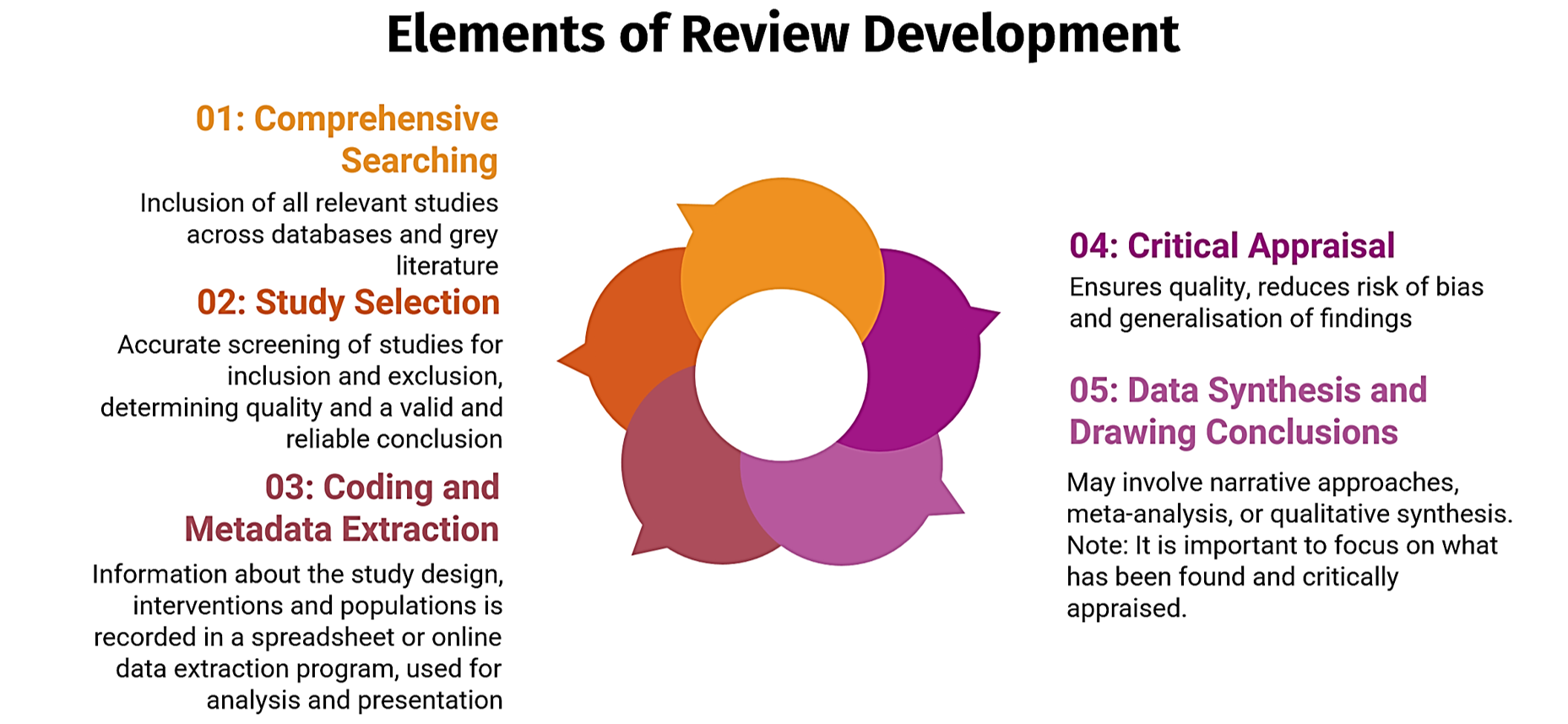
Diagram of review development elements from course content
Each module is followed by a summary and reflection on what we have learnt in this section. The instructional format primarily consists of clearly written textual lessons supplemented by diagrams, examples and real-world case illustrations. While there are no formal peer interaction forums or graded assignments, the course integrates reflective activities and a personal learning log option through a private blog feature on the site itself. They also encourage note-taking and quick reference. We can see and reflect on all our blog entries at any time.
The grading and certification process is straightforward. There are no high-stakes examinations; instead, successful completion is based on engaging with all required modules and activities. The platform automatically tracks progress, allowing learners to pause and resume the course at their convenience. The instructional design reflects a professional and learner-centric teaching style. Learner engagement is encouraged through reflection rather than assessment pressure, which aligns well with adult learning principles.
Personally, the course was intellectually satisfying and engaging, as it directly addressed my immediate learning goal of understanding evidence synthesis in a structured way. The self-paced format offered flexibility, making the learning process smooth and manageable. The content was logically ordered, progressing from basic concepts to moderately complex ideas, which was especially helpful for a beginner. The course struck an effective balance, neither overwhelming nor superficial, providing a focused yet meaningful learning experience. Enrolled to strengthen methodological skills for academic research, policy analysis, and extension-related work, the course successfully fulfilled these expectations.
Overall, I would recommend it to researchers, extension professionals, policymakers, and students seeking a credible introduction to evidence synthesis, especially those looking to upskill.
 Basu Anand is a PhD student in Agricultural Extension at Navsari Agricultural University. He was selected for the Sustainability Ambassador Global Exchange Program. He actively engages in research, writing and mentoring. He can be contacted at basuanand.edu@gmail.com

Add Comment