


In wetlands, water is the defining force shaping both ecosystems and livelihoods. Communities living in these regions hold rich traditional knowledge of water, embedded in their practices, institutions, and stories. In this blog, Suchiradipta argues that Extension and Advisory Services can serve as a vital bridge by translating between scientific and local knowledge, convening fair and inclusive dialogue when interests collide, and fostering learning-by-doing across generations.
CONTEXT
World Wetlands Day (2 February) reminds us that wetlands quietly hold together habitats and ecosystems. This year’s theme, Wetlands and Traditional Knowledge, reminds us that ecosystem services rely on deep relationships between water and livelihoods, landscapes and rituals, and ecological processes and community rules. If we celebrate wetlands only as infrastructure, we miss the living knowledge systems that have kept these waters usable and meaningful across generations.
WETLANDS – THE MELTING POT OF CULTURE, HERITAGE, AND ECOLOGICAL SERVICES
In Tirunelveli, Tamil Nadu, the temple tank at Thirupudaimaruthur features a small monkey figurine carved in a bowed posture at the steps. It serves as an early warning indicator. When the water level reaches the monkey’s mouth, it signals an impending flood to the local community. Similarly, in Odisha and West Bengal, wetlands sustain heritage through religion and culture. The Sholapith craft is intrinsic to worship at the Jagannath Temple in Puri and Durga Puja in West Bengal. Artisans harvest the stems of shola (Aeschynomene aspera), a plant that thrives in waterlogged conditions, during September and October to create deity adornments and Tahia headgear for Odissi dancers.
These and many such examples from across the country show how traditional knowledge encodes early warning, timing, restraint, and stewardship, shaping what the Ramsar Convention calls the wetland’s ecological character and its wise use.
This is where Extension and Advisory Services (EAS) in the wetlands (Box 1 and Table 2) matter. If traditional knowledge is living and adaptive, it needs enabling conditions such as spaces for learning, mechanisms for negotiating trade-offs, and platforms where local observations meet scientific evidence. By institutionalising knowledge exchange and skills-building, EAS ensures that local stewardship practices remain resilient and relevant.
| Box 1: EAS in the wetlands “Wetland EAS” should ideally be a pluralistic extension in which multiple actors across agriculture, fisheries, water, environment, and local governance deliver the combined advisory, facilitation, and capacity-building functions. |
Celebrating the Wetlands but looking beyond
To understand the role of culture and heritage in wetlands, we must first define what we are celebrating. Traditional Ecological Knowledge (TEK) is a “cumulative body of knowledge, practices, and representations, maintained and developed by peoples with extended histories of interaction with the natural environment”.
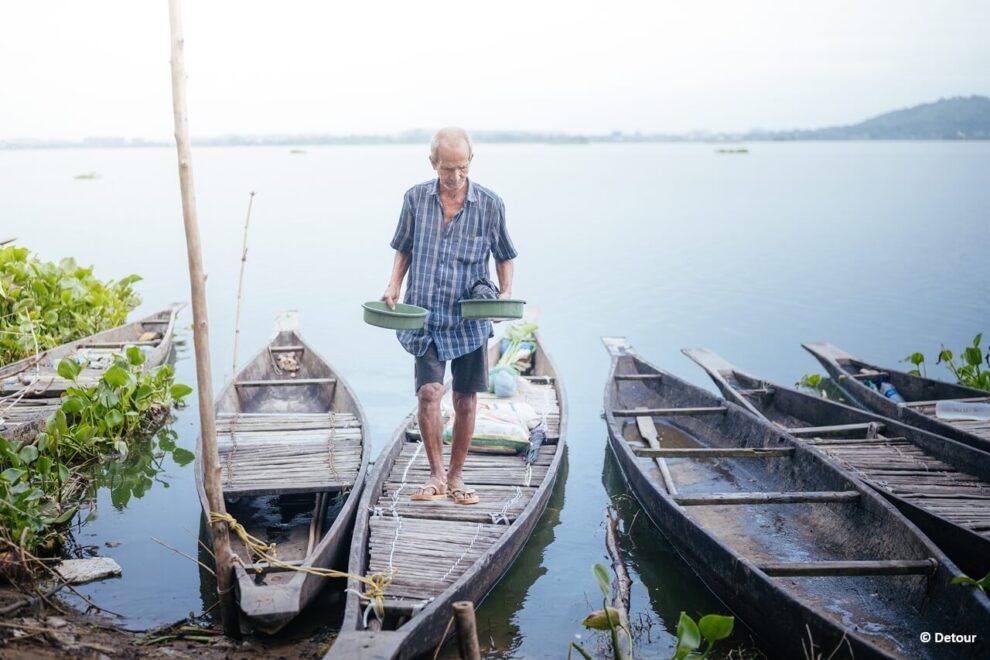
In the context of wetlands, this knowledge transforms physical spaces into cultural landscapes where identity and heritage emerge as functional outcomes of the ecosystem. For example, the Rabha community in Assam uses traditional gear like the polo and juluki during the Bahow festival to reinforce social bonding while managing fish stocks, just as beliefs in guardian deities at Pulicat Lake foster everyday stewardship. In these ecotones, water remains the undertone of wisdom; it lives in shared norms about access, restraint, and care. This is further evidenced in the Thale Noi wetlands of Thailand, where buffalo herders draw on generations of knowledge to navigate rising floodwaters and manage animal health, showing that wise use is often embedded in traditional livelihoods rather than in external regulation. Ultimately, recognising wetlands as cultural landscapes means acknowledging that biodiversity conservation is incomplete without conserving the cultural systems that manage it.
WETLAND CONSERVATION AND EAS
While conservation biology provides the what (the targets for biodiversity and water quality), EAS provides the how. This alignment is clearer when we look at the Ramsar Convention’s CEPA framework (Communication, Capacity Building, Education, Participation, and Awareness), which is meant to complement and integrate with management rather than sit as a standalone outreach track. EAS can play a critical role in keeping wetland knowledge systems legitimate, inclusive, and usable in rapidly changing social and climatic conditions. Table 1 maps these pillars to specific advisory functions.
| Table 1: CEPA Pillars, their counterpart EAS functions, and expected outcomes | ||
| CEPA Pillar | Strategic EAS Function | Expected Outcome |
| Communication | Knowledge bridging and facilitating locally usable practices | Translation of scientific data into local technologies, innovations, and management practices. Connect new information to existing knowledge; build feedback loops. |
| Capacity Building and Education | Technical training and multi-scale analysis | Communities and local managers build skills to observe, map, and interpret change (e.g., basic geospatial tools and monitoring) to support both on-site stewardship and off-site support where relevant (in-situ / ex-situ). |
| Participation | Convening multi-stakeholder platforms | Structured inclusion of women, youth, and traditional knowledge (TK) holders in decision-making and access and benefit sharing agreements. |
| Awareness | Value recognition and ESV education | Shift in perception using Ecosystem Service Value (ESV) coefficients to quantify wetland benefits. Use valuation as decision support, not a single coefficient. Method choice should match the service, decision, and data. |
According to the Ramsar Convention, the wise use of wetlands cannot be achieved solely through top-down information. EAS can play an essential role in ensuring the continuity and coordination required for governance, particularly in managing transboundary and upstream/downstream resources where interests often conflict.
Crucially, in Ramsar sites, wise use cannot be achieved by information alone. Complex challenges like the worm poaching threat in Pulicat Lake, where local livelihoods clash with ecological integrity, require awareness, mediation, and the development of alternatives. EAS, if sufficiently capacitated, can help translate the celebration of wetlands into tangible capability, coordination, and continuity, ensuring that people and wetlands become an operational reality.
EAS is already present in wetland landscapes, but it is often invisible and fragmented. In agriculture, fisheries, livestock, and irrigation, advisory functions exist, though they rarely operate with an explicit mandate for wetland stewardship. Some actors already engaged in EAS activities, and others who could be important in the wetlands, are discussed in Table 2.
| Table 2: Potential EAS actors in the wetland landscapes | |||
| Stakeholder group | Wetland EAS roles | Current roles | Common gaps/risks |
| Agriculture extension (DoA; ATMA, where active) | Advisory, demonstrations, group formation | Promote wetland-compatible cropping, nutrient/pesticide reduction, water-use efficiency; convene farmer learning. | Wetlands are often treated as water resources rather than as socio-ecological systems; incentives focus on yields/targets. |
| Fisheries dept/ fisheries extension | Advisory, norms, training | Sustainable harvest, gear norms, fish health, post-harvest, diversification incl. SIS | Often weak workforce/budget; limited outreach beyond cooperatives |
| Irrigation/Water Resources | Irrigation infrastructure support, water governance support | Water allocation schedules, conflict resolution, O&M, training | Focus on command systems; wetlands are not always recognised as managed water bodies |
| WUAs/WUCS | Water governance | Water allocation schedules, conflict resolution | Conflicting stakeholder interests and a lack of expertise in conflict resolution |
| Environment/ Wetland authority | Regulation, planning support | Management plans, ecological character monitoring, restoration guidance | Not designed for continuous household-level advisory |
| Local government (PRIs/ULBs) | Convening, coordination | Local rules, enforcement support, budgeting; link to livelihoods schemes | Capacity constraints; competing priorities |
| Pollution control/municipal agencies | Risk reduction | Effluent compliance, sanitation links, and solid waste controls | Often compliance-only; limited participatory engagement |
| Forest and wildlife | Biodiversity stewardship | Habitat protection, invasive control, and eco-development | Can become exclusionary without negotiated access rules |
| NGOs/CSOs | Facilitation, rights, capacity | Community mobilisation, training, participation processes | Power asymmetry; funding fragility |
| Producer/ resource-user orgs | Peer advisory | Social norms, compliance, local monitoring, conflict mediation | May exclude women/youth/marginal users without safeguards |
| Capacity Development organisations (WALMI, SAMETI, etc.) | Training curricula on wetland-water interactions: short, field-ready learning units | Train interdisciplinary staff, build extension capacities | Rarely taught as a dedicated, applied module for extension practice |
| Research/ education (KVKs, ICAR, universities) | Technical backstopping | Evidence, training modules, and monitoring methods | Disconnected from continuous field facilitation |
| IWMI/CGIAR | Evidence generation; policy engagement; capacity building for agencies/ partners | Build decision-support tools; create scalable guidance for wise use; strengthen M&E and learning systems for wetland interventions. | Last mile delivery gap; Sustainability and handover risk |
OPPORTUNITIES FOR IMPACT
Wetland protection/restoration is increasingly framed as cost-effective climate adaptation and mitigation with equity co-benefits. It also requires policy shifts away from drivers of wetland loss and better integration into rural/urban planning. However, despite the richness of traditional knowledge, there are significant gaps in its integration into wetland management. Within the complex socio-ecological systems of wetlands, EAS can function as a stewardship support system by driving four critical shifts in how we manage these landscapes.
1. Bridging Contextual Knowledge and Operationalising TEK: There is a critical need to move from simply documenting Traditional Ecological Knowledge (TEK) to operationalising its management. EAS actors can translate between the languages of science and tradition, helping managers and TEK holders align their evidence. For example, EAS can validate citizen science initiatives, such as community observations of siltation in the Maguri-Motapung Beel, against hydrological data to create a shared reality for decision-making. Similarly, existing knowledge, such as the nutritional value of Small Indigenous Species (SIS) cultivated in the East Kolkata Wetlands, needs to be translated into practical advisories and shared norms for aquaculture farmers.
Potential EAS actors: IWMI/CGIAR; government departments (irrigation, pollution control, agriculture, water resources, etc.); NGOs/CSOs; Research/education (KVKs, ICAR, universities).
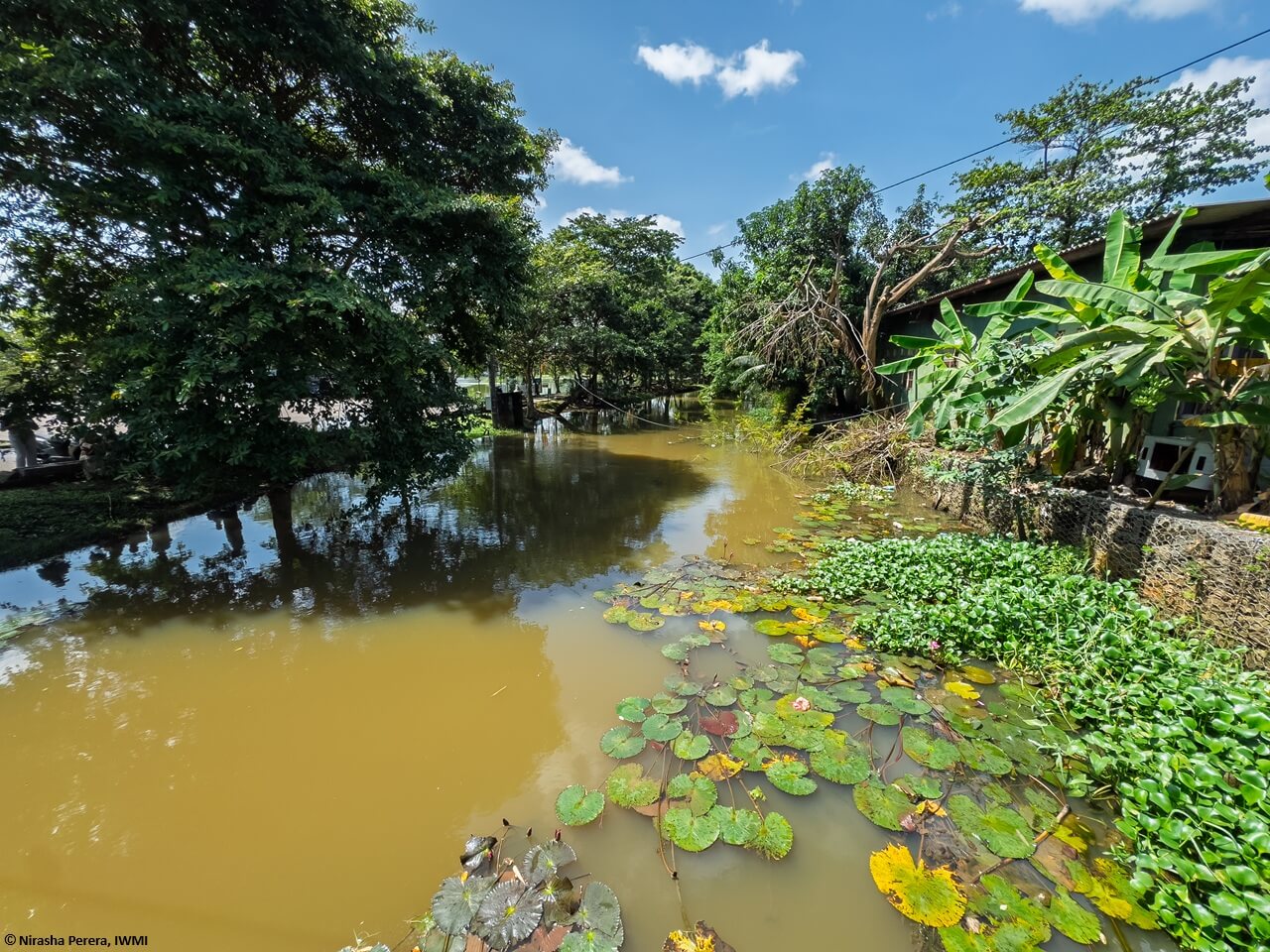
2. Facilitating Governance and Practice-Based Learning: Beyond knowledge bridging, EAS can address the fragmented governance that often plagues wetlands, where responsibilities are spread across departments for irrigation, municipal services, forests, fisheries, and pollution control. To address the resulting accountability gaps, EAS must move beyond generic outreach to provide engaged support and facilitation. The “Wetland Engagement Champions” model proposed for Colombo is an interesting approach for identifying local needs through multi-stakeholder platforms. Furthermore, because change happens through doing, EAS can facilitate practice-based learning. In the East Kolkata Wetlands, where farmers are masters of wastewater reuse, EAS can facilitate farmer-to-farmer exchanges to refine practices for nutrient recovery and fish health management.
Potential EAS actors: Government departments (irrigation, pollution control, agriculture, water resources); Capacity Development organisations (WALMI, SAMETI, etc.); KVKs; Producer/resource-user organisations.
3. Sustaining Intergenerational Stewardship: This engaged support must also extend to temporal and intergenerational dimensions. It is essential to move from one-day celebrations like World Wetlands Day to year-round learning cycles that align with ecological realities. For instance, since the breeding phenology of fish in Indian floodplains is highly sensitive to temperature and rainfall patterns, advisory cycles should mirror these natural rhythms. This approach helps sustain intergenerational continuity, which is vital because traditional knowledge relies on cultural transmission. The decline in youth interest in traditional livelihoods, as noted among buffalo herders in the Thale Noi wetlands of Thailand, poses a risk to wetlands. EAS can counter this by fostering school partnerships and mentoring programs that make traditional ecological knowledge aspirational for the next generation.
Potential EAS actors: Research/education (KVKs, ICAR, universities); IWMI/CGIAR; Pollution control/municipal agencies (especially for citizen scientist monitoring); WUAs; Environment/Wetland authority.
4. Elevating Culture and Voice in Decision-Making: Finally, we must move from viewing culture as “soft” to viewing culture as vital outcomes, where cultural identity and “sense of place” are tracked alongside ecological character as indicators of wetland health. Cultural services are often intangible, yet they drive tangible conservation behaviours. Hence, it’s important to measure changes in cultural conditions like identity, continuity, participation, knowledge transmission, access, and meanings. This requires ensuring that EAS functions as a mechanism for voice and inclusion in high-stakes decision-making. Whether it is the fishing communities of Deepor Beel or the indigenous groups near Dorabeel facing industrial threats, EAS can ensure that traditional knowledge holders are active participants in policy and advocacy spaces. Further, creating multistakeholder platforms for diverse actors to co-design solutions can be an essential way to facilitate dialogue and identify specific local needs.
Potential EAS actors: NGOs/CSOs; Capacity Development organisations (WALMI, SAMETI, etc.); Government departments.
CONCLUDING THOUGHTS
Wetlands are living socio-ecological systems where water flows meet livelihoods, memory, and everyday rules, whether in wastewater-fed fisheries, floodplain fishing grounds, coastal creeks, or temple tanks. This World Wetlands Day theme, Wetlands and traditional knowledge: Celebrating cultural heritage, is a call to protect the knowledge systems that keep wetlands usable and meaningful today. Doing that means year-round stewardship through ethical engagement with traditional knowledge, grounded in consent, ownership, and benefit-sharing; real participation in planning and monitoring; and practical support that helps communities adapt as climates and economies change.
Integrating wetlands into extension and advisory services
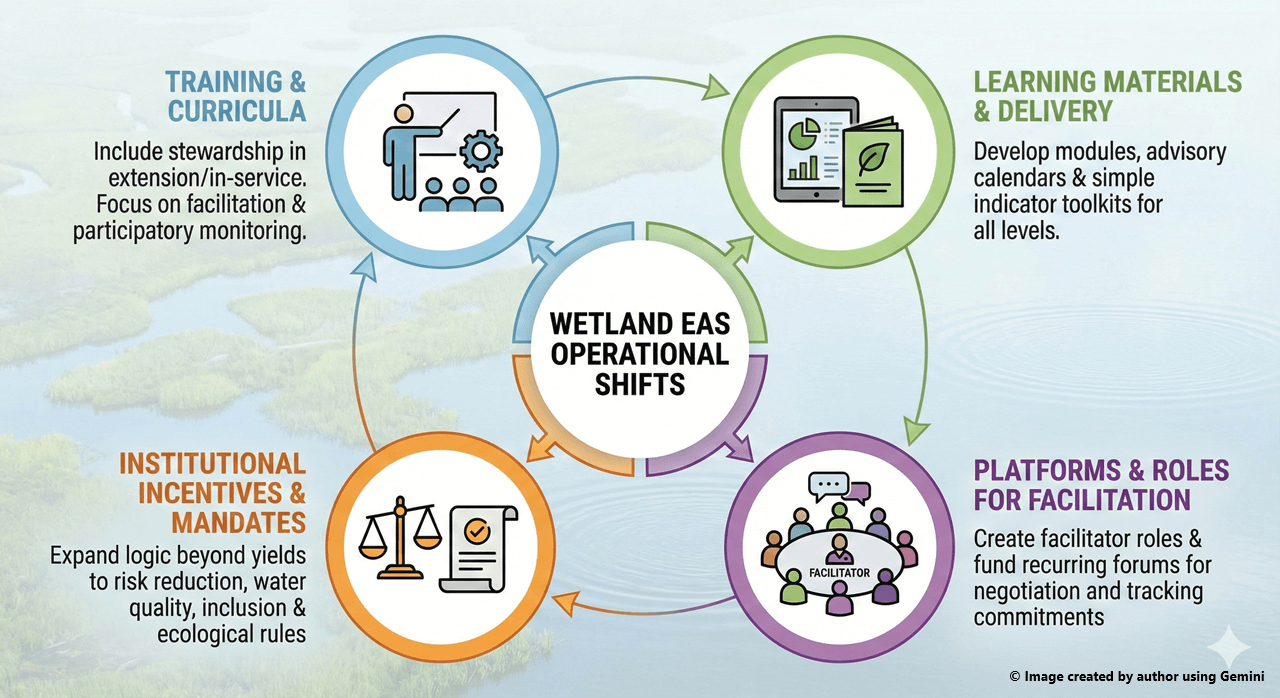
Extension and Advisory Services can be the connecting thread here by translating between scientific and local knowledge, convening fair dialogue when interests collide, and supporting learning-by-doing across generations (Figure 1). Investing in these relationships is critical to ensure wetlands remain not just on maps, but as lived socio-ecological landscapes maintained through everyday stewardship practices.
Suchiradipta Bhattacharjee, a PhD in Agricultural Extension, is a  Researcher at the International Water Management Institute. She specialises in Policy Analysis, Climate Change Adaptation, and Digital Agriculture, leading research on participatory governance, water management, and smallholder prosperity. She can be contacted at b.suchiradipta@gmail.com


Add Comment