


As the world observes the International Day of Forests on 21 March, Rahul Karki reflects on how a local initiative in Nepal helped strengthen women’s participation in community forestry and translate that engagement into tangible economic opportunities on the ground.
CONTEXT
Nepal’s forestry sector is globally recognised for its community-based forest management approach. Over the past four decades, the country has made remarkable achievements in devolving rights to manage and utilise forest resources through community forest management and in restoring the degraded landscape. While a range of actors have played a crucial role, women have been central to this transformation. Their everyday dependence on forest products, viz., fuelwood, fodder, and other non-timber forest products, not only has increased their interactions with the forests but also has made them key actors in conservation, forest regeneration, and local forest governance. However, despite strong participation, women’s involvement in the forestry sector often remains symbolic rather than substantive. Though they have long been active in Nepal’s community forestry system, their roles have largely been limited to resource collection and conservation activities.
There has been ample research showing that structural barriers continue to limit women’s control over forest resources, financial benefits, and decision-making processes. With high male dominance in technical forestry knowledge and overall leadership and decision-making, women’s ability to fully benefit from forest-based economic opportunities has been constrained (Box 1).
| Box 1: Structural and social barriers constraining women Breaking the dominant narrative surrounding women’s roles is a gruelling task, especially in Nepal’s community forestry context. Traditionally, women have been perceived as users and caretakers of forests, and are largely engaged in collecting fuelwood, fodder, and leaf litter. Despite their crucial role in conservation, their capacity as entrepreneurs to engage in forest-based businesses and generate economic opportunities is often neglected. This has limited women’s roles and actual participation in lucrative activities such as the timber trade, enterprise, and market engagement.Even though community forestry has offered a good example of a platform for women’s participation in executive committees, most of the time it has been symbolic. As a result, women had limited influence over decisions related to forest product harvesting, enterprise development, or the allocation of community forest resources.Restricted access to forest resources and the market is another hurdle in promoting enterprises. Although community forests are managed by local user groups, institutional and regulatory requirements, for instance, require several steps to obtain harvesting and sale permits, which have made it difficult for women’s groups to obtain permission to collect or process forest products. Women entrepreneurs often face difficulties accessing market networks, business skills, and financial services needed to scale forest-based enterprises.Equally important in hindering women-operated forest-based enterprises are the technical and institutional barriers. With limited exposure to business planning, product diversification, or value chain development, women’s groups have always lacked the confidence to run enterprises, especially in rural settings. This is compounded by household responsibilities and limited time availability, which constrain their participation in enterprise operations and market activities. |
COMMUNITY FORESTS AS A PATHWAY FOR WOMEN’S ECONOMIC EMPOWERMENT.
Despite these challenges, there have been initiatives that demonstrate community forests as a pathway to women’s economic empowerment. One notable example is the work of ForestAction Nepal through the Economic Empowerment of Women through Forest Solutions (WEE-FS), an initiative funded by the International Development Research Centre (IDRC), Canada and implemented in Sindhupalchowk and Nawalpur districts of Nepal. The project aimed to develop evidence-based models to strengthen women economically by enhancing their access to forest resources and promoting forest-based enterprises in a changing climatic and socio-economic context.
GOOD PRACTICES
Breaking barriers, building opportunities
Adopting a participatory action research approach to identify and break the barriers facing women in realising economic opportunities, ForestAction Nepal and its partners adopted a multi-pronged approach aimed at transforming both institutional practices and social perceptions about women’s roles in forestry.
Formation of women’s groups
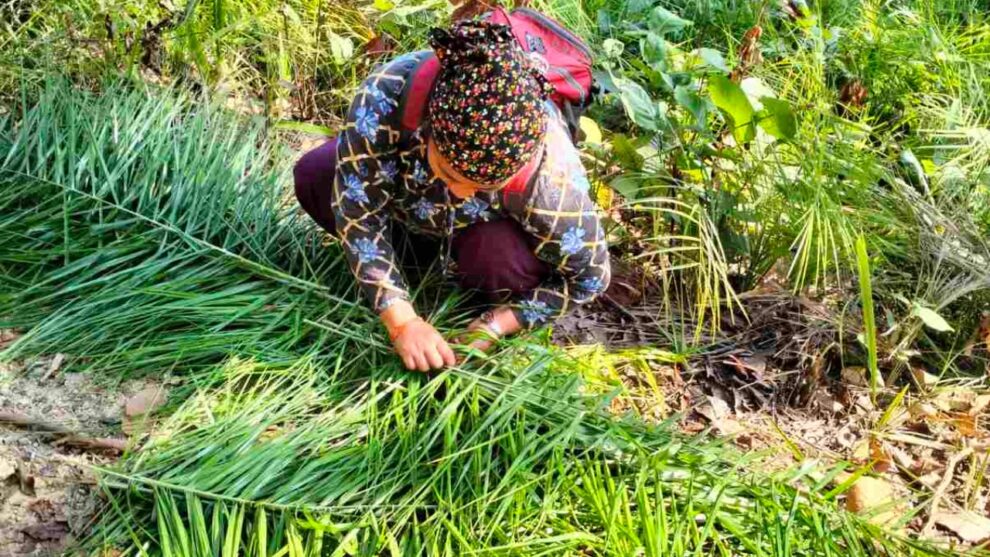
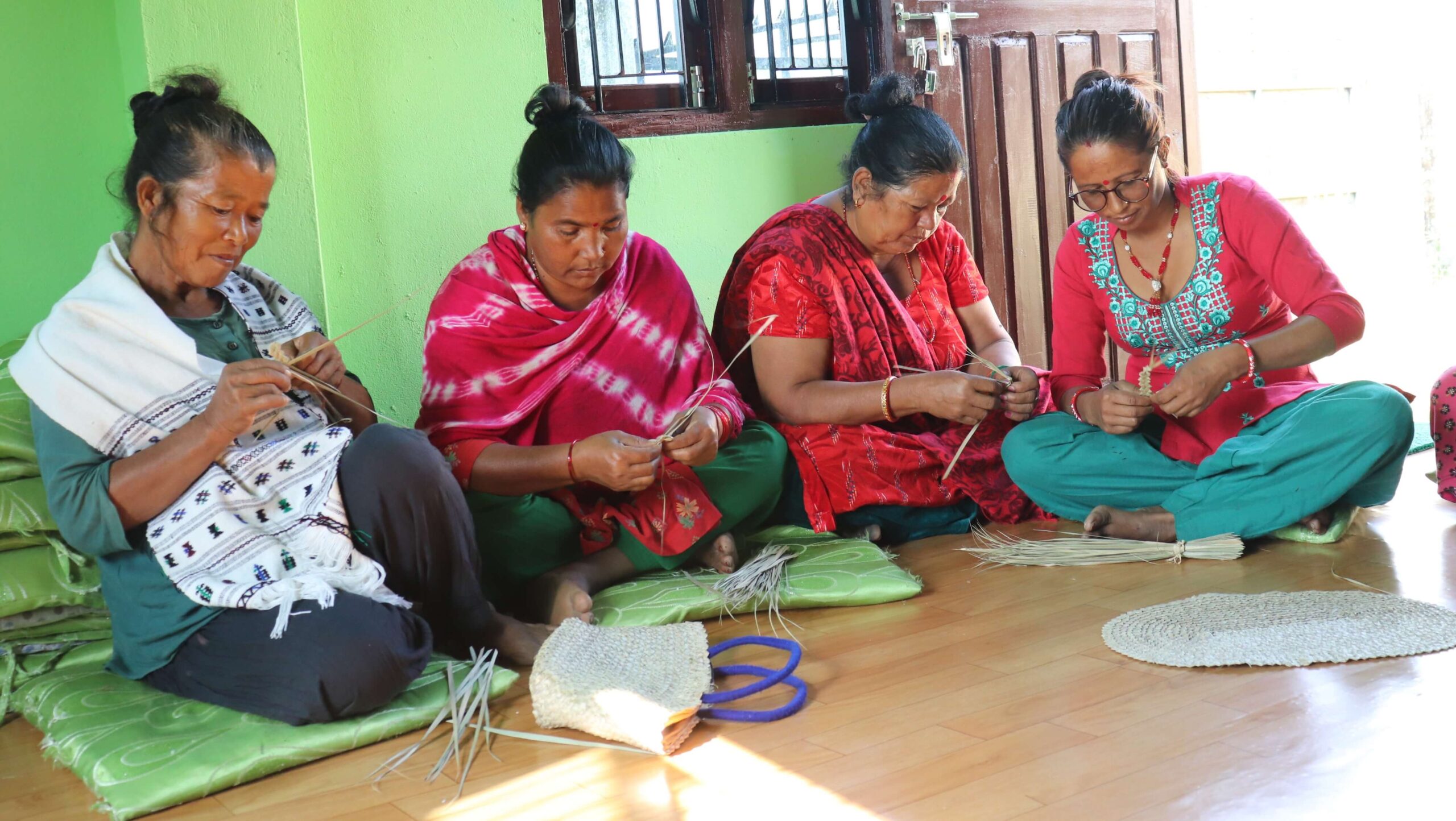
In the first step, the project emphasised collective entrepreneurship by forming women’s groups. An intersectional approach was used to select marginalised women, especially those who are deprived of opportunities. The initiative strives to create safe and comfortable spaces for women by building their confidence, sharing knowledge, and collectively engaging in forest-based businesses such as bamboo crafts, nettle processing, and broom grass production. Collective action reduced individual risk and strengthened women’s bargaining power within community forest institutions.
Enhancing capacities and leadership
Second, the initiative enhanced the capacities and leadership of those women. Training in different areas, including enterprise management, bookkeeping, product development, and market engagement, was delivered to the groups. These trainings were supportive towards shifting perceptions of women from passive forest users to capable entrepreneurs and decision-makers. In many instances, women involved in enterprises gradually began to take leadership roles in collective activities within their institutions (CFUGs).
Improving access to forest resources
Third, the team worked to improve women’s access to forest resources and raw materials. Through dialogue with the executive committees of the community forest user groups, women’s groups were able to negotiate more flexible harvesting arrangements for non-timber forest products such as bamboo, nigalo, and broom grass. This helped align forest management practices with local livelihood needs while maintaining sustainability.
Linking women entrepreneurs to markets and value chains
Another key strategy was to link women entrepreneurs to markets and value chains. The project supported product branding, quality improvement, and connections with buyers and local markets. In some areas, women’s enterprises were also connected with local government initiatives supporting small and medium enterprises, helping them access additional technical and financial support. All of these were supportive towards creating a conducive environment for women to engage in economic opportunities.
OUTCOMES
By addressing both structural and social barriers, the initiative helped reshape the dominant narrative around women in the forestry sector while opening new economic opportunities for them. Women who were once viewed primarily as resource collectors began to be recognised as forest-based entrepreneurs, innovators, and leaders, actively contributing to local forest economies and household incomes.
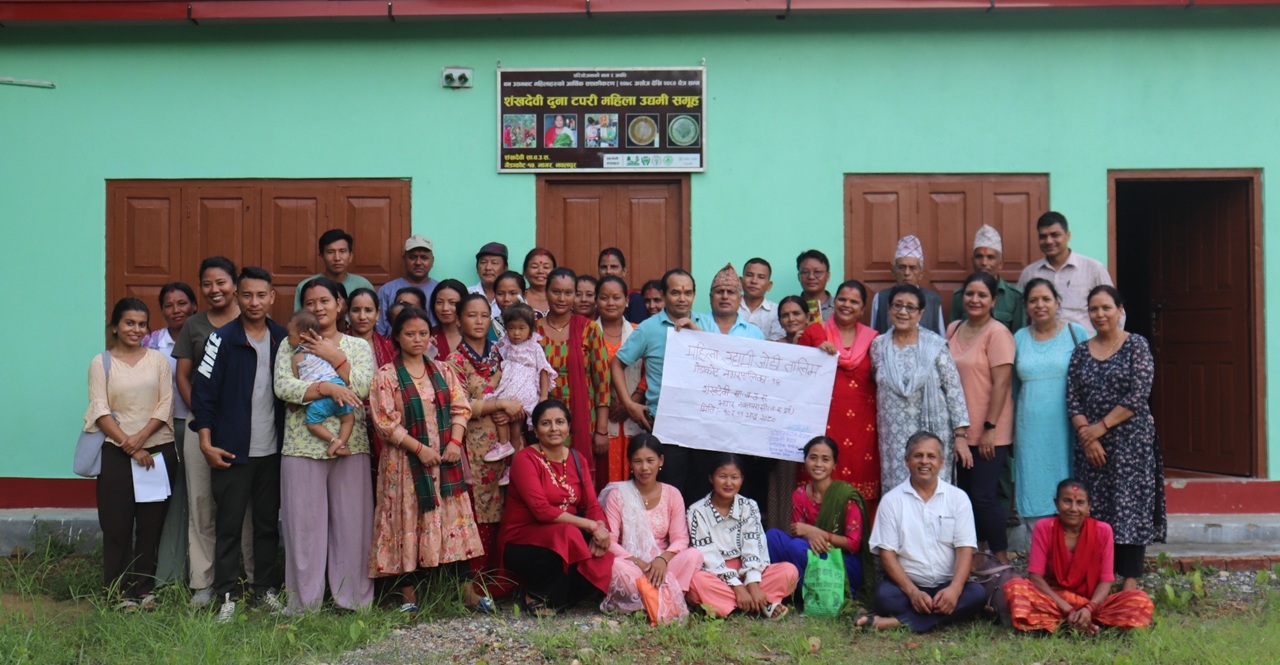
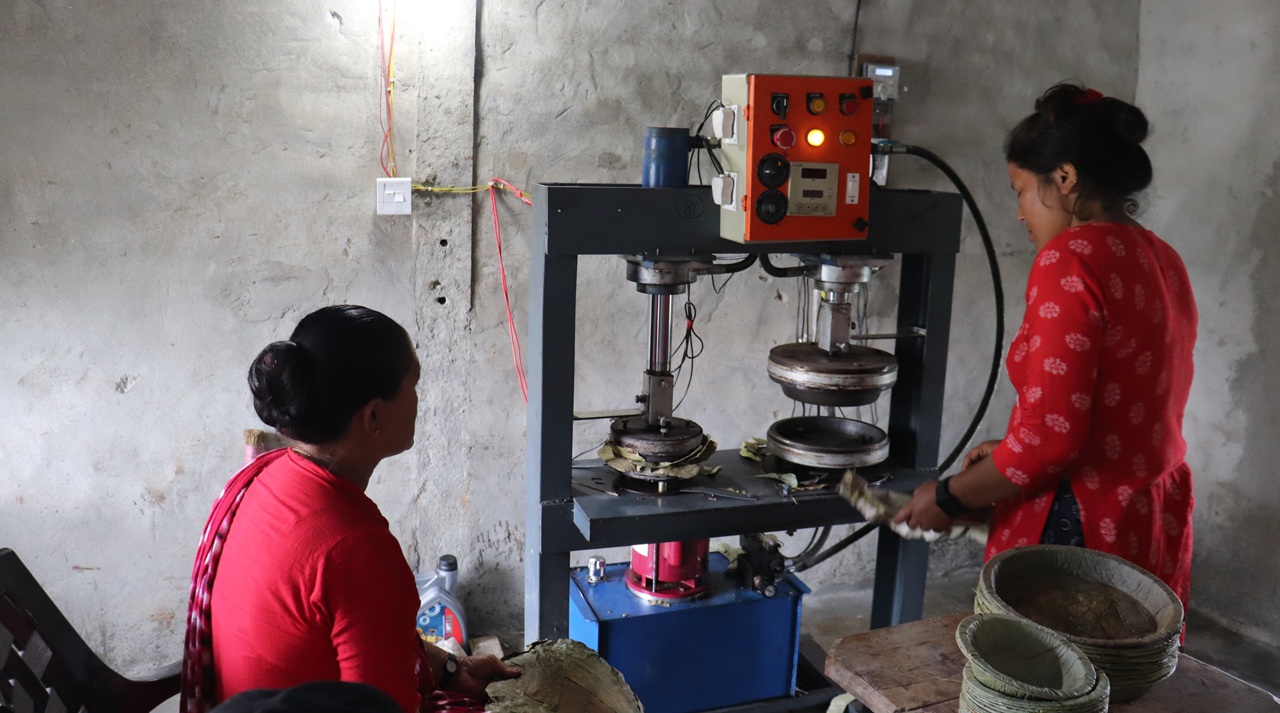
The initiative translated women’s participation in community forestry into tangible economic opportunities on the ground. Through targeted training, enterprise development support, and capacity building, the project empowered more than 240 rural women entrepreneurs, equipping them with the skills and confidence to engage in forest-based businesses. As a result, 18 women-led forest enterprises were established across the two districts, creating new avenues for local income generation. These enterprises directly engaged 60 individuals in production and business operations, while an additional 283 people became indirectly involved across the supply chains, raw material collection, and pre-production activities. Together, these efforts not only strengthened women’s economic roles in the forest sector but also generated wider livelihood opportunities within the community.
LESSONS LEARNT
These results highlight the potential of community forestry not only as a conservation model but also as a vehicle for women’s economic empowerment and inclusive green enterprise development in Nepal. The lessons drawn from the initiative demonstrate that women can successfully move into enterprise development, value addition, and market engagement when they receive targeted support.
SCALING UP
To scale up this initiative, we need to transform women from forest users into forest-based entrepreneurs and leaders. To do so:
- flexible arrangements should be made within the community forestry system to facilitate women’s access and role in harvesting and managing forest products;
- trainings in business management, financial literacy, and marketing, alongside connecting women to the market and supply chains, have to be ensured;
- collective entrepreneurship that allows women to share risks, pool resources, and negotiate more effectively with institutions and markets should be promoted; and
- The dominant narrative that views women mainly as caretakers of forests should be changed to view them as economic actors.
 Rahul Karki is a researcher at ForestAction Nepal with more than a decade of experience. He also held a leadership position as the organisation’s Executive Coordinator from 2023 to 2025. His work primarily centres on forestry and the environment. He can be reached at rahul@forestaction.org.

Add Comment