
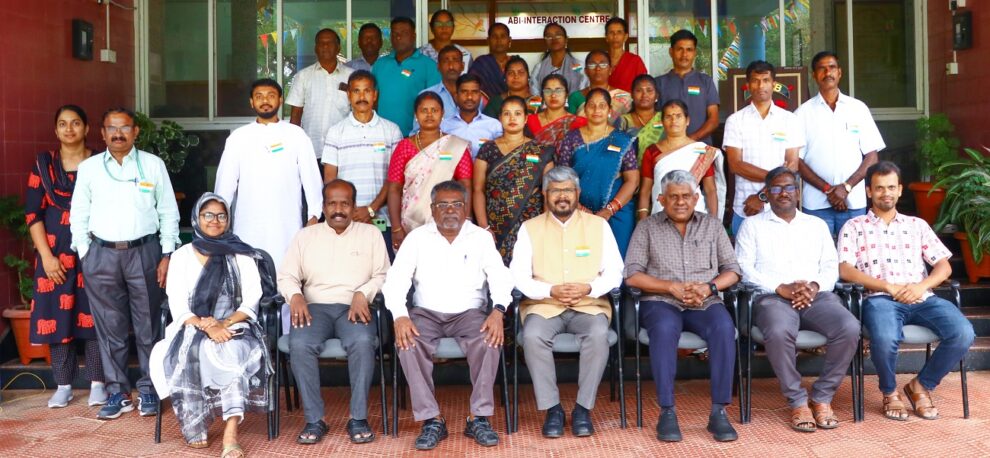
In this note, Susmitha, Karpagam, and Selvarajan discuss the design, implementation, outcomes, and challenges of the skill development training program to promoting entrepreneurship among banana farmers.
CONTEXT
The Andaman and Nicobar Islands produce about 18,000 tonnes of bananas annually. However, except for the bunch, most other parts of the banana plant are not effectively utilised by farmers. Significant scope exists to utilise different parts of the plant, namely leaves, flowers, raw banana, ripen banana, pseudo stem and fibre for generating supplementary income. In this context, farmers require skill-based training on the preparation of banana value-added products. Following discussions between the Department of Agriculture, Andaman and Nicobar Islands, and ICAR-National Research Centre on Banana (ICAR-NRCB), Tiruchirappalli (Tamil Nadu), it was decided to organise an intensive training programme for selected farmers. Accordingly, a six-day skill-based training programme was conducted from 26–31 January 2026. This note highlights the programme’s design, implementation, outcomes, and challenges.
THE PROGRAMME
We designed and implemented the skill development programme as follows:
Selection of value-added products appropriate for small & marginal farmers
Based on discussions among the Department of Agriculture, ICAR-NRCB, and the participants organised before the training, seven value-added products were identified. These are presented in Table 1.
Table 1: Value-added products from bananas identified for skill development
| Sl. No | Title | Picture | Nature of Investments needed |
| Banana Flower-Based Products | |||
| 1 | Flower-based banana thokku | 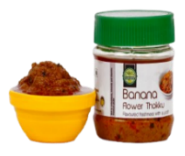 |
A minimum investment of ₹2 lakh is required to start small-scale production of 100 kg of thokku. |
| Banana Stem-Based Products | |||
| 2 | Stem Juice |  |
A minimum investment of ₹1.5 lakh is required to start production with a 100-litre capacity. |
| 3 | Stem Pickle | 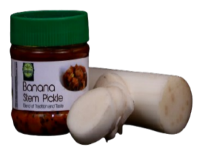 |
An investment of ₹2 lakh is required to start production with a capacity of 100 kg of stem pickle. |
| Raw Banana-Based Products | |||
| 4 | Low-Fat Banana Chips | 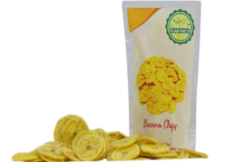 |
A minimum investment of ₹1 lakh is required to start production with a capacity of 100 kg of chips. |
| 5 | Baby Food | 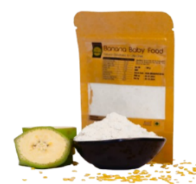 |
A minimum investment of ₹1 lakh is required to start small-scale production with a capacity of 100 kg of baby food |
| Ripened Banana-Based Products | |||
| 6 | Dehydrated Banana (Banana Fig) | 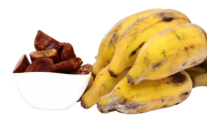 |
A minimum investment of ₹1 lakh is required to start small-scale production with a capacity of 100 kg of Banana fig |
| 7 | Ready-to-Serve Juice |  |
A minimum investment of ₹2 lakh is required for a production capacity of 100 litres of Ready to Serve Juice |
Socio-Economic and Pre-Knowledge Profiling of Participants
Socio-economic profiling and a pre-knowledge test of the participants were conducted using a structured interview schedule covering different aspects of value-added products. The results revealed that about 63 per cent of the participants were women, many of whom were members of Self-Help Groups (SHGs). All the participants belonged to the small and marginal farmer category. The pre-knowledge test indicated that the participants had very low or no awareness of value-added products. Most farmers were unaware that several value-added products can be made from bananas. Based on this analysis, the modalities for the skill development programme were developed.
Using appropriate methods for skill development
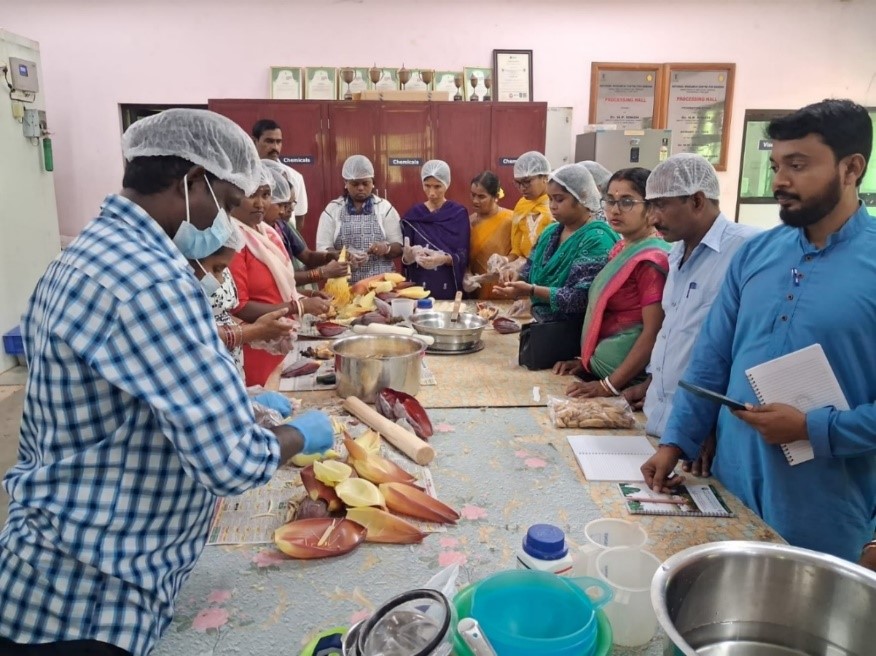
The skilling pattern comprised lecture sessions in the lecture hall and practical demonstrations at the ICAR–NRCB farm, led by expert scientists to impart knowledge on value addition. Participants were also exposed to opportunities in domestic and export markets, including export protocols. The programme also highlighted entrepreneurship development and various government schemes available for Self-Help Groups (SHGs), Farmer Producer Organisations (FPOs), and Micro, Small, and Medium Enterprises (MSMEs).
Practical Demonstration
Practical demonstrations and hands-on training were conducted on the preparation of banana central core stem juice, pickles, dehydrated ripe banana (banana fig), banana flower thokku, banana baby food, and low-fat banana chips. In addition, sessions were conducted on banana fibre and other non-food value-added products, as well as on quality control, food safety, packaging, and branding.
Exposure Visits
For experiential learning from Tamil Nadu FPOs, the participants were taken to the Thottiyam Banana Producer Group (TBPG Ltd.) located in Mohanur. It is one of the pioneering Farmer-Producer Organisations (FPOs) in India.
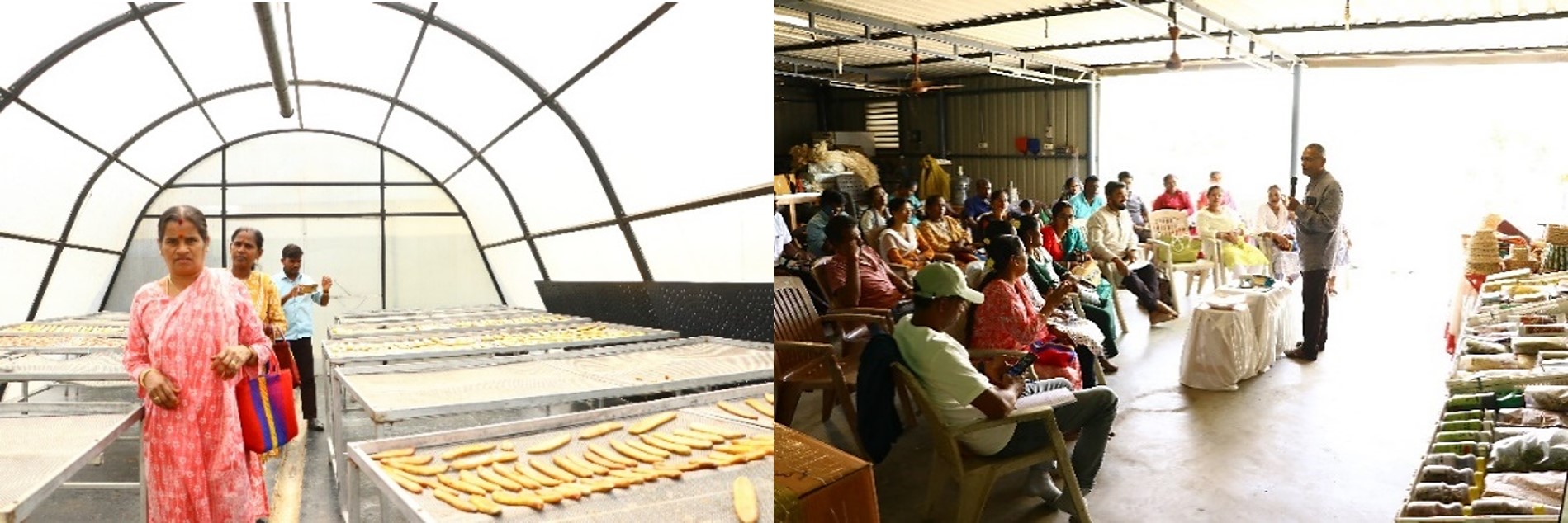
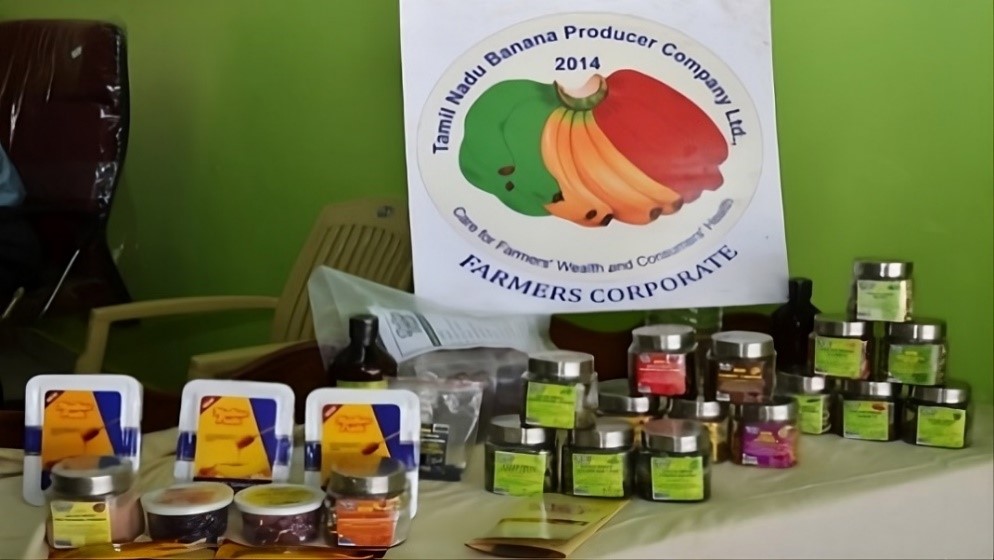
The participants were exposed to different products of the FPOs, viz., dehydrated ripe banana, banana thokku, banana pickle, banana fig, banana stem juice, extruded banana snacks, nutri bars, and ripe banana powder.
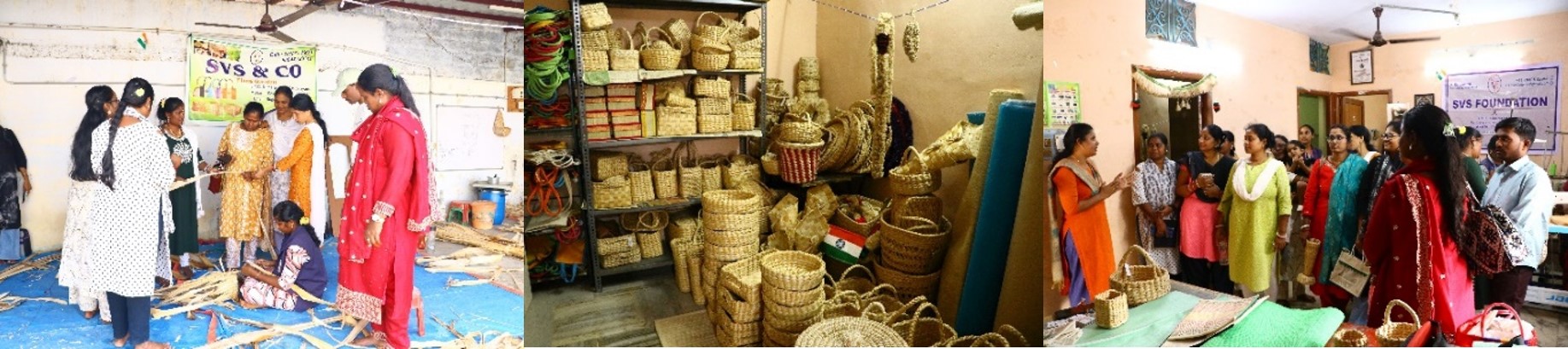
A second exposure visit was arranged to the SVS Foundation in Namakkal to explore the marketing capability of women SHGs in banana fibre enterprises. The SVS Foundation converts agricultural waste from bananas, such as leaf sheaths and fibre, into useful products, including handicrafts, eco-friendly items, and decorative materials.
Interactive Session with the CEO of a Progressive FPO
Real-time exposure was provided to participants not only through the exposure visit but also through an interactive session conducted by a progressive farmer and the CEO of the Agathiar Farmer Producer Organisation (FPO) in Tamil Nadu. During the session, he shared his practical experiences on different aspects of banana value-added products.
Handholding for Financial Sustainability
At present, ICAR-NRCB is providing quality planting material that ensures disease-free cultivation in the Andaman & Nicobar Islands. It supports interested farmers and Self-Help Group (SHG) members in adopting improved technologies and promotes banana-based entrepreneurship in the islands. ICAR-NRCB is also ready to provide technology linkages and continuous handholding support to interested participants. The institute assists farmers and SHG members by sharing relevant technologies, technical guidance, and training support for developing banana-based enterprises.
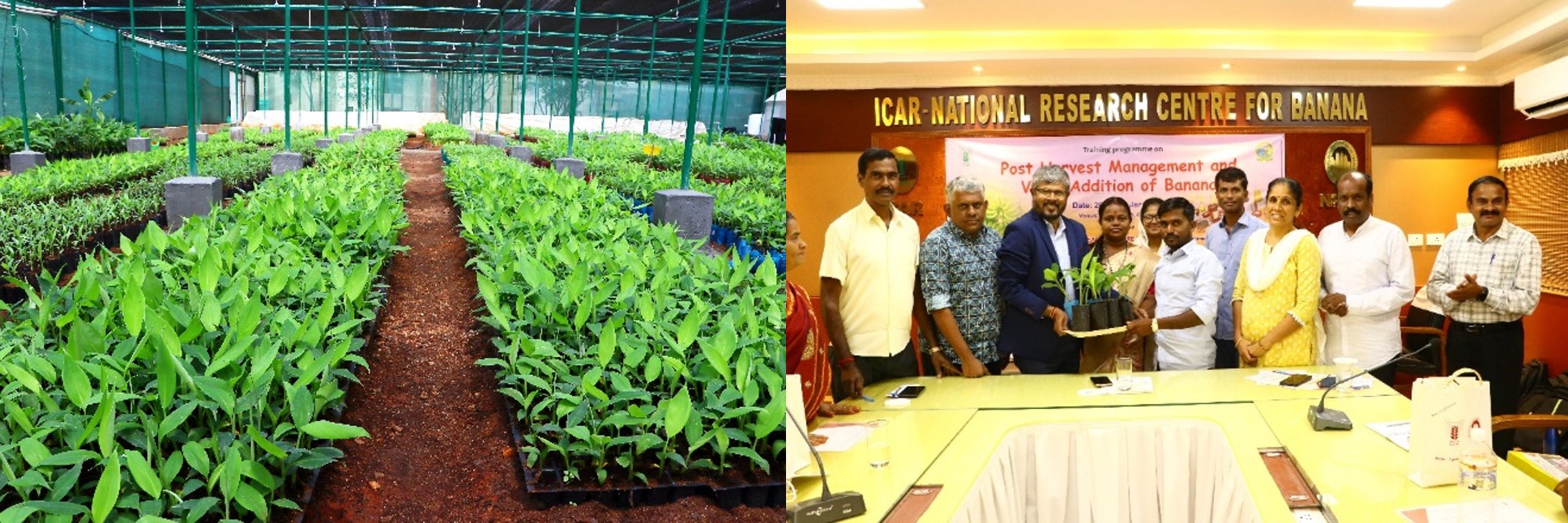
Further, ICAR-NRCB, in collaboration with the Department of Agriculture, Andaman & Nicobar Islands, has developed a handholding plan for entrepreneurship development by linking various schemes suitable for the Andaman coastal agro-ecosystem (Table 2).
Table 2: Entrepreneurship Schemes for Andaman & Nicobar Islands
| Scheme | Target Group | Financial Support |
| Startup India Initiative | Innovative startups and young entrepreneurs | Tax exemption for 3 years and access to ₹10,000 crore Fund of Funds |
| Startup India Seed Fund Scheme (SISFS) | Early-stage startups | Up to ₹20 lakh for prototype development and up to ₹50 lakh for commercialisation |
| Pradhan Mantri MUDRA Yojana (PMMY) | Micro entrepreneurs | Loans up to ₹10 lakh under Shishu, Kishor and Tarun categories |
| Stand-Up India Scheme | Women and SC/ST entrepreneurs | Bank loans from ₹10 lakh to ₹1 crore |
| Prime Minister Formalisation of Micro Food Processing Enterprises (PMFME) | Micro food processing units, SHGs and FPOs | Credit-linked subsidy of 35% of project cost (up to ₹10 lakh) |
| Agriculture Infrastructure Fund (AIF) | Farmers, FPOs and agri-entrepreneurs | Loans up to ₹2 crore with 3% interest subsidy |
| Deendayal Antyodaya Yojana – National Rural Livelihood Mission (DAY-NRLM) |
Rural Women’s Self-Help Groups | Revolving fund ₹15,000–₹20,000 and Community Investment Fund up to ₹1–3 lakh |
| Andaman & Nicobar Startup Policy | Local startups and innovators in the islands | Rent subsidy up to ₹5,000/month, GST reimbursement up to ₹3 L /yr, digital subsidy up to ₹1 lakh |
OUTCOMES
Knowledge Enhancement Outcomes:
The effectiveness of the programme is evident from the pre- and post-training knowledge tests, which indicated an 81 per cent improvement in the participants’ knowledge regarding the development of seven selected banana value-added products for bananapreneurship.
Skill Acquisition and Capacity Building:
All participants developed hands-on skills in preparing seven value-added products. The programme also enabled them to understand the standard procedures, quality aspects, and the potential of value addition as an income-generating activity.
Attitudinal Change:
The programme fostered a favourable attitude towards value-added products and encouraged a positive mindset towards self-employment and income diversification through value-added activities.
|
The participants expressed their interest in preparing products such as stem juice, flower thokku, and stem pickle, as these products require only a minimal investment and can be prepared from waste and locally available banana by-products. |
CHALLENGES ENCOUNTERED DURING THE PROGRAMME
Time Constraints
Although the current skill development programme was planned for six days, imparting complete skills for seven products within this timeframe proved quite tedious. Therefore, discussions were held with the Department of Agriculture personnel to consider organising a programme with a minimum duration of 10 days for those genuinely interested in starting a small venture based on banana value-added products.
Variation in Participants’ Prior Knowledge
Participants had varying levels of prior knowledge, which posed a challenge in delivering the training programme uniformly. This variation made it difficult to maintain a consistent pace throughout the sessions. However, this challenge was addressed by providing a basic orientation class on different aspects of value-added products on the first day of the programme.
Business Linkage between the island and the plains
Establishing linkages between island and mainland ecosystems presents several practical constraints. To address these challenges, we suggested to the Department of Agriculture that it encourage interested entrepreneurs to establish small businesses at the island level with the support of government schemes. If these ventures prove profitable, the entrepreneurs may subsequently consider expanding their value-added products into mainland markets.
CONCLUSION
The skill development programme highlighted the potential of structured initiatives to promote sustainable livelihoods and strengthen banana-based agro-ecosystems in island regions. The significant improvement in knowledge and skill acquisition demonstrates the effectiveness of the need-based and practical training approach. The programme also fostered a positive attitude towards bananapreneurship. Despite certain challenges such as the limited duration of the training programme, variation in participants’ prior knowledge, and practical constraints in linking island and mainland ecosystems, the overall response was highly encouraging. It also indicates the scope for further scaling through continued training programmes and sustained institutional support.
 Dr Susmitha K. is a Young Professional II at the ICAR–NRCB. She can be reached at Susmithakanagaraj2510@gmail.com
 Dr Karpagam C. is a Principal Scientist at the ICAR–NRCB. He can be reached at karpsicar@gmail.com
 Dr R. Selvarajan is the Director of the ICAR–NRCB. He can be reached at selvarajanr@gmail.com
Add Comment