



The rate of tea replanting in Sri Lanka has remained critically low over the past decade, threatening long-term productivity, soil health, and the sustainability of farmers’ incomes. In this blog, Tharaka Jayasinghe illustrates how these challenges are being addressed through the 5P Extension Model.
CONTEXT
Sri Lanka’s tea sector is heavily dependent on smallholders, who contribute over 70% of national production. However, tea replanting rates remain alarmingly low, primarily due to:
- High initial investment cost
- Delayed return from replanted fields
- Limited access to technical Knowledge
- Risk Aversion among farmers
As the bushes age, productivity declines, soil fertility deteriorates, and input efficiency reduces. Without systemic replanting, the Sector’s long-term sustainability is at risk. To address this challenge, in 2025, the A. Baur & Company (Pvt.) Ltd and the Morawakkorale Tea Producers Cooperative Society (MTPCS) decided to work together by forming a 5P Partnership.
| Box 1: Morawakkorale Tea Producers’ Co-operative Society (MTPCS) The Tea Producers’ Co-operative Society – Morawakkorale stands as a premier cooperative institution in Sri Lanka, having started in 1955, specialising in the sustainable cultivation and processing of premium Ceylon Tea from their three owned factories, with more than 7000 tea farmers supplying green leaf to these factories. Operating within the fertile ecosystems of the island’s southern foothills and highlands, the Society serves as a strategic collective for smallholder farmers, designed to optimise yield, standardise quality, and implement regenerative agricultural practices. The Society’s operational frameworks are built upon three primary pillars: |
IMPLEMENTATION
5P Extension Model
While the 4Ps that link small-scale producers with private-sector companies and government, transforming farmers from suppliers into active, equal partners, are often discussed, we decided to add another “P” to this concept by including “Para Extension Agent” in this project. The leaf collectors who represent MTPCS tea factories visit leaf suppliers every week. Incorporating a leaf-collecting agent as a para extension agent into this project increased the efficiency of information delivery to farmers and of weekly field updates on land conditions to MTPCS and the Baurs Extension team.
| Public Extension | Tea Research Institute of Sri Lanka | One visit per year (Induction time) |
| Private Extension | A. Baur & Co (Pvt.) Ltd | Every three months |
| Private/Cooperative Extension | MTPCS Extension | Visiting every month |
| Para-Extension | MTPCS -Leaf Collectors | Visiting every week |
The Tea Research Institute of Sri Lanka was not a full-time partner for this project, but they joined and shared their expertise at the project’s induction. Baur & Co. (Pvt.) Ltd was a full-time extension partner representing the private sector, and they conducted training-of-trainers (for the MTPCS extension team and Para Extension team) and soil and leaf testing before the project started. Baurs also conducted farmer training programs for selected farmers at the beginning, middle and end of the project, monitored agronomic data and progress and realigned the project orientation with the time.
Farmer Selection
During the initial stage, we selected 60 smallholder tea farmers who represent twenty smallholders per factory based on the following criteria
- Willingness to replant
- Accessibility
- Commitment to following recommendations
- No barriers to take replanting loans from MTPCS
In a meeting in September 2024, all stakeholders, namely the Baurs Extension team, the MTPCS Extension team, the leaf collectors, the selected tea farmers and the management of the MTPCS, finalised the project’s goal and objectives, defined everyone’s role and responsibilities, and agreed on a mechanism for monitoring and evaluation.
Multi-Tiered Capacity Development
The strategy was built on the philosophy that extension is not a single event, but a continuous support system. The Baurs Advisory Team designed a structured training program that cascaded through the entire cooperative’s hierarchy:
- Management Training: This ensured that the cooperative’s leadership understood the return on investment (ROI) from replanting and its alignment with available financial resources
- Extension Team Empowerment: The purpose was to train the dedicated extension staff of the cooperative on advanced soil management and modern planting layouts.
- Para-Extension Integration: Here, the leaf collectors who visit farmers daily were trained as “Para Extensionists”. Ensure that technical advice reaches the farmer at every point of contact.
- Farmer-Centric Workshops: Direct training for 60 selected farmers, demystifying the transition from old seedlings to high-yielding clones.
Collection of Soil samples and Application of fertilisers
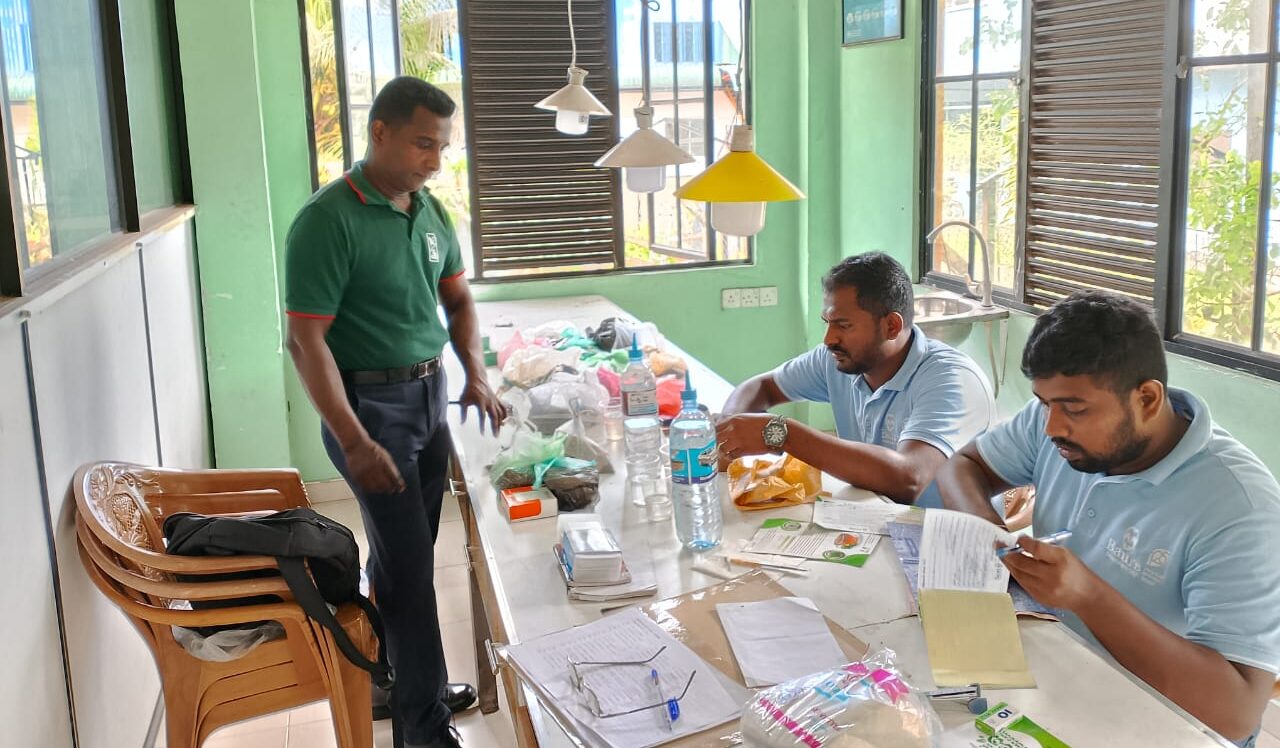
Before initiating the project, we collected soil samples from all participating farmers, tested soil pH and applied the correct amount of Dolomite. Two challenges emerged during the replating stage: the availability of funds (for the initial investment) and fertilisers. Baurs advisory team decided to offer a one-time free issue of (T-200 fertilisers mixture), and MTPCS decided to offer a soft loan with a grace period to farmers. These financial and fertiliser support were sufficient to cover the cost of the 0.25–acre initial investment. These activities served as confidence-building incentives and helped ensure proper management of plant nutrients.
Advisory and Monitoring System
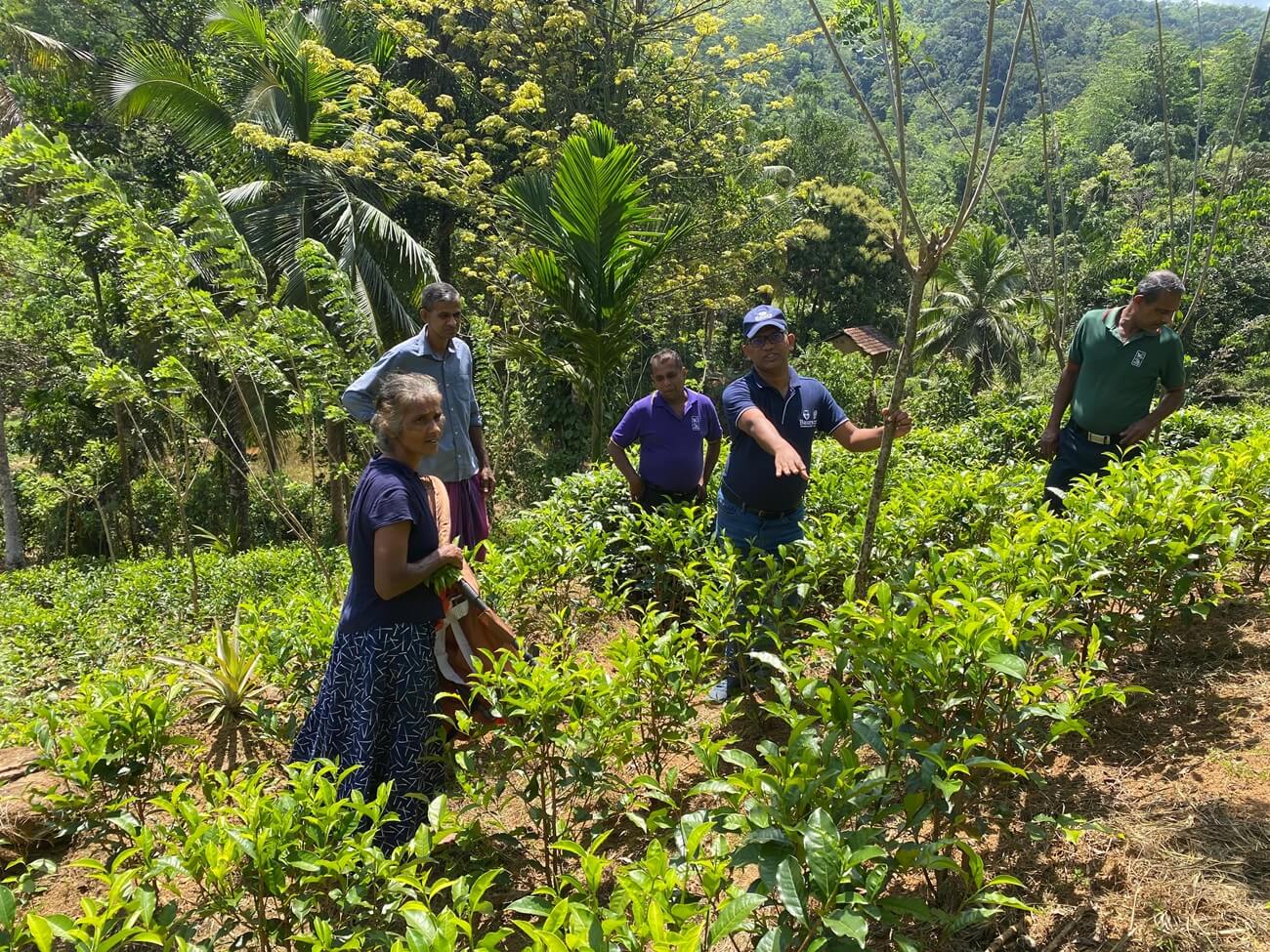
We had to design a multi-layered extension approach to succeed in this project. While the Baur Extension Team focused on periodic technical supervision and advanced advisory support, the MTPCS extension staff conducted monthly farm visits and monitored progress. The leaf collectors served as para extension agents, organising frequent field interaction during leaf collection, offering advice, and recording observations.
THE CHANGE
After 18 months (September 2024 – March 2026) of rigorous monthly monitoring and technical support, the results were definitive. The 60 selected farmers achieved a plant establishment success rate exceeding that of standard replanting programs.
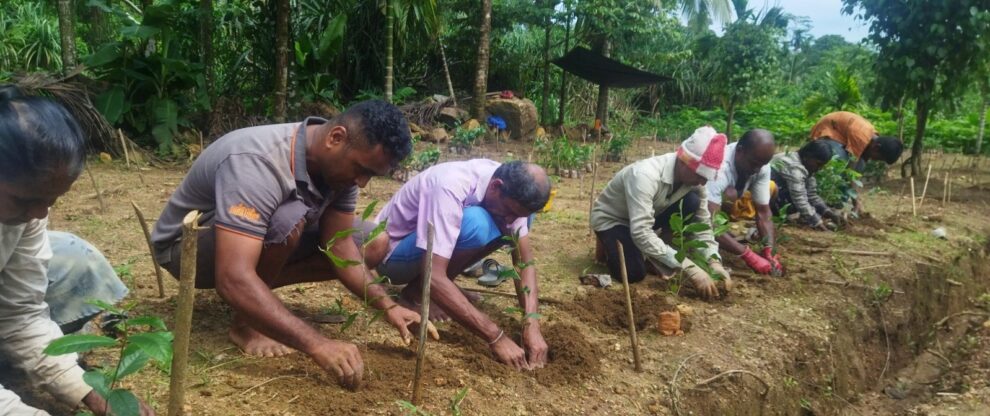
- Behavioural Shift: Farmers who were previously sceptical of replanting became advocates within their village clusters. Almost 15 Acres of land were replanted successfully.
- Systemic Growth: The cooperative now possesses a trained internal extension force capable of scaling this model to the rest of its membership. (Seven extension staff from MTPCS and 32 leaf collectors were trained)
- Proof of Concept: Initially, farmers were hesitant to adopt tea replanting due to economic concerns. However, through continuous advisory support and field demonstrations, many farmers gradually adopted the recommended practices and observed better field establishment and management outcomes. (Only four farmers stopped working with this project –90% of farmers completed this project successfully).
Because of this 5P initiation, all five stakeholders benefited more than in the typical ad hoc collaboration.
Tea Producers: They received soft loans from MTPCS, free advice from Baurs, and MTPCS extension, para extension staff.
MTPCS: The cooperatives believe that observing this replanting will encourage other members of the society to replant, ensuring a higher supply of good-quality green leaves for their three main factories.
Baurs – The project has established a more positive brand image for the company among the 7,000 members of MTPCS, and this is expected to result in additional demand for its products and greater recognition of the company within the industry and among other stakeholders.
Leaf collectors – This project is helping them achieve their target of procuring high-quality tea from small producers. Replanted tea land will produce higher-quality tea leaves than the old tea lands.
TRISL– Though it participated only once during the project period, TRISL was recognised for its contributions to promoting replanting practices among small tea growers in Sri Lanka.
MODEL’S SUSTAINABILITY
Arrangements for the distribution of soft loans and fertiliser at subsidised prices helped remove the main bottlenecks that adversely affected tea replanting in Sri Lanka. This has also motivated non-participating farmers to replant.
The first phase of the project has now been completed. Several farmers are currently approaching MTPCS to avail replanting loans and are asking for similar support to develop their lands. The second phase of the project has now started. As a participant in this project, I feel it has generated a more participatory, self-reinforcing ecosystem in which farmers, private-sector actors, community institutions, and technical experts continuously interact to achieve common objectives. This participatory nature increased trust, improved adoption of recommended practices, and strengthened long-term commitment toward tea replanting and productivity enhancement.
I believe establishing strong farmer engagement and ownership throughout the project cycle will ensure the sustainability of this initiative. Farmers were not treated merely as beneficiaries but as active partners in planning, implementation, monitoring, and decision-making processes.
Economic sustainability emerged through improved farm productivity, better field management practices, and greater awareness of the long-term investment benefits of tea replanting. Farmers have started recognising tea replanting not as a short-term cost but as a strategic investment for future income generation and livelihood security.
There is a significant shortage of green leaves for tea factories due to low productivity on tea farmers’ land. This kind of project and motivation work as a comparative advantage in the field, enabling the collection of green leaves from small-holding farmers. Now, private tea factories are also looking to launch similar projects in their areas.
Overall, the Morawakkorale and Baur’s tea replanting initiative demonstrated that the 5P extension model is not only effective in improving adoption and farmer engagement but also in creating a sustainable, scalable agricultural extension framework for long-term rural development.
MY REFLECTIONS
As a member of the project team, I firmly believe that several critical factors contributed to the initiative’s overall success.
Foremost among these was the effective integration of advisory services with input provision, which ensured that farmers not only received technical knowledge but also had timely access to the necessary inputs, thereby enhancing adoption rates.
The establishment of a structured financial support mechanism, particularly improved access to credit, played a significant role in reducing farmers’ reluctance to invest in replanting activities.
Moreover, the high frequency and consistency of extension engagement proved to be a key strength. The strategic involvement of leaf collectors as para-extension agents facilitated continuous interaction with farmers and enabled prompt, field-level problem resolution.
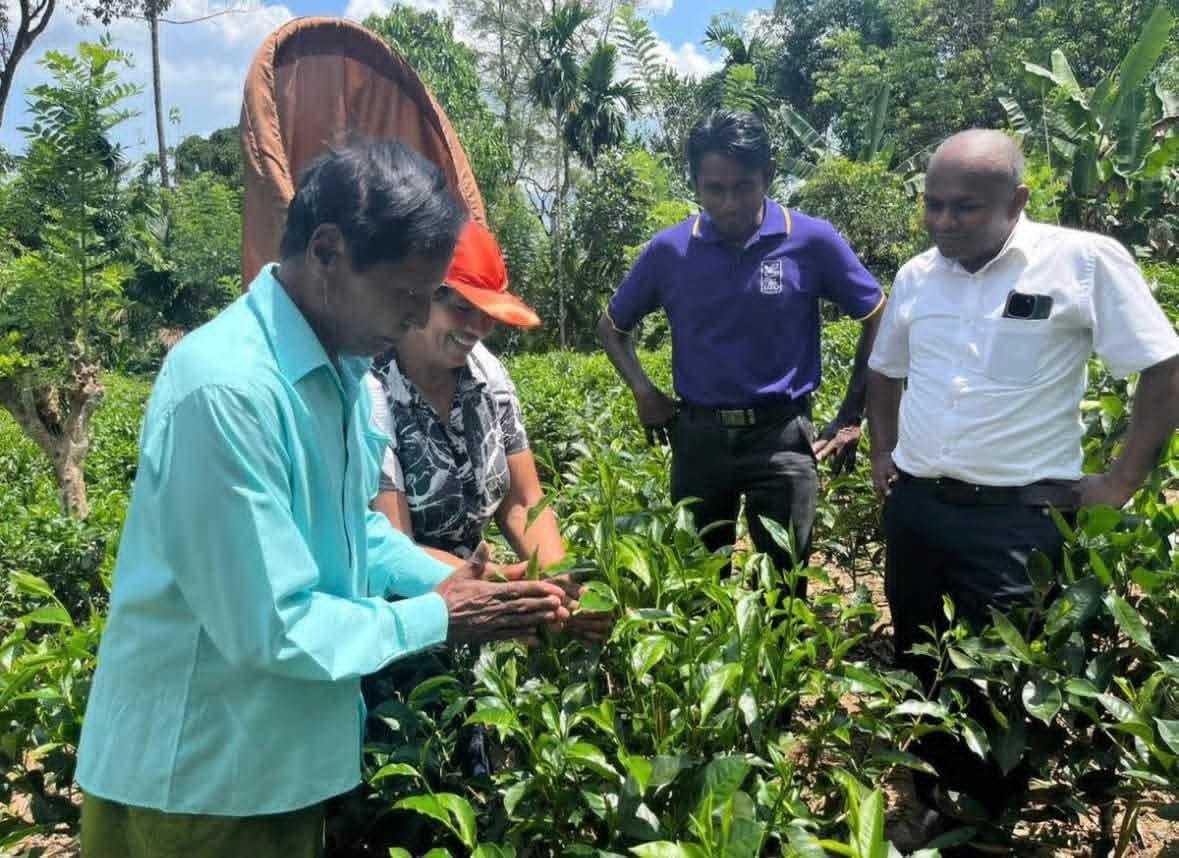
The project also prioritised capacity building across multiple stakeholder levels. Training interventions extended beyond farmers to include cooperative staff—both at senior management and field levels—thereby strengthening institutional effectiveness and service delivery.
Finally, the presence of trust-based local institutions was instrumental in mobilising farmer participation, ensuring accountability and contributing to the initiative’s long-term sustainability.
CONCLUSION
This 5P initiative demonstrated how coordinated advisory service, input support, and farmer engagement can significantly enhance the adoption of replating and agronomic performance among smallholder tea farmers in Sri Lanka. By converting leaf collectors into advisors and backing technical advice with financial support and high-quality input, this project transformed replanting from a risky burden into a managed opportunity. As Sri Lanka seeks to modernise its tea sector, this 5P approach stands as a scalable, sustainable, and highly effective blueprint for the future.
 Tharaka Jayasinghe currently works as a Senior Manager in the Department of Advisory and Extension at A Baur & Co (Pvt.). Ltd, Author of the book High-Density Tea Cultivation, an experienced agricultural professional and extension specialist with over a decade of work supporting farmers and agribusiness development. He can be reached at jayasingheatm@gmail.com
Similar Tea gardens are seen in Assam and North east with a predominancd of small growers. The public extension supported a ststegy for small tea farms diversification with crops like pepper and arecanuts. Side by side there was promotion of ” green technolgies” like bio fertikizers and Growth promting micribial consortiums to enhance soil and plant health.
The model described here in Srilanka is a dynamic mission to put in place a convergent extension support on a mission mode is a proactive initiative.
thank you very much