



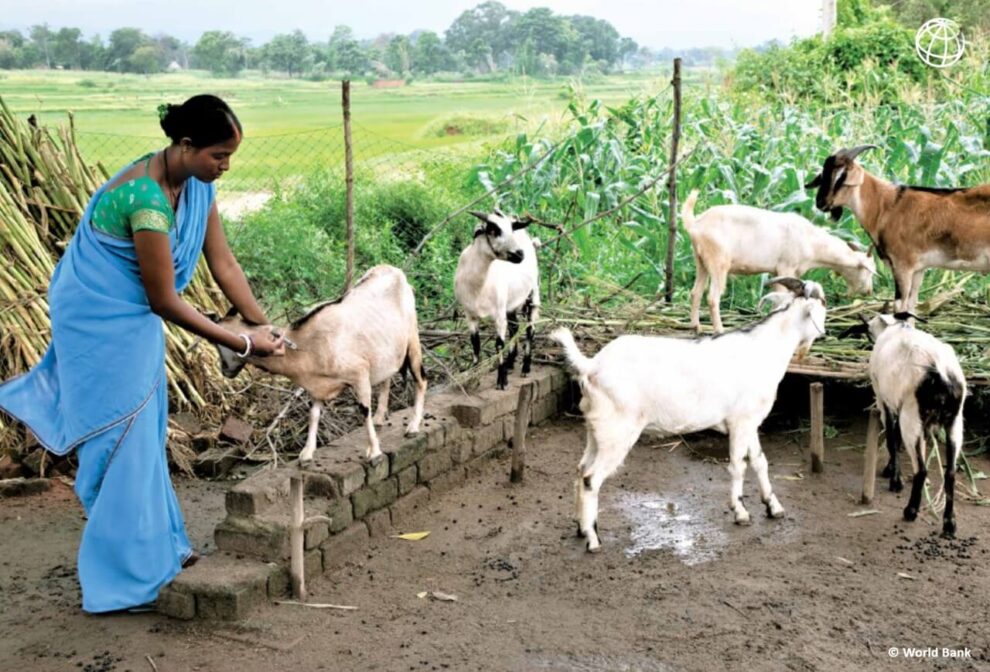
Many small-scale livestock owners, including landless keepers, remain unreached by conventional extension services due to a lack of staff. Although farm women perform most livestock tasks, they are poorly served by current systems. Tarun Kumar and Mahesh Chander advocate for engaging Pashusakhis to revive grassroots livestock extension.
CONTEXT
The livestock sector contributes approximately 4.5–5.5 per cent to India’s total national Gross Value Added (GVA) and has exhibited a consistent upward trend over the years. Women constitute nearly 70 per cent of the livestock workforce in rural India; therefore, gender-responsive livestock extension services are critical. The introduction of the Pashusakhi model, a community-based animal health care and extension approach led by women, has demonstrated notable achievements across several Indian states, including Bihar, Maharashtra, Kerala, Andhra Pradesh, Jharkhand, and Gujarat. Pashusakhis are conceptually similar to Krishi Sakhis, practising farmers trained as para-extension professionals who deliver agricultural extension services at the grassroots level.
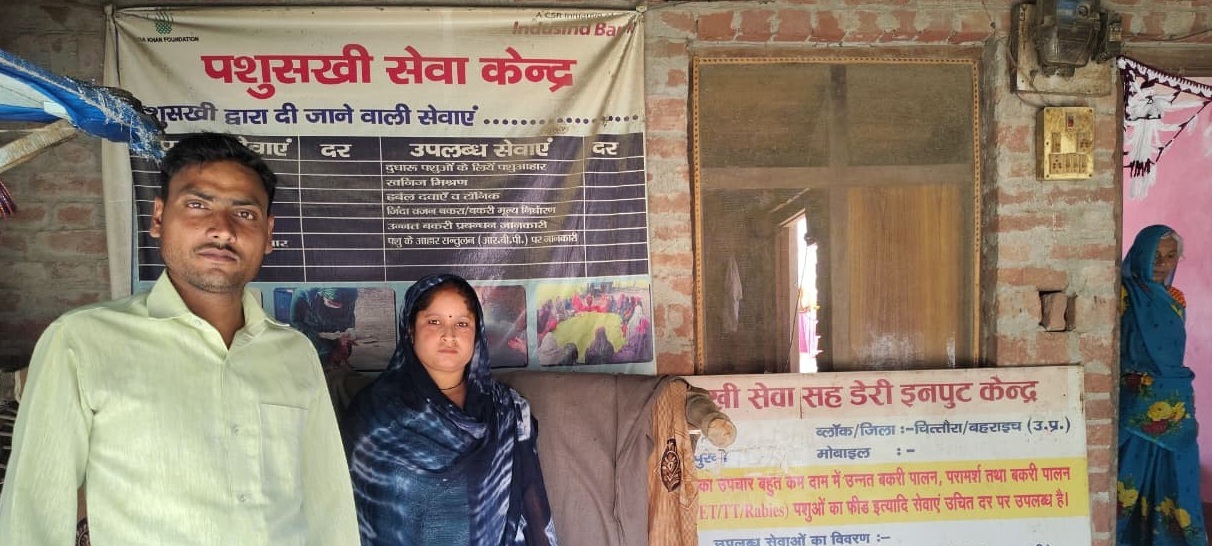
In India, women community animal health workers (CAHWs) are commonly referred to as Pashusakhis (meaning “friends of animals”). They are popularly known among local communities as doctor didi or “goat nurses.” These Pashusakhis are typically middle-aged women selected from within their own communities to serve as CAHWs in their local areas. They are primarily trained to provide preventive animal health care services and livestock-related advisory support to smallholder and marginal livestock farmers.
STRUCTURAL AND FUNCTIONAL FRAMEWORK OF THE PASHUSAKHI MODEL
State governments, in partnership with non-governmental organisations (NGOs) and corporate social responsibility (CSR) institutions, are actively involved in recruiting, training, and providing institutional support to Pashusakhis across India. Key organisations supporting the implementation of the Pashusakhi model include Tata Trusts, the Aga Khan Foundation, the Bill & Melinda Gates Foundation, Mahila Arthik Vikas Mandal (MAVIM), Kudumbashree programme, the AJEEVIKA mission, and the JOHAR project. These efforts have played a crucial role in the successful scaling of the Pashusakhi model in different states of the country.
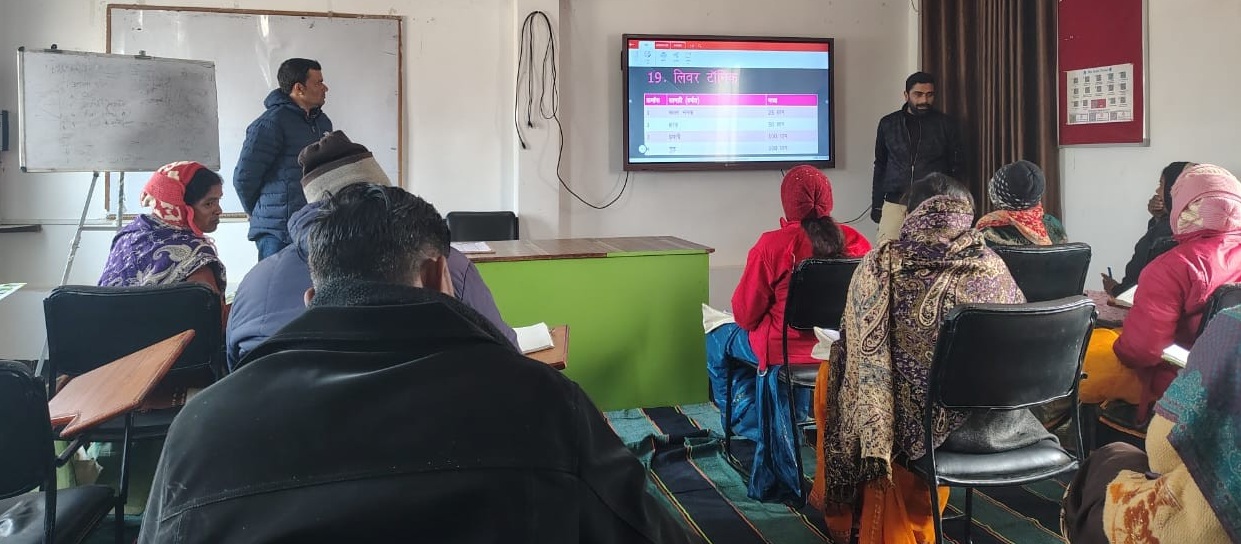
Women community animal health workers (CAHWs), popularly known as Pashusakhis, undergo structured training programmes of 15–21 days conducted in three phases over a period of one year. The training curriculum primarily focuses on the formulation and use of traditional ethno-veterinary remedies, basic livestock management practices, and animal care during various stages of growth and production. In addition, technical backstopping is provided through telemedicine support by qualified veterinarians, which helps ensure the quality and credibility of veterinary services delivered at the village level.
The range of services provided by Pashusakhis includes vaccination, deworming, first aid, castration of bucks, animal weighing for market sale, and livestock management-related advisory services. They also serve as the primary point of contact for animal health emergencies and disease outbreaks in villages, promptly liaising with veterinary officials to ensure timely reporting and control measures. About veterinary inputs and supplies, Pashusakhis initially receive handholding support from their respective implementing organisations. Over time, as they become acclimatised to field-level responsibilities, they are encouraged to procure necessary inputs to sustain their activities independently. To facilitate this transition and enhance financial viability, Pashusakhis are encouraged to form Self-Help Groups (SHGs), which enable collective management of veterinary supplies and strengthen their ability to deliver services within their communities.
HOW DO THE PASHUSAKHI MODEL’S BENEFITS BENEFIT LIVESTOCK FARMERS AND EMPOWER RURAL WOMEN?
Women are deeply involved in routine livestock management activities, including feeding, watering, cleaning, and basic animal care. Engaging women as CAHWs, therefore, builds upon their existing knowledge, experience, and day-to-day interaction with livestock, resulting in more context-specific and practical advisory services. Their constant availability within the village ensures the timely delivery of preventive and First-Aid services, especially for small livestock such as goats, sheep, and poultry, which are often neglected by formal veterinary systems. Although various models of CAHWs, such as Pranibandhu, Prani Mitras, Pashu Maitri, and Gopal Mitras, are operational across different regions, the absence of adequate regulatory frameworks and close administrative supervision has, in some cases, led to role dilution, including the provision of treatments beyond their technical competence.
Women CAHWs are particularly beneficial for small, marginal, and landless livestock keepers, many of whom depend on daily wage labour and cannot afford to lose income while seeking veterinary services from distant sources. The presence of Pashusakhis within the village reduces transaction costs, travel time, and treatment delays. Furthermore, communication and trust between women livestock keepers and women CAHWs are easier to establish compared to male service providers.
The Pashusakhi model has significantly contributed to the empowerment of rural women by enhancing their social, psychological, and economic status within their communities. Engagement as a Pashusakhi has positively influenced women’s self-esteem, confidence, and sense of professional identity—many Pashusakhis report a strong sense of pride when their work is publicly acknowledged.
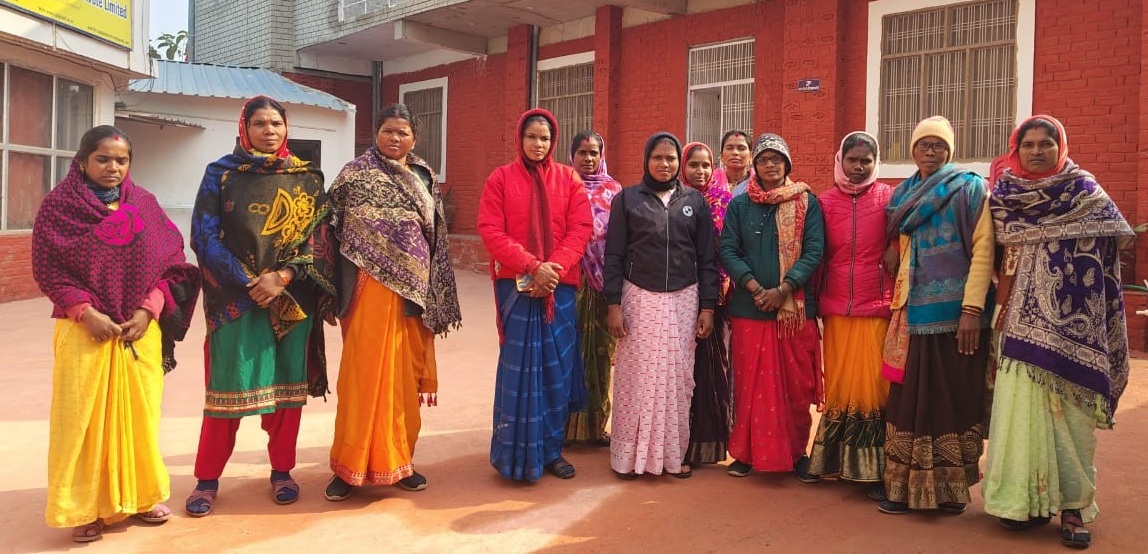
In addition to social empowerment, the Pashusakhi model has also promoted economic empowerment. The provision of initial financial incentives, coupled with opportunities to generate income through service charges, has enhanced women’s earning potential and financial independence. Collectively, these social and economic gains highlight the Pashusakhi model as a practical, gender-responsive approach to empowering rural women while strengthening livestock extension services.
| Box 1: What Livestock Farmers Say: Effectiveness of Pashusakhis’ Work in Bahraich (Uttar Pradesh) A field survey conducted in Bahraich district of Uttar Pradesh (one of the Government of India’s aspirational districts) assessed livestock farmers’ perceptions regarding the effectiveness of Pashusakhis in delivering primary animal health care services. The findings revealed a highly positive perception among livestock farmers toward the services provided by Pashusakhis. Farmers particularly appreciated their timely availability, ease of communication, affordability, and overall effectiveness in delivering preventive animal health care services especially for small ruminants like goats. The study further indicated that accessibility and perceived value of services were strongly associated with farmers’ overall satisfaction. The doorstep delivery of animal health services emerged as a critical factor influencing positive perceptions, highlighting the importance of community-based and locally available animal health workers in improving livestock health outcomes in resource-constrained rural settings. These findings underscore the effectiveness of the Pashusakhi model in addressing last-mile gaps in veterinary service delivery. |
SUSTAINABILITY AND CHALLENGES FACED BY PASHUSAKHI
The sustainability of the Pashusakhi model is often questioned, particularly regarding the income-generating potential of women CAHWs. One of the commonly observed challenges is that the strong social bonds and friendly rapport Pashusakhis develop within their communities may limit their ability to demand payment for services rendered. In cases where animal mortality occurs during or after treatment, defaults in service payments are almost inevitable, further affecting their financial sustainability. Limitations such as formal recognition from state animal husbandry departments, limited access to veterinary supplies, and insufficient training influence service delivery and increase the likelihood of dropouts among Pashusakhis.
The primary sustainability concern is financial sustainability, although it is a semi-incentive-based approach in which Pashusakhis receive a monthly honorarium of approximately ₹2,000 in the first year, followed by ₹1,500 per month in the subsequent year, with financial incentives gradually withdrawn as self-sufficiency is assumed through field experience. This approach often overlooks the economic realities of resource-poor rural settings, where livestock farmers’ willingness and ability to pay for animal health are limited. Irregular demand for Pashusakhi’s services further undermines income stability. Services such as vaccination and deworming are seasonal, making income highly variable. Additionally, the burden of procuring veterinary supplies and medicines increases costs, while profit margins remain uncertain due to the absence of assured caseloads or performance-based incentives.
Pashusakhis need to diversify their income sources beyond service provision alone. Adopting an entrepreneurial approach, such as engaging in small-scale livestock-based enterprises, marketing self-prepared ethno-veterinary formulations (e.g., herbal or liver tonics), and providing value-added livestock inputs, can enhance income stability and reduce dependence on irregular service demand.
WAY FORWARD
Policy guidelines and regulatory frameworks currently support community-based animal health care services in India, yet they lack comprehensive legislative recognition at the grassroots level. Community-based models such as the Pashusakhi initiative can be strengthened by bringing them into a more formal institutional framework. One such opportunity lies in integrating Pashusakhis under the A-HELP (Accredited Agent for Health and Extension of Livestock Production) scheme launched by the Department of Animal Husbandry and Dairying (DAHD) in 2023. Several states, including Bihar, Gujarat, Madhya Pradesh, and Jharkhand, have already adopted the A-HELP initiative, indicating growing policy acceptance of para-veterinary extension models.
Another significant step towards strengthening grassroots animal health care was taken during the National Workshop on Public–Private Partnerships (PPP) to Strengthen National Veterinary Services, held in February 2025 in New Delhi. Deliberations during the workshop emphasised the critical role of CAHWs, workforce development strategies, and PPP frameworks in augmenting national veterinary service delivery.
The national skill ecosystem (Skill India, NSDC, PMKVY, and Sector Skill Councils such as ASCI) aims to formalise training through national qualification standards and certification. Integrating Pashusakhi training into these frameworks could help formally recognise their skills, improve the quality of services at the grassroots, and reduce the existing mismatch between community-level practices and the technical needs of livestock farmers.
Despite positive outcomes, issues related to financial sustainability, inadequate institutional support, and limited career progression continue to pose significant challenges. Addressing these concerns requires greater inclusion of women in policy formulation and decision-making processes to ensure a women-centric perspective in training design, capacity building, and service delivery mechanisms.
 Dr. Tarun Kumar recently completed his Master’s degree in Veterinary Sciences at the Division of Extension Education, ICAR–Indian Veterinary Research Institute (IVRI), Izatnagar. He can be reached at k.tarunmailme@gmail.com.
 Dr Mahesh Chander is Principal Scientist (Agricultural Extension) and Former Head, Division of Extension Education, ICAR-Indian Veterinary Research Institute, Izatnagar-243122 (UP). He can be contacted at drmahesh.chander@gmail.com.


Add Comment