

In this blog, Phalasha Nagpal reflects on her 10 years of experience in the development sector and guides young professionals who are keen to work in this space.
CONTEXT
After working for a year at Deloitte, I decided to transition into the development sector by accepting an opportunity to work with the Government of India as a Young Professional at the Economic Advisory Council to the Prime Minister. I took up the role because it felt like the right choice. Subsequently, I joined an international development consultancy to further my career in this field. Here, I share my learnings in the sector.
MY LEARNINGS
Lesson 1: Find an organisation that works for you, and do not get played by misconceptions
You will only “make it” in your career if you manage to join a handful of well-known organisations in the sector. That is a misconception. I began my career by joining the Government of India as a Young Professional without subscribing to any stereotypes.
At the time, my role involved drafting, analysing, and refining policy notes, supporting officials working under extraordinary pressure and short timelines. The pace was demanding and my learning curve steep, but it taught me to think systemically: how interventions are designed; how departments coordinate, disagree, and align; how administrative processes work; and how policy decisions cascade through complex governance structures.
Looking back, I am glad I took this opportunity. The experience exposed me to how developmental challenges unfold at scale in a country as vast and diverse as India and to the levers required to address them. In government, the focus is not on small pilots; the work spans blocks, districts, entire states, and the nation. That scope allowed me to see, in real time, how meaningful change is enabled through days, weeks, and months of hard work and strategic coordination between ministries, state departments, NGOs, experts, and officials. The questions we aimed to address involved macro- and microeconomic challenges affecting millions:
- How do we secure sustainable jobs for India’s growing youth population?
- How can early childhood interventions be strengthened through existing public systems?
- How do we support agriculture and rural development in a way that is economically viable, socially equitable, and environmentally sustainable?
Lesson 2: Designing a programme for millions compels you to think more deeply and ask difficult questions right at the design stage
During my time at the EAC to the PM, one experience stands out most clearly. I joined just as the design work was beginning on what would eventually become PM-JAY in 2018, then known as the National Health Protection Scheme. I assumed we were working toward coverage for a large population, without fully grasping what “large” means in the Indian context. I soon learned that scale here meant reaching nearly 100 million people. It felt almost unimaginable. Yet that moment fundamentally reshaped my understanding of scale and impact.
The months that followed were filled with extensive discussions involving ministries, departments, economists, clinicians, administrators, and programme specialists. We looked to answer key questions: Who should qualify? Which data sources are reliable? How do we minimise exclusion errors without creating new inequities? How do we design a scheme that can function in contexts as varied as urban Maharashtra, rural Bihar, and the remote districts of the Northeast? This particular experience sharpened one instinct above all others in me: always test whether an intervention can withstand ground realities and truly operate at scale.
A key differentiator during this time was the mentorship I received. Senior officers were extraordinarily generous with their time. They reviewed drafts line by line, asked difficult but crucial questions, and shared insights drawn from years of institutional memory and experience. Some of the most valuable lessons I learned emerged from informal conversations over mugs of strong coffee.
Lesson 3: Prioritise fieldwork over deskwork, especially early in your career
Whether your focus is healthcare systems, governance, climate-linked transitions, or livelihoods and youth employment (as in my work as a Jobs and Livelihoods expert), the real challenges related to development cannot be fully grasped from behind a laptop.
Take youth employment as an example. You cannot truly understand the grassroots challenges until you have spoken with young people about their economic aspirations and the barriers they face, heard employers describe the skills they struggle to hire for, and observed how families weigh risks and opportunities for women and girls aspiring to join the labour force. These interactions reveal the barriers and trade-offs that people, particularly women and vulnerable groups, navigate daily.
As your field exposure grows, you become more aware of insights that do not appear in structured reports or documentation: Informal hierarchies, cultural norms, unwritten rules, and the subtle negotiations in the field that shape human behaviour and agency, and significantly influence the effectiveness, sustainability, and scalability of interventions.
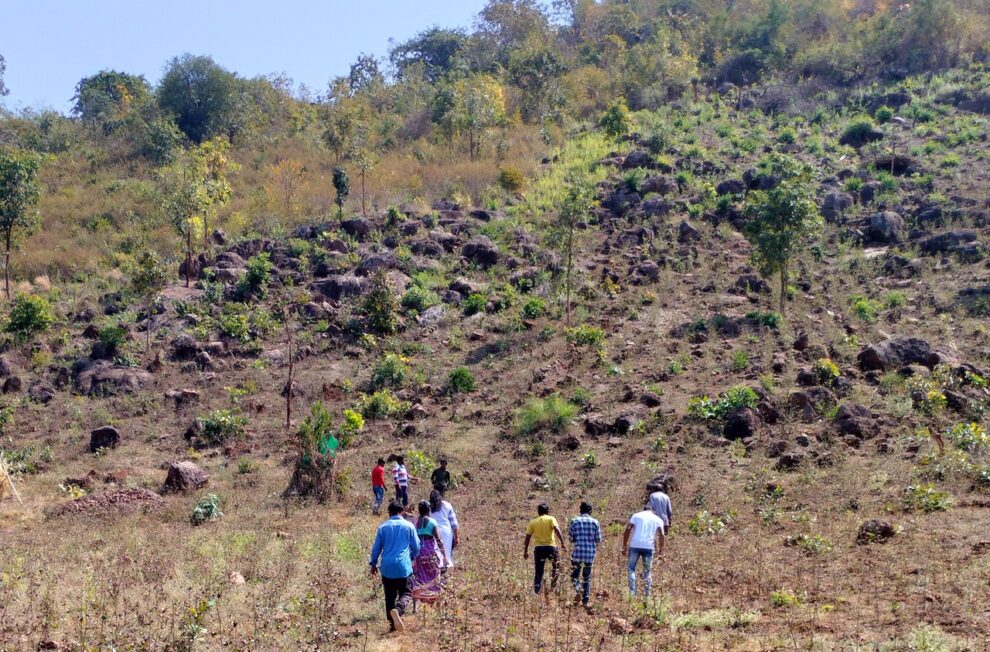
This is exactly what enabled me as an evaluator to answer questions such as: What are some of the key challenges that nurses in healthcare centres face? How did rural communities cope with limited resources, economic distress, and in-migration during COVID-19? What are some of the lesser-documented barriers to adopting clean energy in households? I learned this by spending time with auxiliary nurse midwives and women healthcare workers in health centres; by observing self-help group leaders build community resilience during Covid-19 through often covert strategies, small savings, and consistent emotional support; by witnessing first-hand how the transition to clean energy in households brings its own set of financial, social, and behavioural challenges; and by conducting field visits across Jharkhand to understand the role of extension services in large scale government projects.
Rich field knowledge is relevant whether you are working as a funder, implementer, or evaluator. Funders need it to make responsible investment choices and ensure value for money. Implementers need it to ensure their interventions land where they should. Evaluators need it to assess interventions effectively. Without such knowledge, even well-intentioned programmes risk failing to meet their objectives.
Fieldwork also transforms you personally. I have had a vehicle forced to stop during a field visit while a herd of elephants crossed the road, as we sat with our heads tucked between our knees for safety. I have walked straight into the barbed wire of a solar plant because I was absorbed in a conversation with a young person about his future ambitions. I completed an interview with a woman who runs a clean-energy food-processing enterprise, all while a frog perched on my foot to shelter from the rain so it wouldn’t disturb the flow of our conversation.
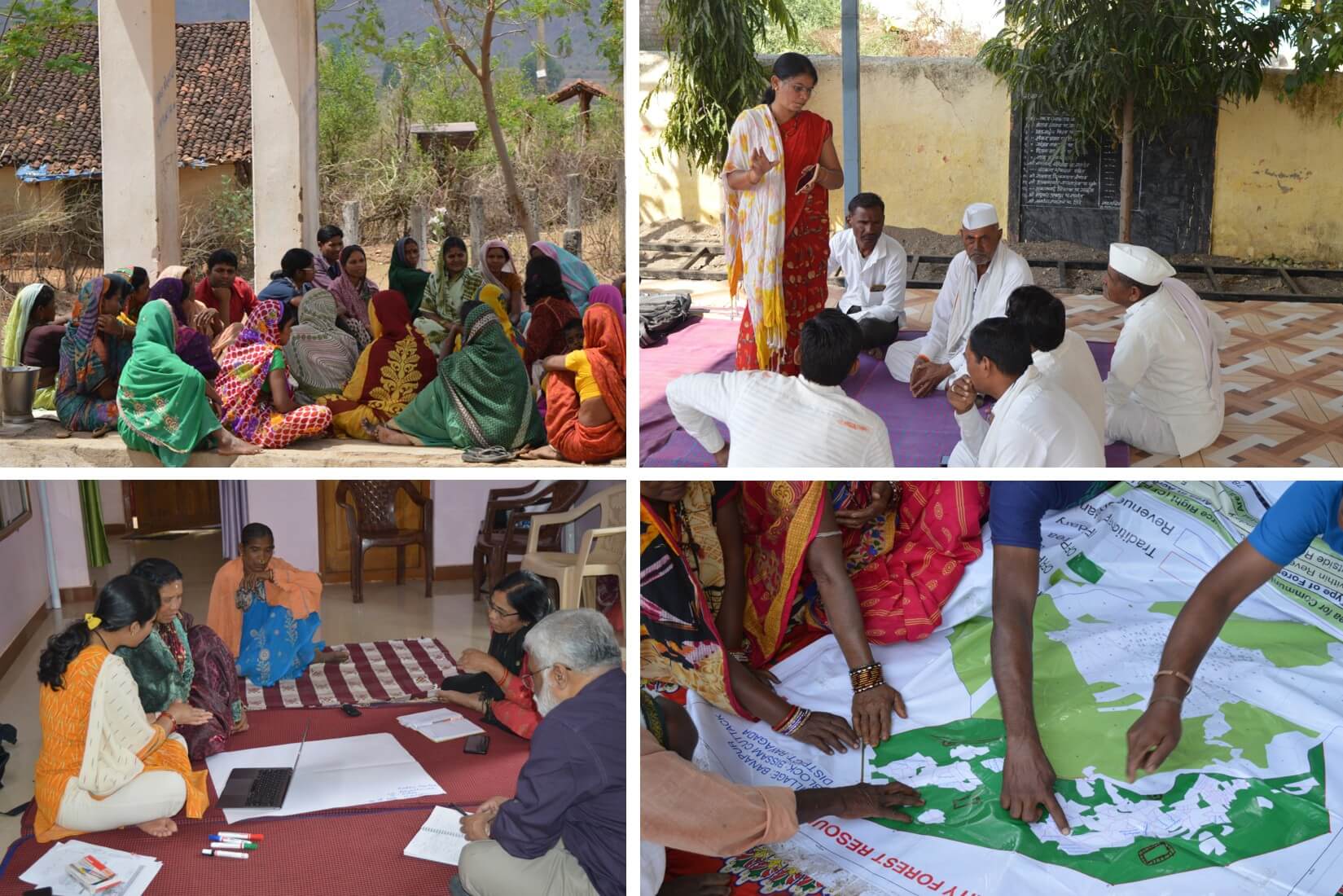
This is not to say that fieldwork is without its challenges. It will test your resilience, your patience, and occasionally even your optimism. You may find yourself searching for a washroom for 100 kilometres on the way to a remote village. You may hear stories of hardship shared by a respondent that affect you more intensely than you expect. It will challenge your assumptions about what real impact looks like. But from personal experience, I can say it will push you to think more clearly, design interventions more responsibly, and remember why this work matters.
Lesson 4: Say YES more often than you say NO
This may sound like straightforward advice, but when you are early in your career, it rarely feels that simple. You will find yourself caught in a loop of questions: Is this the right first opportunity? Am I choosing the right sector? Will I manage a month in a remote village? Is this the perfect career switch?
My experience suggests that perfect decisions do not exist. Many of the opportunities that shaped my career arrived long before I understood or felt prepared for them. I said yes to working in thematic areas I knew little about ten years ago (which is why I could eventually choose what resonated and became my area of expertise), to tasks that required me to learn from scratch (which helped build the resilience and patience that today allow me to take charge in stressful situations), to reading books, reports, and documents, and to long, arduous field visits that pushed me out of my comfort zone, travelling across three continents, multiple countries, and over 50 districts in India. I said yes to learning new evaluation methods and frameworks and applying the theories I had picked up during my master’s.
Saying yes will not always feel safe or comfortable. Along the way, there were moments when I questioned whether I had chosen wrongly, when I felt entirely out of my depth, and when the learning curve felt impossibly steep. But in hindsight, those were the moments when I learned and grew the most: leadership skills, resilience, patience, and teamwork.
A FINAL REFLECTION: YOU WILL NOT DO THIS ALONE
If I had to summarise ten years in a single sentence, it would be this: I did not build this career alone, and the years ahead will be no different.
Over the years, I have deep gratitude for all those I have worked with and continue to work with. Clients and partners pushed me to ask deeper questions and gather more substantive evidence to support and explain the findings from our assessments. Colleagues challenged my assumptions, often in ways that made me work harder and do better. These were the same peers who stood by me on days when the work felt overwhelming, especially in the early years. I have been fortunate to have mentors who trusted me long before I trusted myself and invested their time generously. And, most importantly, the community members and individuals who welcomed me into their homes, shared their anxieties and aspirations, and trusted me to represent their perspectives responsibly. Each of them has shaped who I am, professionally and personally, and continues to do so as I work in this sector.
 Phalasha Nagpal is a development specialist in India, focusing on designing, evaluating, and managing jobs and livelihood programmes. She has a strong track record in scaling interventions and turning evidence into strategies for foundations, multilaterals, and governments. Her expertise includes youth livelihoods, jobs, skills, gender equality, social inclusion, clean energy, and health systems strengthening (phalasha.nagpal@opml.co.uk)

Add Comment