




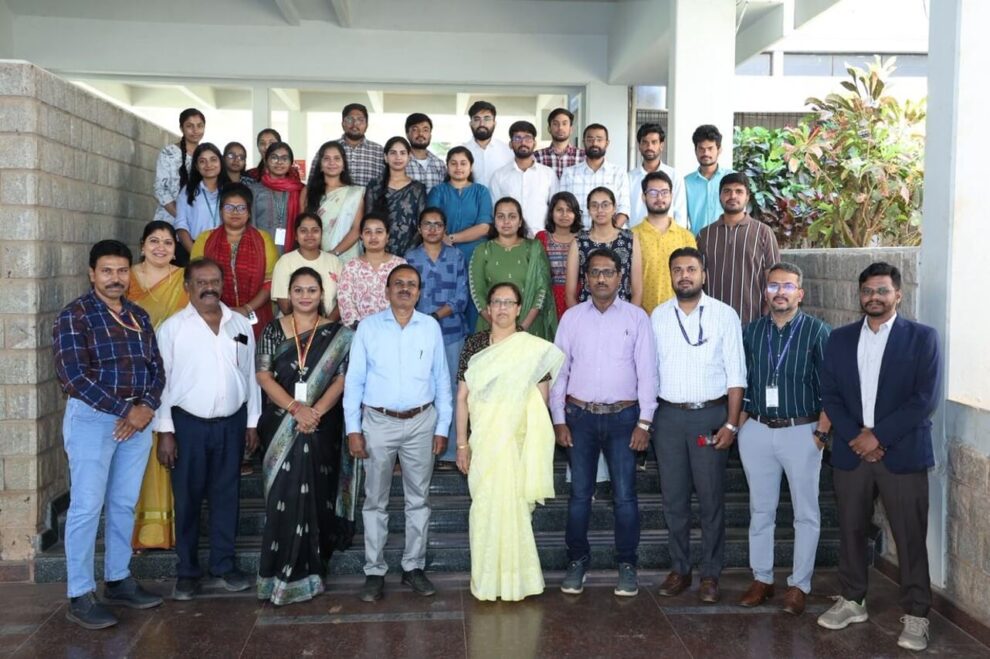
In this meeting note, Sahla shares her learnings and reflections from participating in a Workshop on LaTeX-based Scientific Writing.
CONTEXT
Effective scientific communication is essential for sharing agricultural research findings and strengthening the broader knowledge ecosystem in agricultural sciences. As research becomes more data-intensive and multidisciplinary, researchers must adopt tools that support structured document preparation, efficient citation management, and consistent formatting. Throughout my academic journey, particularly as a doctoral student, I have come to realise that the quality of research communication is just as important as the quality of the research itself.
In this context, I had the opportunity to participate in a workshop to equip researchers and students with practical skills for using LaTeX (Box 1) to prepare scientific manuscripts, theses, presentations, and academic documents. PhD scholars, M.Sc. students, Senior Research Fellows (SRFs) and faculty members participated in this workshop.
| Box 1: LaTeX LaTeX (pronounced “Lay-tech”) stands for “Lamport TeX”, named after its creator, Leslie Lamport and is built on top of the TeX typesetting system developed by Donald Knuth. It is a typesetting system for creating professionally formatted academic and scientific documents. LaTeX allows precise control over document structure, references, equations and figures, making it especially useful for theses, research papers and presentations. With LaTeX, we can write our text in a plain-text file and use special commands to define formatting, such as headings, equations, tables, and figures. LaTeX then compiles this file into a polished, professional-looking document, usually in PDF format. It is widely used in academia, particularly for scientific papers, theses and books, because it handles mathematical equations, references, bibliographies and large documents more efficiently than standard word processors. Online LaTeX editors like Overleaf allow us to write and compile LaTeX documents directly in a browser, while software such as TeXstudio provides similar functionality on a computer.Additional features of LaTeX include: 1) It automatically manages section numbering, figure and table references and bibliography formatting once the correct commands are used. 2) Many journals provide LaTeX templates with predefined formatting styles that match their submission requirements. 3) It is highly useful for structuring large academic documents such as theses and dissertations. 4) It can automatically generate elements such as a table of contents, a list of figures and cross-references. 5) Tools like the Beamer package in LaTeX can be used to create visually consistent and professionally structured presentations. |
THE PROGRAMME
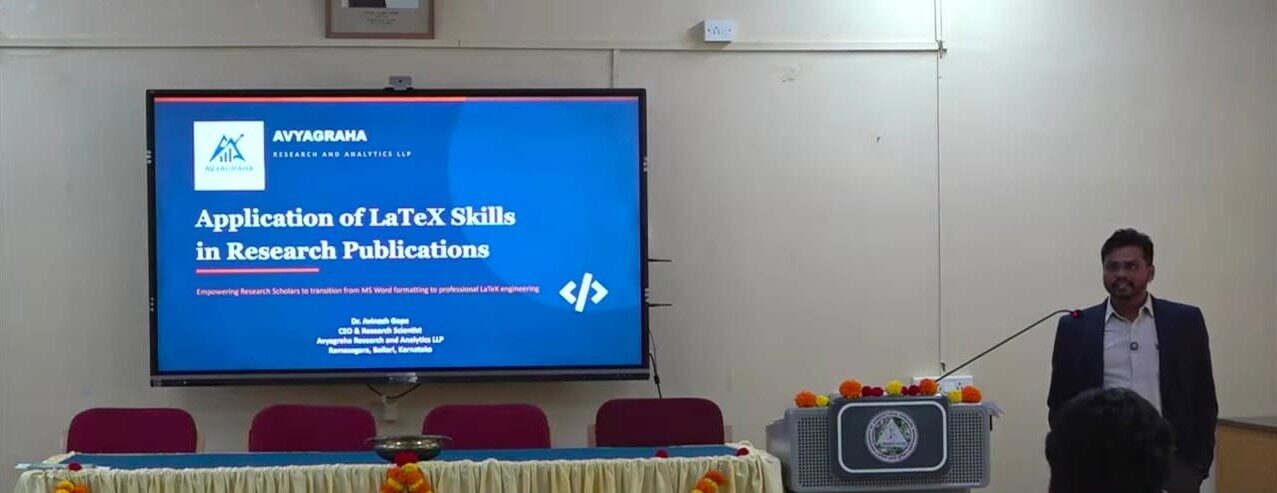
The workshop was led by distinguished resource persons, including Prof. Syed Muzamil Basha and Prof. D. R. Kumar Raja, faculty members from REVA University, Bengaluru, and Dr Avinash Gopa, CEO of Avyagraha Research & Analytics LLP. The resource persons had carefully designed workshop modules that guided us through the various stages of LaTeX-based scientific writing and provided hands-on assistance throughout the sessions. Instead of merely explaining the theoretical aspects of LaTeX, the resource persons focused on helping participants actively practice writing and formatting documents during the sessions. Participating in this workshop was a valuable opportunity for me to explore how modern tools can improve research documentation and scientific communication.
Throughout the programme, the facilitators highlighted the limitations of conventional word-processing tools when handling complex academic documents such as these, journal articles and research reports. They demonstrated how LaTeX can enhance both the quality and efficiency of academic writing by automating formatting processes and maintaining consistency across large documents.

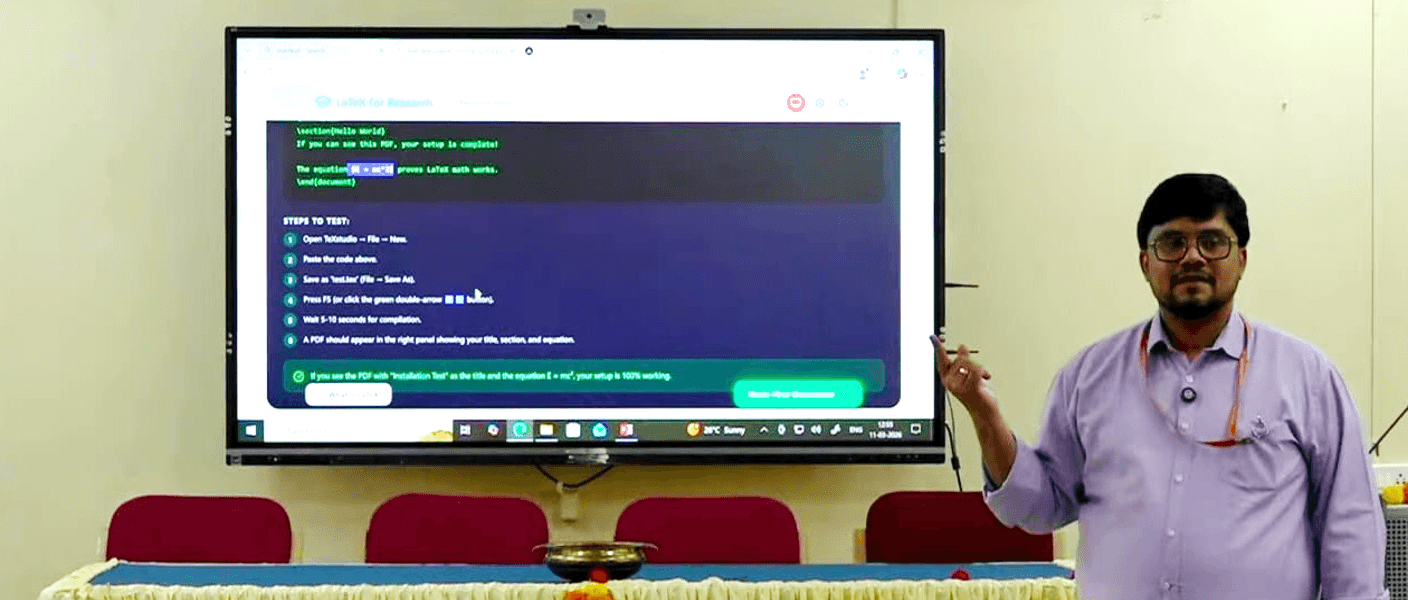
Workshop module developed and shared by the resource persons to guide participants in LaTeX-based scientific writing
During the sessions, I was introduced to commonly used LaTeX editors such as Overleaf and TeXstudio, which are widely used for creating and compiling LaTeX documents. Through guided exercises, we practised creating basic documents, organising sections and compiling outputs. Initially, I felt that LaTeX might be difficult to learn because it involves writing commands rather than directly formatting text as we do in traditional word processors. However, as the session progressed, I realised that once the logical structure of LaTeX documents is understood, the system becomes highly intuitive and efficient.
MY LEARNINGS
Writing Publication-Ready Research Papers
One of the most insightful components of the workshop for me was learning how to use LaTeX to prepare publication-ready research papers. As a researcher, I often spend considerable time adjusting formatting details such as section numbering, figure references and citation styles when using conventional word-processing software.
During the session, the resource persons demonstrated how LaTeX can automatically handle formatting tasks such as section numbering, figure and table references, and bibliography formatting. This eliminates many of the repetitive formatting tasks that researchers usually perform manually.
Another important aspect that I learned was the use of journal templates in LaTeX. Many academic journals provide ready-to-use LaTeX templates that help researchers prepare their manuscripts according to the required formats more easily.
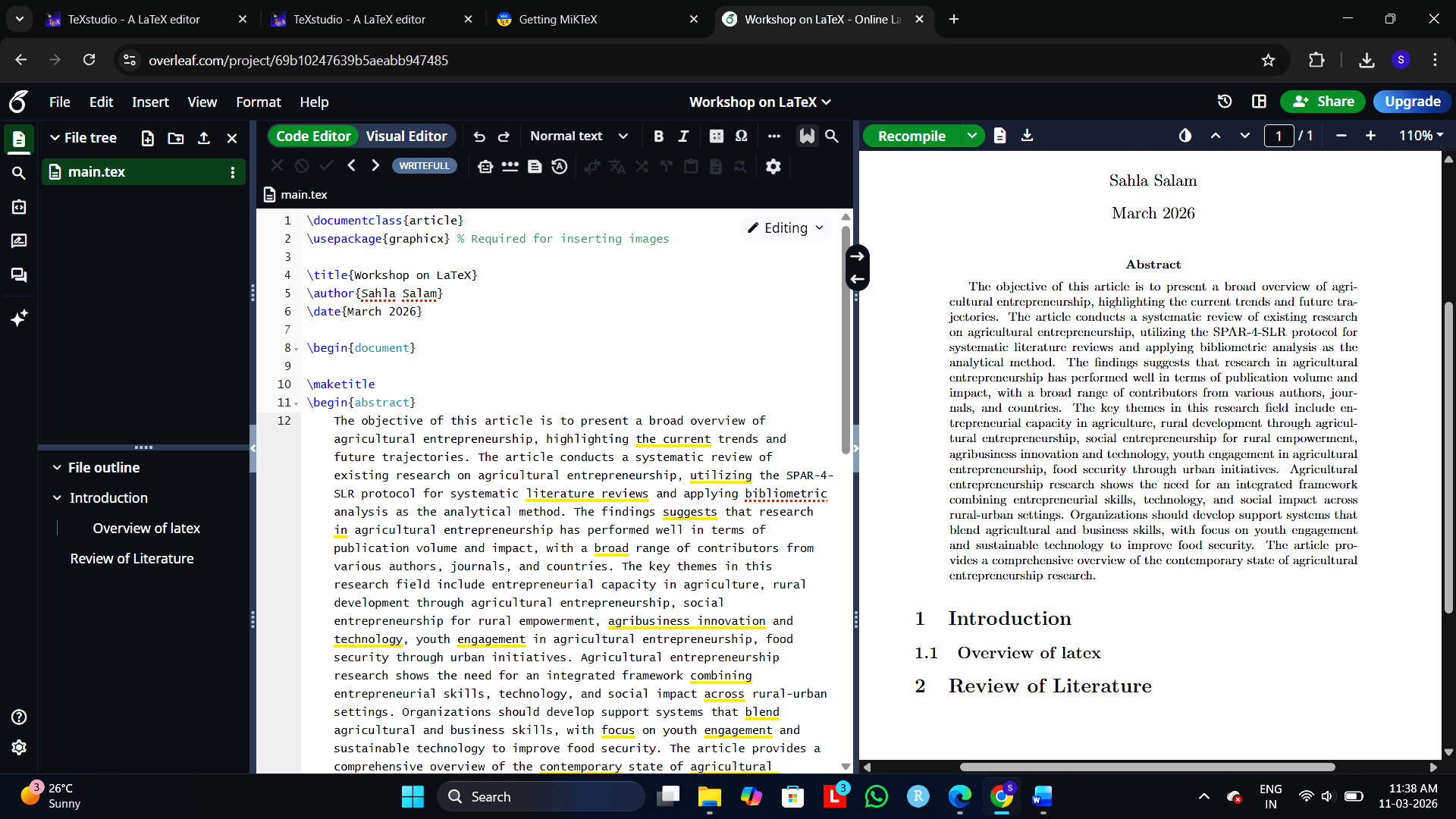
My practice document was created in Overleaf while learning LaTeX commands for structuring scientific manuscripts
This approach was particularly appealing to me because it reduces the need for multiple formatting revisions during the manuscript submission process.
Structuring Theses with Tables, Figures and Citations
Another important learning experience during the workshop was understanding how LaTeX can be used to structure large academic documents, such as theses and dissertations. We know that as research progresses, the thesis document often becomes large and complex, containing multiple chapters, tables, figures and references. Managing such documents in conventional word-processing software can sometimes lead to formatting inconsistencies and referencing errors.
Through the workshop modules developed by the resource persons, I learned how LaTeX allows researchers to organise documents systematically using commands that define chapters, sections and subsections, while maintaining consistency throughout the document.
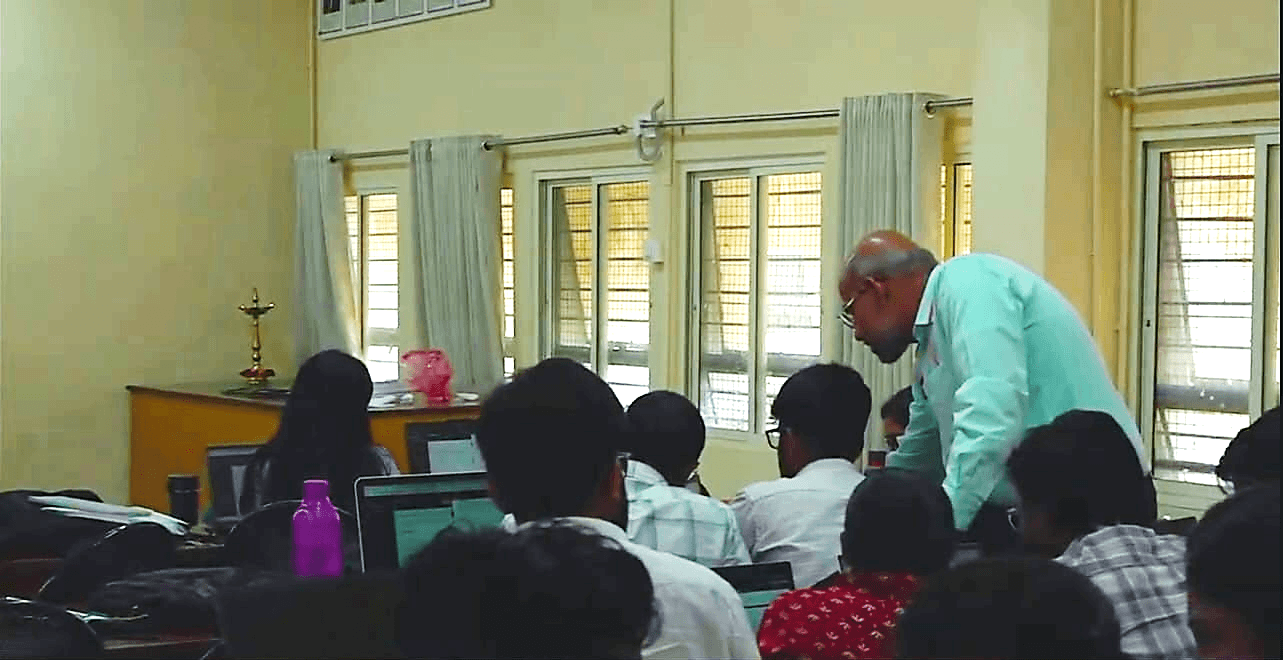
I also learned that citation management tools integrated with LaTeX can simplify referencing multiple research articles within a document.
Academic Resume Preparation and Career Readiness
One of the sessions that particularly caught my attention was related to ATS-optimised academic resume preparation. In today’s academic and professional environment, many institutions and organisations use Applicant Tracking Systems (ATS) to screen job applications before human recruiters review them. The resource persons explained that resumes should be structured so that these automated systems can easily read and interpret them. During the session, I learned how to use LaTeX templates to design professional academic resumes with clear formatting and a logical structure.
This was an eye-opening experience for me because I had not previously considered how digital recruitment systems evaluate resumes.
Beamer Presentations and Research Posters
Another engaging part of the workshop focused on Beamer presentations and LaTeX-based research posters. As researchers, we frequently present our work at seminars, conferences and workshops. During this session, the resource persons demonstrated how the Beamer package in LaTeX can be used to create well-structured and professional presentations for academic purposes.
Compared to traditional slide preparation tools, Beamer allows users to maintain uniform slide formatting and organise presentation content more systematically. We were also introduced to techniques for creating research posters in LaTeX, which are commonly used at academic conferences to present research findings concisely and visually appealingly.
MY KEY TAKEAWAYS
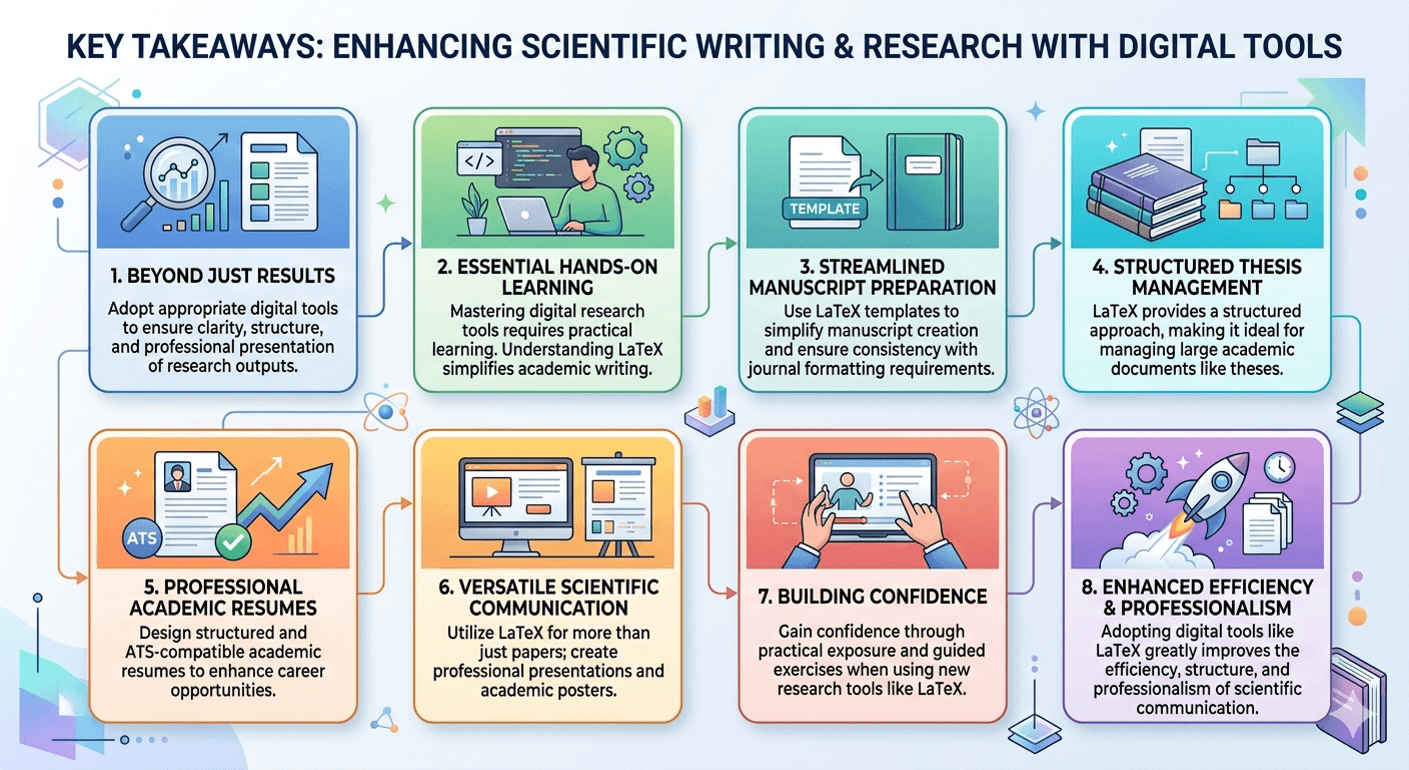 Summary of key takeaways from the LaTeX-based scientific writing workshop (This image is AI-generated for illustrative purposes).
REFLECTIONS
Hands-on Experience with Overleaf and TeXstudio
A major strength of the workshop was its emphasis on hands-on learning. Instead of simply listening to lectures, participants were encouraged to actively practice writing LaTeX documents using platforms such as Overleaf and TeXstudio. During these practical sessions, I learned how to create new documents, structure sections, insert figures and tables and compile documents into final outputs. The resource persons also guided us through common troubleshooting issues that beginners often encounter when using LaTeX.
Initially, I had some apprehension about learning a new document preparation system that relies on coding-like commands. However, the interactive nature of the sessions helped me overcome these concerns.
Overall, participating in this workshop was a highly enriching experience for me. It provided valuable insights into how LaTeX can be used as a powerful tool for scientific writing and academic documentation. The workshop strengthened my understanding of how structured writing systems can improve the clarity, efficiency and professionalism of research publications. For students and early-career researchers, acquiring LaTeX skills can significantly enhance their ability to prepare high-quality manuscripts, theses, presentations, and academic resumes.
Personally, I believe that the knowledge gained from this workshop will help me improve the quality of my academic writing and streamline my research documentation process. I intend to start using LaTeX to prepare research manuscripts and, eventually, to structure my doctoral thesis. Workshops like this play an important role in building research communication skills among agricultural scientists and in contributing to the more effective dissemination of agricultural knowledge.
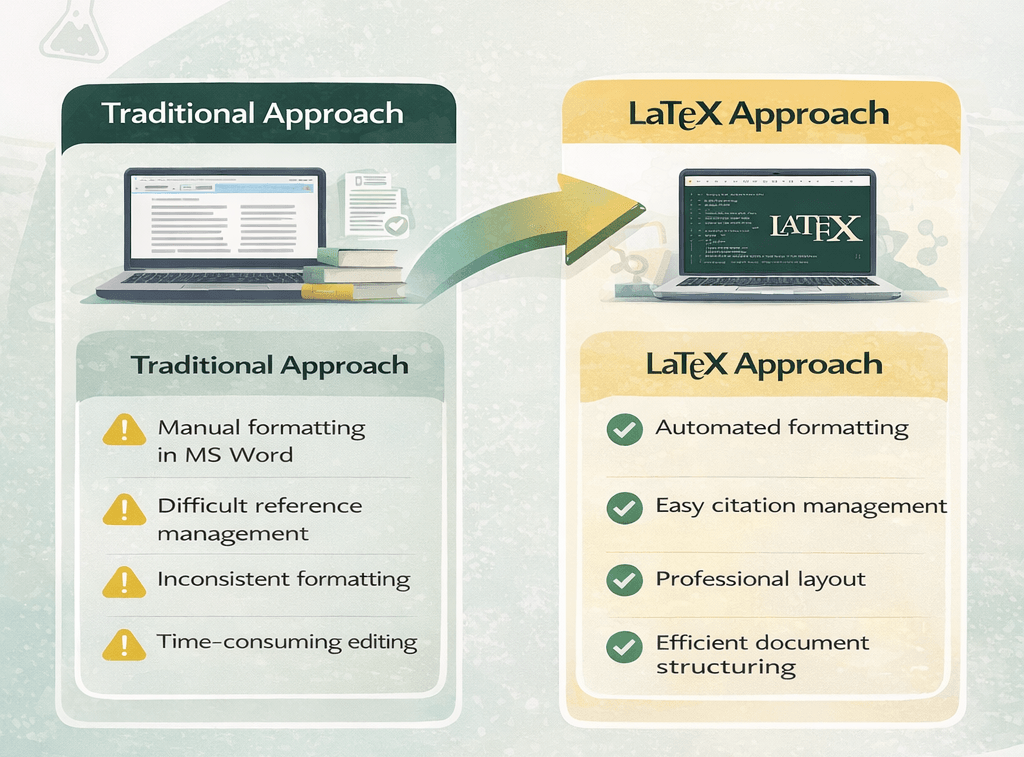 Key takeaway from the workshop: moving from traditional MS Word formatting to efficient and professional scientific writing using LaTeX.
Scope for Improvement
The workshop was highly informative and well-organised; however, a few enhancements could make future programmes even more effective. Extending the duration beyond a single day would allow participants additional time for hands-on practice and a deeper understanding of LaTeX concepts.
Incorporating advanced-level sessions—such as troubleshooting common errors and working with complex templates—would be especially beneficial for participants with prior experience. Sharing pre-workshop materials or introductory tutorials in advance could also help beginners feel more prepared and confident during the sessions.
Furthermore, allocating more time for individual practice and addressing participants’ queries would significantly enrich the learning experience. Overall, these improvements could strengthen participants’ confidence and proficiency in using LaTeX for academic writing.
Acknowledgement
I sincerely thank the Department of Agricultural Statistics, Applied Mathematics and Computer Science at the University of Agricultural Sciences Bangalore for organising this highly informative workshop. I am particularly grateful to Dr K. B. Murthy, Professor and Head of the department, along with Dr Manjunatha G. R. and Dr Vimala M., for their efforts in coordinating and conducting this programme.
I also extend my sincere gratitude to Dr V. Govinda Gowda, Head of the Department of Agricultural Extension, for encouraging and supporting our participation in the workshop. I further express my appreciation to the resource persons and organisers for creating a highly supportive and interactive learning environment.
 Sahla Salam is currently pursuing a PhD in Agricultural Extension Education at the GKVK Campus, University of Agricultural Sciences, Bangalore. She can be reached at salamsahla422@gmail.com

Add Comment