



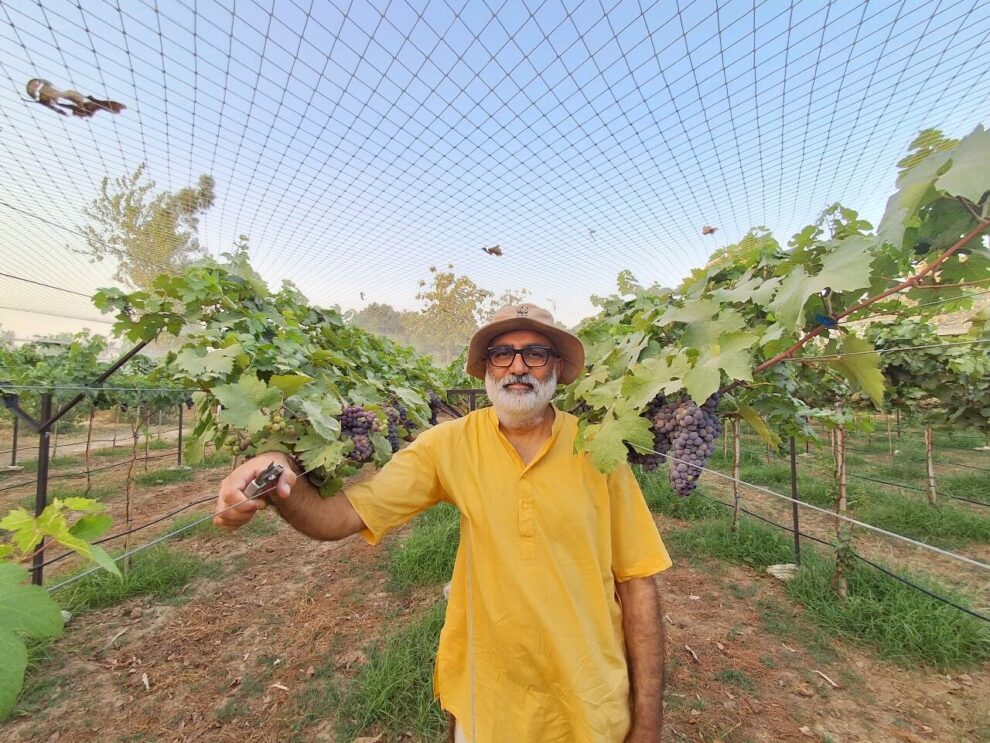
Vimmi Sawhney and Anil K Sawhney in this blog share their experience in building a premiumisation model that helps small farmers process, brand, and directly market their produce to meet the growing demand for chemical-free, heritage-based foods.
CONTEXT
Indian agriculture is dominated by smallholders who sell raw produce at minimal margins, while intermediaries and processors capture most of the value despite bearing zero production risk (Box 1). While urban consumers are increasingly demanding chemical-free, heritage-based foods, small farmers lack the infrastructure, branding, and market access needed to meet this demand. To address these gaps, small farmers need a premiumisation model of farm management that amalgamates farm-level processing, consumer education and direct marketing. The primary purpose of this blog is to share our experience with this premiumisation model.
| Box 1 Balancing Farmer Prosperity and Consumer Affordability
The Ashok Dalwai Committee on Doubling Farmers’ Income (2018) highlighted that, on average, farmers receive only 15-20% of the final consumer price (MRP) for most agricultural produce. The remaining share is absorbed by transporters, wholesalers, retailers, and processors, none of whom bear any risk associated with crop cultivation. In such a situation, any attempt by the government to raise farmers’ incomes by increasing procurement prices directly pushes consumer inflation higher, creating a policy paradox. On the one hand, the political leadership is firmly committed to its vision of Doubling Farmers’ income. On the other hand, it must maintain a delicate balance between keeping food prices under control and being politically sensitive. The current agricultural processing and marketing system, dominated by intermediaries, creates a structural dilemma: farmers receive a small fraction of the consumer price, while intermediaries and processors earn disproportionately high margins. |
PREMIUMISATION MODEL
The model rejects the notion that profitability depends solely on cutting costs or raising prices. Instead, it redefines value as a function of quality, authenticity, heritage, and nutrition. By removing intermediaries and directly connecting with consumers who value traceability and purity, farmers retain a far greater share of the final price without causing inflation.
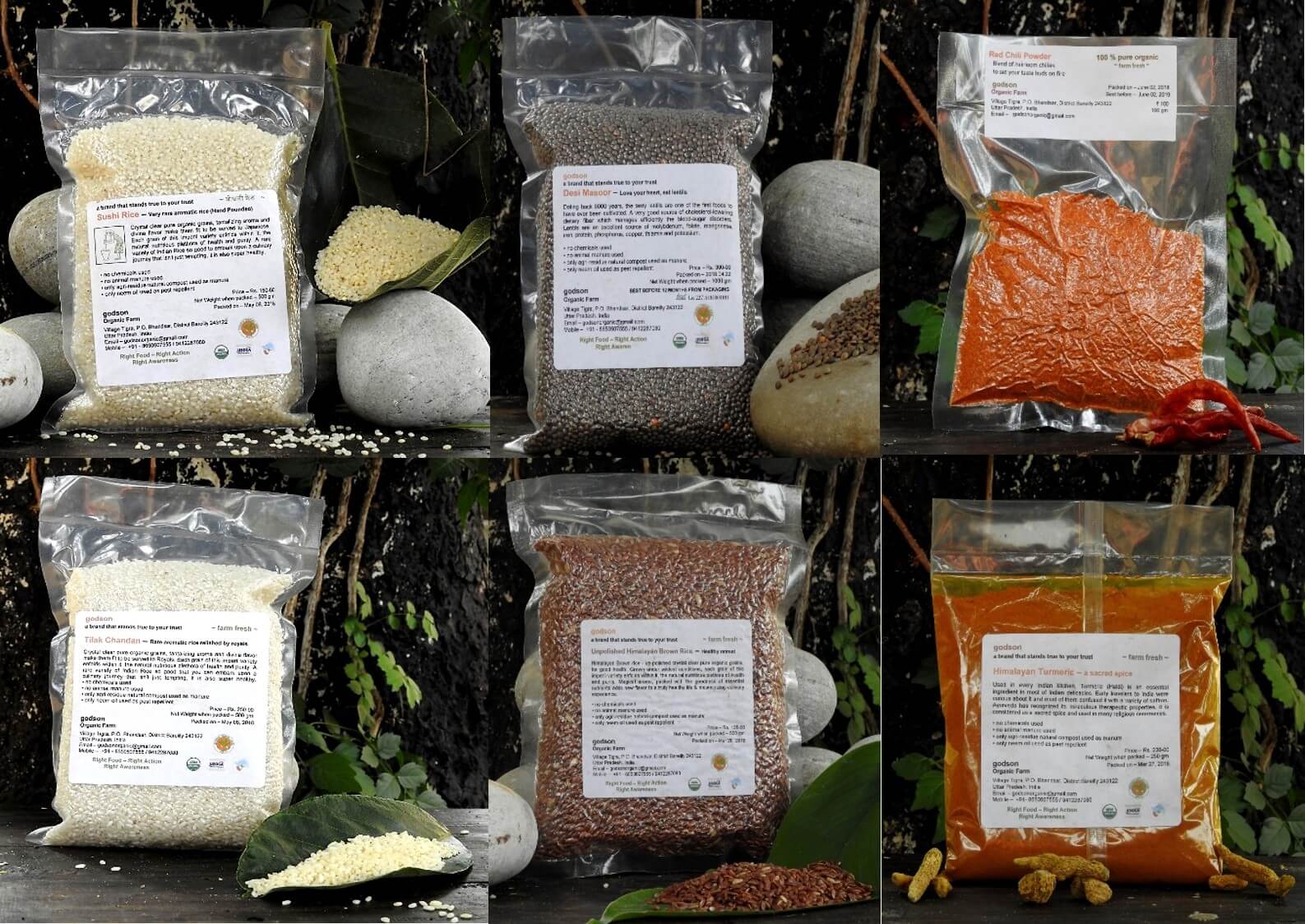
This is not a theoretical framework but a proven field practice. Transparent branding, vacuum packaging, and honest labelling create a direct link between the farm and the consumer. Customers know exactly where and how their food is grown, and they pay for trust, purity, and integrity rather than advertising or logistics. Because value addition is intrinsic and quality-based, not speculative, retail prices remain competitive. At the same time, farmer income rises substantially, thus resolving the long-standing policy dilemma of balancing prosperity with affordability – it keeps food affordable while making farming profitable.
OUR EXPERIENCE WITH PREMIUMISATION
Based in Village Tigra, Bareilly, our Godson Organic Farm has been producing food for serving health-conscious urban consumers. We cultivate 5 Varieties of Wheat, 4 Premium varieties of Rice, Jowar, Bajra, Maize, Mustard, Sesame, Horse Pea, Arhar, Lobia, Yard Long Bean, Moong, Urad, Masoor, Yellow Turmeric, Black Turmeric, Red Chilli, Large Cardamom, etc. We also grow a wide variety of herbs, such as basil, Kalmegh, Ashwagandha, Giloy, long pepper, etc., on our farm spread over 40 acres.
Since 2015, after a few years of struggle in the field, we began processing, packaging, and marketing our entire produce directly to end users. Starting with personal introductions and word-of-mouth promotion, our consumer base expanded organically, allowing us to sell our entire output directly within three years, without external advertising or formal branding. During this process, we became the brand ambassadors of our own produce, and our personal credibility became the brand’s identity, eliminating the need for external advertising or a formal logo. We also grow a wide range of seasonal and exotic vegetables, which we distribute free of cost to our customers. This thoughtful gesture not only strengthens our relationship with them but also serves as a meaningful alternative to spending on social media or other forms of advertising.
KEY FEATURES
Revival of heirloom varieties
Our model revived heirloom “old-gold” cereals, pulses, oilseeds, and spices, many of which vanished under hybrid monocultures. These traditional varieties offered better taste, aroma, and nutrition, creating a premium, authentic product that consumers appreciated. We educated customers on their culinary and cultural importance, strengthening brand loyalty. To expand offerings, we devised a strategy to grow diverse crops to meet most kitchen needs from our farm.
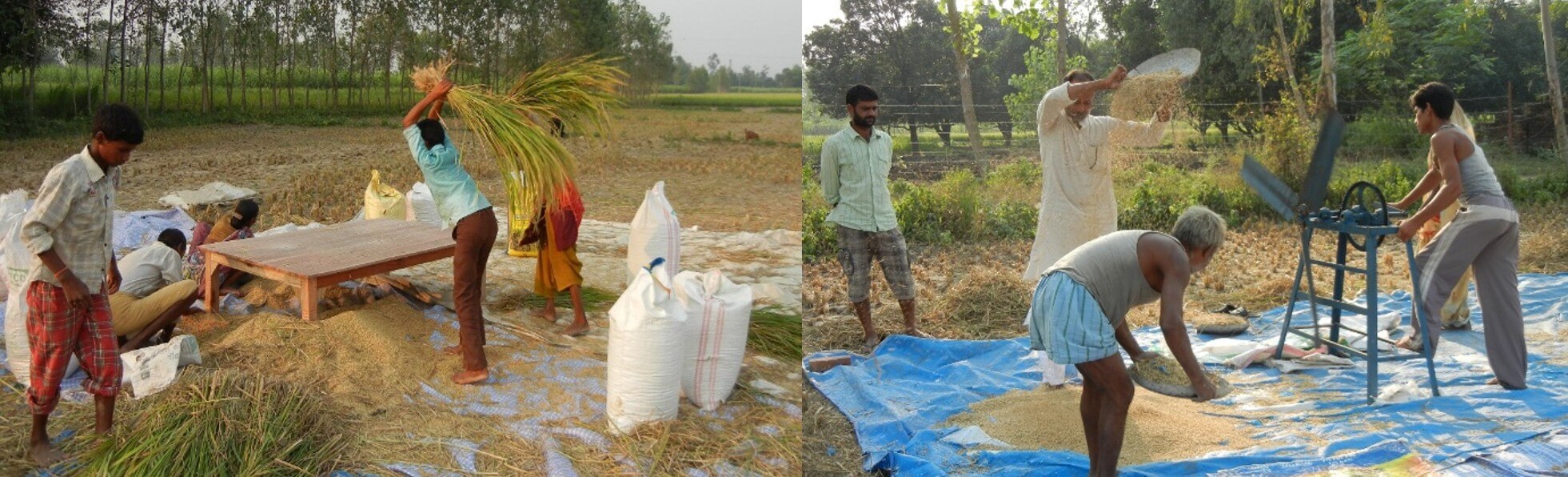
On-farm processing
It involved installing small units, such as a rice processor, flour mill, and oil expeller, to supply fresh rice, flour, and oils directly to customers. Approximate costs of these machines are as follows:
| Equipment | Approximate Cost (INR) |
| Vacuum Packaging Unit | 50,000 – 75,000 |
| Rice processing machine | 50,000 – 1,00,000 |
| Flour Mill (Chakki): 2 HP Single Phase | 50,000 |
| Mini Oil expeller | 75,000 |
This boosted consumer trust by providing convenience and supporting the premiumisation model.
Packaging
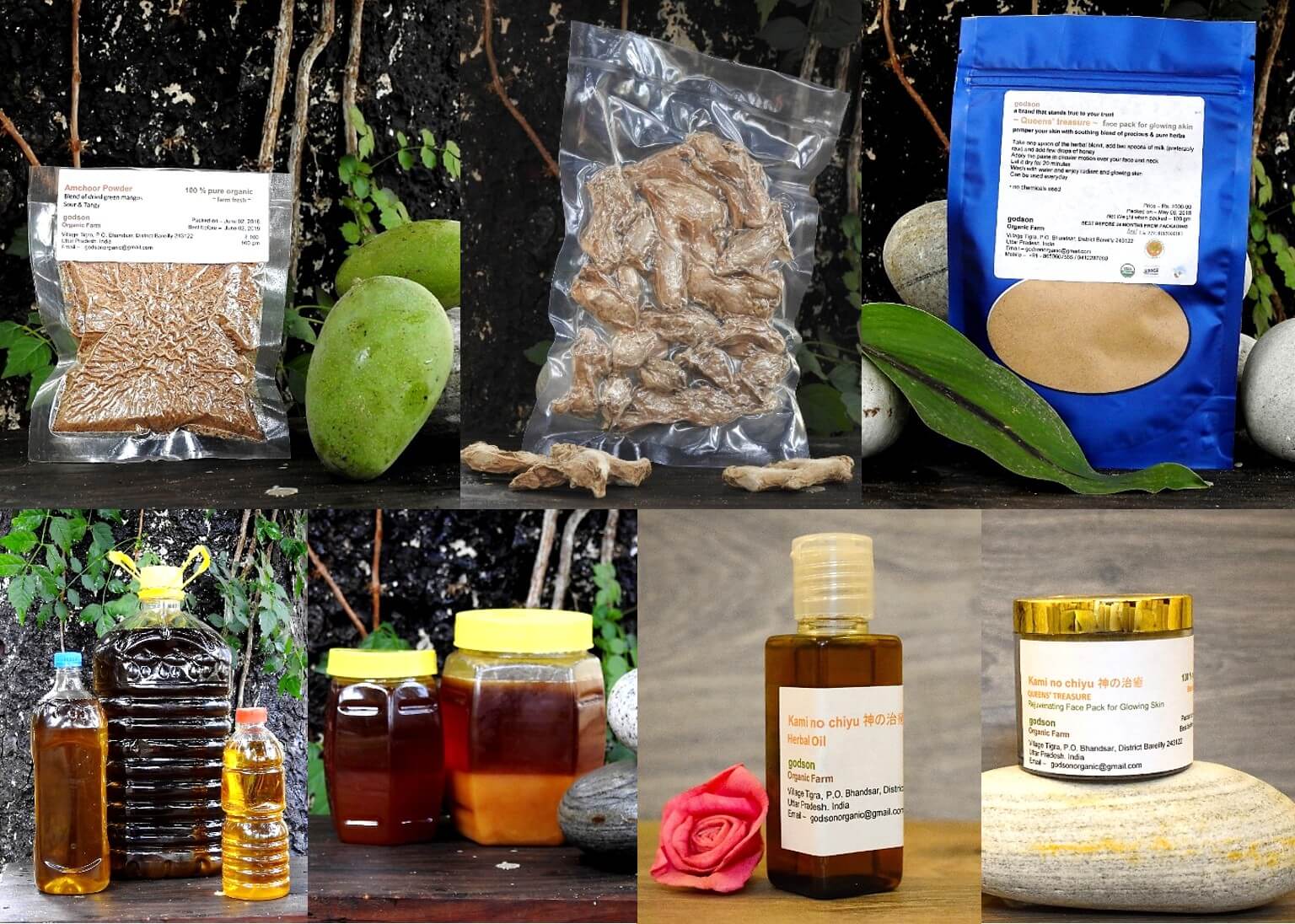
Packaging involves 500g and 1kg biodegradable vacuum packs to ensure hygiene, freshness, and pest protection. All cleaning, processing, and packaging happen on-farm under personal supervision, guaranteeing quality. This holistic system – organic cultivation, heritage revival, on-farm processing, vacuum packaging, and direct marketing – embodies our ‘From Soil to Soul’ philosophy, symbolising integrity, traceability, and nourishment for soil and more spirit.
Storage and Post-Harvest Management
This model highlights the urgent need for better storage facilities at farms. Most Indian farmers lack infrastructure or rely on outdated CAP storage, which is vulnerable to pests, moisture, and weather. Modern agriculture requires engineered storage systems, like silos or modular bins, that preserve quality, control humidity, and enable lossless long-term storage.
For a premiumization model to succeed, farmers must control all stages, from production to marketing. This control is incomplete without scientific storage. Safe storage allows farmers to sell year-round, choose optimal marketing times, maintain supply, and avoid distress selling. Using bulk packing in large drums with a vacuum packaging machine, post-harvest losses – estimated at 5-10% annually – can be nearly eliminated. Developing farm-level silos, supported by bulk vacuum packaging and final vacuum packaging, could significantly boost farmer income and national food security.
Building Trust through Authenticity
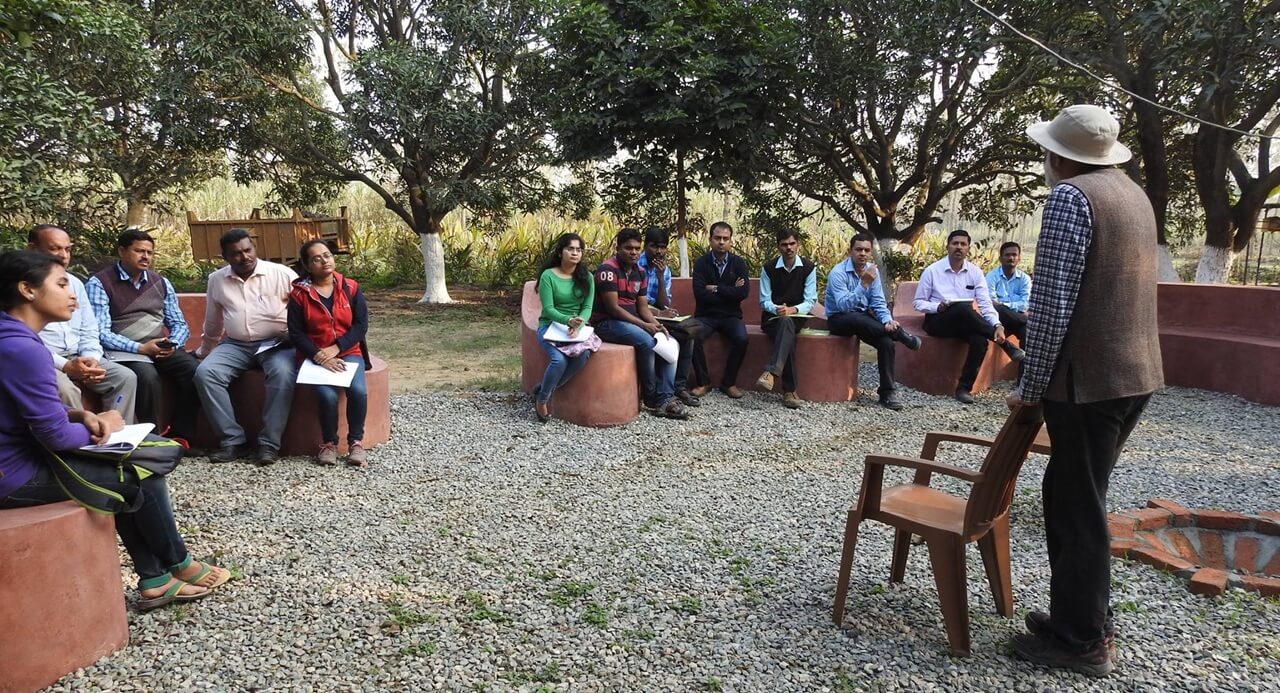
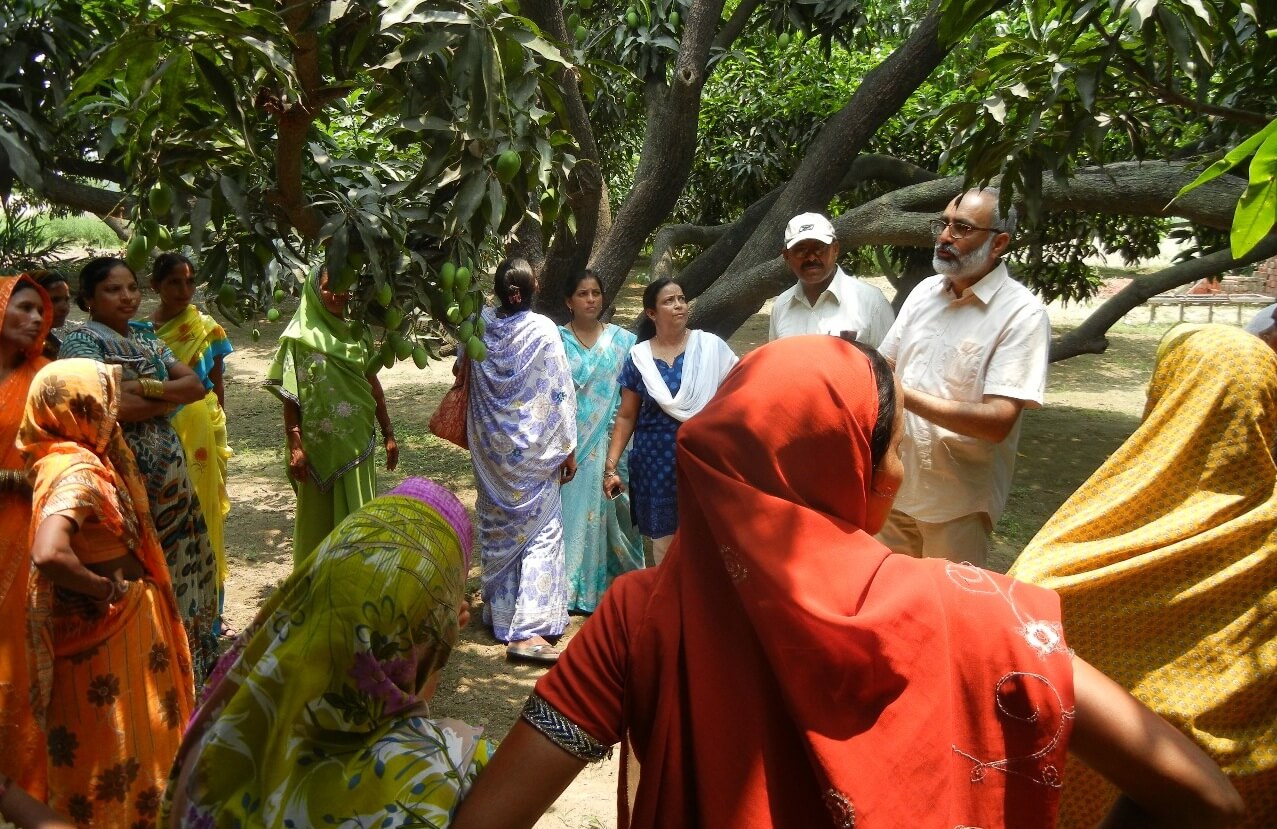
Our marketing strategy relies on personal engagement rather than promotion, starting by supplying friends, families, and small urban groups who care about their food. Every purchase involved conversations about soil health, seed history, and the grain’s journey. We invite customers to experience farming activities firsthand.
These transparent exchanges built an authentic consumer network, removing the need for large retail systems. The resulting trust-based, decentralised, scalable model ensures complete customer retention – something no marketing budget can guarantee – making customers stakeholders in product integrity.
RESULTS AND OUTCOMES
This model enabled us to sell our entire produce directly to consumers, who valued the authenticity, freshness, and unique flavours of heirloom varieties. We set prices 40-50% above market rates, nearly doubling profits without significantly affecting consumers. Eliminating intermediaries saved handling costs, increasing profits unexpectedly. The maximum retail prices for some of our products are as follows:
| MRP of some commodities | |
| Mustard Oil | 450 / Lit |
| Whole Wheat Aata | 75 – 400 / Kg |
| Turmeric Powder | 250 / pack of 200 gm |
| Urad / Moong Whole | 140 / pack of 500 gm |
| Arhar Daal (Roasted – Hand-grounded) | 200 / pack of 500 gm |
| Kami-no-Chiyu – Herbal Oil | 400 / pack of 50 ml |
We also invested in educating consumers about the value of pure, high-quality food. Through engagement and transparency, we showed that premium prices are justified by quality, safety, and nutrition, fostering loyalty and acceptance of higher costs.
Vacuum packaging and small-scale processing ensured hygiene and freshness. Revival of heirloom seeds and diversified crops boosted loyalty and positioned our farm as a source of healthy, chemical-free, culturally significant food.
The strategy created rural employment in cleaning, grading, packaging, and delivery. Consumer education highlighted the nutritional, culinary, and cultural benefits of traditional varieties, supporting biodiversity and sustainable use. Heritage seed revival, crop diversity, and small-scale processing proved that conservation can be profitable and sustainable in practice.
OUR LEARNINGS
Our experience shows that premiumization is rooted in authenticity, not merely in expensive branding. Even with limited financial investment, farmers can build a successful enterprise through quality assurance and transparent engagement with consumers. Direct marketing gives farmers greater control over pricing and consumer relationships, while reducing dependence on intermediaries.
Small packaging units are better suited for urban markets, and the revival of heirloom varieties adds both cultural value and economic advantage. We have learned that scaling up production should never come at the cost of quality. Conservation and profit can go hand in hand when the farmer becomes both the custodian of biodiversity and the entrepreneur of trust.
ECONOMIC AND POLICY RELEVANCE
The premiumization model shows farm prosperity doesn’t rely on subsidies but on local entrepreneurship and consumer participation, boosting farmers’ income without market disruption. It aligns with India’s goals of self-reliance, doubling income, and the goals of UN’s sustainable food systems that emphasises decentralisation, rural entrepreneurship, and consumer focus. The model also benefits climate resilience and nutrition by promoting organic heritage varieties, which support biodiversity, soil health, and offer nutrient-rich alternatives to hybrids.
REPLICATION POTENTIAL
This adaptable model requires minimal capital, given proper training in packaging, traceability, and consumer engagement. Cooperatives, FPOs, and self-help groups can develop micro-enterprises, emphasising local heritage, linked via digital platforms for wider reach. Policy support through small-scale processing infrastructure, certification, and e-commerce can greatly expand rural producers’ potential as heritage and health agripreneurs.
IMPLICATIONS FOR EXTENSION
Actors in the Indian extension system focus on expanding outreach, providing guidance on crop production, pest management, and soil health. To promote farm-level processing and direct marketing, extension professionals must link farmers with end consumers, develop new market connections, and support value addition. They can identify urban and semi-urban markets for farmers’ self-processed products and help create Farmer-Producer Organisations (FPOs) to manage branding, logistics, packaging, and outreach, reducing individual burdens and improving efficiency without sacrificing quality.
Training programs under ATMA, RKVY, and PKVY can educate farmers on small-scale processing, packaging, and marketing of traditional crops. Extension professionals should also raise awareness among urban households about buying unadulterated, fresh produce directly from farmers, emphasizing health benefits, freshness, and ethical production. This builds consumer trust and demand for farmer-owned brands, expands markets, and supports fair farm incomes and sustainable food systems.
By strengthening farmers’ entrepreneurship and influencing consumer behaviour, extension workers can transform agriculture into a market-driven, socially responsible sector.
CONCLUSION
The premiumisation model shows Indian farmers can evolve from raw produce suppliers to brand creators by adopting a holistic system that includes heritage seed conservation, organic farming, diverse crop planning, small-scale processing, storage, packaging, and direct consumer engagement. If widely adopted, it can help India shift from volume to value-based agriculture, turning farmers into trust custodians and consumers into partners in sustainability. This practical, field-tested approach boosts farmer prosperity while maintaining affordability.
To replicate it, extension stakeholders should support farmers by providing heritage seed clusters, training in small-scale processing and packaging, and by forming Farmer-Producer Organisations or self-help groups focused on organic premium products. Offering affordable vacuum packing, rice mills, flour mills, oil expellers, and storage infrastructure allows farmers to supply premium products directly. Strengthening urban-rural market links via organic fairs, digital platforms, and consumer education on traditional varieties can increase adoption, income, and rural livelihoods.

 Vimmi Sawhney and Anil K. Sawhney are organic farmer-researchers from Village Tigra, Uttar Pradesh, involved in every agricultural stage for over 30 years. They work full-time with the team in the field to ensure each grain reflects purity and care. Their farm is a living lab for heirloom seed conservation, organic farming, and processing, creating a self-sustaining system. They have built a strong trust with consumers, with 100% retention and zero dissatisfaction, rare even for commercial brands. (godsonorganic@gmail.com)

“Congratulations to Sawhneys on coming out with a successful model of premiumisation which help both the producers and the consumers. Although it is on a small scale (40 acres) it is highly commendable. Behind this success one can see the devotion and hard work of project leaders.
There are several such successful projects involved in production and marketing of agricultural products, for example Indian Organic Producers Company ltd., Kerala; Chetna Organic Agriculture Producers Company Ltd. Telangana; Junagarh Dairy, Sagar Samridhi Crop, WASSAN Projects in Maharashtra etc. But these programmes are very few compared to several programmes that failed. Although,the Government of India is pushing FPOs to help small farmers the FPOs are not able to make a significant dent because of several reasons such as inability to get finance required for infrastructure development and to buy farmers produce; lack of farmers trust on FPOs, inefficient leadership etc.
It is better to replicate the successful projects in other areas or expand the area of operation but it calls for dedicated staff who can instil trust of farmers on these initiatives.
Thanks to AESA for publishing such blogs which have the potential to motivate the extension professionals in helping the small farmers”.