
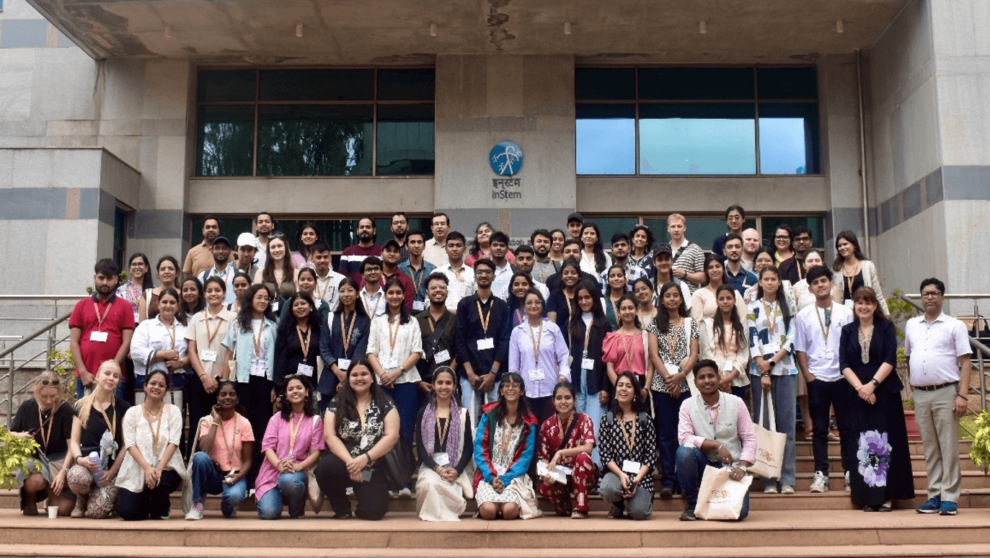
Basu and Sayali were part of the 2025 SAGE (Sustainability Ambassadors Global Exchange) cohort, are sharing their reflections on their experience.
CONTEXT
We were introduced to the SAGE (Sustainability Ambassadors Global Exchange) programme through peers from the 2024 cohort, whose experiences and recommendations encouraged us to explore this opportunity. Guided by their insights, we submitted our application through the programme’s rigorous online selection process, which included an interest form outlining our motivation and perspectives on sustainability, a motivation essay, a research proposal, a recommendation letter and a curriculum vitae. We were honoured to be selected among the top 24 Senior Ambassadors from over 200 applicants. As PhD Scholars, we are firmly committed to community-driven sustainability, which closely aligns with the vision of this initiative.
This program is a customised short-term exchange program (STEP) for Indian and Nordic Master’s or PhD students from the social, natural, physical, and engineering sciences, including an immersive, interactive program to understand cross-sectoral and interdisciplinary research on current on-ground issues facing India. The programme is jointly organised by the Echo Network, the Danish Academy of Technical Sciences, the Nordic Centre in India, Innovation Centre Denmark, the Tata Institute of Genetics and Society and the Ashoka Trust for Research in Ecology and the Environment. It is designed to bring together emerging sustainability leaders from across the world for immersive learning and cross-cultural exchange. The programme focuses on diverse dimensions of sustainability, ranging from clean and resilient cities to rural livelihoods, ecosystem stewardship and frontier innovations in science and technology, offering participants a chance to explore sustainability from scientific, social and technological perspectives.
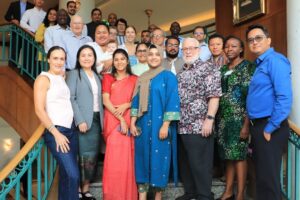
The programme was held over 12 weeks, from 3rd June to 30th September 2025. It included two weeks of intensive online lectures, followed by a two-week in-person STEP training and network summit hosted in Bangalore, India, and 8.5 weeks of remote collaborative research. During the past two weeks, the visits gave us direct insights into how institutions, communities, and research organisations are addressing challenges related to urban sanitation, climate change, biodiversity conservation, and health through innovative, inclusive, and locally grounded approaches. This cohort consisted of participants from around 12 countries, creating a lively platform for global dialogue and collaborative learning.
The program aims to equip participants with knowledge on topics like circular bioeconomy, food security, health, food systems, climate action, ecosystem preservation, WASH, OneHealth, ecosystem adaptation, and regenerative agriculture. It offers a holistic introduction via online and in-person lectures by echo network experts, regardless of academic background. Participants will work on real-world problems with consortium members, stakeholders, and communities through research projects detailed at www.echonetwork.in/projects. The program also facilitates long-term collaborations with Indian organizations involved in sustainability projects.
The course requires students to actively participate in lectures, discussions, assignments, and field visits. The assignments include book reports, field reports, orientation reports, research updates (1, 2, and 3), a virtual conference presentation, and a final report. Field visits are an essential component of the program, with specific visits arranged to Bangalore Creative Circus, ICA; Waste Management Centre, Hasiru Dala; B.R. Hills, ATREE; WASH Facility and Kandawara Colony, BORDA; and a compost site at the Indian Institute of Human Settlements (IIHS).
For a scholar in agricultural sciences, these visits offered a powerful reminder that sustainability is multidimensional, interweaving social, ecological and technological systems. Each visit deepened our understanding of how knowledge, innovation and community engagement can work together to build equitable and resilient societies.
PROGRAM SUMMARY AND KEY LEARNINGS
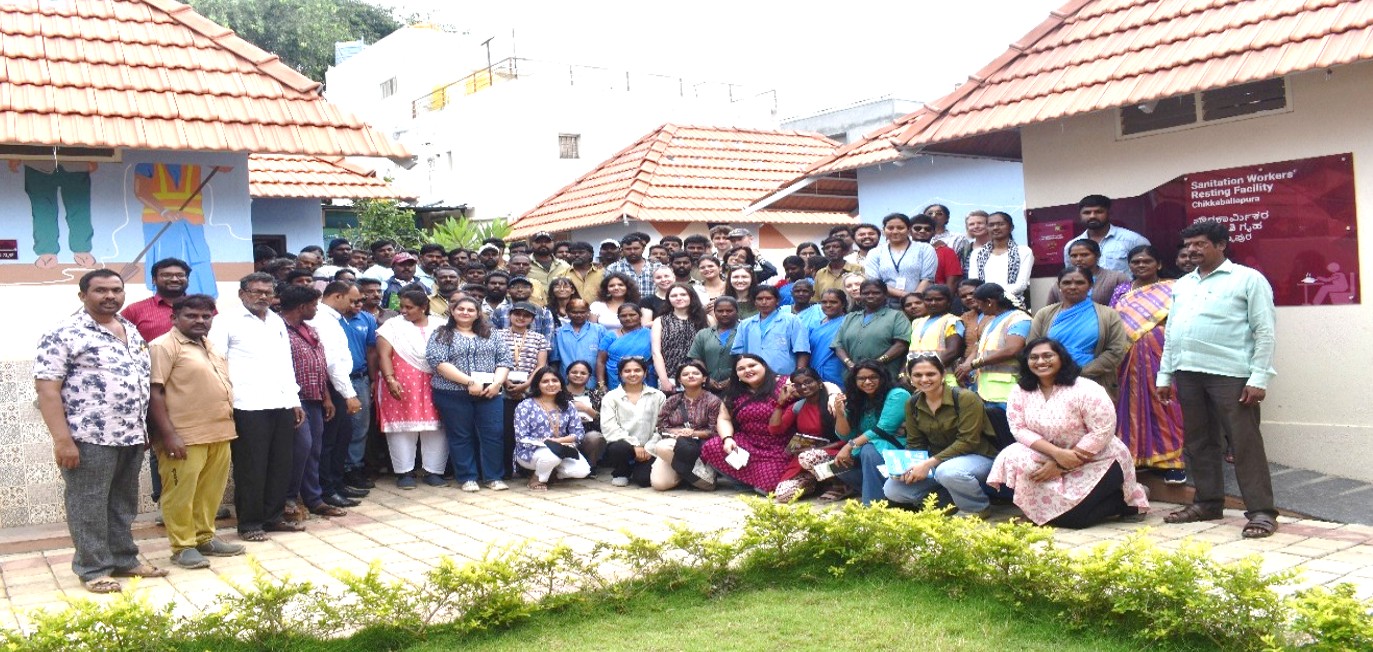
1. Clean Healthy Cities
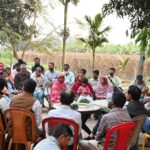
The first field trip focused on urban resilience and public health, highlighting challenges and innovations in the management of Clean and Healthy Cities. In a city like Bangalore, which is famously known for its year-round mild weather, we learned that heat waves are still not recognised as formal disasters, despite their increasing frequency and severe impacts on human health and productivity. The lack of disaster classification limits investment in adaptive infrastructure and risk communication systems.
A second important insight was the undervalued role of sanitation workers, individuals who ensure urban cleanliness yet face unsafe conditions and social invisibility. Despite their essential contribution, many sanitation workers lack protective equipment, adequate rest areas and societal recognition.
Interacting with local officials and community members revealed that achieving “clean cities” is not only a matter of infrastructure but also of social justice and climate-sensitive planning. For me, as a social science researcher, this expanded the idea of disaster studies to include urban heat and sanitation inequities as vital components of urban sustainability.
2. Rural Livelihoods
The second field visit, centred on Rural Livelihoods, was organised at BORDA, a pilot initiative working to improve the living and working conditions of sanitation workers and their families.
The project’s toolkit approach, emphasising rest areas, dignity at work and awareness of institutional rights, showed how livelihood improvement and social empowerment can be interlinked.
We also learned about the City Farmer Partnership Program, which promotes waste segregation, composting and organic manure production for peri-urban agriculture. Another inspiring site was Kandavara Colony, where a low-cost, circular wastewater treatment system was designed to recycle household wastewater for use in gardening and local landscape development.
These models exemplified circular economy principles, turning waste into a resource while improving livelihoods. Having previously worked on wastewater reuse during my undergraduate studies, this visit reinforced my interest in studying the microbial diversity of treated wastewater to develop low-cost, community-based biofertilizers.
The visit demonstrated that technology need not always be high-end; community participation and contextual adaptation can make even simple innovations sustainable.
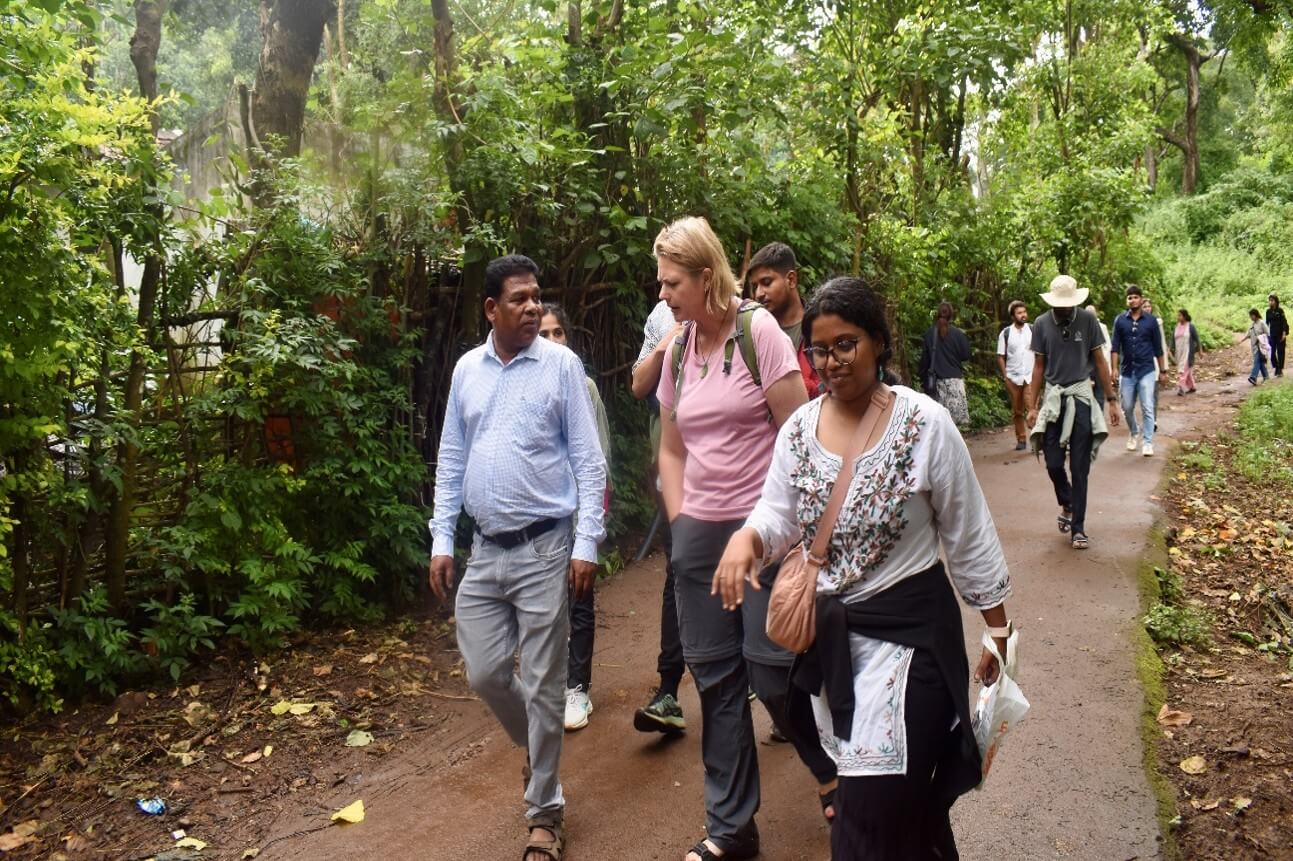
4. Ecosystem Stewardship
The third field visit was held in the Biligiri Rangaswamy Temple (BRT) Tiger Reserve of Karnataka, focusing on Ecosystem Stewardship and Traditional Knowledge Systems. The visit was coordinated by the Ashoka Trust for Research in Ecology and the Environment, which has been working with the Soliga tribal community for over three decades.
A notable finding was the widespread invasion of Lantana camara, which covered nearly 50% of the BRT landscape. The invasive weed has displaced native vegetation and poses threats to livestock due to its toxic compounds, particularly pentacyclic triterpenoids such as lantadene A and B.
However, through innovative community engagement, ATREE and the Soliga artisans have converted this challenge into an opportunity. They produce furniture, baskets and decorative handicrafts using treated Lantana wood, an excellent example of eco-entrepreneurship through restoration.
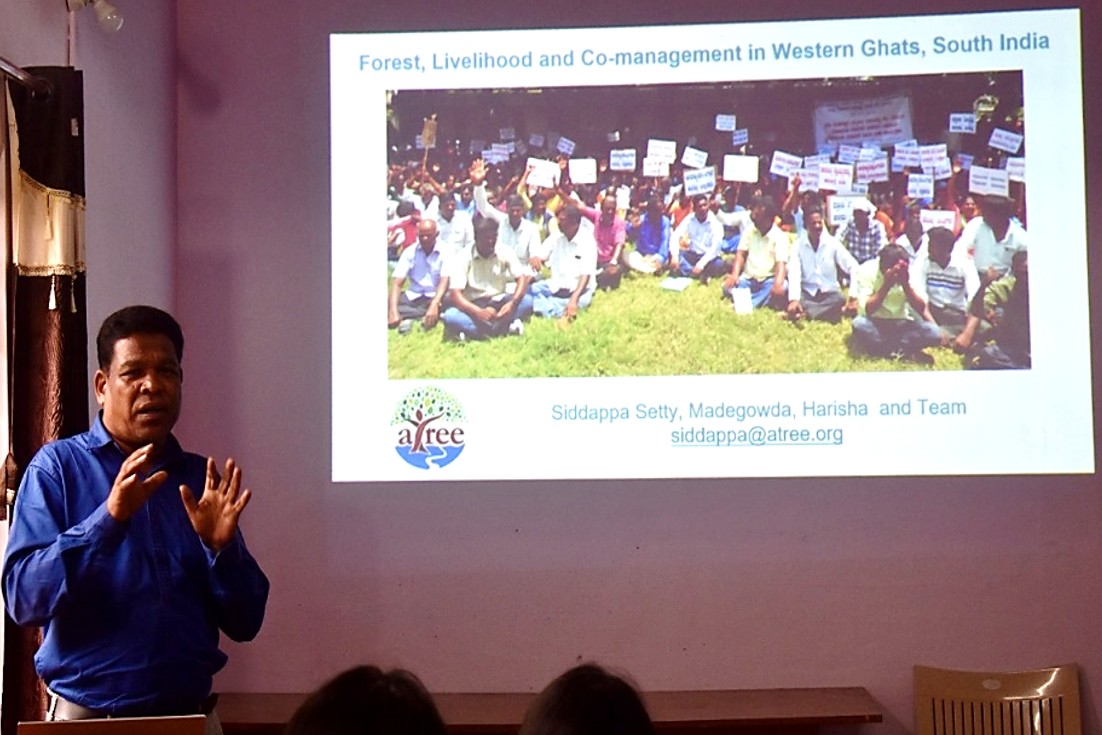
The Community Conservation Centre (CCC) at ATREE functions as a bridge between research and grassroots implementation. Key initiatives include:
- Biodiversity-friendly smallholder coffee cultivation with the Soliga tribe and Coffee Board in the name of Adavi coffee;
- Wild bee honey cluster (Adavi brand), providing value addition and branding support for NTFPs;
- Participatory Resource Monitoring (PRM), where 77 Gram Sabhas manage forest resources under the Forest Rights Act (2006);
- Educational and health projects, addressing high dropout rates and ensuring equitable healthcare through a hub-and-spoke tribal health navigation model.
These interventions demonstrated how livelihood improvement, biodiversity conservation and community rights can be pursued simultaneously when local voices are empowered. Witnessing the Soliga community’s participatory governance and traditional ecological practices- songs, dances and oral histories connected to wildlife and sacred groves-was profoundly inspiring. It illustrated how traditional knowledge systems (TKS) sustain both ecology and culture.
5. Science, Innovation and One Health (TIGS, Bengaluru)
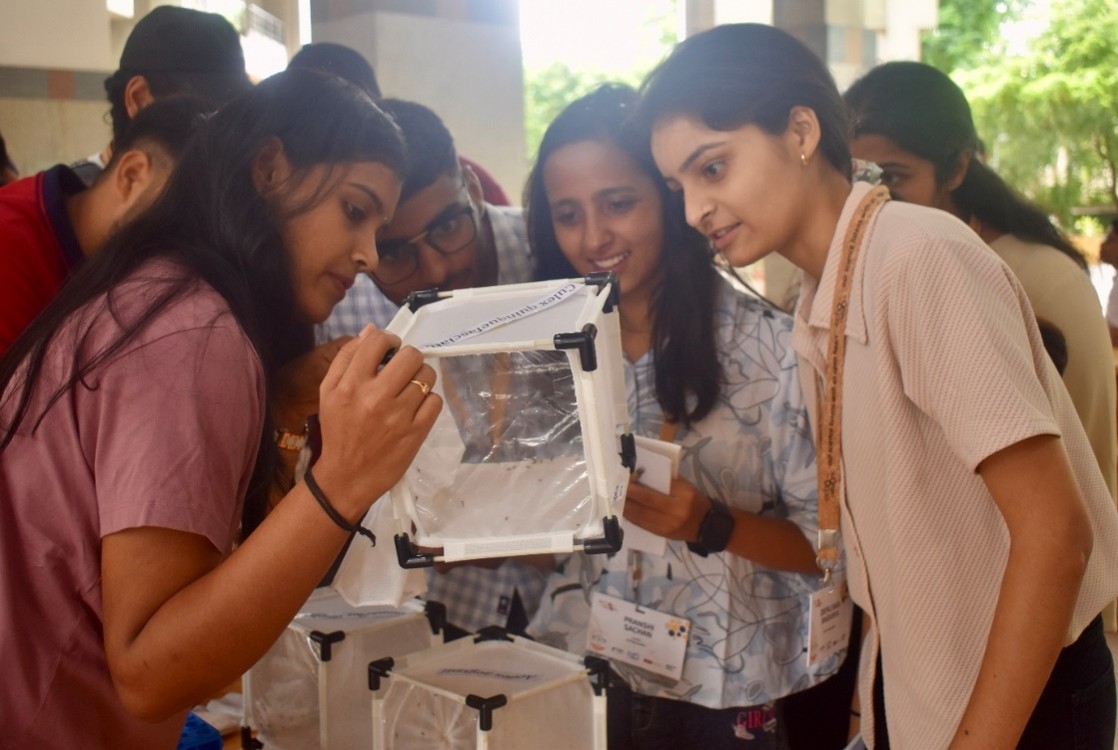
The final visit was to the Tata Institute for Genetics and Society (TIGS), a Bengaluru institution that integrates genetics, health and agriculture through a One Health framework. The facility’s advanced insectary, which houses Anopheles, Aedes and Culex mosquito colonies under high-containment conditions, was particularly impressive. We observed precision systems for insect rearing, containment and lifecycle monitoring, along with sophisticated sterilisation and filtration mechanisms.
Equally inspiring was the work on non-transgenic rice breeding using CRISPR-Cas9 gene editing. By silencing susceptibility genes and crossing edited lines with wild varieties, TIGS scientists are producing nutritionally enhanced, pest-resistant rice that is not classified as GMO, ensuring higher acceptance among regulators and farmers.
TIGS also works on genomic surveillance of antimicrobial resistance (AMR) and rare genetic disorders, adopting models tailored to Indian environments and healthcare systems. Through its Community Engagement and Policy Stewardship Program, TIGS ensures that science remains transparent, ethical and responsive to social needs-an important aspect of the Science-Society interface.
The visit illustrated how science can become socially inclusive when framed through equity, affordability and knowledge sharing. However, a key reflection was that greater representation of farmers and end-users in the co-design of agricultural technologies could strengthen adoption and trust.
Key Takeaways
- Reframing Disasters: Urban heat waves must be recognised as environmental disasters, demanding proactive planning, social protection and adaptive urban design.
- Dignity in Livelihoods: Sanitation work must be viewed through the lens of human rights and dignity. BORDA’s livelihood model offers a replicable framework for social inclusion and occupational safety.
- Circular Economy in Practice: Waste-to-resource innovations, like wastewater recycling and composting, illustrate how circularity strengthens both urban sustainability and rural resilience.
- Community-driven Conservation: The Soliga community’s stewardship of forest resources and their creative use of invasive species highlight that ecological restoration can coexist with livelihood generation.
- Integrating Science and Society: TIGS’ blend of genetics, health and policy engagement demonstrates how science can meaningfully contribute to sustainability when guided by ethics, communication and local relevance.
- Holistic Learning: The four field experiences collectively underline that sustainability transcends disciplinary boundaries, uniting ecology, technology, governance and community participation.
SCOPE FOR IMPROVEMENT
While the field visits were exceptionally enriching, future programs could benefit from:
- Structured debriefing sessions after each visit to synthesise interdisciplinary learnings.
- Enhanced community participation in co-presenting initiatives, ensuring authentic local voices are heard.
- Follow-up documentation and assignments linking field experiences with ongoing research.
- Gender and equity perspectives to better understand how environmental and livelihood challenges differentially affect marginalised groups.
Such additions would make these experiential learning opportunities more participatory, reflective and impactful for students and practitioners alike.
Acknowledgements
We thank faculty coordinators, partner institutions- Clean Healthy Cities Initiative, BORDA, ATREE, TIGS and the echo network for organising these visits and for the opportunity to join the Sustainability Ambassador Global Exchange Program as Senior Ambassadors. We also acknowledge local communities, tribal residents, sanitation workers and artisans who shared their experiences. A special mention to Prof. Shannon Olsson (Founder and Global Director, the echo network), Martin Bech (Senior Advisor, Danish Academy of Technical Sciences) and Christabel Royan (Director, Nordic Centre in India). These exposures have deeply influenced us as doctoral scholars in agricultural sciences, reaffirming that sustainability relies on empathy, participation and context-driven innovation, not just technology.
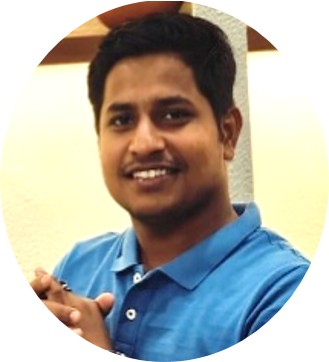 Basu Anand is a PhD student in Agricultural Extension at Navsari Agricultural University. He was selected for the Sustainability Ambassador Global Exchange Program. He actively engages in research, writing and mentoring. He can be contacted at basuanand.edu@gmail.com
 Sayali Uttam Biradar Earned a PhD in Soil Science and Agricultural Chemistry from Mahatma Phule Krishi Vidyapeeth in 2025. She is a proactive soil scientist, skilled in public speaking and currently works as a quality manager at a private agriculture testing lab. She can be contacted at biradarsayali16@gmail.com
Add Comment