



In this meeting note, Anil and Mahesh share their insights from participating in the Psychometry and Scaling Methods training.
CONTEXT
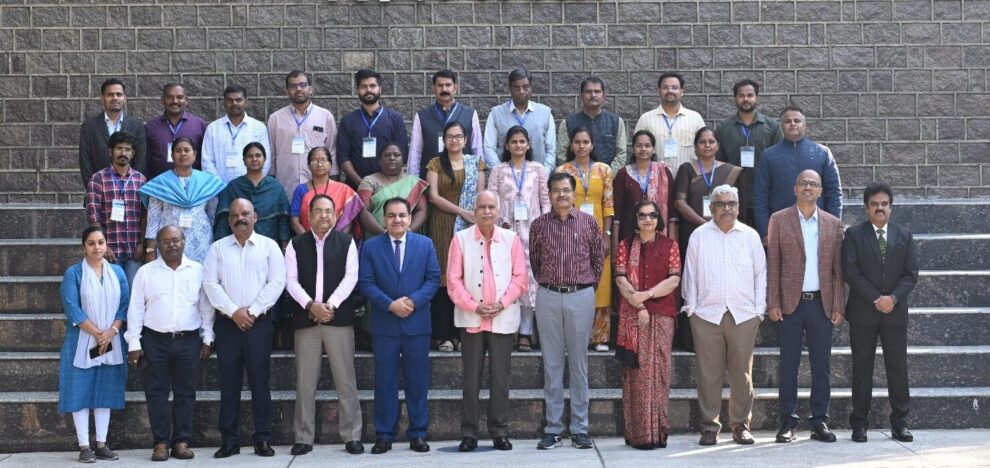
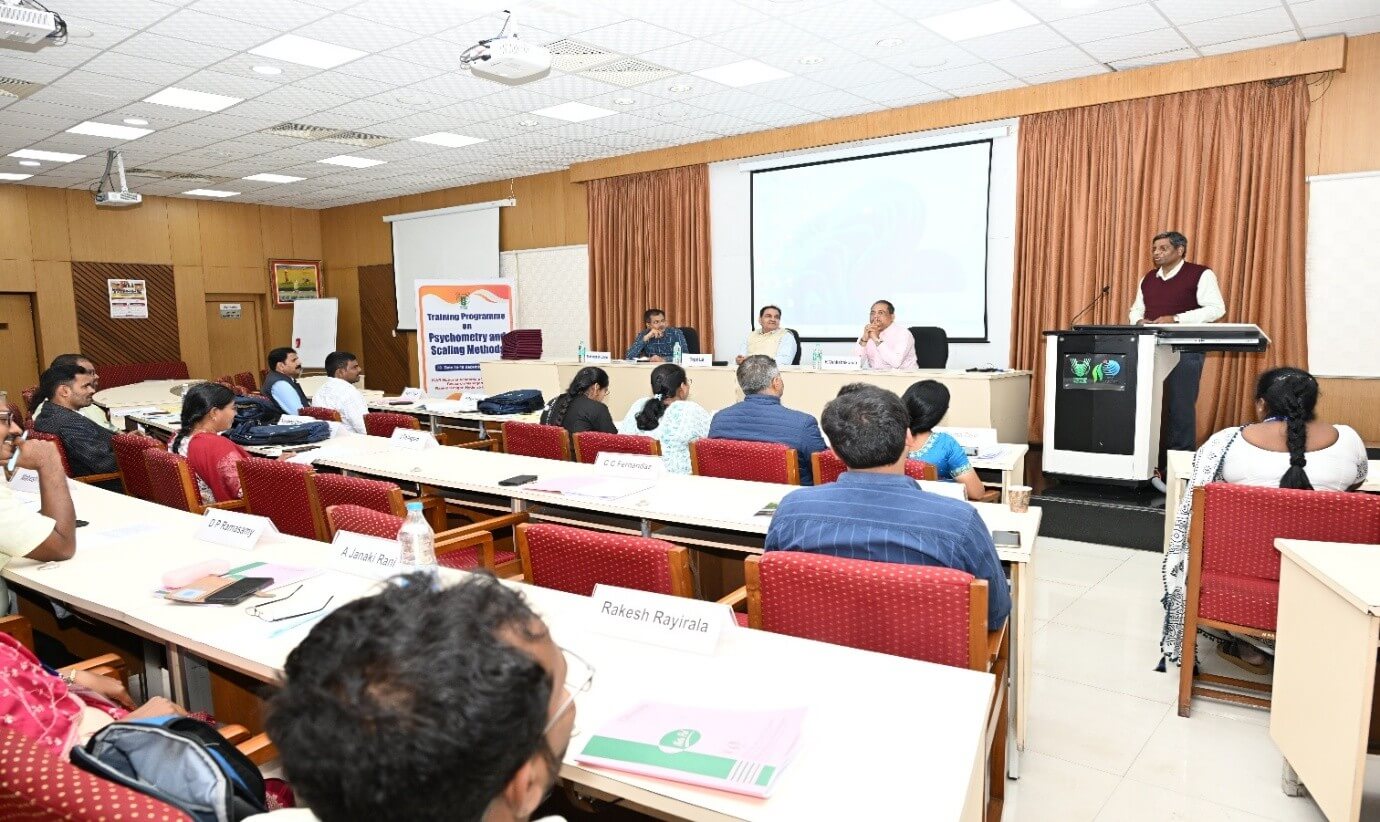
Reliable measurement of psychological measures such as awareness, knowledge, perception, attitude and personality is central to effective agricultural extension and advisory services. As extension professionals work closely with the complex social, psychological, and behavioural dimensions of farming communities, the need for scientifically sound tools is critical. In this regard, this training programme aimed to strengthen the competencies of extension professionals and research scholars across the country. In that sense, we participated in the Training Programme on “Psychometry and Scaling Methods” organised by ICAR–NAARM from December 15 to 19, 2025.
THE PROGRAMME
The programme focused on enhancing skills in capturing, measuring, and analysing psychological constructs. Motivation for most participants (22) to attend this programme came from the growing need in our professional work to design valid instruments to assess the personalities of agricultural stakeholders, including attitudes, awareness, knowledge, perceptions, and adoption behaviour.
KEY LEARNINGS AND REFLECTIONS
Foundations of Psychometry and Measurement in Extension Research
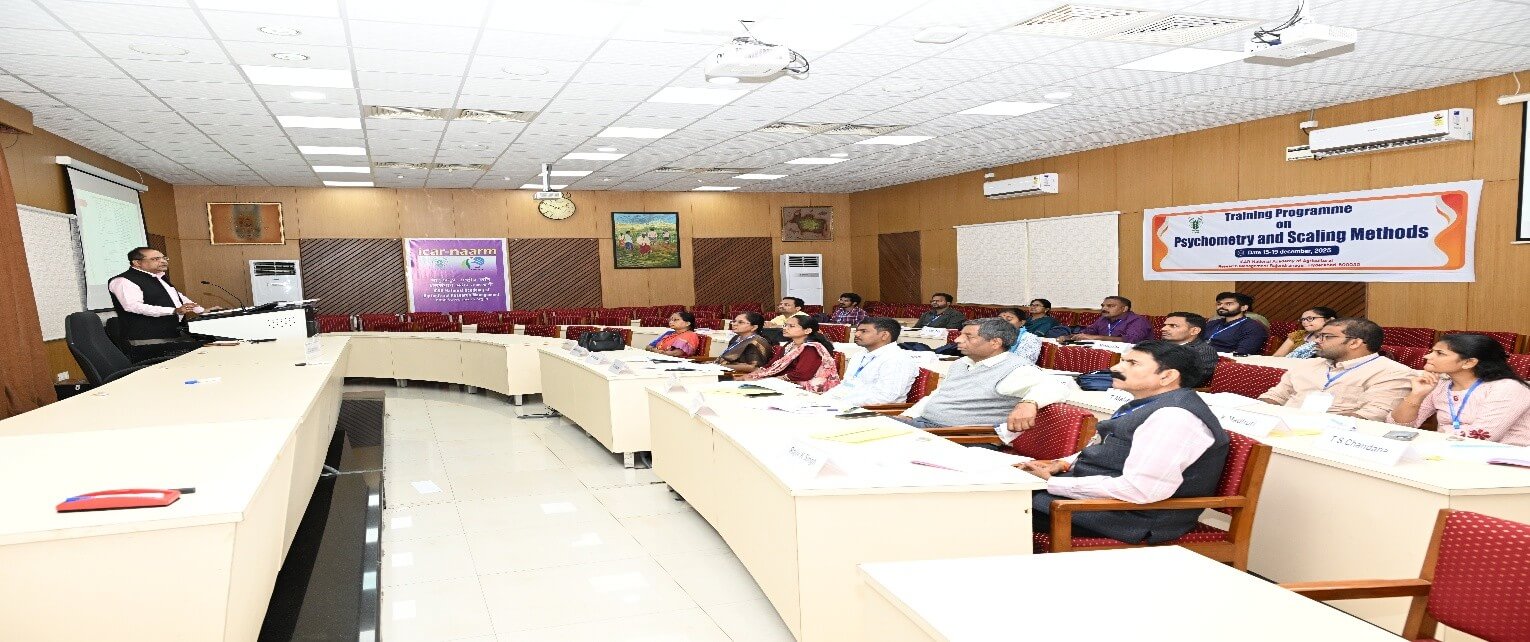
The session was a clear conceptual grounding in psychometry and its relevance to agricultural extension. The session delivered by Dr R. Venkattakumar provided a foundational understanding of psychological measurement, emphasising systematic test construction, reliability, validity, and the role of norms in ensuring scientific rigour. The sessions helped clarify how poor measurement can weaken research findings and lead to misleading conclusions in extension planning. We realised that many commonly used questionnaires in extension lack proper validation, which can affect the credibility of advisory recommendations and policy inputs. This insight reinforced the need to adopt psychometrically sound tools.
The session delivered by Dr Mahantesh Shirur clarified the fundamental concepts of measurement and evaluation, highlighting their importance in systematically assessing psychological and social variables. It provided an overview of major scaling approaches used in social science research and explained how different scaling techniques are selected based on research objectives. Participants gained practical insights into aligning the type of scale with its intended purpose for accurate measurement and meaningful interpretation of data. The session introduced key measurement theories in the social sciences and explained different approaches to scientifically capturing psychological and social constructs. It emphasised applying the Theory of Change framework to measure and evaluate interventions and outcomes effectively. The interactive question-and-answer segment helped clarify concepts and strengthened participants’ understanding of how to link theory to practical measurement strategies.
Measuring Personality, Attitudes, and Behaviour
Sessions delivered by Dr Surya Rathore on projective techniques, personality measurement, and behavioural assessment tools offered deep insights into understanding human behaviour beyond surface-level responses. The practical exposure to tools such as word association tests, sentence completion techniques, and discussions on standardised personality instruments like MBTI, Big Five, and Thematic Apperception Test (TAT) helped demystify their application in extension research.
What stood out for me was the emphasis on contextual relevance and ethical responsibility while using personality and aptitude tests. Dr P. Ramesh’s extensive research experience and real-life examples demonstrated how these tools can be meaningfully applied to areas such as capacity building, leadership development, and training impact assessment, which are often underexplored in agricultural extension studies.
Constructing Reliable and Valid Scales and Indices
Dr Venkatesan delivered detailed coverage of test construction and item analysis. The Sessions delivered by Dr Reshma Gills covered reliability and validity, item difficulty and discrimination indices, and scale construction techniques (Likert, Thurstone, and Guttman). Dr N. Sriram provided a clear, step-by-step roadmap from concept to instrument.
I particularly appreciated the practical guidance on avoiding ambiguous and double-barreled statements, reducing social desirability bias and refining items through expert judgment and pilot testing.
The session on index development by Dr Shivaramane provided detailed insights into measuring complex constructs. Especially, it is relevant to my extension work, as it demonstrated how complex, multidimensional phenomena such as adoption behaviour or performance can be systematically quantified and validated.
Advanced Analytical Techniques for Psychometric Research
Sessions on Factor Analysis, Structural Equation Modelling (SEM), Partial Least Squares (PLS), and Multidimensional Scaling (MDS) by Dr Dhandapani and Dr Ramasubramanian V expanded my analytical perspective. Although statistically intensive, the resource persons successfully linked these methods to practical applications such as scale standardisation, construct validation, and modelling behavioural relationships.
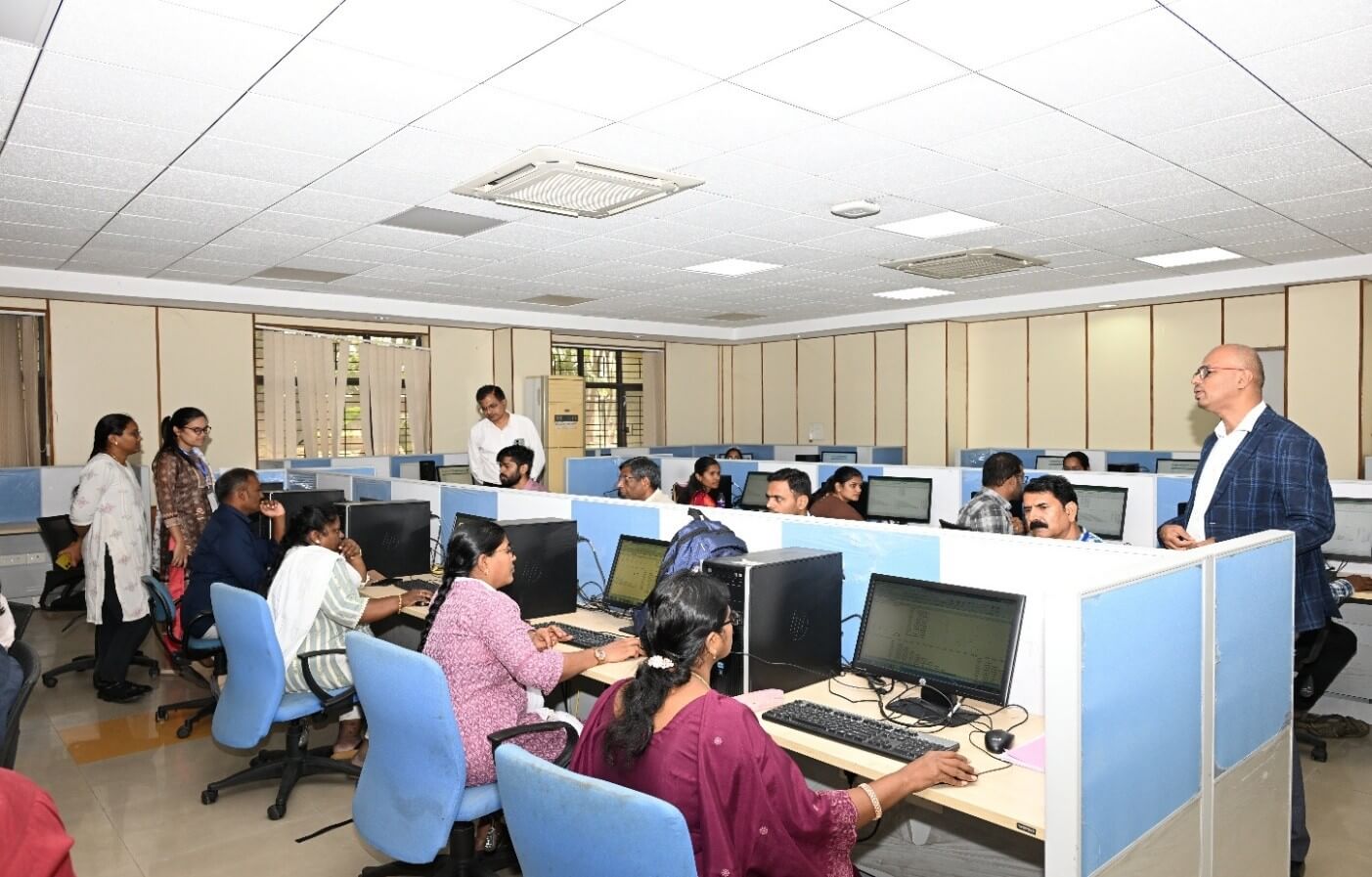
The hands-on exposure to factor analysis and MDS perceptual mapping was particularly useful in understanding how abstract psychological constructs can be empirically examined and visually interpreted. These techniques will be highly beneficial for future studies involving attitude measurement, perception analysis, and consumer behaviour research.
Sensometrics and Digital Tools for Data Collection
The session delivered by Dr Sethuraman Shivakumar provided an in-depth understanding of sensometrics as an interdisciplinary science that links human sensory perception to quantitative analysis using statistical, mathematical, and computational tools. It clearly differentiated between sensory evaluation (data generation) and sensometrics (data analysis and modelling), emphasising their complementary roles in consumer and social science research. Through real-life case studies, participants learned how sensory attributes such as colour, texture, aroma, and taste influence consumer acceptance, food choice and market behaviour. The session also demonstrated the application of advanced analytical methods, including hedonic scaling, discriminant analysis, logit models, conjoint analysis and ‘response surface methodology’ for predicting consumer preferences and optimising products. Participants were particularly impressed by the practical case studies and advanced analytical approaches, which enhanced their understanding of how to link human perception to scientific measurement and data-driven decision-making.
Equally important was the session on online tools for data collection by Dr Thammi Raju D, which highlighted the growing relevance of digital platforms in extension research. This session helped me envision integrating online survey tools and digital feedback mechanisms into large-scale advisory programmes and impact evaluations.
CONCLUDING REFLECTIONS
Overall, the training programme significantly strengthened my conceptual clarity and methodological confidence in psychometry and scaling methods. Our primary objective of gaining skills in constructing reliable and valid psychometric tools was largely fulfilled. This was a timely and valuable capacity-building initiative for extension and social science professionals. It addressed a critical gap in measurement skills that often limits the effectiveness of extension research and advisory services. I strongly believe that such training should be encouraged and conducted to enhance the quality of research and advisory interventions in agriculture.
Scope for Improvement
While the programme was highly enriching, the following suggestions may further enhance its effectiveness:
Primary focus on psychometry: Concentrate the programme mainly on psychometric concepts, applications, and interpretation. Limit general research methodology lectures to only what is essential for understanding psychometric testing.
More hands-on training in psychometric data analysis: Include more practical sessions on new and widely used software/tools for psychometric data analysis. Provide guided practice on scoring, reliability analysis, validity testing, factor analysis, and item analysis using real datasets.
Practical exposure to personality assessment tools: Conduct hands-on sessions with tools such as MBTI and Big Five to enhance learning through practice rather than theory. Include case-based exercises to demonstrate the real-world application of personality assessment results.
Acknowledgements
We sincerely express our gratitude to ICAR–NAARM, the Programme Directors Dr R. Venkattakumar and Dr Mahantesh Shirur, and all the distinguished resource persons and support staff for creating a highly stimulating and supportive learning environment. I (S. Anil Kumar) also gratefully acknowledge ICAR–Indian Institute of Oilseeds Research (IIOR) for sponsoring my participation in this programme.
 Seepana Anil Kumar is currently working as a Senior Research Fellow at ICAR-Indian Institute of Oilseeds Research, Hyderabad, Telangana 500030, India. He can be reached at anil.extension@gmail.com.
 Malliboina Mahesh Yadav is currently pursuing a PhD in the Department of Agriculture Extension Education, College of Agriculture, Rajendranagar, PJTAU, Hyderabad, Telangana 500030, India. He can be reached at maheshyadav.extension@gmail.com.

Add Comment