




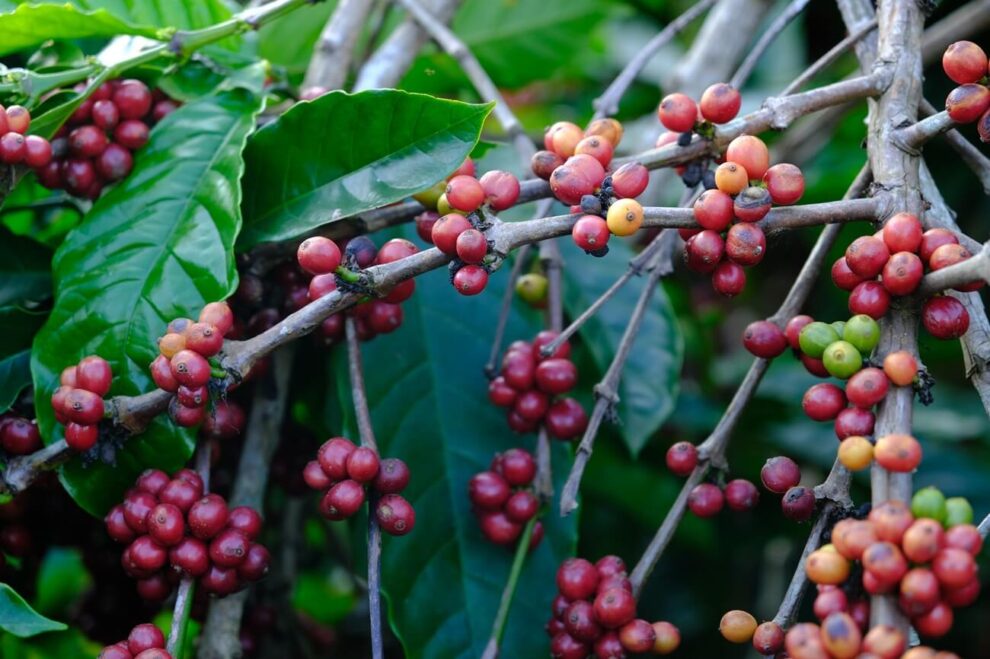
In this Good Practice Note, Sooraj K. Babu and Sooraj Krishna describe the development and pilot testing of “Canopy,” an innovative extension tool designed to help smallholder coffee farmers become more climate-resilient, data-driven, and better integrated into the value chain.
CONTEXT
The global coffee sector is facing multiple pressures at once—climate volatility, rising costs, labour shortages and stricter demands for deforestation-free, traceable supply chains. Projections indicate that significant portions of current coffee-growing land may become less viable by mid-century. At the same time, buyers—especially in premium markets—now expect verified proof of origin, sustainability and farmer practices, not just quality in the cup. The industry is being pushed towards data-driven systems instead of relying on intuition or static certifications.
India reflects this shift. Of roughly 4.4 lakh coffee growers, most are smallholders cultivating under 10 hectares across Karnataka, Kerala and Tamil Nadu. They face erratic rainfall, rising temperatures, changing pest cycles and price uncertainty. Meanwhile, FPOs and exporters must comply with regulations such as the EUDR, which require plot-level geolocation and land-use records. Current advisory models and generic agri-apps are not built to provide continuous, plantation-specific guidance or auditable farm-level data.
CANOPY
This is the gap that Canopy is designed to address. Canopy creates a geo‑tagged digital twin for every enrolled plantation. It links it with satellite imagery, soil information, grower logs and hyperlocal weather, producing ongoing intelligence and soil‑to‑sip traceability for each plot. For growers, this means timely, context‑specific advisories instead of fragmented tips; for value‑chain actors, it means credible proof of origin, land‑use and activity history that can be used across multiple relationships—from FPOs and exporters to roasters and consumers. The practice described in this note focuses on how Canopy is being used as a good extension tool to make smallholder coffee more climate‑ready, data‑driven and visible in the value chain.
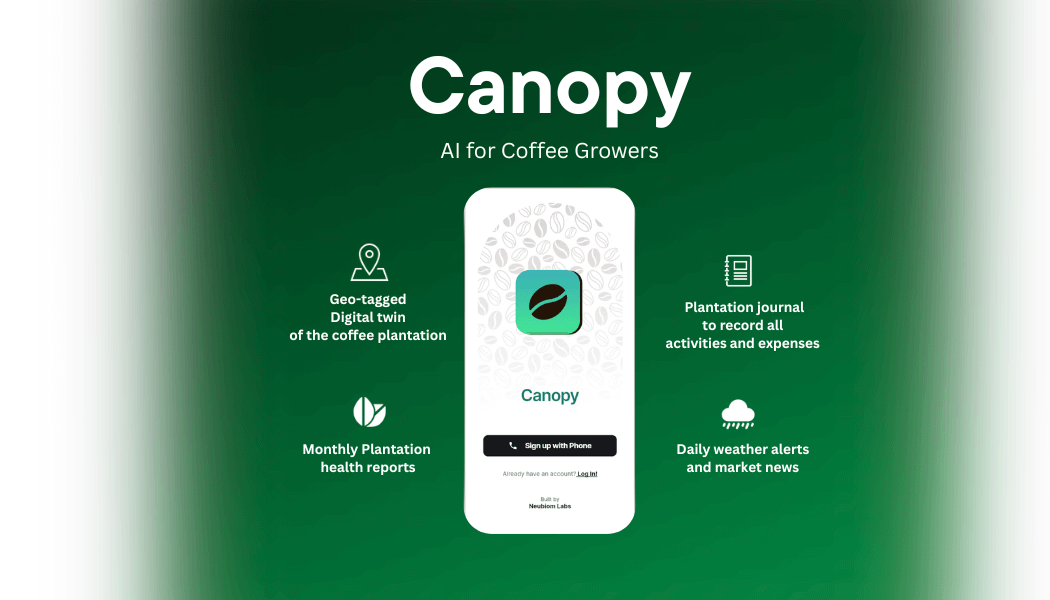
NeuBiom Labs, the organisation behind Canopy, is a deep‑tech startup based in Wayanad and Bengaluru that works exclusively on coffee crop intelligence and traceability. Incubated with the Coffee Board of India’s AIC‑CCRI‑CED centre and the Agri‑Business Incubator at Kerala Agricultural University, NeuBiom brings together agronomists, AI and GIS engineers, and coffee value chain ecosystem partners to build a digital operating system for coffee. Its mission is to pull smallholder growers out of the shadows of the value chain by pairing advanced analytics with practical, field‑ready tools so that their climate adaptation efforts and good practices are recorded, verifiable and eventually rewarded.
GOOD PRACTICES
NeuBiom Labs applied five interconnected extension practices during Canopy’s 2025 NeuGen Growers experiment in Wayanad and the Nilgiris, blending digital tools with participatory, human-centred techniques. These evolved from structured grower interviews and repeated field visits, using local languages and quick visible wins to integrate climate intelligence into daily routines. Rather than a top-down tech push, we emphasised co-creation, nudges and stories to make digital twins feel like extensions of grower expertise, fostering sustained engagement and value-chain visibility. Each practice details the method, soft skills and replication tips below.
Co-creating the digital twin with growers
NeuBiom Labs worked with smallholder and estate growers during the Canopy NeuGen pilot (April 2025 to December 2025) to create geo-tagged digital twins for each coffee holding. These on-screen replicas mirror farm blocks, shade structures, and management zones, anchoring all subsequent advisories and traceability features.
Field teams conducted structured interviews using a comprehensive 42-item questionnaire tailored to capture detailed grower profiles alongside plantation specifics. This covered essential elements like crop varieties from India’s 16 geo-tagged coffee types, shade tree configurations, intercrop patterns, planting history, soil management practices, and micro-zones prone to specific risks such as erosion or waterlogging.
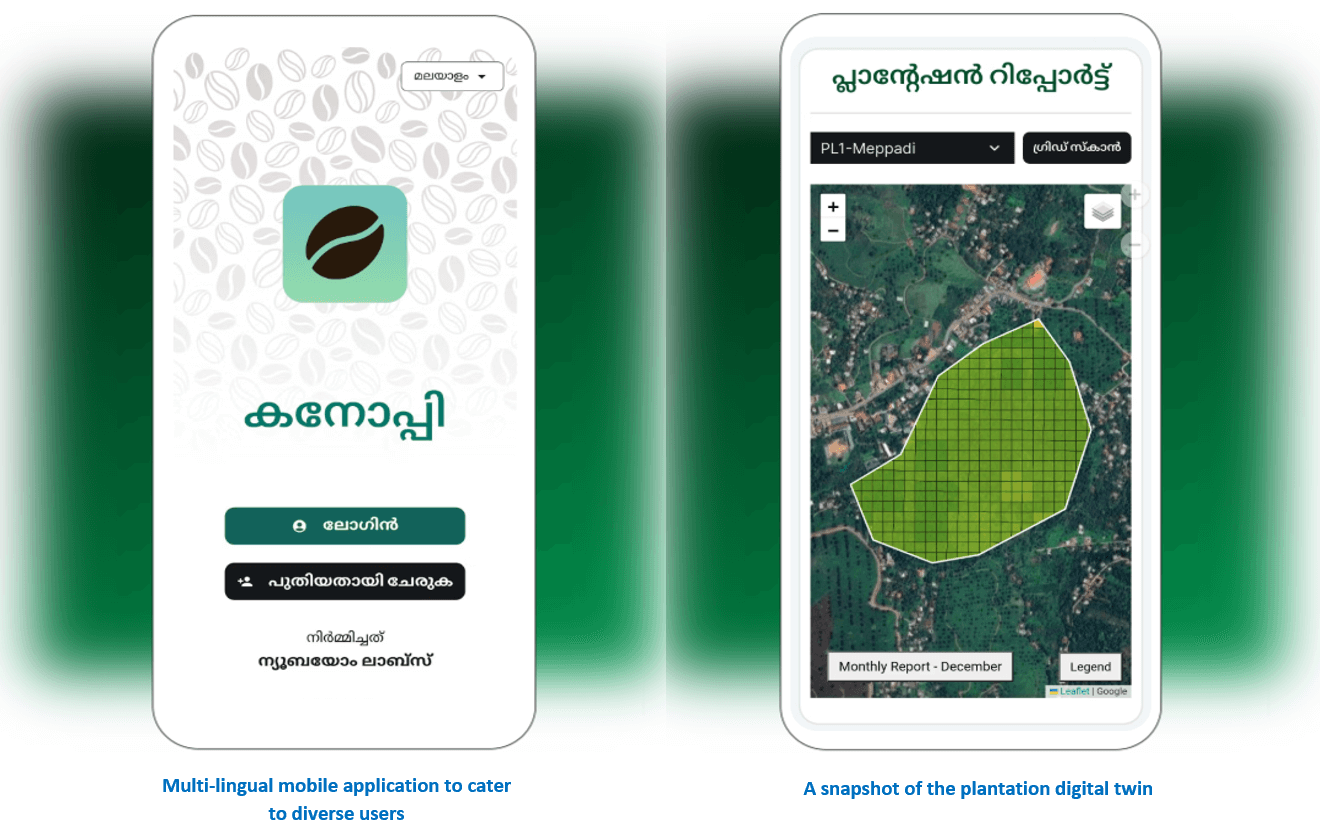
On-site boundary mapping occurred simultaneously via GPS tools in the Canopy app, ensuring precise geo-tagging that aligned physical farm layouts with satellite basemaps. For estates with complex layouts or multiple growers, teams scheduled repeat sessions—often two to three visits per holding—to refine data accuracy. These included audio recordings in local languages (Malayalam, Kannada) for later transcription, validation against satellite imagery, and cross-checking with grower recollections, reducing errors from single-pass surveys.
Grower consent was obtained verbally and documented before images and short videos of plantation health indicators, such as canopy density, pest presence, and soil conditions, were captured. Field notes systematically recorded voiced concerns—like irrigation gaps during dry spells or shade loss post-cyclone—and specific requirements, such as advisories for Robusta versus Arabica blocks. This grower-led input ensured the digital twin reflected lived farm realities rather than generic templates.
The process integrated seamlessly with Canopy’s architecture: questionnaire responses populated the app’s journal and profile layers, GPS boundaries enabled grid-level analytics (e.g., NDVI vegetation indices per block), and multimedia fed into monthly health reports. This methodology transformed data collection from extractive to collaborative, fostering grower trust through transparency: participants reviewed their digital twin live in the app before finalising, confirming details such as replanted areas, estate roads, etc. Early pilots validated its efficacy, with twins supporting EUDR-compliant traceability from plot to export.
Recommendations for Replication:
|
Hyperlocal weather-linked advisories
We implemented daily advisories during the Canopy NeuGen pilot (April 2025 to December 2025) by integrating hyperlocal weather data from micro weather stations and satellite imagery with each plantation’s geo-tagged digital twin. This approach ensured that recommendations aligned precisely with the location, crop variety (Robusta or Arabica), and specific farm characteristics, such as slope, elevation, and shade density, captured during initial onboarding.
Field teams activated these advisories right after completing the digital twin setup for the pilot plantations across Wayanad, Kerala, and Nilgiris, Tamil Nadu, covering 420 acres. Growers accessed advisories on irrigation timing, soil nutrient application, and harvest readiness via push notifications in the Canopy mobile app, available in English, Kannada, and Malayalam, with voice-enabled multi-modal support. This made the information accessible even to low-literacy smallholders managing under 10 hectares, the dominant profile among India’s 4.4 lakh coffee growers.
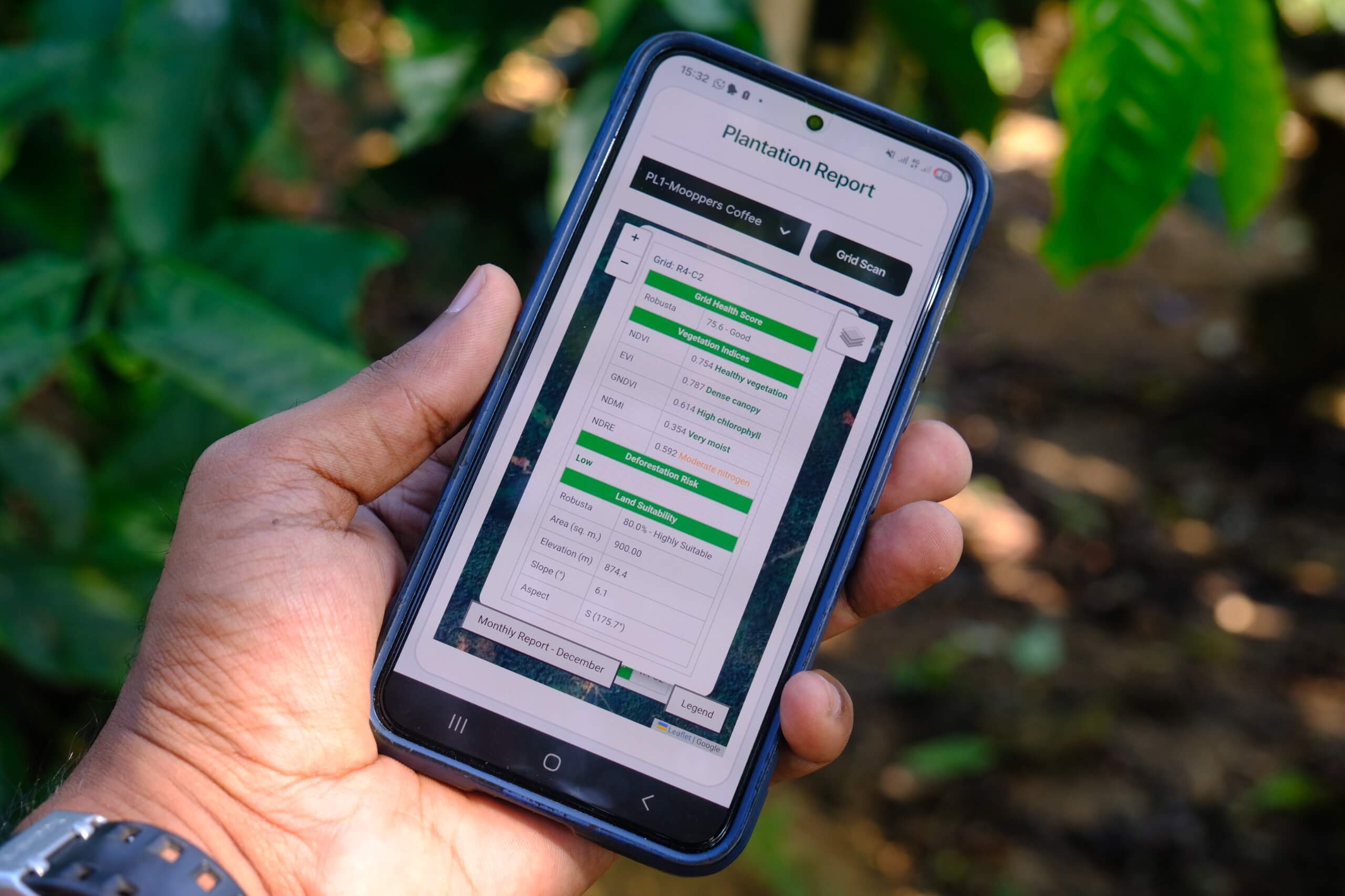
The app interface linked weather forecasts to contextual activity options—land preparation, plant maintenance, soil nutrients, irrigation, harvest/post-harvest—displayed alongside detailed forecasts including cloud cover, rain chance, and humidity. This visual integration turned raw satellite and IoT data into actionable steps tied to the coffee crop cycle, supporting data capture for real-time advisories, plantation journal, GIS reports, analytics, and yield management.
Monthly health reports complemented daily advisories by overlaying satellite-derived vegetation indices such as Normalised Difference Vegetation Index (NDVI), Enhanced Vegetation Index (EVI), Green Normalised Difference Vegetation Index (GNDVI), Normalised Difference Moisture Index (NDMI), and Normalised Difference Red Edge Index (NDRE) directly onto the farm’s digital map at the grid level. These reports also included land features and weather summaries, enabling zone-specific monitoring.
Recommendations for replication
|
Plantation journal for activity logging
NeuBiom Labs enabled growers to maintain a digital plantation journal within the Canopy app during the NeuGen pilot in Wayanad (Kerala) and Nilgiris (Tamil Nadu). This feature served as a structured digital logbook that captured all farm activities, expenses, and management decisions, linked directly to specific geo-tagged blocks and dates.
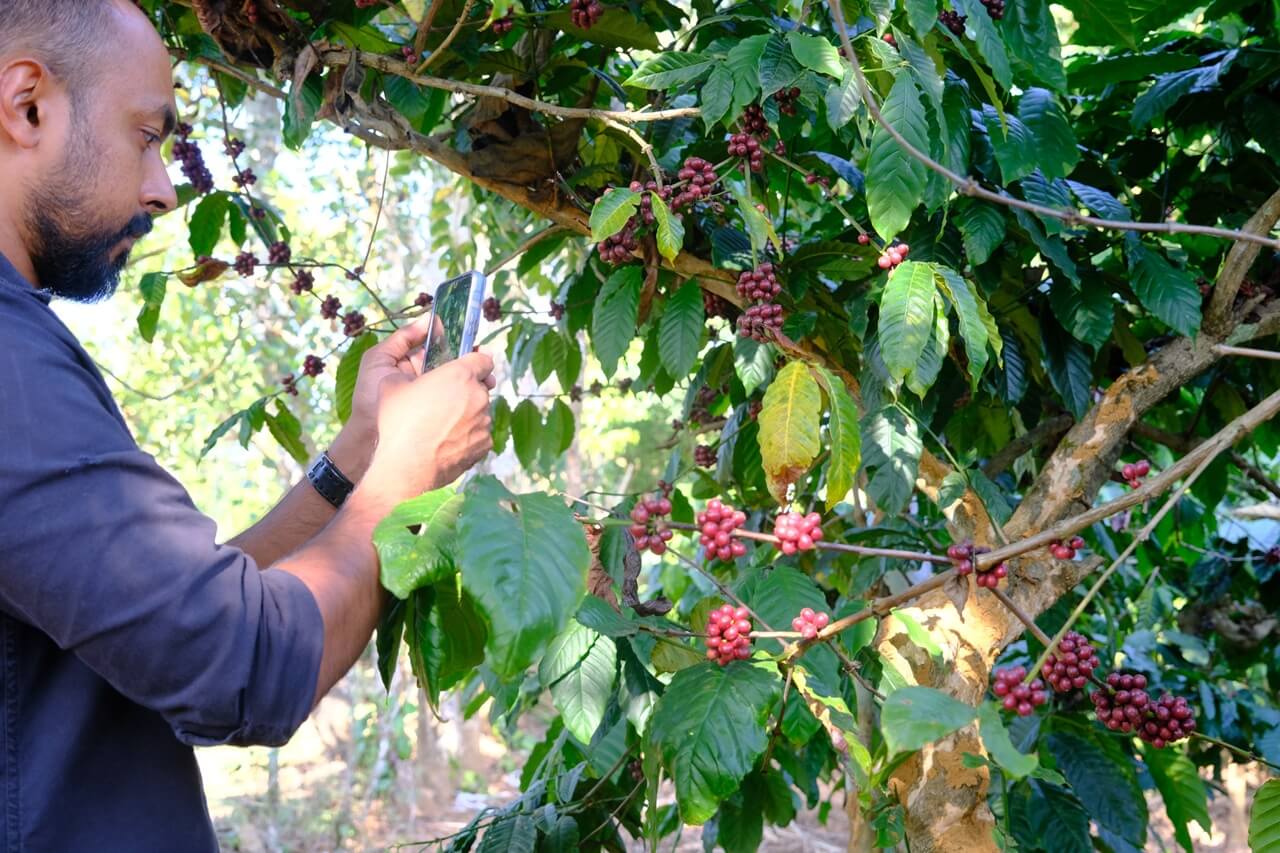
Growers accessed the journal through a simple interface that showed their digital twin map, where they selected activities from dropdown menus tailored to the coffee crop cycle: land preparation, plant maintenance, soil nutrients, irrigation, harvest and post-harvest, equipment and construction, and monitoring and operations. Each entry required attaching geo-location to a specific block, date, optional description, and photos/videos, ensuring every action became part of the immutable plantation record.
The multi-lingual app (English, Kannada, Malayalam) supported voice and image inputs. Journal entries fed directly into Canopy’s traceability layer, creating blockchain-secured logs of crop management practices that supported EUDR compliance for plot-level geolocation and activity verification required for EU exports.
Activity data collected via the journal enabled FPOs and aggregators to generate analytics through Canopy Hub dashboards, tracking activity scores, yield estimates, and compliance across member plantations. For replication, training growers on 3 core activities first (irrigation, nutrients, harvest) during digital twin onboarding would be ideal; photo geo-tagging from day one would be a good practice for building accurate baseline records.
Multi-lingual multi-modal grower app interface
The Canopy mobile app provides comprehensive multi-lingual support covering English, Kannada, and Malayalam as primary interface languages, with AI-generated advisories extending to Tamil, Telugu, and Hindi for broader regional accessibility.
Growers access voice-enabled input for dictation of plantation journal entries, geo-tagged photo and video capture of field activities, and audio delivery of hyperlocal weather forecasts, pest alerts, and contextual crop recommendations. The interface translates complex analytics from digital twins—including satellite vegetation indices and soil metrics—into simple spoken advisories and visual dashboards presented in the user’s preferred language. Activity logging covers 12+ categories from land preparation and irrigation to pest control and harvest operations, with dropdown menus, voice prompts, and image-based selection available simultaneously. Daily push notifications deliver real-time alerts about patchy light rain alongside tailored irrigation or nutrient recommendations, while monthly health reports provide plantation vitality scores and progress tracking.
Field extension officers of NeuBiom Labs conducted hands-on onboarding sessions using the multi-modal features—demonstrating voice-recorded irrigation logs, photo documentation of disease symptoms, and expense categorisation in local languages—which accelerate adoption during pilot programs across Wayanad and Nilgiris plantations. Financial tracking integrates seamlessly with activity records, displaying input costs for fertilisers, labour, and equipment alongside yield projections in regional formats. The app maintains EUDR-compliant geo-tagging throughout all interactions, ensuring every voice or image entry links precisely to plantation coordinates for traceability
Recommendations for Replication
|
Story-driven change management – “soil to sip traceability that makes growers visible and get benefits from the value chain”
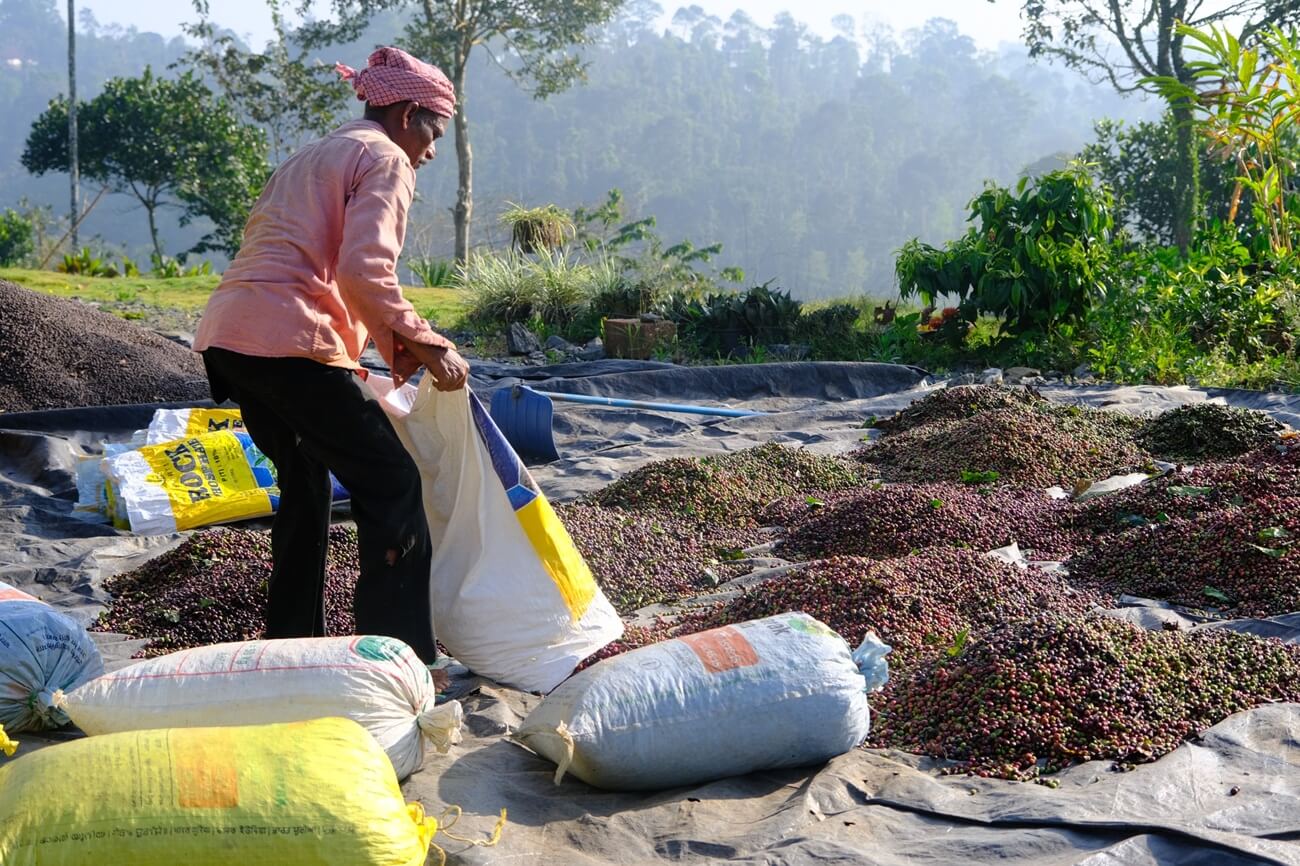
Pilot programs so far have shown how soil-to-sip traceability transforms smallholder coffee growers from invisible bulk suppliers into documented stewards whose climate-smart practices unlock greater visibility across the value chain. The program continues to capture data points and field-level activities to ensure all stakeholders benefit from it and can make business decisions. Iteratively, the activity workflows and captured data points are used to create a cluster-level (FPO-level) package of practices to ensure uniform cultivation styles, thereby standardising the crop produced.
CHALLENGES
Early rollout exposed both behavioural and technical barriers. Many growers questioned the need for GIS and AI, sometimes associating digital mapping with taxation or control. Patchy connectivity, shared devices and low digital comfort slowed adoption. Technically, modelling complex shade systems into accurate digital twins and filtering noisy satellite data into reliable plot-level insights proved challenging. Buyers expressed interest in traceability but hesitated to commit to premium.
The response combined trust-building and product adaptation. Demonstration farms created proof through visible outcomes. Offline-first logging, SMS/WhatsApp alerts and simplified workflows improved usability. Agronomic thresholds were refined to avoid false alarms. Institutionally, partnerships began with compliance visibility, with incentives introduced gradually: role-specific dashboards and simpler data entry replaced earlier assumptions that all users would adopt full features immediately.
BENEFITS AND IMPACT
While still in its early scaling phase, Canopy is already shifting how coffee systems respond to climate and market signals.
For growers, plot‑level weather alerts, early stress detection and context‑specific advisories are reducing blind spots around blossom showers, dry spells and disease outbreaks, helping stabilise canopy vigour and protecting yield potential. The plantation journal and monthly health reports give farmers, for the first time, a structured view of how their decisions interact with weather and terrain, strengthening their bargaining position with lenders and buyers.
For FPOs and cooperatives, aggregated dashboards reveal which clusters are thriving, which are at risk, and where extension or input support should be targeted, improving the efficiency of limited field staff.
Exporters and roasters gain verifiable, geotagged traceability and deforestation‑risk insights that can underpin access to EUDR‑sensitive markets and support differentiated, story‑rich coffees. By enabling soil‑to‑sip storytelling rooted in reliable data, Canopy helps shift Indian growers from invisible suppliers to recognised partners in premium, transparent value chains.
SUSTAINABILITY AND SCALING UP
Canopy’s sustainability rests on aligning incentives across the chain.
For growers, the value lies in reduced climate surprises, better agronomy and easier access to finance and markets; this underpins willingness to pay modest subscription fees or to participate via FPO programmes.
For FPOs and exporters, improved sourcing intelligence and EUDR‑ready traceability justify enterprise subscriptions and project partnerships. Technically, the use of cloud‑based GIS pipelines, crop‑specific AI and modular data layers means maintenance and updates can be delivered centrally while remaining highly tuned to coffee.
Scaling potential is strong because the core practice—creating digital twins and translating them into extension intelligence and traceability—can be replicated across coffee geographies and, with adaptation, to other perennial cash crops. However, several prerequisites are non‑negotiable: minimum smartphone penetration or shared device access, trusted local institutions to broker relationships, and policy environments that recognise digital traceability as a legitimate compliance pathway. Horizontal scaling (new regions, more FPOs) can proceed alongside vertical scaling (deeper integration with credit, insurance and certification), gradually embedding Canopy‑like systems into standard operating procedures for estates, boards, and buyers.
LESSONS LEARNED
The Canopy experience highlights a few critical success factors.
First, domain depth beats generic tech: climate intelligence that truly changes farmer behaviour must be tuned to the crop’s physiology, local micro‑climates and cultural practices.
Second, estate pride is a powerful lever—when growers see their farm rendered as a living digital twin, they engage more with both data and recommended actions.
Third, traceability must feel reciprocal: growers are far more willing to share data when they see it returning to them as actionable advice, better credit terms or differentiated market access.
Areas needing improvement include strengthening last‑mile support for digitally excluded growers, further simplifying interfaces, and co‑designing clearer economic incentives tied to traceability and climate performance.
By doing so, coffee estates can move from being passive recipients of climate risk to active, networked intelligence systems capable of adapting in real time—from soil to sip.
CONCLUSION
Canopy is trying to transform India’s coffee sector by co-creating digital twins that deliver hyperlocal advisories, activity logging, and blockchain-secured traceability, directly tackling climate volatility and market transparency demands. This pilot-validated model—in Wayanad and Nilgiris—shifts smallholders from vulnerability to resilience, enabling premium access while equipping FPOs and exporters with compliance-ready insights. NeuBiom’s scalable approach promises lasting impact, provided it sustains reciprocity, refines incentives, and expands via partnerships, securing coffee’s future from soil to sip.
 Sooraj K. Babu is the founder and CEO of NeuBiom Labs. Coming from a multi-generational coffee-farming family, he combines deep agricultural roots with advanced research in AI and recommender systems (PhD-ongoing at the University of Würzburg, Germany). He leads grower engagement, operations, and ecosystem partnerships. Contact: soorajkbabu@neubiom.com
 Dr Sooraj Krishna is the Co-founder and CTO of NeuBiom Labs. He holds a PhD in Human–AI Interaction from Sorbonne University and was an H2020 research fellow. With expertise in explainable AI, robotics, and domain-specific language models, he leads the development of Canopy AI and the company’s agricultural-knowledge-focused infrastructure, aligning advanced AI research with real-world impact in the coffee value chain. Contact: sooraj.krishna@neubiom.com
Add Comment