

In this Good Practices Note, Jaisridhar demonstrates how participatory irrigation management, when integrated with systematic extension support, quality seed systems, and institutional strengthening, can transform pulse production in water-scarce environments.
CONTEXT
The Lower Palar Sub Basin in Tamil Nadu, encompassing parts of Vellore and Tiruvannamalai districts, represents a typical rainfed agricultural landscape where smallholder farmers have traditionally struggled with water scarcity and low productivity. When I joined KVK Vellore in 2020, the region was grappling with declining groundwater tables, erratic rainfall patterns, and pulse yields that barely crossed 650–750 kg/ha – significantly below the state average.
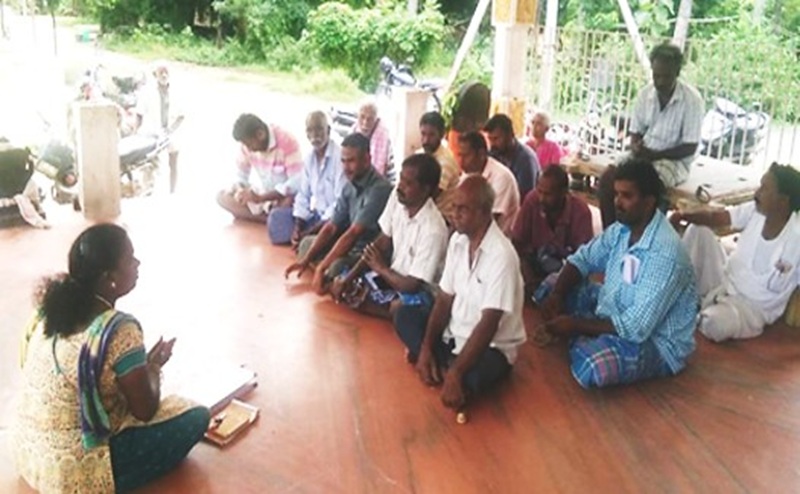
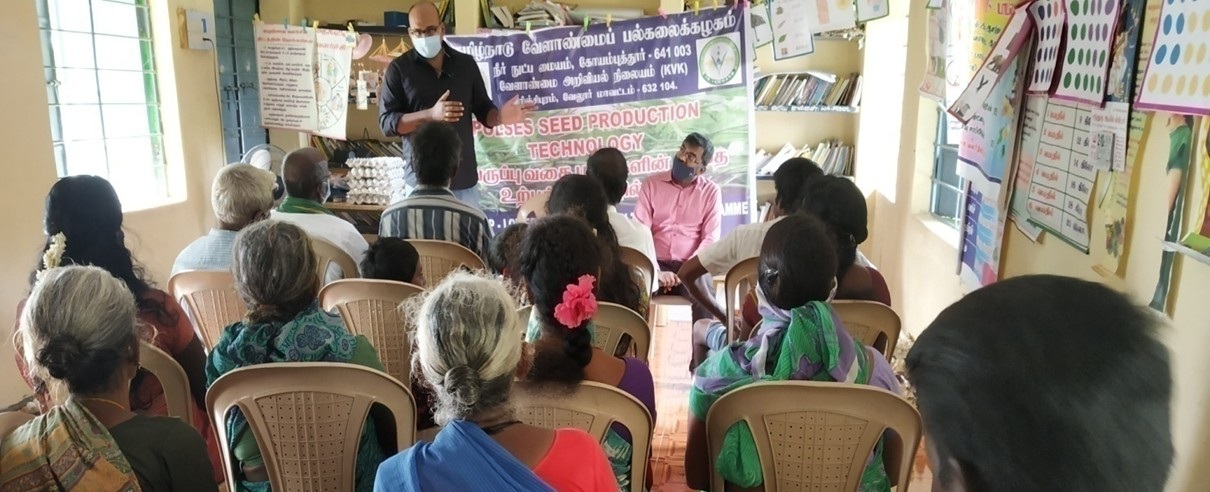
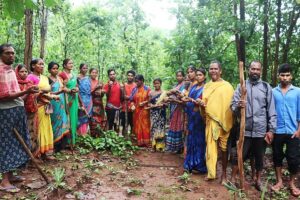
Participatory planning meeting with farming communities
The World Bank-funded Tamil Nadu Irrigated Agricultural Modernisation Scheme (TNIAMP) Phase I (2020–2022) was a timely intervention, aiming to modernise irrigation infrastructure, promote water-efficient practices, and enhance agricultural productivity through a participatory approach. As the extension specialist leading implementation, I witnessed how a well-designed, farmer-centric program could catalyse transformative change. The scheme focused on two primary interventions: pulse area expansion through improved irrigation access and pulse seed production to ensure sustainable input availability. What made this initiative unique was its emphasis on collective action through Water User Associations (WUAs) and Farmer-Producer Organisations (FPOs), coupled with intensive capacity building and technical backstopping.
GOOD PRACTICES
Participatory Planning and Village Selection
Rather than imposing a top-down approach, we began with intensive baseline surveys across 65+ villages. This participatory diagnostic helped us understand specific constraints faced by different farming communities. Villages were selected based on the potential of existing irrigation infrastructure, farmer group cohesiveness, willingness to adopt new practices, and representation of different agro-ecological conditions. This initial investment in participatory planning paid rich dividends. Villages like Ayyapakkam, Pattikadu, and Nerumbur emerged as champions, not just in our assessment but in actual field performance.
Integrated Extension Approach
We moved beyond conventional training programs to adopt a multi-pronged extension strategy. Demonstration-based learning through frontline demonstrations in farmers’ fields enabled peer-to-peer learning, which proved far more effective than classroom sessions. Exposure visits took farmers from low-performing villages to high-performing ones, where seeing fellow farmers achieve yields of 900+ kg/ha was more convincing than any extension literature. Digital extension through WhatsApp groups, video tutorials, and SMS advisories enabled real-time problem-solving, proving invaluable during the COVID-19 lockdowns. Continuous handholding through monthly field visits, soil-testing camps, input-distribution camps, and harvest festivals created sustained touchpoints with farming communities.
Quality Seed Systems Development
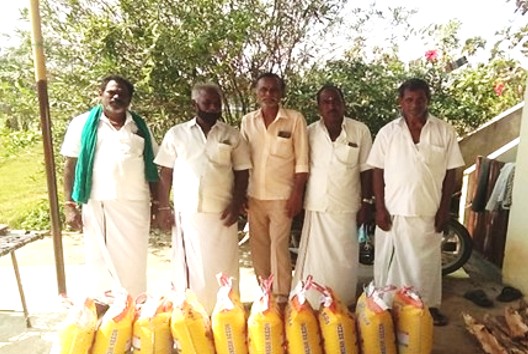
One critical bottleneck was the lack of quality pulse seeds. Through TNIAMP, we identified progressive farmers, trained them in seed production protocols, established seed villages with appropriate isolation distances, linked seed producers to certification agencies, and created local seed banks managed by FPOs. This localised seed production system ensured that farmers had access to quality, adapted varieties without depending on external supply chains.
Scientific Crop Management Package
We promoted a comprehensive crop management package that included pre-sowing seed treatment with Rhizobium and phosphate-solubilising bacteria, precision land preparation using laser levellers provided through custom hiring centres, optimum seed rate and spacing through seed drills, integrated nutrient management combining organic and inorganic sources, integrated pest management with emphasis on bio-pesticides, and critical irrigation at flowering and pod-filling stages.
Strengthening Collective Action
The revival and strengthening of Water User Associations was perhaps our most significant institutional innovation. WUAs evolved beyond irrigation management committees to serve as forums for conflict resolution over water sharing, collective procurement of inputs, the use of shared machinery, marketing coordination, and knowledge exchange.
CHALLENGES
Initial Scepticism: Farmers accustomed to conventional practices were initially hesitant to adopt new technologies. We overcame this through small pilot demonstrations with progressive farmers, results-based evidence sharing, and peer influence rather than expert persuasion.
COVID-19 Pandemic Disruptions: The pandemic coincided with our peak implementation period. We adapted by shifting to digital extension platforms, organising smaller, decentralised training sessions, ensuring input availability through local networks, and providing doorstep advisory services.
Heterogeneity in Resource Endowments: Not all farmers could afford drip systems or precision equipment. We addressed this through custom hiring centres for expensive equipment, subsidised provision of critical inputs, and flexible technology options tailored to different farmer categories.
Market Linkages: Ensuring remunerative prices was crucial for sustaining pulse cultivation. We facilitated collective marketing through FPOs, linked farmers to NAFED and government procurement agencies, and explored value-addition opportunities.
BENEFIT AND IMPACT
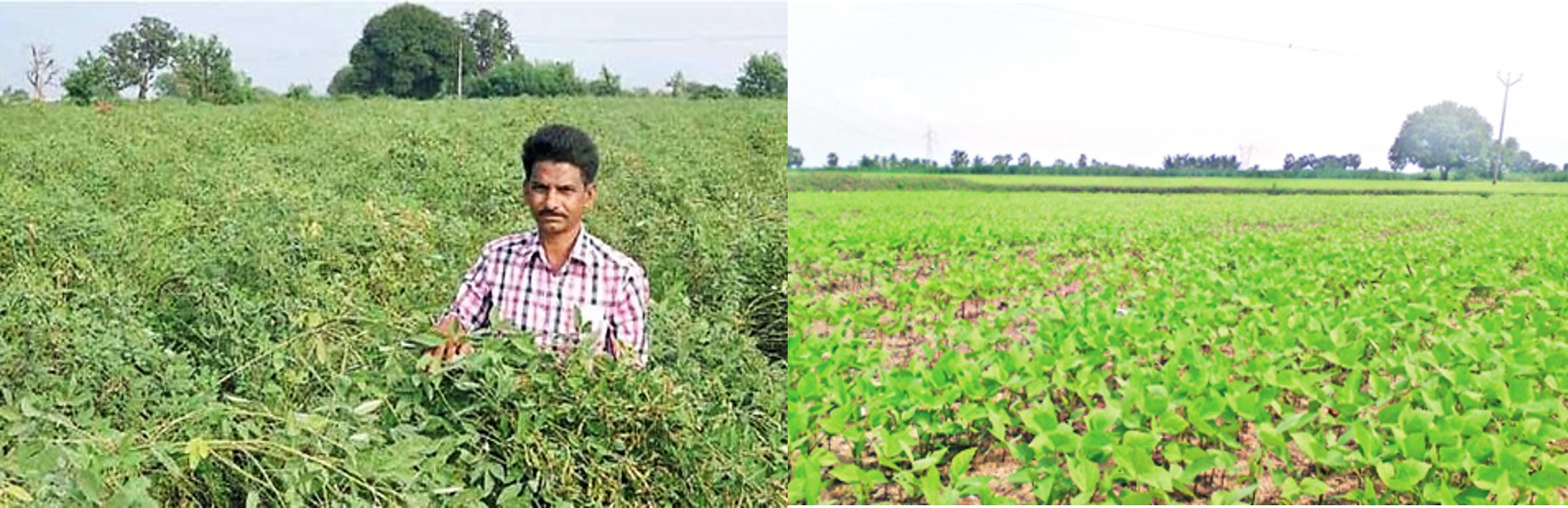
The most striking outcome was the progressive improvement in pulse yields over the project period. From a pre-intervention baseline of approximately 755 kg/ha in 2018–19, yields rose to 923 kg/ha in demonstration plots and 994 kg/ha in impact areas by 2021–22, representing increases of 27.9% and 31.5%, respectively. More importantly, the gap between demonstration and wider impact areas narrowed over time, indicating successful technology diffusion across the region.
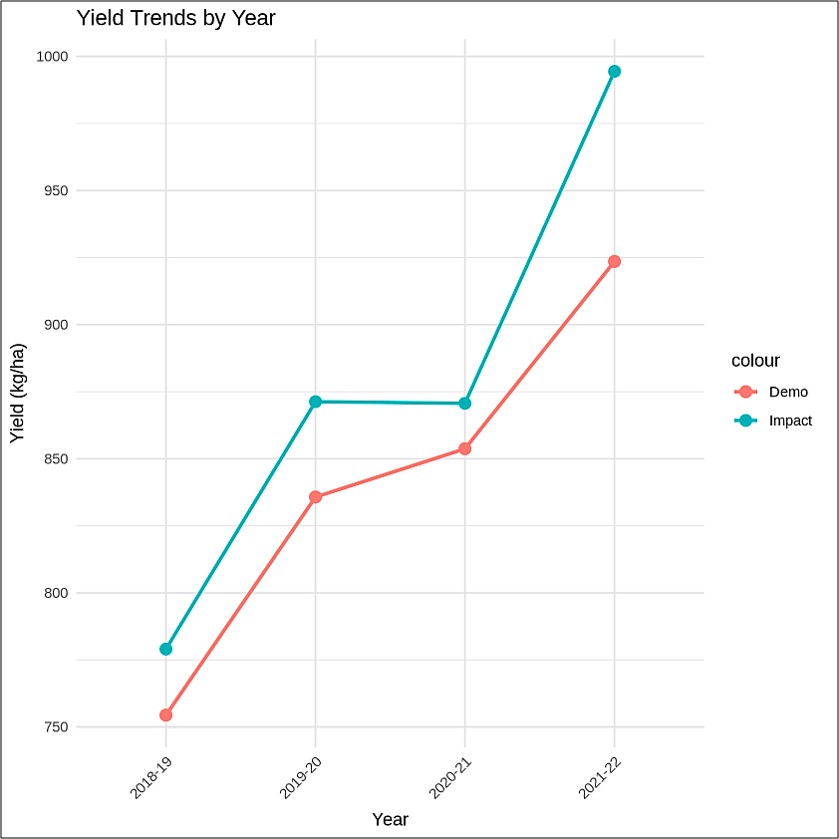 Comparative yield trends showing progressive improvement from 2018–19 to 2021–22.
Ten villages emerged as yield champions, consistently achieving 800+ kg/ha, with Ayyapakkam recording the highest average yield, followed by Pattikadu, Nerumbur, Latur, and Thirukalukundram. These villages became learning centres for the broader region.
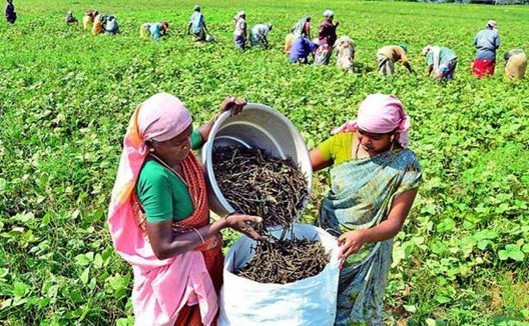
The production impact was equally significant. Nerumbur village, with 105 hectares under pulses in impact areas, produced over 175 tonnes, contributing substantially to regional pulse production. Ayyapakkam, Kunnavakkam, and Thondamallur also emerged as major production hubs.
CRITICAL SUCCESS FACTORS
Our analysis identified three key drivers of success. First, the progressive learning effect over time was the strongest factor, reflecting the learning curve among farmers, technology refinement, improved farmer confidence, and better institutional support systems. Second, the dual-track approach of combining area expansion with seed production validated our intervention design, as both strategies exhibited comparable, complementary performance. Third, management quality mattered more than farm size or total cultivated area, reinforcing that intensive management practices are more important than extensive cultivation alone.
Average yields across all interventions showed consistent upward movement from 543 kg/ha in 2018–19 to 697 kg/ha in 2021–22 – a 28.4% increase from baseline. This progressive, sustained increase rather than a one-time spike indicates that the practices adopted are being successfully integrated into farmers’ cultivation systems.
SUSTAINABILITY AND SCALING-UP
What truly validates an extension program is its sustainability beyond the project period. Having moved to KVK Nilgiris in 2022, I maintained contact with farmer groups in the Lower Palar Sub Basin, and the feedback has been immensely gratifying.
On the institutional front, the WUAs we strengthened continue to operate effectively, mobilising resources for canal maintenance, establishing conflict-resolution mechanisms, expanding into crop advisory services and input distribution, and diversifying into allied activities. The FPOs involved in seed production have established market linkages and are operating as viable commercial entities. On the technical front, farmers who were not direct project beneficiaries have adopted the practices after seeing their neighbours’ results, demonstrating organic diffusion. The seed villages continue to produce quality seeds without project support.
Several scaling pathways have emerged: the model has been horizontally replicated in Krishnagiri and Dharmapuri districts under TNIAMP Phase II; the Government of Tamil Nadu has vertically integrated several TNIAMP practices into regular extension programs; and exposure visits have facilitated south-south learning across neighbouring states.
LESSONS LEARNT
Participation is non-negotiable. Top-down technology transfer models have a limited impact. Farmers must be involved from planning to evaluation, and their indigenous knowledge, combined with scientific inputs, produces superior results.
Time is an essential input. The progressive yield improvement from 2018 to 2022 shows that learning, adaptation, and institutionalisation cannot be rushed. Three-year project cycles are the minimum for sustainable change.
Context matters more than technology. The same technology package produced different results across villages, underscoring the importance of understanding local contexts, including social dynamics, resource endowments, and market access.
Institutions are as important as infrastructure. Investing in WUA capacity building yielded returns comparable to infrastructure investment. Peer learning proved more effective than expert-led training, and digital tools complemented but could not replace face-to-face interaction.
Market linkage is critical. An increase in production without assured markets can backfire. Simultaneous attention to production and marketing is essential for sustaining farmer interest.
Data-driven extension works. Regular monitoring and feedback allowed course-correction. Villages with lower yields received additional support, while practices from high-performing villages were widely disseminated.
Success breeds success. Early wins in champion villages created demonstration effects that accelerated adoption elsewhere. Identifying and supporting potential champions is a valuable strategy.
POLICY SUGGESTIONS FOR THE NILGIRIS
Drawing from the TNIAMP experience, the following policy interventions are recommended for consideration by the Government of Tamil Nadu, the Nilgiris District Administration, and TNAU.
The Government of Tamil Nadu should consider extending the TNIAMP model to the Nilgiris with a dedicated sub-component for pulse area expansion in Gudalur Block, given its strategic tri-state location at the junction of Tamil Nadu, Karnataka, and Kerala, and its untapped potential for pulse cultivation. A Nilgiris Pulse Mission should be formulated as part of the district’s crop diversification strategy, targeting at least 500 hectares of pulse cultivation in Gudalur within five years.
A special package for micro-irrigation in the Nilgiris, with enhanced subsidy rates for tribal and small farmers under convergence of PMKSY, MGNREGS, and TNIAMP, should be designed, prioritising gravity-fed sprinkler systems suited to hilly terrain. Inter-state market linkage facilitation, including registration of Gudalur FPOs on the e-NAM platform with inter-state trading enabled, would leverage the region’s proximity to the Mysore and Calicut markets.
TNAU should establish a pulse seed multiplication and demonstration hub at the KVK Nilgiris campus, serving as the technical anchor for varietal evaluation, seed multiplication, and extension training. Pulse promotion should also be integrated with Tribal Sub-Plan and SCSP allocations, as tribal farmers cultivating in water-constrained environments would benefit disproportionately from low-water-requirement pulse crops. Multi-location trials of pulse varieties suited to Gudalur’s agro-climatic conditions should be prioritised under the university’s research portfolio.
CONCLUSION
The TNIAMP experience in the Lower Palar Sub Basin has demonstrated that participatory irrigation management, when combined with systematic extension support, quality seed systems, and institutional strengthening, can transform pulse production even in water-scarce environments. The journey from 755 kg/ha to 994 kg/ha was not just about irrigation infrastructure or seed varieties – it was about rebuilding farmer confidence, reviving collective institutions, creating knowledge networks, and demonstrating that smallholder agriculture, when properly supported, can be both productive and sustainable.
The fact that practices continue beyond project closure, that WUAs function without external support, that farmers invest their own resources in improved practices, and that non-participants adopt innovations through peer learning – these are the real indicators of transformative change. This story can be replicated across diverse contexts, provided committed extension professionals are willing to spend time in villages, listen to farmers, work with institutions, leverage evidence, and stay the course.
Acknowledgments
I gratefully acknowledge the support of Tamil Nadu Agricultural University, ICAR-KVK Vellore, the TNIAMP Project Management Unit, line departments, and, above all, the farmers of the Lower Palar Sub Basin, whose dedication and trust made this work possible.
 Dr P. Jaisridhar is currently an Assistant Professor cum SMS (Extension) at ICAR-Krishi Vigyan Kendra Nilgiris. He implemented TNIAMP Phase I in the Lower Palar Sub Basin while working at KVK Vellore (2020–2022). He holds a PhD in Agricultural Extension Education and has over a decade of experience in extension work with smallholder and tribal farming communities. Contact: jaisridhar@tnau.ac.in
Add Comment