



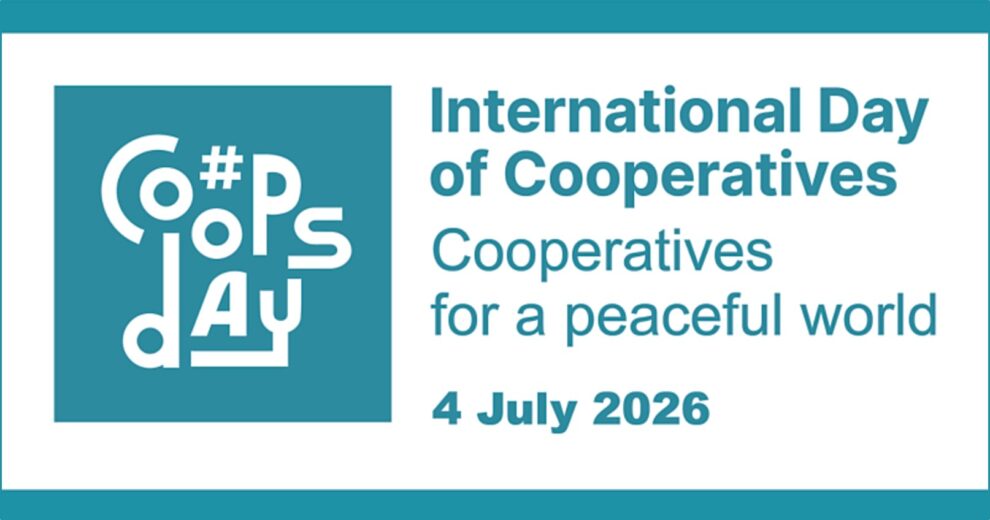
On the occasion of the 104th International Day of Cooperatives, Sagar Kisan Wadkar argues that cooperatives are more than economic institutions; they are also builders of peace. He proposes a “Cooperative Peace Framework for Agriculture” and explores how cooperatives and extension systems can strengthen livelihoods, inclusion, resilience and well-being in rural communities.
CONTEXT
As we celebrate the International Day of Cooperatives 2026, I find myself reflecting on a simple question: Can cooperatives help build a more peaceful world? For many people, peace is experienced in everyday life. It is about earning a decent living, being heard, feeling included, and looking to the future with some hope. Cooperatives may not immediately come to mind when we talk about peace. Yet, by bringing people together to address common needs and pursue shared aspirations, they can help build more peaceful, resilient, and caring communities (Box 1).
| Box 1: Cooperatives and Peace: A Long Historical Connection The idea that cooperatives contribute to peace is not new. Peace is not an accidental outcome of cooperatives. Peace is embedded within cooperative identity. Among the seven cooperative principles, the Seventh Principle, i.e. Concern for Community, reminds us that cooperatives work for the sustainable development of their communities through policies approved by their members. This principle encourages cooperatives to look beyond profits and business performance. It asks them to consider the well-being of people, communities, and future generations. For more than a century, the International Cooperative Alliance (ICA) has linked cooperation with peace. In 1901, ICA adopted one of its earliest resolutions on peace. In 1913, it declared that international conflicts could be reduced when social and economic life is organised according to cooperative principles. Over the years, ICA issued several declarations connecting peace, freedom, democracy, human rights, and cooperation. A major milestone came in 2019 when the ICA General Assembly adopted the “Declaration on Positive Peace through Cooperatives” in Kigali, Rwanda. The declaration recognised that cooperatives contribute to peace by promoting democracy, equality, solidarity, participation, decent work, inclusion and concern for community. |
WHAT DO WE MEAN BY PEACE?
For many people, peace simply means the absence of war or violence. However, peace scholar Johan Galtung (1969) distinguished between “negative peace” and “positive peace”. Negative peace means the absence of direct violence. Positive peace means the presence of justice, equality, inclusion, and opportunities for people to live meaningful lives. Emmanuel and MacPherson (2007) also argue that peace is not merely the absence of violence. It is a process through which people gain greater control over their economic and social lives. In this sense, cooperative development itself becomes a peace-building activity.
Perhaps this distinction resonates with me because I come from a farming family. Growing up, I saw that peace in a farmer’s life often depends on very simple things like a good harvest, a fair price, timely rains, access to timely credit, and confidence that someone will stand by the family in difficult times. A village may appear peaceful from the outside, but many farmers silently carry worries about debts, crop losses, and the future of their children. Building peace, therefore, also means addressing these everyday concerns.
Peace Is Also About Farmers’ Dignity and Mental Well-being
The World is passing through a difficult period. Wars continue in different regions. Geopolitical tensions are rising. Climate change and trade tensions together are undermining food production and livelihoods. Economic inequalities are widening. Many societies are becoming more divided and polarised. These global challenges eventually reach rural communities.
Farmers today face multiple uncertainties, including rising input costs, unpredictable weather patterns, and fluctuating market prices. Farmers often bear the production risks but receive only a small share of the final consumer price. Overall, these feelings of powerlessness often contribute to social tensions and conflict.
In India, farmer distress remains a serious challenge. Cases of farmer and agricultural labourer suicides remind us that economic difficulties are often linked with emotional and psychological stress. Behind every such extreme step is a family, a shaken community, and a story of unfulfilled aspirations. This is why peace should not be discussed only in relation to war. For farmers, peace also means secure livelihoods, fair opportunities, social support, dignity and the hope that tomorrow will be better than today.
A COOPERATIVE PEACE FRAMEWORK FOR AGRICULTURE
Drawing on the cooperative literature, the ICA’s Positive Peace Declaration, and my own observations from India’s cooperative sector, I see peace as one of the most important yet often overlooked contributions of cooperatives. In my view, cooperatives contribute to peace through five interconnected dimensions, as follows:
1. Economic Peace
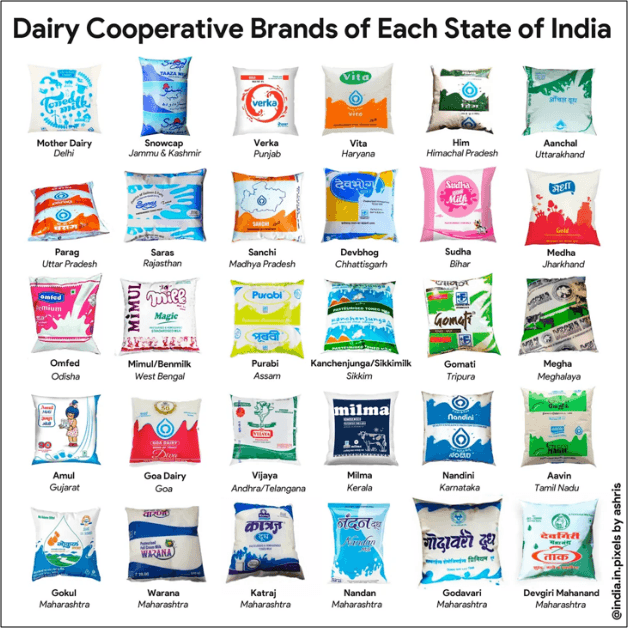 Economic peace begins when farmers can earn a decent living from their work. Individually, small farmers often struggle with rising costs, uncertain prices, and weak bargaining power. Cooperatives help them face these challenges together and improve their chances of earning better and more stable incomes. The experience of India’s dairy cooperative movement provides a powerful example. AMUL ranked 1st among the world’s top cooperatives, according to the World Cooperative Monitor Report 2025. In 2025-26, it has crossed Rs. 10 million crore in turnover. Through the Gujarat Cooperative Milk Marketing Federation (GCMMF), the cooperative network connects nearly 3.6 million milk producers, collects around 31 million litres of milk every day, and markets dairy products in India and more than 50 countries. What makes this achievement significant is not only the size of the business but also the fact that millions of small producers participate in and benefit from it. This model replicated pan-India and helped to address some of the underlying conditions that often contribute to social tensions and instability.
2. Social Peace
Social peace emerges when communities trust each other and work together. Cooperatives bring together people from different social, economic, religious, or cultural backgrounds. Yet they cooperate because they recognise common interests. The cooperative movement offers many examples of social peace in practice. Kerala’s Uralungal Labour Contract Cooperative Society (ULCCS) was built on the idea of securing dignity and better opportunities for workers. The SWaCH Cooperative in Pune brought together waste pickers to gain social security.
 The Indian Coffee House network helps workers to preserve their livelihoods through collective ownership. Similarly, SEWA has empowered millions of self-employed women through organisation, solidarity, and economic participation. Though diverse in their activities, these initiatives share a common purpose: bringing people together, strengthening dignity & inclusion, and building communities based on cooperation rather than exclusion.
3. Ecological Peace
Climate change, water scarcity, soil degradation, and biodiversity loss are becoming major threats to livelihoods. Around the world, many cooperatives are promoting climate-smart agriculture, renewable energy, and improved management of natural resources. Dairy, sugar, and forestry cooperatives are also showing how circular economy principles can be put into practice. A notable example is the Indian Farm Forestry Development Cooperative’s (IFFDC) agroforestry model, which has helped create tree cover on thousands of hectares of land, supported climate resilience, generated carbon credits, and provided additional income opportunities to participating farmers and forestry cooperatives.
4. Psychological Peace
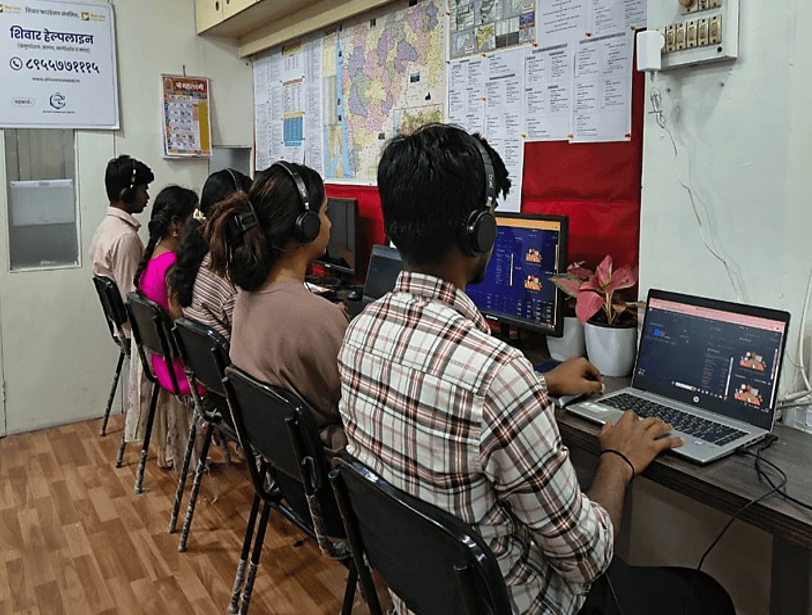
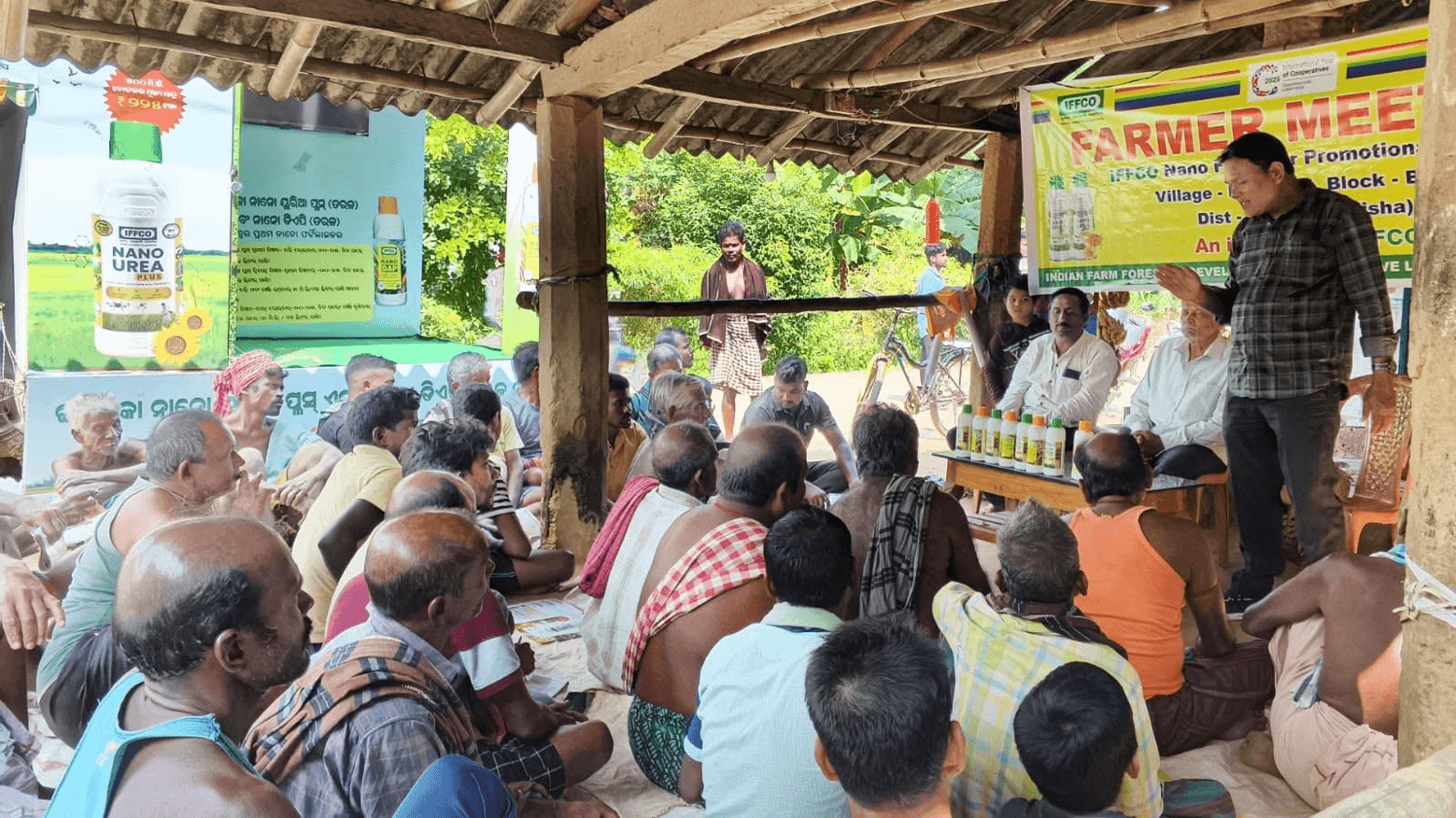
This dimension often receives the least attention. Peace must also include mental well-being. Cooperatives can help reduce social isolation. It provides members with dignity, trust, inclusion, well-being, and a sense of belonging. This perspective resonates well with SDG 16, which calls for peaceful, inclusive societies supported by accountable institutions. As climate risks, indebtedness, and market uncertainties continue to affect farming communities, farmer well-being deserves greater attention. A promising example is the ‘Shivar Helpline’ operated by the Centre for Farmers’ Mental Health, Pune, which received over 11,000 calls from distressed farmers and rural families within four months during 2025. Such initiatives remind us that agriculture is ultimately about people, and that cooperatives, extension systems, and rural institutions can play an important role in fostering supportive communities and restoring hope among farmers.
5. Democratic Peace
Democratic peace is built when people participate in decisions that affect their lives. The second cooperative principle gives members a voice in governance. Members elect leaders, discuss issues, review performance, and shape the direction of their own institutions. India’s recent cooperative reforms, such as the National Cooperation Policy 2025, amendments to the Multi-State Cooperative Societies Act, and the Computerisation of PACS and the Computerisation of Registrar Cooperative Societies (RCS) Offices of States/UTs, have strengthened inclusion, transparency, accountability, fair elections, and members’ rights. These measures recognise that strong cooperatives are built not only through business performance but also through trust, participation, and democratic governance.
Taken together, these dimensions show that cooperatives are more than economic enterprises. By strengthening livelihoods, inclusion, well-being, environmental stewardship, and democratic participation, they help build the foundations of a peaceful, resilient, and sustainable society.
IMPLICATIONS FOR EXTENSION AND ADVISORY SERVICES (EAS)
As an agricultural extension professional, I feel that peace deserves greater attention within EAS. Traditionally, extension has focused on improving productivity, transferring technologies, and enhancing farm incomes. No doubt, these responsibilities remain important. However, the challenges facing agriculture today are becoming far more complex. Farmers are not only dealing with production constraints. They are also facing market uncertainties, climate risks, indebtedness, social changes, and growing psychological stress. In such a context, extension cannot remain limited to technology transfer alone. Extension workers, as the closest public knowledge agents in rural areas, can identify distress signals, connect farmers with support systems, and encourage collective problem-solving.
I increasingly feel that extension is not only about taking technologies to farmers. It is equally about helping people come together, build trust, strengthen their business models, and prepare the next generation of ethical, visionary, and transformational leaders, thereby ensuring that institutional legacies built over generations are carried forward. Cooperatives and other community institutions can provide such spaces. In the years ahead, the impact of extension may well be measured not only by higher yields, but also by stronger communities and more capable farmers that we help nurture.
Further, extension professionals themselves can emerge as community leaders and institution builders. By working closely with farmers and local communities, they are often uniquely positioned to mobilise collective action, promote cooperative values, and provide leadership in establishing and strengthening cooperative-specific value-chains.

Moreover, there is a need to raise awareness among young people, students, and professionals of the cooperative form of enterprise and its potential. Cooperatives should not be viewed only as traditional organisations operating in agriculture, dairy, or credit. They can also provide innovative solutions in emerging sectors such as renewable energy, digital platforms, tourism, transport, logistics, health, and elderly care services. Encouraging young people to develop new cooperative business models in these sectors can help create institutions that are economically viable, socially inclusive, environmentally responsible, and democratically governed.
LOOKING AHEAD
As we celebrate the 104th International Day of Cooperatives on 4th July 2026, the theme of peace invites us to look beyond the traditional understanding of cooperatives as merely economic organisations. The Seventh Cooperative Principle reminds us that development is ultimately about people and their collective well-being. In an increasingly uncertain world, this principle may be more relevant than ever before.
For EAS, this presents both a challenge and an opportunity. Beyond promoting technologies and productivity, extension systems can help build strong institutions, nurture ethical and transformational leaders, inspire young people to engage with the cooperative movement, and support innovative cooperative enterprises in emerging sectors. Perhaps the greatest contribution of cooperatives is not measured only in turnover, profits, or market share. It lies in their ability to bring people together, build trust, create opportunities, and strengthen communities. As we look to the future, these qualities may be just as important as economic success in building a more peaceful world.
Happy International Day of Cooperatives to all! Let us promote cooperative identity!!!
 Dr Sagar Kisan Wadkar is an agricultural extension graduate and a specialist in cooperative law and rural development with over 13 years of experience in policy advisory, institutional strengthening, agribusiness, and community-led development. He has contributed to key national initiatives such as the MSCS Act reforms, Model PACS Bye-laws, the National Cooperative Database, and capacity-building programmes under the Ministry of Cooperation, Government of India. He can be reached at sagarkwadkar@gmail.com.


“There are no two opinions about the necessity to strengthen the cooperatives to help sustain the livelihoods of farmers. The author is very optimistic about the progress of dairy cooperatives in India and indicated that cooperatives can help bring about peace in farmers’ lives. Yes, We can boast of the large number of (2,20,000) dairy coops and the success of AMUL. But over the years the dairy cooperatives are losing their importance and the farmers are shifting towards private dairies. The recent report speaks volumes about the status of coops in India and the same is reproduced below:
“Cooperatives of India: 47.05% of India’s societies defunct, under liquidation or in loss. Only 3.49 lakh of the 8.48 lakh cooperatives are in profit. Uttar Pradesh—one of the largest States—has the highest percentage of defunct societies at 41.8% (16,997), followed by Madhya Pradesh with 34.4% (18,545), Rajasthan with 31.8% (13,357), Andhra Pradesh with 30.1% (5475) and West Bengal with 27.8% (8,930). The condition of smaller States is even worse—Nagaland (72.7%), Delhi (67.1%), Sikkim (55.3%), Manipur (52%) and Chandigarh (46.4%)”
Source : Cooperatives of India: 47.05% of India’s societies defunct, under liquidation or in loss – The Hindu, Published – March 28, 2026 06:11 pm IST
Several studies have pointed out the reasons for failure of our dairy cooperatives which includes our inability to follow the ICA principles of cooperation in letter and spirit. The GOI has been promoting Producer companies based on the recommendations of Dr YK Alagh Committee (2002). The objective is to set up Producer Companies in areas where cooperatives are not present or have low coverage and procurement.
The author could have thrown light on the performance of these producer companies and whether they can help bring smile on famers faces.
Congratulations to Dr Sagar Kisan Wadkar for bringing about a new dimension of peace which the successful coops can bring about among the farmers”.
A good article architechting the three Ps. Priciples, Policies and Priorities with illustrative examples.And also comment by Dr Rao on status quo glaring statistics.
It is in this context the dimensions on forth coming Cooperative policy that have been derived out of Cooperative movements in India and else where ( which may be the first model of collective action?).
Strengthening institutions with more state autonomy in framing by laws and digitising Registrars office ( transparency ).
Buisness vibrancy through promoting village clusters with standard product branding that will enable to access global markets.
Futuristic technologies like developing a cooperative digital stack that would have to be integrated with e commerce portal like Gem.
Inclusivity targetting groups :Youth SC/ST, Women
Expanding to emerging sectors like health care ( Telechery District Cooperative hospital and Thrissur District Cooperative Hospital in Kerala),education, common service facilities for agri processing and ware housing, organic farming, renewable energy.
Finally Banking freedom. ( Multi state Credit Cooperatives)
How these polcy framework helps to improve grass root foot print depends on out lining standard practice framework ( SPF).
Cooperatives may be viewed as the best examples for institutional innovations for catalysing social change. By redefining the transactions and interactions, they are giving visibility to the producer groups and their collective efforts. India has produced some of the best examples like Amul, which are worth emulating. At the same time, we may also need to look into the limitations which are hindering the cooperative network in other domains (such as elite capture of power, political interests, sidelining of actual producers etc.) for its further progress.