



India has come a long way in the cashew industry, evolving from modest beginnings centuries ago into a major player in the global market. But is its historical advantage enough to secure a more competitive and sustainable future? On National Cashew Day (23 November), Aswathy Chandrakumar explores the challenges and opportunities in shaping the next chapter of India’s cashew industry.
CONTEXT
Few agricultural commodities have a journey as interesting as that of cashew. Native to Brazil, cashew (Anacardium occidentale L.) travelled across oceans with Portuguese explorers in the sixteenth century and found a new home along India’s coastline. Initially introduced for soil conservation and afforestation, it gradually became an important plantation crop, supporting millions of livelihoods and creating a thriving processing industry. Over the decades, India emerged as one of the world’s leading cashew-producing, processing and consuming countries. (Box 1).
Yet, behind this impressive journey lies an interesting paradox: India is a major cashew producer and processor, but domestic production is insufficient to meet the processing industry’s needs.
THE PARADOX OF BEING A GLOBAL LEADER
India’s cashew industry has considerable strengths. A large domestic consumer market, an established processing ecosystem, skilled labour, traditional expertise and a well-developed export network provide a strong foundation. However, the sector faces several structural challenges.
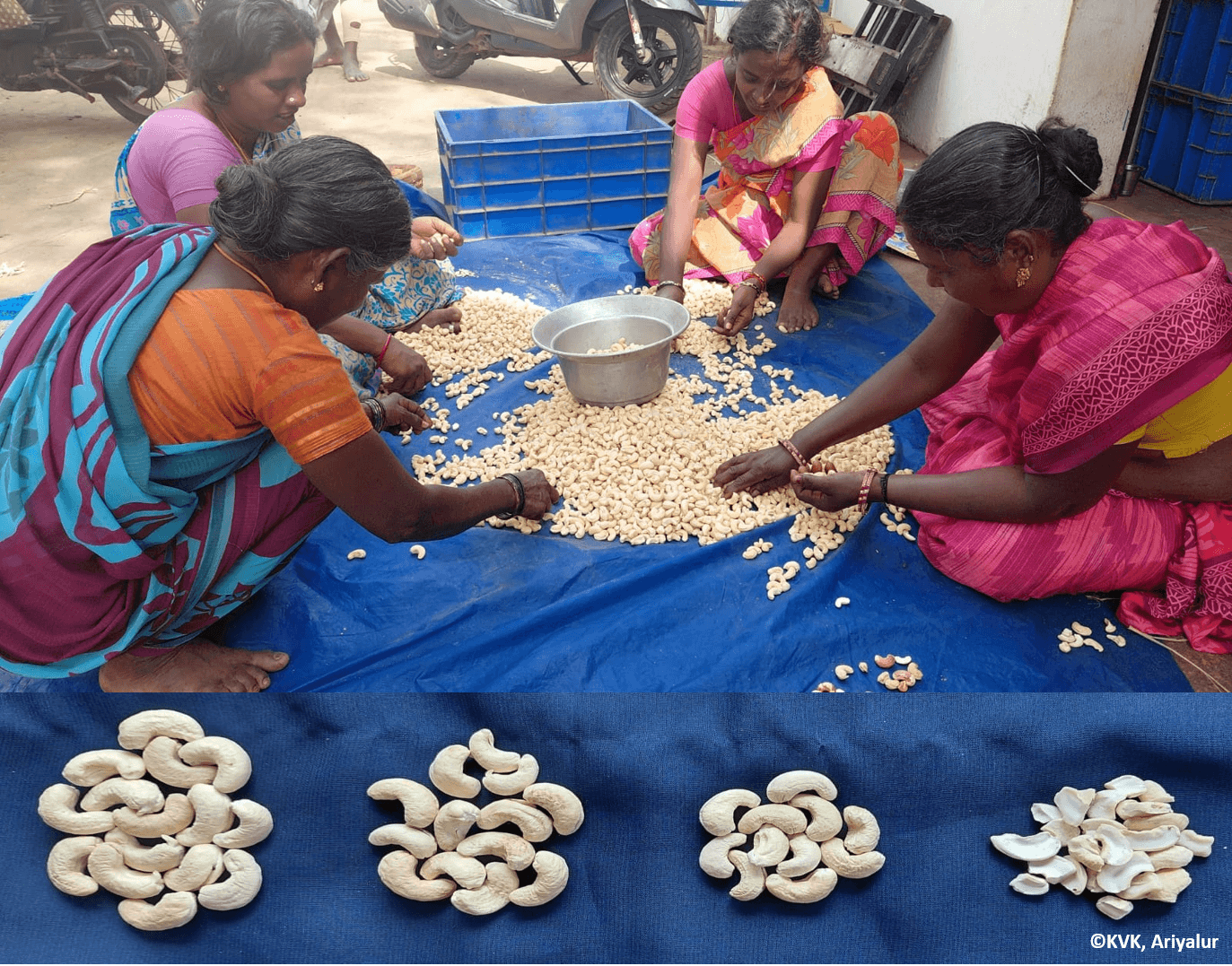
Indian cashew processors require roughly 2 million tonnes of Raw Cashew Nuts (RCN) annually to operate their processing capacity. Because domestic production is around 0.8 million tonnes per year, processors rely heavily on imports, primarily from West and East Africa, to bridge the supply gap. Africa is expanding its processing capacity, targeting 50- 60% of its production by 2030. This will have serious implications for India if corrective measures are not taken. The average yield of Indian Cashew Plantations is 0.6t/ha which is significantly lower than Cambodia (1.5t/ha), Vietnam (1.2t/ha) and the Philippines (6.8t/ha).
Despite having substantial cashew-growing area, India’s average productivity continues to lag behind that of several competing countries. Ageing plantations, inadequate adoption of high-yielding varieties, poor orchard management, labour shortages and climate variability constrain production. The growing dependence on imported raw cashew nuts is another concern. African countries have become important suppliers of raw cashew nuts to Indian processors. While imports help sustain the processing industry, they also expose it to international price fluctuations, supply-chain uncertainties and competition for raw materials. At the other end of the value chain, India’s position in the global processed kernel market faces increasing competition, particularly from Vietnam.
The question, therefore, is not whether India has the potential to lead the global cashew industry. It already has a strong foundation. The real question is how India can strengthen its production base and regain its competitive edge in processing.
PERSISTENT GAPS IN INDIA’S CASHEW STORY
Low productivity and ageing orchards
A considerable share of cashew is grown in old, low-yielding or poorly managed plantations. Limited adoption of improved planting material and recommended orchard practices further restricts productivity. Very few DCCD-accredited nurseries provide quality cashew grafts.
No central MSP for raw cashew nuts
Cashew is not among the 22 crops covered by the Union Government’s MSP framework. Without a national MSP and effective procurement arrangements, growers face price fluctuations and weak bargaining power.
FPOs-a promising but uneven response
Farmer Producer Organisations can aggregate produce, improve access to inputs and markets, and strengthen farmers’ bargaining power. However, their role in cashew aggregation and marketing remains uneven; organising dispersed smallholders around a seasonal crop is still an important task.
Underutilisation of Cashew Apple
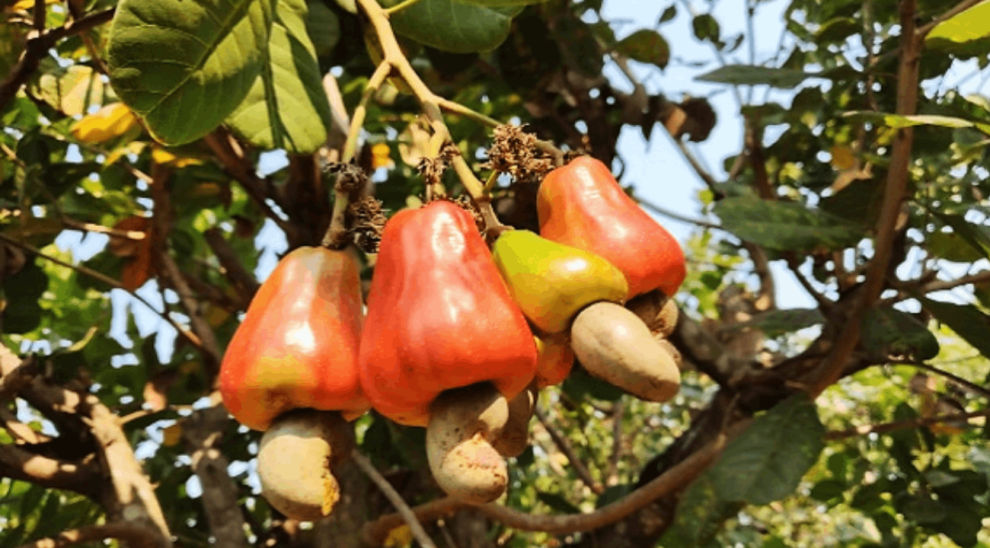
Cashew apple is nutrient-rich and can be processed into products such as juice, syrup, jam, and other value-added foods. For every 1 kg of raw cashewnut produced 8~10kg of cashew apples are wasted. Yet, much of it remains underutilised because collection, perishability, processing facilities and assured markets are difficult to manage at scale. Goa is the only state that processes cashew apples because of feni, the local alcoholic beverage.
Large plantations without consistent upkeep
State corporations or forest departments manage cashew plantations that cover large areas in cashew-growing states. However, these plantations are not maintained to their full productive potential. Inadequate pruning, nutrient management, pest control and timely harvesting can reduce yields and weaken the returns from land already under cashew.
Cashew Stem and Root Borer: a threat to the tree itself
Unlike pests that mainly reduce the harvest, the cashew stem and root borer can kill mature, yielding trees. Its impact is especially serious in neglected orchards, where timely detection and management may be difficult.
Import Policy for Raw Cashew Nuts (RCN) to India
The government reduced the basic customs duty on raw cashew nuts from 5% to 2.5% in 2018, citing challenges faced by the cashew industry, including raw-material availability. Cheaper imported raw cashew nuts can help keep processing units supplied and competitive. Still, they may depress prices offered to domestic farmers, especially where productivity is low, and price protection is limited.
WHO DRIVES INDIA’S CASHEW SECTOR
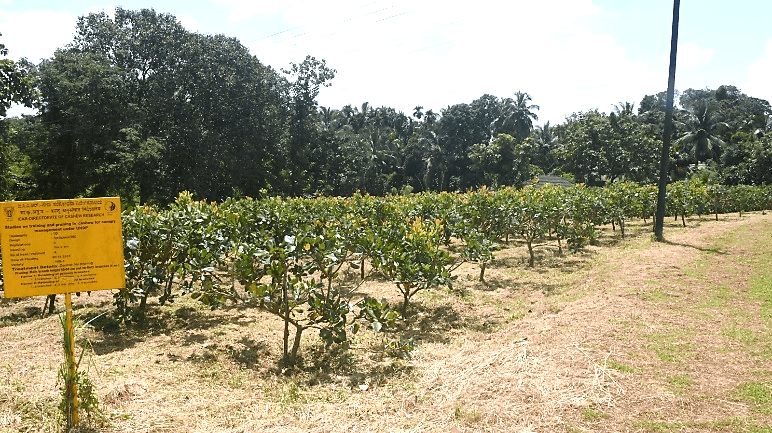
A diverse network of institutions is already working to develop the sector (Table 1). For instance, at the national level, the ICAR–Directorate of Cashew Research (ICAR-DCR) has been playing a pioneering role in developing technologies to improve cashew production, processing, and value addition (Box 2). However, revitalising India’s cashew sector requires coordinated action across the value chain, from developing quality planting materials to marketing processed kernels and value-added products.
Table 1: Key stakeholders in the Indian Cashew Sector
| Stakeholders | Role |
| ICAR-Directorate of Cashew Research and All India Coordinated Research Project (AICRP) on Cashew | Develop, validate and demonstrate improved technologies; strengthen research–extension linkages.
The AICRP on Cashew operates at 14 centres, distributed across major cashew-growing areas of the country. |
| Directorate of Cashew and Cocoa Development (DCCD), Ministry of Agriculture and Farmers Welfare | Coordinates development programmes such as area expansion and sector-wide initiatives. |
| National Horticulture Board | Funds cluster development, quality planting material, post-harvest infrastructure, and market linkages under the Mission for Integrated Development of Horticulture (MIDH) |
| Agricultural and Processed Food Products Export Development Authority (APEDA) | Promotes, facilitates, and regulates the export of Indian cashew kernels, Cashewnut Shell Liquid (CNSL), and value-added cashew products |
| State Departments of Horticulture | Implement farmer-oriented programmes, support quality graft distribution and strengthen extension. |
| Cashew Research Stations working under the State Agricultural/ Horticultural Universities | Evaluation of improved germplasm, production and distribution of planting materials, standardisation of technology packages at the state level (Also serve as centres of AICRP on Cashew) |
| State-level Plantation Corporations and Department of Forests | Expand cashew cultivation on marginal or degraded land, supply planting material and test modern farming methods. |
| Nurseries | Ensure availability of healthy, true-to-type grafts of suitable varieties. |
| NGOs, FPOs and cooperatives | Aggregate produce, improve access to inputs, facilitate collective marketing, and link farmers with processors. |
| Processing Industries (Formal and informal) | Strengthen processing efficiency, quality standards, market linkages and demand for domestic raw nuts. |
Note: The table is illustrative and not exhaustive. In addition to the national-level institutions listed, several state-specific agencies and organisations play important roles in cashew development. Their mandates and contributions vary across states.
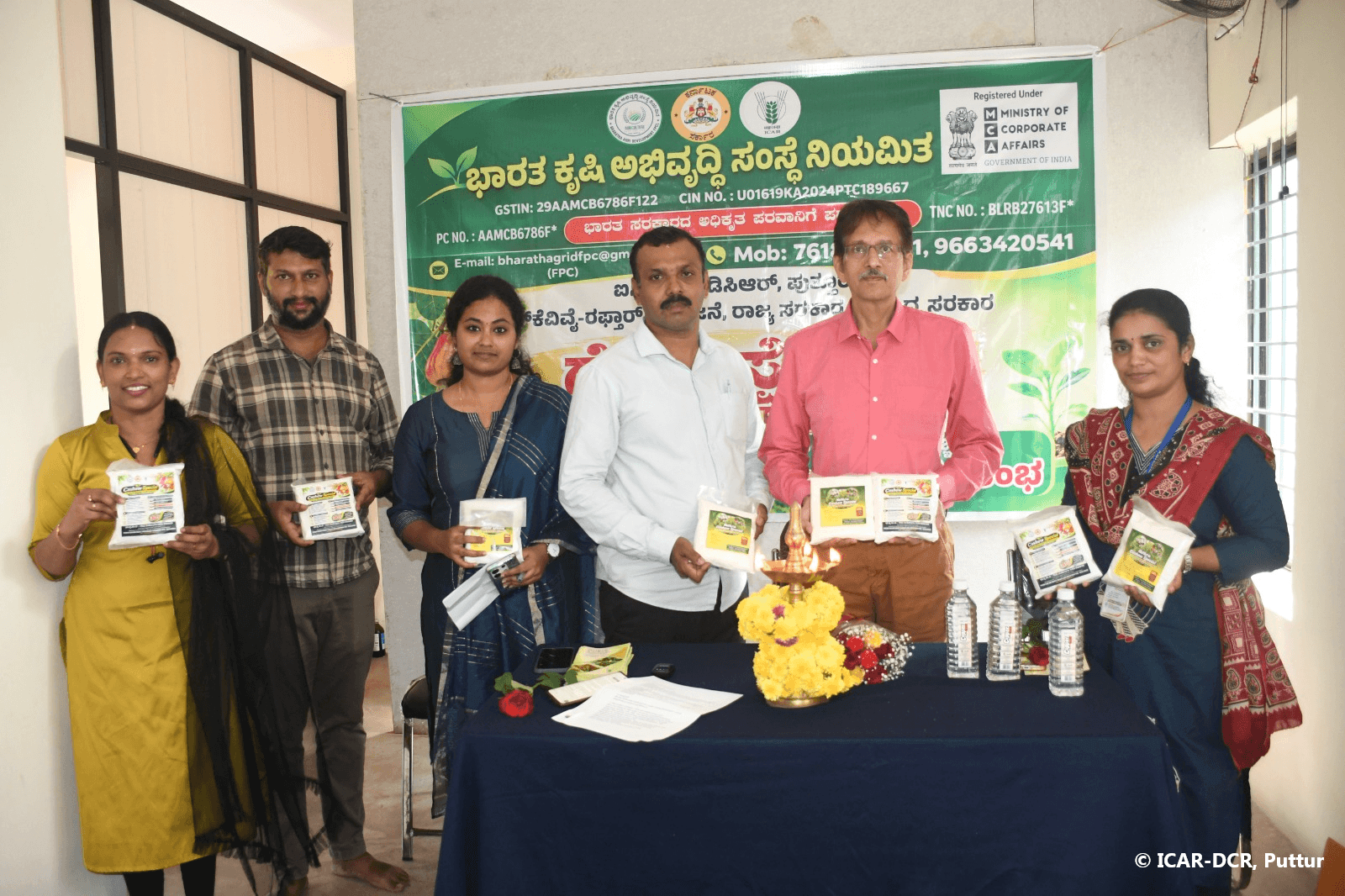
| Box 2: ICAR-Directorate of Cashew Research: Pioneering Research, Transforming India’s Cashew Sector Established in 1986 as the National Research Centre for Cashew in Puttur, Karnataka, the ICAR–Directorate of Cashew Research (ICAR-DCR) is India’s nodal centre for cashew research. Beyond research, it organises field-level demonstrations, training, and incubation services. ICAR-DCR is pilot testing different transfer-of-technology models for technology upscaling. These include:Developing Cashew Model Villages: Under this RKVY-supported project in Karnataka, Sampaje and adjoining villages have been selected as a cluster to introduce several interventions, including the establishment of orchards with high-yielding varieties, a village-level cashew apple processing plant, demonstrations on the application of Cashew Special through drones, and the development of a nursery for quality graft production. The initiative aims not only to bridge the technology gap but also to strengthen linkages among farmers, FPOS, women’s SHGS, the State Department, and research institutes.Strengthening Linkages with FPOs, KVKs and NGOs for technology upscaling ICAR-DCR has strengthened these linkages through collaborations with Farmer Producer Organisations (FPOs), KVKs, and other local institutions. Notable among them are the collaborations with Chully Farmers Club for cashew sprout value addition; pineapple intercropping in Cashew in Parvathipuram, Maniyam district, in collaboration with the KVK; and area expansion under high-yielding cashew varieties in the Gadag region in collaboration with KVK, Gadag and Meghalaya in collaboration with All Garo Hills Multipurpose Co-operative Society. |
THE ROAD AHEAD: REIMAGINING INDIA’S CASHEW SECTOR
India’s cashew sector stands at an important juncture. For India, the way forward must combine production enhancement with processing competitiveness, which requires-
Mapping of senile and low-yielding plantations
State Departments of Horticulture, with support from DCCD, can undertake a district-wise assessment of cashew plantations to identify senile, low-yielding, and neglected orchards. Develop phased rejuvenation plans based on the age, condition and productivity of plantations.
Accreditation of Cashew Nurseries
Establish a systematic inventory of cashew nurseries and scion banks. Ensure that scion banks are maintained with authenticated mother trees of recommended varieties and that nurseries follow prescribed standards for graft production. DCCD can strengthen nursery accreditation, inspection, and graft traceability, with particular attention to the availability of regionally suitable varieties.
Pest surveillance and timely management of Cashew Stem and Root Borer (CSRB)
ICAR-DCR, in collaboration with cashew research stations under state agricultural universities, KVKs, plantation corporations and State Departments, can conduct systematic pest surveillance in major cashew-growing districts, particularly in neglected plantations and areas with a history of infestation. Train farmers and plantation managers to identify early symptoms and adopt locally recommended integrated pest management practices. DCCD is currently providing financial assistance to organisations planning to organise such trainings.
Specific campaigns for Plantation Corporations
DCCD can conduct a plantation-level audit of state corporation and forest-department holdings. Assign clear responsibility for pruning, nutrition, pest management, and harvesting; use performance indicators such as tree survival, yield, and maintenance completion. Where appropriate, explore transparent management partnerships with FPOs or local groups, subject to land and forest rules.
FPOs as Change Agents
Organise cashew growers through viable FPOs/cooperatives, not only by registering them. India has a few successful FPOs in the cashew sector, and there is much to learn from them. Support aggregation, grading, collective input purchase, market information, storage and direct linkages with processors. Build working-capital and management capacity so FPOs can operate beyond the grant period. For instance, Chhatrapati Shahu Cashew Cooperative operating in Maharashtra employed a multifaceted market linkage strategy that combined B2B partnerships with institutional buyers, traditional market engagement with wholesalers and traders, and a strong focus on product quality and brand building. Some other NGOs involved in area expansion and supporting cashew-related activities include All Garo Hills Multipurpose Co-operative Society in Meghalaya, WASSAN in Andhra Pradesh, etc.
Utilisation of Cashew Apple
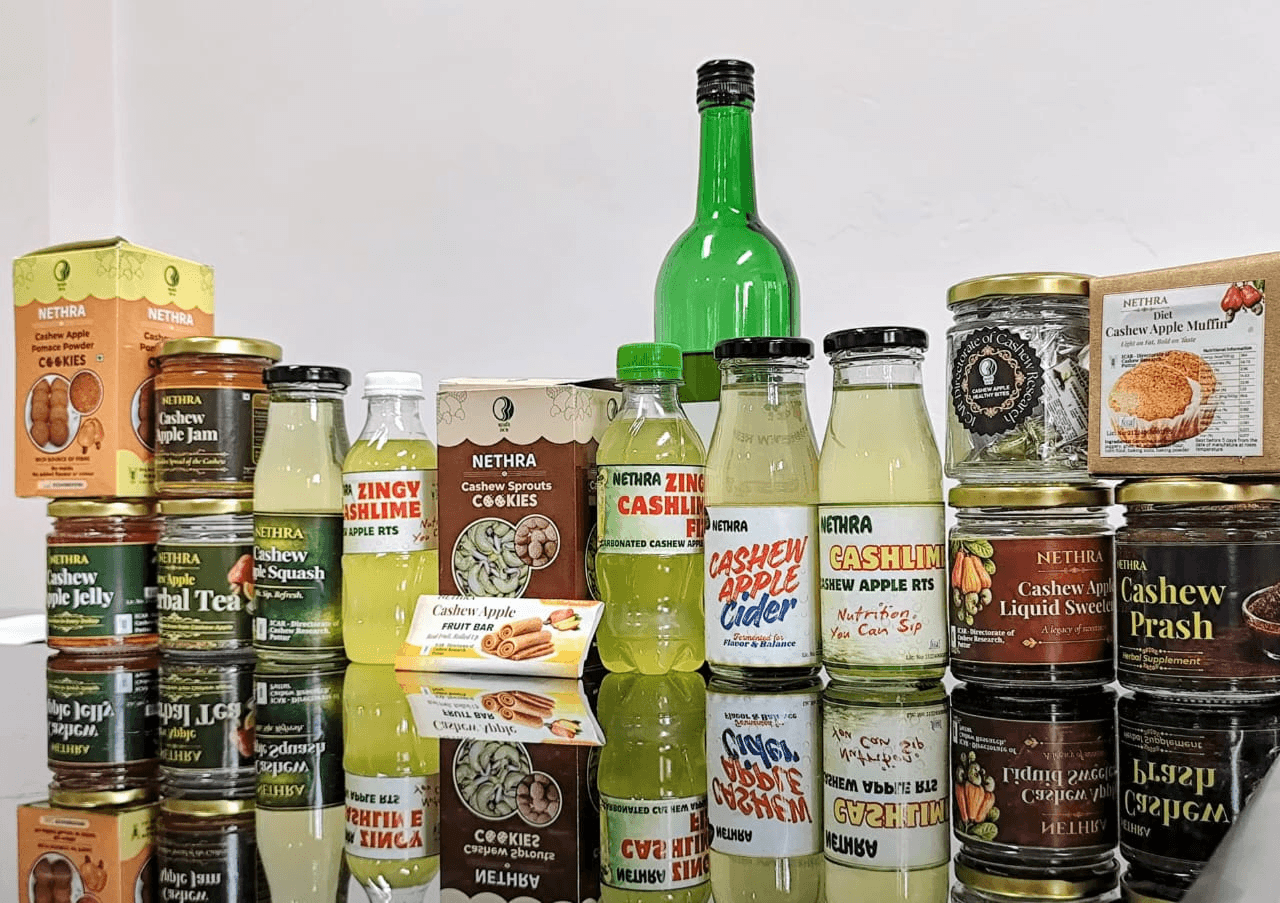
Build on the processing technologies and value-added products already developed by ICAR-DCR and other cashew research institutions. Document successful entrepreneurial initiatives and assess their economic viability, particularly in regions where cashew apple is currently underutilised. Establish and strengthen decentralised collection, processing and marketing systems that can handle the fruit’s short shelf life, linking growers and FPOs with SHGs, micro-enterprises and processors. Support these enterprises through technical training, hygienic processing, product development, packaging, quality assurance, market linkages and access to finance.
Price Support Mechanisms
Improve access to transparent, timely market information and quality-based pricing. Explore feasible state-level procurement or price-support arrangements, which is one of the long-standing demands of cashew growers. Any price-support mechanism should consider both growers’ costs and processors’ ability to compete. At the same time, buyer contracts need to be developed and collective marketing promoted.
A FUTURE BEYOND THE NUT
India’s cashew journey is a story of adaptation, enterprise and achievement. From its introduction centuries ago to its status as a major global player, the crop has created livelihoods, supported industries, and contributed to the country’s agricultural economy. However, past achievements alone cannot guarantee future leadership. India has the advantage of possessing both a strong production base and an established processing industry. What is needed now is to bring these strengths together through innovation, investment and a renewed focus on competitiveness.
On this National Cashew Day, let us celebrate not just this remarkable crop’s journey, but also the opportunities ahead.
 Dr Aswathy Chandrakumar is a Scientist (Agricultural Extension) working at the ICAR-Directorate of Cashew Research, Puttur, Karnataka. She can be contacted at acs14292@gmail.com or aswathy.c@icar.org.in.

Add Comment