

Direct seeding and machine transplanting can save millions of labour-days and cut methane, but labour saved is not the same as benefit gained. In this blog, Ajay Kumar Mishra and Sarita Mishra examine who gains and who loses as India’s rice systems mechanise, and how extension and policy can make women the operators and entrepreneurs of the transition.
CONTEXT
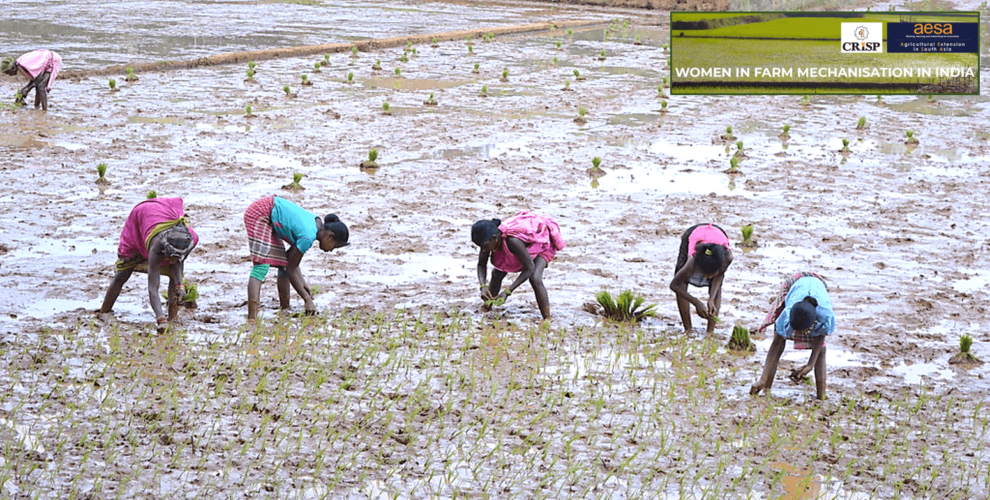
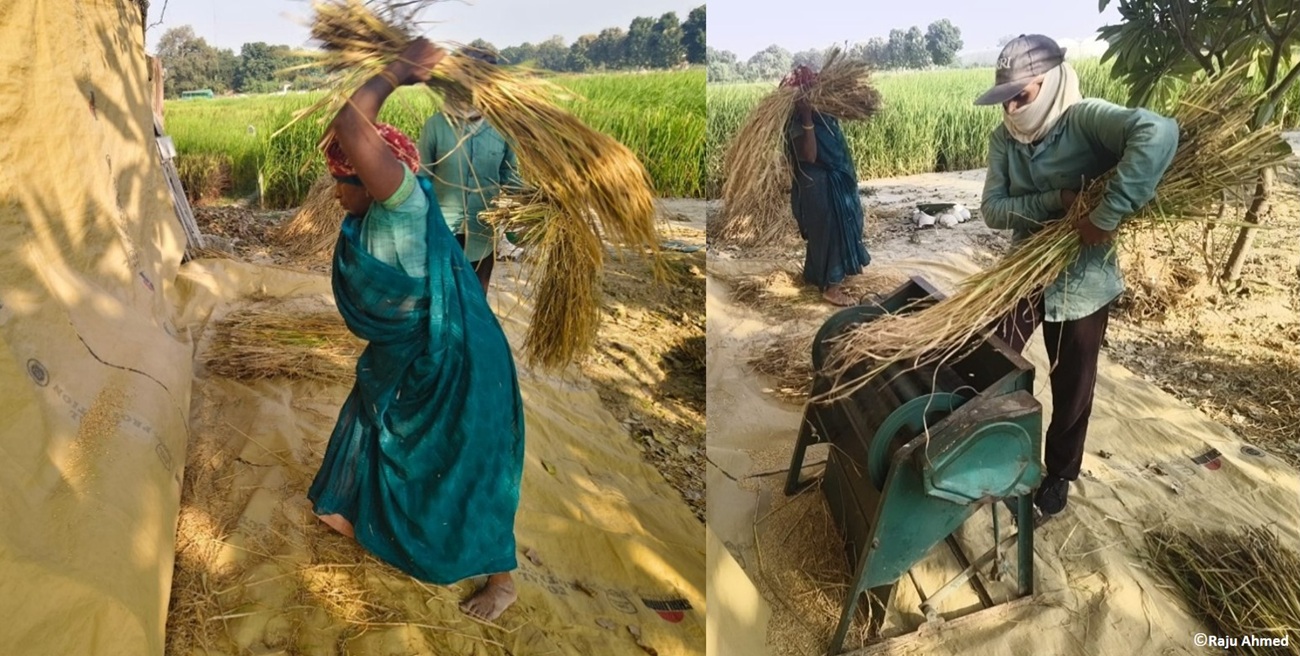
Walk through a rice field in eastern Uttar Pradesh or coastal Odisha in July, and most of the people bent over the nursery and the puddled field are women. They pull seedlings, transplant them by hand, and return weeks later to weed. Yet the machines now arriving to transform this work, from seed drills to transplanters to spray drones, are rarely designed with them, sold to them or owned by them.
This matters more than ever. India’s farm workforce is becoming more female. Labour survey data show that 46.5% of rural women were in the workforce in 2023–24, up from 23.7% in 2017–18, with most of the gain in farm self-employment. Yet women operate only about 14% of the country’s operational holdings. Women do the work; men hold the land, the credit and, mostly, the machines.
Our argument is simple. India’s shift to climate-smart and regenerative rice-based systems is, at its core, a mechanisation transition. If women are not at the centre of its design, it will either push them out of paid work or quietly add to their unpaid burden. If they are, it can become one of the strongest routes to women’s agency in agriculture.
THE CLIMATE-SMART PARADOX
Direct-seeded rice (DSR), machine transplanting, zero tillage and residue retention are now central to India’s plans to save water and cut methane. Their gender dividend is real. A study of nearly 12,000 rice plots across India estimated that moving away from manual transplanting could save women 748 million labour-days through DSR and 610 million through machine transplanting, while cutting emissions by 34 and 7 MtCO₂e, respectively.
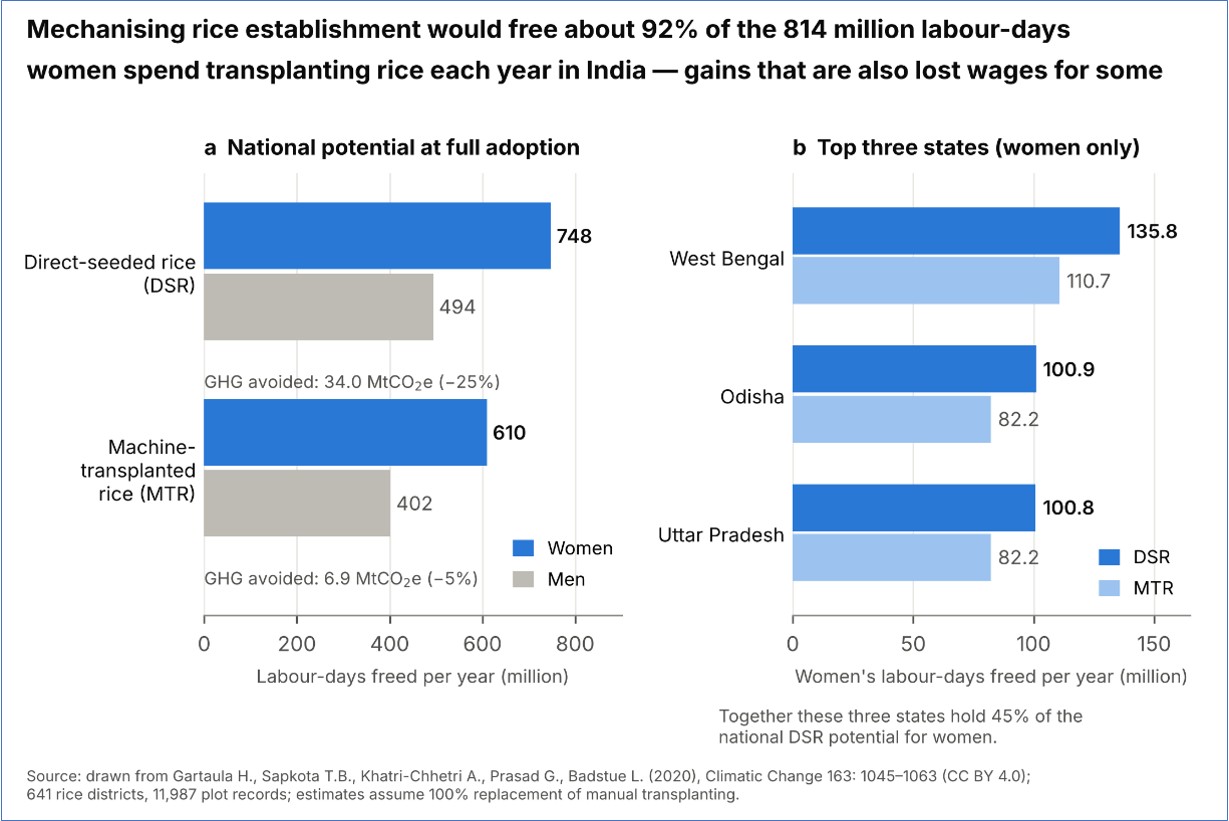 Figure 1. (a) Labour-days freed each year by gender, and GHG avoided, if direct seeding (DSR) or machine transplanting (MTR) fully replaced manual transplanting across India’s 641 rice districts. (b) Women’s labour-days freed in the three states with the largest potential. Drawn from Gartaula et al. (2020), CC BY 4.0.
But labour saved is not the same as benefit gained. Three risks recur in rice systems:
- For landless women who transplant rice for wages, DSR can mean lost income and weaker bargaining power. Ongoing IFPRI–Hohenheim research in four Odisha districts is examining who gains and who loses, across caste, class and gender.
- Burden shifting. DSR fields carry heavier weed pressure. Where herbicides or mechanical weeders are unavailable, the time saved at transplanting returns as hand weeding, which is still largely women’s work.
- Exclusion from skilled roles. The new tasks of operating a seed drill, calibrating a transplanter, or flying a drone carry higher pay and status, and men default to them. In Nepal’s mid-hills, women owned only 4% of mini-tillers and operated only 1%.
Regenerative practices add another layer. Green-manure sowing, flowering bund strips for natural pest control, and compost or biochar handling are often assigned to women and rarely mechanised. Every new practice redistributes labour. The question is whether anyone has planned that redistribution.
WHY GENDER-RESPONSIVE MECHANISATION POLICIES REMAIN LIMITED
On paper, India’s policy is progressive. The Sub-Mission on Agricultural Mechanisation (SMAM) earmarks 30% of its funds for women farmers. Between 2014–15 and 2025–26, it supported 21.61 lakh machines, 27,554 Custom Hiring Centres (CHCs) and 25,608 farm machinery banks. Yet four structural gaps keep the earmark from becoming access.
- Machines built for an average male body. Most equipment is sized for male height, reach and grip. ICAR-CIWA has tested women-friendly tools; its manual disc ridger, for example, cut cardiac cost per square metre by 73% compared with a spade. Such designs remain peripheral to mainstream manufacturing and subsidy lists.
- Subsidies tied to land. Individual subsidies usually require land records. With women operating about one holding in seven, an earmark linked to ownership reaches few of the women who actually farm.
- Undervalued time, limited cash. Because women’s labour is poorly valued and women control little household money, their drudgery seldom becomes household demand for machines. Researchers documented this pattern in Ethiopia and Kenya, and it holds in many Indian villages.
- Extension that speaks to men. Demonstrations, dealer networks and trainings are male-dominated, and their timing often clashes with women’s care work and mobility norms. Yet an IFPRI study in Maharashtra found women valued the labour saved by drum-seeded DSR more than men did, and urged designers and extension workers to target women.
The earmark counts rupees. It does not count who operates it, who earns, or who decides.
FROM LABOURERS TO SERVICE PROVIDERS
The more promising path is not individual ownership but women-run service enterprises. A smallholder needs a seed drill or a sprayer for a few days a season. A service model spreads that cost and puts women in the business, not only in the field.
The evidence is building:
- Namo Drone Didi (outlay Rs 1,261 crore) aims to equip 15,000 women’s self-help groups (SHGs) with drones. It covers 80% of the drone package up to Rs 8 lakh, includes 15-day pilot training, and vests ownership in the SHG or its federation.
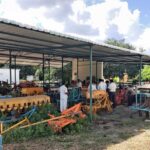
- SHG-run CHCs. In 2023, ICAR-CIWA set up a CHC of women-friendly tools managed by a women’s SHG in Kunjar village, Puri district.
- Women on heavy machinery. BAIF’s Project Prerna promoted women-led CHCs in three states; 55 of the 395 women trained went on to drive tractors.
Rice systems teach some caveats. A drone package is not yet an enterprise. Drone Didis need demand across the season, beyond pesticide spraying: nutrient and biostimulant application, seeding, and crop monitoring linked to digital advisories. They need repair networks, battery logistics and a booking system farmers trust. And the pilot’s seat must not quietly pass to a male relative. The test of success is simple: who flies, and who keeps the income?
A FIVE-POINT AGENDA FOR EXTENSION AND POLICY
- Gender-test machines before subsidising them. Add women’s ergonomic and anthropometric trials to national machinery testing, and give certified women-friendly designs a priority place on subsidy lists.
- De-link access from land titles. Let SHGs, their federations and women-led farmer producer organisations access CHC subsidies and credit on the strength of an enterprise plan, not a land record.
- Bundle each climate-smart practice with a women’s job. When a block promotes DSR or machine transplanting, train and finance local women in the same season as seed-drill operators, mechanical-weeding service providers, or producers of the mat-type nurseries that transplanters need. Displaced transplanters should move up the value chain, not out of it.
- Make extension women-ready. Recruit women machinery trainers, hold demonstrations at village level and at suitable times, and set Krishi Vigyan Kendra and ATMA targets for women operators trained, not women attending.
- Measure what matters. SMAM and Namo Drone Didi dashboards should report sex-disaggregated data on operators, service hours, income retained and drudgery reduced, not only machines distributed. The drone scheme’s portal already tracks each drone’s operations; recording who operates it costs little.
CONCLUSION: DESIGN THE TRANSITION WITH WOMEN, NOT AROUND THEM
India will mechanise its rice fields; climate, water and labour shortages make that certain. What is not certain is who the transition is for. A seed drill that saves water but erases a landless woman’s wages is not climate-smart for her. A drone that her SHG owns, she flies and her village books is. The difference lies not in the machine but in the choices made around it: design, finance, training and measurement. Put women’s needs, experience and leadership at the centre of those choices, and mechanisation stops being something done to women. It becomes something women do.
 Dr Ajay Kumar Mishra is a Senior Associate Scientist – Soil Science at the International Rice Research Institute’s South Asia Regional Centre, Varanasi, India. His work focuses on soil health, regenerative agriculture, nutrient management and greenhouse gas mitigation in rice-based systems, connecting research with farmer-field applications. He can be reached at: a.k.mishra@cgiar.org
 Dr Sarita Mishra is Director and Global AgriCoach at Vasundhara Udgar Foundation Trust, Varanasi, India. Her work spans agricultural extension, nutrition-sensitive agriculture and women’s entrepreneurship, with a focus on helping rural women and self-help groups turn research and new technologies into practical skills and livelihoods. She can be reached at: sarita.mishra91@gmail.com


Add Comment