
Demonstrations show whether a technology works; the second season reveals whether farmers can sustain its adoption. In this blog, Niladri Giri highlights the importance of assessing extension performance through second-season data, when farmers are expected to continue using demonstrated technologies without external support.
CONTEXT
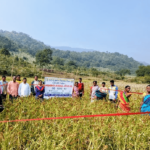
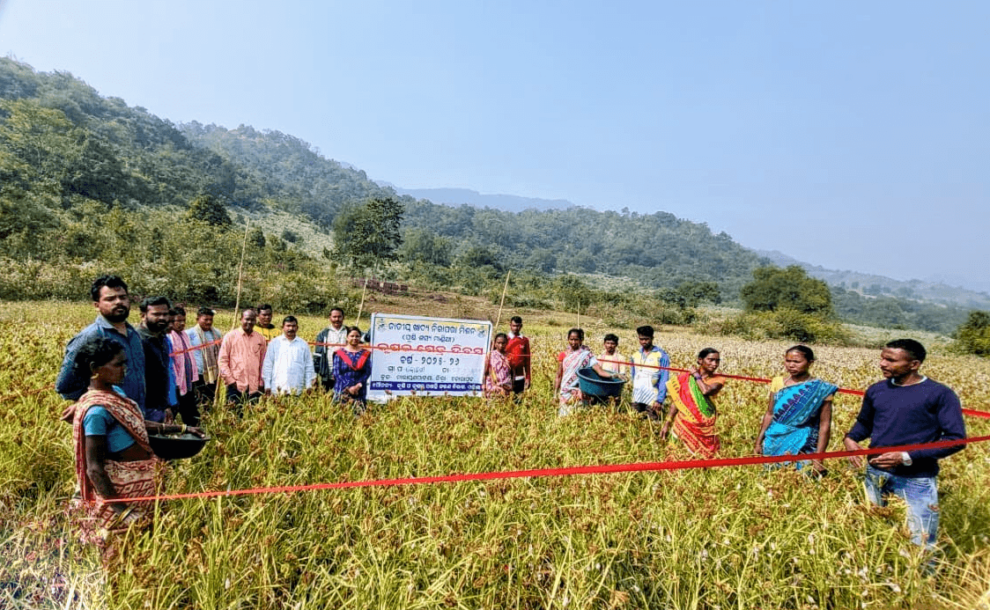
In an upland block in southern Odisha, we set up a 25-farmer cluster demonstration of line-transplanted finger millet (mandia) with cycle-weeding. Project support covered seed, bio-fertilisers, a rope marker, a cycle-weeder and field supervision. The crop looked excellent: even rows and very few weeds. Recorded yield reached nearly 19 quintals per hectare, compared with about 8 under local broadcasting, though this compares a supervised plot with an average farmer’s field. Seventy neighbours attended the field day. The demonstration was held on schedule, photographs were taken, the report went up the line, and the target was met.
The following kharif, I returned unannounced. Only four of the 25 farmers (16%) had repeated line transplanting on their own land. The other 21 had reverted to broadcasting. This was an informal visit, not a sample, but the reasons were consistent:
“Sir, during the demonstration the project supplied the rope marker, covered the labour and brought the cycle-weeder. When we have to buy our own twine, pull four family members away from peak paddy transplanting, and cannot find a single weeder to hire locally, broadcasting gets the seed into the mud before the rain stops.”
This is not a story about careless officers. It is what a target system produces. The report rarely records the next season: whether the farmers who hosted the demonstration, or their neighbours, used the practice again with their own seed, labour, and money.
THE SYSTEM COUNTS WHAT IT IS ASKED TO COUNT
In public extension, officers receive annual targets: so many demonstrations, in specified crops and places. The following year brings another programme, another crop, often another region. Extension officers report achievement of physical and financial targets, and those are what get reported. Nothing in the cycle asks anyone to return to last year’s farmers.
The number of demonstrations conducted is a legitimate measure of implementation. The problem begins when it becomes the main evidence of impact, because a count of demonstrations cannot tell us whether any farmer’s practice changed.
So the practical question is this: how do we measure the success of extension beyond the number of participants in a demonstration?
A PLOT THAT WORKS IS NOT A PRACTICE THAT SPREADS
Agronomic performance alone cannot explain whether a farmer will keep using a technology. A demonstration shows that a practice works under particular conditions, usually with timely operations, close support and good land. It cannot show that farmers can sustain it on their own.
The broader evidence points to the same conclusion. Research in Madagascar found that the System of Rice Intensification (SRI) delivered considerable benefits under the conditions studied, yet continued use remained limited. A 2025 study in Sundargarh, Odisha, of farmers who had discontinued SRI, reported difficulty with alternate wetting and drying, repeated weeding and nursery management. It cannot say how common discontinuation is, but it names the operations a supervised plot absorbs quietly. In an experimental study of wheat demonstrations in Pakistan, gains in seed adoption, yield, and profit persisted for four years. Still, the programme supplied inputs and intensive support to farmers with relatively good irrigation and roads.
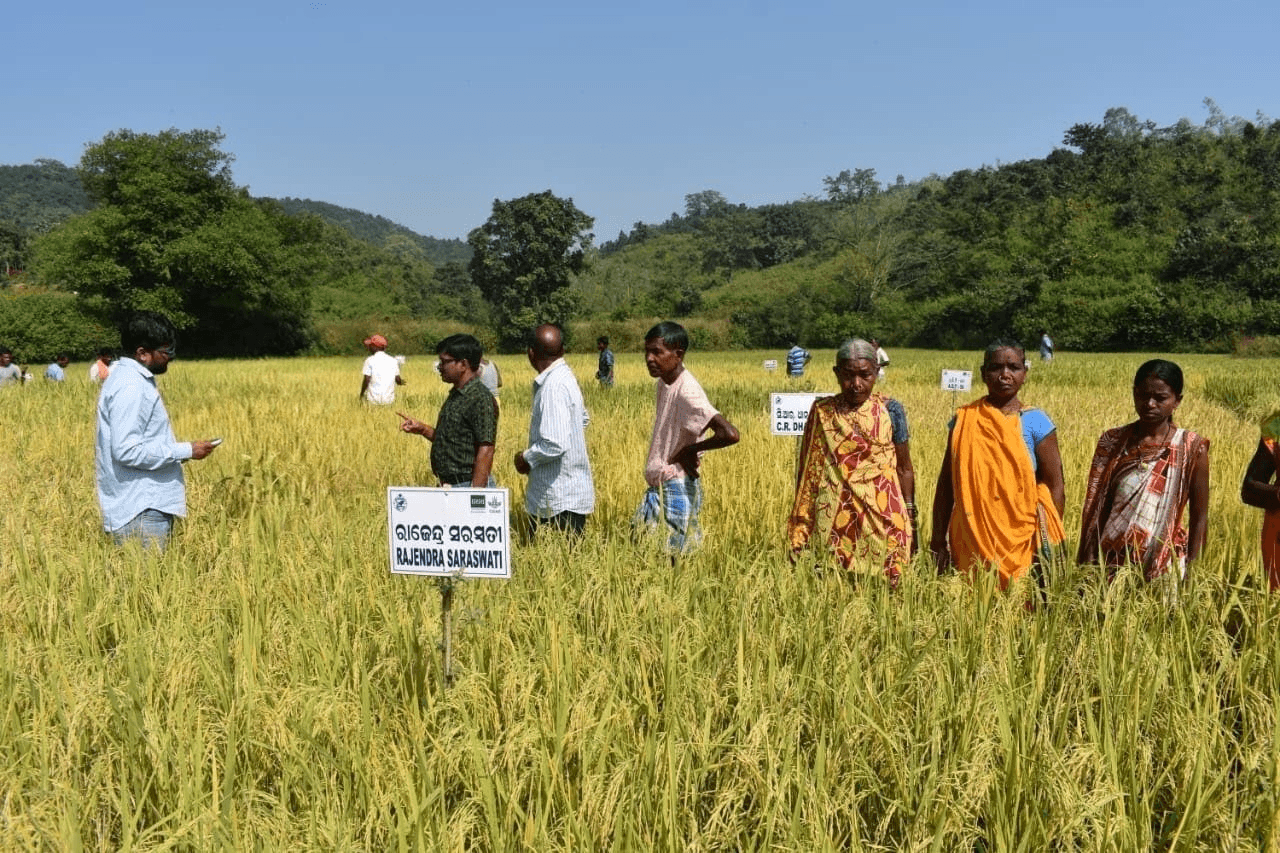
A second case from the same block in Odisha shows the labour behind a plot. A line-sown mustard demonstration on residual moisture in an upland rice fallow looked immaculate on field day: uniform flowering, rows at 30 centimetres. The host farmer had spent three days clearing paddy stubble because no rotavator was available for hire. To reach the recommended two-centimetre sowing depth in drying red soil, he borrowed a bullock pair in the early morning, hand-metered the fine seed mixed with sand and dragged thorny branches over the furrows. Ten days later, when soil crusting threatened emergence, the family carried twenty cans of water by hand across terraced bunds. The plot showed that mustard can follow upland paddy. It never showed whether an unassisted smallholder can spare some seventy hours of unmechanised family labour for an oilseed crop.
A clean demonstration plot hides the work behind it.
ONE INDICATOR: THE SECOND-SEASON CONTINUATION RATE
The indicator is simple to state: the proportion of demonstration farmers who use the demonstrated practice independently in the following season, given a reasonable opportunity to do so. Farmers fall into five categories:
- Full continuation: repeats the core recommended practice.
- Adapted continuation: modifies the practice but keeps its meaningful core or intended benefit.
- Partial continuation: adopts some components only.
- Discontinuation: stops despite having a reasonable opportunity.
- No reasonable opportunity: seed, equipment, water or other conditions make a fair attempt impractical.
To calculate the rate, count the farmers who continued fully or in an adapted form, and divide by those who had a fair chance to do so. Report farmers who adopted only some components and those with no fair chance separately, so they are not counted as failures. For everyone who stops or modifies the practice, record one main reason: labour, water, inputs or equipment, returns, technical difficulty, market or other.
Apply this to the finger millet cluster. The headline is 4 of 25. But where no weeder could be hired locally, many of the 21 arguably had no reasonable opportunity. The continuation rate among farmers with a fair chance would be higher than 16%, and the constraint was a service gap, not farmer reluctance. Only the categories make that visible.
The purpose is not to label farmers. A farmer who drops an unprofitable practice is making a sound economic decision. One who adapts a practice to local conditions shows the judgement extension should encourage.
MAKING IT WORK INSIDE A TARGET SYSTEM
No new programme is needed. Five changes fit inside the existing cycle.
- Add a column, not a system. The demonstration report already exists. Add a next-season field with the category and a reason code.
- Follow up when the decision is made. Contact farmers at the next sowing, and verify again after the critical management stage. Follow all participants where they are few. Otherwise, draw a random sample from the full register and verify part of it in the field, so the figure shows practice, not paperwork.
- Record the economics during the demonstration. Keep a labour calendar in person-days, family against hired, with a cost sheet and break-even yield against the farmer’s own practice, as the mustard case needed.
- Test feasibility first. Can farmers buy or hire the seed drill, weeder or rotavator next season? Producer organisations, self-help groups and custom hiring centres can help services outlast project support.
- Feed the findings upward. Aggregate by technology and block, and review them before planning the next programme. The FAO’s scoring tool for assessing the performance and outcomes of extension and advisory services could be used alongside this, and its guidance on monitoring, evaluation, and learning in Farmer Field Schools offers a starting point.
Two cautions apply. Any indicator tied to rewards gets inflated, so use it to inform the choice of technologies and sites, not officers’ ratings, with field verification as a safeguard. And the cost falls on officers’ time. Folded into sowing-season visits, a sample is modest. A full census is not.
Another question is who carries the risk. The farmer who tries an unfamiliar practice carries the crop risk. The officer carries a target. A continuation record is the first data that shows where those interests diverge.
WHAT A PILOT WOULD LOOK LIKE
A State Department could pilot this in one district for one season: add the field, follow a sample, and review results before programme planning. A low number is not a failure. It shows whether the binding constraint is the seed drill, the weeder, water or the market, and which institution holds the key.
The real test of a demonstration is not what happens inside the plot during the programme. It is what farmers can, and choose to, do with that knowledge in the second season.
 Niladri Giri is an agriculture officer working with tribal farming communities in Odisha. He has over 12 years of field experience in dryland and rainfed agriculture, millet-based farming systems and watershed management in the Eastern Ghats. Views are personal. He can be reached at: neelu.22c@gmail.com

Add Comment