

In this blog, Archana Bhatt and C Thamban discuss lessons from implementing seed festivals in Wayanad (Kerala) over the past decade and how they have evolved into a community-led agrobiodiversity platform that brings together farmers, researchers, government agencies, civil society organisations, and policymakers.
CONTEXT
Situated in the Western Ghats biodiversity hotspot, Wayanad is recognised for its rich diversity of traditional rice landraces, tubers, spices, bananas and other indigenous crops, conserved largely by farming communities, particularly tribal communities. However, agricultural intensification, changing food systems, climate variability and erosion of traditional knowledge increasingly threaten these valuable genetic resources. Recognising these challenges, the M. S. Swaminathan Research Foundation (MSSRF) established the Community Agrobiodiversity Centre (CAbC) in Wayanad district in 1997.
This was aimed at promoting community conservation systems of rural and tribal people through research, extension and advocacy. This was achieved through the C4 continuum: Conservation, Cultivation, Consumption and Commerce, coined by Prof M S Swaminathan, highlighting that long-term conservation is possible only when traditional crop varieties are integrated into local livelihoods and food systems. This initiative also facilitated the emergence of two important community institutions, Wayanad District Tribal Development Action Council (WDTDAC) and Seed Care over time. WDTDAC is a tribal community-based organisation established under the aegis of MSSRF that promotes agrobiodiversity conservation & supports tribal livelihoods in Wayanad. Seed Care is a farmer organisation supporting on-farm conservation of traditional varieties and farmers’ rights over seeds.
WAYANAD COMMUNITY SEED FEST (WCSF): A DECADE-LONG COMMUNITY-ORIENTED EXTENSION MODEL
The Wayanad Community Seed Fest (WCSF) was conceptualised within this broader conservation movement as a community-led extension platform. Since its inception in 2014-15, the Seed Fest has been jointly organised by MSSRF-CAbC, WDTDAC and Seed Care through grassroots mobilisation involving Biodiversity Management Committees (BMCs), local self-governments, farmer groups, various government departments & institutions and other stakeholders. It has provided a platform for seed exchange, farmer-scientist interactions, agrobiodiversity exhibitions, policy dialogue, recognition of custodian farmers and the celebration of traditional knowledge and culture.
Over the past decade, the WCSF has evolved from a conservation-focused event into a dynamic multi-stakeholder platform addressing various themes such as climate resilience, health, food and nutrition security, youth engagement, farmers’ rights and community seed systems. By its tenth edition in 2026, the Seed Fest had become a signature community-led agrobiodiversity platform, bringing together farmers, researchers, government agencies, civil society organisations and policymakers.
| Governance & Knowledge | Operational core | Enabling system |
Outcomes |
| Institutional Synergy: between research & development organisation (MSSRF) & community-based organisations (WDTDAC & Seed Care) ‘scientific rigour with community legitimacy’
Community partnership: curated exhibitions, logistics, culture & knowledge sharing ‘ownership beyond participation’ Knowledge commons: Researchers, farmers & other stakeholders come together wherein traditional knowledge meets science ‘a classroom without walls’ |
4C Continuum integration i.e. Conservation, Cultivation, Consumption & Commerce ‘embedding agrobiodiversity in food systems & livelihoods’
Culture & Indigenous knowledge: Folk performance associated with traditional agriculture and intergenerational knowledge transfer ‘ community-based conservation and celebration’ |
Recognition & Incentivisation: Agrobiodiversity Conservator awards, custodian farmers, Social prestige & validation ‘Strengthening identity, motivation & continuity of intergenerational knowledge’
Livelihoods: Platform for traditional crops, varieties & value-added products, involvement of local enterprises ‘biodiversity linked livelihoods’ |
Agrobiodiversity Conservation: Promotion of on-farm conservation of agrobiodiversity Seed sovereignty: Community ownership over seeds and associated knowledge Food & Livelihood support: Mainstreaming nutri-rich local PGRs, diversified livelihoods Policy influence: stronger grassroots voice |
| Engagement with institutions for long-term support (Government institutions, departments, biodiversity board, LSGDs) Continuous learning, feedback & adaptation | |||
Community Seed Fest: A community-oriented extension model on agrobiodiversity conservation
This model of Seed Fest represents a multi-dimensional extension platform that integrates institutional synergy, community governance and knowledge co-creation. The model is further strengthened through recognition and its role as a grassroots policy interface, thereby transforming the festival into a science-oriented, community-oriented, and policy-relevant platform for sustainable agrobiodiversity management.
IMPACT OVER THE YEARS
Mainstreaming Agrobiodiversity
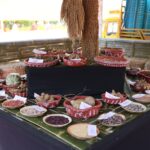
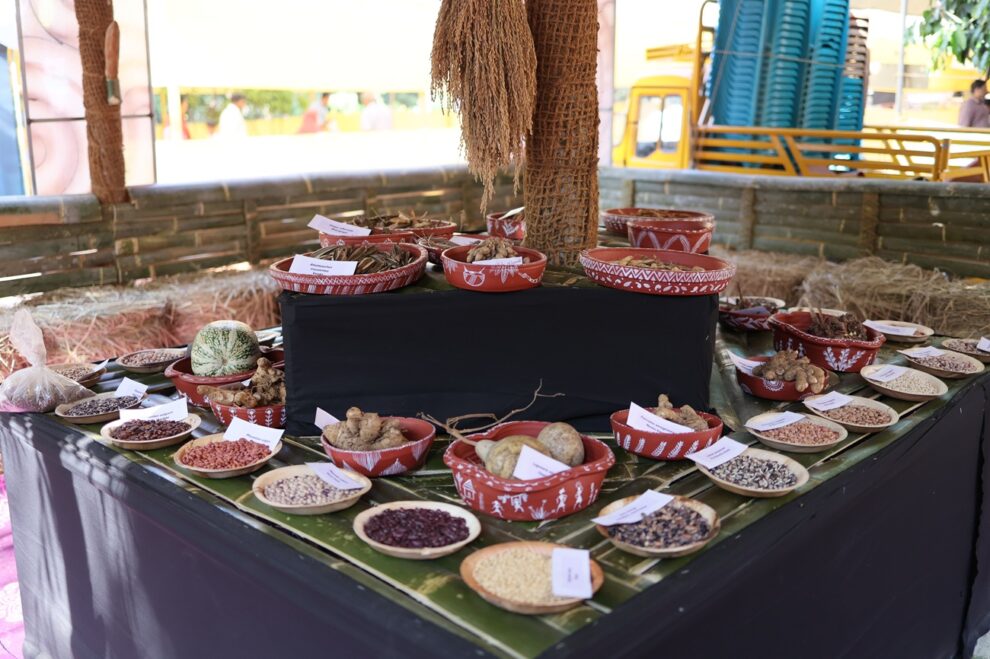
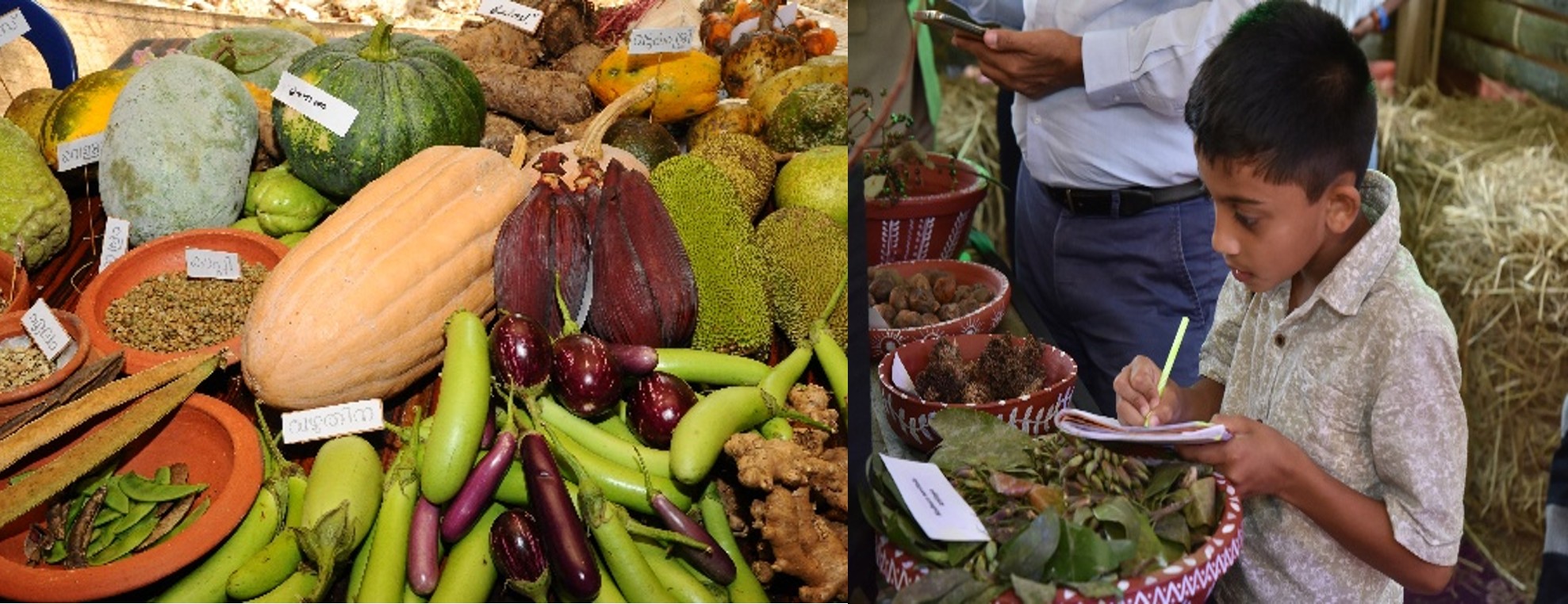
The foremost contribution of the WCSF has been in mainstreaming agrobiodiversity through conservation and promotion. Through annual agrobiodiversity exhibitions, the festival has showcased hundreds of traditional crop varieties, including rice landraces, tubers, bananas, spices, vegetables, pulses and medicinal plants, especially curated by the custodian farmers. Beyond exhibiting, the Seed Fest has served as a platform to mainstream this diversity, thereby increasing public awareness and appreciation of local plant genetic resources.
Community Empowerment and Farmers’ Rights
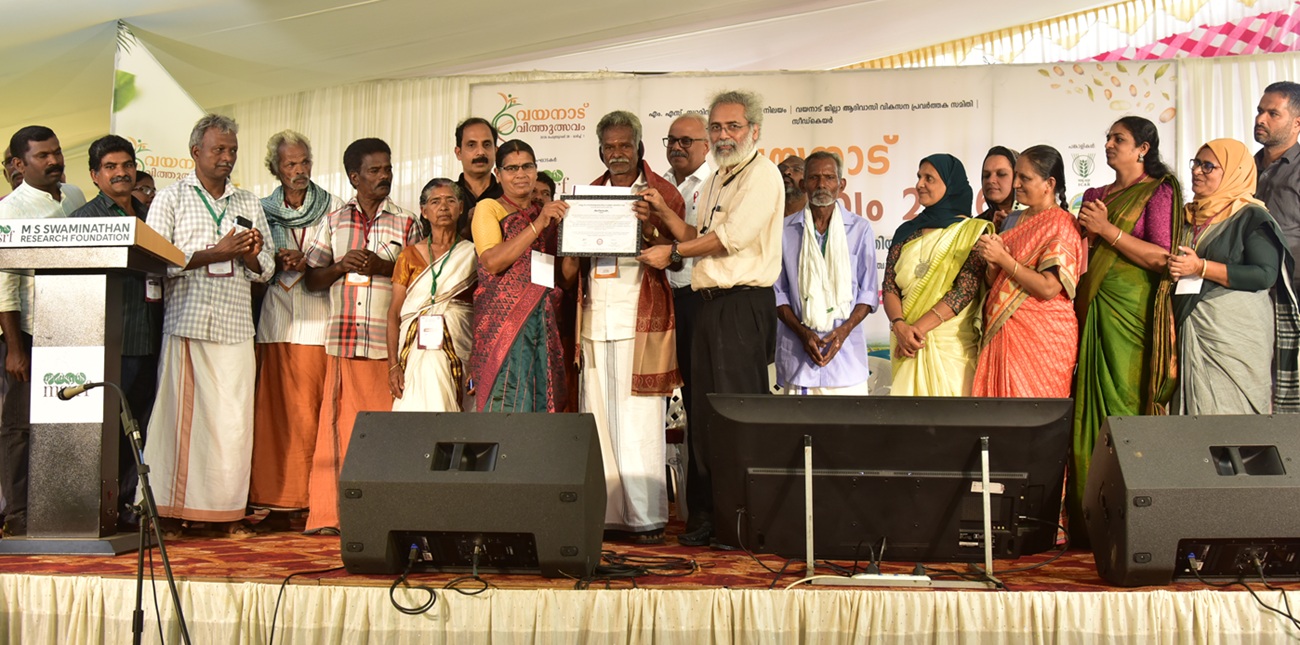
The festival has helped bring together tribal farmers, custodian farmers and community institutions engaged in the conservation of agrobiodiversity. Through the Community Genome Saviour Awards and recognition of Adivasi Conservator families helmed by the WDTDAC, the Seed Fest has honoured grassroots conservation efforts while enhancing the social status and motivation of tribal farmers. Over successive editions, the festival has recognised and economically rewarded 27 agrobiodiversity-conserving farm families, while also creating opportunities for women farmers, youth and community institutions to participate. This represents a significant achievement in formally recognising farmers’ contributions to the conservation of plant genetic resources, and demonstrating how community-led conservation can be incentivised.
Policy Advocacy and Institutional Linkages
Beyond conservation activities, the Seed Fest has emerged as an important platform for policy dialogue. By bringing together policymakers, researchers, extension agencies, community institutions and farmers, it has facilitated discussions on strengthening community seed systems and agri-food systems through sustainable use amidst emerging challenges. The festival has further strengthened institutional collaboration by fostering partnerships among various stakeholders from research & academic organisations, community institutions, government departments, to Biodiversity Management Committees, local self-governments and civil society organisations, thus encouraging shared responsibility for agrobiodiversity conservation. The continued support of multiple stakeholders across successive editions demonstrates the growing institutional recognition of community-led conservation approaches.
Knowledge Exchange and the Science-Farmer Interface
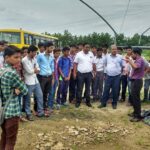
An important contribution of the WCSF has been its role in facilitating knowledge exchange between farming communities and scientific institutions. The festival has created opportunities for farmer-to-farmer learning, farmer-scientist interactions, technical seminars, and experience-sharing sessions that integrate traditional knowledge with contemporary science & technology. Exhibition and related activities have enabled traditional varieties to circulate among farming communities, thereby strengthening local seed systems and reducing the risk of genetic erosion. This integration of scientific and community knowledge has transformed the Seed Fest from a conventional exhibition into a collaborative extension platform for learning, innovation and conservation.
Nevertheless, this decade-long program also faced a set of challenges as it progressed. Some of these challenges included ensuring continued community engagement & partnership, resource mobilisation, limited collaboration and isolated similar events, strengthening the 4th C, i.e., Commerce, to support biodiversity-linked sustainable livelihoods, changing needs, and emerging challenges. It also fostered opportunities for further strengthening the model through improved impact assessment, decentralised planning, and greater stakeholder convergence.
NEED FOR A PARADIGM SHIFT: FROM SEED FESTIVAL TO DECENTRALIZED AGROBIODIVERSITY CONSERVATION
The experiences of the Wayanad Community Seed Fest over the past decade suggest that the next phase of community-led agrobiodiversity conservation should move beyond organising successful annual events towards establishing a decentralised and institutionalised agrobiodiversity governance system. While the Seed Fest has emerged as an effective platform for creating awareness, facilitating seed exchange and recognising & incentivising custodian farmers, the growing challenges of climate change, biodiversity erosion and weakening traditional food systems demand a more comprehensive and continuous extension approach.
WHAT EXTENSION SHOULD DO?
India’s extension system, comprising Krishi Vigyan Kendras, state departments, and decentralised platforms like ATMA, has traditionally focused on yield enhancement and technology dissemination. However, agrobiodiversity conservation demands a paradigm shift and seed festivals offer an ideal interface for this transition. Community seed festivals, as a model, can be uplifted & replicated as a system component with the support of existing extension stakeholders by ensuring synergistic partnership. To institutionalise seed festivals as an extension strategy, a hybrid model combining community leadership and institutional facilitation is essential. This can be achieved by inclusion of such festivals as part of the annual planning & implementation process of the various extension wings & departments from the regional to state level, integrating field-level units under the Agriculture Department, Biodiversity Management Committees (BMCs) of the State Biodiversity Board, Krishi Vigyan Kendras and Local Self Governments (LSGs). By following community-centred planning, institutional support, multi-stakeholder collaboration, and structured extension activities as part of the festival, Seed Fests can become more organised, knowledge-rich, and outcome-oriented extension platforms.
- Event-centred interventions to process-oriented, community-led conservation: Community seed festivals should serve as the focal point of a year-round programme that integrates research, documentation, capacity building, community mobilisation and policy engagement.
- Strengthen knowledge and evidence base
Systematic assessment of traditional crop diversity and farmer innovations, documentation and validation of Indigenous Technical Knowledge (ITKs) is essential for understanding the status of agrobiodiversity and designing evidence-based interventions. Such documentation not only supports conservation planning but also creates opportunities to integrate scientific research with local knowledge for developing climate-resilient farming systems. - Strengthening decentralised governance
Biodiversity Management Committees (BMCs), Local Self Governments (LSGs) and agricultural extension agencies should play a more proactive role in identifying custodian farmers, preparing location-specific conservation plans, and integrating these priorities into decentralised development planning. - Decentralised block-level seed festivals
Organising seed festivals at the block level, supported by district-level consultations, would enhance local ownership, improve participation of custodian farmers, facilitate farmer-to-farmer learning, enable location-specific discussions on conservation priorities, and facilitate market linkage. The district-level Seed Fest or a workshop would then function as a platform to synthesise experiences, recognise exemplary custodians, facilitate stakeholder dialogue and develop a collective action plan for the district. - Agrobiodiversity conservation as an integral component of local development planning
Conservation and sustainable utilisation of local genetic resources should become part of the decentralised planning initiatives of LSGs and climate adaptation strategies. Such integration would strengthen the relevance and sustainability of conservation initiatives while ensuring that agrobiodiversity contributes directly to resilient local food systems and rural livelihoods.
A FRAMEWORK FOR STAKEHOLDER CONVERGENCE
Research organisations, agricultural extension agencies, Biodiversity Management Committees, Local Self Governments, State Biodiversity Board, tribal institutions, farmer collectives, educational institutions and civil society organisations must work collaboratively rather than through isolated interventions. Institutionalising community seed festivals as a decentralised extension strategy requires coordinated action among multiple stakeholders, each contributing according to their comparative strengths. Rather than functioning independently, these actors should operate within an integrated framework that combines scientific research, community leadership, extension services and local governance to promote the conservation and sustainable use of agrobiodiversity.
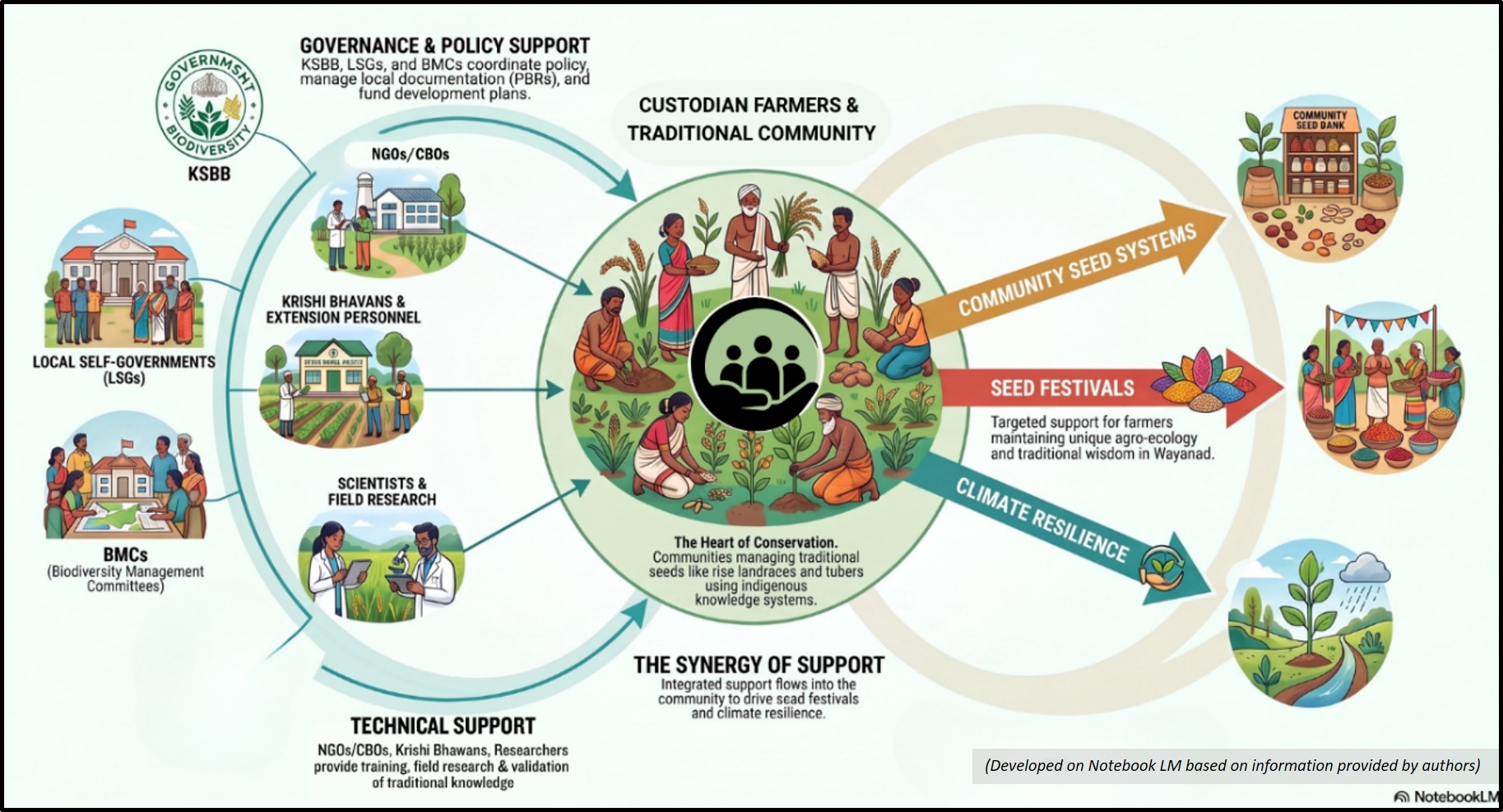 Empowering the Community: An Enabling Environment for Agrobiodiversity Conservation
CONCLUSIONS
Biodiversity conservation is not solely the responsibility of protected areas, repositories, laboratories and international treaties. In fact, much biodiversity is sustained in farmers’ fields & homesteads, sacred groves, community seed systems, and community-based organisations with associated traditional knowledge. Community-led conservation initiatives demonstrate that local ownership can generate ecological, social, and economic outcomes with global relevance.
As we look toward a new decade defined by climate change & biodiversity loss, ‘traditional’ is becoming the ‘innovative’. Community extension models remind us that the resilient technology we have is the one developed over millennia by farmers themselves, and with the right support of science & technology, it can serve as a solution to modern-day challenges.
Once Community Seed Fests incorporate sustainable use of agrobiodiversity and revenue generation while pursuing a clear social and environmental mission, they can develop into social enterprises. By integrating them with the existing extension machinery, we can empower farmers to be entrepreneurs of their own heritage. The goal is a system where the farmer isn’t ‘forced to conserve’, but ‘earns to conserve’ through a sustainable and biodiverse market with key attention to access & benefit sharing (ABS) principles. When farmers exchange seeds, they are not just sharing seeds; they are sharing history, knowledge, and conserving the future of agriculture.
 Dr Archana Bhatt is a Scientist at the Community Agrobiodiversity Centre of M S Swaminathan Research Foundation. Her research and development interests revolve around agrobiodiversity conservation and action, indigenous food systems, and climate change adaptation. She can be contacted at archanab@mssrf.res.in.
 Dr Thamban C, former Principal Scientist of Indian Council of Agricultural Research-Central Plantation Crops Research Institute (CPCRI) has more than 30 years of experience in research and extension in the plantation crops sector. He is currently working as Senior Fellow at M S Swaminathan Research Foundation, Community Agro-biodiversity Centre, Wayanad, supporting the implementation of projects on sustainable agriculture and agrobiodiversity conservation. He can be contacted at c.thamban@gmail.com.


Add Comment