
In this blog, Subash Surendran-Padmaja reflects critically on his research experience and education to engage in a dialogue on decolonising the agricultural research and extension system in India.
CONTEXT
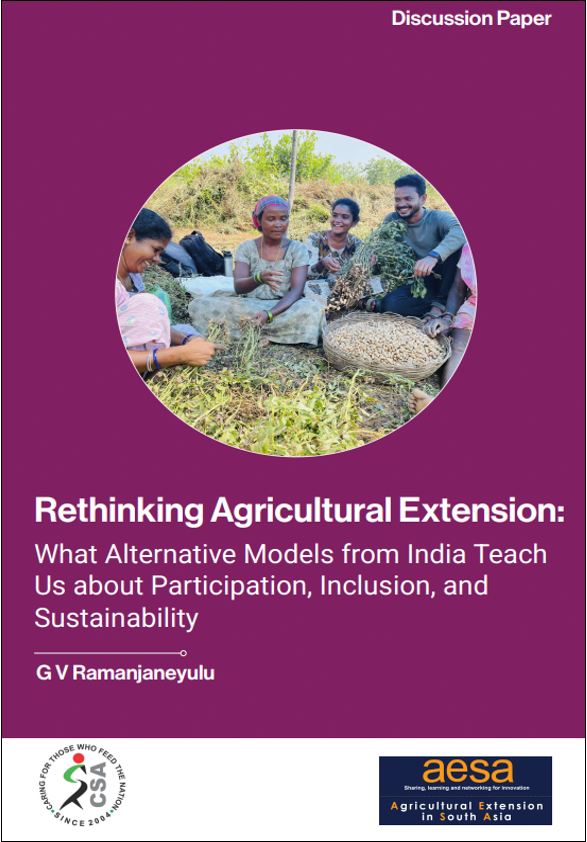 A recent AESA Discussion Paper authored by Dr G V Ramanjaneyelu critically asks why Indian public extension still relies on a “top-down approach” and discusses alternative approaches to extension. Building on this thought-provoking discussion, I find myself wanting to push the conversation a step further, not just toward alternative methods, but toward a deeper interrogation of the system itself. What if the persistence of these approaches is structural? I want to begin with a provocation: “The agricultural research and extension system in India is inherently colonial.”
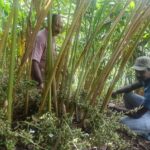
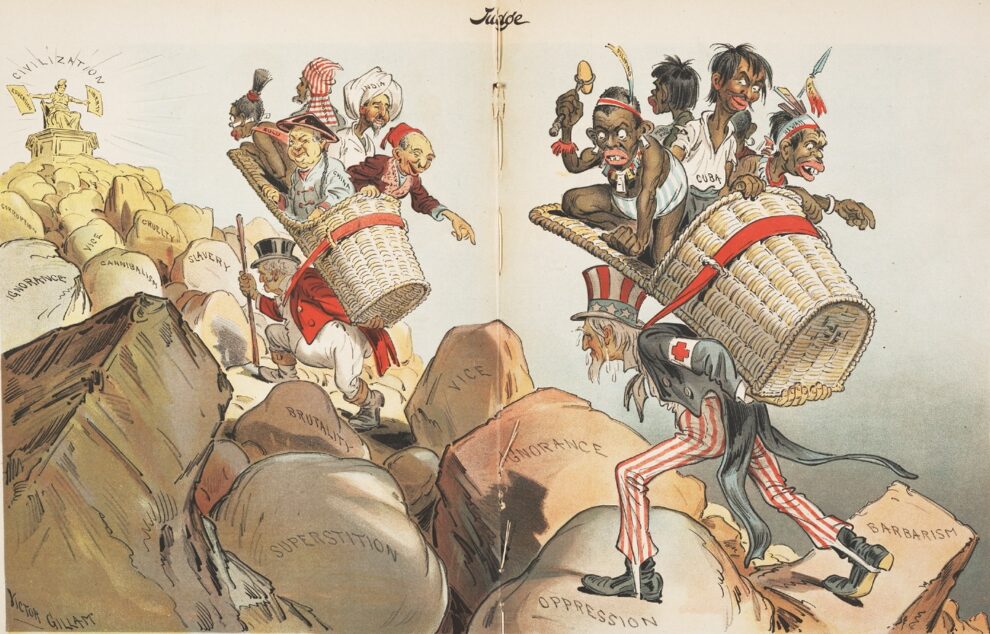
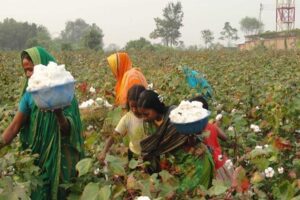
To understand this, I find myself returning to the origins of agricultural research and educational institutions in India. I often feel that what is missing is an honest reckoning with its colonial foundations, not just as history, but as a way of thinking that continues to shape how knowledge is produced and shared. When the British established institutions like the Imperial Agricultural Research Institute at Pusa (now the Indian Agricultural Research Institute), they were not simply building laboratories; they were embedding a particular way of thinking (Colonial thinking). When European colonists were colonising the Global South, they built a narrative that the countries they occupied were poor and barbaric, in need of saving, of bringing civilisation to the “savages” (Picture 1).
This thinking shaped the agricultural research institutions. Agriculture was to be studied, classified, and improved through a lens that served imperial interests. Farmers were not seen as knowledge holders, but as subjects to be instructed. The land was not understood as a complex, living system shaped by generations of local practice, but as a resource to be optimised for extraction. Research was directed toward improving the productivity of crops that fed imperial trade, such as indigo, cotton, and jute. While the rich diversity of local farming systems and indigenous knowledge traditions was largely ignored or dismissed. Knowledge flowed in one direction: from scientists and administrators to farmers, reinforcing a hierarchical, top-down model that left little room for farmers as knowledge holders.
What strikes me is how much of this thinking still lingers. After independence, we renamed institutions, expanded them, but the underlying structures remained remarkably intact. The flow of knowledge is still largely top-down. Scientific authority is still centralised. And the solutions we promote often continue to privilege uniformity, scale, and external inputs over diversity and local adaptation. What concerns me is how we, as researchers, are shaped by this thinking, and how our institutions continue to perpetuate such colonial practices. Elites continue to hold on to power, reinforcing these ways of thinking and sustaining the very hierarchies that colonialism produced.
I see this not just in policies or institutions, but in ourselves, as researchers, shaped by these systems. We are trained to value certain kinds of knowledge over others, to see farmers as beneficiaries rather than collaborators, and to equate modernity with technological intervention. I reflect on my own research experience and education to critically engage in a dialogue on the coloniality of agricultural research and extension.
COLONIAL THINKING IN RESEARCH
If we look closer at our research and reflect on the process, we can see the colonial influence. For instance, when I reflect on these questions.
- What kind of relationship does the researcher have with those being researched?
- Who is involved in planning the research?
- What purposes does the research ultimately serve?
- Who pays for this research?
- How do our assumptions about power shape what we choose to research—and just as importantly, what we choose to ignore?
- Who conducts the research? And finally, perhaps the most important question of all, whose knowledge is valued?
I feel they are not just methodological or ethical details/statements. They go to the heart of how knowledge is produced, whose voices are amplified, and how colonial ways of thinking continue to shape research practice, often without us even realising it.
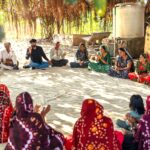
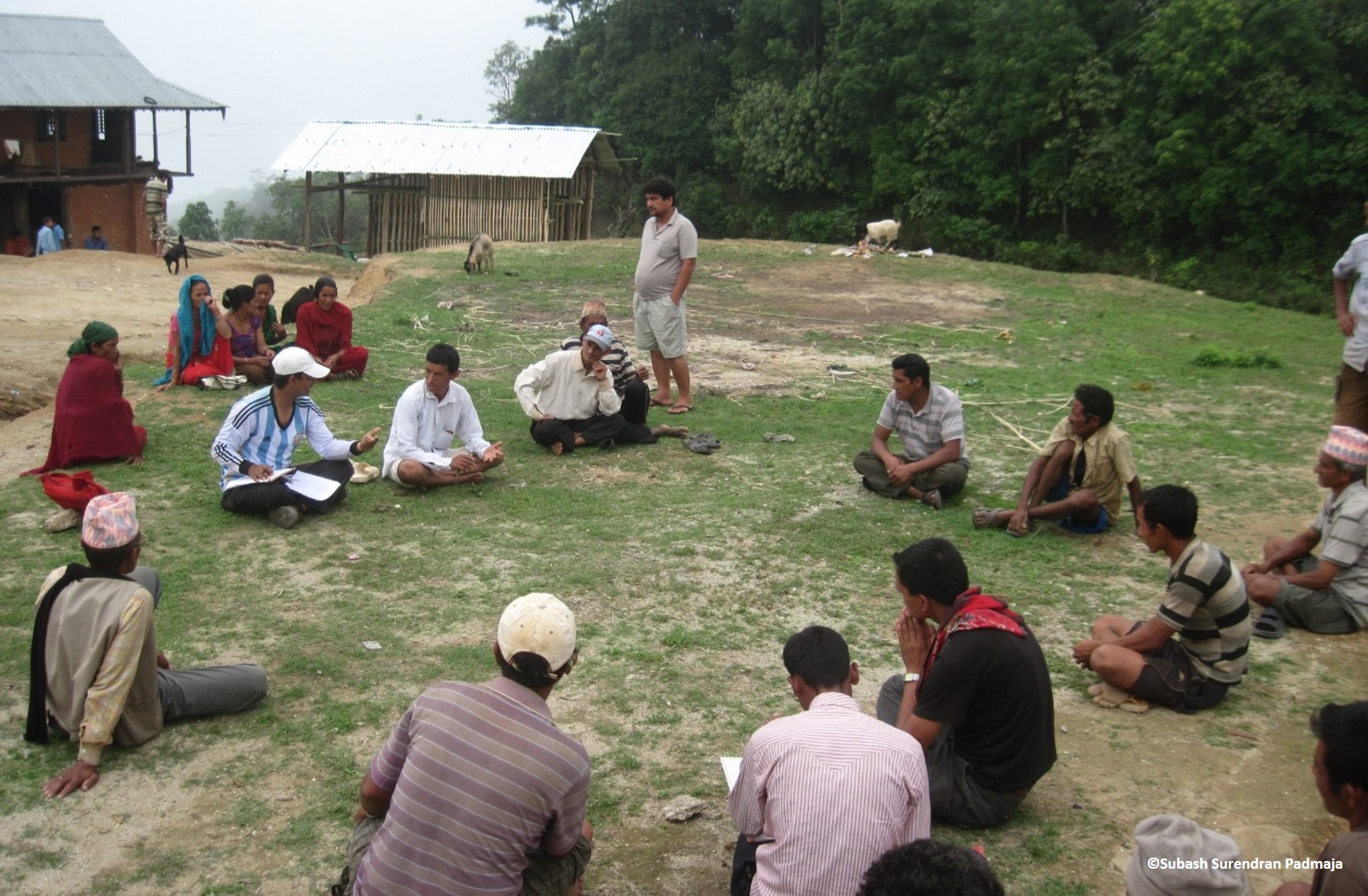
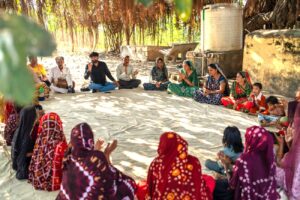
Let me share three agricultural research experiences that pushed me to reflect on equity and inclusion. My first experience comes from my work assessing the impact of a community-based seed producer group in the mid-hills of Nepal (Picture 2). If you look closely, you will notice that women and members of marginalised communities are seated at the periphery of the discussion.
My second reflection is based on my study on elite capture in community-based seed systems. Even in community-based organisations, power does not disappear. Elite capture can and does happen. In some cases, the very organisations and institutions- NGOs and development agencies that are meant to support these groups may unintentionally reinforce local elites.
The third reflection comes from interventions aimed at women’s empowerment in agriculture. Intra-household decision-making is not automatic; it is negotiated. It is bargained and is deeply shaped by social norms. While working on these projects, I found myself asking difficult questions. Did communities ask for these interventions? Is this the only way to empowerment (women)? These questions continue to stay with me, shaping how I think about equity, inclusion, and the way we design and implement research.
COLONIAL THINKING IN EXTENSION EDUCATION
As an agricultural graduate, my first real engagement with farmers came through the Rural Agricultural Work Experience (RAWE) program, a three-month placement in villages designed to “ground” us in rural realities. On paper, it sounds transformative. We were trained to conduct Participatory Rural Appraisal (PRA) exercises, document Indigenous Technical Knowledge (ITKs), and share scientific recommendations with farmers. I remember entering villages with notebooks, survey formats, and a sense that I was there to learn. But looking back, I often wonder, who was this learning really for?
There was something quietly extractive about the whole process. We would sit with farmers, ask them to map their resources, list their practices, and share generations of accumulated knowledge. We called it participation, but the structure was already decided. The questions were ours. The frameworks were ours. And once the information was collected, it moved upward, into reports, submissions, and academic requirements, rarely returning to the people who shared it in the first place. ITKs were documented but seldom meaningfully integrated into research or extension. It felt less like co-creation and more like data collection dressed up as engagement.
What concerns me even more is how PRA, which was originally envisioned as a way to centre local voices, often becomes reduced to a box-ticking exercise. The language of “participation” is present, but the practice can feel tokenistic. Farmers are invited into the process, but not into decision-making. Their knowledge is acknowledged, but not given equal weight. As students, we are taught these tools as progressive methodologies, yet rarely encouraged to question the power dynamics they carry. In many ways, RAWE becomes an early introduction into the same top-down system; one where participation is performed, but not fully realised, and where the colonial patterns of extraction and authority quietly continue under new names.
DECOLONIZING KNOWLEDGE: BUT HOW?
What does it actually mean to decolonise agricultural research and education in practice? This is something I have been grappling with through workshops, group discussions, and conversations with peers (see Acknowledgements for the names) who have significantly shaped my thinking about what a more grounded and equitable agricultural education could look like. I would briefly mention two books.
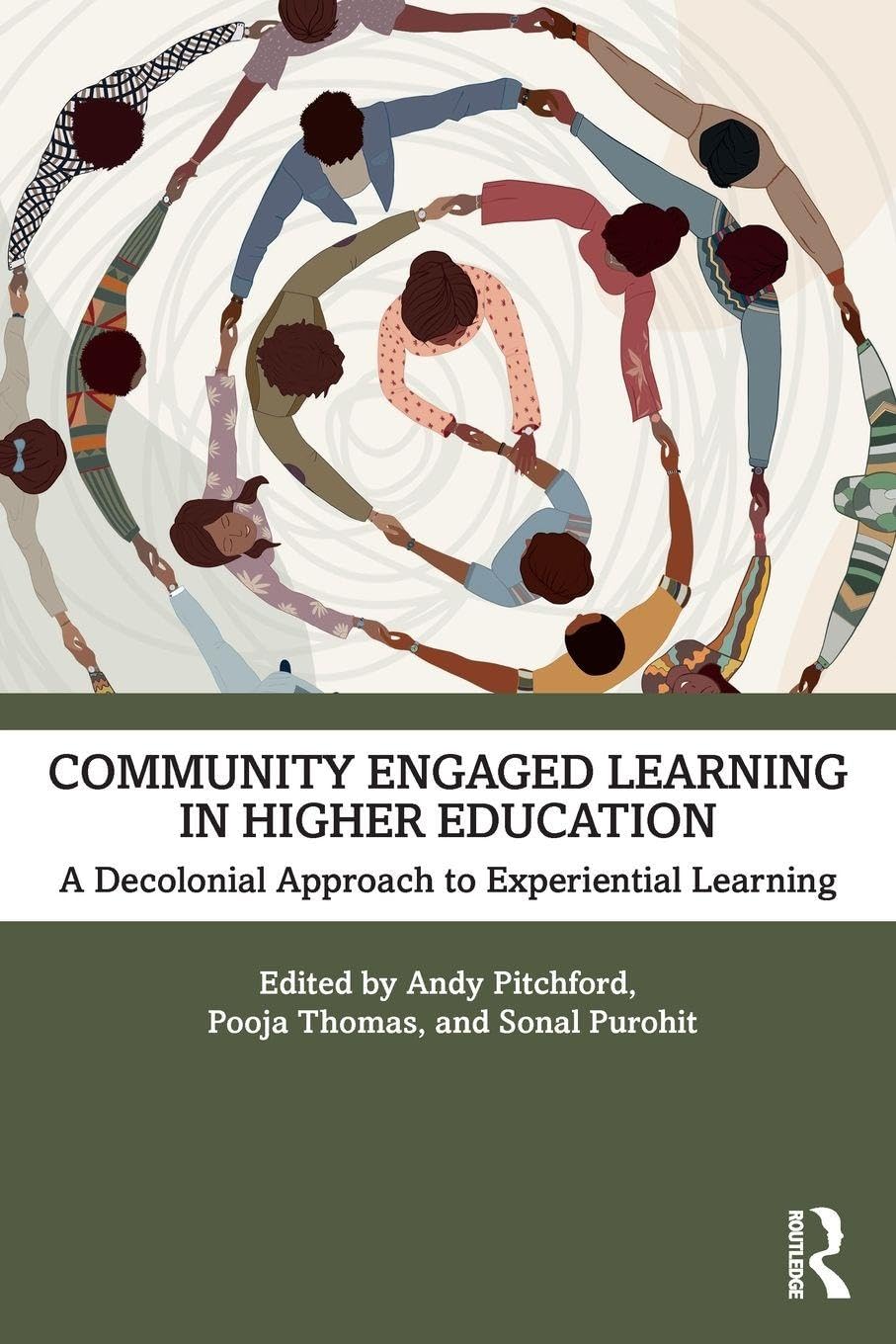 The first book is on “Community Engaged Learning in Higher Education: A Decolonial Approach to Experiential Learning.” What makes this book particularly relevant is that it does not stop at critiquing colonial knowledge systems; it actively asks how teaching and learning can be restructured differently. Bringing together researchers from the UK and India, the book offers practical ways to embed decolonial approaches in higher education through community-engaged and experiential learning.
This feels especially relevant for programmes such as RAWE, which is often the first major field-based exposure for agricultural students. What this book offers is a useful lens to rethink RAWE beyond short-term immersion and information gathering. It encourages us to imagine community engagement not as a site for data extraction, but as a process of mutual learning. Communities are positioned as co-producers of knowledge, rather than passive beneficiaries or field sites. This shift is subtle but powerful. It requires rethinking how students are trained, how fieldwork is designed, and what counts as learning outcomes.
For higher agricultural and extension education more broadly, the lessons are equally important. The book foregrounds non-hierarchical learning, reflexivity, reciprocity, and long-term relationship building, principles that could fundamentally reshape how we train future extension professionals. Instead of reproducing the model in which extension workers are positioned as transmitters of expert knowledge, this approach opens possibilities for training students to become facilitators, listeners, and collaborators.
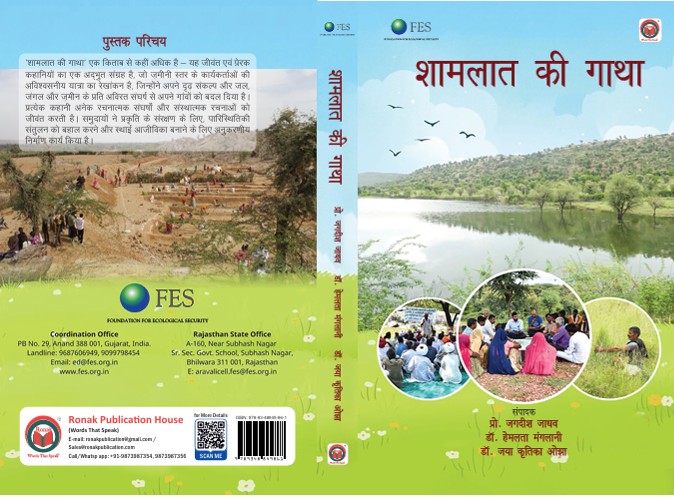
What does a co-production look like? I would like to introduce you to a recently published work, Shamlaat ka Gatha, a collection of stories and experiences about the community’s work in commons management and conservation, produced by the community for the community. Shamlaat refers to common property resources traditionally owned and managed collectively by village communities, including grazing lands, forests, water bodies, and other shared spaces used for livelihoods and social purposes.
GROUNDING
I would like to acknowledge the efforts of several researchers, often the quiet “participatory champions,” who are working to make research more inclusive by co-developing agendas with farmers and engaging in genuinely participatory processes. At the same time, there are visible shifts within institutions, at least in intent. Initiatives such as the Indian Council of Agricultural Research’s Farmers FIRST Program, the growing emphasis on farmer-centric approaches, and the work carried out through Krishi Vigyan Kendras (KVKs) signal an evolving landscape. Within this space, extension agents, students, and researchers are constantly navigating a difficult balance, trying to align institutional expectations with meaningful engagement on the ground. Their efforts often remain under-acknowledged and underappreciated.
At the same time, I feel it is important to confront the deeper question of power, particularly the colonial ways of thinking that continue to shape our institutions. Perhaps we need to move the conversation away from the language of “coloniality of the past” and instead focus more directly on the colonial gaze embedded in our everyday practices (“coloniality of the present”): how we see farmers, how we define expertise, and how research and extension agendas are set. Opening up this space for self-reflection feels necessary. Because ultimately, as researchers and extensionists, we must remain conscious of the power we hold, and keep asking ourselves a difficult but essential question: “For whom are we really doing this work?”
Acknowledgments
First, I would like to acknowledge the farmers who have sacrificed their valuable time for our research, tests, and trials, and often showed remarkable patience with my own ignorance and learning process. I would like to acknowledge Ms Sanjana Rakashekar, Dr Niklas Wagner, and Dr Hannah Ameye, with whom we restarted the Decolonising Knowledge Group at the Centre for Development Research (ZEF) at the University of Bonn, Germany. I would especially thank my peers, Dr Aditya K S, Dr Arathy Ashok, Ms Micely Diaz Espaillat, Ms Lilian Beck, and Dr Carla Baldivieso, participants in the workshop at the Tropentag conference, and, in particular, Dr Sieg Snapp, for the many conversations, exchanges, and reflections that have shaped my thinking.
 Subash Surendran-Padmaja is a Senior Scientist with the ICAR-National Institute of Agricultural Economics and Policy Research (NIAP) New Delhi. His interests include agricultural policy, technology impact assessment, and institutional economics. He can be reached at subashspar@gmail.com
An important and timely reflection. Decolonising agricultural extension is not merely an academic exercise; it calls for a fundamental shift from transferring technology to co-creating knowledge with farmers and recognising the value of local experience alongside scientific evidence.
Unfortunately, our increasingly scorecard-driven institutional culture leaves little room for reading, reflection, writing, and intellectual engagement. These efforts rarely feature in performance metrics or promotion criteria, even though they shape the quality of our thinking and, ultimately, the quality of our interventions.
If agricultural extension is to remain relevant in addressing complex challenges such as climate change, resource degradation, and rural livelihoods, we must encourage critical inquiry and reward broader perspectives, not just measurable outputs. Articles like this contribute meaningfully to that much-needed conversation.
Congratulations to the author and AESA for publishing this intellectually stimulating piece!
Yes, Dr. Mahesh, you are absolutely right. The prevailing scorecard-driven institutional culture is increasingly stifling creativity, innovation, and critical thinking among the extension professionals. Much of their efforts are directed towards meeting performance metrics and promotion requirements – an understandable necessity in any professional career. However, this often comes at the expense of meaningful engagement with the deeper challenges facing agricultural extension. Those who choose to question the status quo or address the issues raised in this blog frequently find themselves sidelined from institutional decision-making and the comfort of boardroom consensus.
The blog overlooks several pragmatic realities of modern agricultural science. While the author critiques the system for favoring uniformity and scale over localized diversity, the reality is that basic research and extension approaches are universal in nature. Core scientific principles across various disciplines remain objective and global; adapting these advancements to specific regions requires a structured framework that hyper-localized practices alone cannot sustain. Furthermore, while the article laments that participatory exercises often become tokenistic and fail to achieve spontaneous community action, expecting absolute self-mobilization from fragmented, resource-poor farming communities is unrealistic. In the real world of agricultural development, complete self-mobilization rarely happens organically because farmers are heavily constrained by economic risks and information asymmetry. Structural institutional catalysts are absolutely necessary to introduce advanced technical innovations and market-led frameworks that communities cannot independently generate. Also, there is no problem in adopting and repurposing good things from the colonial era, as these foundational frameworks provided the essential administrative and scientific infrastructure that ultimately secured India’s national food security. Dismissing systematic, data-driven planning and institutional authority as a lingering “colonial gaze” risks dismantling the very scalable systems required to support millions of livelihoods across the country.