

 In this blog, Mahesh B. Tengli introduces research students to the research ecosystem from a student’s perspective, its uncomfortable realities, and ways to make the best of it.
CONTEXT
My last AESA Blog, published in August 2020, was on designing research methodology using the Research Onion framework. Six years later, here is another. I write not as someone who knows everything about research, but as someone who has sat on both sides of the research table for over a decade: five years as a student researcher and six as a research guide, teacher and researcher.
I have seen students struggle with research problems, methodology, data, supervisors, procedures, infrastructure, deadlines, publications and sometimes themselves. I have seen brilliant students lose direction and average students grow into confident researchers. The difference often lies in how they have learnt to navigate the research ecosystem around them. Let us begin with the most basic question: Why are you pursuing a Master’s or Doctoral degree?
PURSUING A RESEARCH DEGREE
Honestly, most of us pursue postgraduate education for a secure job; few enrol intending to contribute to science. There is nothing wrong with a job mindset; a degree should prepare you for a profession. But there is more to it than the job.
A Master’s or doctoral degree is also a chance to choose a way of thinking and, for some, a way of life. When you enrol in a PG programme, you unknowingly step onto a path called science. Doing science is not simply a job. It is a journey to explore the unexplored, question what we think we know, confront difficult problems and create knowledge that helps us understand or improve the world (Box 1).
|
Box 1: Master’s vs Doctoral Programme In a Doctoral programme, you dive much deeper into a research problem, question or phenomenon. You are expected to understand what is known, identify what remains unknown or poorly understood, and add new knowledge to your discipline, not merely replicate a well-documented fact. The PhD makes you a problem solver and a full-fledged researcher. It also gives you your first brainchild, the “Thesis”, which becomes your identity in your discipline. So do not treat it as just another degree. Simply put: in your Master’s, you prepare for research; in your PhD, you contribute to knowledge. |
THE RESEARCH ECOSYSTEM FROM A STUDENT’S PERSPECTIVE
Unfortunately, the way students are introduced to research rarely captures its purpose, excitement and potential, and our understanding of the philosophy of research remains narrow. When I ask students what research or science is, the universal answer is a smile mixed with silence. Find that out for yourself. Know the what, why and how of research before you choose to do it.
Next, understand the research ecosystem, which nobody explains to new students. From a student’s perspective, the research ecosystem (Figure 1) is the set of conditions in which you work, learn and grow. It includes institutional priorities, regulations and timelines, labs, software, field facilities, supervisors and advisory committees, coursework, fellowships, hostel amenities, peers, competition, mentorship, reputation, faculty and fellow researchers, collaborations, and the administrative machinery that keeps it all moving. At the core of it sits the research student.
Now, I have two pieces of news for you.
The bad news: every research ecosystem is different, with its own mix of opportunities, constraints, resources, relationships and challenges.
The good news: no research ecosystem is perfect. One institution may have outstanding faculty but poor laboratories; another, world-class infrastructure but weak mentorship or administrative hurdles; a third, excellent funding but a problematic academic environment. You may have an excellent supervisor but limited access to equipment. So don’t spend your research life comparing your ecosystem with somebody else’s. Compare if you must, but don’t let it hamper your growth.
UNCOMFORTABLE REALITIES
Here are some uncomfortable realities nobody tells you about when you enter research.
Research infrastructure
Institutional brochures show laboratories, experimental farms, libraries and sophisticated facilities, all labelled “state of the art”.
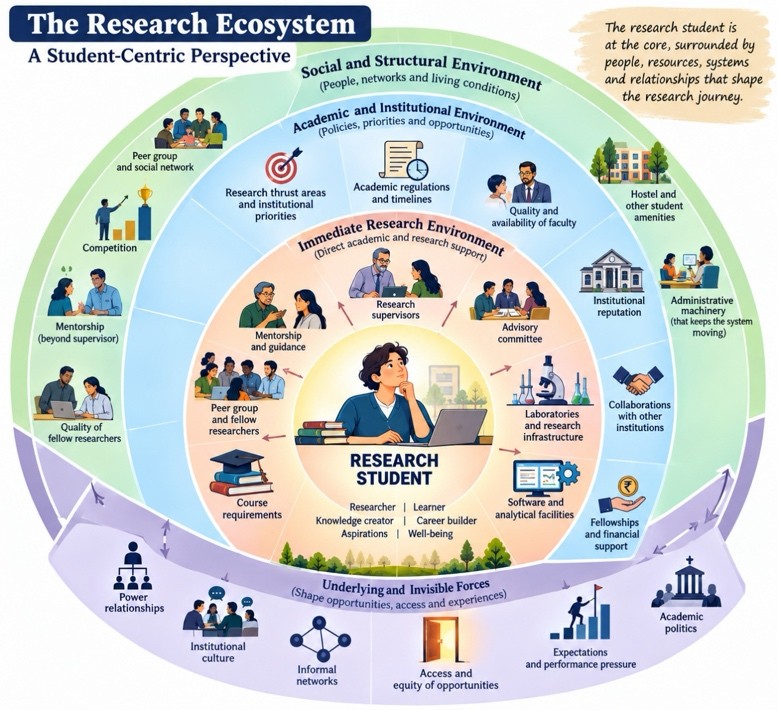 Figure 1: The research ecosystem: A student-centric perspective
You discover what actually works only after you join. There may be a sophisticated machine but no consumables to run it. A facility may need permission from a custodian, then another permission, then another form. This is frustrating. But frustration is not a research methodology. Talk to researchers who have already solved a similar problem.
If you have watched Rocket Boys, you will know what I mean. Scientific progress has often happened under constraints. Do what you can with what you have. Moving from knowing the “state of the art” to learning the “art of making the best of the current state of infrastructure” is growth.
Fellowship: A ship not everyone gets to board
Fellowships make the journey easier, but not everyone gets one. Even when you do, the money may arrive months late. Question such delays respectfully; a responsible system will respond. Meanwhile, don’t let an administrative delay become intellectual decay. Keep reading, writing, analysing and learning. The system may delay your fellowship, but don’t let it delay your growth.
Your research supervisor is also a human being.
Your supervisor is not an AI chatbot available 24/7. They may be knowledgeable, experienced and supportive, but also busy, overburdened or dealing with their own challenges. That is no excuse for a supervisor not to mentor you, and no reason for you to do nothing.
You may not get all the guidance you expected, or a quick reply. Your research journey is yours. Your supervisor is an instructor, not a driver: they should guide your research, but you should not outsource it. It is your degree, not your supervisor’s.
As a curious researcher, this is what you are expected to do:
Ask for guidance: If you are hungry, you have to approach the dining table.
Prepare before you meet: You are not going on a date; you are meeting your supervisor for an intellectual purpose. Prepare specific questions, and never walk in with “Sir/Madam, I don’t know what to do” or “Sir/Madam, give me research work.”
I would appreciate a student who says, “I have considered three research problems: A, B and C. B seems more appropriate because of these gaps, but I am unsure about two issues. Could you please guide me?” Your questions, arguments and actions should show that you are becoming a researcher. No one can make you a researcher unless you decide to become one.
Do not mistake your supervisor or advisor for a tutor: Learn concepts, methodology and methods during coursework. Don’t expect your advisor to hand-hold or spoon-feed you during research.
Meetings, conferences and academic gatherings
Your academic life will be full of meetings, conferences, workshops, seminars and trainings. They can be distractions or opportunities, depending on how they are organised and, more importantly, how you use them. At times you may feel you have landed in an event management institute; no institute should become one.
If you attend a conference only to collect a certificate and take photographs, you have missed the point. If you meet someone working on a similar problem, discuss your methodology, receive criticism or discover a new method, the conference was worth far more than the certificate. Not every conference is an intellectual gathering, and not every meeting is meant for you. If a gathering serves your research, participate.
Institutional research priorities: the invisible boundary
Freedom of research is the foundation of any institute, but every institute has a mandate, every department its priorities and every funding agency its themes. Your research question may not fit within these invisible boundaries, which frustrates many doctoral researchers. It should neither discourage you nor push you to fight the system in the name of “freedom of research”.
Before you fight the system, understand the system. Again, ask questions:
- What is my institution’s or university’s research mandate?
- What are my department’s priorities?
- What does my funding agency expect?
- Does my research question fit within these priorities?
- If it does not fit, can I justifiably design a study without compromising my research question?
Exercise your research freedom within reasonable limits, but understand the institutional context you work in.
Mentorship: easy to talk about, difficult to find
Ask any successful professional how they succeeded, and most will mention “mentorship”. But it is hard to be a mentor and hard to find one. You need formal mentors, like your advisor or a professor, and informal ones within your networks. Mentorship is not always comfortable. A mentor may challenge your assumptions, push you out of your comfort zone, sharpen your judgement, open their networks to you and tell you what you don’t want to hear. If you find one, you are fortunate. But you don’t need only one: you may learn methodology from one person, statistics from another, fieldwork from a third and scientific writing from someone else.
Regulations and timelines
Academic regulations are meant to discipline the research process. But sometimes regulations stay fixed while the enabling conditions don’t: a deadline stays fixed even when equipment is unavailable, or a requirement stays unchanged despite administrative delays. Don’t simply complain. Document the problem, communicate formally, seek alternatives and escalate when necessary.
Changing the ecosystem is largely beyond your control and should not be your objective as a research student. Understand it and learn to work with it. But you control a micro-ecosystem: your habits, dreams, goals, personal resources, and network. And you cannot work in isolation; you must interact with the larger ecosystem.
WAYS FORWARD: INTERACTING WITH YOUR RESEARCH ECOSYSTEM
There is no universal formula, but here are some tips from my experience (Figure 2).
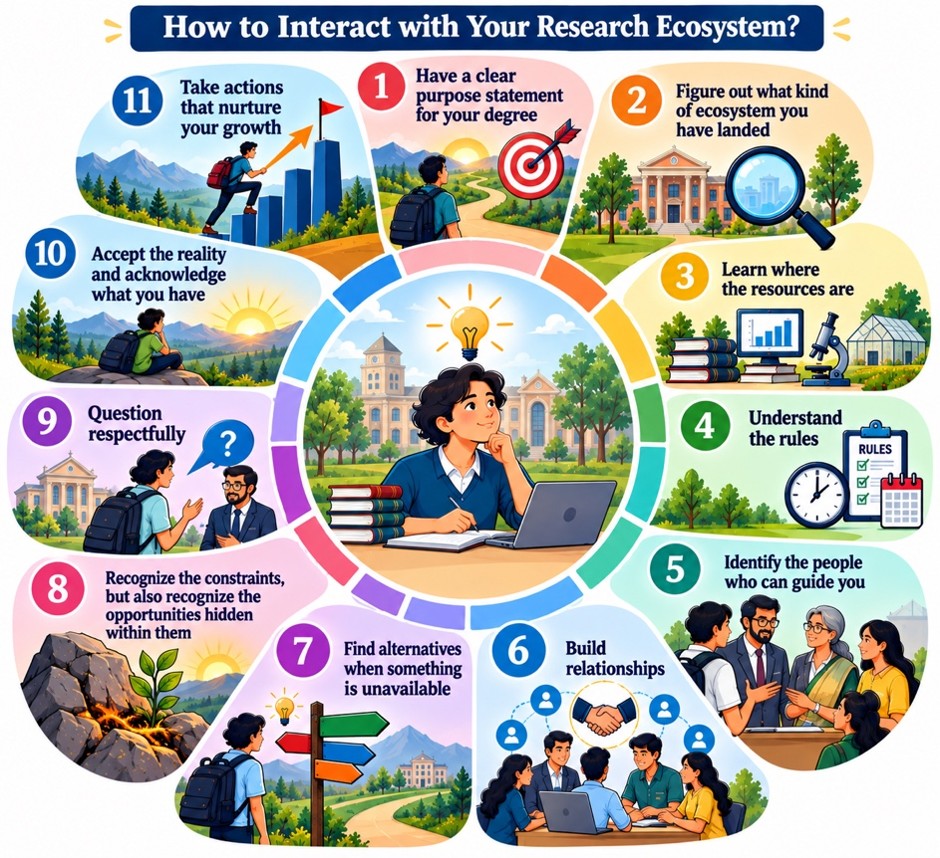 Figure 2: How to interact with a research ecosystem
- Have a clear purpose for your degree: Know why you are here and what you want to learn, achieve and become.
- Know the ecosystem you have landed in: Understand your institution’s strengths, limitations, culture and, above all, opportunities.
- Learn where the resources are: Know what facilities, fellowships, software, field labs and support systems exist.
- Understand the rules: Know the academic regulations, timelines and the dos and don’ts of academia to avoid complications.
- Identify the people who can guide you: Your support system includes not just your supervisor but also senior researchers, peers, administrative staff and mentors. Know them and seek their help.
- Build relationships: Modern science cannot happen in isolation. Be proactive, respectful and collaborative. Build operational networks: not just “I know him or her”, but “I can work with him or her”.
- Find alternatives when something is unavailable: Be creative and resourceful. Explore collaborations, online resources and nearby institutions; your networks should help here. You grow when you decide to overcome limitations, rejections and constraints.
- Recognise the opportunities hidden within constraints: Under a hard stone lies moist soil; just lift the stone. Every constraint hides an opportunity, but most of us give up before we look. Constraints teach creativity, resilience, patience and problem-solving. Remember, “Rough roads make tough drivers”.
- Question respectfully: Asking questions sets a scientist apart, and that includes questioning those who run the research ecosystem. When a basic amenity or lab facility is unavailable, ask why, politely. Questioning is not indiscipline; it is your right, and a sensible system will take it as feedback.
- Accept the reality and acknowledge what you have: Every ecosystem has strengths and limitations; accepting them lets you focus on what you can actually do.
- Take actions that nurture your growth: Actions are the growth engine. Be proactive and reflective. Don’t just discuss; demonstrate. Don’t just try; decide.
Finally, the outcome of your research and degree depends not only on what your institution provides, but also on how well you understand, navigate and use your research ecosystem.
 Dr Mahesh Bhimashankar Tengli, Assistant Professor (Agricultural Extension), School of Social Sciences, College of Post Graduate Studies in Agricultural Sciences, CAU (Imphal), Umiam, Meghalaya. (mahidxndri16@gmail.com)

Add Comment