



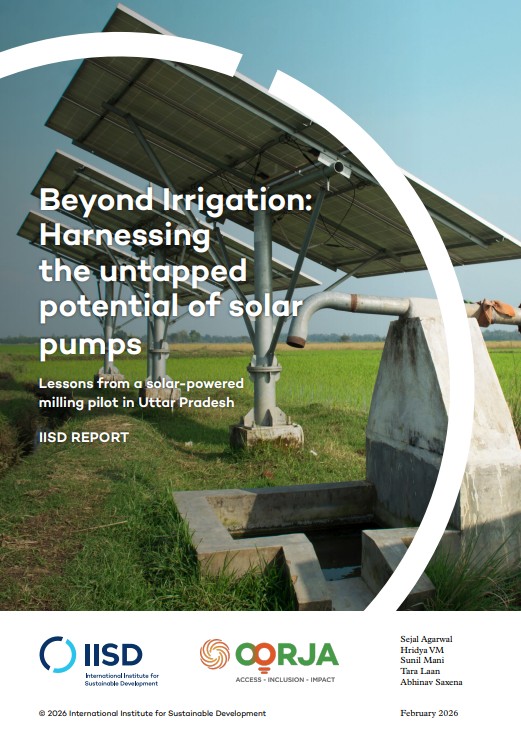
Solar-powered irrigation pumps (SIPs) are widely used globally to increase agricultural yields, boost farmers’ incomes, and reduce reliance on diesel- and electricity-powered pumps. In India, over 850,000 solar pumps have been deployed with the major government subsidy programs under Pradhan Mantri Kisan Urja Suraksha evam Utthaan Mahabhiyaan (PMKUSUM) to encourage uptake. The direct benefit of these subsidies tends to be clustered among landholders and farmers. In many parts of India, solar pumps are used for irrigation only during certain periods of the year, depending on crop cycles, and remain idle otherwise. This seasonal underutilization leads to significant periods where the solar energy generated goes untapped, including in regions grappling with energy poverty. Consequently, the surplus power from these idle pumps remains an underexploited source of clean and affordable energy that could benefit poor smallholders, women, youth, and other disadvantaged groups.
This report presents an in-depth analysis of the socio-economic and behavioural impacts of grain mills powered by solar irrigation systems (as a form of “secondary use” of the solar power) in Uttar Pradesh’s rural villages. The pilot was implemented by Oorja Development Solutions, a company based in India. The initiative aimed to reduce household milling costs, improve food quality, and bring value-added services closer to communities. The quantitative study consisted of allocating villages to treatment groups (with mills) and control groups (without mills). The effects of the mills were assessed with surveys of over 500 households over a 10-month period. This was complemented by qualitative interviews with women users in villages where mills had been operational for over a year.

Add Comment