



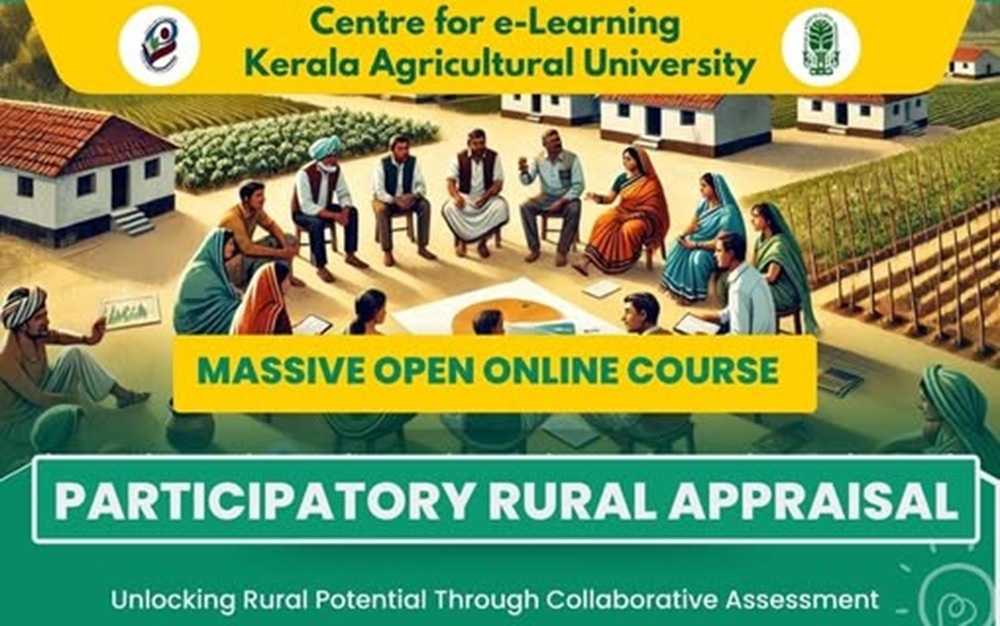
Platform: Centre for e-Learning, Kerala Agricultural University
Duration: 20 days
Certification: Yes, you have to pay for certification
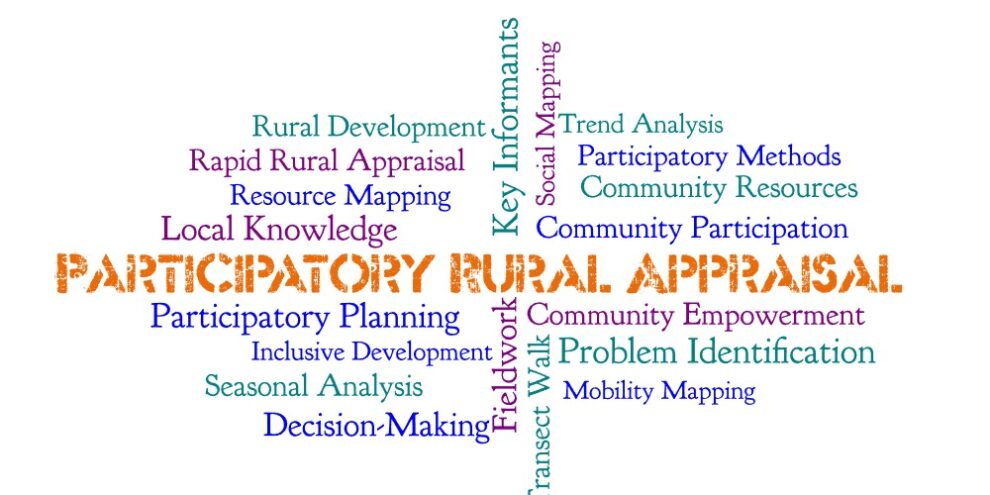
Participatory Rural Appraisal (PRA) is an important approach in rural development that emphasizes active community participation in identifying problems, analysing local resources and planning development activities. It enables researchers, extension workers and development professionals to understand rural realities from the perspective of local people, ensuring more inclusive and sustainable decision-making. In the context of agriculture and rural development, PRA plays a significant role in strengthening people-centric planning and promoting grassroots involvement. Keeping its growing relevance in mind, I enrolled in the MOOCs course on Participatory Rural Appraisal (PRA) held during 6 to 25 March, 2026 offered by Kerala Agricultural University through its Centre for e-Learning, which proved to be an insightful and enriching learning experience.
Course Content and Learning Outcomes
The 20-day MOOCs course on Participatory Rural Appraisal (PRA) was designed in a well-structured and learner-friendly manner to provide both conceptual clarity and practical understanding of participatory approaches in rural development. The course followed an asynchronous mode of online learning, allowing participants to access the learning materials and video lectures at their own convenience and pace. This flexible learning approach was especially helpful for students and professionals managing academic and professional responsibilities simultaneously. The course was primarily suitable for beginners, as it introduced the basic concepts of PRA while also covering practical tools and field-level applications in a simplified manner.
Through nine comprehensive video lectures delivered over the duration of the programme, the course explored the principles, methods, tools and applications of PRA in agricultural and rural development contexts. Each module was systematically organised to help learners gradually develop an understanding of participatory approaches and their significance in community-based planning and decision-making. In addition to the video lectures, PDF reading materials for each topic were also provided, which helped reinforce the concepts discussed in the sessions and served as useful reference material for revision and self-study.
Major Themes and Learning Components of the PRA MOOCs Course
| Module | Topic | Description |
| 1. | Fundamentals of PRA – Part 1 | Introduction to PRA: Evolution, concepts, scope and comparison with traditional research and Rapid Rural Appraisal (RRA) approaches. |
| 2. | Fundamentals of PRA – Part 2 | Fundamentals of PRA including its principles, pillars, components, characteristics, importance, applications, and advantages in rural and farming systems. |
| 3. | Kinds of PRA and role description of PRA team members | Overview of different types of PRA and the roles and responsibilities of PRA team members in participatory processes. |
| 4. | Establishing Rapport with the Local community, Identification of key Informants and considerations in developing PRA methodology | Guidelines for identifying key informants, developing PRA methodology, organizing fieldwork, and ensuring effective use of PRA tools. |
| 5. | Introduction to space related Mapping Techniques in PRA – Part 1 | Introduction to major mapping techniques used for understanding community resources, social structure and rural situations like Social, Resource, Mobility maps. |
| 6. | Introduction to advanced Mapping Techniques in PRA – Part 2 | Understanding transect walks and process flow diagrams as PRA tools for analysing rural resources, activities, and community processes. |
| 7. | Ranking techniques | Use of ranking, scoring, and diagramming techniques in PRA for prioritizing problems, analysing resources, and understanding community perceptions and needs. |
| 8. | Timeline-based analysis in PRA | Timeline-based PRA tools such as trend analysis, seasonal analysis, daily routine analysis, and direct observation for understanding changes, patterns, and community activities over time. |
| 9. | Sequencing and application of PRA Methods | Understanding the sequencing, applications, and practical use of PRA methods along with the integration of theoretical and field-based approaches. |
The course significantly enhanced my understanding of participatory methods used in rural development programmes. It provided practical exposure to various PRA tools and techniques used for data collection, problem identification, resource mapping and community participation. One of the major strengths of the course was its ability to connect theoretical concepts with field-level applications through clear explanations and practical examples. Overall, the course improved my knowledge of participatory research approaches and strengthened my perspective on inclusive and people-centred rural development practices.
The course followed a simple and learner-friendly evaluation system to assess participants understanding of the modules. Self-assessment tests were conducted after each module to help learners evaluate their progress; however, the scores obtained in these tests were not included in the final assessment. A final examination was conducted on the 20th day of the course, consisting of 25 questions in the form of Multiple Choice Questions (MCQs) and True/False statements. The examination was time-bound, with 40 seconds allotted for each question. To successfully complete the course and become eligible for certification, participants were required to secure a minimum of 50 percent marks in the final examination. After successful completion, participants could apply for the course certificate by paying the prescribed certificate fee, which was non-refundable.
The course featured recorded lectures by Dr. Mridula N, Assistant Professor (Agricultural Extension), Central Training Institute, Kerala Agricultural University, who presented the modules in a highly engaging and learner-friendly manner. Her teaching style was clear, simple and easy to follow, which helped learners understand even the technical concepts of Participatory Rural Appraisal with ease. The overall presentation and communication style contributed significantly to creating an effective and comfortable online learning experience.
Being a student of Agricultural Extension Education, I enrolled in this course to strengthen my knowledge and understanding of Participatory Rural Appraisal (PRA), which is an important concept in extension and rural development studies. Although I had previously studied PRA as a topic during my postgraduate coursework, this programme provided a much more detailed and comprehensive understanding of the subject as a dedicated course. It significantly enhanced my conceptual clarity and improved my understanding of various PRA methods and applications.
The learning process was highly engaging and enjoyable, particularly because many of the PRA tools and techniques are participatory and activity-oriented in nature. The practical orientation of the modules maintained my interest throughout the course and made the learning experience more interactive and meaningful. Since the course content was presented in a simple and well-organized manner, it was easy to complete within the given duration. In fact, due to my keen interest in the subject, I completed all the modules even before the prescribed timeline.
 Manjinder Singh is a PhD Research scholar (Agricultural Extension) at the Punjab Agricultural University, Ludhiana. He can be contacted at manjinder-ee@pau.edu


Add Comment