

In this Good Practice Note, Sailabala Panda and Niranjan Mishra demonstrate how community-led forest governance has halted deforestation, restored degraded forests, and strengthened biodiversity and forest-based livelihoods.
CONTEXT
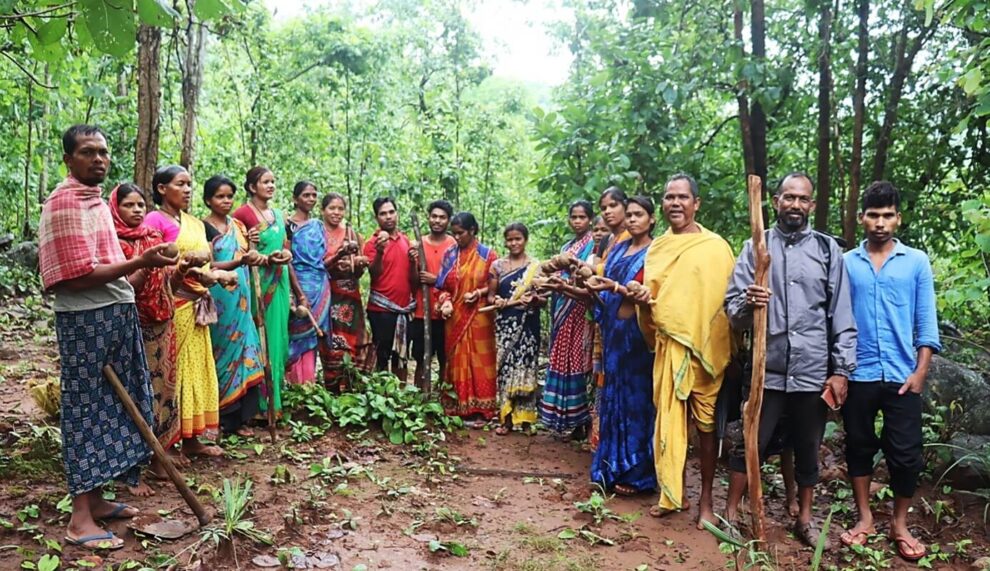
For generations, the forest surrounding Kakansuga village was much more than a landscape. It was a living partner in the lives of its people, a source of food, identity, culture, security, and hope. Located in the tribal heartland of Odisha’s Kandhamal district, Kakansuga is home to 35 families and a population of nearly 180 people. The forest shaped the community’s traditions, food systems, and livelihoods. Seasonal fruits, leaves, tubers, medicinal plants, and other Non-Timber Forest Products (NTFPs) provided both sustenance and income, sustaining generations of forest-dependent households. For the people of Kakansuga, the forest was not simply a natural resource. It was their heritage and their identity.
But over time, this deep relationship between people and forests began to weaken. The forest that had supported the community for generations began to show visible signs of degradation. Frequent forest fires, unsustainable harvesting practices, and uncontrolled grazing gradually affected the ecosystem’s health. The once-diverse forest landscape became thinner and fragmented. Water sources weakened, biodiversity declined, soil quality deteriorated, and livelihood opportunities were reduced. The community watched their forest disappear, along with a part of their own security, resilience, and dignity. Yet, within this challenge was an opportunity: the possibility of restoring the relationship between the community and the forest.
Forests are often protected best when the people who depend on them have the rights, responsibilities, and institutions to manage them. In 2006, the Government enacted the Forest Rights Act (FRA), which created an enabling framework by recognising the rights of Scheduled Tribes and Other Traditional Forest Dwellers to access, manage, protect, and govern their Community Forest Resources (CFRs). The shift was profound. Communities were no longer viewed merely as users of forests but as their custodians and decision-makers.
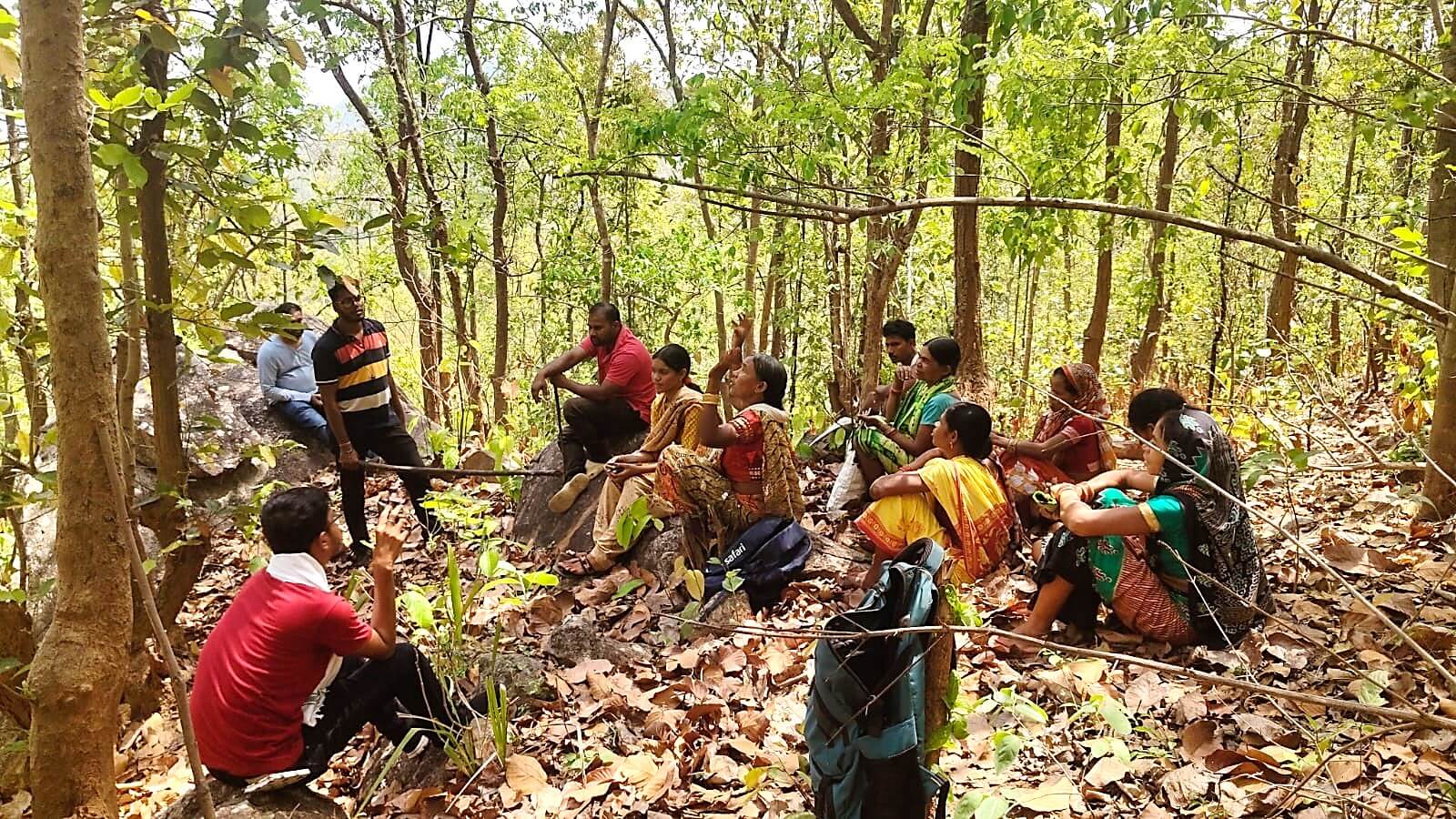
In 2022, PRADAN (Professional Assistance for Development Action) began facilitating this transition—from a declining forest to a forest managed and protected by an empowered community. Supported by the Government of Odisha’s Mo Jungle Jami Yojana (MJJY), Kakansuga strengthened its community forest governance and developed a shared vision for forest restoration. These efforts were further reinforced through the implementation of Community Forest Resource (CFR) management under the Ministry of Tribal Affairs’ Dharti Aba Janjatiya Gram Utkarsha Abhiyan during 2025–26.
GOOD PRACTICES
From Awareness to Ownership
The first step was rebuilding knowledge, confidence, and collective ownership among community members. PRADAN initiated its forest-related interventions in Kakansuga during 2021–22. The PRADAN team conducted a series of awareness and capacity-building activities on the Forest Rights Act (FRA), 2006, including community awareness, claim filing processes, forest-based livelihoods, and the sustainable management of Community Forest Resource (CFR) areas. Alongside these efforts, livelihood interventions such as vegetable cultivation on Individual Forest Rights (IFR) lands, poultry rearing, and goat rearing were introduced in 2022 to strengthen household incomes and promote sustainable livelihoods.
Through awareness generation and capacity-building initiatives, villagers developed a deeper understanding of:
- Forest Rights Act, 2006
- Community Forest Rights
- Roles and responsibilities of Gram Sabha
- Sustainable forest management practices
- Forest-based livelihood in harmony with nature
The Community Forest Resource Management Committee (CFRMC) was strengthened as a community institution responsible for the execution of the CFR management plan and forest governance through organising regular community meetings, exposure visits, field demonstrations, and participatory learning processes, enabling community members to understand their responsibilities, adopt improved livelihood practices, and actively participate in forest governance. These approaches helped build local ownership and strengthen the capacity of rights holders, CFRMC institutions, and active participation and decision-making by women members.
Training Local Youth
Selected youth, designated as Jamisathi, underwent a combination of classroom and field-based training covering:
- Forest Rights Act (FRA), 2006 and its implementation process.
- Community Forest Resource (CFR) claim preparation and documentation.
- GIS-based land mapping and demarcation through a mobile-based tool
- Facilitation of Gram Sabha meetings and community mobilisation.
- Preparation of Community Forest Resource Management Plans (CFRMPs).
- Forest-based livelihoods, agroforestry
- Record-keeping and use of digital tools where required.
These Jamisathis supported:
- Community mobilisation
- FRA claim processes
- Land mapping and Documentation
- CFRMC in CFR management plan execution
- NTFP-based livelihood, agroforestry, etc.
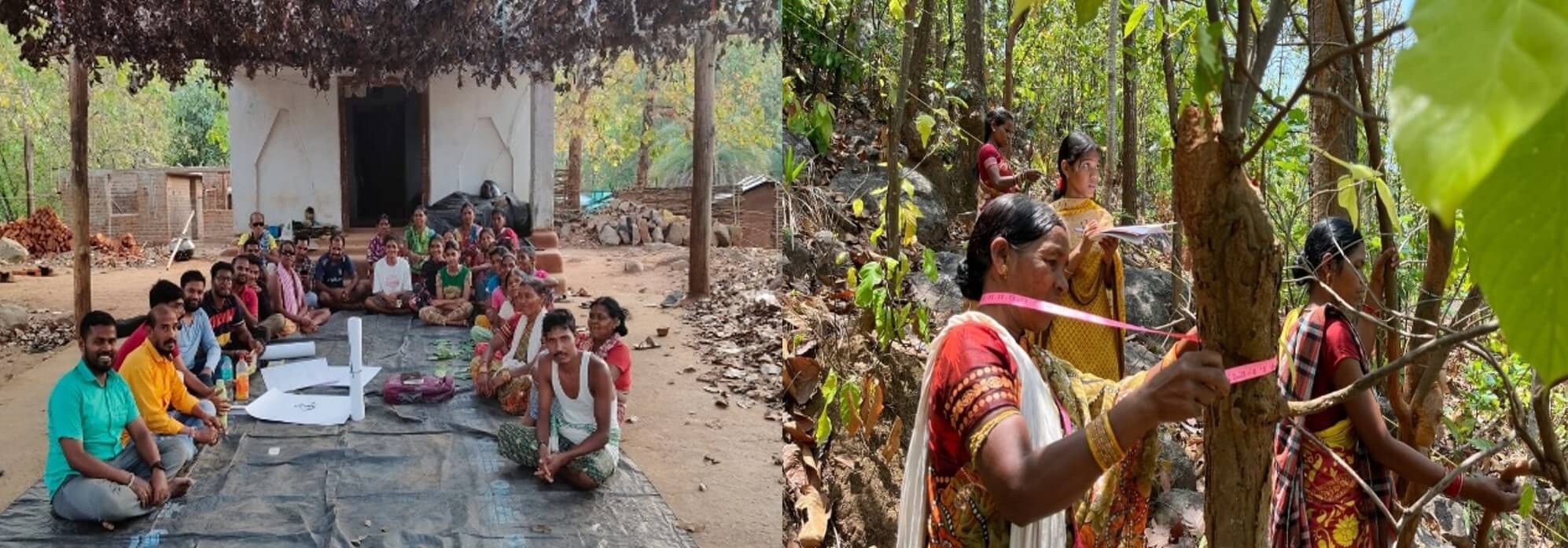
Using Digital Tools
Technology became an important enabler in this process. PRADAN, with technical support from the Cadasta Foundation, co-developed a mobile-based Community Land Mapping and Demarcation Tool (CLMDT) in 2020, making land mapping more accurate, easier, and faster. Such GIS-based mobile tools helped the community accurately map and document forest resources, strengthening transparency and evidence-based planning.
Preparation of a Forest Management Plan (Written by the Community)
With PRADAN’s facilitation, Kakansuga prepared a Community Forest Resource Management Plan (CFRMP), a roadmap designed by the community, for the community. The plan focused on restoring ecological balance while ensuring sustainable livelihood benefits.
Key priorities identified by the community included:
- Stopping further tree felling
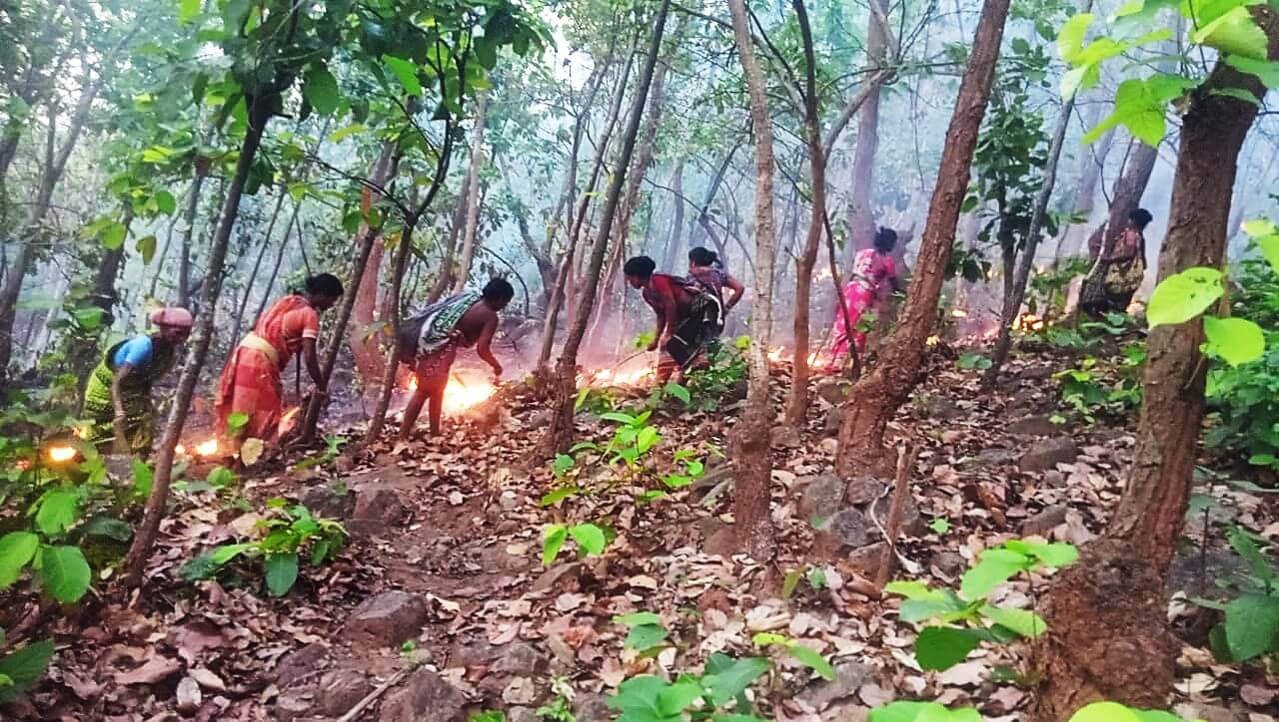
- Prevention and management of forest fires
- Protection of natural regeneration
- Restoration of degraded forest patches
- Regulation of grazing practices
- Conservation of water resources, sacred groves, mother trees
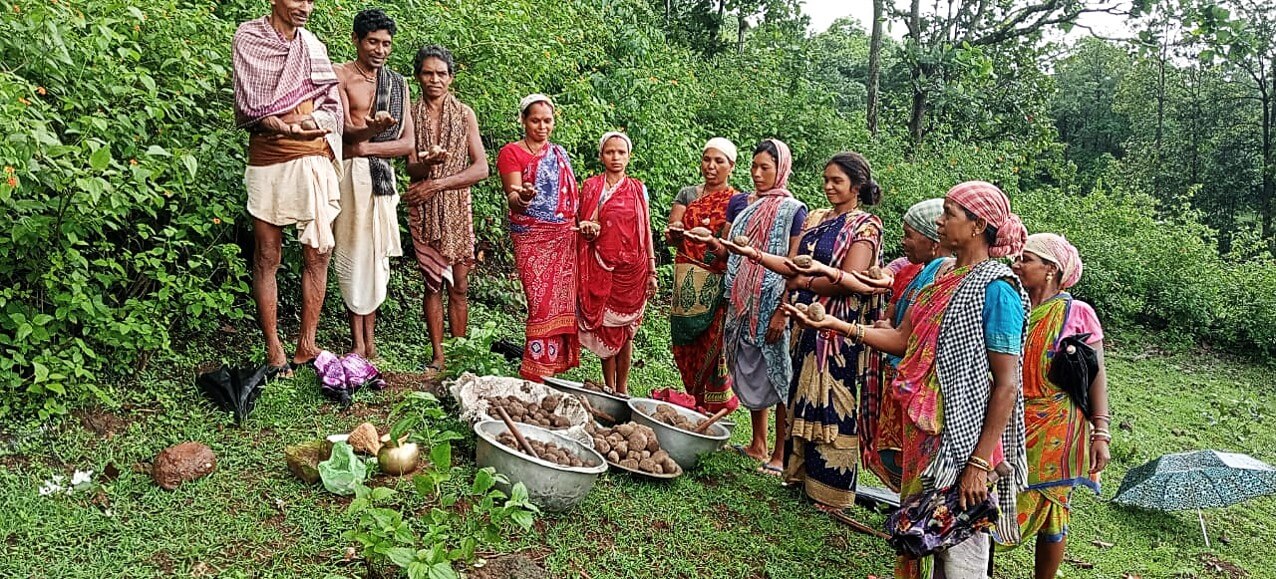
- Afforestation and assisted restoration through native seed balls
- Sustainable harvest of non-timber forest products
- Regular watch ward of forests
The community established regular forest patrols, took collective action against tree-cutting, strengthened fire prevention measures, and regulated grazing in regeneration areas. Regular forest protection is ensured through a community-led mechanism, supervised by the Community Forest Resource Management Committee (CFRMC) and the Palli sabha. The committee prepares a patrol schedule, forms subcommittees and patrol teams comprising community members, and assigns responsibilities on a rotational basis to ensure equitable participation. The forest began receiving care once again.
Blending traditional ecological knowledge with scientific approaches
The restoration journey combined traditional ecological knowledge with scientific approaches.
Community members initiated restoration of degraded patches through:
- Native species plantation
- Seed ball-based restoration
- Assisted natural regeneration
Water conservation measures such as staggered trenches, Water Absorption Trenches (WAT), and canals helped improve soil moisture availability and supported forest regeneration.
Through convergence with government programmes, Rs. 30.43 lakh was mobilised for CFR-related interventions, enabling the community to implement its restoration plans. Slowly, the landscape began to respond.
Livelihood Interventions
For Kakansuga, forest restoration was never only about trees. It was about improving lives.
PRADAN supported convergence-based livelihood interventions on Individual Forest Rights (IFR) lands to strengthen household incomes and resilience.
Key interventions included:
- Land bunding support for 17 farmers
- Ginger cultivation support for 13 farmers
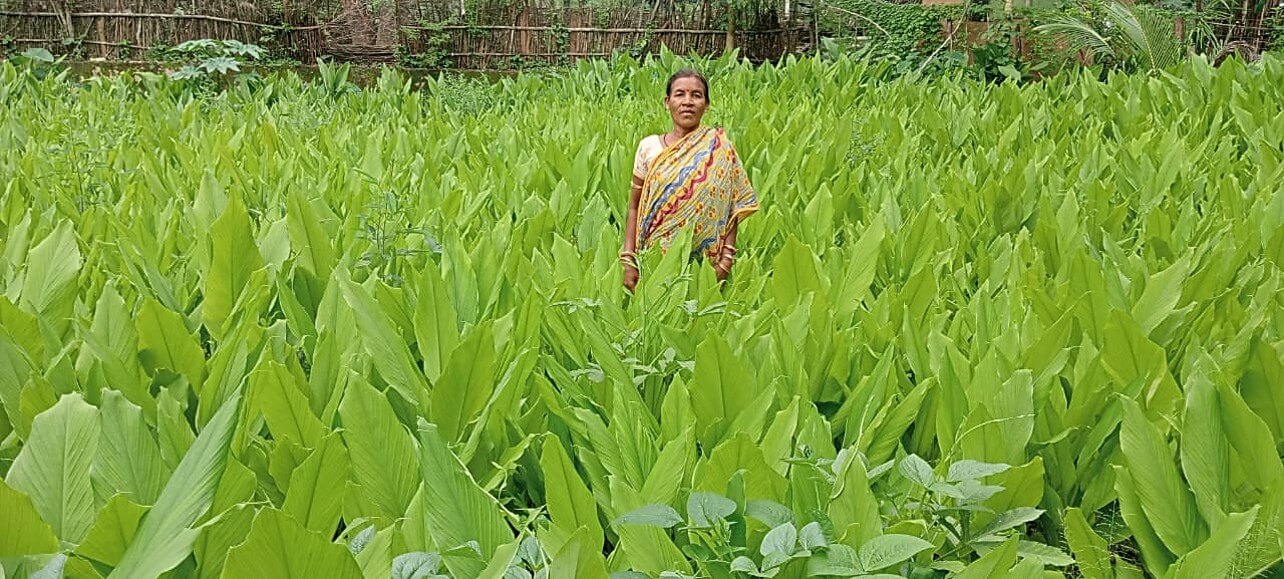
- Turmeric cultivation support for 10 farmers
- Backyard poultry support for 10 families
- Black pepper plantation support for 17 farmers with 1,428 saplings
- Fruit plantation support for 15 farmers with 138 saplings
Fifteen women and their families have adopted integrated agroforestry models on their Individual Forest Rights (IFR) land, utilising 50 decimal (0.5 acre) plots. The model combines fruit-bearing trees, forest trees as boundary crops, herbs such as turmeric and ginger, shrubs like pigeon pea, and climbers such as black pepper. This diversified farming system promotes mixed cropping, enhances biodiversity, and supports chemical-free cultivation. By improving soil health, increasing household nutrition and income, and reducing climate-related risks.
These interventions demonstrated that conservation and livelihoods are not competing priorities. When communities manage ecosystems sustainably, forests and livelihoods can thrive together.
BENEFITS AND OUTCOMES
The biggest transformation in Kakansuga was not technological—it was social. The community began shifting its perspective: the forest was no longer seen only as a resource to harvest, but as a shared responsibility to protect and regenerate.
The forest biomass assessment perspective and training have significantly increased the community’s interest in understanding the health of their forests and motivated them to actively participate in forest restoration efforts. Traditional ecological knowledge and conservation practices, previously limited to older community members, are now being passed down to the younger generation through this process. As a result, the sense of ownership and responsibility among the village’s youth towards forest conservation and sustainable management has grown considerably.
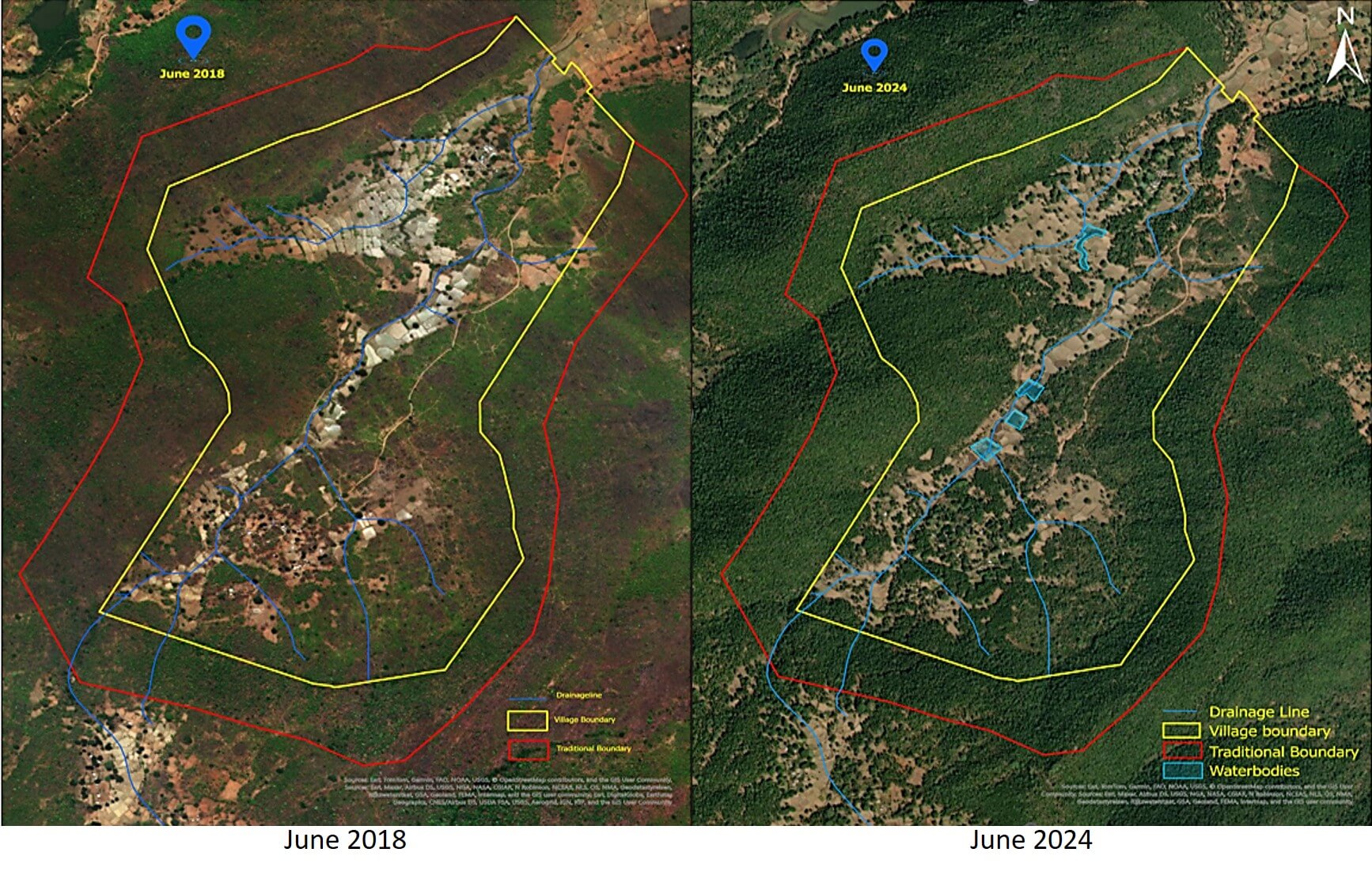
After three years of collective action, Kakansuga began witnessing visible transformation. Forest fires, once a recurring challenge, have stopped. No forest fire incidents have been reported in the village for the last three years. Community institutions successfully controlled tree-cutting and stone extraction within the CFR area. The forest began to become a safer habitat for wildlife, with villagers reporting increased sightings of wild boar, foxes, and bears.
Satellite-based assessment showed a 12% increase in forest cover, reflecting the positive impact of community protection and restoration efforts. The forest was slowly returning. And with it came renewed confidence, dignity, and hope among the people of Kakansuga.
CHALLENGES
The implementation of forest-related activities in Kakansuga faced several challenges: Despite its rich forest and natural resource potential, Kakansuga is located in remote, difficult terrain, making access to villages and the implementation of field activities challenging. The village is inaccessible during the monsoon.
Poor connectivity (both road and mobile network) and limited transportation infrastructure often increased the time and effort required for community mobilisation, capacity building, and regular field support.
Limited awareness of the Forest Rights Act (FRA), 2006, and inadequate technical knowledge for preparing and processing forest rights claims and land mapping were some of the key initial challenges in initiating the activities.
The community’s lack of leadership and follow-up further delayed the process.
LESSONS
For generations, forest-dependent communities have protected and sustained forests as the foundation of their lives and livelihoods. However, without recognition of their rights, many viewed themselves as encroachers rather than owners of these resources. The recognition of Community Forest Resource (CFR) rights under the Forest Rights Act (FRA), 2006, facilitated by the support of district administrations, Tribal and Forest Departments, and PRADAN, transformed this perception.
With secure rights came a strong sense of ownership and collective responsibility, leading communities to actively protect forests from encroachment, tree felling, and fires; restore degraded landscapes; conserve biodiversity; and sustainably manage forest resources. This shift from dependence to stewardship demonstrates how recognising community rights can create lasting ecological, social, and livelihood outcomes.
The story of Kakansuga is not only a story about trees. It is a story about relationships between people, forests, institutions, and ecosystems. It reminds us that forest restoration is not merely about planting trees or protecting boundaries. It is about empowering communities, strengthening institutions, recognising rights, and creating conditions where people become active partners in ecological recovery. When communities have rights, knowledge, and ownership, they can become powerful agents of restoration.
CONCLUSIONS
The forest did not return because someone planted trees. It returned because a community stepped forward as its guardian.
Kakansuga shows that the future of forests depends not only on conservation strategies but also on recognising and strengthening the communities who have protected and lived with these forests for generations. When communities are empowered to manage ecosystems sustainably, forests flourish, livelihoods improve, and conservation becomes a shared pathway to resilient and inclusive development.
 Sailabala Panda is a development practitioner with over twenty years at PRADAN. She specialises in farm livelihoods, natural resource management, gender equality, forest restoration, and nature-based livelihoods. Now, she leads PRADAN’s Centre of Excellence on Forests for thematic discourse and large-scale impact in the lives of forest-dependent communities in Odisha, Jharkhand, Chhattisgarh and Maharashtra. She can be reached at: sailapanda@pradan.net
 Niranjan Mishra has over 16 years of experience at PRADAN, joining in 2010. He worked in Kesla, Madhya Pradesh until 2016 and is now based in Kandhamal, Odisha. His expertise covers climate-resilient agriculture, livestock, women’s empowerment, SHG promotion, forest conservation, agroforestry, the Forest Rights Act, and community forest governance. Currently, as Team Coordinator in Kandhamal, he leads forest livelihood and restoration projects, supporting tribal communities through sustainable forest management. He can be reached at: niranjanmishra@pradan.net

Add Comment