


In this blog, Alagu Niranjan and Rasheed Sulaiman V critically analyse the 6th ICAR Dean’s Committee B. Sc. Ag (Hons) extension syllabus.
CONTEXT
India’s agricultural extension system stands at a moment of profound transformation. While increasing climate volatility, evolving consumer preferences, and concerns around the sustainability of agrifood systems challenge agricultural production, the availability of digital advisory platforms, the expansion of farmer-producer organisations (FPOs), and youth-led agripreneurship initiatives are providing new opportunities for Indian agriculture. Yet a close look at the Agricultural Extension syllabus prescribed by the ICAR 6th Deans’ Committee raises an uncomfortable question: are we educating future extension professionals for today’s realities or reproducing the logic of yesterday?
The four undergraduate courses in the BSc Hons Agriculture programme offered under Extension are as follows:
- Rural Sociology and Educational Psychology,
- Fundamentals of Extension Education,
- Communication Skills, and
- Personality Development
Although the Extension Departments offer communication skills and personality development across all UG programmes, a careful analysis of the content shows that these courses are not, in fact, about extension. The communication skills course focuses on learning good English, and the personality development course focuses on soft skills. Entrepreneurship, which could have been considered under Extension, has now been moved to Economics. The other two courses provide a classical foundation in extension by introducing students to rural social structures, leadership, learning processes, communication models, and basic extension concepts. These are not trivial contributions. However, the problem lies not in what is included, but in what remains marginal, vague, or missing altogether.
A CURRICULUM ANCHORED IN TRANSFER, NOT TRANSFORMATION
At its core, the syllabus continues to reflect a transfer-of-technology mindset, even when it gestures toward newer ideas. Extension is implicitly seen as an andragogical activity that involves teaching farmers, disseminating messages, producing leaflets, or delivering talks rather than as a facilitative, systems-focused profession. While terms such as “market-led extension,” “pluralistic systems,” and “ICTs” appear, they serve more as rhetorical embellishments than as guiding principles of the curriculum.
Contemporary extension practice, however, is no longer primarily about the transmission of messages. Extension professionals today operate as brokers, facilitators, data users, climate risk communicators, and institutional entrepreneurs. Most of them need to support farmers in finding appropriate markets, strengthen FPO governance, mediate between public and private actors, and increasingly work through digital platforms. These roles demand competencies that go far beyond classical communication theory or sociological description.
DIGITAL AGRICULTURE: MENTIONED, NOT MASTERED
Perhaps the most striking gap is the superficial treatment of digital extension. While the syllabus acknowledges ICTs and social media, it does not specify the competencies students must acquire. There is no requirement that a graduate be able to design a mobile advisory, manage a WhatsApp farmer group, interpret digital feedback data, or use basic GIS or survey tools. In an era when information exchange increasingly occurs on smartphones rather than in meeting halls, this omission is consequential.
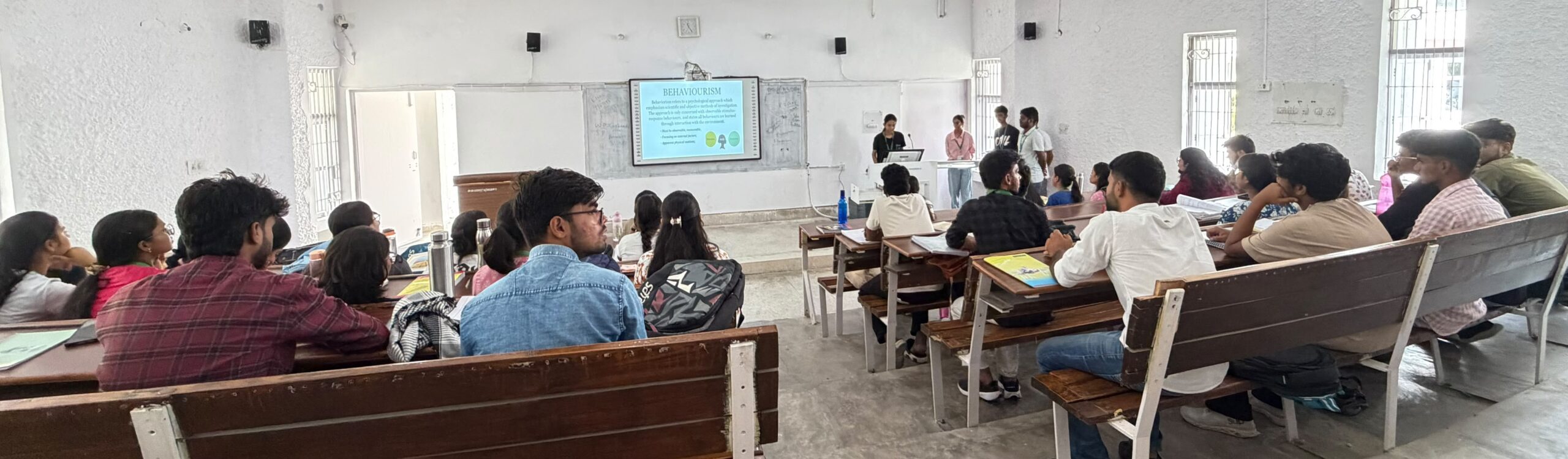
Without hands-on digital practice, graduates risk becoming extension professionals who can describe communication models but cannot operate in the digital ecosystems where farmers increasingly seek advice.
CLIMATE CHANGE WITHOUT CLIMATE ADVISORY
Equally problematic is the near absence of climate-smart agriculture and climate risk communication. Climate change is arguably the single most defining factor shaping agricultural decision-making today. Extension professionals are expected to interpret seasonal forecasts, advise on adaptive practices that also enhance mitigation, and help farmers manage risk and uncertainty. Yet the syllabus does not explicitly prepare students for these tasks.
Teaching “new trends in extension” without grounding them in climate realities leaves students intellectually aware but operationally unprepared.
COMMUNICATION COURSES THAT MISS THE FIELD
The Communication Skills course illustrates a deeper issue. A significant portion of the syllabus is devoted to grammar, sentence construction, and formal presentation skills. While clarity of expression matters, this emphasis comes at the expense of technical, digital, and facilitative communication, the kinds of communication extension professionals actually perform. The course content does not require an extension teacher; rather, an English teacher could handle it with ease.
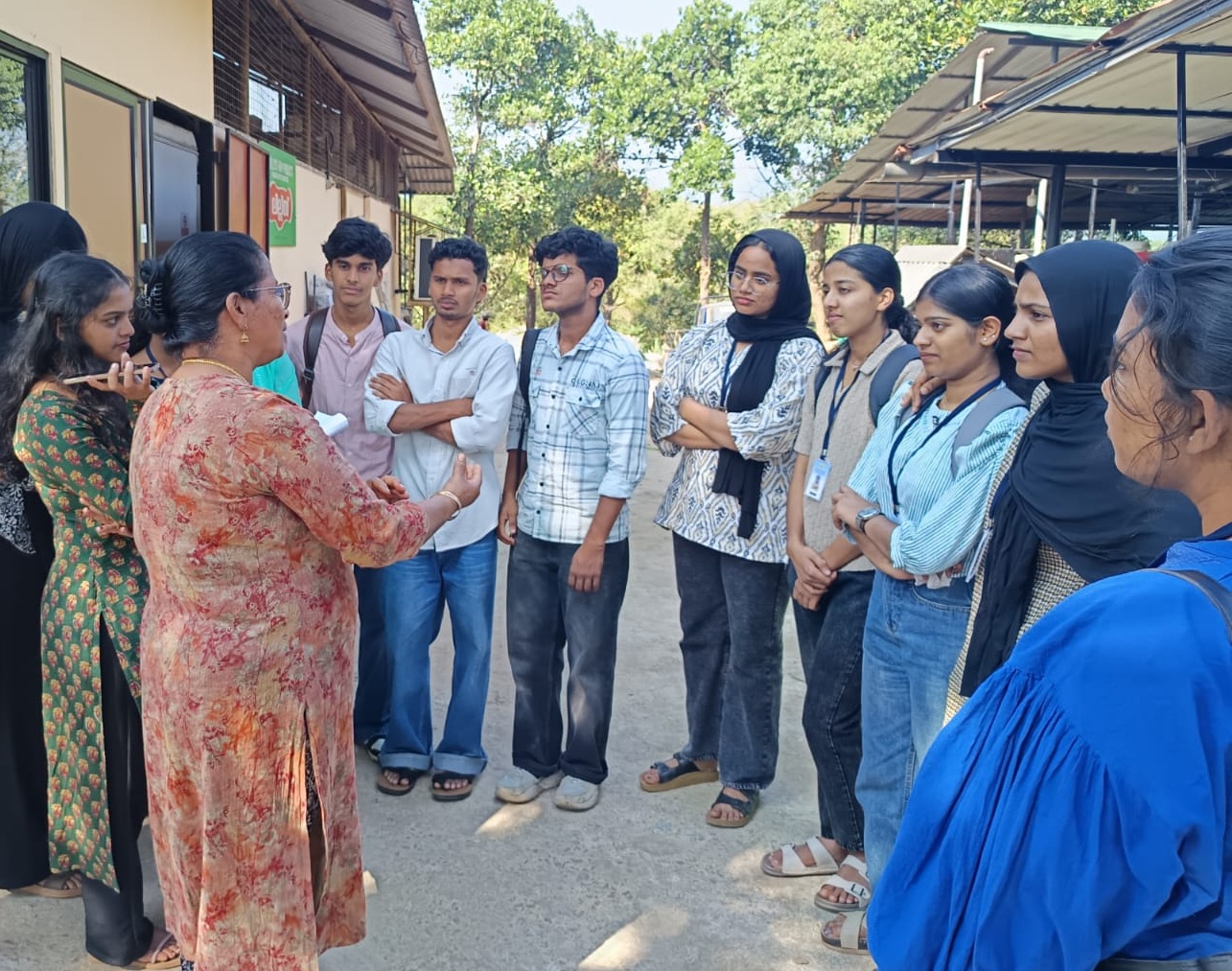
What students need is practice in translating technical information into farmer-friendly advisories, facilitating group discussions, managing conflict, and using multimedia and digital channels. Communication in extension is less about grammatical perfection and more about relevance, trust, and interaction; something an extension teacher can demonstrate well. The current syllabus struggles to make that shift.
PRACTICALS WITHOUT PROFESSIONAL FORMATION
Practical components exist, particularly in Fundamentals of Extension Education, but they are fragmented and often symbolic. Village visits, PRA exercises, and micro-teaching are valuable, yet they rarely lead to sustained engagement or measurable outcomes. Surprisingly, Rural Sociology has no practical component at all, despite being the course most directly concerned with understanding rural realities.
Absent is a serious, compulsory field practicum that allows students to experience extension as a profession rather than a classroom subject. Without prolonged immersion, reflection, and responsibility, students do not develop the professional identity of an extension worker. They remain observers, not practitioners.
OLD BOOKS FOR A NEW WORLD
The reading lists further reinforce this disconnect. Dominated by older, canonical texts, they provide historical grounding but insufficient exposure to contemporary practice. Missing are practitioner manuals, recent peer-reviewed syntheses, and global resources on digital advisory services, market systems development, and climate-smart extension, which are freely downloadable. Students are trained to revere tradition, not to interrogate evolving realities.

WHAT KIND OF EXTENSION PROFESSIONAL ARE WE PRODUCING?
Taken together, the syllabus produces graduates who are theoretically informed, communicatively polite, and socially aware but not necessarily field-ready. The implicit professional identity is that of an educator and messenger, not a facilitator of innovation systems or a partner in farmers’ economic decision-making.
This matters because extension is no longer a protected public-sector role. Graduates compete for positions in NGOs, agribusiness firms, start-ups, and development projects that require immediately deployable skills. When curricula fail to evolve, students pay the price.
NOT THE FIRST WARNING
These concerns are not raised for the first time. An AESA working paper in 2018 titled “Agricultural Extension Curricula in India: Is it Relevant to Changing Times?” critiqued the then 5th ICAR Dean’s Committee syllabus and other earlier syllabi. That same year, the MANAGE Committee proposed Undergraduate-Level Courses in Agricultural Extension. It included them in the Annexure to the BSMA report (as the BSMA concerns the curricula of PG and PhD programmes). While developing these courses, the committee first identified the core competencies required at different levels and worked backwards from those areas, organising them into courses. Unfortunately, ideas from neither of these documents are reflected in the present syllabus.
A CONSTRUCTIVE WAY FORWARD
Critique need not imply rejection. The ICAR syllabus provides a foundation on which a far more relevant program can be built. What is needed is a shift toward competency-based education, anchored in real-world practice. Digital extension, gender and caste (inclusion), climate advisory, market facilitation, designing and evaluating extension programme (which was taught as a course on programme planning earlier), and use of participatory methods should be integrated across courses—not as passing mentions. Communication and personality development should be reframed around employability, facilitation, and leadership in complex systems rather than just a set of soft skills.

Most importantly, every extension student should graduate having done extension, not merely studied it.
If agricultural extension is to remain relevant in India’s rapidly evolving agrarian landscape, its curriculum must prepare professionals not just to explain agriculture but to shape its future actively. Unfortunately, we do not see these basic concerns of professional development reflected in the multiple conferences that extension societies organise every year in the country. Will the next Dean’s committee address these issues? Should we have to wait till then? If so, we will continue to produce Yesterday’s Extension Workers for Tomorrow’s Agriculture.
 Dr D. Alagu Niranjan is a Research and Knowledge Management Officer with the Centre for Research on Innovation and Science Policy (CRISP), Hyderabad, India. He can be reached at: alaguniranjan@crispindia.org.
 Dr Rasheed Sulaiman V is Director, Centre for Research on Innovation and Science Policy (CRISP), Hyderabad, India. He also serves as the Focal Point, Agricultural Extension in South Asia (AESA), He can be contacted at rasheed.sulaiman@gmail.com.
Happy to go through this AESA blog which presents a forward-looking perspective on preparing agricultural graduates for the evolving agricultural landscape. As agriculture becomes increasingly influenced by climate change, digital technologies, market dynamics, entrepreneurship, and data-driven decision-making, extension education must equip graduates with interdisciplinary knowledge and practical competencies beyond traditional advisory roles. The authors rightly emphasize the need for curriculum reforms, stronger industry linkages, and exposure to emerging career pathways. In this changing scenario, there is also an urgent need for updated and context-specific textbooks and learning resources that integrate contemporary themes such as AI in agriculture, digital extension, climate-smart farming, agribusiness management, and innovation systems, enabling both students and practitioners to remain relevant and effective in serving farming communities. Hope those responsible for curriculum updating will take note of the suggestions. Wishing 7th Dean’s committee do the needful to meet the changing requirements. Congratulations to the authors & AESA for making sustained efforts to improve the relevance of agricultural extension discipline.
A look at 6 th Deans committee report indicates updated syllabus includes the Major components of Digital application in agriculture extension, Market lead extension and surprisingly a third element Drone technology application combined with natural farming and organic farming promotion across rural agricultural sector. Its in this context that goodness of fit principle can be applied to the concept and practice of participatory extension which is seen missing in the report. I would certainly support to include in updations and shifting a highly tecno specific drone technology and speciality domains of natural farming and organic farming to PG level.But principles can be included in other subject domains like agronomy. Not neceesserly in niether Social or economic sciences. (?)
Now coming to Partcipatory Extension What earlier I learned was it as a methodolocal tool and a “ set of procedures”. ( and not as a transformative frame rightly seen mentioned in the blog)This lacks relavance now and participatory extenson models should be classified into community extension models, models on co creation and models of local development.(Are they rare in Indian context? Not at all) The courses should heavily rely on many case studies which define effective learning.There should be clear demarcation of domains to be included in UG level rather than a cursory consideration of “ what is mentioned in the report as “ Inter Agriculture “.
Thanks for sharing this sir. Nicely articulated thoughts. In addition to the points raised, some more additional challenges exist. Inadequate competency to handle the present curricula (whether that competency is really needed or not is a different question).
For example, the practical sessions of the course, personality development demands a deeper understanding of various personality development tests and techniques. (Though extension faculty have some preliminary understanding of these topics, that is quite insufficient). Moreover many topics in the course are overlapping with the content covered in the course, Educational psychology.
More importantly, the RAWE programme which equips or transforms an agri graduate to field professional is suggested as an elective course in the 8th semester (presently a mandatory course in the 7th Sem) along with other choices such as industrial attachment, experiential learning, project work or internship. This would highly dilute their field preparedness and abilities to deal with farm field challenges. (Given the focus of the graduates for higher education studies in the last semester, we can safely assume that no one will select the RAWE as an elective course in the last semester).
Though the blog is very interesting, I was a little disappointed by the title , “Are we preparing yesterday’s extension workers for tomorrow’s agriculture?”. I personally believe that an agricultural graduate is an extension professional rather than a worker (who may be trained farmer or grassroot level functionary) since they receive specialized training and show professional expertise. Interestingly, the term extension professional is used consistently throughout the blog, making its absence in the title quite noticeable. A title such as “Are we preparing yesterday’s extension professionals for tomorrow’s agriculture?” might better reflect the professional identity that the article advocates.
As I see from the blog, there are many concerns to be addressed by the academics. What I could visualise is that the curriculum suggested by the Sixth Deans Committee is not progressive, but a retrograde step. Entrepreneurship development and business communication was an important course in the 4 th and 5th DC recommendations. It doesn’t find a place in the 6th DC under extension courses.
From what I could understand from the blog, the contents of two courses – Communication skills and Personality Development do not reflect the field realities and widen the domain knowledge and skill of the extension professionals.
As UG students, in our time, we had two important courses in Agricultural Extension which is still relevant and applicable in the field- Communication, Extension methods and Aids and Programme Planning and Evaluation. Hope the academics will take this blog seriously and influence for a meaningful curriculum revision.
The entire crux of the problem we are facing today is explained very well by you in these few lines “ Practical components exist, particularly in Fundamentals of Extension Education, but they are fragmented and often symbolic. Village visits, PRA exercises, and micro-teaching are valuable, yet they rarely lead to sustained
engagement or measurable outcomes. Surprisingly, Rural Sociology has no practical component at all, despite being the course most directly concerned with understanding rural realities.
Absent is a serious, compulsory field practicum that allows students to experience extension as a profession rather than a classroom subject. Without prolonged immersion, reflection, and responsibility, students do not develop the professional identity of an extension worker. They remain observers, not practitioners.” My question is , why the Deans committee has not taken into consideration the documents (AESA working paper, MANAGE committee, recommendations of various extension conferences etc)? Is it that they are not aware of these documents or not
bothered about them thinking that they know better about what to teach in Extension.
In any case they are harming the profession by ignoring the potent signals and take the blame for developing improper curriculum. Very unfortunate.
I congratulate both the learned authors of this blog Drs Alagu and Rasheed for bringing out major flaws in Agril Extension syllabus proposed by the ICAR Deans Committee.