


In this Good Practice Note, C. S. Shabong reflects on the organisation of six editions of the farmers’ market in Meghalaya organised during January to June 2026.
CONTEXT
The Government of Meghalaya is working towards building a more resilient and self-sufficient agricultural economy and improving market access. The Farmers’ Market initiative, organised by 1917 iTEAMS under the Department of Agriculture & Farmers’ Welfare, Government of Meghalaya, and supported by the Meghalaya Farmers’ (Empowerment) Commission, is a flagship platform that empowers local farmers and entrepreneurs by connecting them directly with consumers. Since its conception in January 2026, the market has evolved into a vibrant urban hub that celebrates Meghalaya’s agricultural richness and diversity, artisan creativity, and community spirit.
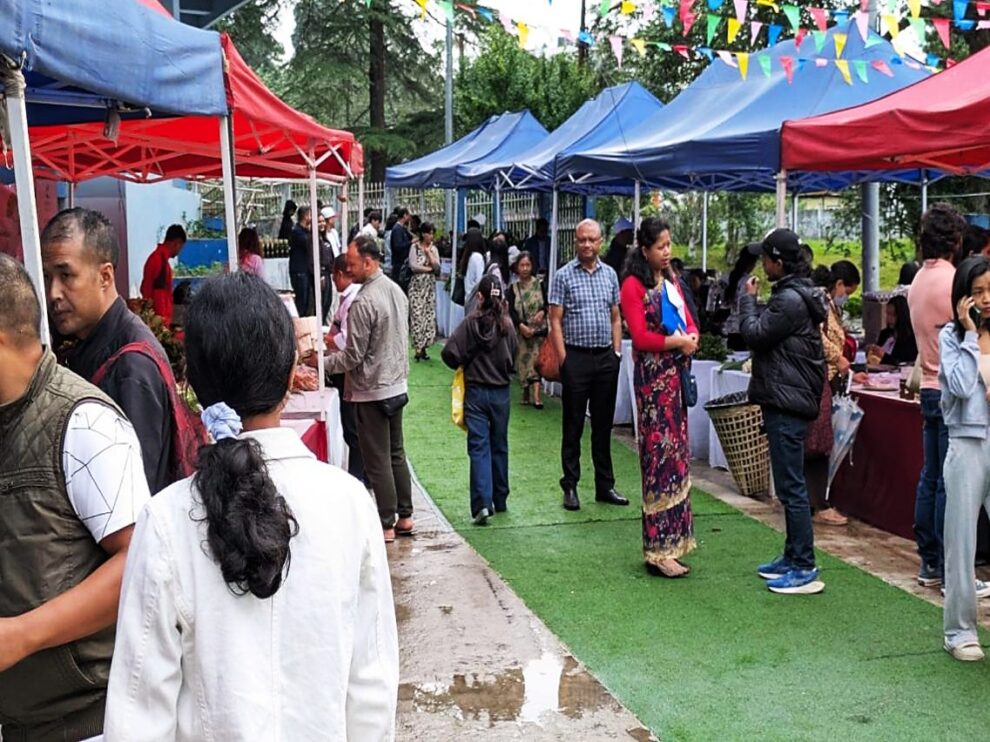
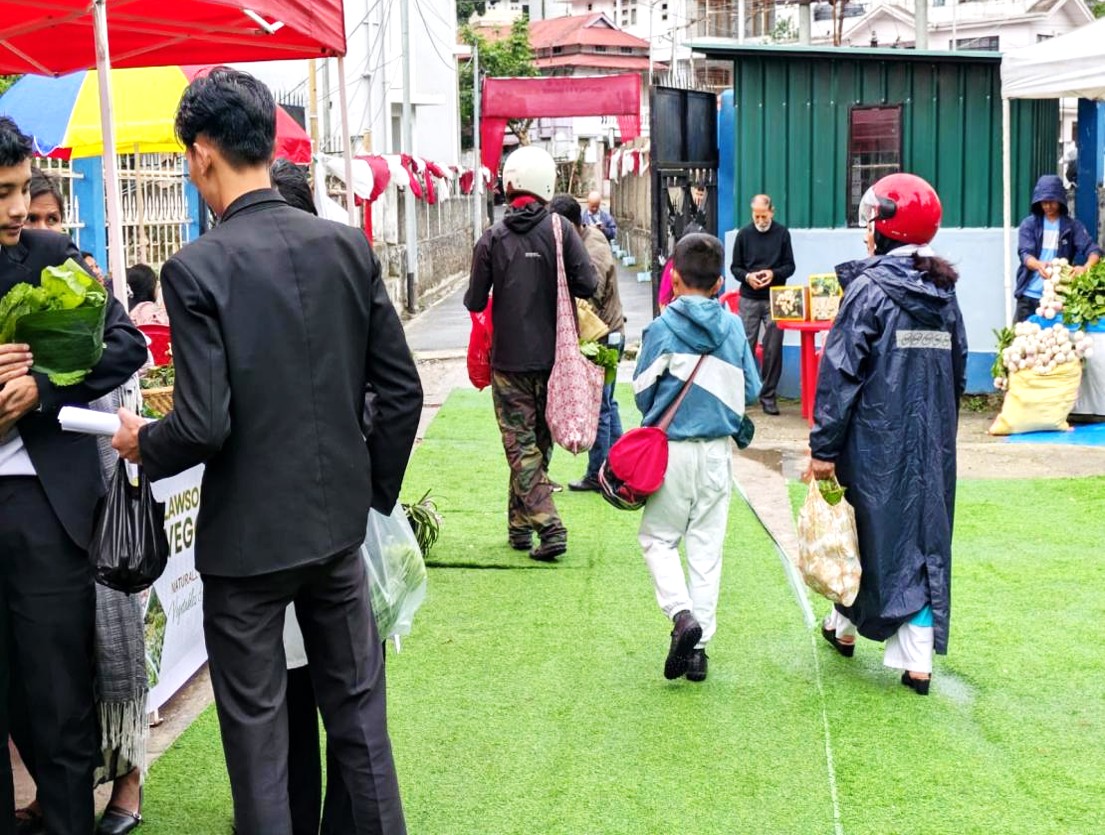
Each edition brings together farmers, cooperatives, startups, and beneficiaries from various government departments on a common platform, offering farm-fresh seasonal produce, value-added produce, and innovative processed products. By eliminating intermediaries, ensuring fair pricing, and promoting sustainable farm-fresh local produce, the Farmers’ Market (Box 1) stands as a replicable model of inclusive agricultural marketing. It is not merely a marketplace—it is a movement that strengthens urban–rural linkages, uplifts farmer incomes, and positions Meghalaya as a leader in innovative agro-tourism and community-driven development.
|
Box 1: Farmers’ Market Key participant categories include: |
GOOD PRACTICES
Direct-to-Consumer Sales
The initiative allows farmers to sell directly to consumers without intermediaries, helping growers secure better returns while giving buyers access to fresh, locally produced food. Consumers can buy fresh produce directly from farmers at fair prices. Processed goods (fruit wines, jams, pickles, millet snacks) showcased innovation and higher-margin opportunities. Hydroponic and organic farmers educated consumers about sustainable farming and healthy living.
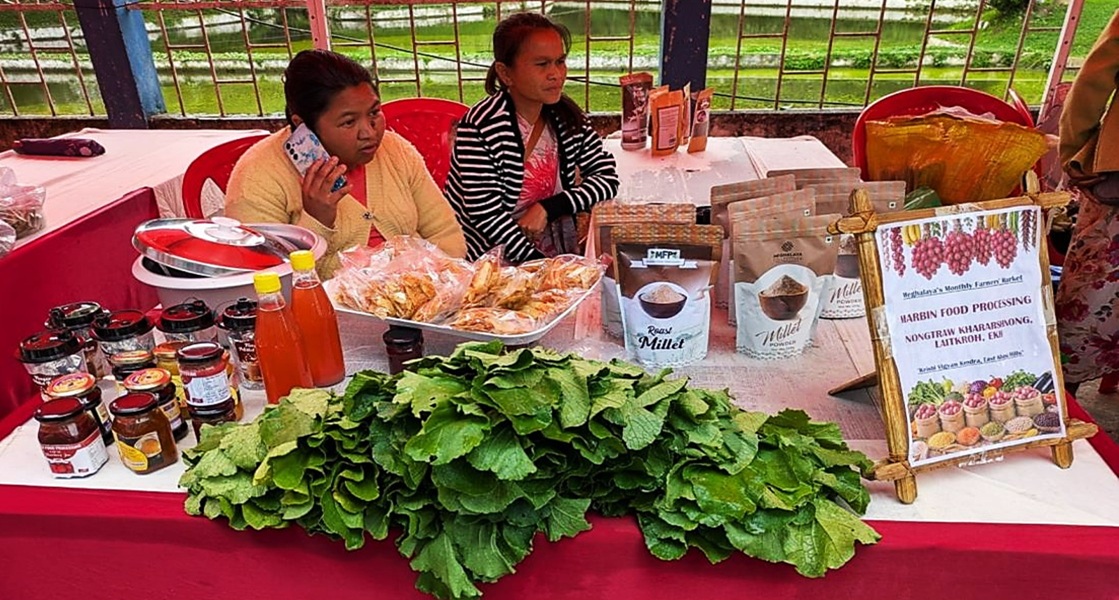
Farmers consistently reported higher earnings compared to traditional markets. For instance, Mustard leaves are sold at ₹50 per bundle, whereas they are sold for ₹10 in local markets. The same is the case with pumpkins, which fetched ₹100–120, while farmers have to sell them at ₹20–50 to local intermediaries.
Cultural Integration
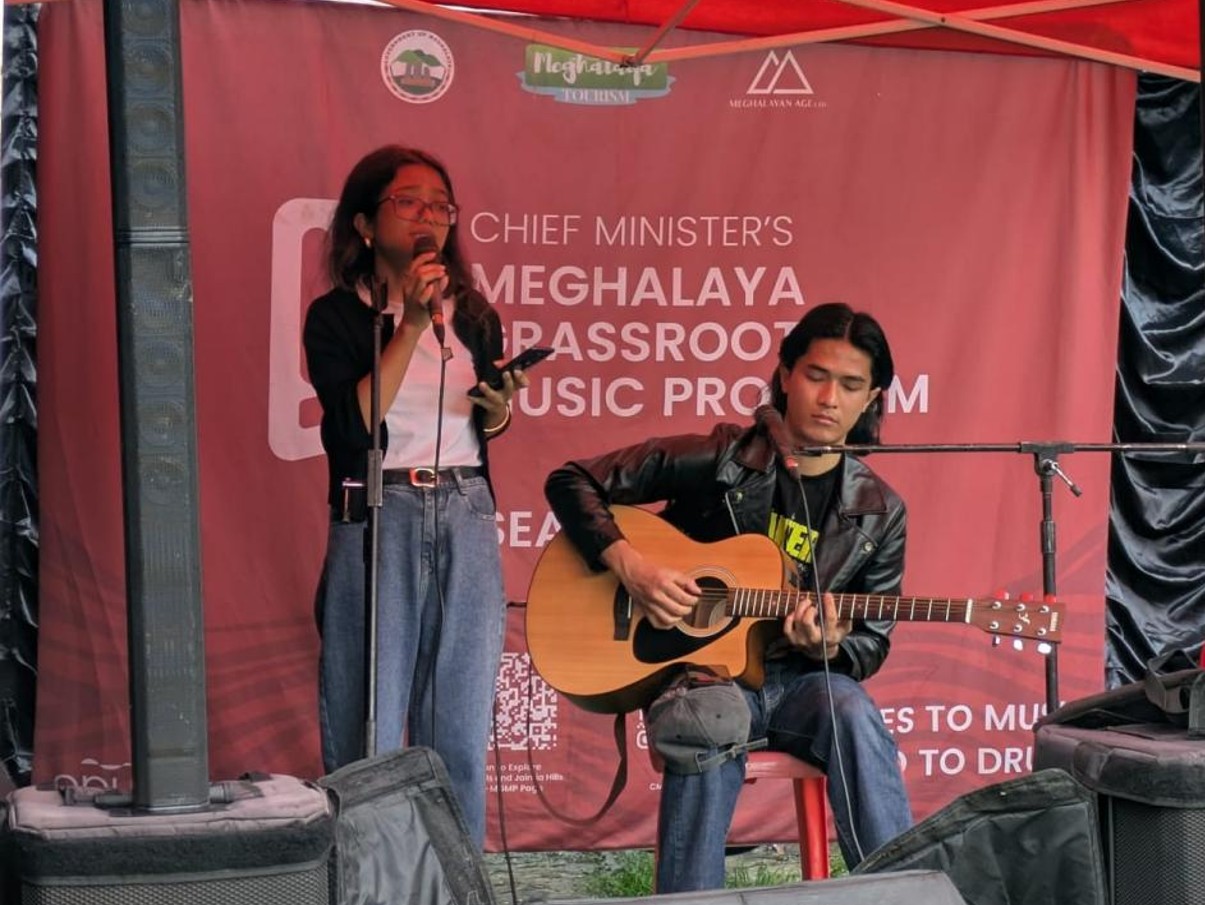
The market also engages Local Music Artists through grassroots music performances funded by the Chief Minister Grassroots Music Program (CMGMP). The Chief Minister’s Meghalaya Grassroots Music Program (CMGMP) is a ₹69 crore government initiative supporting over 7,000 local artists. It provides a platform through permanent fixed venues and offers music theory training, access to production equipment, and global digital exposure to strengthen the state’s creative economy. Grassroots musicians (CM-MGMP) and artisans thus enriched the market, making it more than just a trading space.
Digital Innovation
SOMOI is a local online delivery platform that has successfully integrated with the Farmers’ Market initiative in Meghalaya. Its participation has transformed the market into a hybrid physical–digital ecosystem, enabling farmers and entrepreneurs to reach customers both on-site and remotely. By combining real-time app listings, on-ground delivery agents, and digital visibility, SOMOI has become a vital partner in modernising the Farmers’ Market experience.
Table 1: Benefits for Farmers
| Benefit Area | Description | Impact |
| Instant Market-to-Home Delivery | SOMOI’s riders stationed at the venue deliver produce directly to customers’ homes. | Farmers can sell to both walk-in and online buyers simultaneously, increasing total sales volume. |
| Expanded Customer Reach | Products are listed on SOMOI’s live app section, visible to users across Shillong. | Farmers gain exposure beyond the physical market, attracting new customers and repeat orders. |
| Reduced Logistics Burden | SOMOI handles packaging and delivery logistics. | Farmers save time and cost, focusing on production and customer interaction. |
| Brand Visibility | Farmers’ names and products appear on a digital platform. | Builds trust and recognition for local producers and cooperatives. |
|
Data & Insights |
SOMOI tracks popular products and customer preferences. | Farmers receive valuable feedback for planning future crops and pricing strategies. |
Community Spirit and Bonding
The Farmers’ Market has consistently gone beyond being a transactional space—it has become a community gathering hub. By bringing together farmers, entrepreneurs, government departments, and residents, the event nurtures a sense of shared purpose and pride in Meghalaya’s agricultural heritage. Farmers from remote villages interacted directly with urban consumers, strengthening trust and appreciation for local produce. Young entrepreneurs, women-led cooperatives, and grassroots artisans showcased their work alongside traditional farmers, creating a diverse and inclusive environment. Families, students, and tourists engaged in shopping, tasting, and cultural activities together, reinforcing social bonds across age groups and communities.
Carnival-like Atmosphere
The market was designed to create a festive atmosphere for customers and buyers, transforming routine shopping into a celebration of food, culture, music, and community. These include:
- Live Kitchens by VDVKs: Curated menus featuring seasonal produce (pumpkin, strawberry, banana, sesame) allowed visitors to taste innovative local cuisines.
- Grassroots Music & Performances: Acoustic sets and CM-MGMP musicians created a lively backdrop, encouraging visitors to linger and enjoy the ambience.
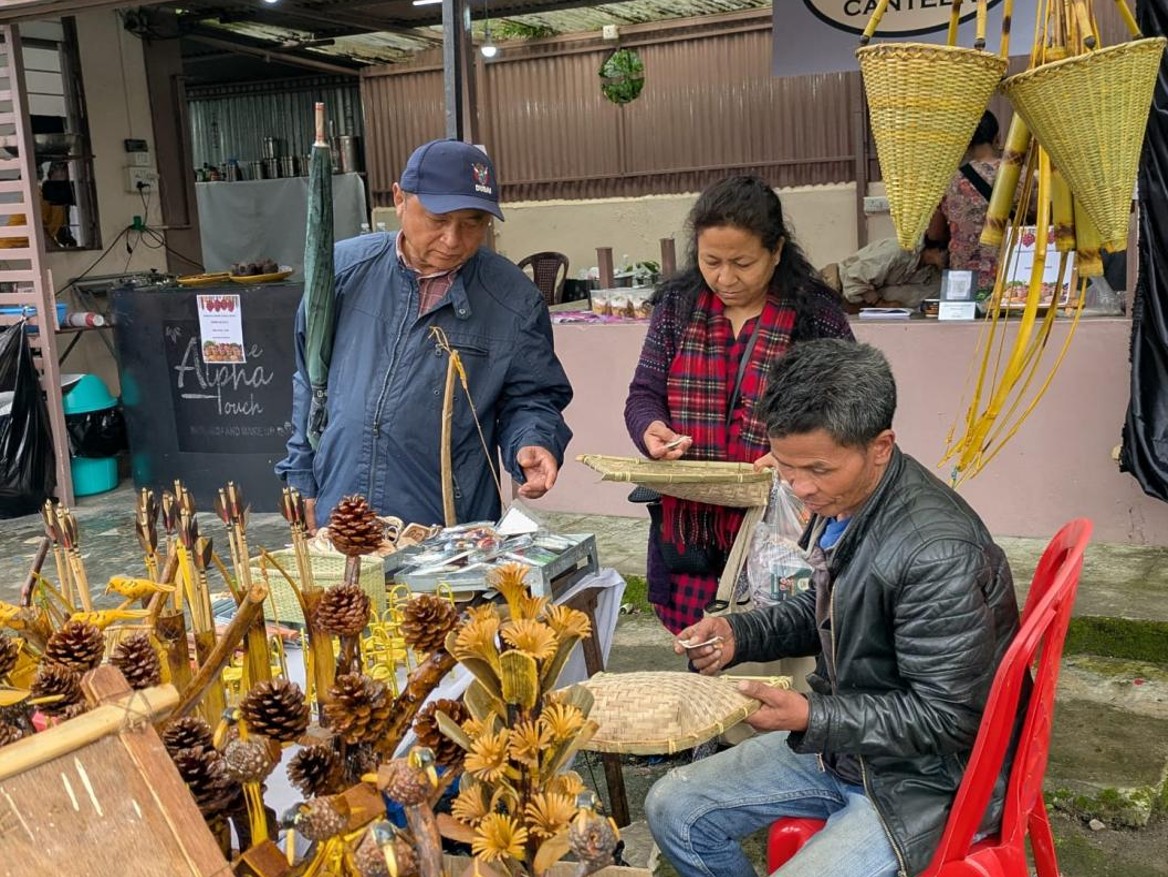
- Artisan & Craft Stalls: Blacksmiths, floriculture entrepreneurs, and handicraft makers added variety, making the market feel like a cultural fair.
- Family-Friendly Additions: Activities like floriculture stalls and even a bouncy castle (in later editions) ensured children and adults alike had reasons to stay and enjoy.
Attraction for Locals and Tourists
The Farmers’ Market successfully positioned itself as both a local necessity and a tourist attraction:
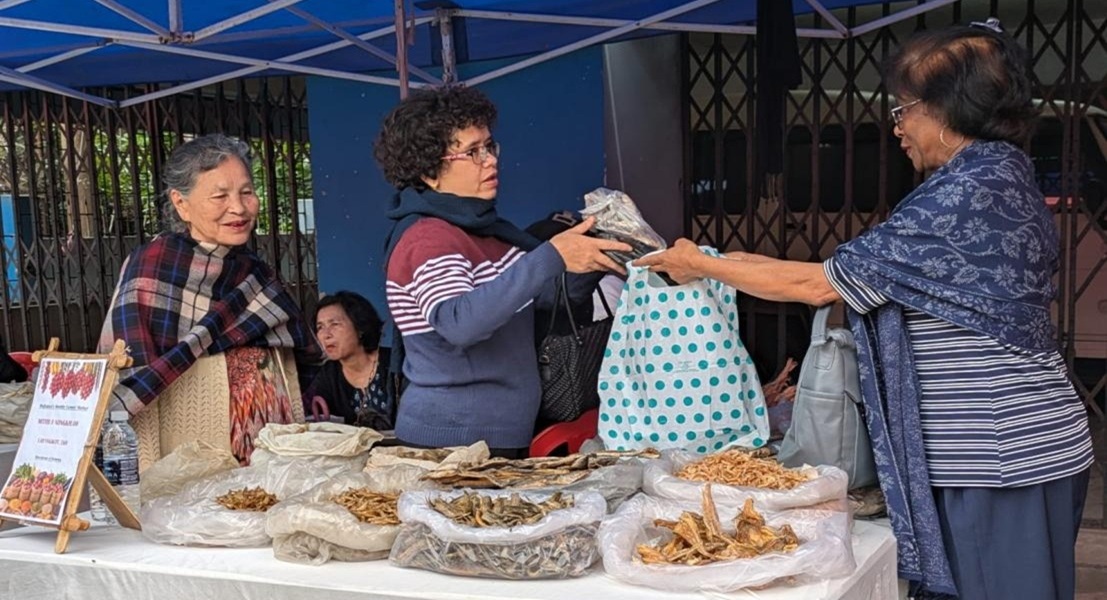
Residents from nearby colonies visited on foot, carrying traditional Pla Iew (cloth bags) to reinforce cultural identity. Tourists were drawn by the festive atmosphere, unique products (fruit wines, organic produce, handicrafts), and opportunities to experience Meghalaya’s culture firsthand. Students, professionals, homemakers, and elderly citizens all found value—whether through affordable fresh produce, cultural performances, or artisan goods. On average, around 500-800 people visit each edition.
BENEFITS AND OUTCOMES
Beyond the invaluable exposure and networking opportunities that have broadened their market understanding and strengthened their connections, the initiative has delivered significant financial gains, enabling farmers to earn higher margins and achieve consistent sales. This dual impact has not only improved their livelihoods but also motivated them to increase production, diversify their offerings, and engage more confidently in future market editions—creating a sustainable cycle of growth and empowerment within the farming community.
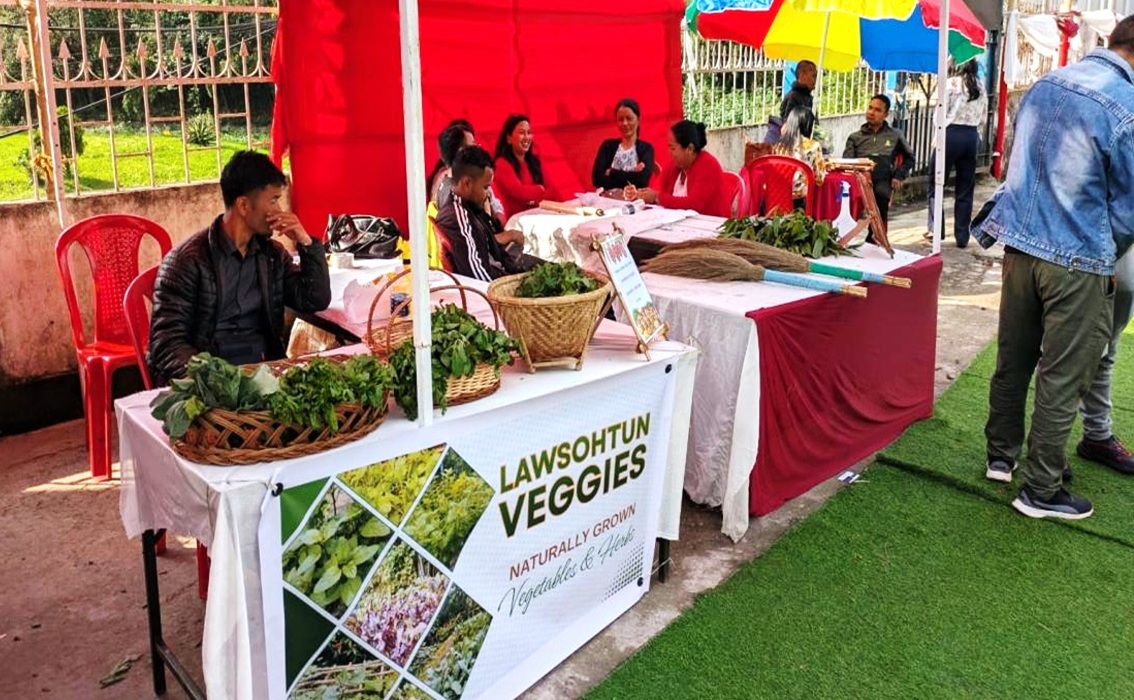
Farmers consistently reported higher earnings compared to traditional village markets, largely due to direct-to-consumer sales and fair pricing mechanisms. While a few vendors sold their produce at the same rates offered to middlemen, they still experienced a complete ‘sold-out’ outcome, reflecting strong consumer demand and improved visibility. Farmers selling organic or niche products (wine, hydroponics, mushrooms) achieved good margins. Farmers consistently reported 3–5x higher margins compared to village markets. Farmers reported customers returning for specific products, creating sustainable demand. Travelling Allowance ranging from 200/- to 2000/- depending on the distance travelled by the farmer is supported by the organisers to reduce operational costs, thereby further boosting farmers’ net profitability.
Some of the feedback received from market functionaries and visitors (Verbatim) are given below.
- “Mustard leaves were sold at ₹15–20 per bundle compared to ₹5 in local This platform is a blessing.” — Pynhunlang Mynsong
- “We want this market twice a It helps us earn more and meet new customers.” — Tipsuk Pohshna
- “The market was very essential for processed products as compared to local markets. It gave us exposure.” — Jingkyrmen VDVK
- “This initiative genuinely supports and uplifts the vendor community.” — March 2026 Vendor Feedback
- “Fruit wine converts seasonal surpluses into higher-value We sold everything.” — Khasi Wines
Hybrid sales through association with SOMOI app
SOMOI app-enabled hybrid sales (on-site + online), expanding reach and convenience for buyers and customers. Farmers gained visibility and new business leads through digital integration. The association with SOMOI has redefined the Farmers’ Market model, bridging the gap between traditional commerce and digital convenience. It has empowered farmers to sell more efficiently, expanded consumer access to fresh local produce, and modernised the market’s operations.
Feedback Received on SOMOI (Verbatim)
- “SOMOI has been very helpful to us and all It’s a great platform for collaboration and growth.”
- “We are happy to share that we have onboarded Country Spice Shillong, Tynrai, Open Up Eats, and many more vendors.”
- “The market has truly helped us build strong connections and expand our”
SOMOI thus stands as a “last-mile enabler”—a partner that connects farmers and consumers seamlessly, ensuring that Meghalaya’s agricultural ecosystem remains vibrant, inclusive, and future-ready. It also introduces digital accessibility to a traditional market, appealing to younger, tech-savvy consumers. Moreover, the live app features highlight farmer stories and seasonal specials, reinforcing cultural value. Two-wheelers used for short-distance deliveries reduce the carbon footprint compared to larger vehicles.
CHALLENGES
Though the organisers didn’t face any challenges in organising this event, the farmers’ market addressed many of the challenges farmers face. In regular markets, organic vegetable producers are often forced to sell at the same price as those produced with agrochemicals. At the Farmers Market, consumers specifically come looking for fresh, local, and organic produce. This allows organic farmers to sell at a fair price that reflects the cost of cultivation, without undercutting. It also serves as a launchpad for farmers and entrepreneurs seeking opportunities to introduce new and speciality products that were previously not easily accessible to consumers. Through digital initiatives like SOMOI, small vendors who participate in the physical market have also gained visibility online. This has translated into direct inquiries, orders, and business leads beyond market days.
The market encourages farmers to diversify beyond traditional staples. For instance, one farmer introduced millets and fruits that were not commonly sold before. As a result of her visibility in the market, she secured supply leads from multiple shops across Shillong city. This shows how the market acts as a B2B connector, not just a B2C one. The market is not limited to agriculture. The farmer market also provides space for local artisans to showcase and sell traditional crafts. Products like handwoven baskets, traditional knives, and other handmade items get visibility among urban consumers who value local craftsmanship.
SUSTAINABILITY AND SCALING UP
Post-event discussions revealed that the Farmers’ Market not only enhanced sales performance but also generated a handsome turnover, underscoring its role as a catalyst for both financial growth and motivation to scale production. Farmers expressed gratitude for exposure, fair pricing, and complete sales. Many requested more frequent markets (twice a month) and larger stall sizes.
CONCLUSION
The Farmers’ Market initiative has emerged as a transformative model for economic empowerment, community engagement, and sustainable development in Meghalaya. Over six successful editions, it has generated an estimated ₹28–36 lakh in total turnover, directly benefiting more than 75 farmers and cooperatives. It has proven that when farmers, entrepreneurs, and citizens come together, they create not just a marketplace—but a movement that strengthens livelihoods, promotes sustainability, and celebrates identity. The Farmers’ Market stands today as a replicable model of inclusive growth, blending tradition with innovation. Its continuation will ensure that Meghalaya’s farmers remain at the heart of the state’s economic and cultural narrative—empowered, visible, and celebrated.
 Canning S Shabong, B.Sc Agri (Hons), MBA (Mkt), is a retired Director of Agriculture (R&T), Meghalaya, with over 35 years of field and administrative experience in areas ranging from Agriculture Marketing, Agriculture Information, and Information Technology. Currently, he is serving as Executive Adviser, Meghalaya Farmers Empowerment Commission, Government of Meghalaya. He can be reached at csshabong@gmail.com
That’s a wonderful initiative connecting farmers directly with the consumers.
Both consumers and the small & marginal farmers are benefitted.
Such initiatives to be promoted in India.
An inspiring example of how inclusion goes beyond participation—it means creating equitable market systems where every farmer has the opportunity to thrive. The Meghalaya experience shows that strengthening market access, local institutions, and community ownership can make farmers’ markets more resilient, inclusive, and sustainable. A valuable read for anyone working on agricultural extension, rural livelihoods, and food systems. Congratulations to the authors and the AESA for documenting and sharing these practical lessons!
Excellent initiative by the govt of Meghalaya which facilitated bringing several groups of people especially farmers and consumers on to a common platform.Congratulations to Mr. Shabong and Shullai on their success in organizing such initiatives. As indicated it is a big challenge to bring down the operational costs and to scale up the operations.
The organisers may visit farmers market initiatives in other states where the stalls are permanent, farmers have to bear the transport and rental charges. The department of Agriculture will provide the stall, weighing machines and fix the prices for different products and display on boards. These markets are open on all the days from 5.30 to 1.00 pm. This model has been working since many years and both farmers and consumers are highly satisfied.
Farmers’ markets connect farmers with consumer. Similar initiative is being implemented in Tamil Nadu under the name ‘Uzhavar sandai’. ICAR-Indian Agricultural Research Institute, New Delhi is having ‘Pusa Agri Krishi Haat’. Efforts are needed to make farmers’ markets sustained like we have weekly markets in India. In Meghalaya model, inclusion of unique features such as music, delivery apps are commendable.