



In this blog, Mahesh Chander explores the possibility of institutionalising the contributions of Agripreneurs and farmer mentors in strengthening extension teaching and training.
CONTEXT
For decades, agricultural extension systems have focused primarily on transferring technologies from research institutions to farmers. While this approach has contributed significantly to productivity growth, today’s agricultural landscape demands much more. Agriculture today is shaped by rapidly changing markets, climate variability, technological innovations, and evolving consumer preferences. Smallholder farmers need advice not only on production technologies but also on business planning, market intelligence, value addition, digital agriculture, access to finance and risk management. No single extension agency can effectively address all these needs. This has led to growing recognition of pluralistic extension systems, where public institutions, private organisations, farmer organisations, NGOs, and agripreneurs work together to support rural development.
Farmers are no longer expected merely to produce crops and livestock; they must increasingly function as entrepreneurs who understand markets, manage risks, add value, and connect with consumers. This transformation raises an important question: Who can best guide farmers on the journey from producer to entrepreneur? One promising answer lies in the experiences of successful farmers themselves. Farmer-to-Farmer Extension (F2FE), where trained farmers share knowledge, skills, and experiences with fellow farmers, offers a powerful mechanism for promoting agripreneurship and strengthening Extension and Advisory Services (EAS). Though F2FE is not a new approach per se and several agencies have tried this approach to disseminate new knowledge, using successful agripreneurs to strengthen EAS and promote entrepreneurship is relatively new.
THE POWER OF FARMER-TO-FARMER LEARNING
F2FE builds on a simple but powerful principle: farmers often learn best from other farmers. The approach has been widely promoted by the Food and Agriculture Organisation (FAO) and successfully implemented in many developing countries. Instead of relying solely on extension officers, experienced farmers are trained as facilitators who help others learn through demonstrations, mentoring, and hands-on problem-solving. The strengths of this approach include:
- High levels of trust and credibility
- Context-specific advice
- Lower delivery costs
- Faster diffusion of innovations
- Strong local ownership
Research from Africa has shown that farmer-led extension can be a highly cost-effective method for increasing technology adoption and improving productivity.
AGRIPRENEURS: AN UNTAPPED RESOURCE IN EXTENSION
Across India, thousands of progressive farmers have evolved into successful agripreneurs. They operate enterprises in areas such as seed production, organic farming, dairy development, custom hiring services, input supply, food processing and digital advisory services. Agricultural universities, ICAR institutes, KVKs, NGOs, and institutions such as MANAGE have documented their success stories. Yet, these agripreneurs remain an underutilised resource within the extension system.
As they combine practical farming experience with business success, agripreneurs possess something that conventional extension often struggles to provide: real-world examples of profitable agricultural enterprises. Their experiences can inspire, motivate, and guide fellow farmers far more effectively than theoretical recommendations alone.
TURNING FARMERS INTO AGRIPRENEURS THROUGH PEER LEARNING
Successful agripreneurs are contributing to agricultural transformation in several ways. They
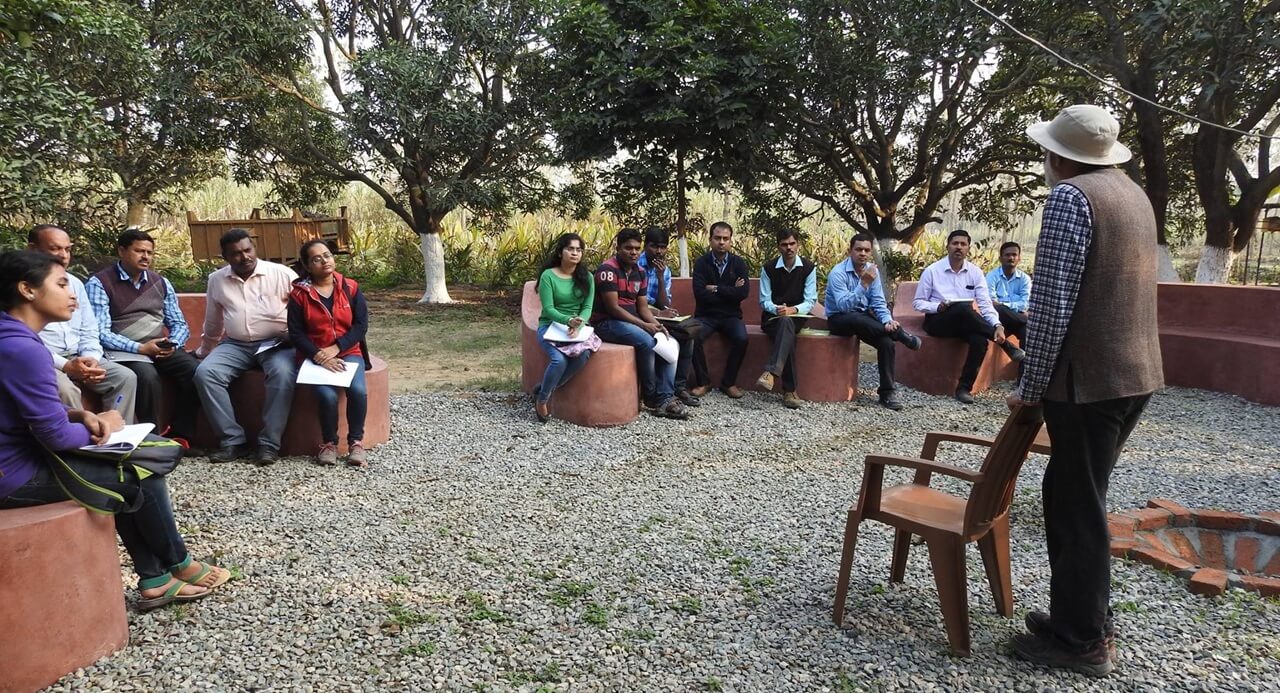
- offer their fields to conduct field demonstrations
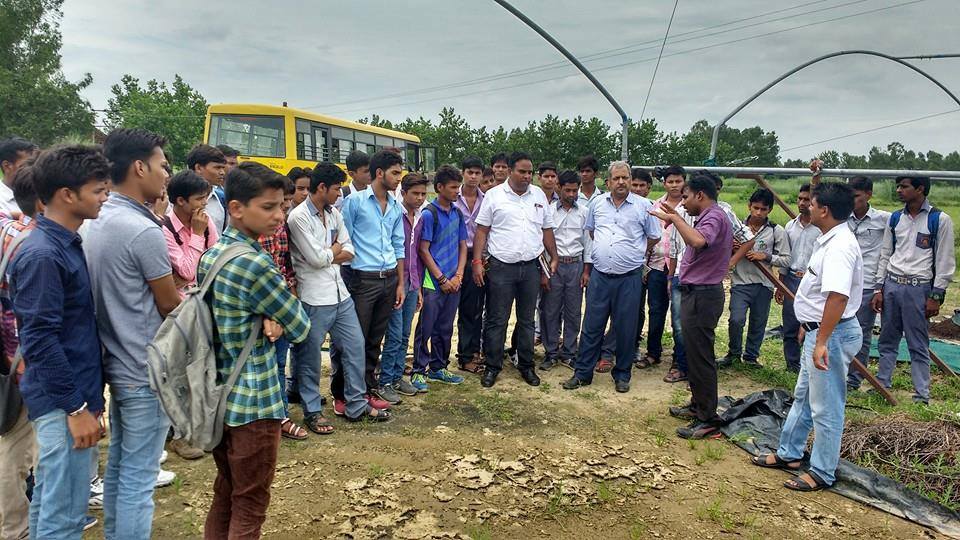
- host farmers who come for exposure visits to their farms or enterprise
- mentor other aspiring entrepreneurs
- share their business experiences and
- link farmers to value chains
When farmers observe neighbours or other farmers succeeding through innovation and entrepreneurship, they are more willing to experiment and adopt new practices themselves. This aligns closely with Everett Rogers’ Diffusion of Innovations theory, which highlights the critical role of opinion leaders and change agents in accelerating adoption.
INSTITUTIONALISING AGRIPRENEURS’ INVOLVEMENT IN EXTENSION
India’s policy environment is increasingly supportive of agripreneurs-led extension (Box 1). There is a possibility of engaging agripreneurs in agricultural extension, teaching and training field extension functionaries and farmers.
| Box 1: PRAGATI launched to empower agri-entrepreneurs Union Agriculture Minister Sri Shivraj Singh Chouhan launched the PRAGATI (Promoting Regenerative Agriculture and Agri-Entrepreneurship) program to empower 20,000 rural youth as agri-entrepreneurs. The initiative helps these local entrepreneurs support 20 lakh small farmers by offering soil testing, crop advice, and better market access across eight Indian states. The initiative brings together PepsiCo Foundation, SBI Foundation (SBIF), Gates Foundation, IDH, Heifer International, Environmental Defence Fund (EDF), Global Agri Entrepreneurship Academy, Sustainable Agriculture Foundation International Association (SAFIA), Agri Entrepreneur Growth Foundation (AEGF), and Transform Rural India Foundation (TRIF) to build a nationwide ecosystem of agri-entrepreneurs. https://dailypioneer.com/news/shivraj-launches-pragati-to-empower-agri-entrepreneurs |
Professor of Practice in Agricultural Extension
The position of Professor of Practice, created by the University Grants Commission (UGC) under the National Education Policy (NEP) 2020, is one approach to engaging such agripreneurs to bridge the gap between textbook theory and on-the-ground realities (Box 2). Unlike traditional professors who focus heavily on research and classroom teaching, these professionals share their direct experience in rural development, farming and agribusiness.
| Box 2: Professor of Practice in Agricultural Extension Professor of Practice is a senior professional position designed to bring extensive field experience, policy engagement, and practical innovation into academic teaching, research, and outreach—especially within agricultural universities and extension systems. The position of Professor of Practice (PoP)could be meant for distinguished practitioners who may not necessarily follow the conventional academic pathway (PhD → publications → promotions), but who have:
As agricultural Extension is inherently practice-driven, a Professor of Practice can help in:
This is especially relevant in fields such as digital extension, extension for climate-smart agriculture, FPO strengthening, agroecology promotion, and organic & natural farming extension. |
There are guidelines for engaging Professors of Practice in universities and colleges. Positions of Professors of Practice have been created across various disciplines in universities. This can also be in the Agricultural Extension discipline. For instance, Tamil Nadu Agricultural University has appointed Professors of Practice in various disciplines, including the Department of Agricultural Extension & Rural Sociology. Similarly, Kerala Agricultural University has registered itself as a Higher Education Institution on the UGC Professor of Practice (PoP) portal. Interested experts who wish to be considered for the “Professor of Practice” role can register on the Professor of Practice (PoP) portal and upload their biodata.
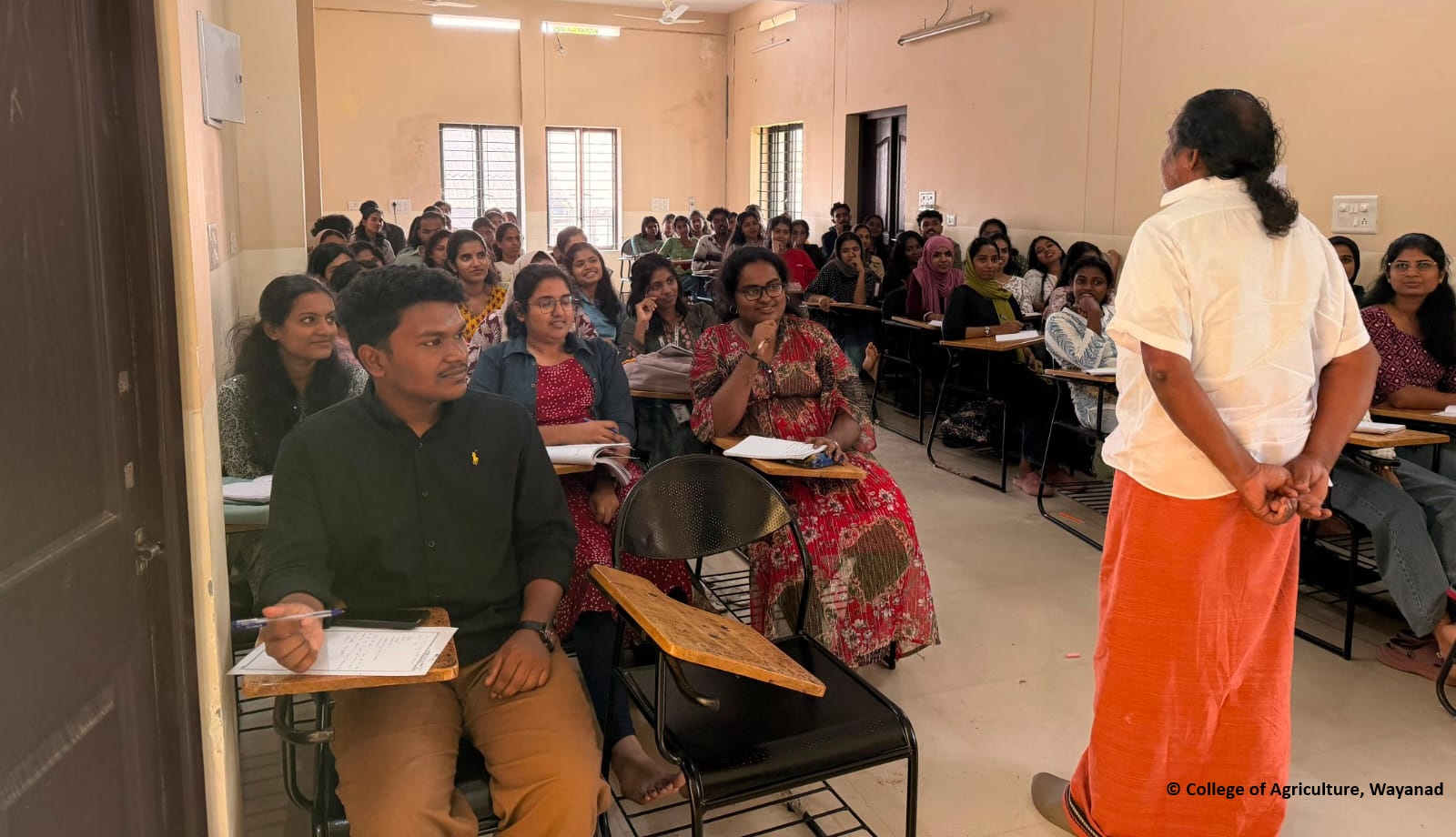
The Kerala Agricultural University has appointed Padma Shri Raman Cheruvayal as Professor of Practice, who will share his practice-based knowledge with KAU students. He is a tribal farmer from Kerala, known for his contributions to sustainable agriculture and biodiversity conservation, for which he was awarded the Padma Shri in the field of agriculture in 2023. More SAUs and ICAR Deemed Universities can consider appointing Professors of Practice in agricultural Extension departments. Even traditional universities having agriculture faculty have appointed Professors of Practice (Box 3).
| Box 3: Mr Anil Sawhney, a progressive farmer and Professor of Practice, says…
|
 As a Professor of Practice at MJPRU, Bareilly, my students and I cherish the early-morning field classes (5-6 am) that last 2-3 hours. Rather than classrooms, my Gen Z students learn in orchards and demo plots, observing plants, birds, reptiles, and pollinators as living teachers. They master natural indicators, sustainable eco-farming principles, and my hardy local rootstock concept for disease resilience and ecological harmony. Classes rotate between university demo plots and farmer sites, bridging academic excellence with three decades of field wisdom. My formulated SOPs guide students beyond textbooks into biodiversity-conscious agriculture. This fusion of classroom theory and hands-on field experience ignites their passion for sustainable farming.
Farmer Mentors
KVKs already engage with Agripreneurs occasionally by inviting them to meetings such as the SAC (Scientific Advisory Committee), giving invited talks in training programmes, and organising farmers’ visits to the farms and ventures of such farmers. However, one practical way forward could be to formally integrate such agripreneurs into the Krishi Vigyan Kendra (KVK) system with provision of monetary incentives. This will compensate Agripreneurs for their time and efforts. They could also be used by the line Departments (Agriculture, Horticulture, Animal Husbandry, Fisheries, etc).
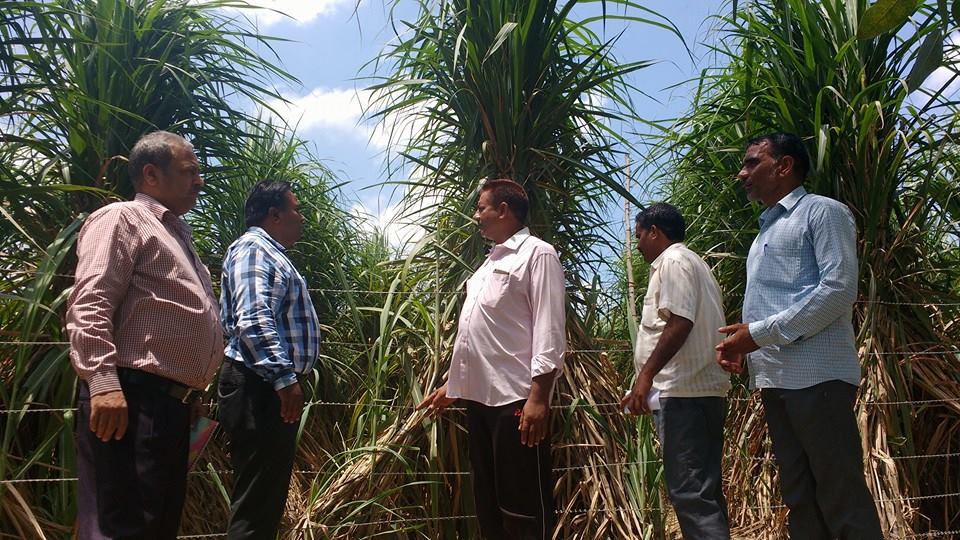
They need to be identified, supported, certified and engaged in strengthening EAS. For instance, KVKs could identify successful agripreneurs based on their adoption of scientific farming practices, entrepreneurial success, communication skills and credibility within the community. They could be trained in best practices in communicating with farmers and engaging students. They could then be certified as farmer mentors or para extension facilitators and used to organise demonstrations, conduct field experiments, organise farmer training and technology campaigns, and organise surveys and collect feedback. In other words, they complement, rather than replace, extension personnel.
INSPIRING THE NEXT GENERATION
One of the most significant benefits of agripreneur-led extension is its potential to attract rural youth. Many young people perceive agriculture as risky and unprofitable. However, successful agripreneurs demonstrate that agriculture can be:
- Innovative
- Technology-driven
- Market-oriented
- Environmentally sustainable
- Financially rewarding
As mentors and role models, agripreneurs can help create a new generation of rural entrepreneurs capable of driving agricultural transformation. These trained agripreneurs can be incentivised for their services through honoraria and travel expenses.
There are some good examples to draw lessons from and adapt in various contexts. For instance, ICAR-KVK-MYRADA has conceptualised and promoted the Agri Entrepreneurs’ Service Centre (AESC) to provide professional handholding support through which entrepreneurial networks can be established, and enterprises sustained. The centre provides mentoring support to budding entrepreneurs to sustain their enterprises through appropriate services via collective action. The KVK trains and handholds interested farmers in their endeavour to become agripreneurs, and they, in turn, will serve as mentors to the KVK, training other budding entrepreneurs. KVKs across the country – if they are keen on promoting agripreneurs – can replicate this functional model with the necessary adaptations.
LOOKING AHEAD
The question is no longer whether farmers can teach other farmers. Across India and the world, they already do. The challenge now is to create institutional mechanisms that recognise, support, and scale their contribution to agricultural development. There can be several ways agripreneurs can be engaged in agricultural extension. Professor of Practice and ICAR-KVK-MYRADA-Agri Entrepreneurs’ Service Centre (AESC) are only illustrative. Many more innovative ways could be explored to engage agripreneurs in agricultural extension teaching & field extension services.
The future of agricultural extension lies not in replacing public systems but in strengthening them through partnerships. Farmer-to-Farmer Extension is a practical, scalable approach that combines scientific knowledge with local experience, social trust, and entrepreneurial success. By recognising agripreneurs as extension partners, India can build a more inclusive, responsive, and market-oriented advisory system. Such an approach not only improves the dissemination of technology but also empowers farmers to become innovators, business leaders, and agents of rural transformation.
This is a summarized version of paper, “Farmer-to-Farmer Extension (F2FE) as a Catalyst for Agripreneurship: Engaging Agripreneurs within Pluralistic Extension and Advisory Services (EAS) to Transform Smallholder Farmers into Market-Oriented Entrepreneurs” presented at MANAGE Dialogue 2026: International Workshop on the Future of Agricultural Extension and Advisory Services, 24–26 February 2026 held at the National Institute of Agricultural Extension Management (MANAGE), Hyderabad, India.
 Dr Mahesh Chander is a Principal Scientist at ICAR-Indian Veterinary Research Institute, Izatnagar-243122 (UP), India. He can be contacted at drmahesh.chander@gmail.com

It is very well written including the F2F extension approach in a new format of Professional Practices to strengthen the current extension system by scaling out their approach.
It was an insightful read sir. I completely agree with your perspective. My recent analysis of the NSSO-SAS (Situation Assessment Survey) data also indicates that most of the farmers tend to seek advice from and adopt the practices of progressive farmers. This strongly resonates with the ideas you have shared, particularly regarding the role of progressive farmers as Professors of Practice and mentors in agricultural extension.
The blog authored by Dr. Mahesh is worth consideration for strengthening the entrepreneurial ecosystem. Though the F2F extension is not a new concept, the learnings from successful implementation of F2F extension in India and other countries can be used to design an implementation framework.
In this context, I suggest that the concept of Recognition of prior learning (RPL) may also be clubbed for synergy. To leverage farmers’ expertise from RPL, their life long hands on skills can be assessed against formal competency standards. This validates their knowledge/skill which are not accredited, and can be converted into a recognised qualification. Provision under Skill India Mission can be utilised.