


In this meeting note, Thirumalai Nambi shares his experience of participating in the National Workshop on Reimagining India’s Agri-Incubation Ecosystem: Innovations, Good Practices and Future Pathways.
CONTEXT
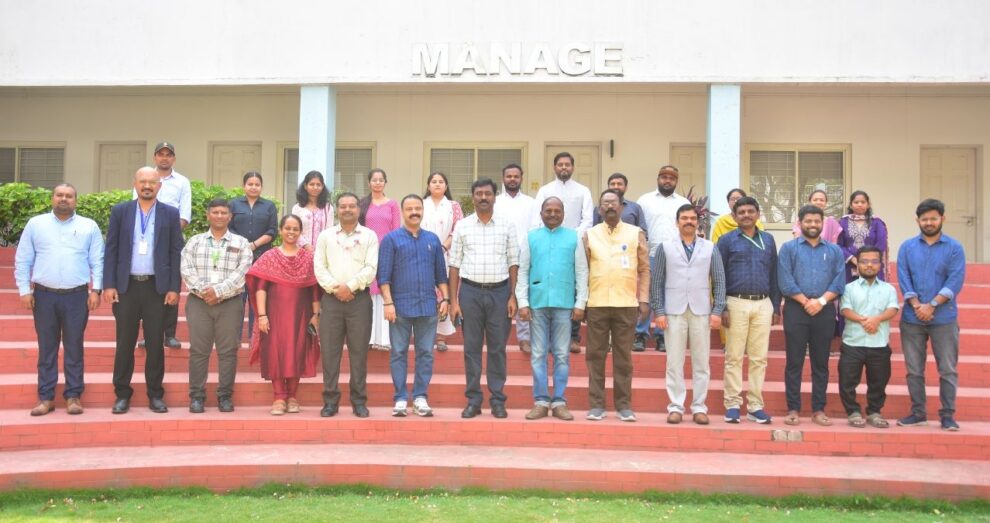
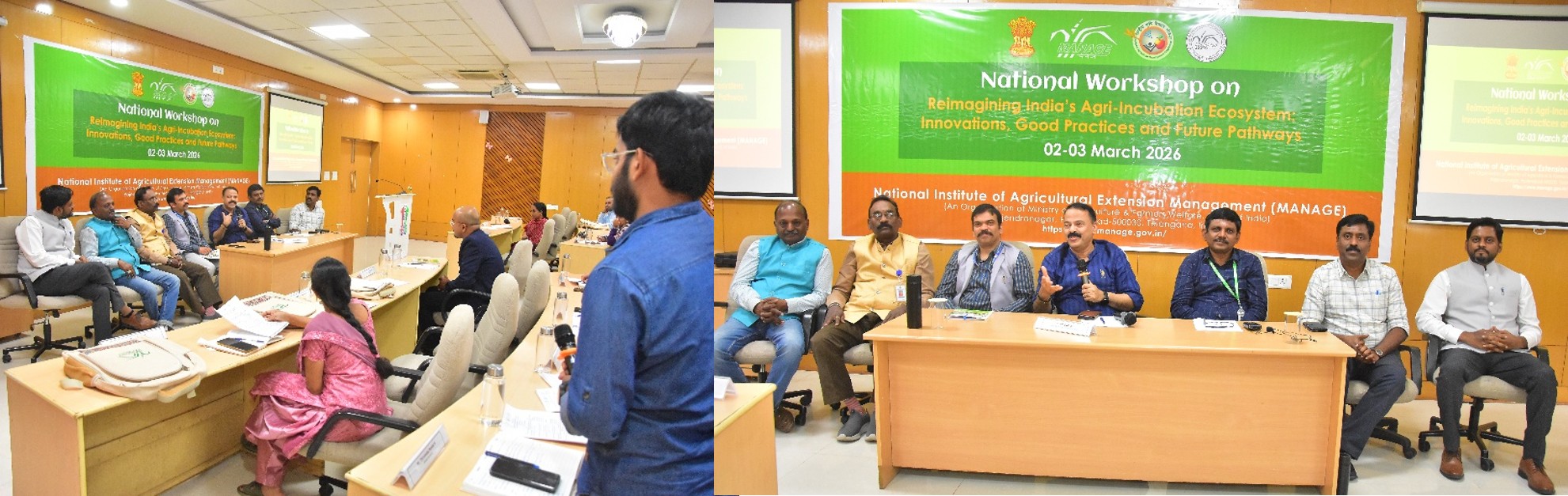
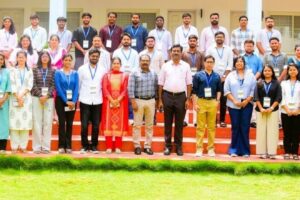
The MANAGE–Centre for Innovation and Agripreneurship (MANAGE-CIA) at the National Institute of Agricultural Extension Management (MANAGE), organised the National Workshop on Reimagining India’s Agri-Incubation Ecosystem: Innovations, Good Practices and Future Pathways at Hyderabad on 2nd and 3rd March 2006 at Hyderabad. 25 representatives from agribusiness incubators affiliated with ICAR institutions, agricultural universities, national institutes, international research organisations, and state government-supported incubators, along with mentors and ecosystem enablers from across India participated in this programme.
As a member of the organising team, I viewed the workshop as an opportunity to understand how a national-level knowledge-sharing platform is conceptualised, coordinated, and delivered. The experience provided firsthand exposure to workshop planning and execution, while also creating a valuable opportunity to interact with representatives from diverse incubation institutions and gain practical insights into the evolving Agri-incubation ecosystem.
Beyond Mentoring and Funding: Good Practices in Fostering Agripreneurship
Before attending the workshop, I primarily understood agribusiness incubation as mentoring, training, and financial support for startups. The practices shared during the workshop broadened this understanding by demonstrating that incubation involves supporting the entire entrepreneurial journey.
Identifying and Preparing Future Entrepreneurs
One of my key learnings was that entrepreneurial support should begin even before an innovator formally enters an incubation programme. Many promising individuals may possess useful ideas or technical knowledge but lack awareness of incubation opportunities, confidence in their entrepreneurial abilities, or clarity about how to develop their ideas into viable enterprises. Proactive startup scouting and structured pre-incubation support can help identify such innovators and guide them through idea validation, business-model development, market assessment, and enterprise planning. (e.g. MANAGE CIA- Agri-Eureka & Pre-Incubation Programme).
Similarly, sustained engagement within educational institutions can foster entrepreneurial mindsets among students and build a stronger pipeline of future entrepreneurs. (e.g. WE HUB, AIC Anand Foundation, MANAGE CIA initiatives).
Extending Incubation to Underserved Regions
Decentralised incubation was one of the most interesting models presented during the workshop. Conventional incubation services are often concentrated in universities, research institutions, and urban centres, limiting their accessibility to innovators in rural and geographically distant areas. The hub-and-spoke incubation model adopted by AgHub stood out for demonstrating how a central incubator’s expertise and resources could be extended through regional institutions to reach local entrepreneurial communities. I found this approach particularly relevant to agriculture, where farmers, innovators, and aspiring entrepreneurs are widely dispersed across rural regions.
Connecting Innovation with Markets
Another important learning was that the development of an innovation does not automatically lead to the creation of a sustainable enterprise. Incubators must actively bridge the gap between technical innovation and market adoption. Facilities such as the ABIS-TBI Product Promotional Centre and Nutrihub’s Eat Right branding initiative demonstrated how product presentation and branding can improve startup visibility and build customer confidence.
I also found structured networking platforms highly significant. Interactions with stakeholders help startups validate assumptions, build partnerships, understand market expectations, and access growth opportunities. (e.g. MANAGE CIA- Agri-Startup Stakeholders Connect Programme & a-IDEA AGRI UDAAN Accelerator Programme)
Strengthening Human and Institutional Capacity
The workshop also made me realise that successful incubation depends not only on programmes and infrastructure but also on the capabilities of the people who manage and support them. Internship programmes and National faculty development programmes were particularly relevant in this regard. They can prepare future incubation professionals, expose students and faculty members to entrepreneurial processes, and expand the pool of individuals capable of guiding startups. As an intern, I found this practice personally meaningful because it showed how experiential learning can contribute to both individual professional development and the long-term capacity of the incubation ecosystem.
Keeping the Ecosystem Learning
Continuous knowledge exchange was another practice that stood out to me. Platforms such as the MANAGE-CIA Saturday Webinar Series demonstrated how regular interaction among startups, incubators, experts, and ecosystem enablers can promote learning from practical experiences, keep stakeholders informed about emerging developments, and help them adapt their support systems to changing entrepreneurial needs.
What Makes a Startup Investable?
The panel discussion changed my understanding of startup evaluation by showing that investability depends on much more than an innovative idea or an impressive pitch. Evaluators consider the founder’s commitment, the time, effort, and resources already invested, evidence of customer or field validation, the relevance of the problem being addressed, and the venture’s potential for scalability and financial sustainability.
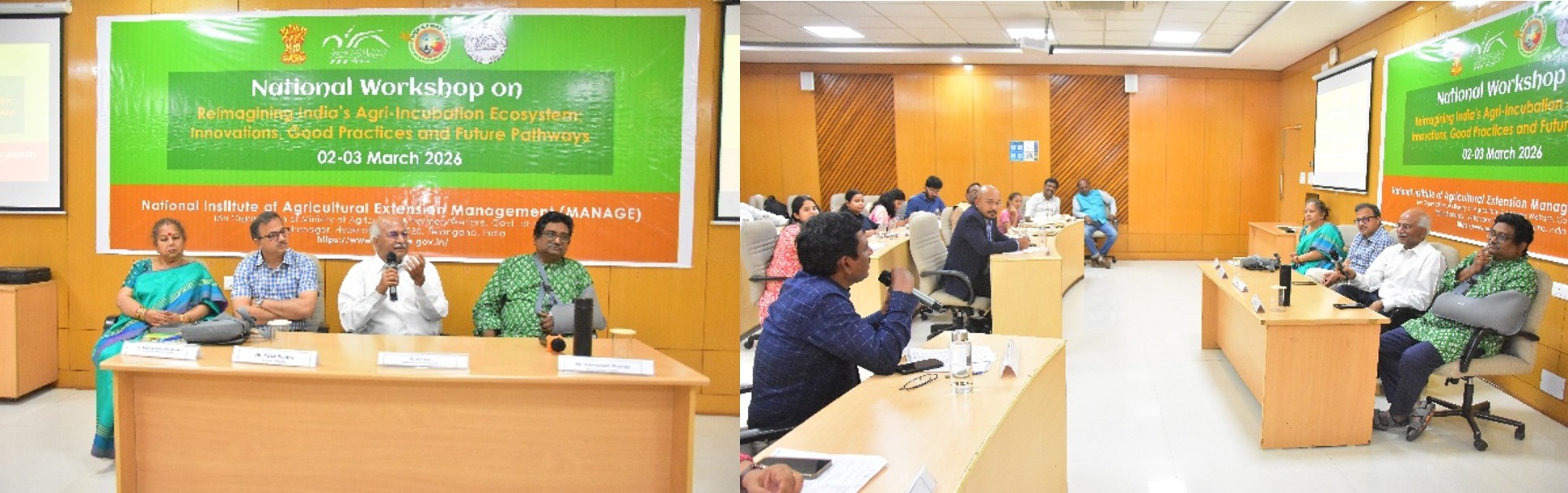
“The ideal entrepreneur has ‘skin in the game’ investing their own time, effort, or money because ideas alone cannot be assessed; only action reveals true commitment.”
“True entrepreneurial passion is reflected not in seeking incentives while holding on to job security, but in a founder’s willingness to take risks with conviction”
Genuine ownership and active involvement strengthen a founder’s credibility, whereas nominal participation undertaken mainly to meet eligibility requirements or access funding may raise concerns. I also learned that technology creates value only when it provides a practical, affordable, and context-appropriate solution to a genuine user need. Equally important was the reminder that entrepreneurial potential should not be judged by language proficiency, presentation style, or urban exposure, as rural and non-English-speaking innovators may possess strong practical knowledge and viable solutions.
Understanding the Bottlenecks in Incubation Ecosystems
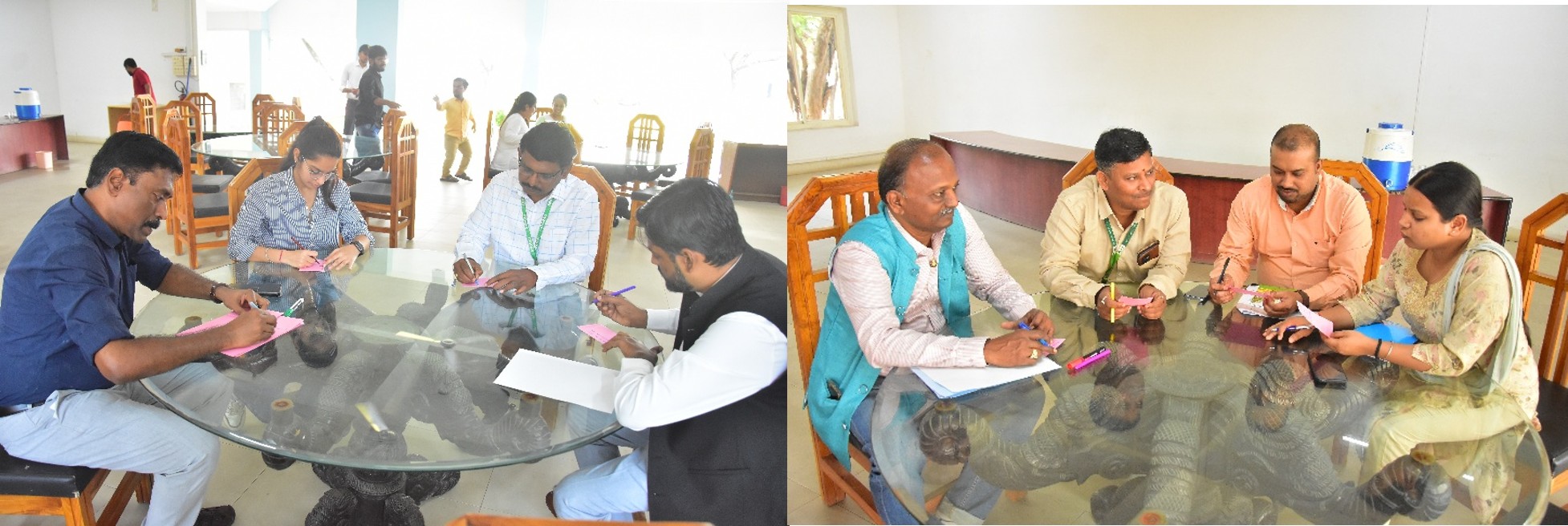
Designing and facilitating the group exercise gave me a deeper understanding of the practical challenges faced by agribusiness incubators operating across diverse institutional contexts. One recurring concern was the difficulty of identifying diverse and innovative entrepreneurs, particularly from rural and tribal communities. Declining application numbers and the repetition of similar business ideas suggested that conventional outreach methods may no longer be sufficient, highlighting the need for more targeted and inclusive startup scouting mechanisms. The discussion also highlighted financial sustainability as a persistent institutional concern. Delays in funding, limited operational autonomy, weak coordination among support schemes, and inadequate access to sector-specific investors can affect the continuity and expansion of incubation services. To strengthen financial sustainability, incubators need to develop robust infrastructure and specialised training programmes that not only support startup operations but also generate revenue through facility usage, technical services, and capacity-building initiatives. At the same time, the rapid growth of the agribusiness ecosystem has created a demand for skilled incubation professionals with domain expertise that many centres struggle to meet. I realised that the effectiveness of an incubation centre depends not only on the availability of funds and infrastructure but also on its ability to reach promising entrepreneurs and provide them with consistent, high-quality human support.
What Makes an Agribusiness Incubator Credible?
The session ‘Branding Beyond the Logo’ gave me a different perspective on branding in agribusiness incubation that extends beyond logos, publicity, and communication materials to include how consistently an incubator delivers value to startups. An incubator’s reputation is shaped collectively by its staff, mentors, experts, selection committees, and incubated startups, with every interaction influencing how the institution is perceived. Consistent performance can therefore transform the incubator’s brand into a valuable institutional asset that strengthens its effectiveness while enhancing the visibility, legitimacy, and investability of the startups it supports.
“Internal brand precedes external brand; true brand value is built through consistent performance over years, not campaigns.”
Future Pathways for Building Sustainable and Impact-Oriented Agri-Incubation Systems
After listening to diverse experiences, innovations, and good practices shared by incubators and ecosystem enablers throughout the workshop, I gained an understanding of the priorities and strategic directions required to strengthen India’s agribusiness incubation ecosystem. Key takeaways included:
- Strengthen farmer–researcher–industry linkages: Collaboration can ensure that innovations address real agricultural problems and market needs.
- Expand outreach and branding: Greater visibility can attract a wider and more diverse pool of innovators and improve application quality.
- Improve testing and validation access: Quality facilities can accelerate product development, build credibility, and support commercialisation.
- Accelerate technology commercialisation: Effective licensing and technology-transfer mechanisms can convert research innovations into market-ready enterprises.
- Diversify revenue sources: Incubators should reduce grant dependence through income-generating services.
- Promote ecosystem collaboration: Partnerships among startups, FPOs, SHGs, MSMEs, industry, and research institutions can strengthen incubation outcomes.
The common message emerging from these recommendations was that sustainable agri-incubation cannot be achieved through isolated programmes or financial support alone. It requires incubators to connect innovation with real user needs, provide pathways from validation to commercialisation, build diverse partnerships, and develop the institutional and financial capacity needed to deliver long-term value to startups.
Words That Sparked Reflection
“The Indian Agri-startup ecosystem does not lack innovative ideas; rather, it suffers from a ‘problem discovery gap’.”
“Successful incubation depends on evaluating ideas not just for innovation, but for customer relevance, feasibility, and market readiness.”
The idea of a “problem-discovery gap” resonated strongly with me because it shifted my attention from generating more innovations to understanding whether those innovations address clearly identified problems faced by farmers, consumers, or markets.
Carrying the Learning Forward
Documenting What Reports Often Miss
Listening to the experiences of incubator representatives deepened my understanding of how incubation centres operate across diverse institutional and regional contexts. Their accounts revealed practical challenges and lessons that are often absent from formal reports. The workshop also provided valuable insights into how innovations and entrepreneurs are assessed for incubation support, including the considerations that influence selection, mentoring, and funding decisions.
Because many of these experiences remain undocumented, the discussions reinforced the importance of my current work in documenting the good practices of MANAGE-CIA’s incubation programmes. I intend to use these insights to capture not only programme activities and outcomes but also the processes, challenges, adaptations, and lessons that contribute to institutional impact over time. Such documentation can help ensure that valuable practices are shared, adapted, replicated, and continuously improved.
A New Perspective on Event Organisation
Beyond the insights on incubation, being part of the organising team provided important professional learning. It gave me a deeper appreciation for the extensive planning, coordination, and teamwork required to deliver a national-level workshop, which I had often overlooked when attending similar programmes as a participant. The experience was particularly meaningful because I was trusted to take initiative, manage responsibilities independently, and contribute my own ideas.
The workshop design also showed me the value of participant-centred learning. Rather than beginning with a conventional inaugural session, the workshop opened with “Incubator on Spotlight,” which gave each incubator three minutes to present a distinctive initiative or successful intervention. Discussion forums and group activities further encouraged active participation, experience sharing, and collective reflection. These formats demonstrated how workshops can move beyond one-way presentations and become spaces for peer learning and collaborative problem-solving.
Shared Learning, Stronger Ecosystems
The workshop reinforced the importance of creating platforms where institutions can exchange ideas, share best practices, and collectively reflect on emerging challenges. Observing these interactions showed me how collaborative learning strengthens the wider ecosystem by enabling institutions to learn from one another rather than work in isolation. I look forward to applying these learnings while contributing to the next edition of the National Workshop on Reimagining India’s Agri-Incubation Ecosystem: Innovations, Good Practices and Future Pathways, scheduled for 04 February 2027 at MANAGE, Hyderabad.
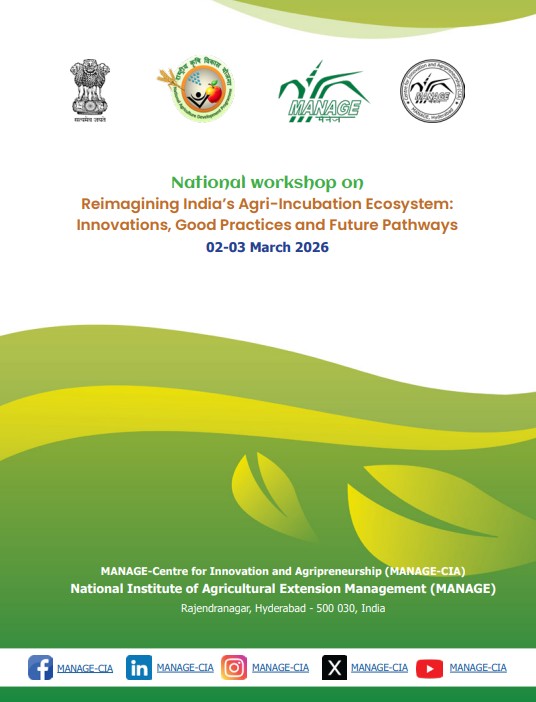 Read the full report here: Proceedings of the National Workshop on Reimagining India’s Agri-Incubation Ecosystem: Innovations, Good Practices and Future Pathways 02-03 March 2026
 Thirumalai Nambi is an Intern at the MANAGE Centre for Innovation and Agripreneurship (MANAGE-CIA), Hyderabad. He completed his Master’s degree in Agricultural Extension Education from the University of Agricultural Sciences, Dharwad. His areas of interest include agripreneurship and rural development. He can be reached at tnambi2001@gmail.com.
Add Comment