

In this Good Practice Note, Salome and Santhoshi review the organization of the annual Mobile Biodiversity Festival in Telangana, emphasizing good practices and their outcomes.
CONTEXT
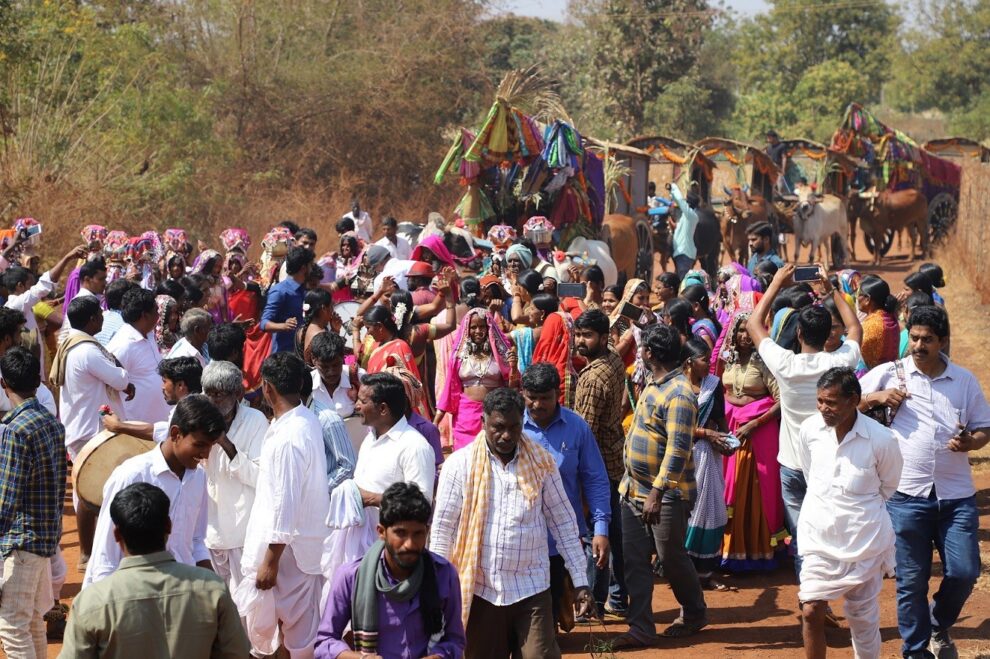
For over 25 years in Telangana, grassroots Sanghams—village-level collectives of nearly 5,000 Dalit and indigenous women farmers in the Zaheerabad region—have led the Mobile Biodiversity Festival (Paatha Pantala Panduga). This unique initiative celebrates agro-biodiversity, community sovereignty, and women-led governance. Supported by the Deccan Development Society (DDS), it demonstrates how inclusive, locally rooted development—driven by collective action and community voices—can preserve cultural heritage, sustain ecological knowledge, and strengthen rural livelihoods.
GOOD PRACTICES
Planning and Decision-Making Process
The process begins with a series of meetings among Sangam leaders who generate the core ideas and key decisions that shape the Jathara’s direction, purpose, and structure. The outcomes of these meetings are subsequently discussed with DDS staff. Finally, the consolidated plan, along with detailed budget estimates, was presented to the DDS Board for review and approval. This ensures institutional oversight and accountability before activities commence.
Community participation is central to the success of the Jathara. The event is not merely organised for the community, but by the community. Key community-level responsibilities include:
- Finalising the venue, securing necessary permissions
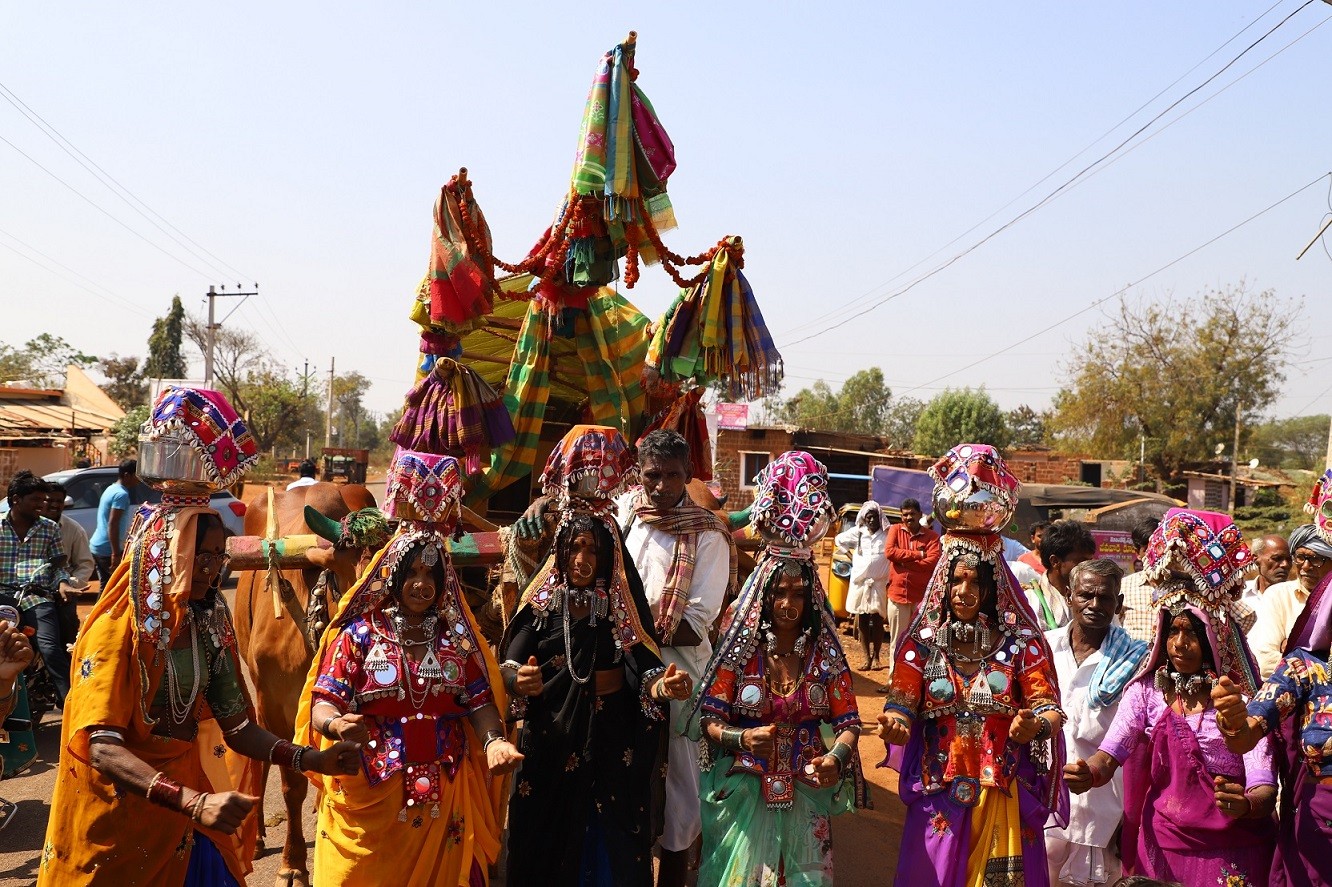
- Arrangement of food and bullocks’ carts is a major responsibility
- Decorating the venue, symbolising agricultural diversity and local identity.
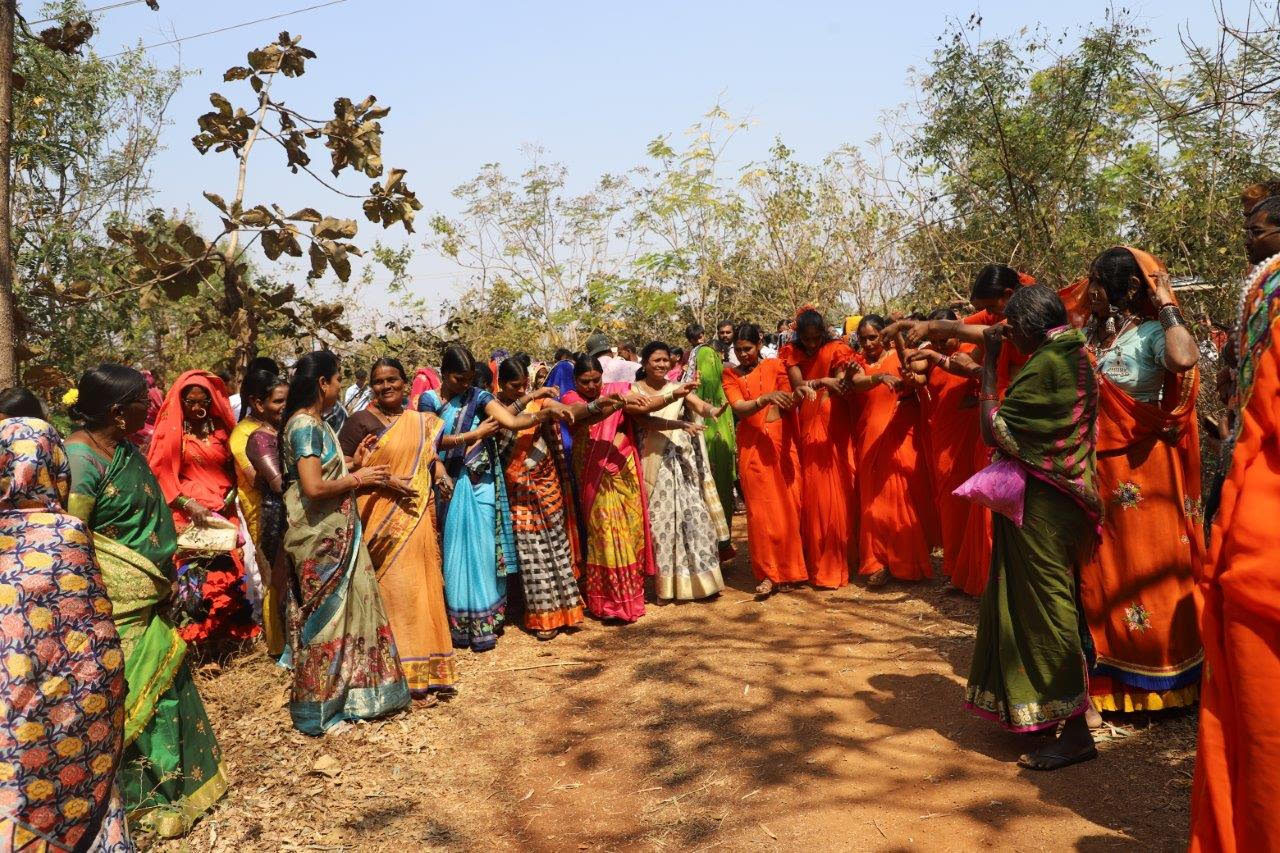
The field and office teams of DDS have been playing the primary coordinating roles, ensuring systematic preparation and effective communication across all levels.
- Preparing route map for the Jathara, scheduled from mid-January to mid-February, including 5mandal level Jatharas
- Conducting a quiz programme for school children focusing on local ecology, agriculture and local food culture.
- Ensuring the timely delivery of invitations at all levels.
- Good care of guests, serving local, delicious, nutritious foods.
- Coordination with Sangam Radio for live broadcast of programs and Community Media Trust to ensure systematic video documentation of the entire Jathara process.
This integrated approach—combining institutional coordination with strong community ownership—is fundamental to the successful planning and implementation of the Jathara.
Local Economy and Community Participation
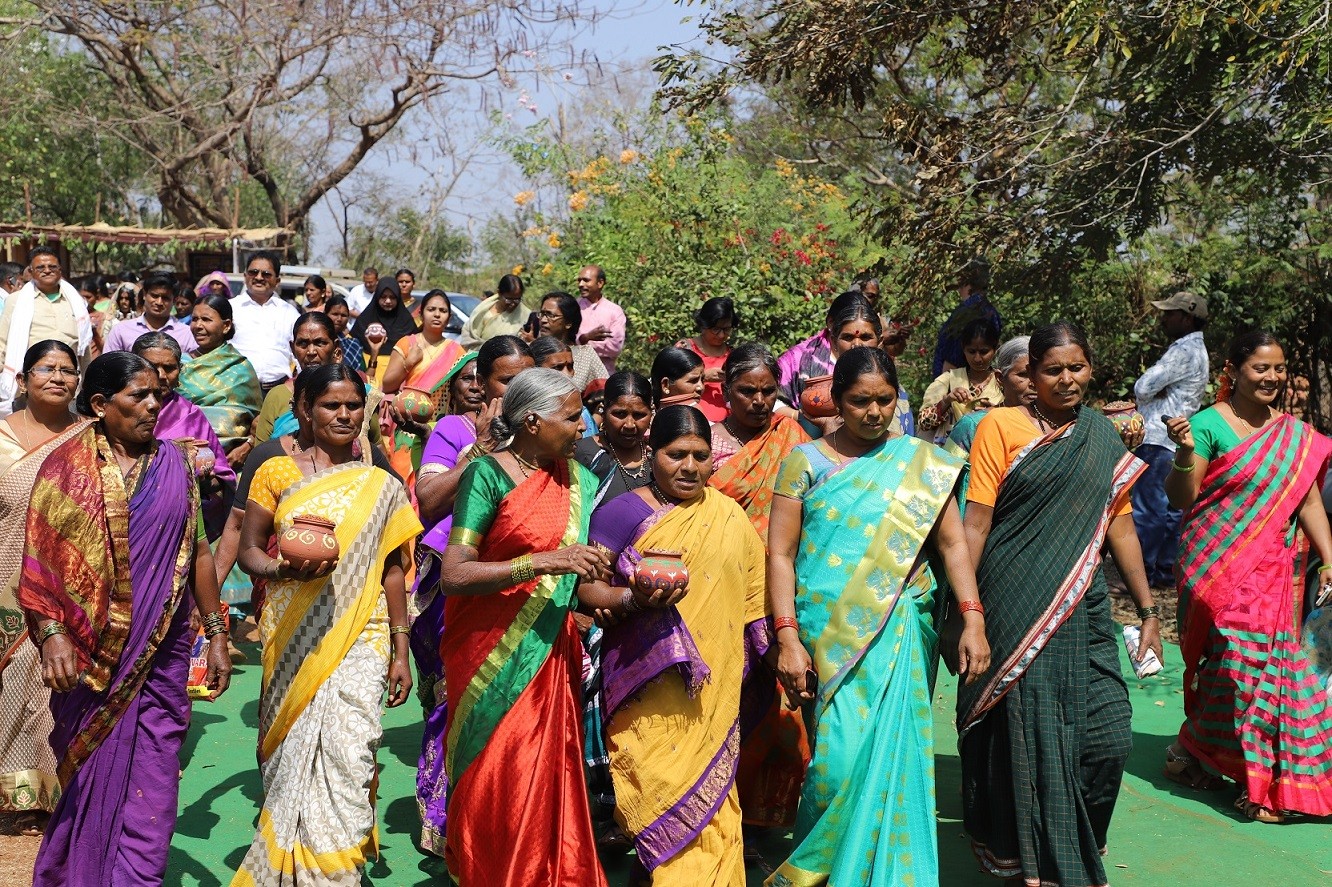
Jathara serves as a strong platform for inclusive community engagement, not only for sangham members but also for the wider village. In every village Jathara, there is active involvement of villagers from surrounding areas, representing diverse age groups, occupations, and social backgrounds. Additionally, participation of local schools and colleges is also encouraged through cultural performances, volunteering, exhibitions, and awareness activities.
The Jathara creates substantial short-term and seasonal livelihood opportunities, directly supporting local artisans and traditional cultural practitioners. Key Beneficiary Groups include Bullock cart makers, Drum (Dappu) beaters and folk singers, Kolatam performers, Handloom saree weavers, Mazmaa cultural teams, Bamboo weavers, clay potters, Flower decorators and carpenters. A significant portion of that budget, approximately 4 lakhs INR, is paid directly to local artisans and performers during each Jathara cycle, contributing to income security and the preservation of indigenous skills and cultural traditions.
The event also stimulates the sales of community-run enterprises: herbal medicine, Manures like vermicompost, neem oil, and value-added millet products.
Institutional Recognition and Incentives for Farmers
From its inception, the Jathara has prioritised the recognition of small and marginal farmers, particularly those practising sustainable and biodiversity-rich agriculture under challenging conditions. This recognition framework aims to honour exemplary practitioners and strengthen their identity as biodiversity conservers within their own communities.
Selection criteria include key dimensions of sustainable agriculture, such as crop diversity, mixed farming systems, conservation & active use of local landraces, and preparation of farm inputs using locally available resources, drawing on local knowledge systems.
At each Jathara, 15-20 outstanding farmers (men and women) are recognised. Each selected farmer is also documented in a short film that captures their agricultural practices and knowledge systems. These films are publicly screened during the Jathara before the presentation of citations and awards, ensuring peer learning and wider dissemination of best practices. Jathara also serves as a local platform for hundreds of farmers to discuss issues in the presence of local authorities, both elected and government. Often, some of the issues are solved on the spot.
KRISHI VIGYAN KENDRA (KVK)’s facilitation
As an extension institution, Jathara offers the ICAR-KVK working under the administrative control of the DDS a unique 45-day platform to listen to farmers, learn from their experiences, and engage in meaningful dialogue. The KVK has been facilitating dialogue and farmer meetings across all Jathara villages. This process has also helped the KVK in systematically documenting farmers’ demands, needs, and emerging trends.
KVK has been able to continuously fine-tune its technical programmes to reflect local realities through their active involvement in this programme. These include refining the existing millet dehusker, promoting Non-Pesticidal Management (NPM) practices, introducing indigenous goat and poultry breeds, establishing village-level vermicompost units, and promoting grafting techniques for various fruit species. KVK prepares a note on the jathara proceedings from 30 villages, where an average of 150 people are involved in discussions. Finally, the KVK team arrive at strong action points which can be included in their action plans.
OUTCOMES
An Open University for Learning without Frontiers
The festival operates as an informal yet structured learning ecosystem, attracting farmers, students and young practitioners from varied geographic and disciplinary backgrounds. Participants engage actively in experiential learning processes, encouraging critical reflection on dominant development paradigms while reconnecting participants with ecological knowledge, cultural identity, and community-based systems of practice.
Convergence points for multiple knowledge systems
The Mobile Biodiversity Festival brings together diverse national and international participants, creating a space where cultural, agricultural, and indigenous knowledge systems intersect. Through dialogue, performance, and exchange, communities engage in mutual learning and knowledge co-creation. The event attracts a wide range of stakeholders—including scientists, activists, media, officials, and institutional leaders—establishing the Jathara as a dynamic platform linking biodiversity conservation, cultural expression, and community knowledge.
Some important networks participated in Jatharas include: South Asian Network on Food, Ecology and Culture; Andhra Pradesh Coalition in Defence of Biodiversity; South Against GM Crops:, Food Sovereignty network Sustainable Local Food Systems Network; Canada Biodiversity Action Network; Global Health Project Network; GRAIN- a small international non-profit organisation that works to support small farmers and social movements in their struggles for community-controlled and biodiversity-based food systems. Millet Network of India (MINI) and COPAGEN (Coalition pour la protection du patrimoine génétique africain) dedicated to protecting African genetic heritage.
A platform for revitalisation and sustained practice of rural and performing arts
The festival functions as a critical platform for the revitalisation and sustained practice of rural and performing arts, including folk traditions, indigenous storytelling forms, traditional music, and culturally embedded dance practices. Rather than treating culture as a static exhibit, the festival enables heritage to be actively experienced, transmitted, and renewed through community participation and intergenerational exchange.
REPLICATION, ADAPTATION, AND SCALING
Communities and organisations from other regions that have participated in the Jathara have increasingly adapted its core principles to their own local contexts. In India, 15 CSOs across 10 states have taken up this idea and are celebrating such festivals. Many African countries that are part of COPAGAN also celebrate in similar ways.
CHALLENGES FACED
Funding Constraints
A key difficulty lies in the initiative’s very nature. The Jathara is not a conventional project or service-delivery program; rather, it is a celebration of biodiversity that creates joyful and meaningful learning experiences in rural communities, where everyday life is often monotonous and labour-intensive. Each Jathara involves an expenditure of approximately INR 15 lakhs. While limited sales do take place during the event, the proceeds go directly to local exhibitors and artisans, not to DDS. This further limits the possibility of financial recovery for the organising body.
Declining Crop Diversity
Economic pressures and market forces continue to erode indigenous landraces, as farmers increasingly shift toward cash crops such as cotton. Despite these challenges, DDS women farmers’ efforts are rooted in strong values of land stewardship, food sovereignty, nutrition, and community well-being. The Jathara generates renewed interest among farmers in accessing local seed varieties, thereby contributing to the revival of agricultural biodiversity.
Assessing the Impact
A recurring question over the past 25 years has been: “What is the impact of this festival?” While numerous qualitative and quantitative indicators demonstrate its significance, systematic documentation and comprehensive measurement have not yet been undertaken, beyond a few basic figures.
One way to measure the importance of Jathara is to assess the extent of participation by national and international partners. Over the years, the Jathara has attracted farmers, activists, researchers, and practitioners from more than 20 countries. This wide participation highlights its role as a unique international learning platform grounded in local knowledge and practice.
The influence of the Jathara extends well beyond DDS-organised events. As discussed earlier, various public institutions, private organisations, and people’s movements have adapted and replicated their philosophies and approaches across diverse contexts. Moreover, in each Jathara, approximately INR 4 lakhs is paid to local artisans and performers. Beyond the financial aspect, the event helps revive and sustain traditional art forms and cultural expressions by providing them with a vibrant platform each year.
CONCLUSION
The Mobile Biodiversity Festivals of the DDS Women Sangams represent a tradition far too valuable to lose. This community-led initiative offers more than inspiration—it provides practical, grounded alternatives for the future of farming and rural livelihoods.
Krishi Vigyan Kendras (KVKs) and other agricultural extension organisations working with farmers and rural communities have a significant opportunity to engage with and learn from the Jathara. Through participatory and mutual learning processes, this model can meaningfully inform training and capacity-building efforts. Most importantly, these spaces create joyful learning environments that enable academia to engage with people from all walks of life.
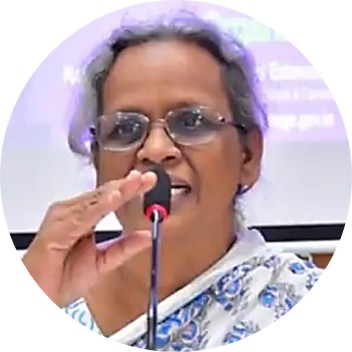 Salome Yesudas is an independent researcher who has worked closely with various communities across many states in India. She has also worked with Deccan Development Society – Krishi Vigyan Kendra for 11 years and is still associated with DDS through the Beyond Organic -Consumer Connect program. (salomeyesudas@hotmail.com)
 Santhoshi Srilaya Routhu is currently an MPhil candidate in development studies at the Oxford Department of International Development. Before this, she has worked for 4 years as a program coordinator at Deccan Development Society on participatory field projects relating to food sovereignty, agro-biodiversity conservation and local knowledge (systems.laya@ddsindia.org)

Add Comment