

In this Good Practice Note, Bhuvana and Ravi discuss Rupantar’s systems approach to enable smallholder livelihood diversification across the Eastern Gangetic Plains.
CONTEXT
Small and marginal farmers in the Eastern Gangetic Plain (EGP), spanning Bangladesh, India, and Nepal, are trapped in rice-wheat monocultures, with limited escape from poverty, food insecurity, and climate vulnerability. Despite decades of technology promotion, diversification remains low, not because of a lack of technologies, but because weak extension and advisory services (EAS) prevent farmers from adopting them. Failures stem from misalignment among technologies, service delivery, markets, and policies, further compounded by water scarcity, input and credit constraints, weak mechanisation, and poor market links, especially for marginal, small, and landless farmers.
This good practice note discusses how the RUPANTAR project (Box 1) repositions extension from one-time information delivery to a systems approach that integrates technical advice, service delivery, participatory pathway design, and multi-stakeholder coordination to promote diversification in the EGP.
| Box 1: Rupantar – Transforming Smallholder Food Systems in the Eastern Gangetic Plains The Rupantar project has been implemented since 2023 across four districts in India, Bangladesh and Nepal. Led by multiple partners (see table 1), it aims to promote sustainable, efficient, and diversified food systems in the EGP at scale (table 2). Project sites are: India– Bhogmara and Ruidanga Dritiyo Khanda, Unnishbisha, Cooch Behar, West Bengal; Bangladesh– Uttor Borokhata and Poschim Sarodubi, Borokhata region, Rangpur; Nepal- Kalijhora and Lalpur, Sunsari district; A Gaun and D Gaun, Jhapa. The project leverages existing actor networks to demonstrate inclusive diversification pathways, define scaling processes, and generate evidence on enabling policies. For more: https://www.rupantarfoodsystems.com/ |
GOOD PRACTICES
Rupantar’s approach uses five interlocking practices to move beyond one‑time, top‑down technology promotion. It applies a structured, iterative process (Figure 1) to select, implement, and promote diversification pathways—bundles of interventions, policies, and technologies that address smallholder constraints in the EGP—defined collaboratively by multiple actors.
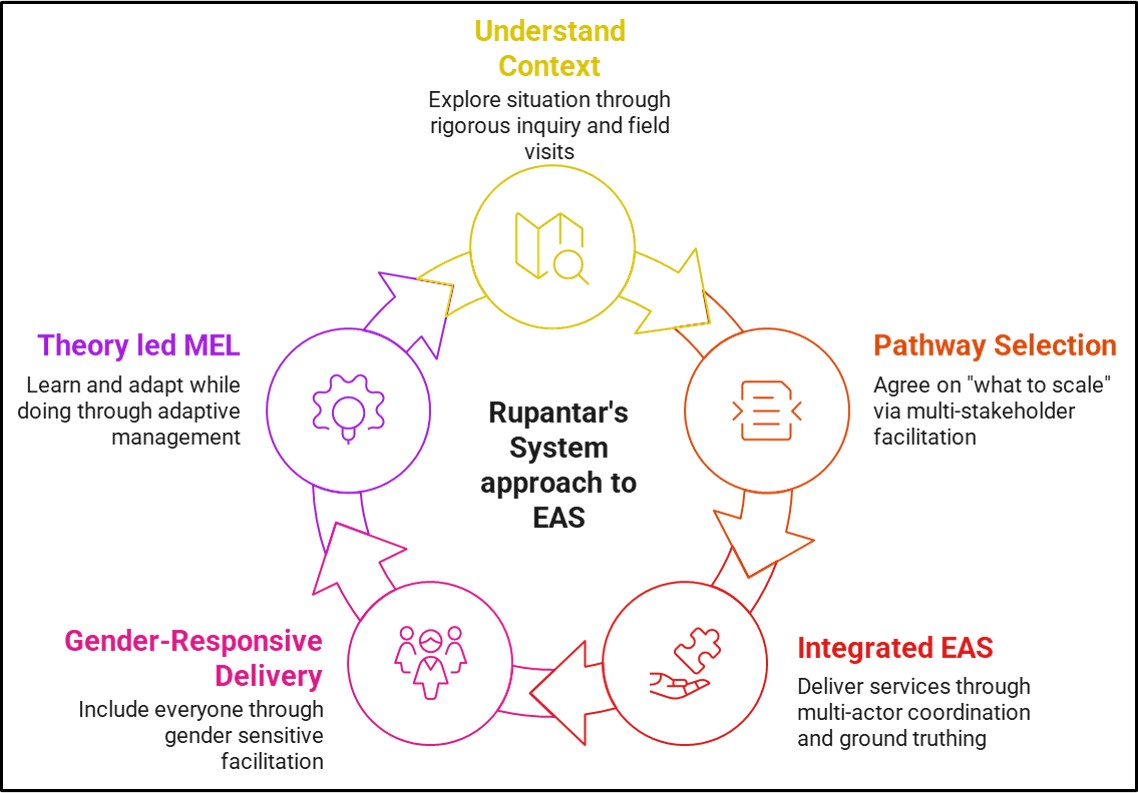 Rupantar’s system approach to extension and advisory services (EAS)
Understanding context through multiple lenses
Before designing interventions, Rupantar invested 1.5 years analysing the agri-food system context, asking what worked, what did not, and why. The team conducted baseline surveys with 1,800 farmers and spouses, 27 case studies, 18 gender-segregated focus group discussions, village mapping, household profiling by typology (marginal, small, landless), and multi-stakeholder workshops involving state departments, universities, NGOs, farmers, and research organisations across the EGP. Farmer typologies were mapped separately, recognising that landless and small landholders face different constraints. Findings revealed that past diversification failures stemmed not from technology gaps but from misalignments among technology, service delivery, markets, and policy.
Decide together: Participatory pathway selection using ScAD
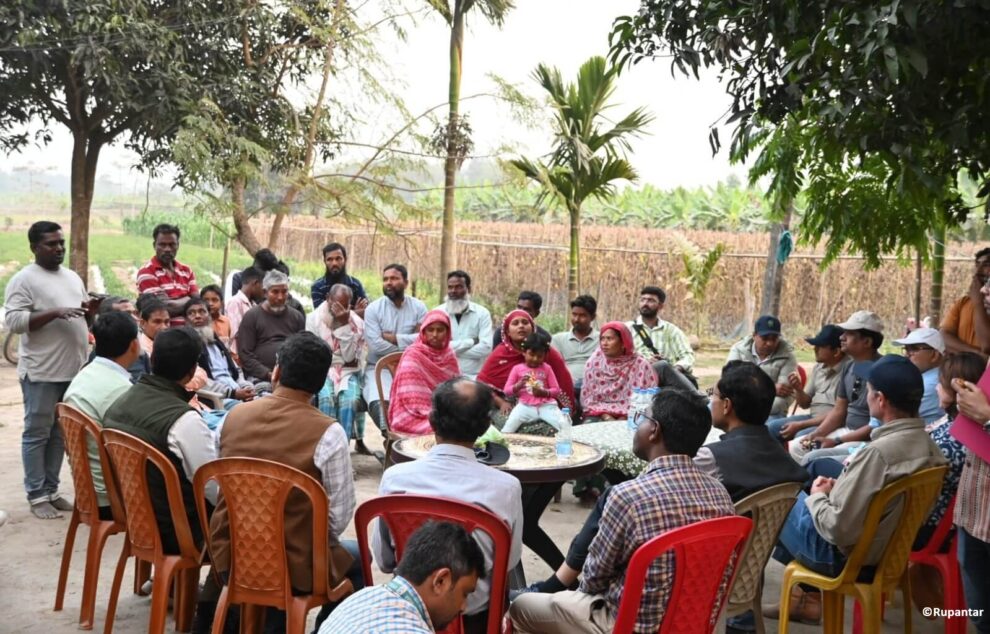
Rather than prescribing interventions, Rupantar applied the Scaling Assessment and Discussion (ScAD) tool to enable participatory pathway selection, bringing together varied actors (Table 1) to jointly decide what to scale, how, and who should lead. This yielded nine context-specific interventions across three pathways (Table 2) tailored to different farmer realities.
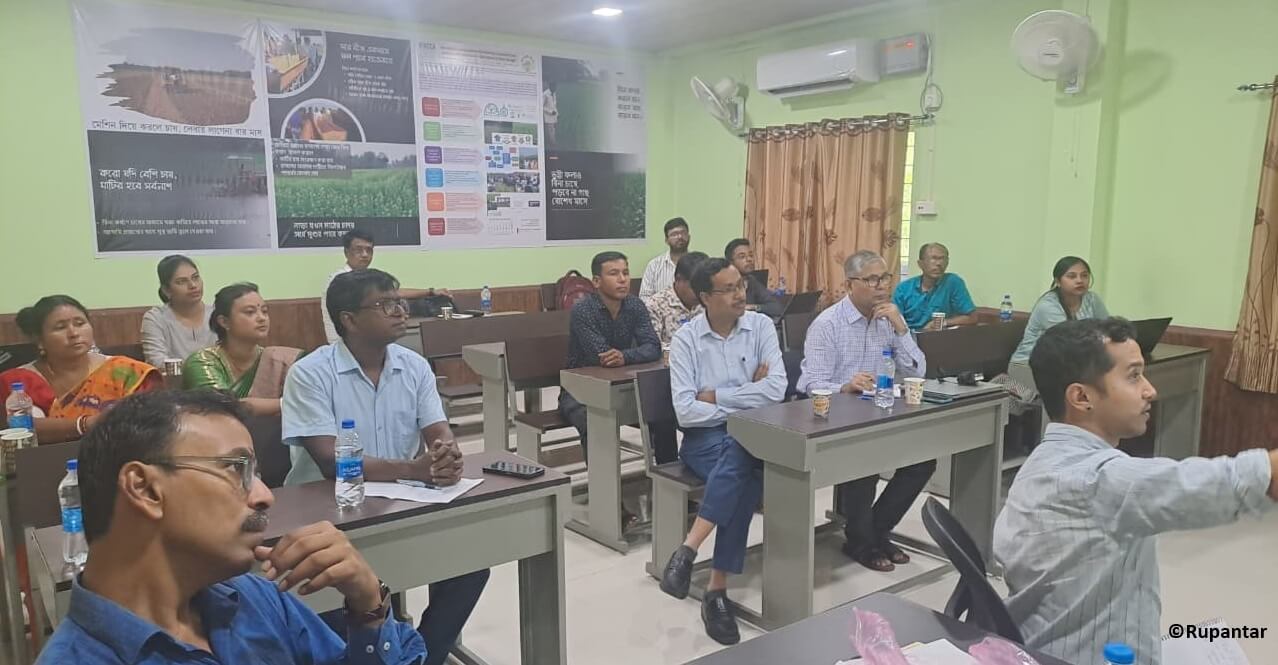
Table 1: Actors and their roles in Rupantar
| Partner/Agency | Countries | Key Roles & Responsibilities |
| Australian Centre for International Agricultural Research (ACIAR) | Bangladesh, India, Nepal | Primary funder: provides strategic oversight and accountability. |
| International Maize and Wheat Improvement Centre – CIMMYT | Bangladesh, India, Nepal | Leads technical work—trial design, agronomic support, M&E, and cross-country knowledge sharing. |
| University of Adelaide | Regional | Leads overall research design, coordination, and program leadership. |
| International Food Policy Research Institute (IFPRI) | Regional | Leads policy analysis, impact assessment, and socioeconomic studies. |
| National Universities (BAU, UBKV, AFU) | Bangladesh, India, Nepal | Conduct agronomic research, varietal trials, and technical backstopping. |
| Government Departments (DAE, DoA/Hort., MoIAC & local govts.) | Bangladesh, India, Nepal | Provide policy oversight, deliver public extension services, and support local governance. |
| Livestock Departments (DLS, ARDD, VHLSEC) | Bangladesh, India, Nepal | Deliver veterinary, livestock extension, and animal health services for poultry, goat, and dairy. |
| NGOs/CSOs (RDRS, UFF, SSCOP, JBS, NSKBS) | Bangladesh, India, Nepal | Facilitate community mobilisation, farmer groups, social inclusion, and field coordination. |
| Cooperatives (SAGUN, NMC-COOP) | Nepal | Support group organisation, collective management, and institutional assistance for dairy (Sunsari) and multi-layer farming (Jhapa). |
| Farmer-Producer Companies (FPCs) | India | Enable market linkages, product aggregation, and value chain support for ZT rapeseed and mulched chilli (Cooch Behar). |
| Community-Level Service Providers (Prani Bandhu, Prani Mitra, Livestock Service Providers) | India, Bangladesh | Offer last-mile animal health, vaccination, and para-vet services. |
| Smallholders & Women Farmers | All countries | Lead adoption through on-farm trials, peer learning, and diversification demos. |
Table 2: Diversification pathways along with interventions across EGP
| Diversification pathway
Type |
For whom | Interventions across the EGP region |
| Plot-based | Farmers with adequate land and irrigation | ZT Mustard (Cooch Behar, India), ZT Maize (Morang, Nepal), Mustard BARI-14,15,17 (Shimulbari, Bangladesh) |
| Non-plot | Land-constrained & women-headed households | Scientific goat rearing (Cooch Behar, India), Improved dairy (Sunsari, Nepal), Native poultry (Borokhata, Bangladesh) |
| Irrigation-constrained | Water-deficient areas | Poly-mulching in Chilli (Cooch Behar, India), Mulching in Brinjal cultivation (Gaddimari, Bangladesh), Multi-layer farming (Jhapa, Nepal) |
Link advice to action: Integrated EAS – “Show-Try-Supply-Support”
Rupantar coordinated technical advice with complementary services (Table 3). Extension workers (personnel from agricultural extension departments, NGOs, cooperatives, FPCs, community-level service providers) acted as institutional brokers, negotiating with input suppliers, coordinating vaccination camps, and linking farmers to FPOs and cooperatives, building skills that traditional extension rarely develops.
Table 3: EAS coordinated actions under Rupantar
| What was coordinated | What was done |
| Farmer groups & exposure visits | 22 farmers formed into 2 multi-layer farmer groups (Nepal, 2024); 34 women formed into poultry groups (Bangladesh, 2023); 383 households profiled (2025); Bahundangi farm visit for Jhapa farmers (2024) |
| Demonstrations & peer visibility | On-farm demonstrations, field days for paddy & mustard (India, since 2023), poultry demo units in 2 villages (Bangladesh); banners on 12 farmers’ fields (India). |
| Actionable technical guidance | Crop-specific protocols for same-season use; WhatsApp advisories (text, voice, video); dairy farmers in Sunsari guided on disease management; Cooch Behar farmers advised on fertiliser dose for mulched chilli. |
| Expert backstopping | Uttar Banga Krishi Vishwavidyalaya (UBKV) & Bangladesh Agricultural University (BAU) professors visited fields for germination & pest issues; Veterinary Hospital and Livestock Service Expert Centre (VHLSEC), Sunsari, provided real-time veterinary guidance (Nepal dairy) |
| Seeds, credit, markets | Yellow Sarson via targeting rice fallow areas (TRFA) scheme (India); BARI mustard seeds (Bangladesh); mass vaccination by Department of Livestock Services (DLS); SAGUN cooperative credit; Farmer Producer Organisation (FPO)-led input aggregation (India mustard); market promotions (Nepal dairy) |
Design for inclusion: Gender-responsive delivery
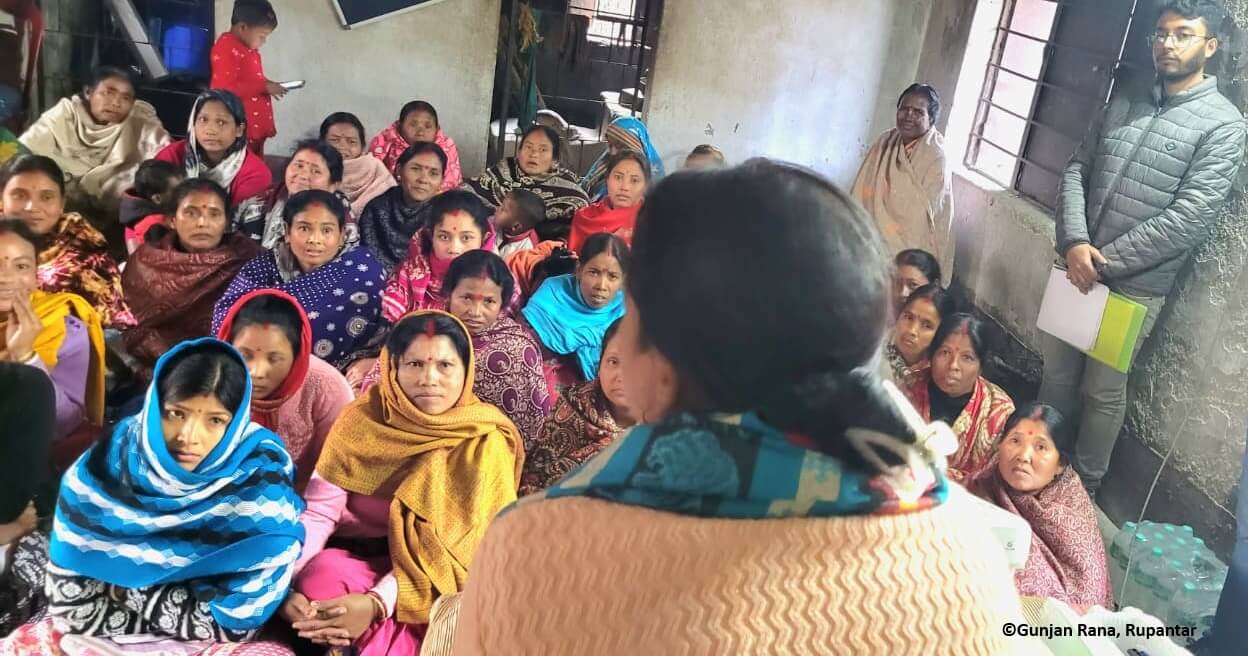
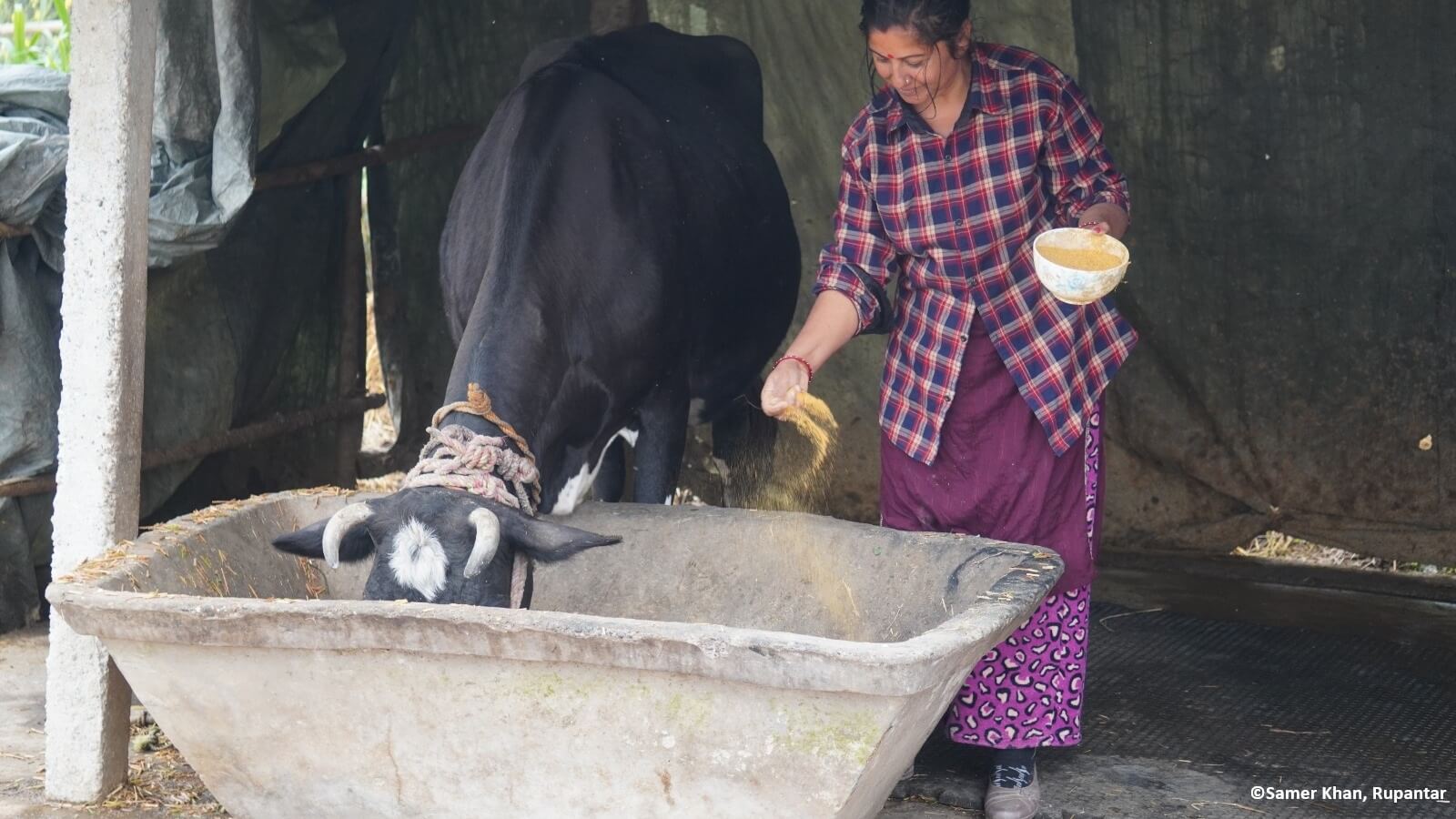
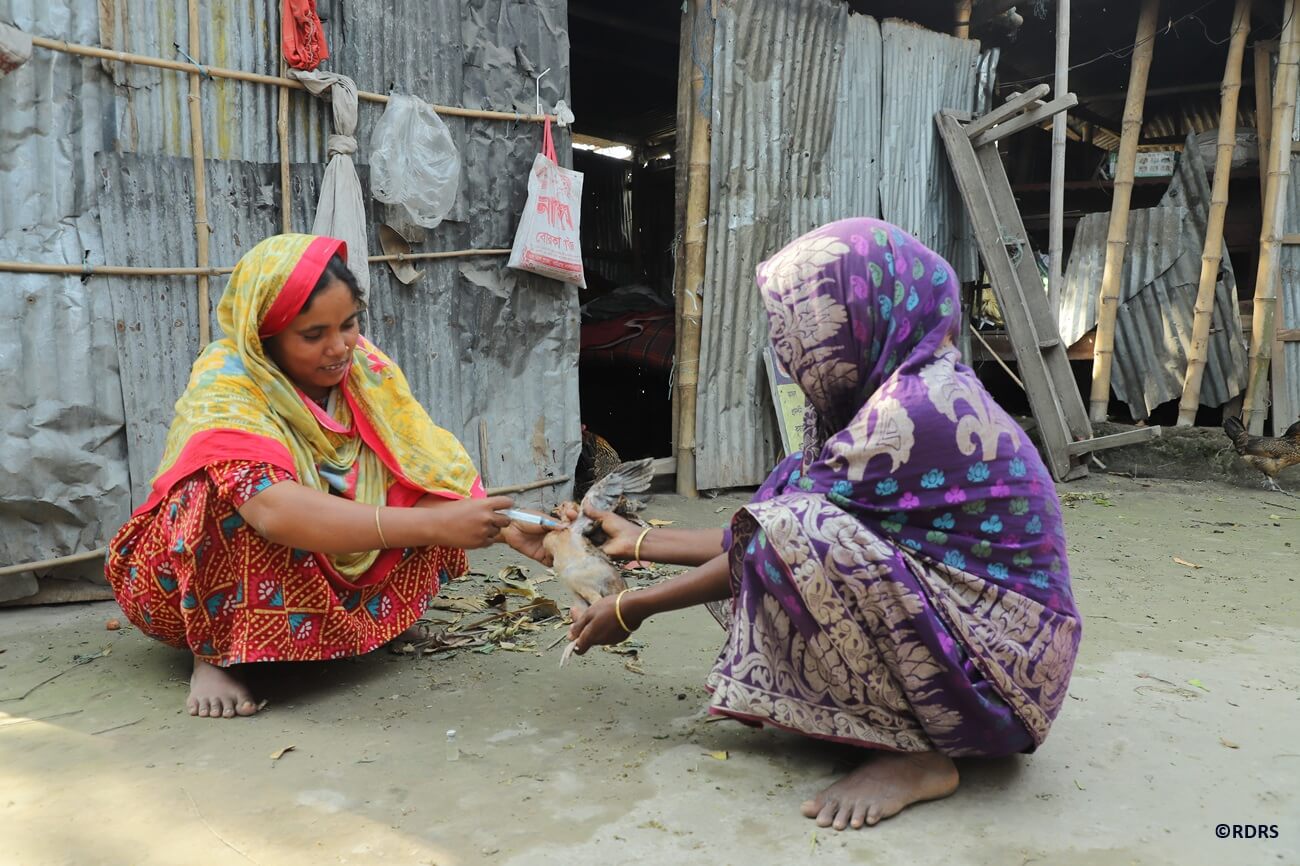
Non-plot/livestock pathways targeted land-constrained women-headed households. Pre-ScAD consultations with women and landless farmers shaped priorities. Training suited women’s schedules through women’s SHGs: 34 women trained in Bangladesh poultry (100% women participation); 84% women in India’s goat pathway.
Learn while doing: Theory- led monitoring, evaluation and learning (MEL)
Rupantar’s MEL framework tracked outcomes across individual, household, community, and system levels, focusing on sustainability and trade‑offs, not just yield. Seasonal monitoring covered adoption, incomes, labour, gender, climate shocks, markets, diet, nutrition, and knowledge. Mid‑season case studies informed same-season adaptations, such as extending interventions across preceding and succeeding rice crops in India. At the same time, quarterly field‑team workshops used MEL as an iterative process to shape implementation rather than just end‑of‑project evaluation.
CHALLENGES
Last-mile input delivery gaps
Recommended inputs (e.g., Yellow Sarson in India; quality fodder seed for Nepal dairy) were often unavailable locally, forcing substitutions that weakened practice change. Zero‑tillage machinery sometimes arrived after the optimal sowing window for mustard in India and maize in Nepal.
These gaps are being addressed by linking farmer groups with Farmer Producer Organisations (FPOs) for bulk ordering; connecting farmers to schemes such as the transformation of aspirational districts (TRFA) in India for subsidised access to varieties; preparing 2-3 acceptable substitutes as contingencies; and using WhatsApp for real‑time coordination and adaptation.
Limits of digital and AI-enabled advisory
WhatsApp-based diagnostics (e.g., diseased chicken images in Bangladesh) could not always replace physical examination and often ignored the availability of local inputs and women’s labour constraints. This is being addressed by using digital tools as decision support for extension staff, reserving field visits for serious cases. At the same time, WhatsApp handles routine queries and complements its digital reach with expert‑led group meetings in Bangladesh and India, providing prescriptive solutions.
Incentive misalignment among actors
Public veterinary departments had vaccination mandates but limited travel budgets; input dealers prioritised fast-moving products; farmer groups showed limited motivation for ongoing handholding.
This is being addressed by clarifying mutual benefits in partnerships, supporting transport for vaccination camps, and engaging senior officials in steering committees. Sustaining coordination after project funding ends remains a challenge, requiring viable business models for service providers.
Gender and social inclusion barriers
Women’s mobility constraints limited training attendance in Bangladesh; landless farmers showed risk aversion; social norms limited women’s voice in mixed-gender meetings.
These are addressed through gender-segregated FGDs; village-based trainings at suitable times; 34 women specifically trained in the Bangladesh poultry pathway; women’s SHGs used as entry points; gender-differentiated outcomes tracked in the MEL framework.
BENEFITS AND IMPACT
Rupantar’s integrated EAS approach significantly increased adoption across nine diversification pathways within 3–4 seasons in Bangladesh, India, and Nepal. Farmers gained economically, with ZT mustard households in India earning up to INR 28,000, dairy farmers in Nepal nearly doubling or more than doubling milk yields, and Bangladeshi women using poultry as an emergency financial buffer. Household nutrition improved, as 93% of poultry farmers in Bangladesh and 84% of dairy farmers in Nepal reported better food consumption and dietary diversity. Knowledge of pathway principles moved from near‑zero to good or expert levels, and gender inclusion strengthened, especially in non‑plot pathways, where 100% of poultry farmers in Bangladesh and 84% of goat farmers in India were women. Circular farm integrations such as manure recycling, crop residues as feed, and home‑pressed oil further enhanced household resilience and income stability.
SUSTAINABILITY AND SCALING UP
All pathways yield positive economic returns, incentivising farmers to continue without sustained project support. ScAD‑based, community‑selected pathways ensure local relevance and ownership, with government departments, universities, NGOs, and cooperatives embedded in implementation to build institutional capacity. SAGUN Cooperative plans chilling vans and processing centres, while NGOs (RDRS and SSCOP) receive expansion requests, signalling post‑project momentum.
The ScAD process is replicable in similar EGP contexts where multi‑stakeholder coordination, a basic service‑provider ecosystem, and community‑facilitation capacity exist. Horizontal scaling is underway in neighbouring districts, with vertical scaling emerging as state/provincial governments adopt ScAD into public extension.
LESSONS LEARNED
- Train field staff to facilitate processes, not just surveys; strong situation analysis ensures context‑fit actions.
- Pre‑consult women, smallholders, and landless farmers to ensure their priorities are not overridden in mixed‑stakeholder settings.
- Map service providers and markets 3-6 months before the season; promote only practices with confirmed inputs and services.
- Treat women’s barriers as both logistical (timing, venue, transport) and social; group composition and facilitator sensitivity matter as much as the message.
- Build rapid mid‑season feedback loops for adaptive decisions, not end-of‑project evaluation.
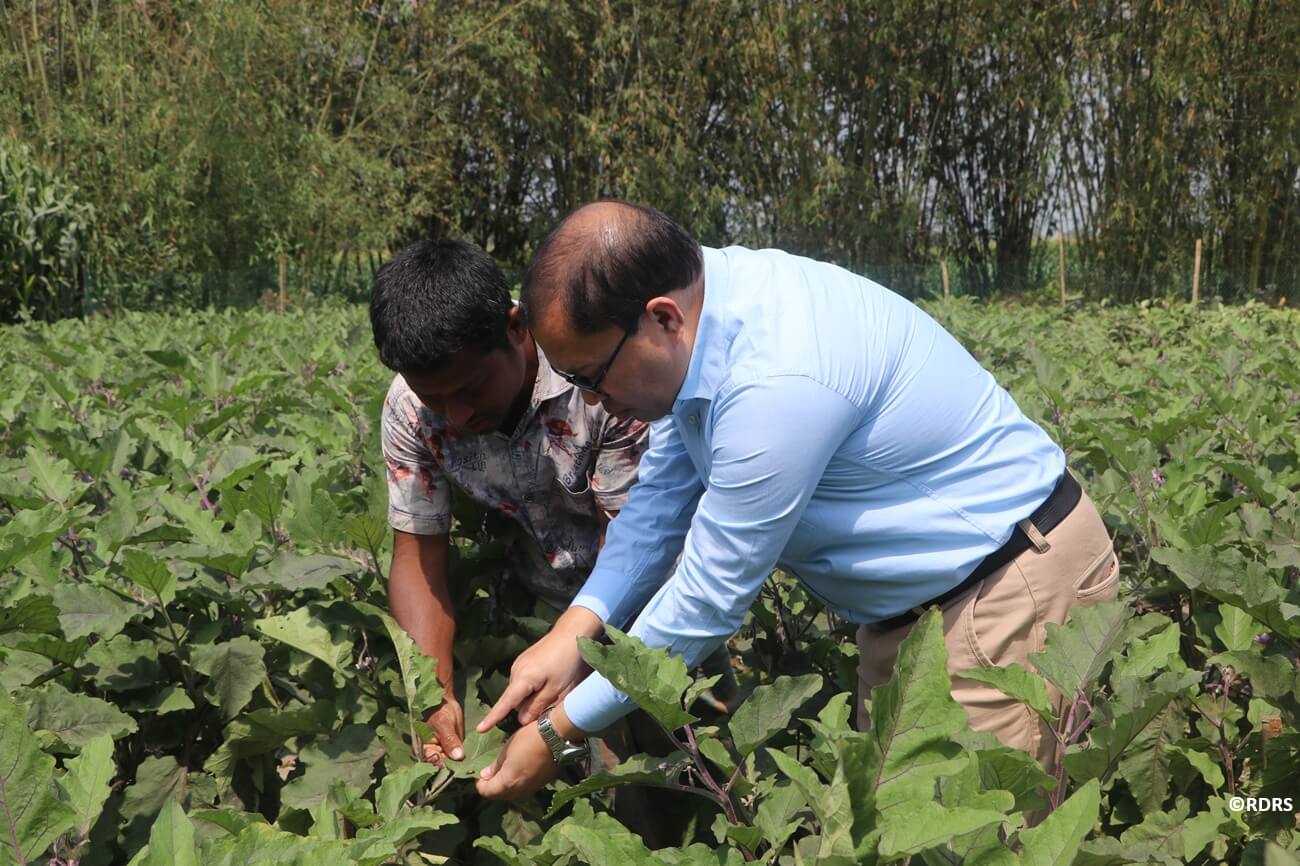
- Use visible demonstrations and field‑based learning to turn advice into trusted action.
- Apply participatory pathway design so farmers, government, and NGOs jointly decide what to scale.
- Offer multiple pathway options so landless, smallholders, and women have viable entry points.
- Avoid technology‑push without context, one‑size‑fits‑all designs, advice without services, tokenistic consultations, one‑season thinking, and counting only training numbers instead of system‑level change.
Acknowledgement
We thank the Australian Centre for International Agricultural Research (ACIAR) and CGIAR- Scaling for Impact (S4I) programme for their constant support and all Rupantar partner organisations in India, Nepal, and Bangladesh for their active contributions. We also acknowledge the farmers for their time and active participation.
 Bhuvana Narayanarao is a Consultant (Social Sciences) for the International Maize and Wheat Improvement Centre (CIMMYT). She can be reached at bhuvanaditya7@gmail.com
 Ravi Nandi is an Agricultural Economist and Innovation System Scientist at the International Maize and Wheat Improvement Centre (CIMMYT), Bangladesh. He can be reached at r.nandi@cgiar.org
The preliminary work invested over 1.5 years highlights the importance of strong baseline surveys and understanding what is functioning well and what needs improvement before introducing interventions. The discussion on the ScAD tool and participatory pathway design clearly shows how integration and collaboration among stakeholders can lead to meaningful change.
Thanks to the authors for sharing these valuable insights and to AESA for documenting and disseminating such good practices on a global platform. These learnings will be useful for practitioners working on agricultural diversification and extension systems.