

Platform: FAO e-Learning Academy
Duration: Self-paced
Certification: Free Certification upon successful completion
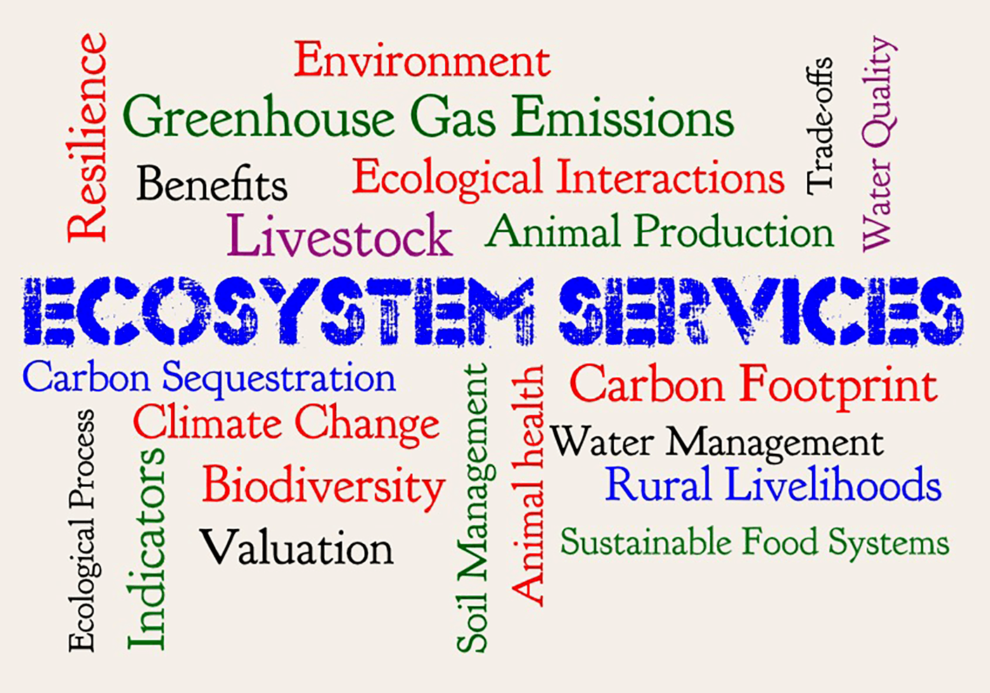
Livestock agroecosystems play a significant role in global food systems while also influencing biodiversity, soil health, water resources, climate regulation and rural livelihoods. The course ‘Assessment of Ecosystem Services in Livestock Agroecosystems’, offered by the Food and Agriculture Organisation through the FAO e-Learning Academy, provides a comprehensive introduction to the concept of ecosystem services and their assessment within livestock production systems. The course aims to help learners understand how livestock systems interact with ecological processes and how ecosystem services can be evaluated to promote sustainable agricultural development.
Ecosystem services are the benefits humans derive from natural ecosystems and ecological processes, including food production, water regulation, soil fertility, biodiversity conservation, and climate regulation. In livestock agroecosystems, these services play an important role in maintaining environmental sustainability while supporting agricultural productivity and rural livelihoods. Understanding these ecological functions is essential for developing more sustainable, resilient and environmentally responsible agricultural systems.
The course has four lessons that gradually build understanding of ecosystem services in livestock agroecosystems. It covers the relationship between livestock farming, ecological sustainability, and ecosystem functioning. Learners explore key concepts like ecological interactions, sustainability indicators, valuation frameworks, and trade-offs in livestock production.
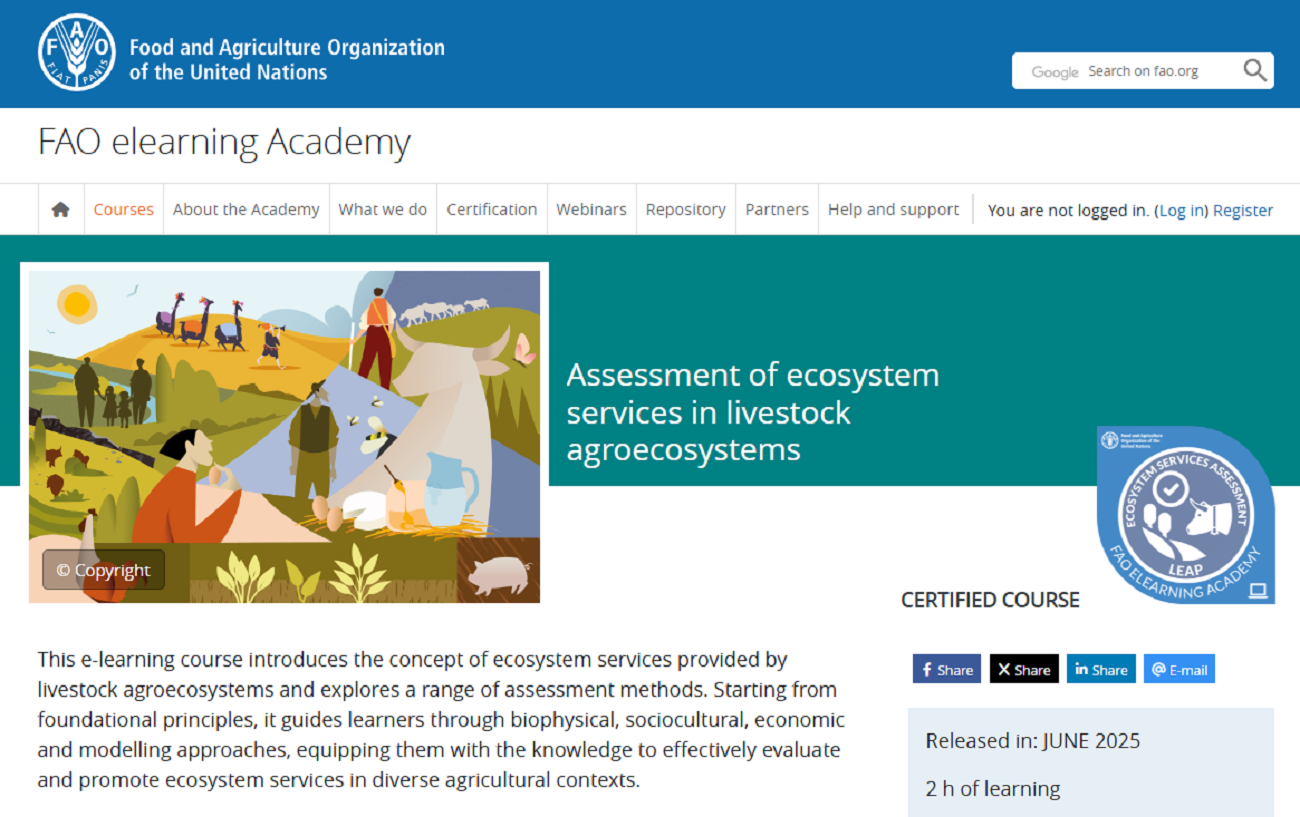
Lesson 1 – Introduction to Ecosystem Services and Framework for Valuation: This lesson introduces ecosystem services and explains their importance in livestock agroecosystems. It discusses how livestock systems provide provisioning, regulating, supporting and cultural services while also creating certain environmental disservices. The lesson also explains the ecosystem service valuation framework and highlights the need to assess ecological, economic and social impacts together. As a beginner to the topic, I found this lesson particularly useful because it provided a clear foundation for understanding the broader relevance of ecosystem services in sustainable agriculture and policy discussions.
Lesson 2 – Biophysical and Sociocultural Valuation Methods: This lesson explains the different biophysical and sociocultural methods used to evaluate ecosystem services. The discussion on indicators such as soil fertility, biodiversity, water quality and carbon sequestration clearly shows how ecosystem performance can be measured. I found the inclusion of participatory and qualitative approaches particularly valuable because they recognise the importance of human perceptions and community involvement in ecosystem management. Overall, the lesson demonstrates that ecosystem valuation should combine scientific and social perspectives to support effective decision-making.
Lesson 3 – Economic and Modelling Valuation Methods: This lesson focuses on economic valuation techniques and modelling approaches used in livestock agroecosystems. The explanation of cost-benefit analysis, market valuation, and economic trade-offs helps clarify how ecosystem services can inform policy and management decisions. In my opinion, the lesson effectively demonstrates the usefulness of economic tools while also implying that not all ecosystem values can be measured in monetary terms. The discussion on simulation models further highlights the importance of long-term sustainability planning.
Lesson 4 – Trade-offs, Synergies and Cross-Method Approaches: This lesson discusses the trade-offs and synergies that exist among ecosystem services in livestock agroecosystems. It clearly explains that improving one service may sometimes negatively affect another, making balanced management essential. I found the focus on integrated and cross-method approaches particularly important because combining ecological, economic and sociocultural assessments provides a more comprehensive understanding of sustainability. Overall, the lesson highlights the value of interdisciplinary approaches in addressing complex agricultural and environmental challenges.
The course follows an asynchronous online learning approach, allowing learners to progress independently according to their own schedules. This flexibility makes the course suitable for students, researchers, extension professionals, and individuals working in the agriculture, sustainability, and rural development sectors. The overall difficulty level is intermediate, as the course introduces scientific frameworks and assessment approaches while still presenting the content in a learner-friendly manner.
Key Features of the Course
- Practical Assessment Approaches: The course introduces analytical methodologies such as ecological footprint analysis, life cycle assessment, telecoupling frameworks and systems thinking approaches to evaluate ecosystem services and sustainability in agricultural systems.
- Visual and Example-Based Learning: Technical concepts are explained through diagrams, illustrations, visual explanations and real-world agricultural examples, making complex ecological relationships easier to understand.
- Interactive and Self-Paced Learning Design: The course uses concise lecture slides, simplified explanations and structured reading sections instead of lengthy theoretical lectures, allowing learners to progress independently at their own pace.
- Knowledge-Check Activities: Each module includes quizzes and interactive exercises that reinforce conceptual understanding and encourage analytical thinking rather than rote memorisation.
- Resource Materials and Supplementary Content: Additional reading materials and supplementary resources are provided to support deeper understanding and practical application of ecosystem service assessment concepts.
- Accessible Assessment and Certification: Learners complete module-wise quizzes and achieve a minimum passing score of 75% to receive certification. The flexible assessment structure allows learners to revisit modules before attempting evaluations.
- User-Friendly Learning Experience: The platform is easy to navigate and free from strict deadlines, making the course suitable for learners from diverse academic and professional backgrounds.
- Scientifically Grounded Course Content: The lectures are concise, research-based and aligned with current discussions on sustainable agriculture, ecosystem services and environmental management.
- Conversational and Application-Oriented Teaching Approach: The course uses interactive conversations between two animated virtual characters before and after lessons to simplify complex ecological concepts and connect theoretical ideas with practical implications for agricultural sustainability and policy.
- Structured Topic Progression: The course content follows a logically organised sequence, ensuring clarity and continuity even while discussing technical assessment frameworks and sustainability concepts.
I enrolled in this course to strengthen my understanding of sustainability assessment in agricultural systems and to explore the ecological dimensions of livestock production. I had only recently come across the concept of ecosystem services and realised its significance as a new and innovative area of research, particularly for those interested in working on agricultural sustainability, policy-related issues, and the achievement of the Sustainable Development Goals (SDGs). This sparked my curiosity to learn more about the topic in a structured manner. Since my academic interests are related to agriculture and development-oriented studies, I found the course highly relevant and intellectually engaging. The course was enjoyable to complete because it connected environmental concepts with practical agricultural challenges in a meaningful way.
Overall, this course provides valuable foundational knowledge for students, researchers and development professionals interested in sustainable livestock systems, ecosystem services and environmental assessment. I would strongly recommend this course to individuals pursuing studies or careers in agriculture, rural development, environmental science, agricultural extension and sustainability-related fields.
 Sahla Salam is currently pursuing a PhD in Agricultural Extension Education at the GKVK Campus, University of Agricultural Sciences, Bangalore. She can be reached at salamsahla422@gmail.com.

Add Comment