



In this blog, Sreenath Dixit reflects on his three decades of work strengthening resilience in dryland systems and draws lessons for building systems capable of thriving amid uncertainty.
CONTEXT
Few concepts have gained as much prominence in recent years as resilience. It appears in discussions on climate change, agriculture, food security, disaster management, livelihoods, public policy, and development. Yet despite its widespread use, resilience often remains poorly understood. It is frequently reduced to a technical intervention, a project objective, or a measurable outcome.
My own understanding of resilience has evolved over nearly three and a half decades of engagement with dryland agriculture, agricultural research, watershed management, climate adaptation, and rural development across Asia and Africa. These experiences have convinced me that resilience is far more than a scientific construct. It is a way of understanding how people, ecosystems, and institutions respond to uncertainty.
This blog synthesises reflections from a recent ten-part series titled Rethinking Resilience I published on LinkedIn. While inspired by the realities of dryland agriculture, the lessons extend far beyond drylands. They offer insights into how societies can navigate a future characterised by climatic, ecological, economic, and social uncertainties.
DRYLANDS: LABORATORIES OF ADAPTATION
Drylands are often portrayed as marginal environments characterised by poor soils, erratic rainfall, recurrent droughts, and fragile livelihoods. Yet this perspective overlooks an important reality: drylands are among the world’s greatest laboratories of adaptation.
For generations, communities inhabiting these regions have learned to survive and thrive under conditions of scarcity and uncertainty. Their experiences demonstrate that resilience is not built in times of stability; it is forged through continuous adaptation to variability.
For example, farmers in the dryland regions of north and south Karnataka have followed the akkadi saalu system for centuries. It is a traditional, climate-smart intercropping practice in which minor crops are grown in alternating rows (or along the border) alongside a primary crop. It is not merely a system for maintaining soil health and reducing the risk of crop failure. It also takes care of the family food basket – a perfect combination of cereals and legumes/pulses. The combination of deep and shallow-rooted crops also helps exploit moisture from different soil layers. Some of the most common akkadi saalu or intercropping systems are:
-
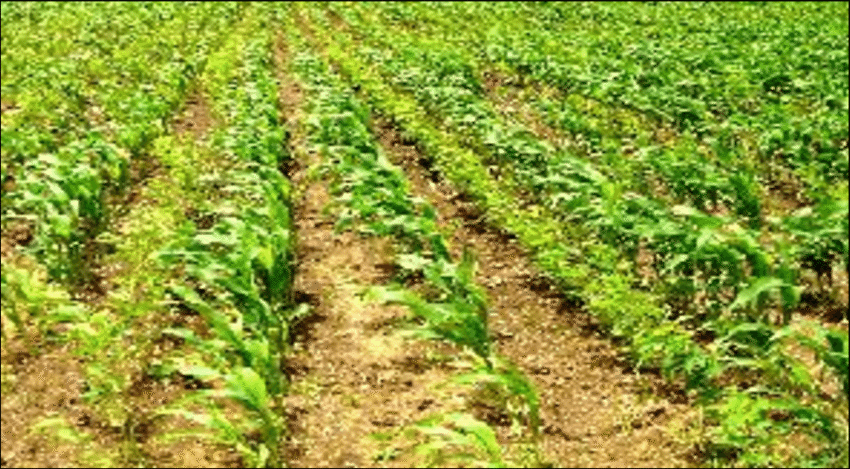
Sorghum-pigeon pea row intercropping Sorghum & Pigeon Pea This is the classic, staple akkadi Farmers sow rows of primary sorghum alongside rows or borders of pigeon pea in north Karnataka.
- Finger Millet & Field Beans: In this setup, ragi is the main crop, and a few rows of field beans, a popular vegetable, are interspersed to fix atmospheric nitrogen and provide additional income/yield.
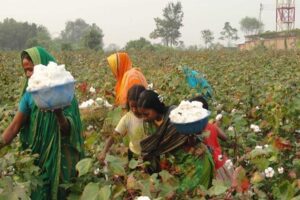
- Cotton & Castor: A traditional commercial akkadi mix where castor acts as a companion crop and sometimes serves as a natural pest trap.
- Pearlmillet & Sesame: Pearl Millet is intercropped with minor oilseeds such as sesame or a horse gram, a highly drought-tolerant legume cultivated in areas which receive very scanty rainfall.
As climate change increases uncertainty across the globe, many regions are beginning to experience conditions long familiar to dryland communities. In this sense, the future may increasingly resemble the challenges that drylands have always faced.
The lessons emerging from these landscapes, therefore, deserve broader attention.
THE ECOLOGICAL FOUNDATIONS OF RESILIENCE
The first lesson is that resilience begins with ecological foundations.
Much of contemporary agricultural development continues to prioritise production outcomes while paying insufficient attention to the natural systems that enable production. Yet every agricultural system ultimately depends on water, soil, biodiversity, and ecosystem functions.
Water, in particular, must be viewed not merely as a resource but as a strategic asset. Across dryland regions, successful communities have historically managed water not only through infrastructure but through collective stewardship, careful allocation, and long-term planning. Resilience often depends less on the quantity of water available than on how effectively it is managed. Dryland farmers are inherently ingenious. Just the limited availability of water curtails their ingenuity.
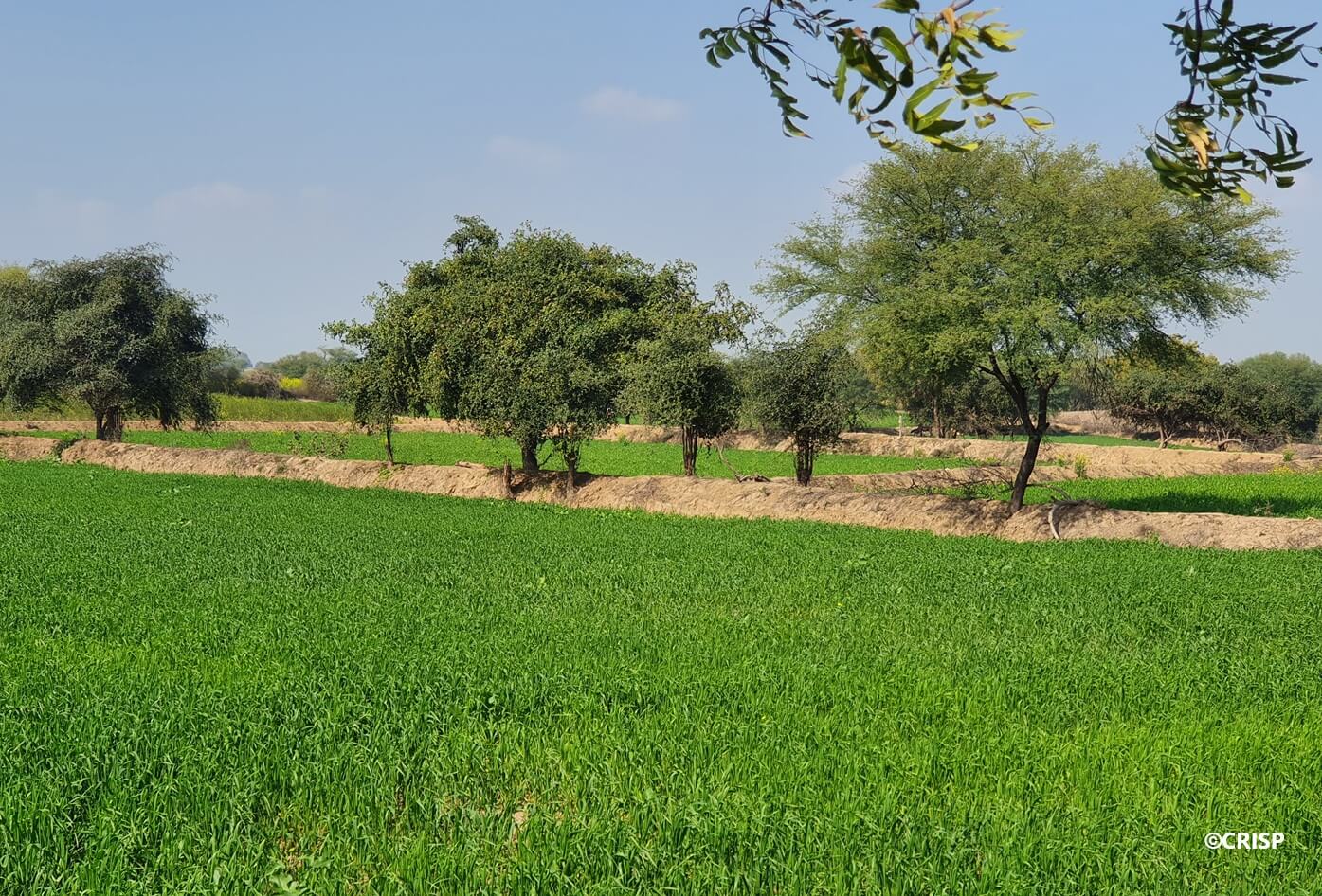
I have come across umpteen instances in my career where the mere possibility of mobilising water for growing crops ignites farmers’ creativity in making the best use of limited moisture. I recall a farmer in Adilabad, in the erstwhile Andhra Pradesh, who was assisted by our project in digging a farm pond. After completely utilising the water from the pond, he broadcast sorghum seeds and harvested them for fodder before the summer set in.
Similarly, soils represent far more than a medium for plant growth. Healthy soils regulate water, store carbon, sustain biological activity, and buffer crops against climatic stress. They constitute agriculture’s first line of defence against droughts, floods, and extreme weather events.
Resilient systems, therefore, invest in ecological capital as deliberately as they invest in physical or financial capital.
RESILIENCE AS A SYSTEMS PROPERTY
A second lesson is that resilience emerges from systems rather than isolated components.
Nature rarely relies on uniformity. Diversity is one of its most powerful strategies for managing uncertainty. Diverse cropping systems, mixed farming enterprises, integrated crop-livestock systems, and diversified livelihoods distribute risks and create multiple pathways for recovery following shocks.
Yet resilience is not only ecological; it is also social.
Across many successful watershed projects, farmer organisations, producer groups, and community institutions, one common pattern emerges. Technical interventions succeed when people organise around shared objectives. Communities often display remarkable capacities for collective action when supported by appropriate institutions and incentives.
This perspective challenges conventional approaches that treat farmers primarily as beneficiaries of externally generated solutions. Smallholder farmers possess sophisticated adaptive knowledge accumulated through generations of experimentation. Their observations, innovations, and decision-making processes frequently represent the first line of response to changing conditions.
Here comes an incident to my memory. While implementing a 5-year livelihood improvement project, one of the years was a drought year. As part of the project, we introduced a motorised shredder in the project areas to enable farmers to shred their crop residue (such as cotton and pigeonpea stalks that don’t compete with fodder for animals) and use it as mulch to conserve soil moisture. One of the farmers found the shredded cotton stalks to be valuable feed for his cattle. All he did was sprinkle water over the shredded stalks and let them soften overnight before feeding them to his cattle.
Resilience, therefore, depends not only on scientific knowledge but also on recognising and strengthening local adaptive capacity.
WHY GOOD SOLUTIONS OFTEN FAIL TO SCALE
One of the most persistent frustrations in agricultural development is the failure of successful pilots to achieve large-scale impact.
Across the world, countless projects have demonstrated promising results. Improved technologies, watershed approaches, climate-smart practices, and institutional innovations have generated impressive outcomes under project conditions. Yet many remain isolated success stories.
The reason is that scaling is rarely a purely technical challenge.
I was part of at least three large projects aimed at scaling micronutrient management and the balanced application of major nutrients. This was based on field evidence of widespread micronutrient deficiency, following the analysis of thousands of soil samples collected across vast areas. Despite demonstrating yield gains of 20-30% percent across thousands of farms and securing support from state governments during the project period, the practice failed to find a place in mainstream extension recommendations and input delivery systems.
Successful scaling depends upon supportive policies, functioning markets, appropriate incentives, financing mechanisms, extension systems, and governance structures. In other words, resilience scales through institutions.
This realisation requires a shift in thinking. Development practitioners often devote significant attention to designing better technologies while paying insufficient attention to designing enabling environments.
The future of resilience may depend less on discovering new solutions and more on creating institutions capable of supporting their widespread adoption.
RETHINKING PRODUCTIVITY
Perhaps one of the most important questions confronting agriculture today concerns the meaning of productivity itself.
For decades, agricultural success has been measured primarily through yield and output. These metrics have undoubtedly contributed to significant advances in food production. However, climate change is exposing the limitations of productivity metrics that ignore ecological sustainability and adaptive capacity.
A system may generate high yields under favourable conditions yet remain highly vulnerable to droughts, floods, pest outbreaks, or market disruptions. Such systems appear productive until they encounter stress.
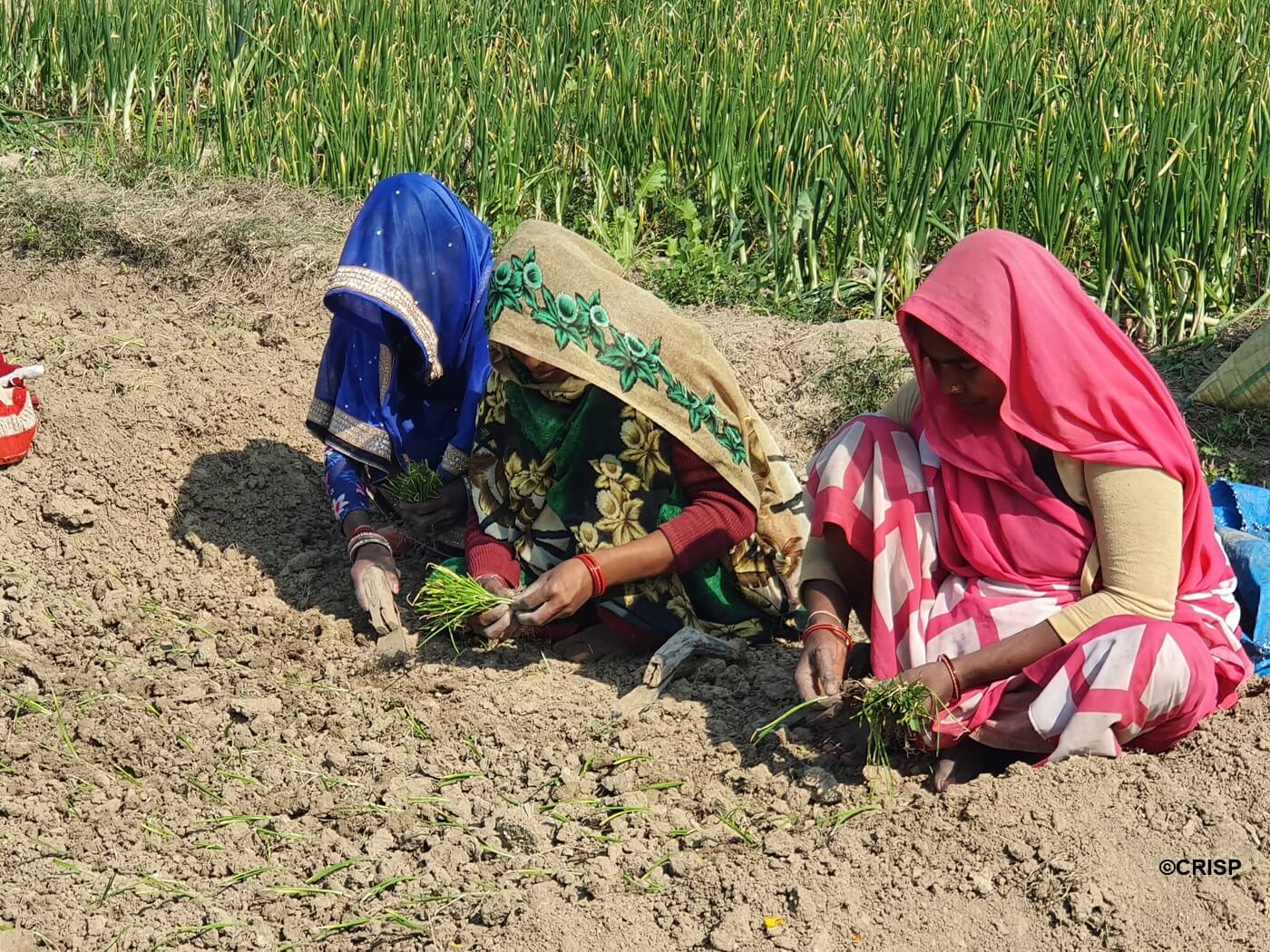
Resilience invites us to broaden our definition of success. Here, I recall an incident from when I was working with my team in a tribal hamlet in UP, home to about 25 -30 farm families. The men in this family migrated out for work while the women mostly managed the farms. The families typically faced food shortages during adverse years. These farmers needed support to ensure reasonable food security. We needed to ensure that the farmers did not incur significant crop losses during drought years but were able to harvest a reasonable yield. So we worked on a low-input, low-risk strategy and introduced wheat varieties that were not known for their high yield but for their tolerance to moisture stress.
In addition to production, agricultural systems must be evaluated based on their ability to maintain ecological integrity, conserve natural resources, sustain livelihoods, and recover from shocks. Productivity and resilience should not be viewed as competing objectives. The challenge is to design systems that achieve both.
DESIGNING FOR UNCERTAINTY
A defining characteristic of the twenty-first century is increasing uncertainty.
Climate models project greater variability in rainfall patterns, temperatures, and extreme weather events. Economic systems are becoming more interconnected and therefore more susceptible to cascading shocks. New risks continue to emerge from technological, geopolitical, and environmental change.
Under such conditions, the traditional objective of optimising systems for stability may no longer be sufficient.
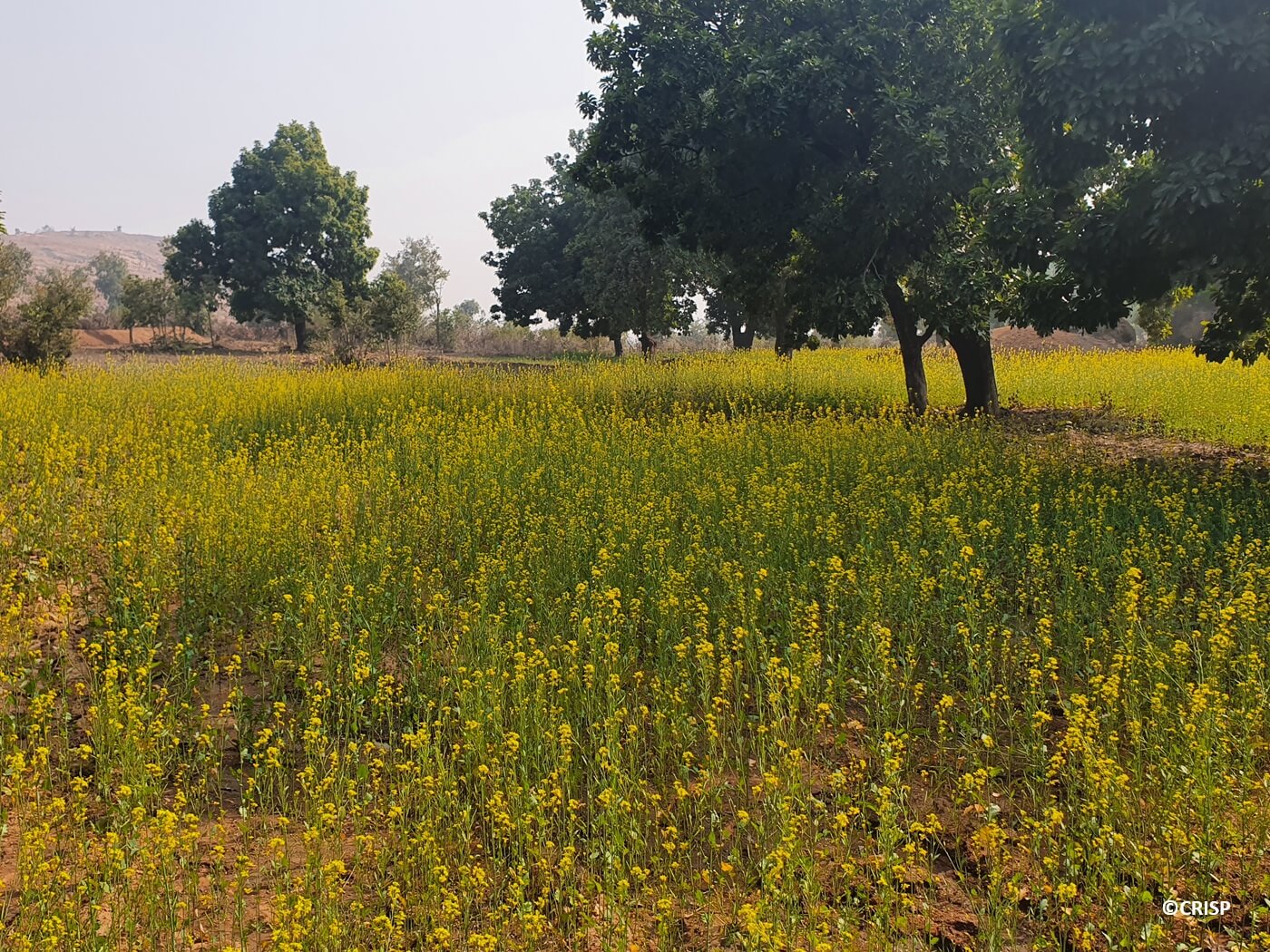
Here, I remember a case from my NICRA experience. We were bracing for a delayed monsoon in one of the years during the project duration, and the idea was to have a contingency plan if the dryness persisted too far into the season, which would prevent sowing crops like sorghum or maize. The monsoon evaded this particular project area until late July, shortening the crop growing period by half. As a contingency measure, farmers were supported in raising foxtail millet, and it proved a huge success. The farmers with whom we worked were able to get a large buyer, a bulk supplier to the baby food industry, at farmgate , resulting in a good price. The precious fodder was an add-on to sustain their livestock during the drought year
The case in point here is that resilience requires designing systems capable of learning, adapting, and evolving. Flexibility, redundancy, diversity, and continuous learning become strategic assets rather than inefficiencies.
The future will belong not necessarily to the most efficient systems, but to the most adaptive ones.
FROM CONTROL TO COEXISTENCE
Perhaps the deepest lesson emerging from resilience thinking is philosophical.
For much of modern history, progress has been associated with increasing control over nature. Agricultural development, industrialisation, and technological advancement have often been framed as efforts to overcome environmental constraints.
Climate change is forcing us to reconsider this worldview. Climate change is affecting the coexisting flora and fauna as much as or perhaps more than we humans. This reminds me of a conversation I had with an interesting farmer who was tending his guava and sapota orchard located on the fringe of a protected bear sanctuary. When I visited his orchard, I observed that several fruit-bearing branches had been broken and were hanging loosely from the trees. I asked the farmer why he was not fencing his orchard. His reply forced me to contemplate deeply how we have ceased to follow the principle of coexistence. He said fencing is expensive and doesn’t offer much protection against powerful bears, which can knock it down and enter the orchard anyway. Instead, he said, he has reconciled with them. Let them have some and leave something for me. After all, they also need to survive.
The growing frequency of extreme weather events, ecosystem degradation, and resource scarcity highlights the limitations of approaches based solely on control. Increasingly, resilience appears to depend on learning how to work with natural systems rather than attempting to dominate them.
This represents a shift from control to coexistence.
It requires humility, systems thinking, and recognition of humanity’s dependence on healthy ecosystems.
IMPLICATIONS FOR EXTENSION PROFESSIONALS
If resilience is fundamentally about helping people and systems navigate uncertainty, then agricultural extension must move beyond its traditional role of transferring technologies. Extension professionals are uniquely positioned to facilitate resilience by helping farmers anticipate risks, diversify livelihood options, strengthen collective action, and adapt to changing climatic conditions. The examples discussed in this article show that farmers are not passive recipients of knowledge but active innovators who continuously experiment, learn, and adapt. Extension systems, therefore, need to create spaces for co-learning where scientific knowledge and farmers’ experiential knowledge complement one another.
Equally important, extension professionals must act as connectors across scales. Building resilience requires linking farmers with weather and climate information, markets, financial services, producer organisations, government programs, and local institutions. It also requires bringing field realities back into policy discussions. In a climate-uncertain future, the most valuable extension systems may not be those that disseminate the most technologies, but those that strengthen the adaptive capacity of farming communities and help create enabling environments where resilience can flourish.
CONCLUSION
The lessons from dryland systems remind us that uncertainty is not an anomaly to be eliminated but a reality to be navigated. Communities living in these landscapes have long demonstrated that resilience is less about resisting change than about adapting creatively to it.
As climate change reshapes our world, the challenge before us is not simply to build more productive systems. It is about building systems capable of thriving amid uncertainty.
“Resilience is not a technology, a project, or a single outcome. It is a capacity that emerges when ecological health, social cohesion, institutional support, and adaptive thinking reinforce one another. And extension professionals have the power to reinforce these.”
The conversation on resilience is far from over. If anything, it has only just begun.
 Dr Sreenath Dixit served both in the ICAR and CGIAR systems in senior positions. He has made significant contributions to R4D in dryland agriculture, climate adaptation, and rural development. His work spans research, extension, watershed management, and scaling innovations for impact. He can be reached at: dixit.sreenath@gmail.com
Srenaths paper on Resilliance concept updation has really addressed the issue of multi dimensionsinal uncertainties challenging farming communities. The three aspects of mitigation, adaptation, and Resilliance are explained on a systems perspective wilth illustrations.
In his paper author has posted illustrations of resilience promoting interventions. I wolud add an experience here of my working in team for lively hood improvement of tribal and marginalused farmers in spices and horticulture crops.The project was in Chintappally tribal belt in Andhra Pradesh known as a poverty stiricken belt. Often funded projects to address knowledge, resources, yiels gaps do yield results.In this scheme also three interventios of introducing a high yielding variety of turmeric ( turmeric belt ), changing from flat bed system of planting to raised bed, and a simple turmeric boiler suited to small farm holdings supported by a turmeric polisher as a common facility produced immediate impact of incresed income.The program attracted farmer as well as media ( often underscored in extension projects) participation. All is Good.
But then…. You have success stories.Well documented, rewarded and glorified with immediate many times localised gains. How do we have to replicate success to ensure scalabilty? This is the high light of Sreenath’s article building yield income resource gaps but the “ goal” lies in bridging institutional gaps.
How to promote, “ ease of doing extension”
Coming back to turmeric project,After our interventions for three years The Paderu Tribal Development Agency( Headed by a senior IAS) had a series of meetings with us and in following years they supported mass supply of turmeric boiler suited to crowded small dwellings. A recent visit by Projct coordinator AICRPS noticed an impactful public opinion. The take home lesson to address institution gaps bet on pluralism and convergence.craft upon them.