




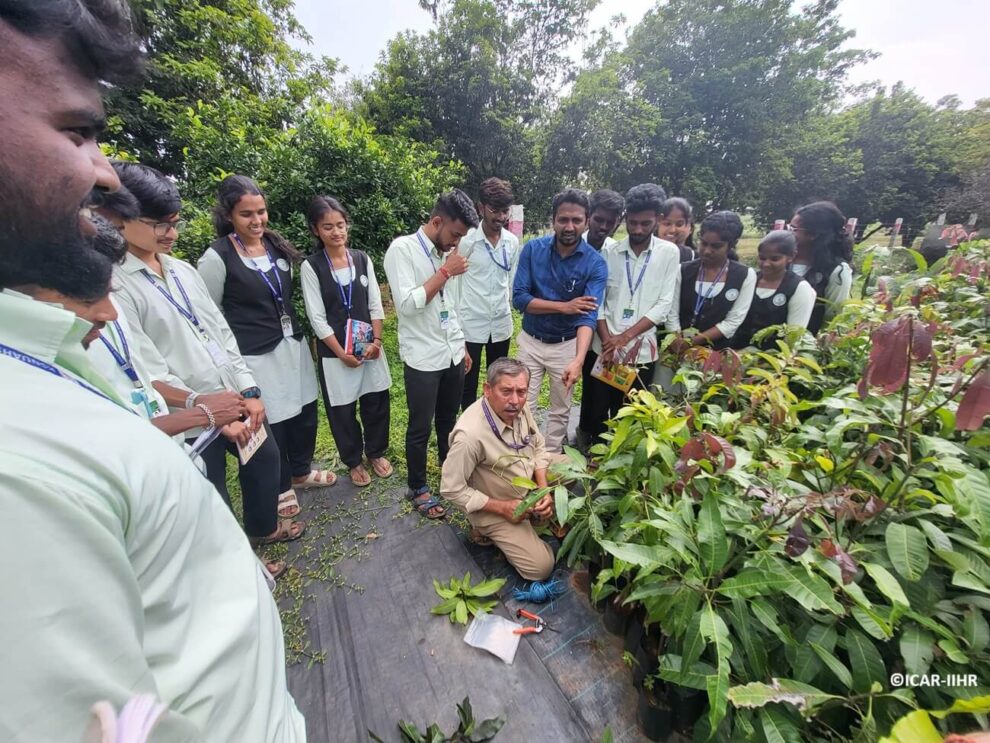
A strong horticulture sector requires more than scientific breakthroughs; it depends on professionals who can translate knowledge into action on farmers’ fields. In this blog, Atheequlla raises concerns over the declining emphasis on extension education in undergraduate horticulture curricula.
CONTEXT
India’s horticulture sector has emerged as a powerhouse, contributing significantly to nutritional security, income diversification, and export growth. Every year, thousands of horticultural graduates are produced by Indian Universities. While the undergraduate curricula in Horticulture (as prescribed in the Sixth Deans’ Committee Report) cover aspects related to the production and post-harvest management of horticultural crops, the extension component is missing. Horticulture is not only a science of production but also a practice that depends heavily on the effective transfer of technology, farmer engagement, and field-level problem-solving. Without adequate grounding in extension education, graduates may possess technical knowledge but lack the ability to communicate, adapt, and implement innovations among diverse farming communities.
IMPORTANCE OF EXTENSION COURSES
Extension courses equip students with essential competencies, including a basic understanding of rural society, the use of participatory approaches, conducting needs assessments, communication skills to engage with diverse stakeholders, undertaking programme planning, capacity development, mobilising farmers for group action, and using ICTs in extension work. These skills are particularly critical in the current context of climate variability, market fluctuations, and increasing demand for precision and sustainable horticulture. Well-trained extension graduates are better prepared to bridge the gap between research and field application, ensuring that scientific advancements reach farmers effectively. Moreover, extension education fosters social sensitivity, leadership, and entrepreneurship—qualities emphasised in the National Education Policy 2020. It enables students to work with Farmer-Producer Organisations (FPOs), rural youth, and women groups, thereby strengthening grassroots institutions and promoting inclusive growth.
FROM ‘CORE’ TO MISSING: THE DECLINE OF EXTENSION CONTENT IN HORTICULTURE CURRICULUM
In the 6th Dean’s Committee curricula prescribed for the undergraduate (UG) horticulture programmes, extension education is weakly represented.
Previously, there were three core extension subjects, viz.
- Fundamentals of Extension Education;
- Communication and Transfer of Technology and
- Entrepreneurship Development.
These courses, to some extent, helped build the foundational knowledge and aptitude required for extension activities and for working effectively with farmers and related stakeholders. However, currently, not a single core subject with the required credit hours is included in the curriculum.
The two related courses, Communication Skills (1+1) and Personality Development (1+1), which are common across all UG programmes, have nothing to do with extension per se. The course Information and Communication Technology in Horticulture (1+2) is a Computer Science course and not an extension course. The Entrepreneurship Development and Business Management course is listed in the BSc Ag curricula as an Economics Course, so it is taught by the Economics Department.
While the BSc (Hons) Agriculture curriculum includes Fundamentals of Extension Education (1+1) and Rural Sociology and Educational Psychology (2+0), these courses are completely missing from the BSc Horticulture curriculum.
This relatively weak representation of extension education in the Sixth Deans’ Committee report for the BSc Hons in Horticulture has resulted in the production of technically sound but field-disconnected graduates, ultimately affecting technology adoption and impact.
This raises a fundamental concern: Can we truly strengthen horticulture without strengthening horticulture extension? Skill empowerment, along with sound theoretical knowledge of the subject, is a basic requirement of a trained graduate. While attempts have been made to provide students with the technical aspects of Horticulture, they struggle to apply this knowledge on the ground because they lack practical understanding.
The evolving nature of the horticulture sector presents a complex set of challenges that cannot be addressed by technology alone but require a strong and responsive extension system. As horticulture becomes increasingly technology-intensive through advancements in precision farming, protected cultivation, and post-harvest management, the need for skilled extension support is critical to guiding farmers in adopting and adapting these innovations. This is particularly important in a sector dominated by small and marginal farmers, who rely heavily on timely and context-specific advisory services. Issues such as quality planting material, food safety standards, market volatility, and value chain integration further highlight that horticulture is no longer confined to production alone. In this context, extension plays a central role in connecting research with field realities, enabling effective knowledge transfer, strengthening farmer capacities, and ensuring that technological advancements lead to tangible improvements in productivity, profitability, and sustainability.
PERFORMING EXTENSION FUNCTIONS WITHOUT LEARNING EXTENSION
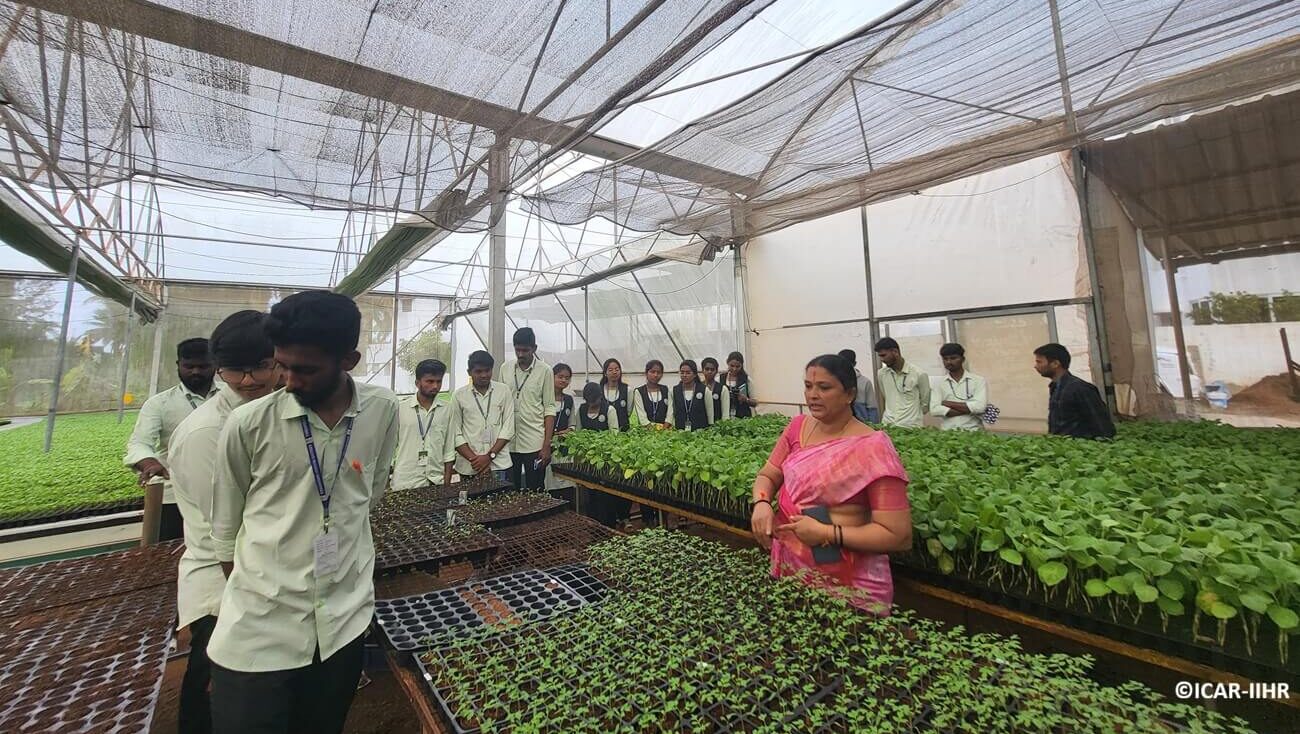
Although the RHWE (Rural Horticulture Work Experience) course is included in the final semester as a requirement for completing the undergraduate degree programme, the absence of basic and core extension subjects makes it difficult for students to grasp and apply the fundamental principles required for its effective daily execution. During RWHE, a student shall be familiar with terms such as demonstration, trials, and farmers-scientist interaction meets, in both letter and spirit, to execute its objectives clearly.
The Student READY programme (RAWE/Industrial Attachment/Project Work/Internship), carrying 0+20 credits, is where classroom learning finally meets the real world. It’s the phase where students step out of textbooks and into farms, villages, and industries—transforming from “pupae” into confident “adult” professionals. During this journey, they don’t just observe field conditions; they actively engage with farmers, work with communities, and understand the practical challenges and realities of agriculture and horticulture systems. And yes—this is also the moment when students realise that crops don’t grow by PowerPoint presentations, and farmers don’t follow lecture notes. After all, stepping into the field without extension training is a bit like being asked to conduct a farmers’ meeting, without knowing how to start a conversation beyond “Good morning”!
IMPLICATIONS FOR STUDENTS AND THE SECTOR
The exclusion of core Extension Education courses from the B.Sc. (Horticulture) curriculum, as noted in the 6th Deans’ Committee Report, has significant implications for both students and the horticulture sector. Extension serves as the critical link between research institutions and farmers, ensuring that scientific innovations, improved varieties, and modern cultivation practices are effectively transferred to the field. In a dynamic and technology-driven domain like horticulture, the absence of structured extension education/training limits graduates’ ability to translate knowledge into practice, thereby weakening the overall impact of agricultural advancements.
For students, the lack of extension education results in inadequate field-level competence and poor communication skills, making them less effective in interacting with farmers and understanding real-world agricultural challenges. While they may possess strong technical knowledge, they often struggle to deliver advisory services, conduct training programmes, or facilitate technology adoption. This gap reduces their employability, particularly in government departments, development projects, NGOs, Farmer-Producer Organisations (FPOs), and agri-startups, where extension skills are essential. Additionally, the lack of exposure to extension activities limits the development of soft skills such as leadership, participatory decision-making, and problem-solving in rural contexts, ultimately producing graduates who are academically sound but socially disconnected.
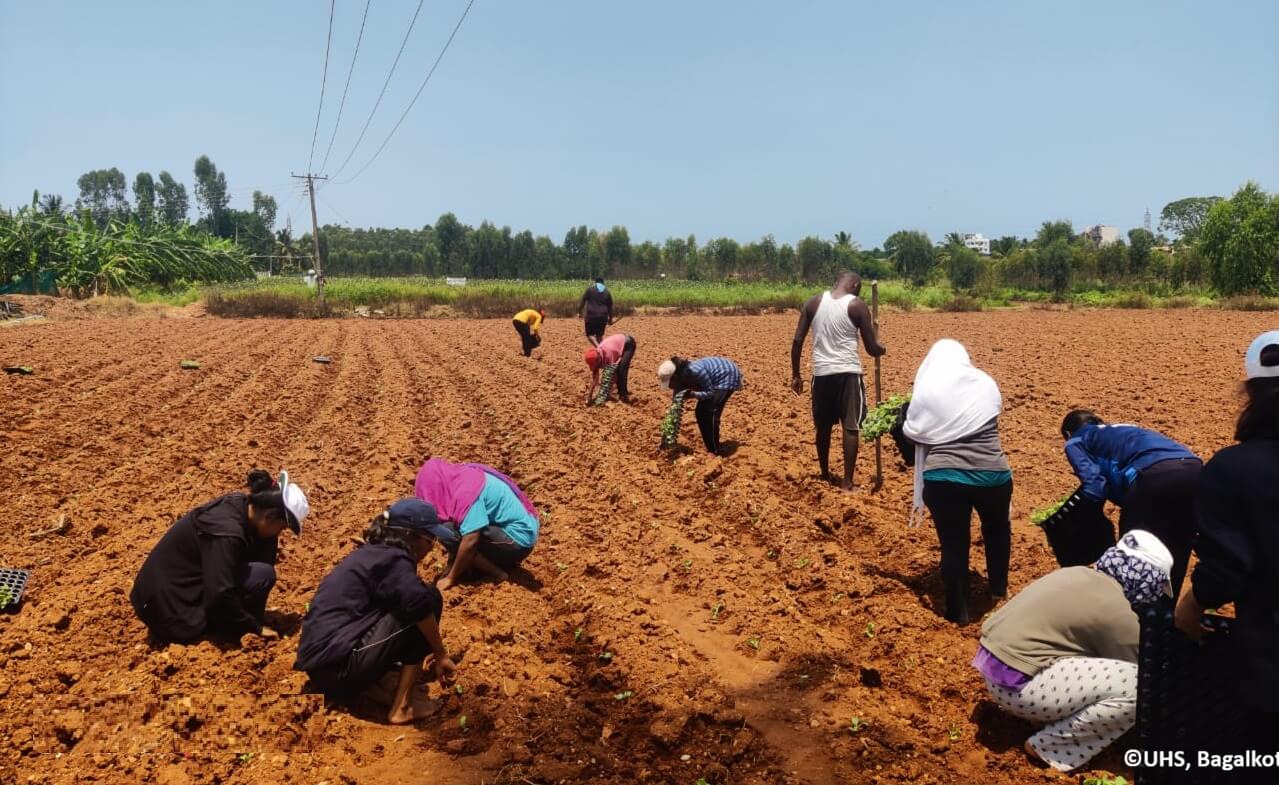
From an industry perspective, the lack of extension-trained professionals leads to poor dissemination and adoption of horticultural technologies, resulting in lower returns on research investments. The critical feedback loop between farmers and scientists is weakened, affecting the refinement and localisation of technologies. Industries such as seed companies, nurseries, and agri-tech enterprises also face challenges in scaling innovations due to the shortage of skilled extension personnel. Furthermore, the effective implementation of government programmes such as the Mission for Integrated Development of Horticulture (MIDH), the Pradhan Mantri Krishi Sinchayee Yojana (PMKSY), and FPO promotion initiatives depends heavily on extension capabilities; without adequately trained graduates, these programmes risk underperformance and limited outreach.
In the long term, this gap may shift horticulture towards a technology-centric rather than a farmer-centric approach, undermining sustainable development and rural livelihoods. Therefore, even if Extension Education is not retained as a core subject, it is essential to integrate extension components through practical training (e.g., RHWE) and experiential learning modules. Strengthening these aspects will help ensure that graduates are not only technically proficient but also capable of effectively engaging with farmers and contributing to the holistic development of the horticulture sector.
THE WAY FORWARD
Extension Education should be reinstated as a core component of the B.Sc. (Horticulture) curriculum, as it is essential for preparing graduates to effectively engage with farmers and facilitate technology adoption. Foundational courses such as Fundamentals of Extension Education, Rural Sociology, and Educational Psychology provide a critical understanding of communication, farmer behaviour, and rural institutions. However, their reintroduction should be accompanied by the modernisation of the curriculum to include digital extension, AI-enabled advisory systems, Farmer-Producer Organisations (FPOs), agripreneurship, and value chain development. Experiential learning through strengthened RHWE programmes, internships with KVKs and FPOs, and practical exposure to farmer advisory services should be enhanced. Developing communication, leadership, and facilitation skills alongside technical competence will ensure that horticulture graduates emerge not only as skilled producers but also as effective communicators and change agents capable of translating innovations into meaningful impacts for farming communities.
CONCLUSION
A strong horticulture sector cannot exist without a strong extension system. And a strong extension system cannot be built without teaching extension. If we continue to produce graduates who understand crops but not farmers, technologies but not adoption, science but not society—then we risk weakening the very foundation of agricultural progress. Because in the end, knowledge in agriculture has value only when it reaches the field—and that journey begins with extension.
 Atheequlla G.A. is a Senior Scientist (Agril Extension) at the ICAR- Indian Institute of Horticulture Research, Bengaluru. He can be reached at atheeq.agriextn@gmail.com

Add Comment