


In this blog, Md. Gazi Golam Mortuza discusses the evolving role of extension services in transforming Bangladesh’s cotton sector.
CONTEXT
Bangladesh is the world’s second-largest garment exporter and relies heavily on cotton to fuel its economic engine. As global supply chains shift toward sustainability, the country faces a pivotal moment. The future of Bangladesh’s textile industry depends on turning its raw-material supply chain into a force for social, economic, and environmental good. Cotton provides livelihoods for millions of smallholders and labourers, including women and their families, and contributes significantly to the economies of many developing countries like Bangladesh. World Cotton Day, celebrated every year on 7th October, celebrates cotton and highlights its enduring positive impact (Box 1).
|
Box 1: World Cotton Day The official theme for World Cotton Day 2026 is Cotton for Good: Building Prosperity Through Trade, Transformation and Partnership. |
 From supporting millions of livelihoods to providing a renewable, biodegradable natural fibre, cotton delivers economic, social, and environmental benefits worldwide. Every October 7, the global cotton and textile community comes together to celebrate cotton’s contribution to livelihoods, trade, innovation, and sustainable development. World Cotton Day is also a call to action: an opportunity for organisations, schools, businesses, and individuals everywhere to share cotton’s story, celebrate the people behind this amazing natural fibre, and show how cotton remains a global public good.
As the world’s second-largest exporter of ready-made garments (RMG), Bangladesh occupies a central position in the global textile supply chain. Yet an ironic vulnerability lies at the heart of this thriving industry: Bangladesh imports roughly 97% of the raw cotton its domestic spinning and textile mills require. To feed an annual industrial demand of approximately 8.5 million bales, the country spends over $3 billion annually on imports.
With the government setting an ambitious target to scale domestic production fivefold to 1 million bales by 2030, the agricultural spotlight has firmly shifted to the country’s white-gold system. Achieving a highly competitive, productive, and high-yielding cotton system requires systematically addressing entrenched cultivation challenges and reshaping the role of Extension Services.
CHALLENGES
Despite cotton’s potential as a highly lucrative cash crop, domestic output hovers around only 225,000 bales per year, cultivated on roughly 45,000 hectares. The stagnation stems from severe structural and environmental bottlenecks:
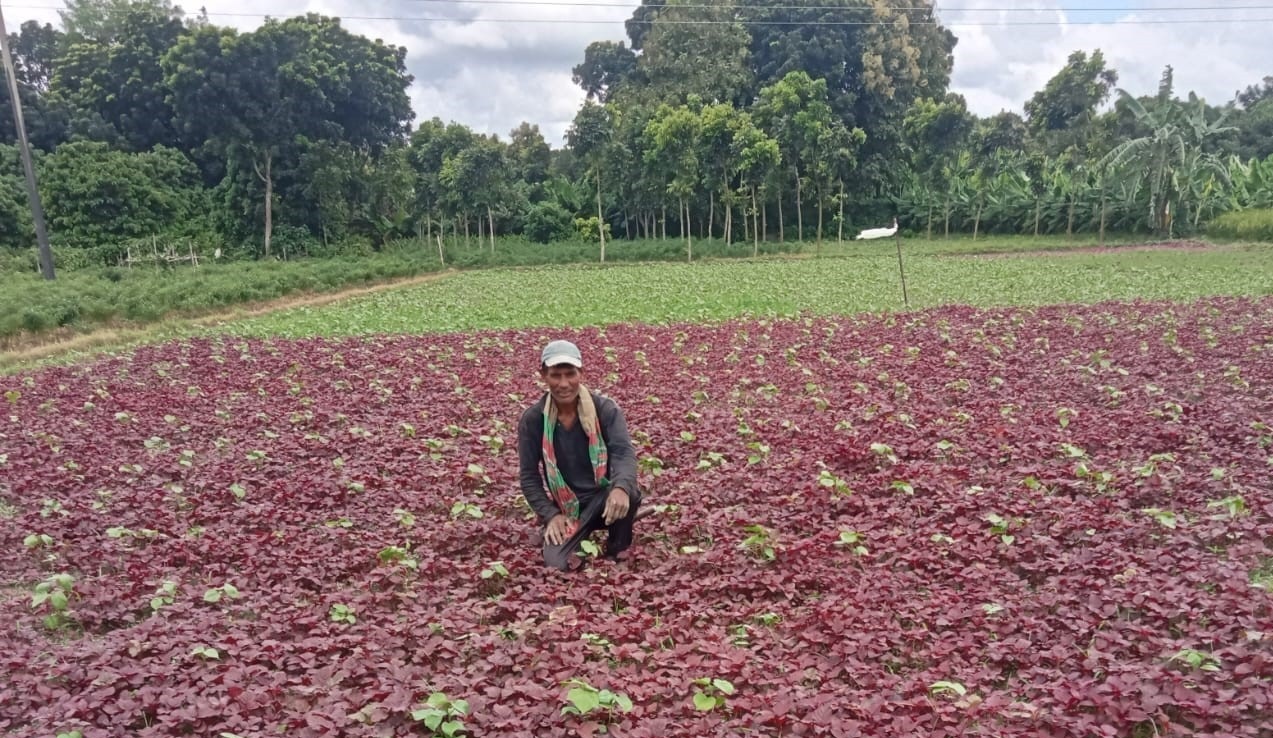
Acute Land Scarcity and Food Competition: Bangladesh possesses finite arable land, which is systematically prioritised for food grains like rice and high-value winter vegetables. Traditional cotton varieties feature a long growth duration (around 6 months) from seed to harvest. Sowing cotton means smallholder farmers must forgo Aman rice and winter crops, an economically risky trade-off.
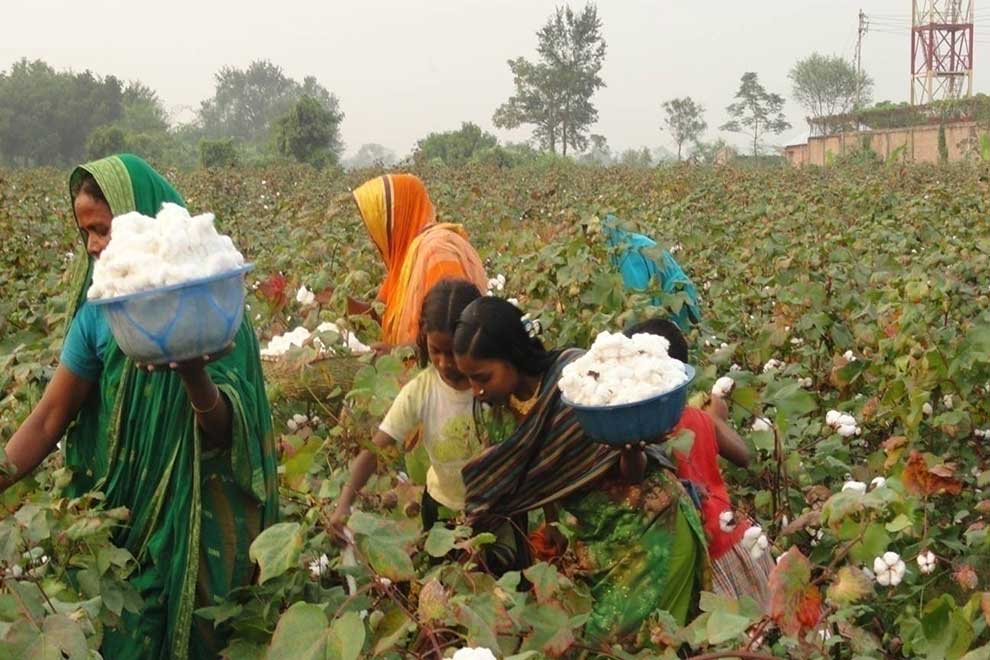
Labour Shortages and High Input Costs: Cotton cultivation in Bangladesh is highly labour-intensive. Farmers do sowing, weeding, insecticide spraying, and harvesting entirely by hand. Seasonal labour shortages during peak harvest months cause critical delays in picking mature cotton, degrading fibre quality. At the same time, skyrocketing prices for inputs like high-yield seeds, fertilisers, and pest management products squeeze profit margins.
Vulnerability to Biotic and Abiotic Stress: The humid subtropical climate renders cotton prone to devastating pests, particularly the American bollworm. Furthermore, expanding cotton into marginal lands requires robust resistance to rising soil salinity in coastal areas and drought conditions in the northern Barind tracts.
Fragmented Markets and Delayed Cash Flows: Farmers frequently encounter systemic market hurdles, including lack of formal storage facilities, limited localised ginning services, and delayed payments from buyers or brokers.
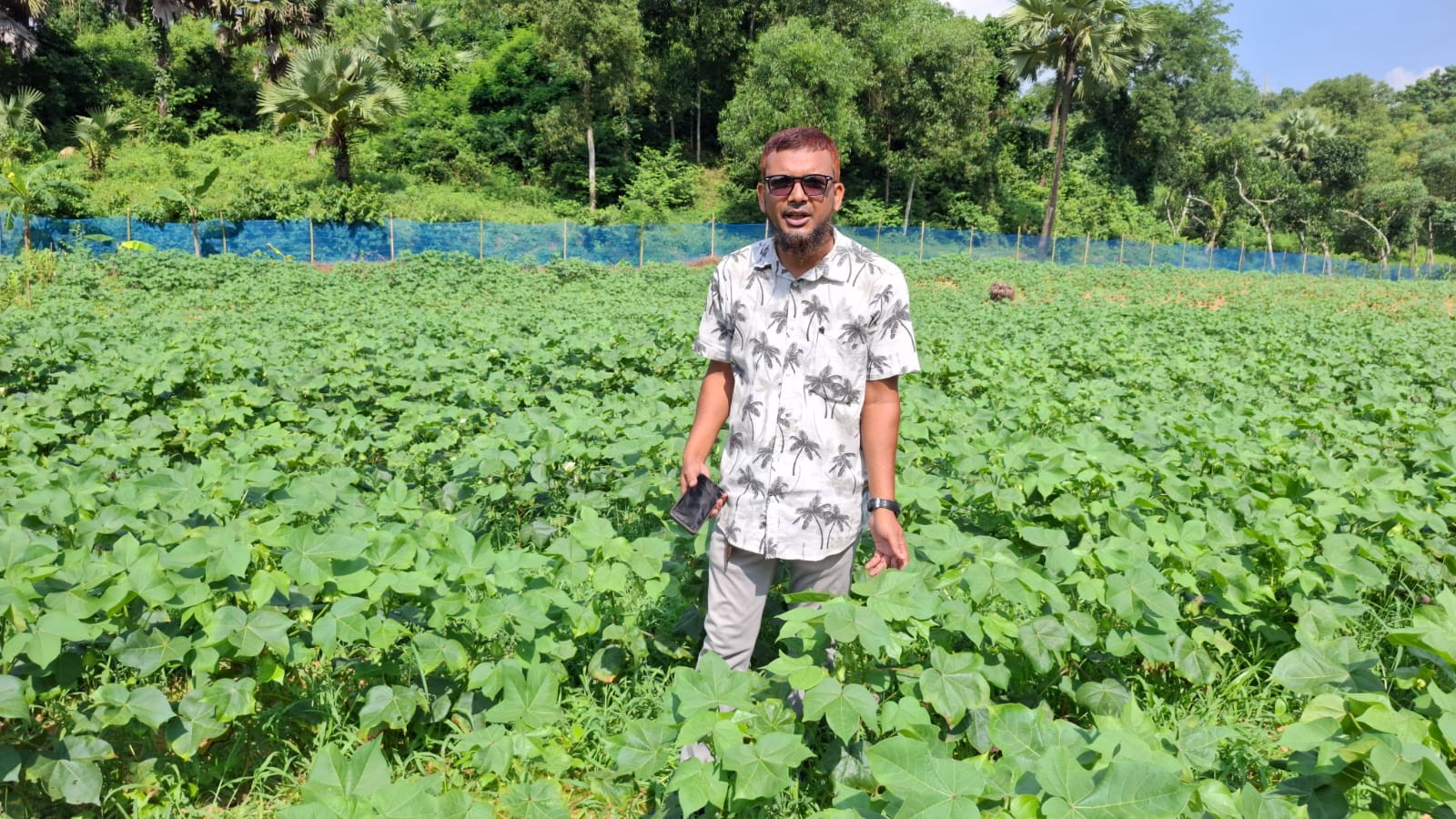
ROLE OF EXTENSION SERVICES
In Bangladesh, the Cotton Development Board (CDB), operating under the Ministry of Agriculture, acts as the primary vehicle for research, seed multiplication, and advisory outreach across 39 districts (Box 2).
|
Box 2: Cotton Development Board CDB has the following mandates: |
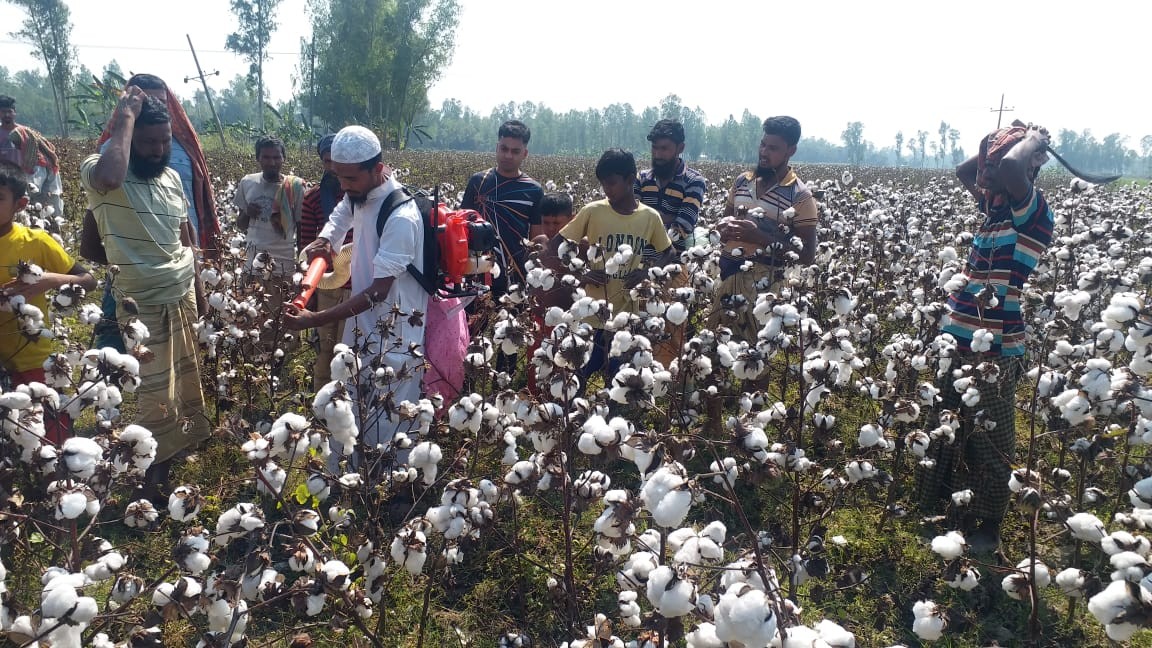
KEY EXTENSION INTERVENTIONS OF CDB
Introduction of High-Yielding and Biotech Varieties
To bypass long cropping durations, extension wings have actively transferred hybrid cotton strains and climate-resilient mutant varieties (such as CDB Tula M-1) to plain and hilly tracts. A major milestone is the targeted rollout of Bt Cotton, genetically engineered to resist the destructive bollworm. This reduces the required volume of chemical pesticide applications and cuts input costs for early adopters.
Expansion into Non-Conventional and Climate-Vulnerable Landscapes
Recognising that cotton cannot displace vital food crops in fertile plains, extension officials are actively redirecting cultivation toward underutilised, low-fertility terrains. The CDB currently runs dozens of on-farm trials spanning the Chattogram Hill Tracts (Bandarban, Rangamati, Khagrachari) for tree cotton, as well as the riverine chars, coastal saline zones, and drought-prone western districts like Jhenaidah and Jashore.
Input Subsidies and Small-Scale Capital Delivery
To alleviate high start-up barriers, the government disbursed dedicated agricultural incentives worth Tk 180 million to cotton growers. In parallel, extension networks manage supervised, interest-free micro-credits directly to marginal and landless farmers, insulating them from predatory high-interest rural moneylenders.
NEED FOR A PARADIGM SHIFT
While existing extension mechanisms have successfully doubled yields over the last decade, reaching the 1-million-bale threshold requires a comprehensive paradigm shift. To cultivate an efficient, competitive system that delivers superior returns to farmers, action must be taken across multiple dimensions:
A. Revitalising Extension Services
- Scale Up Regenerative Agriculture and Intercropping: Extension Services must step away from monoculture advice. Extension agents should be trained to transfer precise spatial knowledge on regenerative intercropping. Teaching farmers to row-crop cotton alongside short-duration winter vegetables or legumes allows them to generate steady income streams during the six-month cotton cycle without compromising regional food security.
- Digital Extension and Smart Pest Forecasting: The current ratio of extension officers to farmers limits face-to-face visits, leaving growers to complain about a lack of timely advice. Transitioning to mobile-enabled advisory channels—using app-based diagnostic tools for pest identification and SMS alerts for weather anomalies—will democratize access to timely advice.
- Farmer Field Schools (FFS) for Precision Agriculture: Establishing decentralised demonstration plots focused on precision nutrient placement and drip irrigation will optimise expensive inputs. This ensures farmers maintain a highly profitable benefit-cost ratio.
B. Structural, Technological, and Market Reforms for Cotton Cultivation Extension
- Introduction of Small-Scale Farm Mechanisation: To permanently resolve the agricultural labour crunch, the Ministry of Agriculture must co-finance or subsidise mechanical cotton pickers and motorised sprayers through local farmer cooperatives. Mechanisation reduces heavy manual labour costs and speeds post-harvest clearing.
- Institutional Buyer Linkages and Contract Farming: Farmers frequently suffer from delayed financial returns post-harvest. The state should incentivise direct contract farming agreements between the Bangladesh Textile Mills Association (BTMA) and regional ginneries or grower groups. Eliminating multiple tiers of intermediaries guarantees transparent, immediate cash transfers directly into growers’ bank accounts upon crop delivery.
- Establishment of Rural Ginning and Storage Hubs: Cotton is highly susceptible to moisture and staining. Setting up public-private decentralised storage warehouses and modern ginning facilities across major production zones (like Jashore, Kushtia, and the Hill Tracts) ensures fibre quality is preserved to fetch premium mill-grade prices.
CONCLUSION
Bangladesh’s dependency on imported raw cotton represents both a macroeconomic challenge and a massive domestic agricultural opportunity. By modernising Extension services into a digitally enabled, intercropping-focused framework, and backing it with mechanisation and direct market integration, the country can successfully build a highly competitive cotton network. Providing cotton growers with the tools, elite biotech seeds, and direct market access needed for high returns will secure a sustainable, climate-resilient future for the nation’s garment supply chain.
 Dr Md. Gazi Golam Mortuza is serving as Soil Nutrition and Water Management Specialist at the Cotton Development Board (HQ), Tula Bhaban, Farmgate, Dhaka. He can be reached at: mortuzacdb@gmail.com

Add Comment