
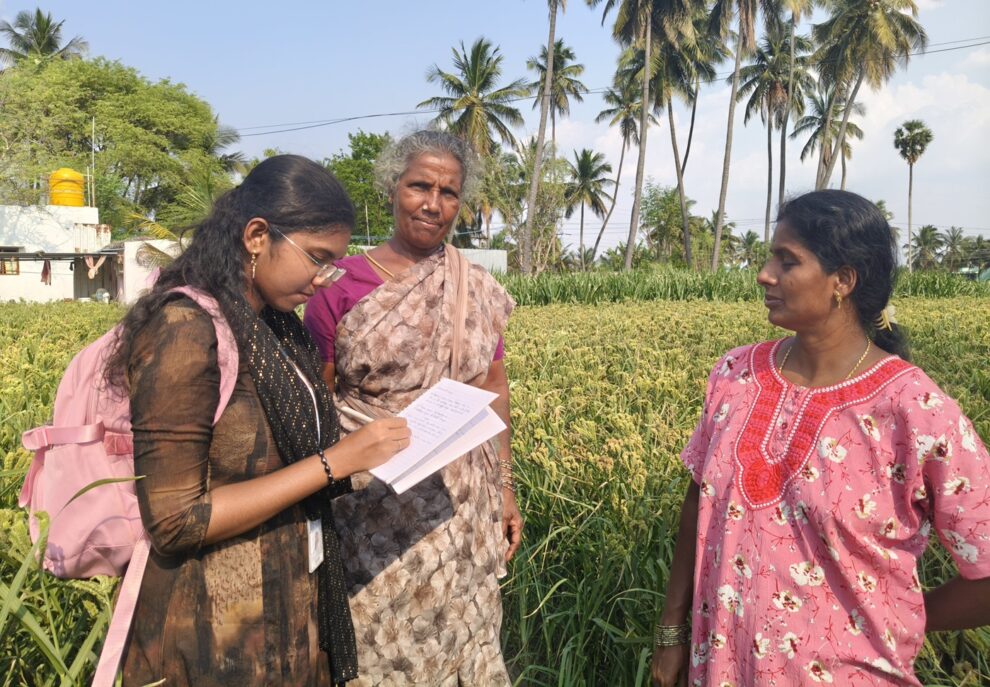
In this blog, Juno Ashok reflects on her experiences and learnings from fieldwork, highlighting the importance of being empathetic towards respondents and approaching data collection as an opportunity to learn—rather than simply as a means of gathering the data needed for a study.
CONTEXT
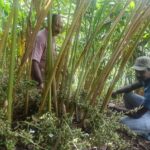
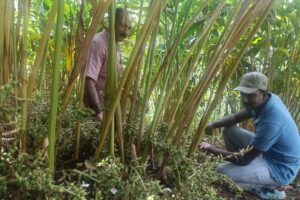
The farmer looked at me for a few seconds before answering my question. Then he smiled and asked, “Will this survey help us get any subsidy?” Around him, a few other farmers paused their work and waited for my response. At that moment, I realised that while I had come looking for data, the farmers were trying to understand something entirely different—the purpose behind my visit. What appeared straightforward in research methodology textbooks became far more complex in practice. Farmers rarely viewed surveys as academic exercises. Conversations extended beyond questionnaires, responses were influenced by people around them, and numbers often carried stories that could never fit into a spreadsheet. Gradually, I began to question a basic assumption underlying most field research: Are we really collecting data, or are we co-creating it through our interactions with respondents?
The more I reflected on these experiences, the clearer it became that field data are not produced by the questionnaire alone. They emerge through an interaction between the researcher, the respondent, the questions being asked, and the social context in which the conversation takes place. What a farmer chooses to share, how a question is understood, and even the meaning attached to a response can be shaped by trust, expectations, relationships, and the presence of others. In this sense, data collection is not always a one-way process of extracting information; it can become a process of co-creating meaning between the researcher and the farming community?
THE CHALLENGE
Varying Expectations of Respondents
One of the first realities I encountered was that every farmer interpreted a survey differently. Many farmers associated surveys with government programmes, subsidies, training programmes, or development initiatives. Their questions were often less about the survey and more about what might come after it. Would their concerns reach policymakers? Could this survey bring any support to their village? Would this study help them access a scheme?
Initially, I wondered whether these questions indicated that the purpose of the study had not been communicated clearly enough. However, I gradually realized that even when the purpose and nature of the interview were explained, farmers interpreted the interaction through the lens of their previous experiences with government departments, extension agencies, researchers, and development programmes. Their questions therefore reflected more than a need for clarification; they revealed the expectations and concerns they brought into the interview. Farmers were not merely respondents waiting to answer questions; they were individuals trying to understand the purpose behind yet another visit from an outsider. Building trust therefore became just as important as explaining the study and administering the questionnaire.
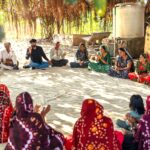
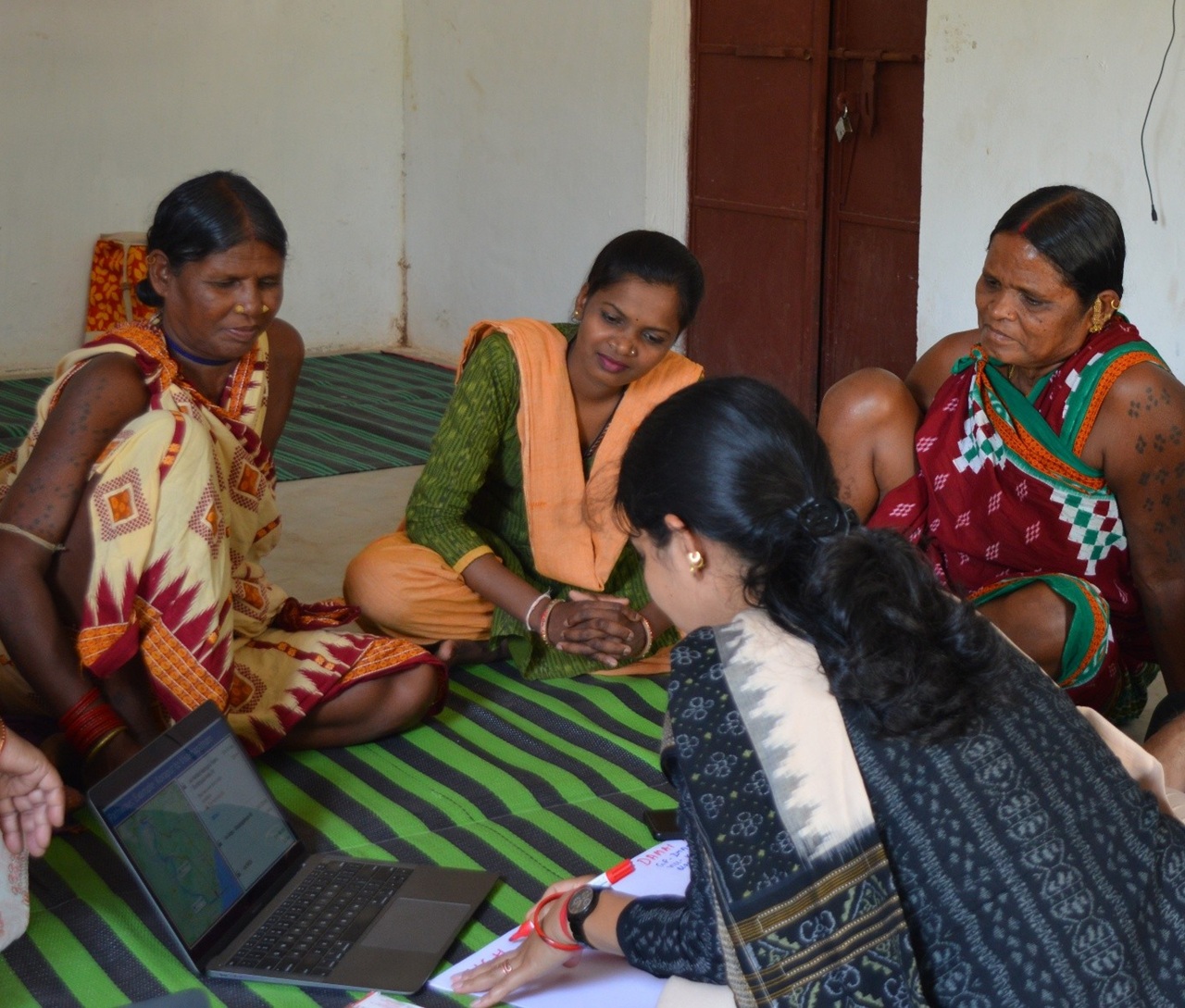
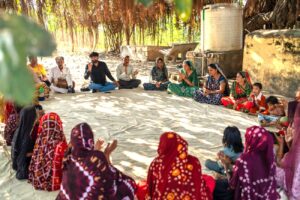
As interviews progressed, another interesting reality emerged. Research designs often assume that respondents provide independent opinions. Rural life rarely works that way. A farmer interviewed alone could provide very different responses from the same farmer interviewed in the presence of neighbours or family members. What began as an individual interview would sometimes transform into a group discussion, with neighbouring farmers offering their own interpretations and experiences.
Women respondents offered another important insight. In many households, agricultural decisions are discussed collectively, and responses often reflected household perspectives rather than individual opinions. This reminded me that farming decisions are rarely made in isolation; they are shaped by relationships, responsibilities, and shared experiences.
Researchers Love Numbers. Farmers Live Experiences
Perhaps the greatest challenge, however, was not social—it was numerical.
Questionnaires ask for exact figures on yield, income, expenditure, labour costs, and returns. Yet many farmers do not maintain detailed records. They remember the season, the rainfall pattern, the market price fluctuations, and whether the harvest was better or worse than the previous year. Asking for precise numbers often required them to reconstruct entire seasons from memory.
Income-related questions were particularly sensitive. Some farmers were cautious while discussing their earnings, partly because they feared that disclosing higher incomes might affect their eligibility for existing schemes and benefits. Others simply provided approximate figures because exact records were unavailable. This was not dishonesty. It was a reflection of how rural livelihoods operate. The neat precision that appears in research reports often originates from realities that are far more fluid and complex.
Identifying the Right Respondents
Another lesson came from identifying respondents. Researchers often depend on local extension personnel, village leaders, or progressive farmers to establish contact. Their support is invaluable and often makes fieldwork possible. However, I gradually realized that the most visible farmers are not always the only farmers whose experiences matter. Farmers who are active in village meetings, associated with farmer groups, or already known to extension personnel may be easier to identify and approach, while women, smallholders, tenant farmers, older farmers, or those less connected to local institutions may remain less visible. This can shape not only who participates in a study but also which experiences become represented in the resulting dataset. Some voices are easier to reach than others. This reminded me that representativeness is not only a statistical concern but also a social one. The process through which respondents are identified is itself part of field methodology and deserves careful attention.
DEMYSTIFYING ACADEMIC TERMS
One of the most surprising lessons came from discussions around climate-smart agriculture. When asked whether they were aware of climate-smart agriculture, many farmers responded negatively. Yet as the conversation continued, they described practices such as crop diversification, moisture conservation, drought-tolerant varieties, organic nutrient management, and adjustments in sowing dates based on weather conditions.
At first glance, this seemed contradictory. In reality, it revealed a gap between the language of researchers and the language of farmers. Farmers often practice more than they can name. They may not be familiar with academic terminology, but they possess a deep understanding of practical solutions developed through years of experience and adaptation. This realization reminded me that extension is not merely about introducing new concepts; it is also about recognizing and building upon existing knowledge.
The experience also highlighted the importance of communication. Some questionnaires are filled with concepts that make perfect sense in research proposals but sound unfamiliar in villages. A good interviewer is therefore not someone who reads questions exactly as written. A good interviewer is someone who can translate academic language into meaningful conversations. Often, a simple example from everyday farming life generated more useful responses than a technically perfect question.
UNINTENTIONAL LEARNINGS
Yet the most memorable moments from fieldwork were not recorded in the questionnaire at all.
Many interviews took unexpected turns. A question about crop production would lead to a discussion about labour shortages. A question about farm income would become a conversation about educational expenses, health concerns, debt, or migration. Farmers frequently spoke about market uncertainties, erratic weather, rising cultivation costs, and the challenges of sustaining agriculture as a livelihood.
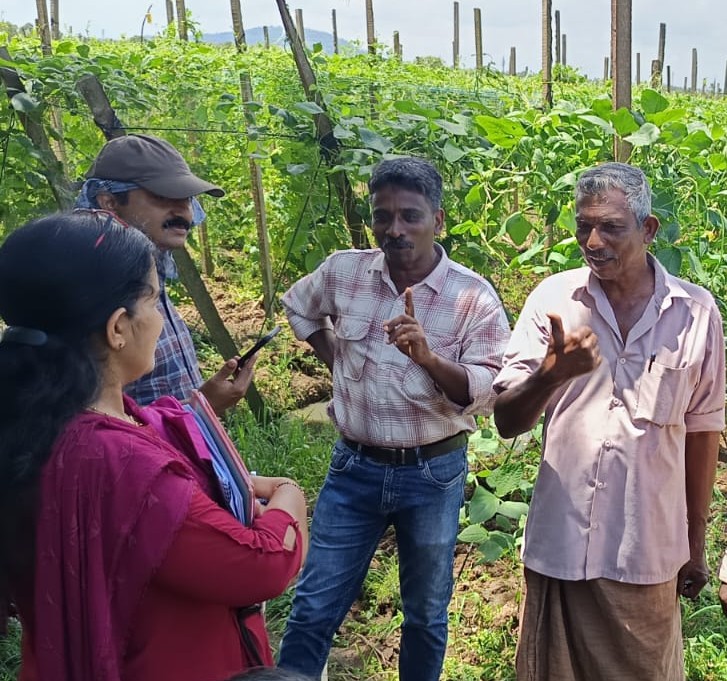 In one instance, a question about farm income led to a long conversation that had little to do with income itself. The farmer spoke about rising cultivation costs, uncertainty about rainfall, difficulties in finding labour, and concerns about whether the next generation would remain in agriculture. The questionnaire remained open on my lap while the conversation moved far beyond its pages. That interaction reminded me that farmers often carry concerns that cannot be captured through predefined response categories.
Initially, I worried that these conversations were taking time away from the survey. Over time, I realized they were often the most important part of the interaction.
Ironically, some of the most valuable insights emerged after the questionnaire had ended. The stories farmers shared often explained survey findings better than the numbers themselves. A low adoption rate could be linked to labour shortages. Income variability could be traced to market fluctuations. Decisions that appeared irrational in datasets suddenly became understandable when viewed through the lens of everyday realities.
IMPORTANCE OF EMPATHY
While researchers visit villages seeking data, farmers often see these interactions as rare opportunities to be heard.
Many farmers simply wanted someone to listen. They spoke about years of uncertainty, frustrations with agriculture, and concerns about the future. In those moments, the role of the researcher extended beyond collecting information. Empathy became as important as methodology. Listening respectfully was not merely a courtesy; it was an essential part of understanding the realities behind the data.
END NOTE
In the field, every number has a story behind it. These experiences taught me three lessons.
First, trust-building is as important as questionnaire design.
Second, communication matters more than terminology.
Third, some of the most valuable insights emerge when researchers pause their questioning and simply listen.
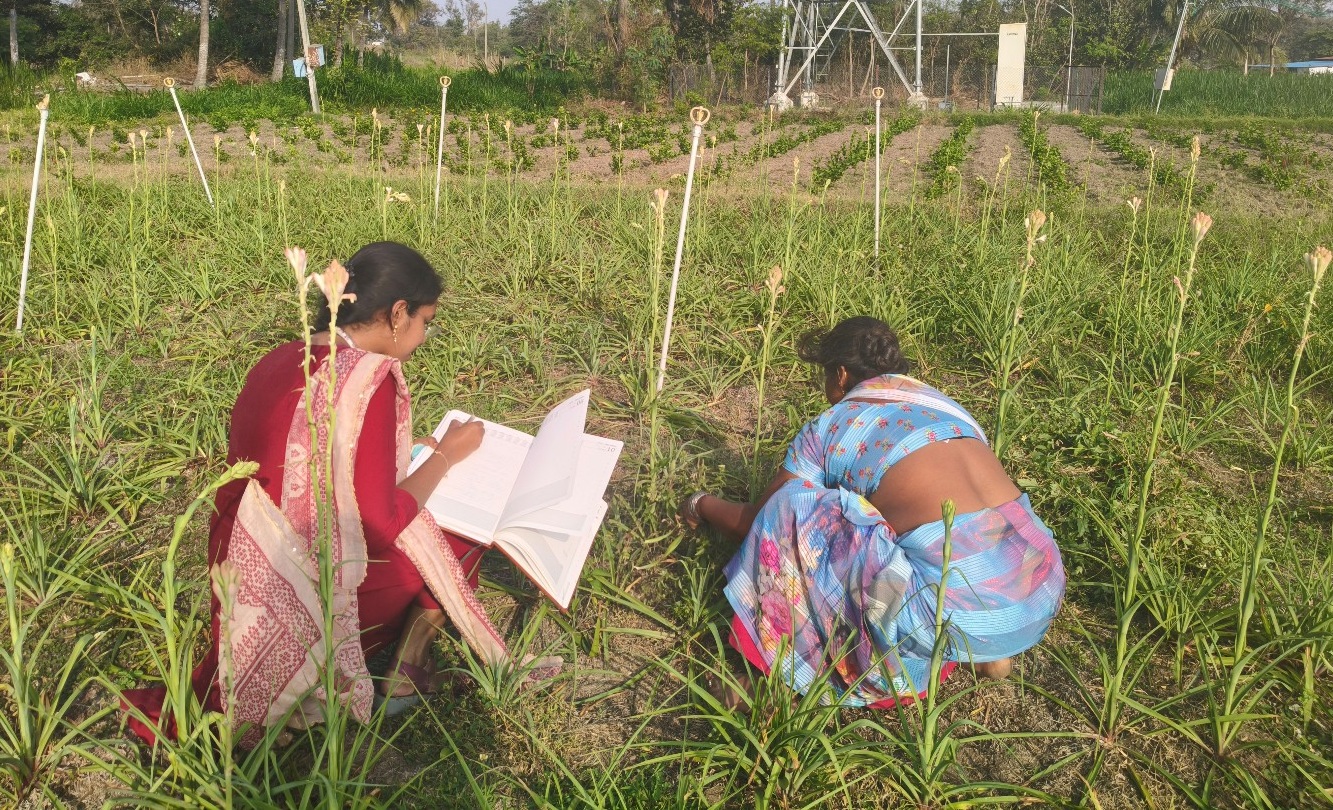 These lessons also point towards the value of mixed-methods research designs in agricultural extension. Quantitative approaches are essential for identifying patterns, measuring adoption, comparing groups, and generating evidence at scale. However, numbers alone may not explain why farmers make particular decisions, how they interpret new technologies, or what social and livelihood realities shape their choices.
Qualitative conversations can provide the context needed to interpret these patterns and reveal perspectives that predefined response categories may overlook. Rather than treating qualitative insights as supplementary to quantitative data, agricultural extension research can benefit from integrating both approaches from the outset. After all, people do not live in datasets; datasets emerge from people’s lives.

Juno A M is currently pursuing M.Sc. in Agricultural Extension Education at Tamil Nadu Agricultural University, Coimbatore and is an AESA Volunteer. She can be reached at amjuno2001@gmail.com.
Based on field insights shared by Ms. Juno Asok, this brief outlines an empathetic, communication-driven framework for agricultural extension professionals to optimize field data integrity. Traditional data extraction often misses critical nuances; by embedding experiential learning and reflective thinking directly into collection tools, researchers can uncover highly accurate real-world data and capture invaluable indigenous traditional wisdom.
Before entering the field, extension professionals must shift from passive data gatherers to active facilitators:
• Two-Way Communication: Establishing open, symmetric dialogue rather than rigid interrogation.
• Empathy: Understanding the farmer’s operational environment, constraints, and motivations to build trust and eliminate reporting bias.
The Dual-Engine Questioning Framework
To strengthen data collection and ensure data accuracy, field collection tools should move away from binary or abstract questions and instead integrate a structured dual-engine framework:
• Experiential Learning Tools: Prompts farmers to review their concrete historical actions. Questions focus on uncovering past activities and their immediate outcomes (e.g., ‘What did you plant last season, and what were the explicit yields?’). This establishes a verified factual baseline.
• Reflective Thinking Tools: Uncovers the underlying drivers behind those actions. By targeting the ‘Why’ aspect realistically, this line of questioning bypasses superficial responses and reveals actual decision-making constraints or motivations.
Secondary Benefit: Traditional Knowledge Extraction
A critical secondary benefit of combining experiential and reflective methodology is the natural extraction of traditional knowledge. When farmers are prompted to systematically reflect on their past actions and long-term outcomes, they inherently bridge modern agricultural observations with generational, localized practices.
A very relevant and interesting area has been explored Juno. As social science researchers we are often seen as people who simply conduct surveys but those who have worked in the field know how challenging the process can be. Field situations rarely go exactly as planned and researchers have to adapt to different people and circumstances. This practical side of research is often missing in our academic training. Extension institutions could therefore give more importance to hands-on training in field research and equip young researchers to handle real-world situations with confidence and sensitivity.
A very insightful reflection on what happens beyond the questionnaire and interview schedules. The idea that data are not simply “collected” but co-created through relationships, expectations, context and conversations is particularly important for agricultural extension research. I especially appreciate the emphasis on listening to farmers’ experiences and recognizing the knowledge they already possess, even when it is not expressed in academic terminology. This is a valuable reminder that behind every number is a person, a story and a context. Integrating quantitative evidence with qualitative insights can make extension research not only more rigorous, but also more grounded and meaningful. Congratulations to Juno and AESA for bringing these important field-level lessons to the fore
Very interesting and thought-provoking blog, straight from the field experiences of a budding social scientist. Beautifully written, with field issues articulated very well. Another worthy addition to the recent AESA Blogs on conducting scientific research in complex field situations.
I see this blog as a young scientist’s quest to obtain objective and unbiased information from a realistic situation involving farmers. As someone involved in teaching/training social research methodology, this blog raises more questions than answers—perhaps from a slightly different perspective.
Are we really doing research the way we are supposed to?
A few reflections:
1. Are we focusing too much on “data” and quantification?
From my experiences of interacting with MSc and PhD students across universities, I feel that our research culture is becoming more focused on generating data amenable to quantitative analysis than on generating empirically validated information to explain a research problem. In the race for sophisticated statistical techniques and publications in 6+ NAAS-rated journals, we sometimes lose sight of the subject matter of extension. Constructs are poorly conceptualised, inappropriate scales are used, and sometimes the research question itself is shaped by the data and analytical techniques available. Research should begin with the problem and the evidence required—not with the statistical technique.
2. Is methodology driving the research question rather than the other way around?
Research methodology is a means to answer a research question, not an end in itself. Sometimes we give greater importance to methodological sophistication than to the research problem, conceptual clarity, and the study’s relevance. The choice of methodology should emerge from the research question, the nature of the phenomenon being studied and the type of evidence required—not the other way around.
A sophisticated methodology cannot compensate for a poorly conceptualised research problem, inappropriate measurement or inadequate understanding of the field context. The real challenge is not to make research methodologically complicated, but to make it scientifically appropriate and empirically meaningful.
3. “Will this survey help us get any subsidy?” — What is the purpose of extension research?
The very purpose of extension research in agricultural universities is to strengthen the professional extension system through scientifically developed approaches, tools and techniques. In my opinion, every student research should generate some useful information for farmers, extension professionals, universities or policymakers. Research conducted merely for publication, without meaningful field implications, loses much of its purpose. Farmers are not merely respondents; they are important stakeholders of extension research.
4. Conversations extending beyond questionnaires can provide valuable insights into why farmers respond in a particular way. But this also raises a methodological question: are we adequately applying the MAXMINCON principle in field data collection? The timing and location of interviews, the presence of others, interviewer behaviour, and other contextual factors can influence responses.
Equally important is prior informed consent. Farmers should be clearly informed, in simple and locally understandable language, about the purpose of the study, why the information is being collected, how it will be used and what is expected from them. Informed consent should not be treated merely as an ethical formality; it is also important for creating an appropriate research situation for obtaining valid information. Researchers should ensure that participation is voluntary and should not create expectations of subsidy, government benefits or other direct advantages.
Perhaps standardisation should therefore mean not only standardising the questions, but also the conditions under which questions are asked—including how the researcher introduces the study and establishes the relationship with the respondent.
5. Researcher + respondent + question + context = response
If responses emerge through an interaction between the researcher, respondent, questions and social context, how objective and unbiased is our measurement? This takes us into measurement theory. While Classical Test Theory focuses largely on measurement error, approaches such as C-OAR-SE and Item Response Theory (IRT) provide interesting perspectives on the relationship between constructs, respondents and responses. The question is: are we only reducing measurement error, or are we also accounting for the influence of research context on measurement?
6. “Many farmers do not maintain detailed records.” — Can we depend entirely on recall?
Much of our research relies on self-reported data, which is vulnerable to recall problems. In field interventions, project staff can regularly visit farmers and record activities and actual expenses. For student research, key variables directly related to the research problem can be triangulated using available records, shorter recall periods, field observations and cross-checking with other relevant sources. Better research does not necessarily mean asking more questions; it may mean asking at the right time and verifying what matters most.
7. “Researchers love numbers. Farmers live experiences.”
We need numbers for quantitative research and systematic evidence for qualitative and mixed-methods research. Conversations beyond the research framework can certainly help us understand farmers’ perspectives, but to become scientific evidence, they need to be systematically documented, coded, and analysed.
This highlights the importance of pilot studies and prior field training of students in administering tools and managing real field situations. Students need to learn not only how to ask questions, but also how to handle unexpected field situations without compromising the research design. Even in participant/non-participant observation, we are not simply “living the farmers’ experiences”; we are studying those experiences systematically within a defined research framework.
Empathy helps us understand farmers’ experiences; methodology helps us convert that understanding into scientific evidence.
8. “Identifying the right respondents” — are we following the sampling framework?
If the study requires a representative sample, we should begin with an appropriate village/household/farmer sampling frame and select respondents according to the stated sampling design. Obtaining lists of “progressive farmers” from agencies may be convenient, but it can introduce serious selection bias. Such farmers may disproportionately represent innovators or early adopters and may not represent the broader farming population. They are appropriate when the research specifically focuses on innovators/progressive farmers—but not as substitutes for a representative sample.
Also, selection bias is the real concern. A properly selected random sample can legitimately produce skewed data if the population itself is skewed.
Overall, Ms. Juno’s blog has opened a Pandora’s box of methodological questions for agricultural extension research.
Perhaps the larger question is:
Are we training students to collect data and run statistical tests—or to identify meaningful problems, select appropriate respondents, obtain informed participation, measure validly, understand field realities and generate empirically validated knowledge that can contribute to change?
In the AI era, this question becomes even more important. AI can help us analyse data and write papers, but sound research methodology, field understanding and scientific judgement cannot be outsourced.
Good research is not about collecting more data, using more sophisticated methods or publishing more papers. It is about asking the right question, choosing the right respondents, obtaining informed participation, measuring the right things, collecting evidence systematically, understanding the context and drawing scientifically defensible and socially meaningful conclusions.
I read the blog by Ms. Juno Asok which is a sincere articulation by a budding scientist. I congratulate her for the insightful blog.
Besides trust building, communication including non verbal, empathy, etc indicated by the author, I suggest triangulation as one the effective ways to obtain quality data. Triangulation can use multiple sources and methods to cross check and validate the collected data. Triangulation improves data obtained from farmers by overcoming memory bias, reducing social desirability bias and combining quantitative and qualitative information.
Good writing Ms. Juno Asok. Keep writing. All the best