

As we celebrate International Coffee Day on 1 October, Sangappa highlights how ICAR–KVK Kodagu has been working with coffee growers to strengthen their capacities through field-based demonstrations, continuous technical guidance, and support for farmer collectivisation.
CONTEXT
Kodagu produces over 1, 10,000 metric tons of coffee annually, accounting for roughly 35% to 40% of India’s total coffee production. Coffee production in Kodagu is part of a diversified plantation system in which coffee is grown under shade and often combined with pepper and other crops. The experience of ICAR-Krishi Vigyan Kendra (KVK) Kodagu demonstrates how multidisciplinary technical support, field demonstrations, continuous learning, farmer collectivisation, institutional linkages and exposure to value-added coffee activities can improve the coffee value chain.
GOOD PRACTICES
Rather than limiting its role to providing one-time technical advice, KVK has worked with farmers across different stages of the coffee value chain, from addressing field-level problems to building their capacities, organising them into institutions and linking them with markets and other agencies.
Taking Coffee Technologies to Farmers’ Fields
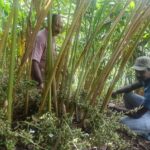
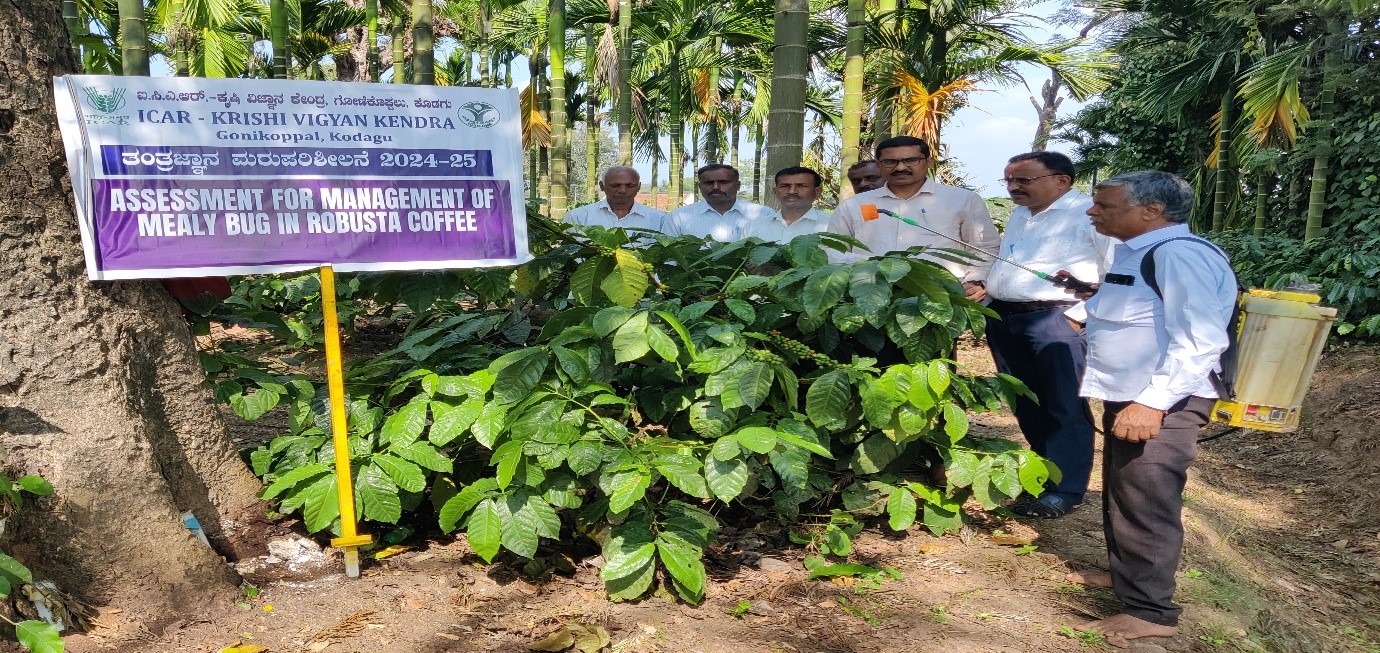
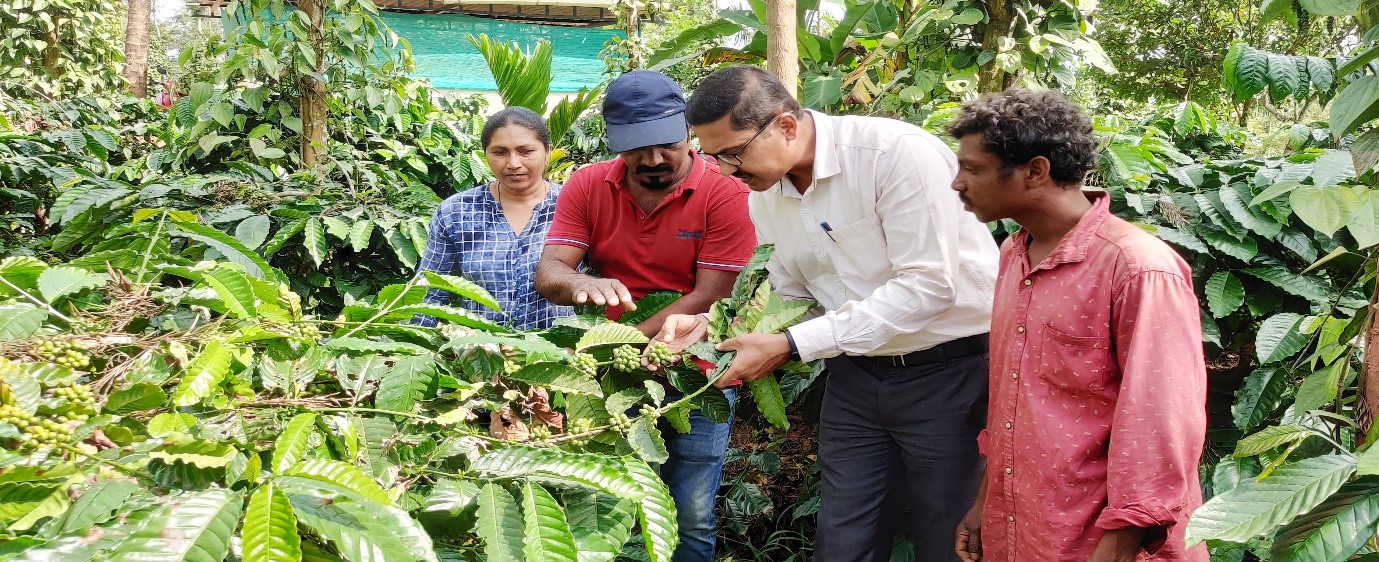
The perennial nature of coffee cultivation makes pest and disease management a continuing concern for growers. A notable field demonstration on mealy bug management in Robusta coffee was undertaken at Tavalageri on 28 September 2024. As part of the demonstration, the parasitoid Leptomastrix dactylopii was released at 12,000 parasitoids per acre during September–December 2024. The demonstration recorded a 68.68% reduction in the mealy bug population, with a reported yield of 29.4 q/ha under the demonstration conditions. KVK Kodagu also conducted a field demonstration in December 2024 on managing shot-hole borer in coffee, addressing a significant pest-related constraint faced by growers. These demonstrations enabled farmers to observe and understand the recommended management practices under their own field conditions. Direct interaction between farmers and technical personnel further facilitated practical learning, discussion of field-level experiences, and a better understanding of how to apply the demonstrated technology.
Building Farmer Knowledge through Continuous Capacity Development
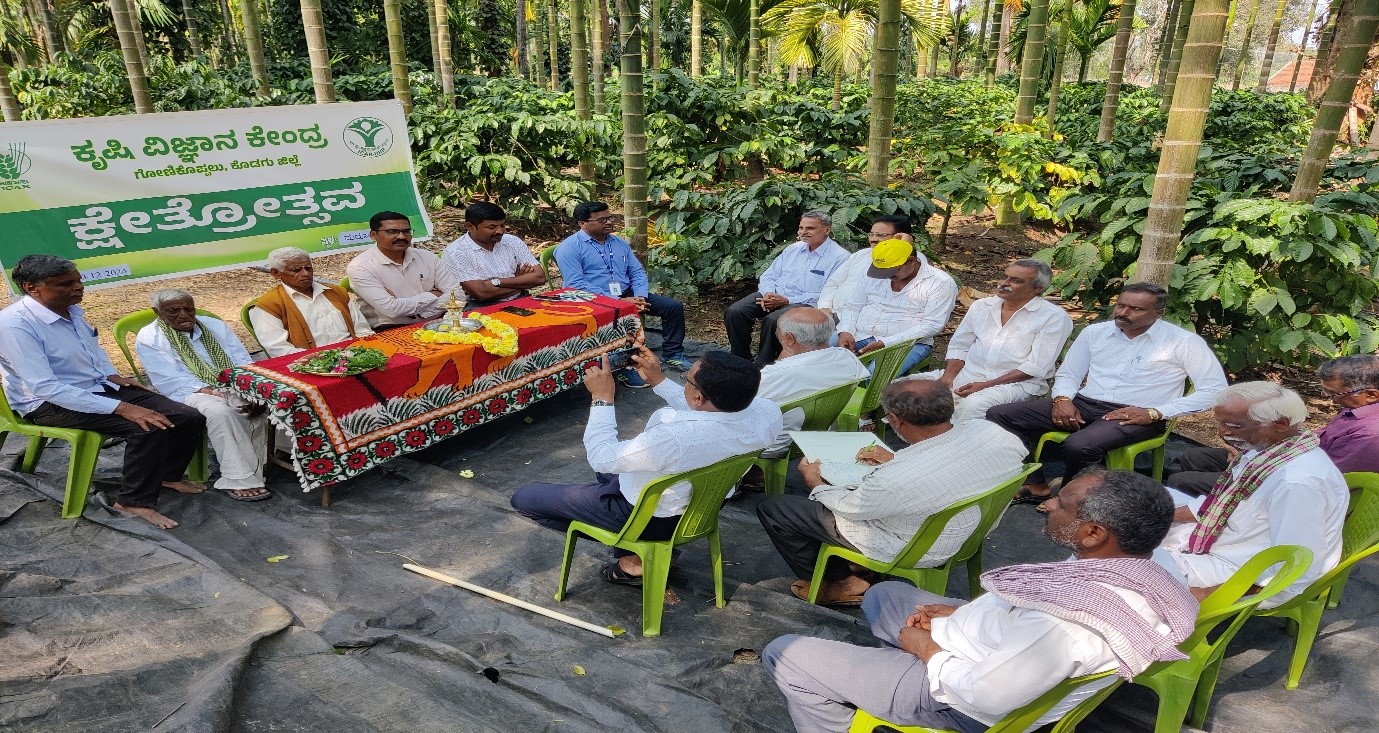
The KVK has used training and interactive learning programmes to strengthen farmers’ knowledge and decision-making capacities in coffee and other important crops. One such programme on “Soil and Plant Management Strategies in Important Crops of Kodagu District” was organised on 7th November 2024 in collaboration with the Department of Agriculture and it brought together 85 farmers, farm women, students and agricultural officials.
The programme addressed important aspects of crop and resource management, including integrated nutrient management, farm certification, recycling of farm waste, shade regulation and plant management, with relevance to coffee-based farming systems. Regular interaction with farmers also provides an opportunity to understand field-level concerns and make extension support more responsive to their practical needs.
Using soil diagnostics to guide site-specific nutrient management
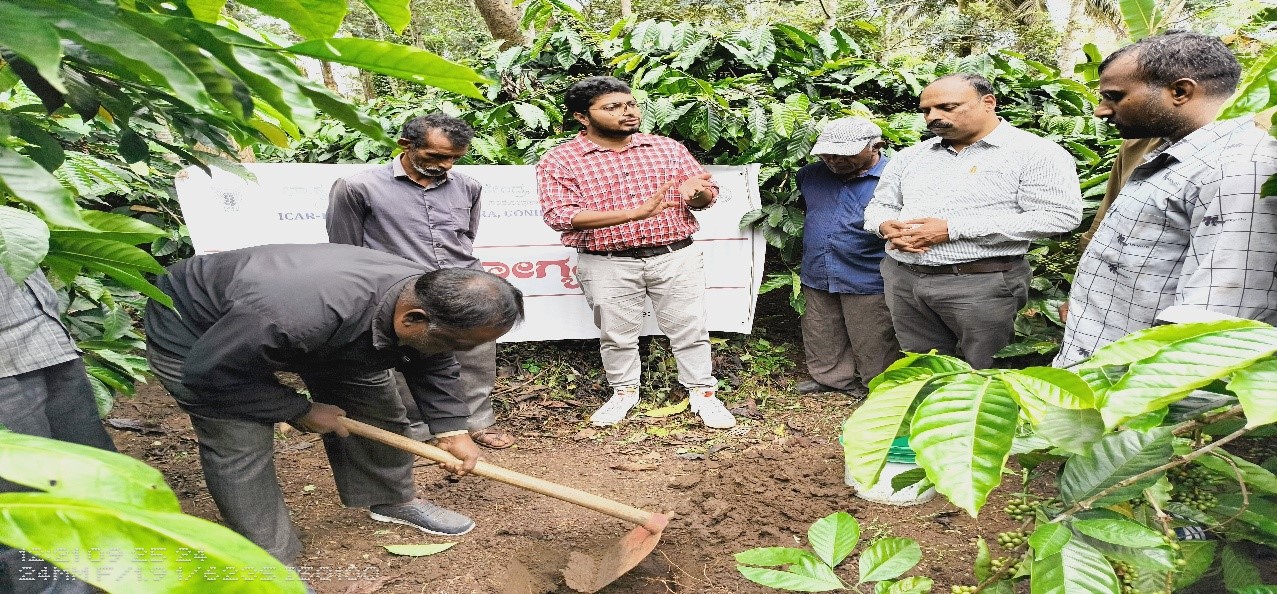
ICAR–KVK Kodagu has integrated soil testing with its farmer advisory services, with the Soil Testing Laboratory typically analysing around 1,000–1,500 soil samples annually collected from farmers’ fields. The test results provide farmers with field-specific recommendations on nutrient application, lime requirements, and the appropriate timing of fertiliser use through Soil Health Cards. The KVK further strengthens this approach through farmer awareness programmes on balanced fertiliser management and the 4R principles—right source, right rate, right time and right place. This combination of soil diagnosis, farmer-level interpretation and follow-up advisory support helps growers move from routine fertiliser application towards nutrient management based on the actual condition of their plantation soils.
From Individual Coffee Farmers to Collective Action and Market Participation
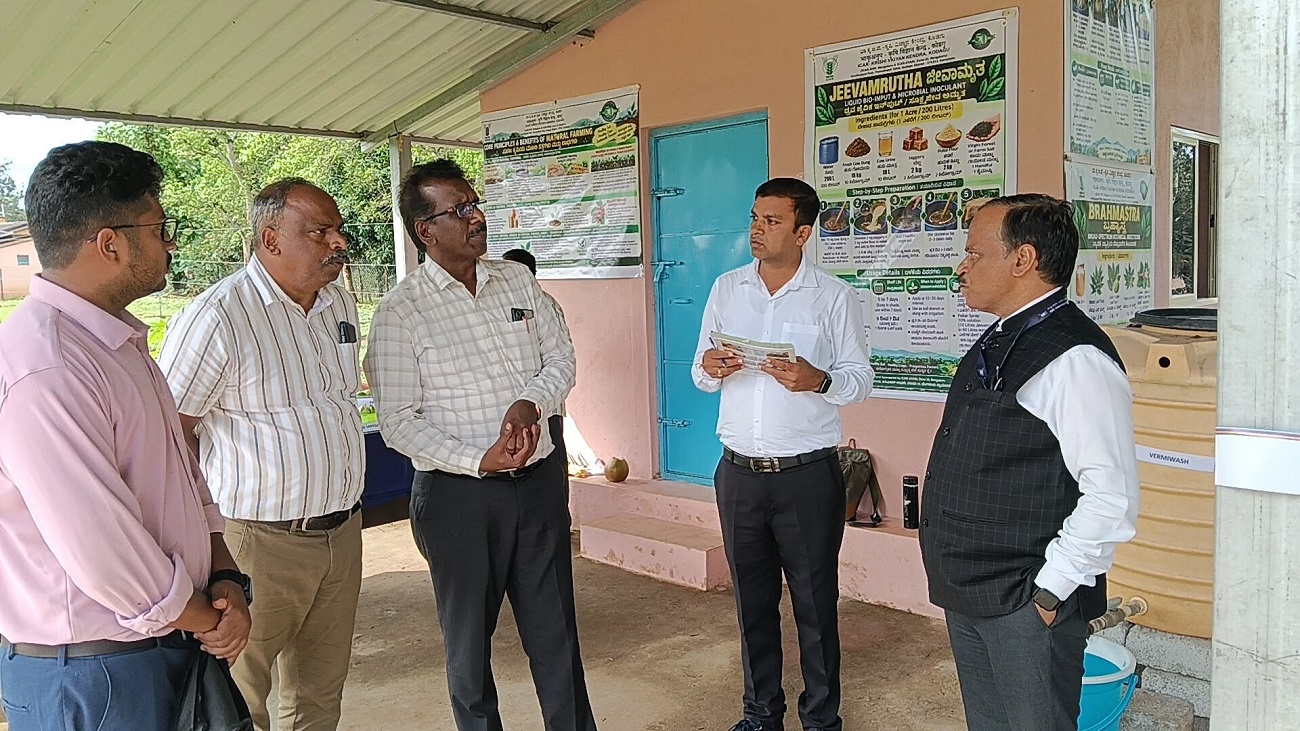
A significant step in strengthening support to coffee farmers in Kodagu was the establishment of the Puthari Farmers Producer Company Limited (PFPCL) in 2017, with ICAR–KVK Kodagu serving as the Producer Organisation Promoting Institution (POPI) under NABARD’s Produce Fund. The initiative aimed to bring farmers together to improve access to agricultural inputs, services, and collective business opportunities, particularly in coffee and other plantation crops.
During its formative years, KVK Kodagu supported PFPCL through farmer mobilisation, capacity-building programmes, training of the Board of Directors and exposure visits to successful FPOs and progressive farmers. Starting with a small group of farmers, the organisation gradually grew into a larger farmer institution, with 980 members at present. PFPCL initially concentrated on improving farmers’ access to essential agricultural inputs. Its first retail outlet, launched in September 2017, started with around 15 products and subsequently expanded to nearly 1,750 products, including fertilisers, manures, plant protection chemicals, irrigation equipment, coffee-picking mats, shade nets and farm machinery. The FPO recorded a turnover of INR 3.5 crore in 2020–21, reflecting the expansion of its enterprise activities and services to farmers.
As the organisation developed, its role extended beyond input supply towards the post-production and marketing stages of coffee. For individual smallholders, handling, curing and marketing relatively small quantities of coffee can limit their ability to access organised markets. PFPCL responded by exploring collective aggregation to bring together farmers’ produce and create a larger marketable volume. During COVID-19, the FPO reportedly aggregated 1,000 bags, equivalent to about 50 tonnes of coffee, from 60 farmers. The FPO proposed curing the aggregated coffee at the cooperative curing works in Hunsur and marketing it through auction with support from the Coffee Board.
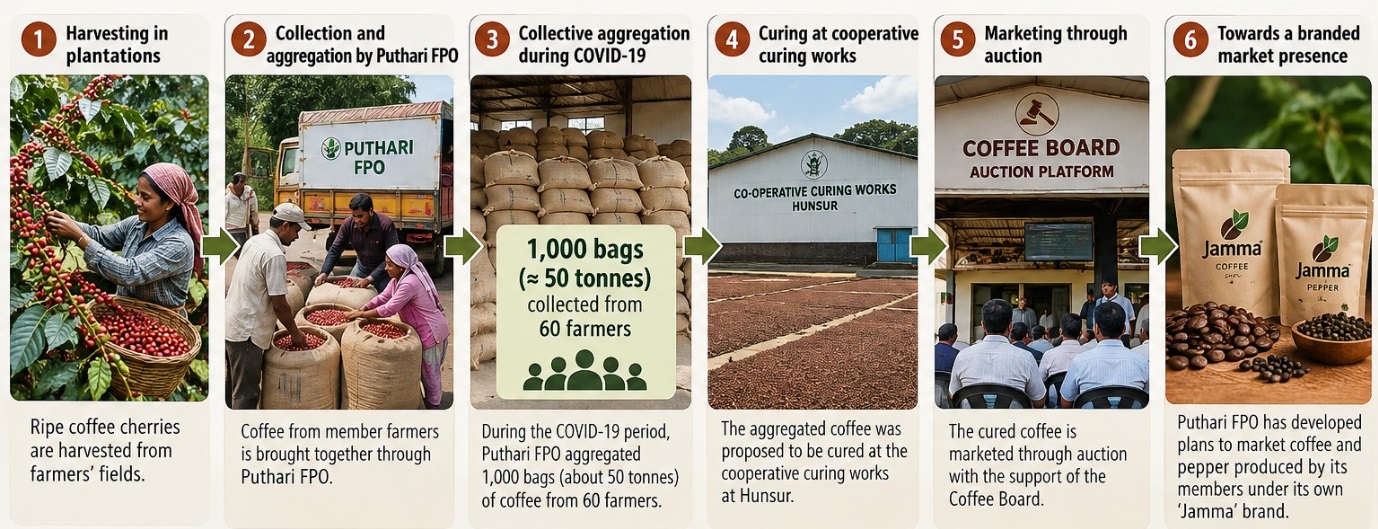 Connecting Coffee Farmers to Processing and Markets through Collective Action (An AI Illustration)
By bringing together coffee from several farms, the initiative created an organised pathway from individual production to collective handling, curing and marketing. The FPO has since developed plans to market coffee and pepper produced by its members under its own “Jamma” brand, indicating a gradual shift toward greater farmer participation in the coffee value chain.
Connecting Coffee Farmers with Specialised Knowledge
When a coffee grower brings a field-level concern to the KVK, the issue is first understood in relation to the plantation conditions and the nature of the problem. Where specialised intervention is required, the KVK facilitates access to the relevant technical expertise available through its institutional contacts, including ICAR–IISR, Appangala and the Coffee Research Station, Chettalli. This helps move beyond general recommendations towards advice that is technically appropriate and suited to the local situation. At the same time, observations and difficulties reported by farmers are communicated back to technical institutions, creating scope for further diagnosis, clarification and refinement of recommendations.
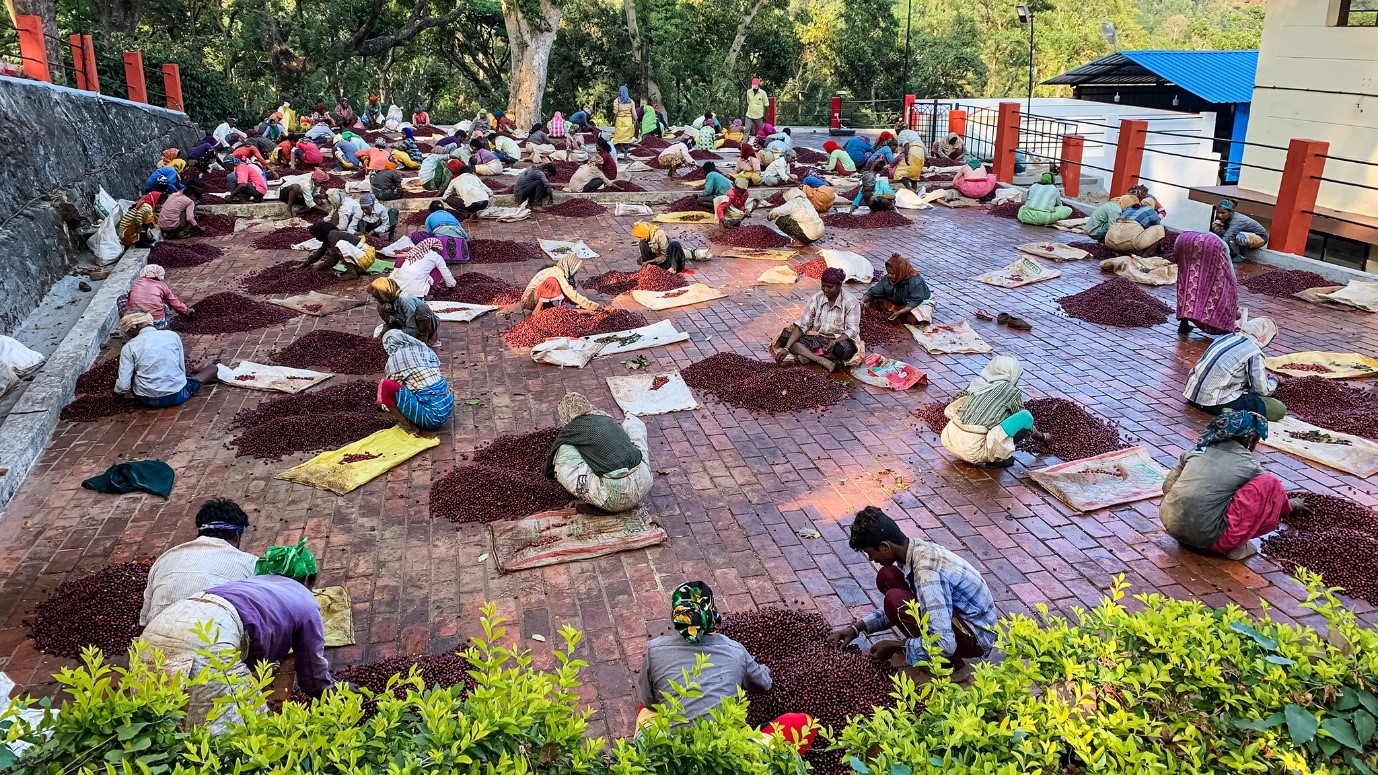
Promoting Coffee Entrepreneurship through processing and product diversification
 Fifth Generation Coffee, rooted in Rasulpur Estates, exemplifies this farm-to-cup approach through hand-picked and sun-dried coffee; honey-processed Arabica and Robusta; different roast profiles; cold-brew and espresso blends; and speciality coffees processed with banana, vanilla, and passion-fruit. Such diversification creates scope for product differentiation, local branding and greater value retention within the coffee-growing region. It also shows how coffee can be developed into convenient and premium formats suited to different consumer preferences.
CHALLENGES IN STRENGTHENING THE COFFEE VALUE CHAIN
The KVK encountered practical challenges in translating technical recommendations into consistent farm-level practices because coffee plantations differ in crop condition, management practices and the occurrence of pests and diseases. Demonstrations and advisory support therefore required field-level diagnosis, repeated interaction and follow-up rather than one-time dissemination.
Another challenge was connecting farmers with appropriate specialised expertise when a problem required inputs beyond routine extension support, particularly for pest management, soil and nutrient issues and crop-specific recommendations. Coordinating farmers, technical experts and different institutions around a specific field problem also required timely communication and follow-up. At the post-harvest and value-addition stages, farmers and emerging enterprises faced challenges in developing the skills and facilities required for processing, quality evaluation, roasting, blending, packaging and branding. Moving from conventional coffee marketing to differentiated products also required practical knowledge of processing methods, quality standards, product development and consumer preferences. Limited exposure to such activities made it difficult for potential entrepreneurs to assess which value-addition options were technically and commercially suitable.
BENEFITS AND IMPACT
ICAR–KVK Kodagu’s interventions have generated measurable results at the field and farmer-support levels. The mealy bug management demonstration at Tavalageri recorded a 68.68% reduction in mealy bug population, with a reported yield of 29.4 q/ha under the demonstration conditions. The shot-hole borer demonstrations conducted in coffee plantations also reported a 23.56% increase in yield under the demonstrated management practice. These field-level results provided farmers with an opportunity to observe the performance of pest-management technologies under local plantation conditions and supported practical learning through direct interaction with KVK personnel.
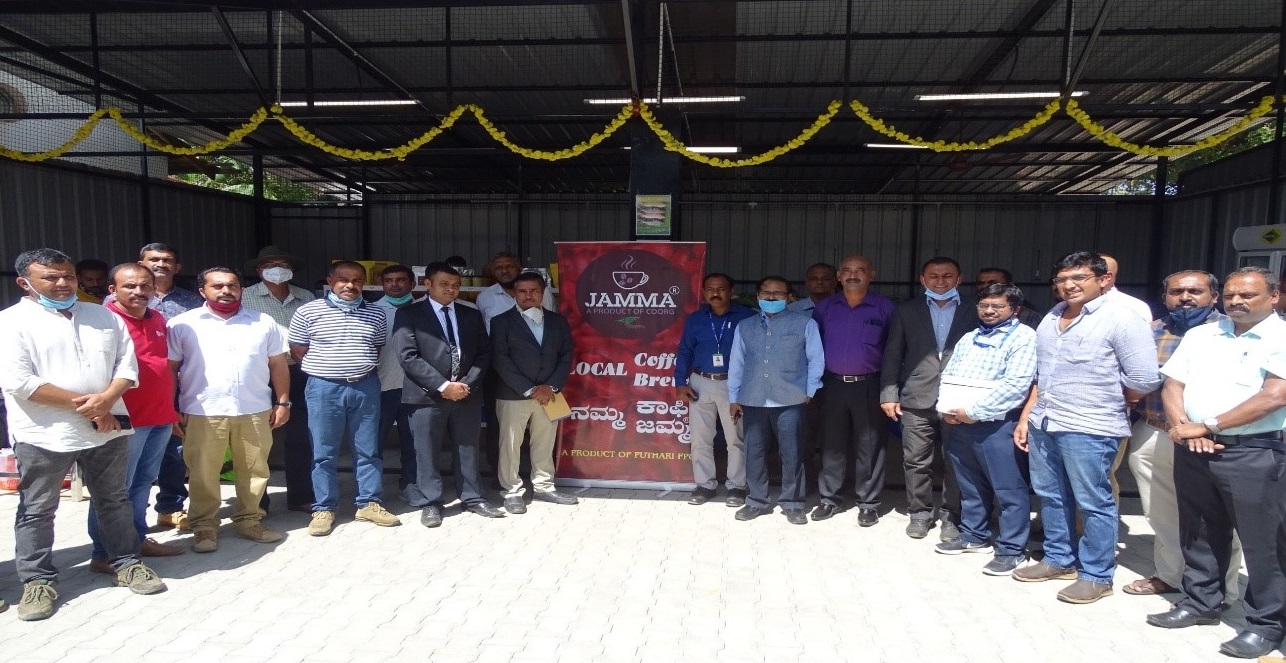
The development of Puthari Farmers Producer Company Ltd. (PFPCL) has further expanded the scope for collective action. From supporting access to farm inputs and services, the FPO has progressed towards aggregation and collective marketing. Its reported aggregation of about 50 tonnes of coffee from 60 farmers during the COVID-19 period illustrated the potential of collective handling and marketing for small growers. The organisation has also explored marketing coffee and pepper under its own “Jamma” brand.
SUSTAINABILITY AND SCOPE FOR SCALING
The KVK will continue to strengthen its interventions in coffee by integrating field demonstrations, farmer training, soil diagnostics and institutional linkages. Its experience in strengthening farmer institutions demonstrates that these institutions can progressively expand their role—from facilitating access to inputs and services to collective aggregation, marketing and greater participation in the coffee value chain. Depending on the maturity of farmer groups and the availability of infrastructure, interventions can be introduced progressively, beginning with addressing production constraints and strengthening technical knowledge, and moving towards collective marketing, processing, product development and enterprise opportunities.
Sustaining and scaling up these interventions will require a flexible, context-specific approach that enables the KVK and other supporting agencies to respond to the diverse production, institutional and market conditions of coffee-growing communities. Such an approach can help farmer institutions evolve according to local needs and capacities while creating greater opportunities for farmers to participate more effectively in the coffee value chain.
LESSONS LEARNT
The experience in Kodagu highlights the importance of building coffee extension support around the changing needs of farmers across the value chain. Practical demonstrations help establish the relevance of technologies under local plantation conditions, while continued interaction enables farmers to gain confidence in applying them. At the same time, collaboration with specialised institutions is important for addressing technical issues that require expertise beyond routine extension services. The experience also shows that farmer capabilities can be strengthened progressively—from improved production and post-harvest practices to collective marketing and value addition. For other coffee-growing regions, a locally adapted combination of farmer engagement, technical support, stakeholder collaboration and gradual development of value-chain capabilities can provide a practical basis for strengthening coffee-based livelihoods.
Acknowledgment
ICAR–KVK Kodagu gratefully acknowledges the cooperation of the coffee growers and other farmers who participated in the field demonstrations, training programmes and extension activities and shared their field-level experiences. The support and participation of farmer institutions and other stakeholders involved in coffee production, processing and marketing are also sincerely acknowledged.
The contributions of the multidisciplinary team at ICAR–KVK Kodagu—Mr. Prabhakara B., SMS (Horticulture); Mr. Veerendra Kumar K.V., SMS (Plant Protection); Dr. Suresh S.C., SMS (Livestock); Dr. Mohankumar K.T., SMS (Soil Science); Dr. Mrunal Barbhai, SMS (Home Science); and Mr. Benecio C. Fernandes, Programme Assistant (Computer)—in providing technical guidance, farmer training, field demonstrations, soil-testing support, documentation and continuous extension assistance are gratefully acknowledged.
 Dr Sangappa, Senior Scientist cum Head at ICAR-KVK, Kodagu, has 12 years of experience in Agricultural Extension, specialising in millet technology dissemination, FPO support, and institutional strengthening. He has played a key role in establishing CHCs and processing units and promoting millet farming, benefiting small farmers, particularly in tribal and NEH regions. He can be reached at sandeep4192@gmail.com
A valuable example of how extension can go beyond technology transfer to strengthen the entire coffee value chain. The Kodagu experience shows the importance of farmer learning, institutional convergence, FPO strengthening, collective marketing and value addition. A key lesson for scaling such models is the need for sustained handholding and stronger evidence on income and livelihood outcomes.
The KVK, Kodagu has done extremely well in establishing a workable network of farmers groups through formation of FPO with the involvement of NABARD and Coffee Board. Although it is beneficial for the farmers to embark on value addition, it is difficult for the KVK with its limited staff and infrastructure to train the farmers and entrepreneurs in improving their capacity in product development and placement because of a variety of reasons.
Aiming at expanding its area of operation with multiple activities like soil testing, disease diagnosis, appropriate recommendations to contain the pests and diseases, value addition and marketing is a very big challenge as it involves constant interaction with the small growers spread in the entire area of Kodagu. In my view the KV K may do well in focusing on coffee production related issues and provide technical guidance to the Farmers groups especially in diagnosis and control of pests and diseases, soil testing and its nutrient management. Strengthening the PFPCL which was evolved as a potential FPO is equally important.
Congratulations to Dr Sangappa and his team in helping the small coffee growers increasing their incomes. Thanks to AESA for publishing this useful GP note which I hope will motivate the staff of other KVKs.