


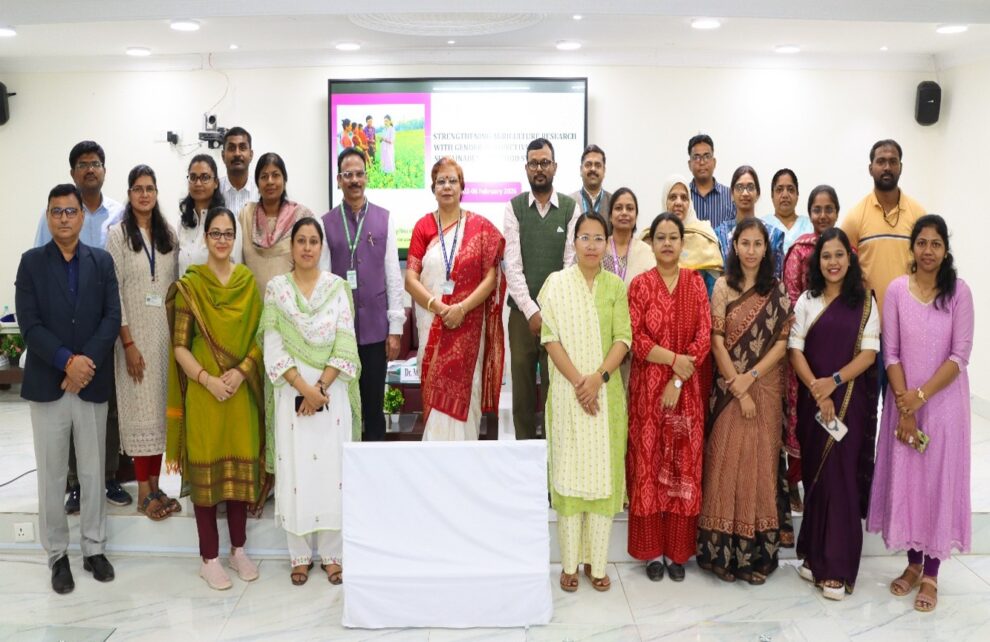
In this meeting note, Ramya shares her learnings and reflections from the training programme on Strengthening Agricultural Research with Gender Perspective for Sustainable Agri-Food Systems organized by ICAR–Central Institute for Women in Agriculture (CIWA), Bhubaneswar.
CONTEXT
Gender responsiveness is recognised as important for improving the impact of agricultural research and technology adoption. Gender analysis and inclusiveness are now considered important quality parameters in planning sustainable agri-food system interventions globally. Most of the international organisations involved in agricultural development currently integrate gender frameworks and gender assessment tools into programme design, implementation and evaluation to ensure that research and development interventions are socially inclusive and equitable. However, in India, integrating gender into research planning and implementation still remains limited and often fragmented. In this context, the training programme helped in understanding how gender inclusiveness can be translated into practical research approaches.
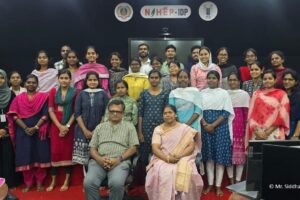
Participating in the training programme titled “Strengthening Agricultural Research with Gender Perspective for Sustainable Agri-Food Systems” for Nodal and Co-Nodal Officers under Gender Research in Agriculture (NO-GRA), held at ICAR–Central Institute for Women in Agriculture (CIWA), Bhubaneswar, during 02–06 February 2026, was a useful learning experience. The programme aimed to strengthen the capacity of officers from different ICAR institutes to integrate gender perspectives into research, extension, and development interventions. While I had some prior exposure to gender-related concepts, the training provided a clear and more structured understanding of how gender can be integrated into ICAR research and extension systems.
THE PROGRAMME
The training adopted a blended learning approach comprising expert lectures, interactive sessions, group discussions, hands-on exercises and case studies. The programme was carefully structured around thematic sessions covering gender-transformative R&D approaches, gender-sensitive extension models, NISWA (National Information System for Women in Agriculture) portal orientation, women-friendly technology assessment, ergonomic evaluation tools, and sector-specific gender responsiveness across the horticulture, livestock, fisheries, and aquaculture systems.
MY LEARNINGS
One of the most impactful components of the training was the ICAR–CIWA checklist for gender-responsiveness assessment and the gender strategy for integrating gender into agricultural research and extension. The checklist helped in examining different stages of the research and extension cycle from a gender perspective. It brought attention to basic but important questions such as who participates, who benefits, who makes decisions, and who carries the workload, which are often overlooked in routine research planning. It also helped in understanding how gender roles, access to resources, and labour dynamics influence the way technologies are designed and used. It enables researchers to systematically score and evaluate the women-friendliness and inclusiveness of any agricultural technology. Based on the assigned scores, technologies can be classified into defined categories of gender responsiveness.
The training made it clear that gender responsiveness in ICAR research is not limited to the inclusion of women as beneficiaries or respondents. It needs to be considered across all stages of research, from problem identification and technology design to testing, dissemination, and impact assessment. It also highlighted the need to move beyond gender-neutral approaches and towards more gender-responsive strategies. This includes not only addressing immediate constraints faced by women but also improving their participation and role in decision-making. The importance of institutional support and capacity building for integrating gender into research systems was also emphasised.
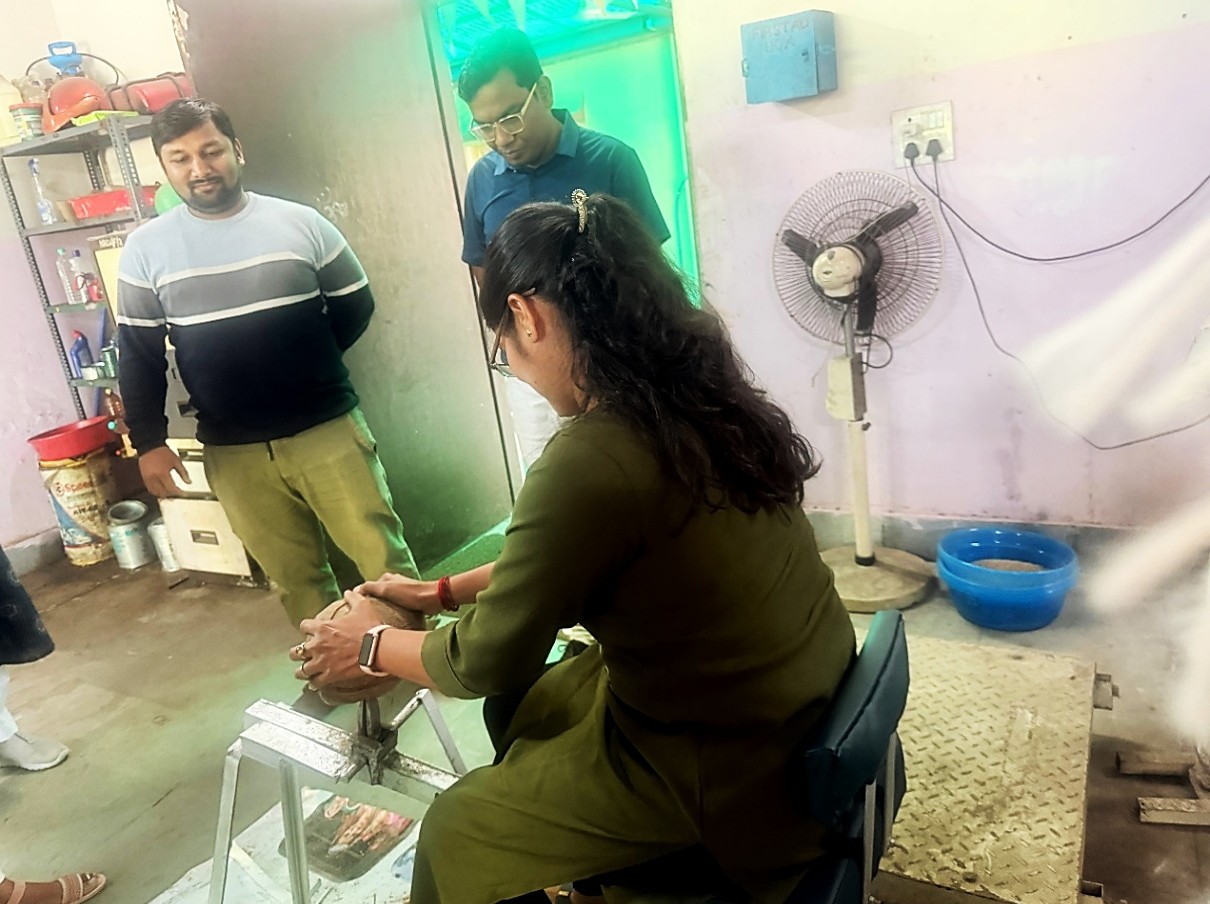
Another significant learning was the role of women-friendly technologies and ergonomic assessment tools in improving adoption and impact. Integrating these aspects within the CIWA checklist enables systematic evaluation of drudgery reduction, occupational health and time-use efficiency, ensuring that technological innovations are aligned with the needs and priorities of farm women.
From a policy and programme perspective, the training highlighted that gender-responsive research can improve the relevance, adoption, and overall impact of research. It also led me to revisit my approach to analysing research from a gender perspective, particularly the need for stronger gender sensitisation within ICAR through awareness campaigns, training, expanding leadership development initiatives for women, and strengthening experiential learning through exposure to women-led institutions such as Farmer-Producer Organisations, NGOs, Start-ups, enterprises, institutions, etc.
The training has encouraged me to use the ICAR–CIWA Gender Responsiveness Checklist and Gender Strategy more systematically in research planning, implementation, and evaluation/ impact assessment, especially in multidisciplinary and multi-location projects. It also reinforced the need to promote gender sensitisation modules within the ICAR system, especially among early-career scientists during their ICAR–NAARM ARS probationary training. The experience showed that gender inclusiveness needs to be treated as an integral part of research, rather than an additional component. The gender strategy also highlighted the need to institutionalise gender analysis in research planning and to strengthen scientists’ capacity to apply gender-responsive approaches in their work.
HOW I INTEND TO USE THESE LEARNINGS
The learnings from the training are directly relevant to my work in horticulture. One key learning is the need to integrate gender analysis at the problem-identification stage itself, rather than addressing it only during impact assessment. This involves examining differences in roles, access to resources, labour contributions, and decision-making between male and female farmers when designing research interventions.
As illustrated in Figure 1, gender responsiveness needs to be understood within the broader context of social, technological, and institutional factors that influence access to and use of technology. Similarly, Figure 2 highlights the importance of integrating gender considerations across all stages of the research cycle—from planning and design to implementation and evaluation. These frameworks provide a useful basis for applying gender-responsive approaches more systematically in horticultural research.
In practice, this would include collecting gender-disaggregated data, incorporating gender-responsive indicators, and using user-based criteria in evaluating technologies during field trials and demonstrations. Exposure to women-friendly tools and ergonomic approaches also highlighted the need to assess technologies not only for productivity but also for reducing drudgery, enhancing safety, and improving ease of use for women farmers.
The training has influenced me to include a specific objective in my ongoing institute project focusing on assessing the gender responsiveness of ICAR-IIHR technologies and identifying areas for improvement. Where technologies are found to be less suitable for women, the research will support their refinement or modification. For example, adjusting the height of structures in the Arka vertical farming system to better match the average height of women farmers can help reduce ergonomic constraints. Key learnings are summarized in Figures 1 and 2.
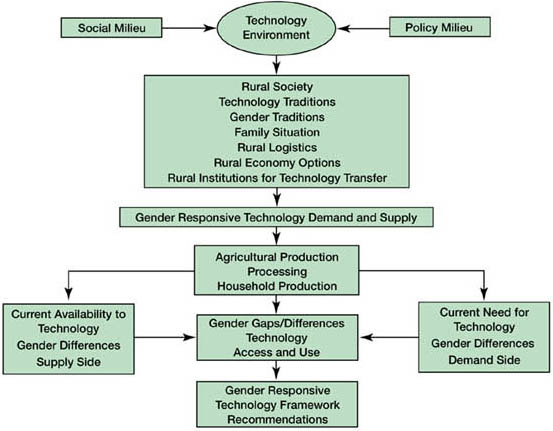 Figure 1. Flow chart illustrating progression from Gender Awareness to Gender-Transformative Action (Source: Author’s illustration)
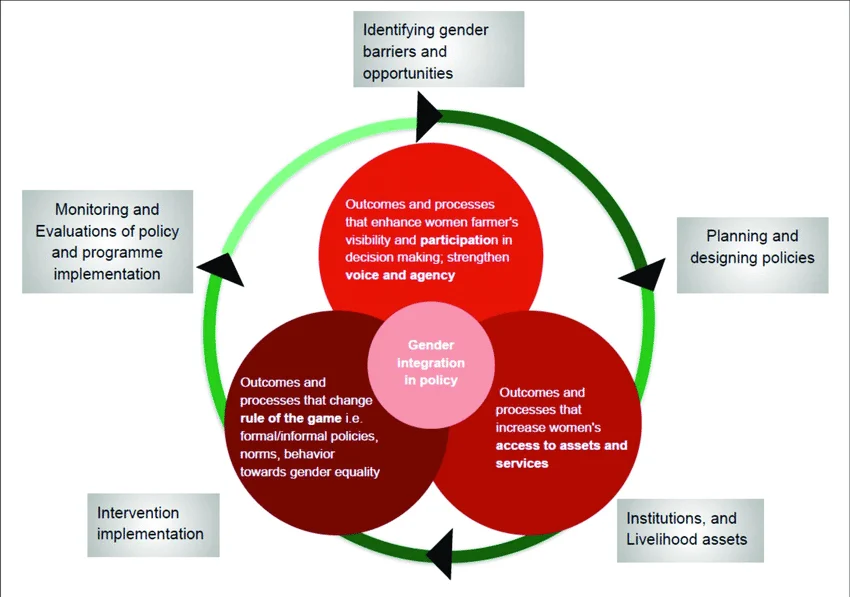 Figure 2. Flow chart demonstrating Integration of gender analysis at every stage of the agricultural research cycle — from problem identification and gender analysis to technology design, implementation, capacity building and impact assessment. Circular arrows and decision icons represent feedback loops and evidence-based refinement of interventions. (Source: Author’s illustration)
KEY TAKEAWAY
The most important takeaway from the programme is that gender inclusiveness is not a parallel component of agricultural research, but a quality parameter of good science itself. When gender perspectives are integrated from the beginning, research becomes more relevant, technologies become more adoptable, and outcomes become more equitable. Strengthening gender-responsive thinking among researchers and institutions will be critical for building truly inclusive and sustainable agri-food systems.
 Dr. Ramya H. R. is a Scientist (Agricultural Extension) at the ICAR–Indian Institute of Horticultural Research (ICAR-IIHR), Bengaluru, Her research focuses on gender perspectives in agriculture, digital and AI-enabled agricultural advisory services, tribal livelihood analysis, integrated farming systems, participatory breeding and technology development, and the promotion and performance assessment of Farmer Producer Organisations (FPOs) and Self-Help Groups (SHGs). She can be reached at ramya.hr@icar.org.in or rammuhr@gmail.com.
Add Comment