



In this blog, Shaik N. Meera and Rasheed Sulaiman V explore the reasons for the decline of public agricultural extension in India and outline a roadmap to strengthen it.
CONTEXT
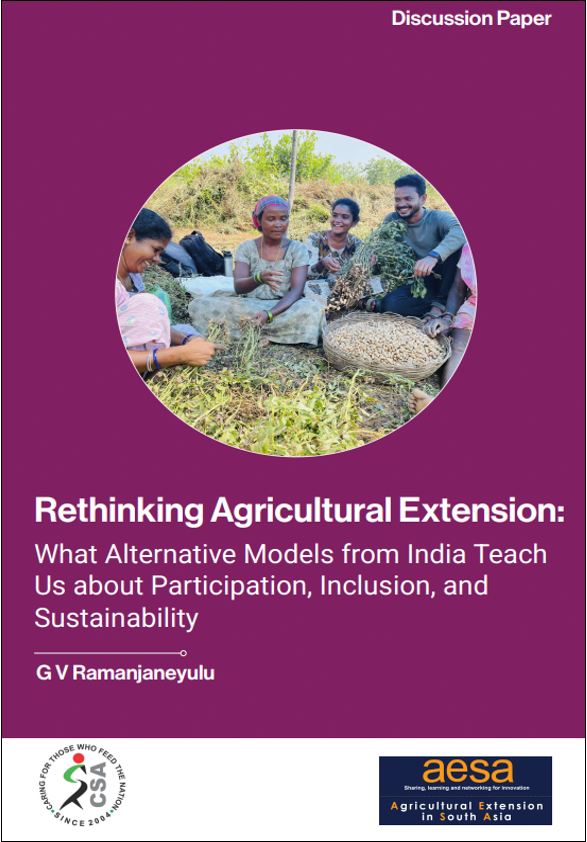 A recent AESA Discussion Paper written by G V Ramanjaneyulu argues that “India’s public extension system has failed the Indian farmer, not through lack of effort, but through design. It has evolved into a compliance-driven system rather than one focused on learning”. We sought to examine further the reasons for the decline in public-sector field extension in India, which is dominated by the state Department of Agriculture (DoA), to inform corrective measures. So, in this blog, we examine what has really caused this decline and the resulting weak support for farmers.
Public agricultural extension in India did not become weak overnight, nor did it become ineffective because of a lack of intent. It evolved under the weight of history, policy choices, and expanding state responsibilities. The system was originally designed in an era when the main national priorities were food security, productivity growth, and technology diffusion. In that context, a top-down, production-centric model worked reasonably well, especially in irrigated regions where the conditions for new technology uptake either existed or were newly created.
While the challenges facing Indian agriculture have changed, the institutional design of public extension has not kept pace. Farming today demands support on climate risk, markets, value chains, enterprises, natural resource management, input efficiency, nutrition, digital systems, and compliance, yet the public extension apparatus largely retains the structure of an earlier period. The result is a structural overload on the public extension system, which is failing to address many of these new challenges.
What appears to be declining effectiveness is the result of a system that has been progressively layered with responsibilities far beyond its original design. The cumulative effect is not a breakdown, but a dilution of its core function—providing timely, contextual, and trust-based advisory support to farmers.
WHY PUBLIC EXTENSION CAME UNDER SUCH STRAIN
The Indian extension system was designed as a technology-transmission mechanism, connecting research institutions with farmers through a hierarchical, linear model. However, it also created a structural template that persisted even after its relevance ended. Indeed, the Training & Visit (T&V) system played an important role in ushering in the Green Revolution technology for major cereal crops in irrigated regions through the state Departments of Agriculture, though its performance in rainfed farming areas, where local conditions vary widely, was seriously limited and often failed.
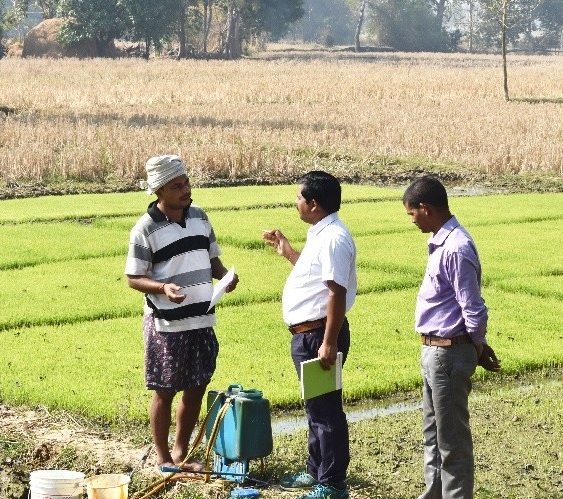 Over time, public extension also became the default last-mile arm for government implementation. Scheme delivery, subsidy-linked verification, portal updating, farmer identification, convergence meetings, campaign mobilisation, and repeated data collection increasingly occupied the attention of field personnel. Evidence from Indian extension literature is consistent on this point: field visits became irregular because staff were preoccupied with implementing government schemes linked to subsidies and subsidised inputs, while non-extension functions steadily crowded out core advisory work. The Direct Benefit Transfer (DBT) architecture further formalised this data burden through centralised beneficiary mapping, uploading, and scheme-wise digital tracking.
This process gradually transformed extension from a knowledge-intensive service into a multi-functional administrative instrument.
THE HIDDEN OPPORTUNITY COST
The real crisis is not only a shortage of personnel or operational funding, though these also matter. It is the hidden opportunity cost of how extension time is now spent. Every day spent on beneficiary verification, subsidy processing, enumeration, portal compliance, and scheme reporting is a day not spent in diagnosing field problems, supporting farmer decisions, or building trust. This diversion is costly because extension is fundamentally a relationship-intensive function. The cost is not administrative—it is developmental. The consequence is gradual and often invisible:
- Reduced field presence
- Declining diagnostic capacity
- Generic advisory
- Weakening trust relationships
Public extension, therefore, suffers not only from under-capacity but from time fragmentation.
Reduced finances and a declining workforce also compound this.
During the T&V/World Bank-supported phase (Late 70’s to early 90’s), extension projects financed not only salaries for new staff but also travel and operational costs. Hence, the projects covered most of the programme and operational costs. Later, once project financing ceased, states were left with the salary bill and shrinking operating space with very little operational flexibility. Policy and review documents have repeatedly noted that after external project support weakened, state systems were left carrying salary commitments with very little operating flexibility. One policy framework stated that states had “barely been able to pay the salaries” of extension personnel and that less than 10% of the budget remained for operations. Other studies have noted that 85–97% of expenditures go to salaries, leaving few resources for programmes, mobility, or operational support.
There is a major scarcity of extension officers at various levels in India; of the 143,863 positions in the Department of Agriculture, only 91,288 posts are filled. Recruitment is not commensurate with the increased activities and responsibilities, or with the vacancies arising in the system. All these explain why public extension often appears visible on paper but thin in the field. Though the Agricultural Technology Management Agency (ATMA) currently provides operational support for select extension programmes at the district level (on an average INR 70-80 Lacs annually), this support is insufficient to meet the wide range of extension support.
PUBLIC EXTENSION IS NOT THE SAME AS PRIVATE OR HIGH-PERFORMANCE MODELS
This distinction is critical. Public extension carries a universal mandate. It must serve smallholders, rainfed areas, women farmers, tribal areas, risk-prone geographies, and activities that do not immediately generate private returns. It deals with public goods: soil health, resilience, food security, inclusion, and common resource management. Private extension, by contrast, usually works where there is a commercial incentive, a paying client, a narrow crop focus, or a contract structure. That makes private systems faster, more responsive, and often more personalised, but also narrower in coverage and less equitable in mandate.
The difference becomes obvious when farmer-to-extensionist ratios are compared. In India’s public system, current discussions cite an extension worker-to-farmer ratio of below 1:5000, far worse than recommended norms of 1:750 irrigated areas, 1:1000 in rainfed areas and 1:400 in hilly areas. In contrast, the South Nyanza Sugar Company in Kenya operates with 1 field officer for every 65 growers. Thus, the system needs additional virtual and direct touchpoints to supplement the existing field force and improve access.
These comparisons do not mean public extension is poorly designed in its intent; they show that private or high-performance systems work with a far narrower clientele, clearer objectives, and a much higher intensity of engagement.
WHERE KVKS FIT — AND WHERE THEY DO NOT
Over the past few years, there seems to be a thinking of handing over many field-level extension functions to the Krishi Vigyan Kendras (KVKs). However, KVKs are not a substitute for routine public extension. Their mandate is different. They are district-level platforms for technology assessment, refinement, demonstration, training, and linking research and extension. Even policy documents have emphasised that KVKs are meant to play a strategic role in location-specific technology refinement and in linking research with district extension systems, rather than becoming just another generic field extension channel.
The figures clearly illustrate the situation. India has 731 KVKs, each with a sanctioned staff of 16. However, only 68.44% of these positions are filled, totalling approximately 8,005 filled posts nationwide. If one incorrectly assumes KVKs as the primary last-mile extension agencies for all 14.65 crore operational holdings, it would suggest about 18,300 holdings per filled KVK post—a clearly unrealistic expectation. Consequently, KVKs are best understood as district-level knowledge and innovation hubs, rather than routine village-level advisory units. Their strengths lie in adaptive research, frontline demonstrations, diagnostics, training, content creation, and support, rather than in replacing the public village or block extension system.
WHY PARTICIPATORY AND CO-CREATION MODELS ARE MORE RESOURCE-INTENSIVE
Several AESA publications, including the AESA Discussion Paper by Dr G.V. Ramanjaneyulu, provide important insights into alternative extension pathways.
These models emphasise:
- Community-based extension
- Farmer-to-farmer learning
- Agroecological approaches
- Decentralised knowledge systems
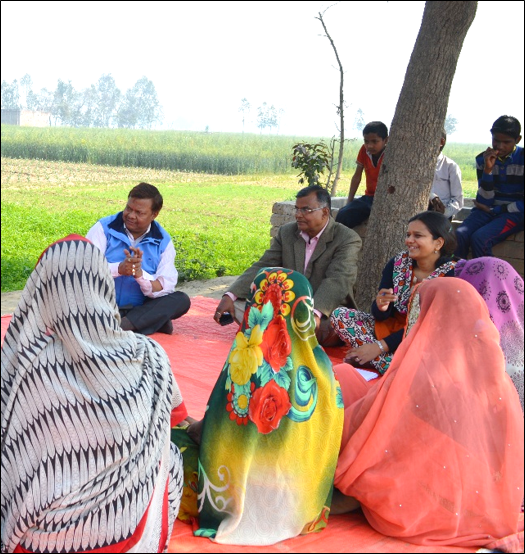 Their strength lies in trust-based engagement and local relevance. They demonstrate that when extension is designed around relationships, participation, and co-creation, it can deliver meaningful outcomes—particularly in natural farming and resilience-building contexts.
Equally important is their operational design:
- Lower farmer-to-facilitator ratios
- Strong community institutions
- Continuous field engagement
- Flexibility in implementation
These initiatives deserve recognition and appreciation. They represent important innovations in extension practice and provide valuable lessons for public systems.
Participatory extension, co-creation of solutions, farmer-led experimentation, climate adaptation planning, and enterprise support all require repeated interaction, diagnostic capacity, and trust. They are not message-dissemination functions. They are labour-intensive, time-intensive, and transaction-heavy.
Group processes, farmer interest groups, local experimentation, and location-specific recommendations were recognised even in earlier policy frameworks as requiring stronger research-extension-farmer linkages, broader skill sets, and more district-level specialist support. In other words, the more we ask the public to become participatory and problem-solving, the more we must invest in people, time, travel, and local analytics.
WHAT HUMAN RESOURCES ARE REQUIRED FOR NEXT-GENERATION EXTENSION
The future of public agricultural extension cannot be built around a single extension worker expected to perform every function—from farmer mobilisation and technology dissemination to data management, climate advisories, market intelligence, and scheme implementation. Agriculture has become too complex, and farmers’ needs too diverse, for such a model to remain effective.
A next-generation public agricultural extension system requires a differentiated and complementary human architecture comprising four distinct layers, each with clearly defined roles and competencies.
The first and perhaps most important layer is the Village-Level Para-Extension cadre, consisting of Community Resource Persons (CRPs), Kisan Sakhis, Pashu Sakhis, Krishi Sakhis, progressive farmers, FPO extension volunteers, and other locally embedded facilitators. The success of the National Rural Livelihoods Mission (NRLM) demonstrates the power of such community-based cadres. Local communities trust these individuals, understand local contexts, and can maintain continuous engagement with farmers. Their role is not to provide sophisticated technical advice but to mobilise farmers, facilitate group learning, support adoption processes, identify emerging problems, and act as the first point of contact between farmers and the formal extension system.
India currently has approximately 268,000 Gram Panchayats. If every Gram Panchayat were to have at least one trained agricultural Community Resource Person, the country would require around 268,000 village-level para-extension workers. Such a cadre would dramatically improve the last-mile reach of public agricultural extension while creating local employment opportunities, particularly for women and rural youth.
The second layer should comprise Block-Level Generalists, largely drawn from the B.Sc. Agriculture and allied science graduates. These officers would function as professional extension managers and technical coordinators. Their role would be broader than crop-specific advisory services. They would support farmer groups, facilitate convergence among schemes, coordinate demonstrations, supervise para-extension workers, and provide integrated solutions across crops, livestock, natural resources, and livelihoods. Unlike highly specialised scientists, these professionals would serve as multidisciplinary problem solvers capable of responding to a wide range of field situations.
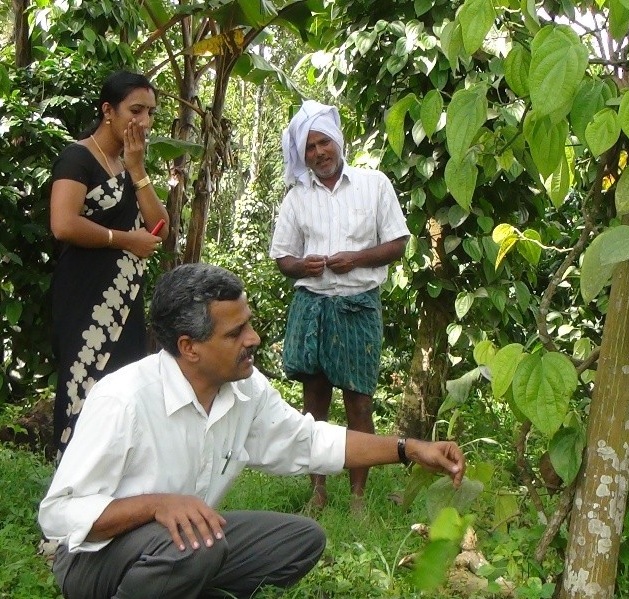 This layer is particularly important because most agricultural problems farmers encounter are not disciplinary in nature. A farmer facing declining profitability may simultaneously confront issues related to soil fertility, irrigation, pest management, market access, and credit. Such situations require generalists capable of integrating knowledge from multiple domains rather than narrow specialists working in isolation.
The third layer should consist of District-Level Subject Matter Specialists who provide technical backstopping to block-level generalists and para-extension workers. These specialists would cover disciplines such as agronomy, horticulture, livestock production, fisheries, water management, mechanisation, plant protection, climate adaptation, agri-business, digital agriculture, and value chains. Their role would not primarily involve direct contact with farmers. Instead, they would diagnose complex technical problems, support capacity building, validate recommendations, and ensure scientific quality control across the system.
This arrangement mirrors the functioning of many successful international extension systems. In countries such as the United States and Israel, highly specialised experts do not spend most of their time conducting routine farmer visits. Rather, they support frontline extension personnel who maintain regular contact with farming communities. Such a division of labour improves efficiency while ensuring scientific rigour.
The fourth and increasingly indispensable layer is the District-Level Digital and Data Support Unit. One of the most significant lessons from the past decade is that data-related responsibilities increasingly consume the time of public agricultural extension professionals. Farmer registration, DBT verification, geo-tagging, portal management, dashboard reporting, scheme monitoring, and digital compliance activities occupy a growing share of their time. As a result, advisory functions are crowded out by administrative requirements.
The solution is not to abandon digital systems but to establish dedicated personnel to manage them. This digital layer would handle farmer registries, data quality assurance, dashboard management, analytics, content dissemination, AI-enabled advisory systems, remote sensing outputs, and digital service delivery platforms. By separating digital administration from advisory functions, frontline extension personnel can devote their time to farmers rather than computers.
This fourth layer is no longer a luxury. It has become an essential component of institutional design for modern public agricultural extension systems.
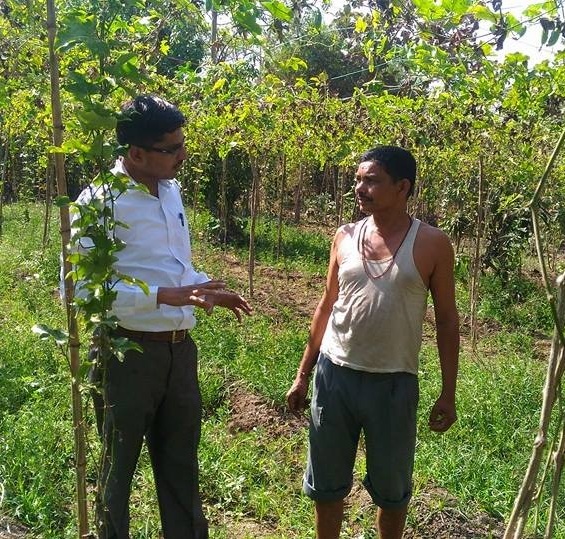 The implications of such a model are substantial. Using India’s approximately 14.65 crore operational holdings as a reference, conventional extension norms already suggest the need for far more personnel than are currently available. However, future systems should not be designed solely around farmer-to-extension-worker ratios. The real question is how many people are needed to support meaningful farmer engagement, participatory problem solving, climate adaptation, entrepreneurship development, and digital inclusion.
If India were to establish one village-level para-extension worker for each Gram Panchayat, approximately 268,000 Community Resource Persons would be required. These personnel would form the foundation of the system. Above them, a network of block-level generalists would provide professional guidance and coordination. District-level specialists would ensure technical quality and innovation, while dedicated digital teams would manage information systems and data infrastructure.
Such a structure would create a genuine phygital extension ecosystem, combining human relationships with digital capabilities. More importantly, it would address one of the most fundamental weaknesses of the current system: the expectation that a single individual should simultaneously function as mobilizer, trainer, technical expert, data manager, scheme implementer, and climate adviser.
The future of public agricultural extension lies not in expecting more from the same personnel, but in building a layered human architecture where each cadre performs what it does best. Only then can the system effectively support the increasingly complex needs of twenty-first-century agriculture.
THE CONTEMPORARY ISSUES THAT MAKE THE OLD MODEL INADEQUATE
All the major contemporary issues push in the same direction: smaller holdings, more market uncertainty, climate shocks, water stress, input-use inefficiency, allied-sector growth, rising expectations from youth and women, traceability requirements, food safety, export standards, natural farming transitions, carbon and sustainability reporting, and digital compliance. At the same time, farmers access information from multiple sources—other farmers, media, input dealers, private agents, and digital channels—while public extension is no longer their dominant source. NSSO surveys 2013 and 2019 showed that a large share of households received no extension assistance at all, and that even among those who did, only a modest proportion came from physical government machinery. The share of agriculture households who have accessed technical support from extension workers or ATMA declined from 6.2 per cent in kharif season 2012-13 to 3.1 per cent in kharif season 2018-19. This means the challenge is no longer only “more extension,” but “better-designed extension” with differentiated functions and partnerships.
RECLAIMING THE CORE FUNCTION
The stress on public extension is therefore not simply a workforce problem. It is a structural mismatch between mandate and design. Public extension is expected to serve everyone, solve everything, report everything, and digitally verify everything—all while operating on salary-heavy budgets, with little contingency, and with insufficient specialisation.
Private and high-performance models look more effective partly because they work with tighter ratios, narrower mandates, and better operating support. KVKs remain essential, but they are not substitutes for routine extension. And a participatory, personalised, co-created extension cannot be delivered at scale unless we invest in a new human architecture that separates advisory work from administrative burden. That is the hidden opportunity cost India must now confront.
The way forward requires strategic recalibration, not incremental adjustment.
Key priorities include:
- Rationalising non-core administrative functions
- Restoring operational flexibility
- Redesigning human resource structures
- Leveraging technology to reduce, not increase, workload
Most importantly, there must be a conscious recognition of opportunity cost.
Extension cannot do everything without trade-offs. If it is expected to deliver meaningful advisory services, it must be freed to focus on its core function.
Public extension remains one of the most critical institutions in India’s agricultural system. Its relevance has not diminished; if anything, it has increased. But its effectiveness depends on how it is structured, supported, and prioritised.
The hidden opportunity cost of diverted time, fragmented attention, and constrained resources is now too significant to ignore.
Extension will ultimately be judged not by the number of schemes implemented and the volume of data processed. But by the quality of decisions enabled at the farm level.
That is its core purpose. And that is what must be protected.
WHY PUBLIC AGRICULTURAL EXTENSION MATTERS MORE THAN EVER
From Information Delivery to Decision Support
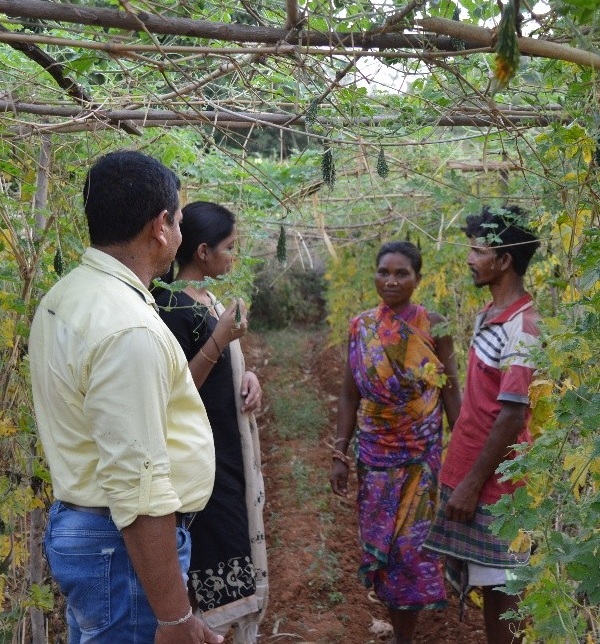 One of the most important insights emerging from the Committee on Doubling Farmers’ Income (DFI) is that Indian farmers no longer suffer primarily from a lack of information. Mobile phones, social media, YouTube channels, agri-input dealers, farmer networks, digital platforms, and agri-tech startups have significantly expanded access to information. The challenge today is not information scarcity but decision complexity. Farmers need help in interpreting information, evaluating alternatives, managing risks, and making profitable decisions under conditions of uncertainty. Public agricultural extension, therefore, needs to move beyond technology dissemination and evolve into a decision-support system that helps farmers navigate climate risks, market volatility, and emerging opportunities. The future relevance of public extension lies not in transmitting messages but in building farmers’ capacity for informed decision-making.
From Production Extension to Income Extension
For decades, the success of extension systems was measured largely through increases in production and productivity. However, the DFI Committee argued that higher yields alone do not necessarily translate into higher incomes. Farmers’ prosperity increasingly depends on market access, aggregation, value addition, post-harvest management, enterprise diversification, risk management, and participation in value chains. Public agricultural extension, therefore, needs to shift its focus from production-centric advisory services to income-centric advisory systems. This transition is particularly relevant for states where horticulture, livestock, fisheries, seed production, protected cultivation, and export-oriented agriculture are becoming increasingly important. Farmers today require guidance not only on how to produce, but also on what to produce, when to sell, where to sell, and how to capture greater value from their produce.
Why Public Agricultural Extension Matters More in the Digital Era
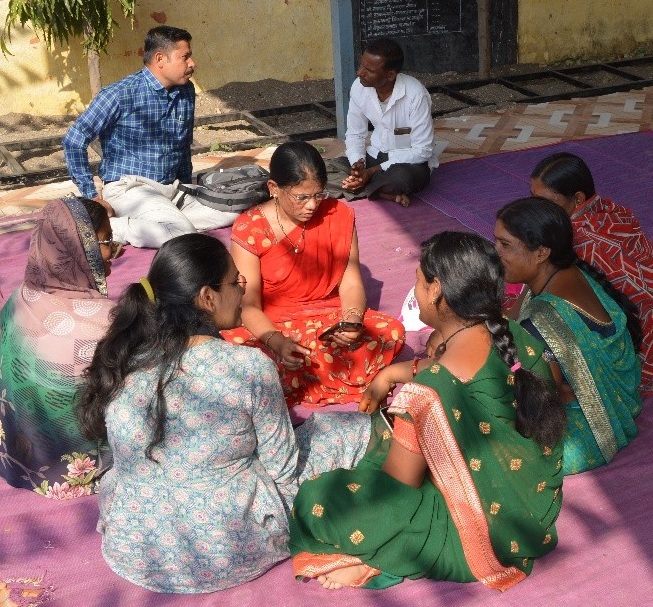 There is a growing assumption that digital technologies, artificial intelligence, remote sensing, and advisory apps will eventually replace traditional extension systems. However, emerging evidence suggests the opposite. As agriculture becomes more data-intensive, farmers increasingly require trusted intermediaries who can interpret information, contextualise recommendations, and build confidence in decision-making. Recent policy discussions on frontier technologies in agriculture emphasise that technology alone cannot transform agriculture unless institutional mechanisms exist to translate digital intelligence into actionable field-level decisions. The future, therefore, lies not in replacing extension personnel with technology, but in creating “phygital” systems that combine digital tools with trusted human interfaces. Public agricultural extension will remain indispensable as the bridge between data, science, technology, and farmer action.
Why Strong Public Agricultural Extension Still Matters
The emergence of private advisory services, agri-tech startups, FPOs, digital platforms, and input companies has enriched the agricultural knowledge ecosystem. However, international experience demonstrates that even highly commercialised agricultural economies continue to invest substantially in public agricultural extension, as there is significant public interest that only public funding can address. Public extension performs functions that markets alone cannot adequately address—climate resilience, natural resource management, nutrition security, women’s empowerment, tribal livelihoods, sustainable agriculture, and support to resource-poor farmers. The future is therefore not a choice between public and private extension, but a partnership among public agencies, research institutions, KVKs, universities, farmer organisations, civil society organisations, and digital service providers. In such a pluralistic ecosystem, public agricultural extension must continue to play the role of trusted coordinator, knowledge broker, and guardian of public interest.
CONCLUSION
The debate on agricultural extension in India should not be reduced to a binary question of success or failure. Public agricultural extension has undoubtedly struggled to respond to the rapidly changing needs of agriculture. However, its current challenges are largely the result of institutional overload, evolving policy demands, declining operational flexibility, and the growing complexity of agricultural systems rather than a lack of commitment or relevance.
The future does not lie in replacing public extension with digital platforms, private advisory services, or isolated institutional innovations. Nor does it lie in expecting KVKs to substitute for routine field extension. Rather, it lies in building a pluralistic and collaborative ecosystem where public extension, KVKs, universities, farmer organisations, civil society institutions, agri-tech firms, and digital platforms complement one another.
Such a transformation requires more than additional funding. It requires a fundamental redesign of the extension architecture. Village-level para-extension workers, block-level generalists, district-level specialists, and dedicated digital support teams must work together within an integrated phygital ecosystem. Administrative and compliance functions need to be separated from advisory functions. Operational flexibility must be restored. Most importantly, the system must be judged not by the number of schemes implemented or reports submitted, but by its ability to improve farmers’ decisions, resilience, incomes, and well-being. This would also require greater investment in strengthening the technical and functional capacities of extension professionals at all levels—including field, middle, and senior management—along with the implementation of necessary organisational and management reforms.
Ultimately, public agricultural extension remains one of the few institutions capable of connecting science, policy, markets, and communities at scale. As India seeks to build climate-resilient, market-oriented, and technology-enabled agricultural systems, strengthening public agricultural extension is not merely an administrative reform. It is a strategic investment in the future of Indian agriculture itself.
 Dr Shaik N. Meera is Director, ICAR-Agricultural Technology Application Research Institute (ATARI) Zone X, Hyderabad, India. He is a renowned expert in Digital Agriculture and Extension Systems and has been part of the ICAR/CGIAR/UN system since 2003. He can be contacted at meera.shaik@icar.org.in
 Dr Rasheed Sulaiman V is Director, Centre for Research on Innovation and Science Policy (CRISP), Hyderabad, India. He also serves as the Focal Point, Agricultural Extension in South Asia (AESA). He can be contacted at rasheed.sulaiman@gmail.com.

Congratulations to you both for constructively analysing the current predicaments of public extension system. It puts in perspective the enormous expectations from the PES and the limitations under which it is currently functioning while rightly placing KVKs as frontline extension providers. The four-layer model, if adopted, could be a game-changer in the digital era. However, a thorough overhauling of the PES is long overdue.
Thanks for an insightful blog on the public extension system.There are two key areas: strain and opportunity cost. My views are as follows:
1. Strain occurs due to increased stress (overload). Structural overload is mentioned in the blog. Equally important is the functional overload. If the stress exceeds a specific limit, one enters the ‘plastic region,’ meaning the strain becomes permanent. This is what happened to our public extension system. It has reached a stage of ‘beyond redemption’. Some stress must be released to reduce the strain. How?
2. Opportunity cost is an economic concept stating that when resources are limited, choosing one action means sacrificing the benefits of another. Here, the authors point out that extension workers shift from their core expected functions due to time constraints. It is also indicated that they are mostly engaged in non-extension activities. My question is: are these activities not important from a farmer’s perspective? I do believe farmers need these activities also. To me, it appears that the connotation of the word ‘Extension’ is the culprit. A better word could be ‘outreach’. In this case, other activities also become relevant.
3. Public extension cannot be compared with private extension since both are distinctly different regarding goals, operational structure, audience, etc.
4. The blog is silent on the important regulatory role of public extension. How this role can be strengthened is a serious concern.
5. “Phygital” extension ecosystem sounds good. How this can be translated into action at the field level needs to be elaborated.
On the issue of non-extension functions, the problem is that the activities that are important from a farmer’s perspective (subsidies, PM-KISAN, farmer registration etc) are being done by sacrificing extension functions. The suggestion is to have separate manpower to address these so that extension activities are not affected.
Changing names won’t help. Whichever word we use, farmers need information, knowledge support and often handholding support to navigate new challenges and help with access to varied types of knowledge and services and this function has to be performed
There are many issues like the regulatory role of public extension that has not been addressed. This is important. Similarly there are other issues like Governance, Coordination, and Capacity Development etc that are not addressed. In a blog we cant address everything and we decided to focus on few key issues.
On the implementation of the “Phygital” extension system, definitely we need more discussions. But that is probably the direction which we should take.